
gift
Rocket Mass Heater Plans: Annex 6" L-shaped Bench by Ernie and Erica
will be released to subscribers in: soon!
  • Post Reply Bookmark Topic Watch Topic
  • New Topic
permaculture forums growies critters building homesteading energy monies kitchen purity ungarbage community wilderness fiber arts art permaculture artisans regional education skip experiences global resources cider press projects digital market permies.com pie forums private forums all forums
this forum made possible by our volunteer staff, including ...
master stewards:
  • Nancy Reading
  • Carla Burke
  • John F Dean
  • Timothy Norton
  • r ransom
  • Jay Angler
  • Pearl Sutton
stewards:
  • Devaka Cooray
  • Leigh Tate
  • paul wheaton
master gardeners:
  • Christopher Weeks
gardeners:
  • M Ljin
  • thomas rubino
  • Megan Palmer

30 Years Of Composting Humanure

 
Posts: 27
Location: Masardis, Maine
15
  • Likes 24
  • Mark post as helpful
  • send pies
    Number of slices to send:
    Optional 'thank-you' note:
  • Quote
  • Report post to moderator
In the summer of 1995 I Participated in a 4-week primitive living experiment in Alaska. We built shelters, did a lot of rock-boiling in log troughs, ate a bunch of wild foods and lived in shelters we built. It was an amazing learning experience that is still paying dividends in my personal and professional life. To manage the stuff that comes out of our bodies on a regular basis, we dug pit toilets. These smelled bad and were gross. I recall the frustration I had in not knowing how to deal with what comes out of human bodies on a daily basis in a hygenic way. I reasoned that it was ridiculous that as a culture we could put a person on the moon but I didn’t know how to manage what came out of my body on a daily basis without modern infrastructure.

Serendipity was was my friend that year, as that fall I came across a self-published book called “The Humanure Handbook” that was all about composting what comes out of human bodies. If you’ve ever had a problem that was knawing at you, and suddently the solution appeared, you can understand the A-HA moment I had reading through it that first time. The lights were turned on and I now had the information needed to manage bodily fluids and substances.

In the book, and his subsequent works, author Joe Jenkins give you the how-to, explains all the science, arms you with knowledge for how to deal with naysayers, and does it all with a sense of humor. It has allowed me to manage several off-grid, no-infrastructure campsites over the years, as well as use humanure composting as my primary home composting system. As you learn in the book, it is the secret ingredient to a compost pile that makes it heat up, and a hot compost pile digests almost anything.

On a more philosophical note, composting humanure takes a potentially dangerous waste product that must be managed, sometimes at great expense if using modern infrastructure-intensive systems, and turns it into a low or no-cost resource.

I don’t think it will soon replace modern flush toilets for a simple reason; it has to be well-managed. When poorly managed, a humanure composting system can be a disgusting, smelly disease vector. When well managed, it is amazing in its effectiveness, simplicity, and lack of odor.

I tell people coming to the field school on day 1 that if they’re not on board with this system, then have to leave right away. I simply won’t tolerate people who can’t get on board and manage the system the right way, because the will make it gross and unsafe. This is non-negotiable for me. As part of our orientation, I explain that for it to work well, it has to be well-managed. And that we are going to manage the hell out of it. And we do.

The older I get, the more it amazes me that this material isn’t taught at the elementary school level. But it’s not. In fact it’s not taught anywhere, you have to seek out the information yourself, of go somewhere where people have successfully implemented the system. I meet intellligent adults all the time who have no idea how to safely manage what comes out of their bodies daily without PVC pipes, running water, electricity, pumps, big underground septic tanks, or multi-million or billion dollar sewage treatment plants. As I consider this a foundational skill of being a functioning human being, I am amazed and disgusted by this. I realize that I am somewhat of a humanure evangelist and that everyone may not embrace a humanure lifestyle, but not having one or two buckets in the basement or garage as a backup for when modern systems stop working is crazy to me.

If you’ve never seen the book, you can learn more about it at https://humanurehandbook.com
[img]https://humanurehandbook.com/../images/LLoo_Overview.gif[/img] . On the website you can also download a copy of The Compost Toilet System Condensed Instruction Manual, which is free and a great introduction to the system.

My reason for writing this post was to be inspirational. I’ve been composting human poop for 30 years, it’s not difficult, it’s not gross, and it’s not expensive. It can be the thing that makes composting work for you. It’s a great backup for when modern systems fail. It can allow you to live or camp in a remote place with no infrastructure and not pollute the water or foul the land. It takes a waste product and turns it into a resource. And it is knowledge and a foundational skill you should have if you are to consider yourself an educated human.

Special thanks to Joe Jenkins for publishing the book back in the day and continuing to lead from the front. He is one of my heros and I hope to someday get to shake his hand.
 
Rocket Scientist
Posts: 951
Location: Province of Granada, Andalucía, Spain
694
6
cooking rocket stoves woodworking wood heat
  • Likes 10
  • Mark post as helpful
  • send pies
    Number of slices to send:
    Optional 'thank-you' note:
  • Quote
  • Report post to moderator
Thank you T for your inspirational post.
I too am baffled about how helpless a lot of modern humans are when it comes to dealing with their byproducts.
I lent my handbook to two different people already and everyone visiting our house gets a prep talk.
One by one we might make a change.
 
pollinator
Posts: 121
39
fungi composting toilet composting greening the desert homestead
  • Likes 7
  • Mark post as helpful
  • send pies
    Number of slices to send:
    Optional 'thank-you' note:
  • Quote
  • Report post to moderator
T. Smith, thanks for your inspirational post.  I too have used the system for several years, and find it works great, but have become discouraged by some of the challenges.  Maybe you have some tips that might help, as I'm planning on going one more winter with the system before pivoting.

My back is not as strong after sitting at a desk so much.  If I'm not available, I'm not sure my wife or kids would be able to or want to manage it, but they do find it incredibly useful to manage various farm wastes.  I know you can fill each bucket less, and I use steps around the compost pile so I don't need to lift so high, but do you have any other tips there?

My compost end product doesn't grow anything, and I think it ends up hydrophobic.  Perhaps I'm keeping the pile too hot, but it has to keep going all winter down to -27F and I live in an area with decent winds.  I use kiln dried pine sawdust bought from the store as cover material because I wasn't able to find or make readily accessible right-sized cover material.  I'd hydrate and age the sawdust, but I don't have room to store months of cover material for so many people inside the house to prevent it from freezing solid outdoors.  Any ideas there?
 
pollinator
Posts: 642
Location: Zone 8A
133
homeschooling kids rabbit tiny house books chicken composting toilet medical herbs composting homestead
  • Likes 7
  • Mark post as helpful
  • send pies
    Number of slices to send:
    Optional 'thank-you' note:
  • Quote
  • Report post to moderator

Burton Sparks wrote: I use steps around the compost pile so I don't need to lift so high, but do you have any other tips there?

My compost end product doesn't grow anything, and I think it ends up hydrophobic.  Perhaps I'm keeping the pile too hot, but it has to keep going all winter down to -27F and I live in an area with decent winds.  I use kiln dried pine sawdust bought from the store as cover material because I wasn't able to find or make readily accessible right-sized cover material.  I'd hydrate and age the sawdust, but I don't have room to store months of cover material for so many people inside the house to prevent it from freezing solid outdoors.  Any ideas there?


They have shoulder straps for buckets that clip into the holes that hold the metal handle. You can lift the bucket once to the height needed to dump the bucket into the compost and let your shoulder hold the weight while rotating the bucket. I wait until I have 6 buckets to add to the pile and have thought about using a 4 wheel cart to carry the buckets. I do not currently have a 4 wheel cart so I just carry the buckets for now.

We may use similar cover material. I stopped at a local saw mill about 10 mins from my house. Several sawmills around here are owned by one company whose offices are an hour away. The workers said that they have a large blower that blows the sawdust from the pile into dump trucks. I contacted the office location to see about getting a load of sawdust, even if I had to buy it. I never got any traction with them. For now I use pelletized bedding made for horses for bucket cover material. 100% pine pellets without glue or chemicals from TSC. I do not sperate urine. I bag grass clippings, let them dry and use them to cover the large pile outside.

My end result does not look as beautiful as what I see in the humanure handbook pics. I think that is due to the bucket cover material that I do not take the time to age. I change piles and let the full one rest for 1 year or more. The current pile gets to 4'x4'x4' when I start a new one. I have added chickens that died of natural causes, deer carcasses, etc. and there is no sign of them after the year is up. I am convinced from the Humanure Handbook testing and my own experience that the material is innocuous after a year or more. Jenkins uses his on his vegetable gardens and I know many others do the same. All of that depends on your comfort level with the material, I suppose. When I make a deposit to the pile, I get temps around 160F for a week or so.

Do you have chickens? After the pile rests for 1+ years, I add the material to my coop/run and the chickens mix it in with all the other deep bedding. I dig this chicken deep bedding out of the coop/run a few times a year in sections and pile it in a compost area and let the BSF move in. It must be a little hot from the chicken manure because the BSF larvae take over in numbers I do not see in other material that is composting.

On my list of things to try is using the rested deep litter pile material (after the BSF are done with it) as cover material for my bucket system. I have another bucket system set up in a small tent in the shop where I plan to test that out. I think the end result may turn out better that way since the rested chicken litter will be full of microbes instead of the kiln dried pine shavings which is not. More to follow on that experiment, I expect a learning curve to it and it just may not work. If it does work, I will be producing my own bucket cover material, which would be encouraging.  


CHX-Bedding.jpg
[Thumbnail for CHX-Bedding.jpg]
 
T. Smith
Posts: 27
Location: Masardis, Maine
15
  • Likes 5
  • Mark post as helpful
  • send pies
    Number of slices to send:
    Optional 'thank-you' note:
  • Quote
  • Report post to moderator
Burton Sparks, I'm in northern Maine and it gets pretty cold here for 6 months, so we're probably dealing with similar cold temperatures in the winter. I don't have any tips for lifting buckets, but a couple of winter things we've tried. We run outdoor guide training classes in winter, and in years past when we filled an outhouse bucket, I'd put a cap on it and let it sit until warmer weather in the spring. Then have a big bucket dump day at some point when they thawed out. We did this because it froze solid pretty fast.  For two years I've been doing composting toilet bags in winter, where each individual useage gets tied off and tossed on the compost pile. I haven't been doing this for long enough to see the results, but  it's pretty cheap, less labor, less weight. I also use these bags when traveling with a bucket toilet, or when we do expeditions in places you can't bury humanure such as islands on the coast of Maine when sea kayaking, or canoeing southwest rivers such as the Rio Grande in Texas. When traveling (pack it out), I have a separate 5 gallon bucket with a screw-top lid that holds the full bags. I know it's not exactly what you asked about, but maybe something there might be useful.

Here's a link to the bags I've used:

https://www.amazon.com/Portable-Camping-Biodegradable-Compostable-Outdoor/dp/B0B8C8N2ZF/ref=sr_1_6_pp?dib=eyJ2IjoiMSJ9.RVkLk4_XUwoP25mQ2zrIm_O68vbipSU5oX_fbYfIJsF35HA0b334ts0mmsmgqoNpDCieRGc1yhlhSOvCbn2kvax36NVkDN2T7xPAr9TVwmrpZ60bLgKm0jE_uuCSq1jaLZmK-ecvizjRaEHpe4eWsOcV8NpRffjVpGxbYowvPzj45qDE23aVU1HUdJAcyZnRC4wBYfbqxj0W0M4xDe9L-xZQcY9Nm0LgR35tuauSUuaaZzHP8v3BiKzBFQDgccky2sp6eIexsyFAEGaNyN1DRwEAwbGkushF3CW-PYQLVG0.CitlwUAQaYoS4uRAqR9BtTK5HxcG7gZEemz2Q4ljvL4&dib_tag=se&keywords=biodegradable%2Btoilet%2Bbags&qid=1765660444&sr=8-6&th=1

 
Posts: 37
Location: Northwestern Ontario
13
  • Likes 4
  • Mark post as helpful
  • send pies
    Number of slices to send:
    Optional 'thank-you' note:
  • Quote
  • Report post to moderator
Hi Folks, I am new here from the frozen north of Canada, and this is my first practical post. Would there be special considerations for the compost if the sh*t or other was in a paper coffee filter? What a way to introduce myself….Lol

I know this must seem an odd question but when I obtained my property late summer, I had full intentions of having a proper composting system with a new very small cabin build before winter. But months of very wet weather put a stop to that for many reasons, mostly the 300yard road into my building location. I had to switch my plans from a small cabin build to building a quick 8x12 insulated addition that I could install wood heat into and attach my 16ft trailer to before the real cold set in.

So I have a 16ft rv with no composting toilet or septic system currently. I have found a commercial Bunn paper coffee filter that is large diameter with deep basket dimensions that fits almost perfectly in the bowl of my Thetford RV toilet.

Right now I am just putting that into a very small plastic kitchen garbage bag and storing that waste in glad garbage bags for my bi-weekly or so trip to the dump. Not a huge concern right now as its almost frozen by the time I close the door behind me to come back inside. But I need to deal with this and would like to know how this could work? I’m sure there is someone who is composting coffee and filters and don’t see this as much different.

I really am starting from scratch out here in the middle of nowhere and am living full time out here on a shoestring budget.

Cheers,
Bob
 
Posts: 40
Location: Southeastern Norway, half coastal - half inland climate
12
  • Likes 4
  • Mark post as helpful
  • send pies
    Number of slices to send:
    Optional 'thank-you' note:
  • Quote
  • Report post to moderator

Bob Hutton wrote: Would there be special considerations for the compost if the sh*t or other was in a paper coffee filter?


Most coffee filters are completely compostable, to be sure you may have to do some research on the specific brand you have. I've put *a lot* of coffee filters in my compost (although only filled with coffee grounds), and as long as they don't freeze or dry out they disappear in a week or two. I assume they add some fiber/carbon.
 
Posts: 106
Location: Colorado Springs, CO [Zone: 5B/6A]
25
hugelkultur goat fungi gear hunting building writing woodworking
  • Likes 4
  • Mark post as helpful
  • send pies
    Number of slices to send:
    Optional 'thank-you' note:
  • Quote
  • Report post to moderator
I've thought about attempting this at one of the community gardens that I volunteer at. One of the things holding me back is that fact that so many people eat processed garbage. Even "healthy" people will occasionally binge at fast food restaurants. I guess there would have to be some kind of vetting system if this were to take place in an urban setting where access to highly processed "food" was available.

Thank you for sharing the story.
 
pioneer
Posts: 51
Location: Between south Spain and west Africa
21
wheelbarrows and trailers forest garden trees chicken composting toilet ungarbage
  • Likes 6
  • Mark post as helpful
  • send pies
    Number of slices to send:
    Optional 'thank-you' note:
  • Quote
  • Report post to moderator
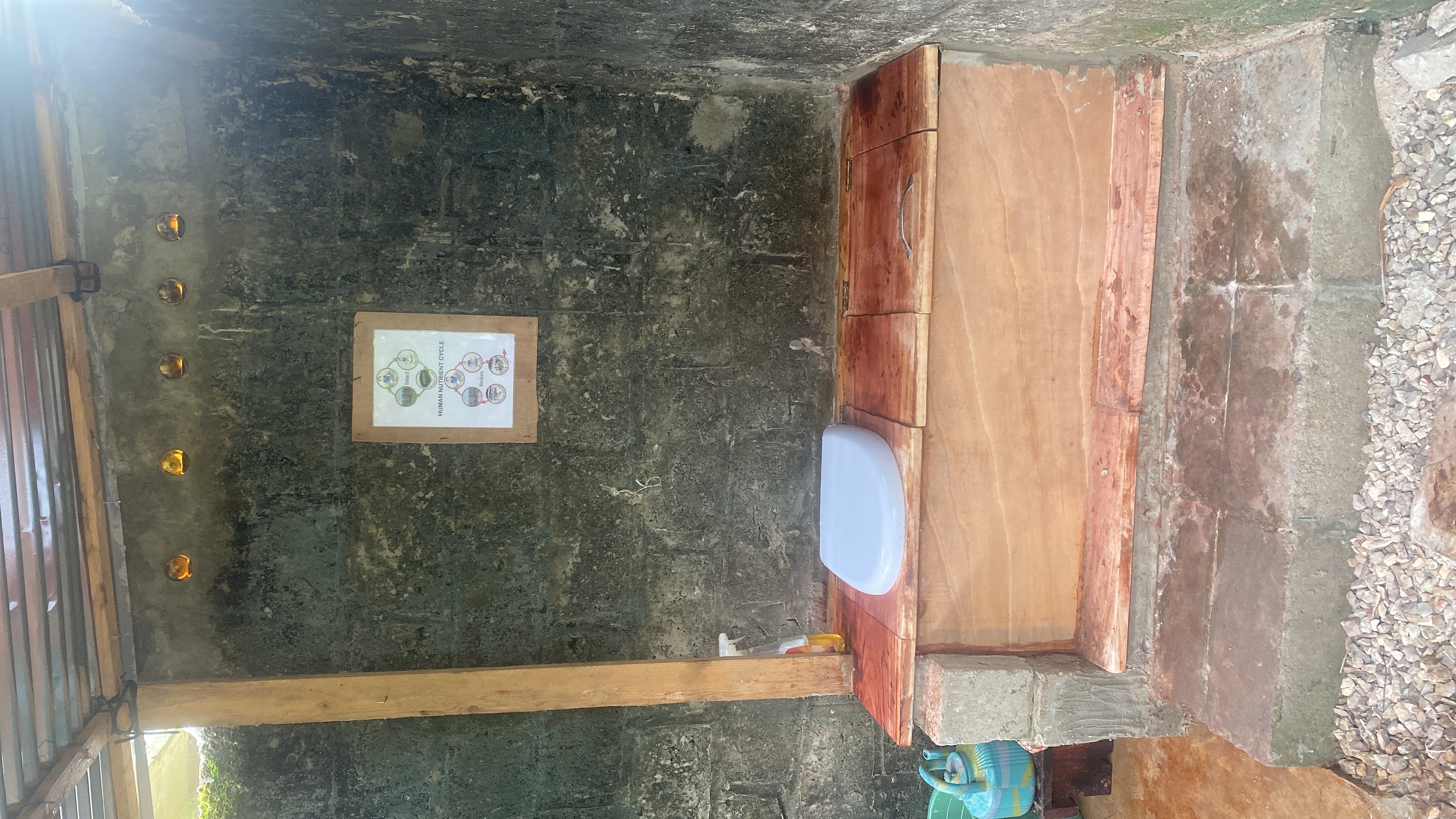
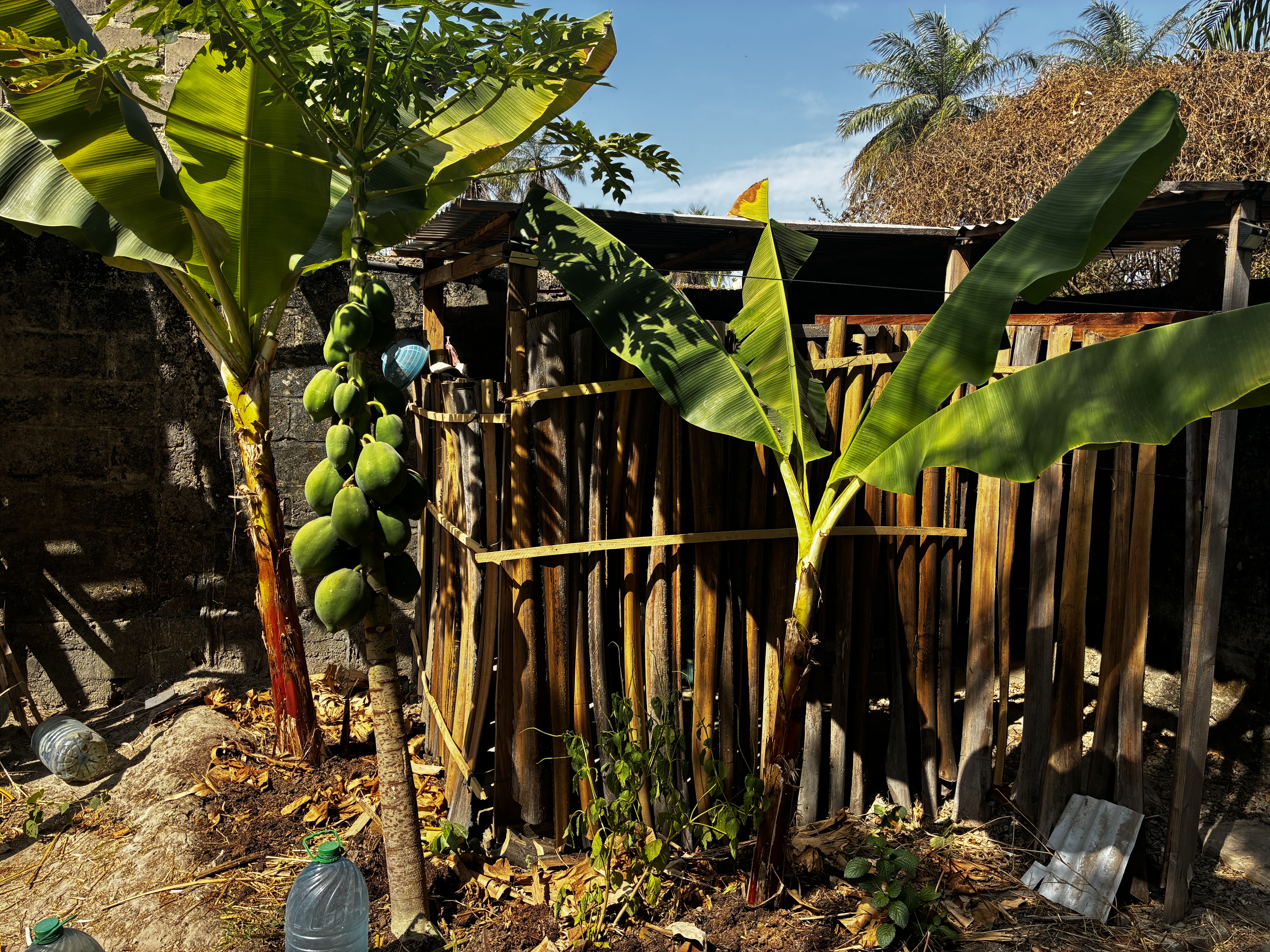
What a great thread. I haven't nearly the experience to match your 30 years of composting humanure, but I have read both of Jenkin's books and built a portable toilet illustrated in The Compost Toilet Handbook which I used over a period of time here at my property in Spain. What is useful in this post isn't so much how I used my 'spanish compost toilet', which I always got free cover material for from the local sawmill (they're happy when someone comes to take it), but probably more so my experience with using another compost toilet I built in the tropics of west Africa, especially in the rainy season.

In the tropics you not only have to deal with higher temperatures throughout the year but also higher humidity - AND TERMITES! (You'll see two image attachments below - the 1st is my first tropical compost toilet before it got eaten by termites; the second is my 2nd attempt with termite-resistant wood) Termites weren't the only challenge though, and this issue has yet to be resolved, although I think I have found the solution; this challenge had to do with flies getting in under the toilet seat to lay eggs in the sawdust-covered humanure. No matter how much cover material I would throw on top of the humanure, the flies would always get through to it, perhaps a bit of uncovered urine on top was enough, so I quickly came to the conclusion that I need the seat to be airtight!

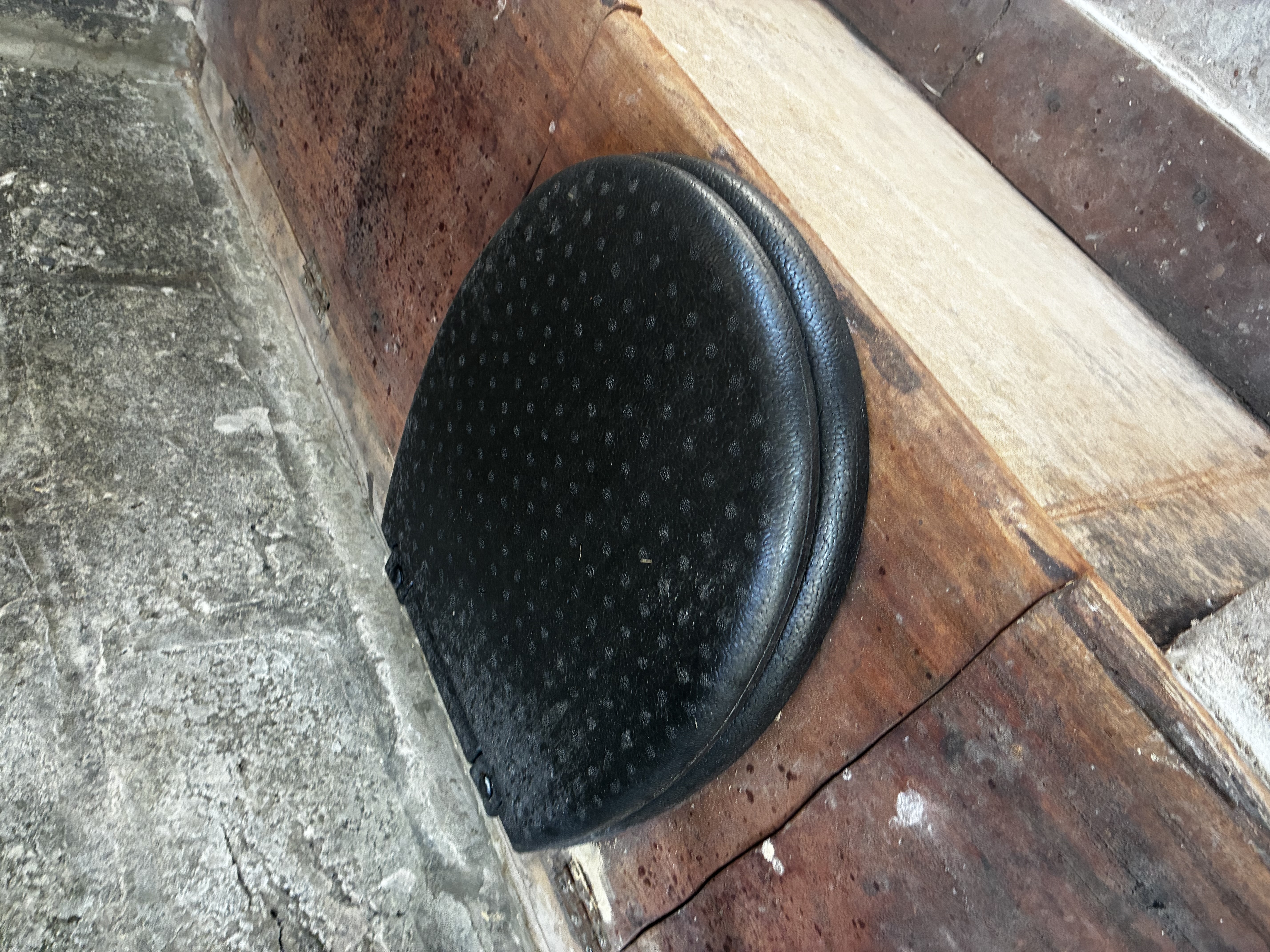
Until I could figure out how to get an airtight toilet seat, I would try to excessively cover the humanure and firmly close the stored buckets while I was still gathering material, but it was seemingly impossible to get out of the hassle. However, and I still have to put this to the test, I recently stumbled upon a 'thermal toilet seat', which is also said to be airtight, sold by some different providers online which could be the solution to my humanure nightmare (as long as the people I share the toilet with will remember to close the damn lid (for the love of God...))

Hinged Thermal Seat (WaterlessToiletShop)

It seems pretty easy to install and I sure hope this is airtight as listed in the sales ad. I've bought it and will give updates in the future if this solves my tropical humanure problems.

I hope this comment is useful to anyone
4313157F-DED6-46CC-941E-29460666CF56.jpeg
1st try (termites loved it)
24F2DF89-994B-44EF-B786-DB8F90A09268.jpeg
2nd attempt (hopefully termite proof)
 
Benjamin Dinkel
Rocket Scientist
Posts: 951
Location: Province of Granada, Andalucía, Spain
694
6
cooking rocket stoves woodworking wood heat
  • Likes 5
  • Mark post as helpful
  • send pies
    Number of slices to send:
    Optional 'thank-you' note:
  • Quote
  • Report post to moderator

Nikolaj Vinicoff wrote:
It seems pretty easy to install and I sure hope this is airtight as listed in the sales ad. I've bought it and will give updates in the future if this solves my tropical humanure problems.


Hey Nikolaj,
thanks for sharing.
I am very interested in your test result. An actual airtight seat would be great for both flies and residual smells.
 
Bob Hutton
Posts: 37
Location: Northwestern Ontario
13
  • Mark post as helpful
  • send pies
    Number of slices to send:
    Optional 'thank-you' note:
  • Quote
  • Report post to moderator

E Nordlie wrote:

Bob Hutton wrote: Would there be special considerations for the compost if the sh*t or other was in a paper coffee filter?


Most coffee filters are completely compostable, to be sure you may have to do some research on the specific brand you have. I've put *a lot* of coffee filters in my compost (although only filled with coffee grounds), and as long as they don't freeze or dry out they disappear in a week or two. I assume they add some fiber/carbon.


Thank you for taking the time ,
 
Bob Hutton
Posts: 37
Location: Northwestern Ontario
13
  • Likes 7
  • Mark post as helpful
  • send pies
    Number of slices to send:
    Optional 'thank-you' note:
  • Quote
  • Report post to moderator
hey Nikolaj Vinicoff
If you vent the privy with 3 or 4 inch pvc from the floor level to 2 or 3 feet above the roof convection will have the smell draw (what is attracting flies) well above the roof. This eliminates most of the problem. This is standard practice for Provincial rest stops here in Canada that use privy type facilities. We have thousands of them and no shortage of hot humid weather in the summer.   I have used this type of system myself many times and it does eliminate most of the odour and insects.  
 
pollinator
Posts: 1791
Location: southern Illinois, USA
353
  • Likes 7
  • Mark post as helpful
  • send pies
    Number of slices to send:
    Optional 'thank-you' note:
  • Quote
  • Report post to moderator
I've been at it since 1985.  I was never able to get any kind of compost to really heat up, whether containing humanure or not. Eventually I gave up trying and went for long composting instead, and then eventually to simply trenching it in under garden beds or in planting holes for certain nutrient hungry things.  I rely on the burial at least six inches or more deep, plus not digging that area or growing salad crops or raw-use low growers there for a few years for disease control.  Never had an issue with this method for pushing 10 years now. Commonly now I use ashes to cover each deposit in the buckets....thus processing two wastes together and I figure to let the roots and soil microbes do the rest over time.  In warm weather, I've given fresh manure to black soldier flies as well, with excellent results, and then handle the BSF residues the same as I would the humanure.
 
T. Smith
Posts: 27
Location: Masardis, Maine
15
  • Likes 5
  • Mark post as helpful
  • send pies
    Number of slices to send:
    Optional 'thank-you' note:
  • Quote
  • Report post to moderator
Nikolaj Vinicoff,

We don't have the same type of fly problems in Maine as in the tropics, but I do use an inexpensive bucket cover when using the system inside a modern building. I get a cheap 5 gallon bucket lid and rest it on top of the bucket. By this I mean I put it on the bucket, buy don't push it down to seal it. It keeps in all of the odors. We've also used these to cover buckets next to the compost pile before we dump them. When we have dogs in camp who are curious about the compost, I'll put a rock, or brick on top to keep them out.

Here's a link to a lid that I've used:   https://www.lowes.com/pd/United-Solutions-12-41-in-White-Plastic-Bucket-Lid/1000458801

I'd be interested to hear how the bucket cover you mentioned works.

 
Nikolaj Vinicoff
pioneer
Posts: 51
Location: Between south Spain and west Africa
21
wheelbarrows and trailers forest garden trees chicken composting toilet ungarbage
  • Likes 2
  • Mark post as helpful
  • send pies
    Number of slices to send:
    Optional 'thank-you' note:
  • Quote
  • Report post to moderator
Thanks for all your posts! I’ll be sure to come back to this thread once I have the new cover installed - I might even make a video and show you the results.
 
Nikolaj Vinicoff
pioneer
Posts: 51
Location: Between south Spain and west Africa
21
wheelbarrows and trailers forest garden trees chicken composting toilet ungarbage
  • Likes 6
  • Mark post as helpful
  • send pies
    Number of slices to send:
    Optional 'thank-you' note:
  • Quote
  • Report post to moderator
Heres a quick, yet not final, update on the airtight thermal seat:

I ordered the thermal seat from a Finnish website and just received the parcel today, along with a book I ordered on Amazon that Paul recommended on a podcast (or a talk?). The 2 seem to go hand in hand. Next I will bring the seat to my compost toilet setup in Senegal and give you all another update once installed.
IMG_1754.jpeg
[Thumbnail for IMG_1754.jpeg]
IMG_1755.jpeg
book for natural greywater treatment
 
Posts: 21
6
  • Likes 5
  • Mark post as helpful
  • send pies
    Number of slices to send:
    Optional 'thank-you' note:
  • Quote
  • Report post to moderator
I’ve been composting humanure for 23 years, most of that with the bucket method but more recently with a 2-story barrel composter I built in the straw bale house I’m building. The treatment area is near the hot water heater to help keep the temps above freezing in the winter, as my basement is unheated.  I live in the BC Interior.

Does anyone have experience with indoor composting? My cover material has always been whatever is on hand, so might be fir sawdust, woodchips I make from deciduous tree leavings, or chipped-up weeds like chicory. (Don’t use invasive weeds that you can’t control; I’ll burn any plants that survive the barrel.) I also shred all my paper and cardboard and use that, especially for visitors as they’re more comfortable with the familiarity of shredded paper.

I researched soldier flies as I’d like to feed the larvae to my chickens, but they generally like kitchen compost over the mostly/fibrous compost of humanure. When I worked for a septic company I did mycoremediation and found that Stropharia shrooms kill coliforms without absorbing toxins (so remain edible if clean, and I used a layer of sand as a barrier) but this year couldn’t find any so used oyster mushrooms (which do absorb toxins while killing coliforms).  I threw a single sawdust kit of mycelium on a 2/3 full barrel, a couple of flakes of wheat straw I had on hand over it(which I wouldn’t do again), and a screen over the top.

Second barrel will probably be full at the end of January and I’m going to throw a pound of my red  wiggler compost worms in there, as they love the fibrous cover materials, and I have read they lock up heavy metals and maybe some of the nastier common toxins. (We’re all toxic now, folks.)

I think 1year of composting will take 3 drums (55 gal), and I’m trying to figure out what to use for processing in the 3rd. The goal is to reduce the material significantly for easier handling, so after a year I can easily roll the barrels outside to a pallet bin for another year of processing. Or it might be enough to sequence them inside: 4mo shrooms to remove coliforms, 4 mo worms to remove other toxins & reduce volume, and 4 mo of ??  Ideas and questions welcome.
 
I agree. Here's the link: http://stoves2.com
reply
    Bookmark Topic Watch Topic
  • New Topic