|

|
|

|

|

|
|
|
|
|
|
|
|

|

|

|

|

|
 11
11


"Ah, but a man's reach should exceed his grasp,
Or what's a heaven for?"
Andrea del Sarto by Robert Browning
2
Just because you are not able to imagine or do something, does not mean that I can't or that it in fact cannot be safely done.
2
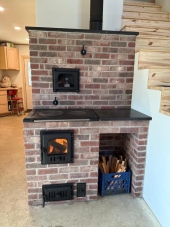
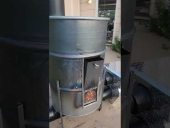
Tommy Bolin wrote:Finns don't seem to use steel as a radiant surface unless for cooking, they believe it strips the air of negative, healthy ions
2
"Ah, but a man's reach should exceed his grasp,
Or what's a heaven for?"
Andrea del Sarto by Robert Browning
1
"Irrigation is not something that you just dump something on. It's not a big truck. It's a series of tubes."
Tyler Grace wrote:I don't know which Finnish invention I'm more grateful for. This or Linux.
Just because you are not able to imagine or do something, does not mean that I can't or that it in fact cannot be safely done.
Kevin Olson wrote:Be aware, there are a couple of pages missing from the scan (there's only one page between numbered pages 90 and 94, but I can't tell which 2 page numbers are AWOL). I would assume this was merely an oversight
cristobal cristo wrote: I read a better explanation in an older masonry building book - steel surfaces heat to temperatures high enough to burn the dirt particles and the fumes created pollute the air. It makes sense, taking into consideration that dirt will be partially composed of organic compounds like skin, hair, food remnants, microplastic, etc.
Sure, agreed, but that seems an incomplete answer. The accumulation since prior use burns off, then what, remaining settling dust burns as well? how much of that can there be?
The volume of air in contact with steel ( the source of 'ions' ) is immensely greater than any airborne solids, which obviously have to have a mass less than air to float onto stove in the first place.
Another point I've not heard made. Traditional steel woodstoves likely contribute more fine particulate to inside air. Masonry of whatever form seems more airtight.
Regardless, the historical observation remains the same. No hot steel in the house, wait for the sauna to stabilize before jumping in.
Hot rock good, hot steel bad.
Finns have a colloquial name for sauna, 'poor man's pharmacy'. Positive ions, really hot air and bit of steam jump start the immunity
Just because you are not able to imagine or do something, does not mean that I can't or that it in fact cannot be safely done.
2
How permies.com works
What is a Mother Tree ?



| I agree. Here's the link: https://woodheat.net |