|

|

|

|

|

|
|
|
|
|
|
|
|
|

|

|

|

|


 15
15


I choose...to be the best me I can be, to be the strongest me I can be, to learn the most I can. I don't know what comes next. But I'm gonna go into it balls to the walls, flames in my hair, and full speed ahead.
5
Invasive plants are Earth's way of insisting we notice her medicines. Stephen Herrod Buhner
Everyone learns what works by learning what doesn't work. Stephen Herrod Buhner


 11
11
- Tim's Homestead Journal - Purchase a copy of Building a Better World in Your Backyard - Purchase 6 Decks of Permaculture Cards -
- Purchase 12x Decks of Permaculture Cards - Purchase a copy of the SKIP Book - Purchase 12x copies of Building a Better World in your Backyard


 11
11
"We're all just walking each other home." -Ram Dass
"Be a lamp, or a lifeboat, or a ladder."-Rumi
"It's all one song!" -Neil Young
6
Anne Miller wrote:Use it as a soil amendment.
Who was the sender?
I choose...to be the best me I can be, to be the strongest me I can be, to learn the most I can. I don't know what comes next. But I'm gonna go into it balls to the walls, flames in my hair, and full speed ahead.
6
Timothy Norton wrote:Coconut coir can help improve aeration and water retention in soils. When I have had some in the past I used it as part of a homemade seed start mix in addition to worm casting, perlite, and some sifted compost.
The blocks take A LOT of water to properly break apart and fluff up. I ended up putting a 15 pound block in a 30 gallon tote and would keep adding pitcher of water to gradually break apart the dry bits. Once it is sufficiently saturated it will take up a bunch of volume.
To note for those using it indoors, when the expanded coir dries out it can be very dusty. I like to spray it down with water before using it if it has sat for some time.
I choose...to be the best me I can be, to be the strongest me I can be, to learn the most I can. I don't know what comes next. But I'm gonna go into it balls to the walls, flames in my hair, and full speed ahead.
7
Leaftide - garden planner w/ 1228 plant types. Need permaculture testers for fruit trees & perennials. Free Pro month for detailed feedback, even just suggesting plants
10
When I have had some in the past I used it as part of a homemade seed start mix in addition to worm casting, perlite, and some sifted compost.
The blocks take A LOT of water to properly break apart and fluff up. I ended up putting a 15 pound block in a 30 gallon tote and would keep adding pitcher of water to gradually break apart the dry bits
Visit Redhawk's soil series: https://permies.com/wiki/redhawk-soil
How permies.com works: https://permies.com/wiki/34193/permies-works-links-threads


 9
9
Jay Angler wrote:Timothy Norton wrote:
When I have had some in the past I used it as part of a homemade seed start mix in addition to worm casting, perlite, and some sifted compost.
Yes - I always add some to my seed starting mix because it holds water so well that I'm less likely to kill baby plants that seem to go from "wet enough" to "too dry" exactly when I'm not watching!
Similarly, I add it to planters, as they are more dependent on me watering them than plants that are in the ground.
and wrote:The blocks take A LOT of water to properly break apart and fluff up. I ended up putting a 15 pound block in a 30 gallon tote and would keep adding pitcher of water to gradually break apart the dry bits
1. kept in a dry place, the blocks will keep for years and be perfectly happy to reconstitute when you need them, so if storage space isn't an issue, I wouldn't rush to use it up.
2. I use a bucket with a lid for wetting mine. There is no way it will hold a whole block, so I use my small mattock, or a little pry bar to break off chunks. It will break better by wedging an edge.
3. Once wet with the lid on, in my climate, in the shade, it will sit for months without going moldy, so I try to have some hydrated so if someone suddenly asks for a plant or cutting, I can just grab it, compost and a bit of dirt and get the job done without waiting for it to hydrate.
4. Coir serves a similar purpose as peat, but peat is hydrophobic if it dries out too far, whereas coir is not, so I find it much easier to work with.
5. I would feel better if the coir was being reused/returned to the land in the places where it is harvested (a byproduct of the palm oil/coconut oil business). So I consider it to be "precious" as any imported material that required fossil fuels to process and deliver. Thus I use it, but I try to only use what I need in my ecosystem to genuinely help me produce food and help my friends produce food. I try to evaluate "cradle to grave", when I use things in my garden, with the knowledge that many people who tell you, "you can't garden without X" are usually trying to make money and there are often alternatives (like putting punky wood in the bottom of my planters to act like a sponge).
I choose...to be the best me I can be, to be the strongest me I can be, to learn the most I can. I don't know what comes next. But I'm gonna go into it balls to the walls, flames in my hair, and full speed ahead.
7
I choose...to be the best me I can be, to be the strongest me I can be, to learn the most I can. I don't know what comes next. But I'm gonna go into it balls to the walls, flames in my hair, and full speed ahead.
7
Susan Mené wrote: I just had a very wet, puddled area in my back yard and I threw some coir on top to suck up the moisture. Gave no thought at all as to whether that was a good idea or not; what say you?
Visit Redhawk's soil series: https://permies.com/wiki/redhawk-soil
How permies.com works: https://permies.com/wiki/34193/permies-works-links-threads
6
Jay Angler wrote:
Susan Mené wrote: I just had a very wet, puddled area in my back yard and I threw some coir on top to suck up the moisture. Gave no thought at all as to whether that was a good idea or not; what say you?
OK - I have heavy clay soil. Water doesn't soak in well, so puddles tend to evaporate, which is part of the water cycle, but doesn't help my growies!
So coir added to the puddle might hold that moisture and give it more time to either soak into the clay a bit more, or encourage the worms to move in and help aerate the clay (how the worms manage to get through amazes me, but they do because I see the tunnels).
So I would say this is a great experiment and I hope to hear how it works for you. If your puddled area is low on organic matter, increasing that alone could provide nice benefits.
I choose...to be the best me I can be, to be the strongest me I can be, to learn the most I can. I don't know what comes next. But I'm gonna go into it balls to the walls, flames in my hair, and full speed ahead.
9
Jay Angler wrote:
Susan Mené wrote: I just had a very wet, puddled area in my back yard and I threw some coir on top to suck up the moisture. Gave no thought at all as to whether that was a good idea or not; what say you?
OK - I have heavy clay soil. Water doesn't soak in well, so puddles tend to evaporate, which is part of the water cycle, but doesn't help my growies!
So coir added to the puddle might hold that moisture and give it more time to either soak into the clay a bit more, or encourage the worms to move in and help aerate the clay (how the worms manage to get through amazes me, but they do because I see the tunnels).
So I would say this is a great experiment and I hope to hear how it works for you. If your puddled area is low on organic matter, increasing that alone could provide nice benefits.
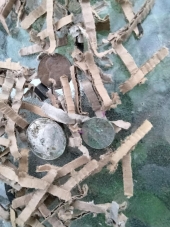
![[Thumbnail for 20260713_093627.jpg]](/t/372191/a/292763/20260713_093627.jpg "Filename: 20260713_093627.jpg
Description:")
I choose...to be the best me I can be, to be the strongest me I can be, to learn the most I can. I don't know what comes next. But I'm gonna go into it balls to the walls, flames in my hair, and full speed ahead.
4
3
I choose...to be the best me I can be, to be the strongest me I can be, to learn the most I can. I don't know what comes next. But I'm gonna go into it balls to the walls, flames in my hair, and full speed ahead.

|
Catch Ernie! Catch the egg! And catch this tiny ad too:
Permaculture Voices 1, 2 and 3 - all 117 hours of video!
https://permies.com/t/voices123
|