• Post Reply Bookmark Topic Watch Topic
  • New Topic
permaculture forums growies critters building homesteading energy monies kitchen purity ungarbage community wilderness fiber arts art permaculture artisans regional education skip experiences global resources cider press projects digital market permies.com pie forums private forums all forums
this forum made possible by our volunteer staff, including ...
master stewards:
  • Carla Burke
  • Nancy Reading
  • John F Dean
  • r ransom
  • paul wheaton
  • Jay Angler
  • Timothy Norton
stewards:
  • Pearl Sutton
  • Tereza Okava
  • Nicole Alderman
master gardeners:
  • Christopher Weeks
gardeners:
  • M Ljin
  • Megan Palmer
  • Pete Podurgiel

permaculture polytunnel or Nancy's undercover gardening

 
steward and tree herder
Posts: 14329
Location: Isle of Skye, Scotland. Nearly 70 inches rain a year
7989
6
transportation dog forest garden foraging trees books food preservation woodworking wood heat rocket stoves ungarbage
  • Likes 11
  • Mark post as helpful
  • send pies
    Number of slices to send:
    Optional 'thank-you' note:
  • Quote
  • Report post to moderator
So as promised, this is a thread on growing in my new polytunnel (construction and planning thread here. I started planting in the last few days, so hopefully things will move along pretty quickly. There are still a few things to finish off on the tunnel itself:

1) The guttering on the uphill side is not collecting the water yet - I need a dry day to get that finished. That will water most of the polytunnel from underneath
2) The wicking bed is still under construction. I don't think I will have it ready to grow much till much later in the year.
3) The windows and doors don't have catches so I can't control the ventilation very well
4) I haven't set up a dog resistant door, but they don't tend to be unsupervised in that area so it shouldn't be a problem
5) I'm wanting a max/min thermometer, so I can keep an eye on the temperatures
6) I'm needing more stepping stones for the paths. I collected flat stones intending them for a patio area, but they make pretty good stepping stones.

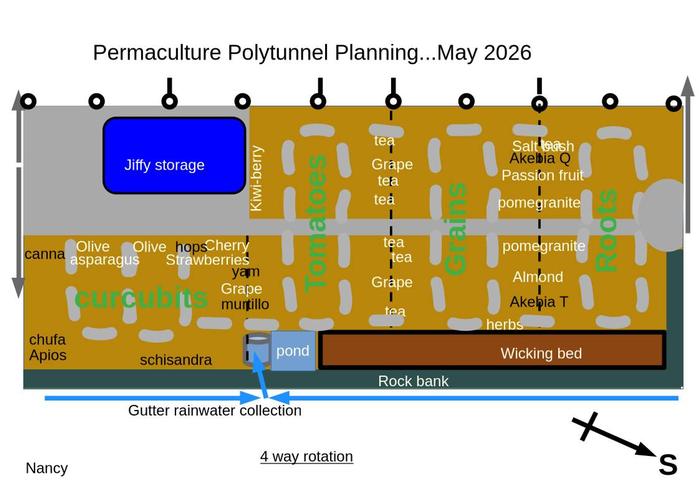
This is my plan of how the polytunnel planting might go.
rotation planting in a polytunnel or greenhouse
Polytunnel planting plan


It won't be exactly like this, as I have already planted my roots (yacon and sunroot/sunflower hybrids) where it is labelled cucurbits, and I put the pomegranites where the murtillo is suggested. The idea however is to have a four way rotation so as to move the tomatoes each year, with each area divided by a permanent planting area with shrubs and herbs and climbers. The grains area is going to be mainly sweetcorn. I love corn on the cob, and have managed to grow some in the past, but often have problems with germination. I also like experimenting, so have some Italian millet to try. I'd love to try the edible form of jobs tears if I can ever get hold of some.... The roots bed is actually for perennial and replant perennial roots, so Dioscorea yam, mashua and yacon. The curcubits is all things gourd - courgette, squash, achocha, pumpkin. If I ever get to try chayote, that would be here.
 
pioneer
Posts: 486
132
cat trees urban
  • Likes 2
  • Mark post as helpful
  • send pies
    Number of slices to send:
    Optional 'thank-you' note:
  • Quote
  • Report post to moderator
Exciting! The Italian millet is an interesting thought.
 
master pollinator
Posts: 418
Location: UK
153
kids urban seed
  • Likes 5
  • Mark post as helpful
  • send pies
    Number of slices to send:
    Optional 'thank-you' note:
  • Quote
  • Report post to moderator
Exciting to see it finally planted up. The guttering situation is always the last thing to get sorted on a polytunnel build, at least in my experience. Italian millet is an interesting choice — curious how it handles the humidity in there.
 
Nancy Reading
steward and tree herder
Posts: 14329
Location: Isle of Skye, Scotland. Nearly 70 inches rain a year
7989
6
transportation dog forest garden foraging trees books food preservation woodworking wood heat rocket stoves ungarbage
  • Likes 4
  • Mark post as helpful
  • send pies
    Number of slices to send:
    Optional 'thank-you' note:
  • Quote
  • Report post to moderator

Joao Winckler wrote:Italian millet is an interesting choice — curious how it handles the humidity in there.


Maybe I'll find out. It is quite often grown as a garden ornamental in the UK I believe, that's how i got hold of some seeds. I could try some millet from the grocery store, but suspect that would be even less likely to be successful.
 
Nancy Reading
steward and tree herder
Posts: 14329
Location: Isle of Skye, Scotland. Nearly 70 inches rain a year
7989
6
transportation dog forest garden foraging trees books food preservation woodworking wood heat rocket stoves ungarbage
  • Likes 8
  • Mark post as helpful
  • send pies
    Number of slices to send:
    Optional 'thank-you' note:
  • Quote
  • Report post to moderator
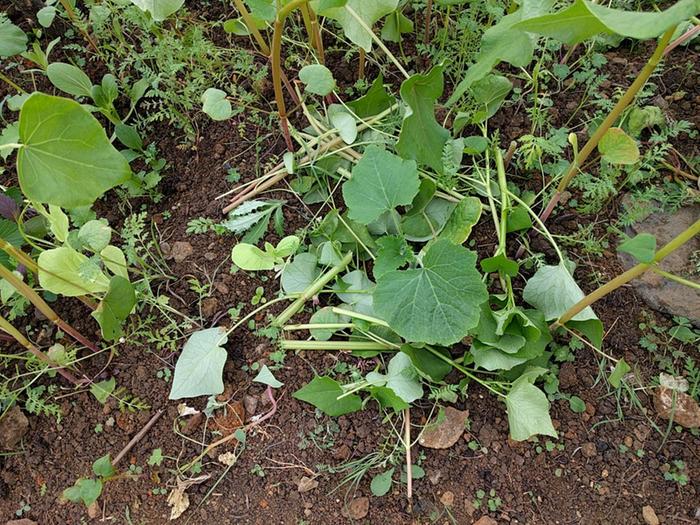
The soil at the start is all mixed up: good topsoil, smothered turf and subsoil. It isn't particularly stony and is pretty shallow - maybe 18 inches with what I hope to be a wicking bed with the irrigation channels and spruce/fleece layer underneath. Since the soil is all mixed up, I have sown some green manures over the whole area - lupin, phacelia and buckwheat. Hopefully this will soon create a bit of life in the soil and start adding mulch to the surface as I will cut these away from my crops as they grow. There are also weed seeds and some persistent perennial plants that may regrow - particularly buttercup in the case of the former and creeping thistle and silverweed for the latter. As well as the green manures I have also sown a load of different salad leaf plants: lettuce, pak choi, rocket, mizuna, and more. If they grow well I can use them as cut and come again salads, and let them go to seed to form an edible understory. I'd like some nice kale, beet and claytonia going as well, hopefully I can collect seed this year to scatter in the tunnel for those. Fat hen and chickweed are also ones I like in salads, that grew of their own accord in my old tunnel.
I deliberately watered the surface so as to germinate the weed seeds, a couple of weeks before sowing and planting. I'm not sure how effective this has been, as I've not been able to hoe the seedlings off and dessicate them as I was hoping. Basically I got impatient and got started! I had some old bags of soil improver left over from the shop last year which I have raked into the surface dislodging the weed seedlings as I went, but these may regrow, as after seeding the green manures and salads, I have watered the surface again. I'm hoping that buttercup won't like the polytunnel as much as it likes it outside here, as it will tend to be warmer and drier.

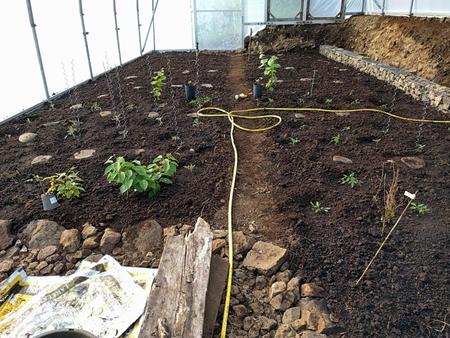
planting out the grapevines


The next step was planting out the permanent plants - I've got some new supposedly early, and seedless grapes (hoping to dry my own raisins), a new olive to be friends with the one out of the old tunnel (although that is getting a bit big to transplant), a couple of kiwiberry Actinidia arguta, which hopefully won't be too vigorous, a couple of pomegranites (just because!), my Camellia sinensis grown from Welsh tea seeds, and I forget what else.
I haven't added anything else to improve the soil. I'll probably not get super growth as a result, but since pests and diseases tend to worst in the first few years, adding lush growth to the mix probably will contribute to more problems anyway.
 
Nancy Reading
steward and tree herder
Posts: 14329
Location: Isle of Skye, Scotland. Nearly 70 inches rain a year
7989
6
transportation dog forest garden foraging trees books food preservation woodworking wood heat rocket stoves ungarbage
  • Likes 9
  • Mark post as helpful
  • send pies
    Number of slices to send:
    Optional 'thank-you' note:
  • Quote
  • Report post to moderator
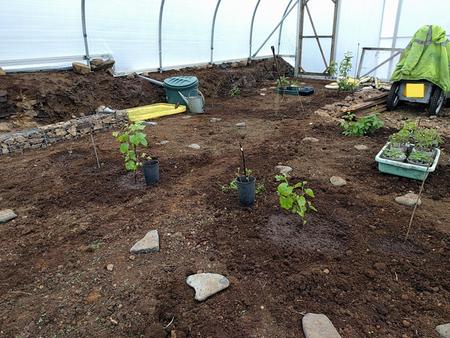
yay! I've planted my main crops.

The tomatoes were the first to go in, as the earliest sown were looking a bit purple in their seed snail. I'm not sure whether some of them are cordon or bush type, so I've tried to put them where they will have some head room.

tomatoes planted out in tunnel


I had a few spiral metal bits left over from the gabions which form the wicking bed side, so I stuck those in next to some of the tomatoes to act as a support. I'll tie them to the crop bar when I get round to it, as I suspect the sprial alone will not be strong enough once the tomatoes get going. I have some taller, wider spiral supports though which can be free standing, which i can use where I don't have a handy crop bar.

I don't have much in the way of replant perennials as yet. I obtained some sunflower/sunroot hybrid from Alison Tinsdale at backyard larder which hopefully will be sunroots with larger flowers and maybe seeds. One of them looked like it was rotting slightly, but I planted it anyway, the other looks good so far. I scattered a load of sunflowers in the area too which hopefully will grow. I don't have much success with sunflowers, but they ought to like the tunnel, and there will be fewer slugs to munch the seedlings. The dioscorea I'm dithering about at the moment - I'm concerned that the roots will go too deep and get tangled in the spruce/wool layer. They're OK in their little pots for the moment, but I'll need to think of something soon.

Some of my seeds for the curcubits section are pretty old, so I sowed quite a few in each position. As it happens though I have now got some new courgette and pumpkin seed, so if nothing appears in a couple of weeks I can resow and still hope to get a crop. I'm keen to try for the seeds i have though, as they are hull-less pumpkin seeds, sharks' fin melon and large achocha, which are slightly more difficult to get hold of.

The same applies to the sweetcorn seed. I did have some pretty new 'golden bantam' seed so made sure some of that was in each hole. I have heard that corn can be grown several seeds per station and does pretty well (I guess it could help with pollination) so unless they all come up I'll leave a few to grow in each hole. I only sowed half my seed too as I'm hoping to extend the season and not have all the plants ripening at once (well I can hope!). I'll sow the rest in two or three weeks time.

The green manure seeds are already starting to germinate. Some of the lupin seed are still dry, and I'm pokinh them back under the ground as I spot them, but I'm also seeing strong little seedlings of those and the buckwheat after only a few days in the ground. I have deeply watered the new plants once and lightly watered the surface again, as that has quickly dried out in the few sunny days we had this week (back to normal Misty Isle today )
 
Ac Baker
pioneer
Posts: 486
132
cat trees urban
  • Likes 4
  • Mark post as helpful
  • send pies
    Number of slices to send:
    Optional 'thank-you' note:
  • Quote
  • Report post to moderator
Looking really lovely!  I've also planted my tomatoes (although outdoors), fed & watered them in, and we're due to get a good rain tomorrow.
 
Nancy Reading
steward and tree herder
Posts: 14329
Location: Isle of Skye, Scotland. Nearly 70 inches rain a year
7989
6
transportation dog forest garden foraging trees books food preservation woodworking wood heat rocket stoves ungarbage
  • Likes 8
  • Mark post as helpful
  • send pies
    Number of slices to send:
    Optional 'thank-you' note:
  • Quote
  • Report post to moderator
Just a little update....
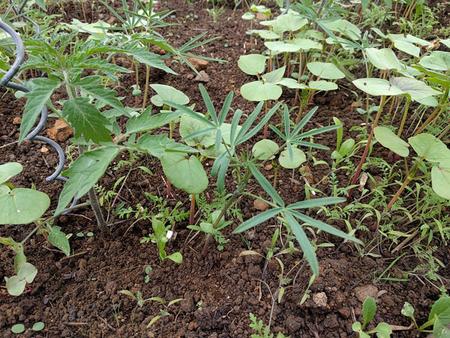
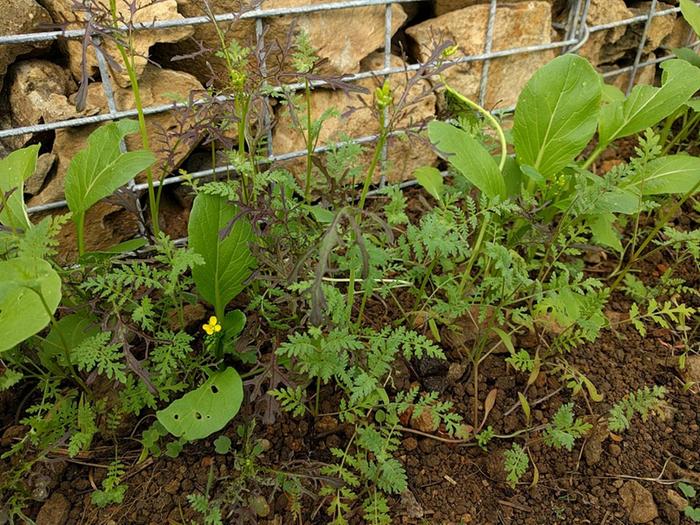
I'm happy with the germination of the green manure seeds. Because they were raked in and then disturbed as I planted and sowed the coverage is a little patchy, but it has been fun to see them come up. There are now salad leaves big enough for me to pluck and munch on. Hopefully in a couple of weeks there will be more than I can use.

a polyculture of seedlings


I have been watering the four sections in successive days, just a good surface wet, either with the hose (I found my finger over the nozzle gave the best sprinkle!) or with the watering can dipped in the pond depending on how full it is. I watered the tomatoes in well when I planted them and then not at all for a week, to try and encourage the roots to go down. I've now given them another good water (with extra vitamin pee) they are starting to grow visibly and throw out side shoots. I'm not sure the growth habit of some of them - whether they are determinate or indeterminate - and wonder if there is an easy way of telling whether it is better to take out the side shoots or not.

So far I have had a few curcubits germinate. Why do several come up in one location and none in others! I've potted some of spares up for the moment and may replant them in gaps, depending on how many more come up in the next week. I'm getting new ones daily still, so haven't given up hope. I've got courgette, hulless pumpkin, cucumber and even one sharksfin melon germinate so far. No sign of the pattypan squash or the achocha as yet.
There is also no sign of the sweetcorn. I haven't quite given up hope, but am a little pessimistic. I do have a fair few sunflowers deciding to pop up now, so that will be fun to see them grow!

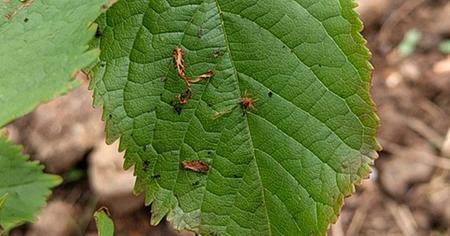
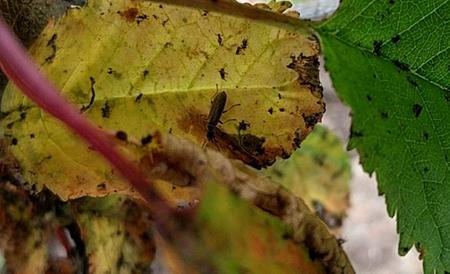
I've also had my first pests! One of the trees I forgot to mention was a patio cherry with two eating varieties. Shortly after planting I noticed it was covered in glossy black aphids. They were making the leaves curl and it was obviously quite an infestation. I nipped out the longer growing shoots - i want a bushy growth anyhow - and I also sprayed it a bit with water, but didn't really make much impression. When I checked today it looks like the aphids are pretty much all gone though. I spotted four other insects on the tree. I suspect one of these two had had a feast:

A tiny red spiderling - it moved really fast! but was minute only 3mm or so.

red spiderling


and a small beetle like a soldier beetle:

small soldier beetle


You can see the remains of some of the aphids in the images perhaps. So that's a win for the do nothing approach! I was a bit concerned that being in the tunnel, which is still pretty bare, the aphids would cause much more damage to the tree, but other than a few curled leaves I think it will be fine.
 
Nancy Reading
steward and tree herder
Posts: 14329
Location: Isle of Skye, Scotland. Nearly 70 inches rain a year
7989
6
transportation dog forest garden foraging trees books food preservation woodworking wood heat rocket stoves ungarbage
  • Likes 5
  • Mark post as helpful
  • send pies
    Number of slices to send:
    Optional 'thank-you' note:
  • Quote
  • Report post to moderator
Time for another update.

I think I could have done with planting the tomatoes and cucurbits with some compost or other soil improver. It may be that the tomatoes have a bit of Magnesium deficiency, or they could just be a bit hungry (see this thread for discussions) The jury is still out. I'm going to try feeding a bit more, but am a bit concerned about overwatering at the moment. The soil seems to be staying nice and moist which is a bit unexpected. I've taken off the lower shoots and leaves and done a bit of chop and drop around the plants. I've got a bit of sheep manure tea to give them a bit of a boost (as well as a couple of doses of 'vitamin pee') so we'll see how they look in a week or so. Most of the plants are flowering well, so hopefully I will see some fruit setting soon.

chop an drop around tomato plants


The cucurbits seem a bit slow in comparison. I planted out the extra seedlings and in the end no more germinated, so they aren't going to be overcrowded. I've done a bit more chop and drop around the plants. I think I'll get some comfrey leaves cut and make some plant food from that. One of the cucumbers has failed. I'm actually wondering if one of the dogs got in the tunnel, as it looks like the stem got squashed as if someone trod on it. I don't think it was me!

chop and drop around courgette


I've obtained the cage off an IBC to use as a cucumber climbing frame. It might mean I'll need to move my stepping stones slightly, but I think it will be pretty useful for them to climb on if I can get some help moving it into position. Funnily enough I have the plastic body off another IBC from another source as a potential water reservoir...

The salad plants have started to go to seed already. I'm not that familiar with growing them, so I don't know if they are just very short lived, or whether they are finding it a bit warm in the tunnel. It isn't particularly warm. Our summer has been noticably horrid, cloudy and cool, this year, so I'm very happy to have the tunnel, and don't think it is getting hotter than is reasonable. These are mostly oriental vegetables. The lettuce seedlings I can see are still pretty tiny, so I'm hoping that those will grow on and take over in terms of leaf production.

salad plants going to seed


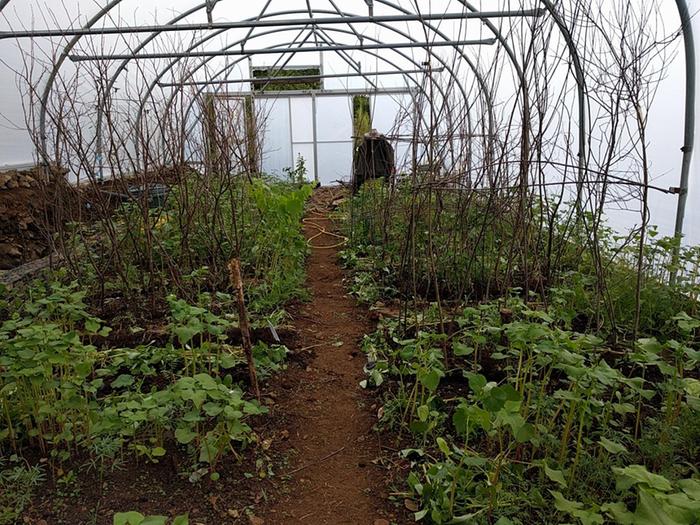
The sweetcorn never germinated, so I have decided to plant some peas and beans in that space instead. I think it is not too late to get a good harvest undercover. I presoaked all the seed overnight and watered them in after planting, so hopefully they will germinate pretty quickly. My coppiced hazel sticks make a nice trellis for them to grow up.

peasticks and green manures in polytunnel


I bought some cold stored strawberry plants - three different varieties -  and planted a few of those inside and a few outside the tunnel. I've got a few seedling passionfruit which I've tried and failed with before. Some canna germinated very quickly as have 4 different types of globe artichoke. I'm  going to pot up some of those to transplant outside too. There is also still lots of buttercup and dock seedlings along with thistle and silverweed, which I'm sporadically pulling out. I just leave the seedlings to dessicate on the surface (which wouldn't work outside as they just carry on growing!)
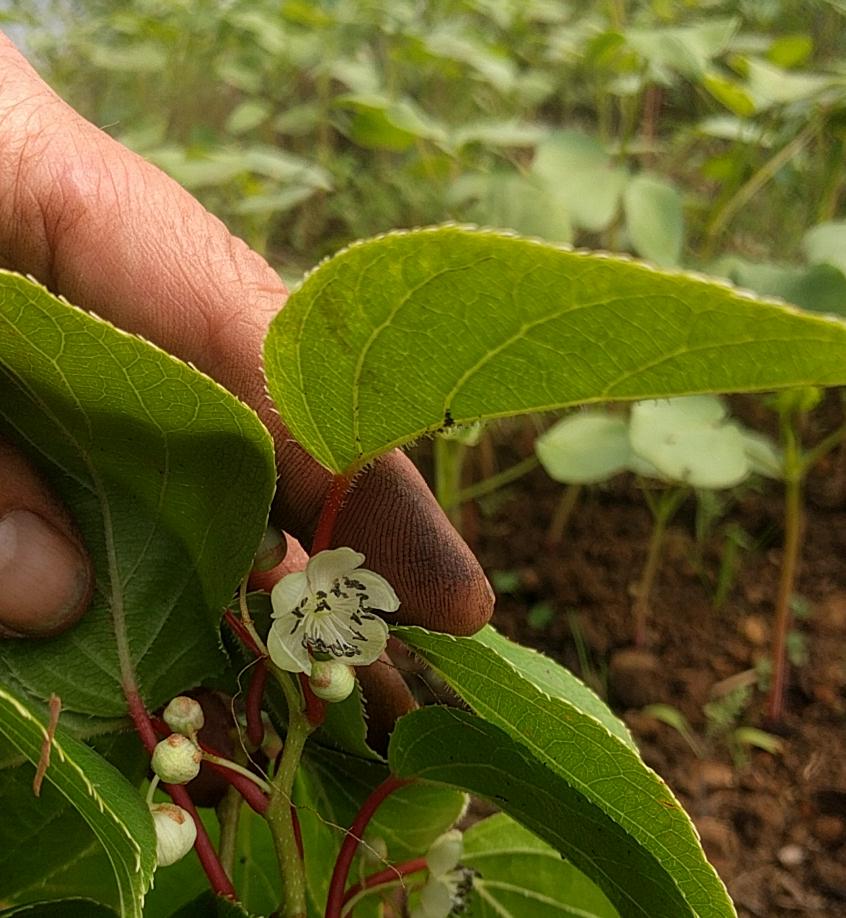
The grapevines are growing well as are the kiwi berries. I'm a bit alarmed that one which I thought was Actinidia arguta 'Anna' (which is female) has turned out to have male flowers. It seems that I have been sent the wrong variety, which is disappointing. The other kiwiberry hasn't flowered this year. That should be a self fertile variety. My plan was to have three - two self fertile and a female, as I thought the self fertile ones would fertilise the female too. Maybe I will change my plan and get another female variety instead.


male_kiwiberry_flowers.jpg
male Actinidia arguta flowers
Not kiwiberry Anna
 
Nancy Reading
steward and tree herder
Posts: 14329
Location: Isle of Skye, Scotland. Nearly 70 inches rain a year
7989
6
transportation dog forest garden foraging trees books food preservation woodworking wood heat rocket stoves ungarbage
  • Likes 7
  • Mark post as helpful
  • send pies
    Number of slices to send:
    Optional 'thank-you' note:
  • Quote
  • Report post to moderator
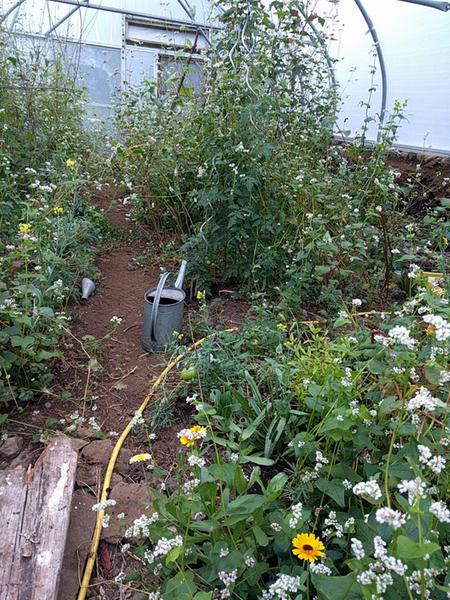
Now it's getting later in the season and the plants are running out of oomph. I've been watering and feeding the tomatoes and curcubits, but have eased off on the watering of the rest of the plants.
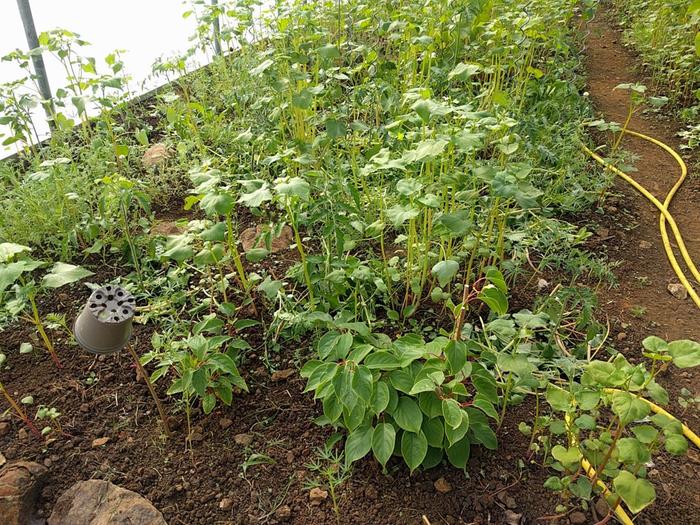
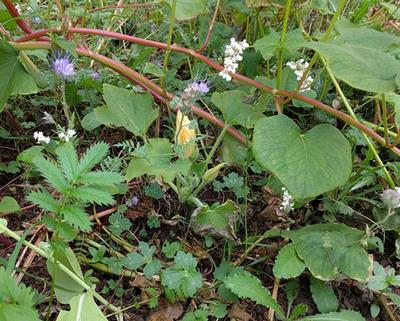
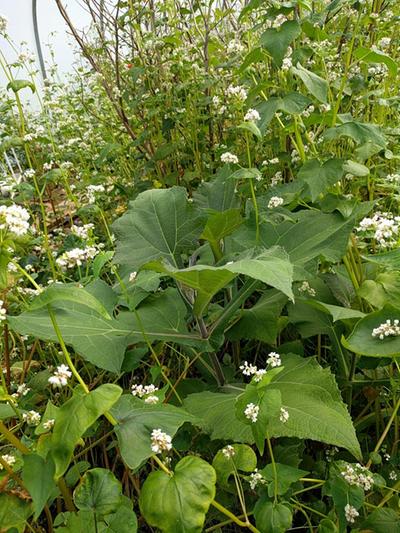
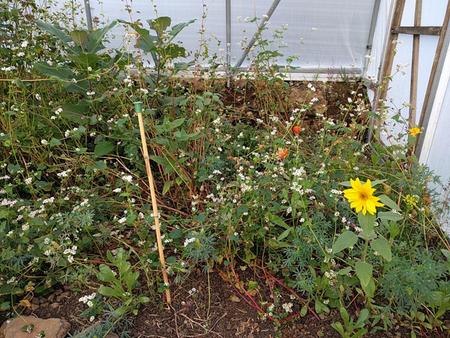
It's nice to see the calendula starting to flower. I got a mix of seed via 'going to seed' so some of the flowers are double and there are shades of orange. The buckwheat is head height. That's one plant that seems to have been perfectly happy in the soil. Lots of flowers, which various insects have been appreciating, and the seeds are starting to ripen. I was hoping to leave these to maybe get a crop of seed from, but some of the tomatoes are showing signs of fungal disease, so I'm going to do a bit of chop and drop and use the buckwheat as mulch around them.

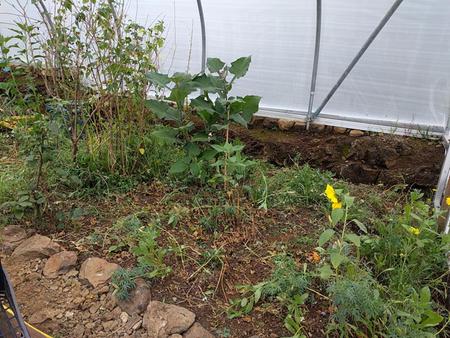
overview of polytunnel in mid August


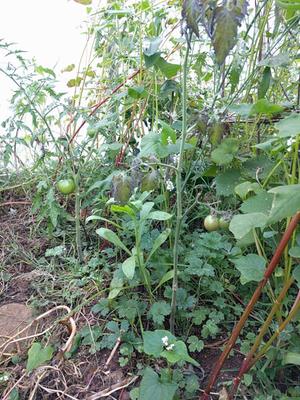
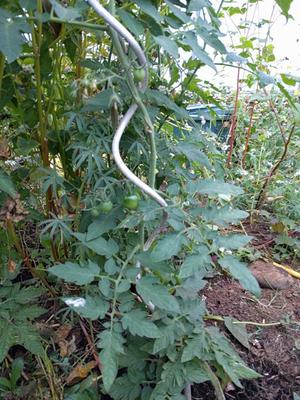
I've noticed quite a difference between the varieties of tomatoes in terms of how healthy they are staying. Also, although they flowered fairly well, only a few fruit have set, and I am just now starting to see one or two changing colour. I've been very disappointed with the 'amish paste' tomatoes for example which have hardly set any fruit and are generally looking pretty tatty, whereas some others are looking much greener and sturdier. I guess this reflects different growing conditions from where they were bred, or maybe (as I have read the amish paste can be variable) it was a poor selection that were grown on for my seed in this case.

sad spindly tomato plant with purple leaves


sturdy green tomato plant


I'm pretty sure I'm not going to get courgettes (zucchini)... The plants are flowering sporadically with all male flowers so far, but I don't feel they have much life in them. The pumpkins are starting to vine slightly, but again without much vigour and at this stage in the year I don't expect them to do well.

sad little courgette plant


My yacon plant is looking pretty happy, although I haven't watered it very much. This is one that survived for several years in a small pot on the window sill or outside with no food, so I know it is a tough cookie!

strong yacon in late summer


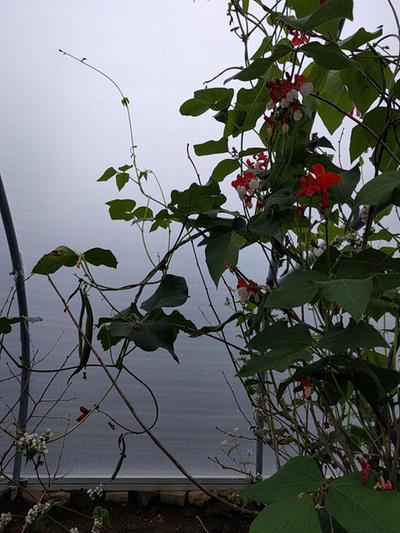
The runner beans are setting pods and have made it to the crop bars. I've pinched out the growing points at that stage, as I don't want then to be too tall and it will be a nuisance to have to tidy the vines up from up there! Sorry about the quality of this photo - I took it late in the evening, so the light level is quiet poor.

runner beans with multicoloured flowers and pods


I'm not too disheartened actually. I know I started this season late, so wasn't expecting very much. It's easy to say, but next year will be much better!
 
gardener
Posts: 5770
Location: Cincinnati, Ohio,Price Hill 45205
1374
forest garden trees urban
  • Likes 3
  • Mark post as helpful
  • send pies
    Number of slices to send:
    Optional 'thank-you' note:
  • Quote
  • Report post to moderator
Did you grow chuffa?
I see it on the planting map.
 
Nancy Reading
steward and tree herder
Posts: 14329
Location: Isle of Skye, Scotland. Nearly 70 inches rain a year
7989
6
transportation dog forest garden foraging trees books food preservation woodworking wood heat rocket stoves ungarbage
  • Likes 4
  • Mark post as helpful
  • send pies
    Number of slices to send:
    Optional 'thank-you' note:
  • Quote
  • Report post to moderator
Not yet William. I do have some tubers (and they last for years!) I'm thinking I might be able to plant them next to the pond.... At the moment the wicking beds are still not set up - I'll work on those over the winter again. I have got the gutters set up so that the water butt (barrel) overflows into the builders tub/pond and this just overflows - so I am getting a wet patch just next to it, which presumably will suit the chufa well. When I have the wicking bed set up however, the flow will go first to the wicking bed, then fills up the barrel, then overflows into the pond, so it will depend on the volume/rate of rain I get as to whether the wet patch will stay reliably or not. So I think I'll have to wait until the wicking bed is set up properly to find out whether I'll need to arrange something different in terms of a damp spot for the chufa. I could have a pot in the pond for example.
This year has been quite cloudy and overcast (unlike the rest of the UK), so the tunnel has not got very hot. I think the chufa does prefer higher temperatures.
 
I agree. Here's the link: http://stoves2.com
reply
    Bookmark Topic Watch Topic
  • New Topic