
• Post Reply Bookmark Topic Watch Topic
  • New Topic
permaculture forums growies critters building homesteading energy monies kitchen purity ungarbage community wilderness fiber arts art permaculture artisans regional education skip experiences global resources cider press projects digital market permies.com pie forums private forums all forums
this forum made possible by our volunteer staff, including ...
master stewards:
  • Carla Burke
  • John F Dean
  • Nancy Reading
  • r ransom
  • Jay Angler
  • Timothy Norton
stewards:
  • paul wheaton
  • Pearl Sutton
  • Anne Miller
master gardeners:
  • Christopher Weeks
  • M Ljin
gardeners:
  • Jim Garlits
  • thomas rubino
  • William Bronson

Magnesium - alternatives to Epsom salts

 
steward and tree herder
Posts: 13714
Location: Isle of Skye, Scotland. Nearly 70 inches rain a year
7461
6
transportation dog forest garden foraging trees books food preservation woodworking wood heat rocket stoves ungarbage
  • Likes 1
  • Mark post as helpful
  • send pies
    Number of slices to send:
    Optional 'thank-you' note:
  • Quote
  • Report post to moderator
I'm thinking my tomatoes might be showing signs of magnesium deficiency. I'm growing in my new polytunnel, so new ground, which is pretty good but unimproved. I'm thinking the older leaves are starting to look a little yellow, although the plants aren't very big yet. Epsom salts are the thing that most often gets mentioned, but is there an alternative, like a dynamic accumulator I can grow myself, to feed the plants?
 
Posts: 98
Location: West central Minnesota
40
  • Likes 4
  • Mark post as helpful
  • send pies
    Number of slices to send:
    Optional 'thank-you' note:
  • Quote
  • Report post to moderator
Nancy,

This what I feed tomatoes. Pelletized chicken manure, 4-3-2 NPK plus about 8.5% calcium and there may be some trace elements that are fed to the chickens as a supplement. I also put on gypsum (calcium sulfate). We have a good magnesium level in our soil so that fertility element is something I do not think about. Our soil gets very hard with frequent waterings so when I plant the transplants I dig a fairly generous hole and mix the dirt with about 1/2 organic potting soil. This allows the roots to expand more freely and the fertilizer (every 2 weeks) will get to the roots quickly with each watering. We have high calcium levels in our soil but the additional available calcium I feel is essential.  In good years there may be 50 to 75 nice WI 55 tomatoes per plant. May put on a bit of Soil Biological a couple times per summer just to make me feel good and maybe the tomatoes too.

As the summer progresses the bottom leaves do dry up on the WI 55 tomatoes. They are also very good at sending out new branches (low runners) very near the ground. They will form all kinds of new tomatoes if left alone. I cut off the low runners except for maybe a cluster or 2 near the main plant. As time goes on I will clip off new blossoms and the ends of the new growth to concentrate all efforts towards the ripening tomatoes. The tomato is quite a plant, from a tiny papery seed comes all of the production, the miracle of photosynthesis.
 
gardener
Posts: 2234
Location: Zone 6b
1414
forest garden fungi books chicken fiber arts ungarbage
  • Likes 7
  • Mark post as helpful
  • send pies
    Number of slices to send:
    Optional 'thank-you' note:
  • Quote
  • Report post to moderator
Sea water has high concentration of magnesium. If your land gets salt laden winds, there should have plenty of magnesium.  Do you have a picture of the plant?
 
pollinator
Posts: 285
87
kids urban seed
  • Likes 4
  • Mark post as helpful
  • send pies
    Number of slices to send:
    Optional 'thank-you' note:
  • Quote
  • Report post to moderator
Comfrey is probably the most practical dynamic accumulator for magnesium. Deep tap root pulls it up from lower in the soil. You can chop and drop it around the tomatoes or make a liquid feed. Takes a season to get going if you're planting from root cuttings, but once it's established it's basically indestructible.
 
gardener
Posts: 3240
Location: Central Maine (Zone 5a)
1779
homeschooling kids trees chicken food preservation building woodworking homestead
  • Likes 6
  • Mark post as helpful
  • send pies
    Number of slices to send:
    Optional 'thank-you' note:
  • Quote
  • Report post to moderator
Are you allowed to collect seaweed where you are? Many types of seaweed are high in magnesium.

Here is Maine, USA we are allowed to harvest up to 50lb of wet seaweed per day. I tend to go at low tide and focus on the dried stuff at the top of the tide. I have only done it a couple times but I added it to compost one time, and another time, I added it before putting down a layer of woodchips. I don't know what the laws are like there... but if you could, sounds like you might be surrounded by a great source on the Isle there.
 
Nancy Reading
steward and tree herder
Posts: 13714
Location: Isle of Skye, Scotland. Nearly 70 inches rain a year
7461
6
transportation dog forest garden foraging trees books food preservation woodworking wood heat rocket stoves ungarbage
  • Likes 2
  • Mark post as helpful
  • send pies
    Number of slices to send:
    Optional 'thank-you' note:
  • Quote
  • Report post to moderator

May Lotito wrote:Sea water has high concentration of magnesium. If your land gets salt laden winds, there should have plenty of magnesium.  Do you have a picture of the plant?


That's interesting - yes sea salt has about 0.4 - 0.5% Magnesium (next after Sodium and Chloride).
I'll see if I can take a picture. The plants are only little (just starting to flower) but I want to fend off trouble before it affects them.
 
Nancy Reading
steward and tree herder
Posts: 13714
Location: Isle of Skye, Scotland. Nearly 70 inches rain a year
7461
6
transportation dog forest garden foraging trees books food preservation woodworking wood heat rocket stoves ungarbage
  • Likes 2
  • Mark post as helpful
  • send pies
    Number of slices to send:
    Optional 'thank-you' note:
  • Quote
  • Report post to moderator

Joao Winckler wrote:Comfrey is probably the most practical dynamic accumulator for magnesium. Deep tap root pulls it up from lower in the soil. You can chop and drop it around the tomatoes or make a liquid feed. Takes a season to get going if you're planting from root cuttings, but once it's established it's basically indestructible.


Ooh that's a good idea - I know comfrey liquid is a good plant food anyway...
from gardenUK

The no-water concentrate variant tested even higher in my own samples sent for analysis in 2023: 2.2% N, 0.5% P and 5.7% K on a dry-weight basis, plus measurable calcium (1.1%), magnesium (0.6%) and trace iron and boron.

That looks like a useful amount as well as the bulk nutrients which will do no harm either!
 
Nancy Reading
steward and tree herder
Posts: 13714
Location: Isle of Skye, Scotland. Nearly 70 inches rain a year
7461
6
transportation dog forest garden foraging trees books food preservation woodworking wood heat rocket stoves ungarbage
  • Likes 6
  • Mark post as helpful
  • send pies
    Number of slices to send:
    Optional 'thank-you' note:
  • Quote
  • Report post to moderator

Matt McSpadden wrote:Are you allowed to collect seaweed where you are? Many types of seaweed are high in magnesium.

Here is Maine, USA we are allowed to harvest up to 50lb of wet seaweed per day. I tend to go at low tide and focus on the dried stuff at the top of the tide. I have only done it a couple times but I added it to compost one time, and another time, I added it before putting down a layer of woodchips. I don't know what the laws are like there... but if you could, sounds like you might be surrounded by a great source on the Isle there.


That's another good resource thank you! Ability to harvest seaweed is area dependant in the UK - it seems to be OK (very traditional for Island crofters!) here, and i harvest usually in winter for mulching my garden beds - the beach is only about 1 1/2 miles away (but all uphill on the way home of course!). It was a bit difficult to find the Magnesium content for seaweed, but according to this site it again is about 5% dry weight. Again seaweed makes a super liquid plant feed. I tend to collect it over winter as I said, but I may collect extra to mulch the polytunnel beds for next year.
 
gardener
Posts: 992
Location: Ontario - Zone 6a or 4b, depending on the day
704
dog foraging trees tiny house books bike bee
  • Likes 3
  • Mark post as helpful
  • send pies
    Number of slices to send:
    Optional 'thank-you' note:
  • Quote
  • Report post to moderator
Do you have access to dolomite/dolomitic lime? It's crushed magensium-rich limestone.  Potentially not ideal if you have very alkaline soils, as it will raise the pH, but about 13% Mg by weight (plus 21% Ca). It's a very common soil amendment.
 
Nancy Reading
steward and tree herder
Posts: 13714
Location: Isle of Skye, Scotland. Nearly 70 inches rain a year
7461
6
transportation dog forest garden foraging trees books food preservation woodworking wood heat rocket stoves ungarbage
  • Likes 3
  • Mark post as helpful
  • send pies
    Number of slices to send:
    Optional 'thank-you' note:
  • Quote
  • Report post to moderator
That's a really good idea Katie - my soil is pretty acidic, so it would be a win win! Unfortunately I'm trying to avoid buying stuff (and inputs) - and to get limestone would probably be a 60 mile round trip (if they have it in stock). Mind you I may have to do the trip for business reasons in a couple of weeks so that could be a fall back.
 
Nancy Reading
steward and tree herder
Posts: 13714
Location: Isle of Skye, Scotland. Nearly 70 inches rain a year
7461
6
transportation dog forest garden foraging trees books food preservation woodworking wood heat rocket stoves ungarbage
  • Mark post as helpful
  • send pies
    Number of slices to send:
    Optional 'thank-you' note:
  • Quote
  • Report post to moderator
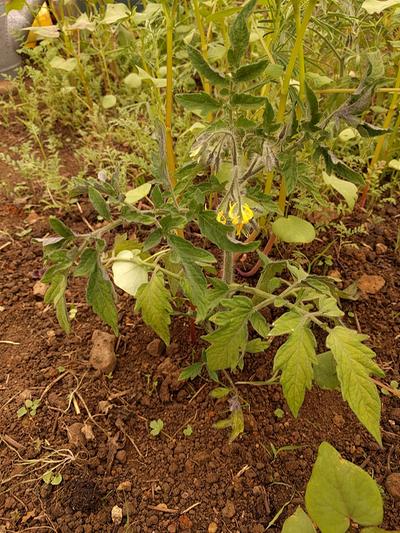
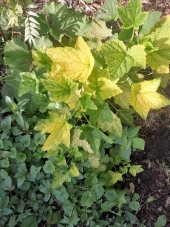
Pictures of one of my tomatoes plants:

yellowing older leaves on tomato plant
whole tomato plant


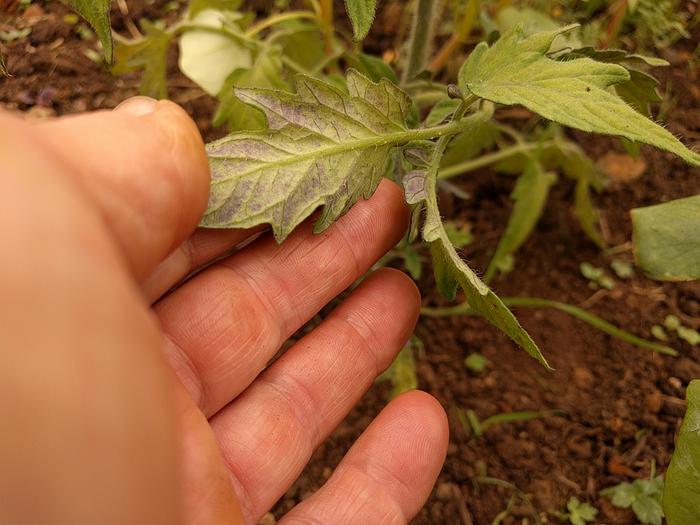
and the underside of the lower leaves. This one is quite purple, some are paler between the veins.

discoloured leaves on tomato plant
underside of lower leaf


It seems to be the older leaves that are affected, so they may just need a general feed. As I said I didn't improve the soil before planting, but it wasn't particularly bad.
 
Matt McSpadden
gardener
Posts: 3240
Location: Central Maine (Zone 5a)
1779
homeschooling kids trees chicken food preservation building woodworking homestead
  • Likes 5
  • Mark post as helpful
  • send pies
    Number of slices to send:
    Optional 'thank-you' note:
  • Quote
  • Report post to moderator
So a different question is how long between when you planted the plants and saw the discoloration? Could the yellowing and purple be stress from something after being transplanted? I often get a little purple on the plants after transplanting if I get a cold snap or a really big rain or something that would stress them out.
 
pioneer
Posts: 421
112
cat trees urban
  • Likes 4
  • Mark post as helpful
  • send pies
    Number of slices to send:
    Optional 'thank-you' note:
  • Quote
  • Report post to moderator
The tomato plants you so kindly posted me me, were noticeably yellow and purple by the time I got them in the ground.

My soil of course is quite different from yours, being a 100 year old allotments site in central England.

I think I've mentioned that I've been mulching them with dandelion leaves, nettles and compost, as well as watering them daily.

They've all greened up really beautifully now in my soil despite the heatwave.

So hopefully that's good news regarding the plants themselves!
 
Nancy Reading
steward and tree herder
Posts: 13714
Location: Isle of Skye, Scotland. Nearly 70 inches rain a year
7461
6
transportation dog forest garden foraging trees books food preservation woodworking wood heat rocket stoves ungarbage
  • Likes 3
  • Mark post as helpful
  • send pies
    Number of slices to send:
    Optional 'thank-you' note:
  • Quote
  • Report post to moderator

Matt McSpadden wrote:So a different question is how long between when you planted the plants and saw the discoloration?


Hmm, I planted the tomatoes out about a month ago, and they've been growing pretty well since then - more than doubled in height. I only noticed the issue in the last week.

Ac Baker wrote:I've been mulching them with dandelion leaves, nettles and compost, as well as watering them daily.
They've all greened up really beautifully now in my soil despite the heatwave.
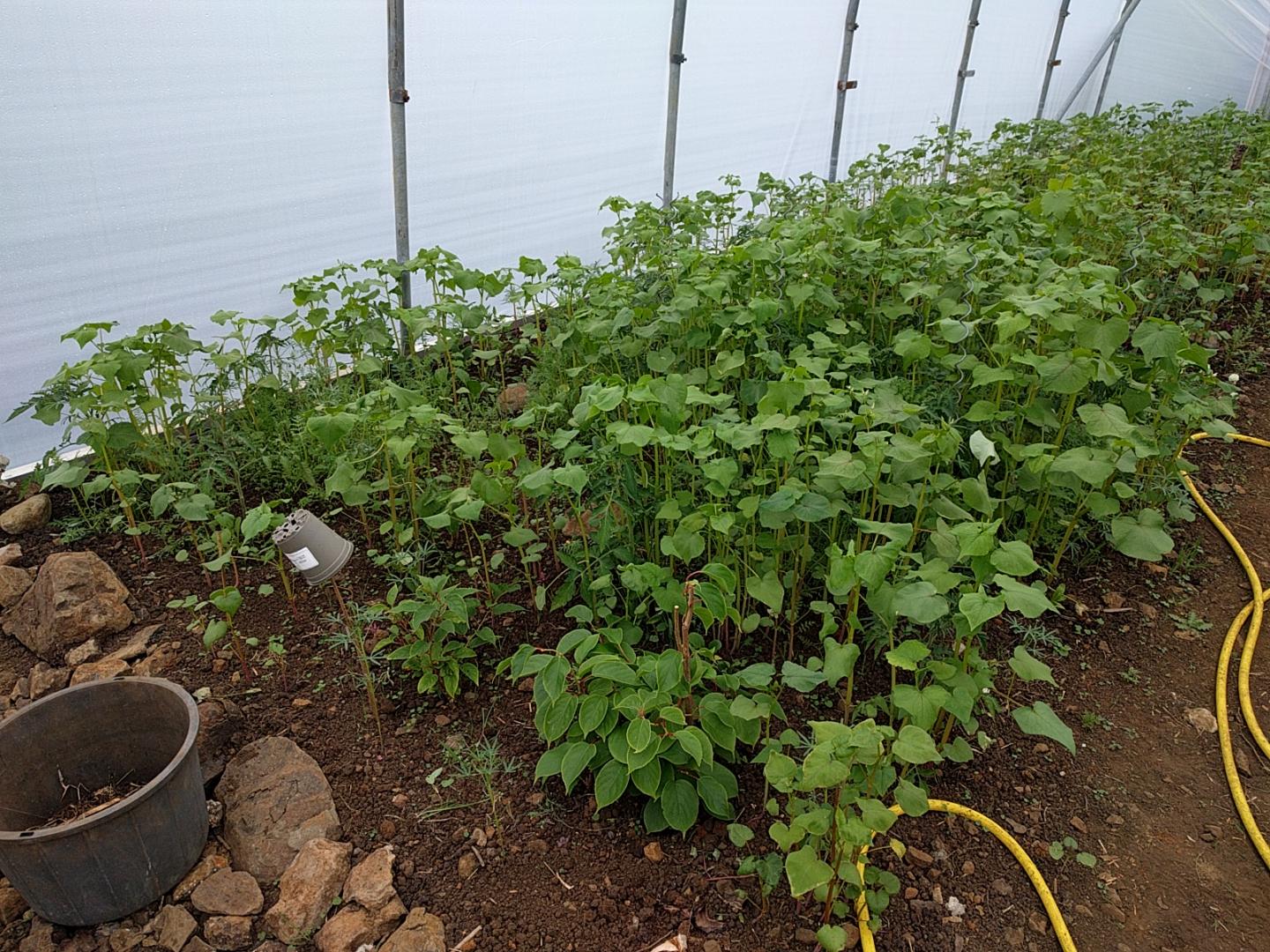


Good news your plants are doing well Ac!

I'm wondering now if more feeding generally would do the trick? I have given them at least one dose of Vitamin Pee, diluted and watered in well. But maybe it's time to make up some comfrey liquid feed, do a bit of chop and drop of the green manure plants I sowed (the buckwheat is starting to crowd some of the tomatoes a bit) and see whether that helps.
I haven't been watering much, as I wanted the tomato plant roots to reach deeper to where I'm hoping the soil will stay damp. I don't think they are showing signs of being thirsty, and I'm a way off seeing any fruit yet, when consisent watering will be more important for fruit quality.
tomato_manures.jpg
spot the tomato plants!
 
pollinator
Posts: 566
Location: Oz; Centre South
188
trees books cooking fiber arts writing
  • Likes 3
  • Mark post as helpful
  • send pies
    Number of slices to send:
    Optional 'thank-you' note:
  • Quote
  • Report post to moderator
Leafy dark green leaves like spinach and kale have magnesium as part of the chlorophyll, so I'd say that a swift boil and blender treatment, then pour the "smoothie" around the tomatoes when the mix has cooled.
Fingers crossed that your tomatoes recover, since in the first plant image, it's flowering and doing rather well otherwise.
 
I am going to test your electrical conductivity with this tiny ad:
montana community seeking 20 people who are gardeners or want to be gardeners
https://permies.com/t/359868/montana-community-seeking-people-gardeners
reply
    Bookmark Topic Watch Topic
  • New Topic