
|

|
|
|
|

|

|

|

|

|
 4


 11


 7
Invasive plants are Earth's way of insisting we notice her medicines. Stephen Herrod Buhner
Everyone learns what works by learning what doesn't work. Stephen Herrod Buhner
8
How permies.com works
What is a Mother Tree ?


 15
12
John Daley Bendigo, Australia The Enemy of progress is the hope of a perfect plan
Benefits of rainfall collection https://permies.com/t/88043/benefits-rainfall-collection
GOOD DEBT/ BAD DEBT https://permies.com/t/179218/mortgages-good-debt-bad-debt
16
No point in crying if you havnt been trying
 18
9
Christopher Weeks wrote:Does it freeze where you live? Are your bathroom and kitchen adjacent? what's under the floor where the drain goes currently? Do you own the house? Do you care about the law?
9
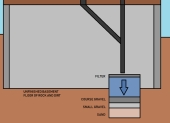
Alder Burns wrote:I've discovered on multiple off-grid homesteads that with any serious gardening going on, the need of water for irrigation is at least ten times more than all other household uses combined; unless perhaps you are in a quite rainy climate. (This was assuming no flush toilets in use, only showers, laundry, and kitchen) So as far as total water conservation is concerned, yes, greywater is valuable, but perhaps not as valuable as many think it to be. It's definitely not worth a lot of elaborate re-plumbing and re-working. What I've done most places is what Art Ludwig calls a drain to mulch basin....run a wide hose....1 1/4 inch black irrigation plastic works well, direct from each drain outside at a downward slope the whole way to a dedicated pit filled with wood chips or other coarse mulch, and then plant moisture loving plants, usually perennials through shrubs to trees, all around and in it. In temperate climates things like elderberry, blackberry, comfrey, etc. In dry climates just about any kind of useful tree or shrub can benefit. If the single source is very large, say in a large family or community situation, then you might need a branched drain or something like that, some way to spread the water out. You don't want any standing, because mosquitoes, and you don't want it to clog.....I've often found that setting up some kind of sump pit at the end of the drain hose....a kind of buried bottomless pot or some such so the water comes out into empty space and drops into the mulch, rather than directly into it. Earthworms and rodents and all will churn up that mulch and mix it with soil eventually....and this is moreso in dry climates since those things are attracted to the moisture. In California I actually had to dig it out and put it in garden beds every year or two and place fresh mulch for this reason, whereas in wetter climate the basins seem to maintain for years.
10
Sam Potter wrote:I kind of red necked my set up, all of my drains are plumbed directly outside. We have 2 sinks and 1 tub so I just drilled a hole thru the wall and set the pipes out for each one as I got the time. Then there's a adapter for a garden hose and I send it out to where it is needed. My plans are to set up reed beds that drain into a pond next year for any excess water to store it in a way it wont go gross. But this way it broke the project down into chunks that where easy to learn and get done when I had the time.
And yes this seems to work for my winters. Our normal temps in the winter like to get down and stay down in the negatives. I just shorten the hoses and make sure there's never any standing water.
5
John C Daley wrote:We need good understanding of the plumbing details of your house.
- Des the house have stumps
- Is there enough space to reach pipes
- what will you hod the water in
- is the land sloped
- will you use a pump
- where will the water be used
- distance between source and use
4
John Daley Bendigo, Australia The Enemy of progress is the hope of a perfect plan
Benefits of rainfall collection https://permies.com/t/88043/benefits-rainfall-collection
GOOD DEBT/ BAD DEBT https://permies.com/t/179218/mortgages-good-debt-bad-debt
5
John C Daley wrote:SJ, you are certainly taking the hard road!
Firstly, take care damming a seasonal creek others may be getting a benefit you are not aware of.
Grey water is best stored for only 24 hors at the most, you can read about the downsides elsewhere.
Ponding may turn into a festering stinking mess, reed beds etc may be the best starting point for a pond.
M Pearson wrote:200 meters total distance, I assume? How much elevation gain is it? That matters for the pumping more than the distance itself (IIRC).
Sounds like you basically want to catch the water leaving your house, e.g. just slightly downhill so it'll gravity feed from your greywater sources into that (could be a tank). Then pump it uphill to either another container there, or a pond. Could do container now and dig out a pond later? I suppose you could also have the pond be downhill of your house if that works. Having a pond not uphill from your house sounds.. smart, now that I think of it, but you'll have to have at least some water up there to use it. You could just pump it up the hill daily as you need it. If you don't care for it to take a while, maybe a really long garden hose is good enough. The really serious option would be to dig a trench and put a PEX (up to 1in I think) below the frost line. I looked it up and it says a 1in PEX can carry about 12 gallons per minute, so it would take only about 20 minutes to pump up an entire 250 gallon IBC tote. I don't know how big your garden up there is, you'd have to figure that out, but that's a lot of water.
20°F is definitely freezing territory if it lasts long enough (couple days?).
For now you could do this with 2 IBC totes (250 gallons each), the pump and the garden hose and just make sure it doesn't freeze, or drain it if it's about to freeze.

| I agree. Here's the link: https://woodheat.net |