|

|

|

|

|

|
|
|
|
|
|
|
|

|

|

|

|

|


 10
10


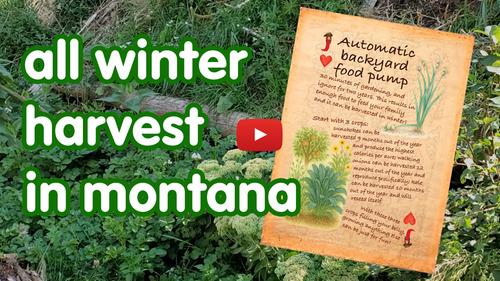
Jay Angler wrote:...I think a big part of the "automatic backyard food pump" is identifying plants that grow so well in your ecosystem, that you can count on them for your basic calories and nutrition pretty much without fail. Paul has plenty of other plants and young fruit trees on his land, both wild and domestic. Those can supplement and diversify his diet as available (like rhubarb which is only a spring crop due to its oxalic acid content). In my area, the natives relied on the ocean for their "food pump" by harvesting the salmon run. They also grew camas bulbs, but also exported/traded many of those. Many areas around the world had at least one "reliable" staple crop that was well adapted to their ecosystem.
"Also, just as you want men to do to you, do the same way to them" (Luke 6:31)


 9
9
Inge Leonora-den Ouden wrote:
If the information I got is right, the staple crop growing here, and harvested since prehistory, was a wild parsnip. When potatoes were 'discovered', and came to Europe, everyone changed to potatoes. I don't understand why parsnips now are a 'forgotten vegetable' (starting to come back since a few years, mostly in the organic food stores). They grow easily, at least at my allotment garden. Better than potatoes, which get blight and colorado bugs.
Lina
https://catsandcardamom.com
9
8
One can never be too kind to oneself or others.
Never our fault, always our responsibility


 8
4
9
8
4
9
Harold Skania wrote:So if I were to build one of these Automatic Backyard Food Pumps, I wouldn't need solar pumps or aquaponics gear, right? It looks like you usually set up a hugel to keep the ABFP moist for most of the summer?
"Also, just as you want men to do to you, do the same way to them" (Luke 6:31)
6
paul wheaton wrote:I think a person could plant sunchokes, walking onions and kale into a patch of dirt. Maybe even a lawn. And then be done.
Of course, there are better food pumps. This is the minimum.
3
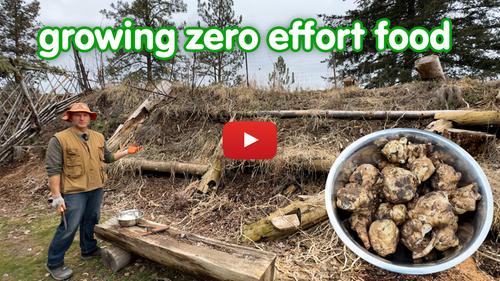
paul wheaton wrote:We have a giant thread about sunchokes https://permies.com/t/sunchokes
And then samantha shared this excellent video
Life doesn't always follow the plan.
No, I'm not all-right - I'm half left!


 7
7
Sandy Cromwell wrote:Any chance there is actual information? I truly hate these AI videos, and seriously doubt the validity of the 'information' contained in them.
How Permies works: https://permies.com/wiki/34193/permies-works-links-threads
My projects on Skye: The tree field, Growing and landracing, perennial polycultures, "Don't dream it - be it! "
12
Sandy Cromwell wrote:Any chance there is actual information? I truly hate these AI videos, and seriously doubt the validity of the 'information' contained in them.
How permies.com works
What is a Mother Tree ?


 8
8
--
"Whitewashed Hope: A Message from 10+ Indigenous Leaders and Organizations"
https://www.culturalsurvival.org/news/whitewashed-hope-message-10-indigenous-leaders-and-organizations
8
Ac Baker wrote:Is there a list of climate zones with suggested staple perennial plants somewhere?
How Permies works: https://permies.com/wiki/34193/permies-works-links-threads
My projects on Skye: The tree field, Growing and landracing, perennial polycultures, "Don't dream it - be it! "
3
--
"Whitewashed Hope: A Message from 10+ Indigenous Leaders and Organizations"
https://www.culturalsurvival.org/news/whitewashed-hope-message-10-indigenous-leaders-and-organizations
3
Ac Baker wrote:Thank you. PFAF.org is definitely a go-to mine of useful information.
ETA: Being in central England, we've been sort-of equivalent to Zone 8 but not quite. Frost is rarer and very rarely colder than -10 C. These days, our average last frost is around mid-May. Our average first frost is late Oct or Nov. Our summers are now a lot hotter, frequently reaching 30-40 C.
Still, this list of Perennial Vegetables, particularly in my case the section for for Zone 8, is a useful find from that other thread: https://www.epicgardening.com/perennial-vegetables/
"Also, just as you want men to do to you, do the same way to them" (Luke 6:31)
3
"Also, just as you want men to do to you, do the same way to them" (Luke 6:31)
8
Ac Baker wrote:Still, this list of Perennial Vegetables, particularly in my case the section for for Zone 8, is a useful find from that other thread: https://www.epicgardening.com/perennial-vegetables/
I don't think they've proof read their AI script very well.This is a smaller vegetable, with plants reaching only four to six inches tall.
How Permies works: https://permies.com/wiki/34193/permies-works-links-threads
My projects on Skye: The tree field, Growing and landracing, perennial polycultures, "Don't dream it - be it! "
2
--
"Whitewashed Hope: A Message from 10+ Indigenous Leaders and Organizations"
https://www.culturalsurvival.org/news/whitewashed-hope-message-10-indigenous-leaders-and-organizations
5
Ac Baker wrote:Oh, that's very disappointing.
I'd thought they meant perpetual spinach, which the RHS calls Beta vulgaris subsp. cicla var. cicla
https://www.rhsplants.co.uk/plants/_/perpetual-spinach/classid.2000014666/
How Permies works: https://permies.com/wiki/34193/permies-works-links-threads
My projects on Skye: The tree field, Growing and landracing, perennial polycultures, "Don't dream it - be it! "
4
 3
3
Andrés Bernal wrote:
"Also, just as you want men to do to you, do the same way to them" (Luke 6:31)


 3
3
Inge Leonora-den Ouden wrote:I can not find the 'SuburbanBiologist' this video refers to. I don't see a link.

- Tim's Homestead Journal - Purchase a copy of Building a Better World in Your Backyard - Purchase 6 Decks of Permaculture Cards -
- Purchase 12x Decks of Permaculture Cards - Purchase a copy of the SKIP Book - Purchase 12x copies of Building a Better World in your Backyard


 4
4
 4
4
 8
5
8
5
Joshua Streamland wrote:Hello and thank you for this beautiful page....
"Also, just as you want men to do to you, do the same way to them" (Luke 6:31)
3
Joshua Streamland wrote:. If you would let them do what they want they will come back the next year by themselves, and if you harvest them, they have lasted longer than any other tomato species I’ve ever grown.
Invasive plants are Earth's way of insisting we notice her medicines. Stephen Herrod Buhner
Everyone learns what works by learning what doesn't work. Stephen Herrod Buhner
9
3
Visit Redhawk's soil series: https://permies.com/wiki/redhawk-soil
How permies.com works: https://permies.com/wiki/34193/permies-works-links-threads
 8
8
Jim Sayers wrote:...
Something that continues to come back year after year self sown is ground cherries. I planted purple variety about 6 years ago and every year I have plenty come up and fruit. They are just now getting their papery husk fruits. We have made small hand pies with them. It’s an odd little savory tomato like fruit that needs sugar if going for dessert use.
...
"Also, just as you want men to do to you, do the same way to them" (Luke 6:31)
"Good tea. Nice house." -- Lt. Worf, TNG
1

|
permaculture is giving a gift to your future self. After reading this tiny ad:
Solar Dehydrator Plans - Combo Package download
https://solar-food-dehydrator.com
|