Joseph Lofthouse wrote:This year, we grow the seed as sibling groups (seed from the same parent). This allows us to notice whether a variety grows looking like a clone (selfing), or whether every sibling looks unique (self-incompatible). We intend to save seeds this year only from the lines showing high diversity between siblings.
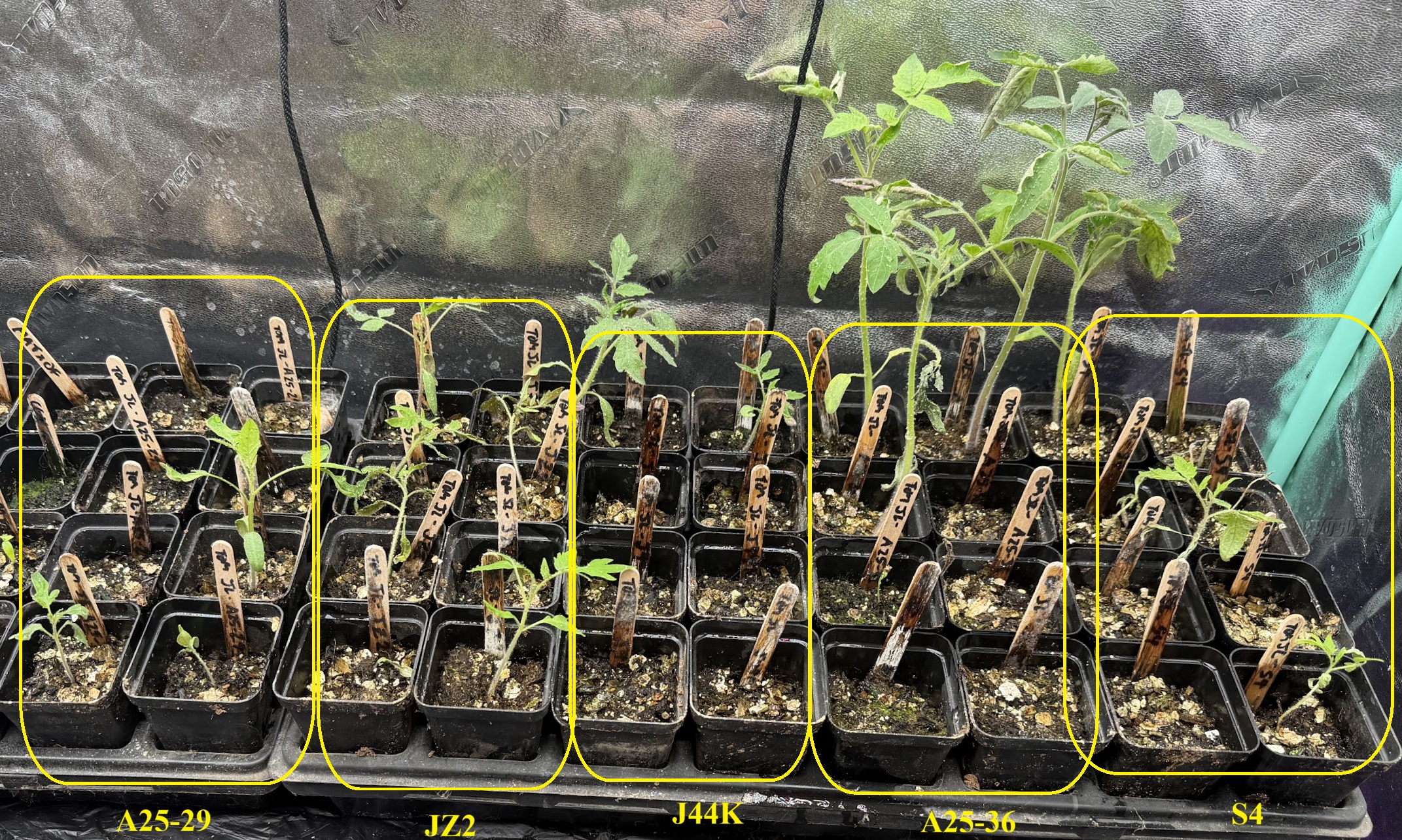
Joseph, I wanted to check in with a germination update for my five families. I have an infestation of tiny white bugs which might be making germination worse than usual, but the image below is what I have.
Is poor germination part of what you're looking to see or should I attempt to late-start seeds (I have a lot left after planting eight of each packet) for those that have been lost, to be more sure of getting six into the field?
Thanks for the grow report. I sent you farmer favorites from last year. Your germination rates roughly match what other growers report. [Lesson for next year—test germination before sharing].
Use your best judgment on whether to replant. I'd love if you did.
In 1974, plant breeder Donald W. Denna at Colorado State University was working with crosses between wild Solanum peruvianum and domestic tomatoes.
Denna died unexpectedly the following year, at only 44 years old. His breeding work ended, but some of his seeds survived.
As the story came to me, the seeds spent decades forgotten in warehouse storage before someone rescued them and passed them along through the seed-saving community. Eventually, many hundreds of them reached me.
I have previously tried planting them with miracle rescue techniques. None germinated. This year I planted the last of the 1974 F₂ seed without any special care other than hydrating them gently. Two germinated.
Both are now producing fruit.
I don't know how much of the story of their fifty-two-year journey I can document. What I can document is Donald Denna's work. He studied S. peruvianum, self-incompatibility, and pollinator attraction, and proposed transferring those traits into domestic tomatoes. His published work sounds remarkably familiar to some of the tomato breeding I've been doing half a century later.
I rarely care whether an individual plant lives or dies. Populations matter more to me. But I wanted these two to reproduce.
Apparently they did.
Denna studied S. peruvianum, self-incompatibility, and pollinator attraction, and proposed transferring those traits into domestic tomatoes. Half a century later, I find myself exploring remarkably similar territory.
I rarely care whether an individual plant lives or dies. Populations matter more to me. But I wanted these two to reproduce.
They did.
Thank you, Donald Denna. I'll do what I can to keep the genetics moving.
Also today, because of proximity and abundant pollen, I pollinated some of these flowers with Solanum pennellii pollen.
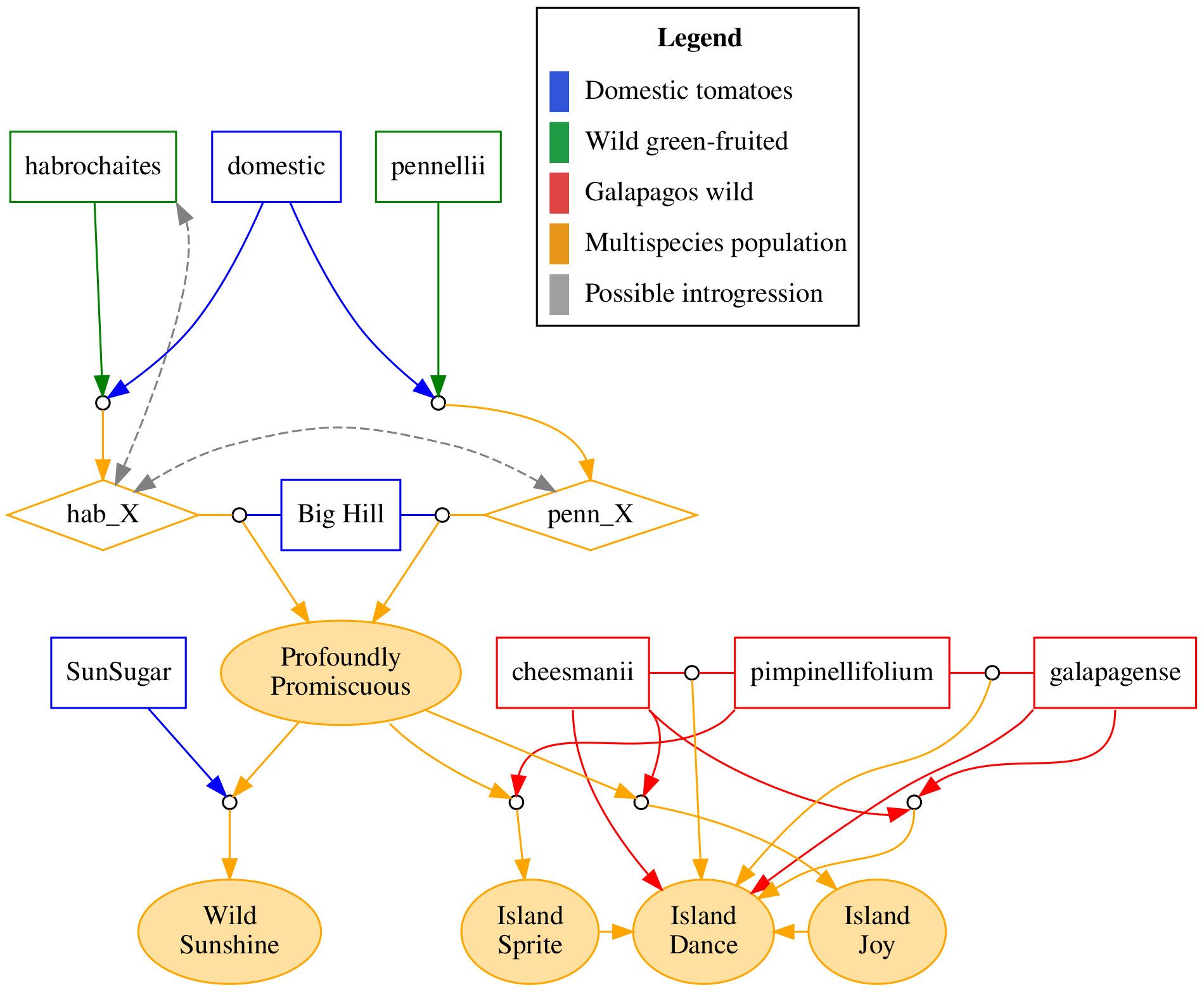
My tomato breeding focuses on bringing together genetics from multiple wild and domesticated tomato species, then letting the bees do much of the crossing. I encourage the plants to cross freely, mingle their genetics, and adapt to local growing conditions.
Rather than developing uniform, inbred varieties, I favor genetically diverse populations that continue evolving through promiscuous pollination and natural selection. Some of these populations continue exchanging pollen with one another, so their genealogies overlap. I expect future generations to keep changing as the bees bring together new combinations of genes.
This genealogy shows the ancestry of four new tomato varieties that I'm sending to Experimental Farm Network this fall.







-A.png)


 4
4




![[Thumbnail for donald-denna-sharp.jpg]](/t/54641/a/295236/donald-denna-sharp.jpg "Filename: donald-denna-sharp.jpg
Description:")