

• Post Reply Bookmark Topic Watch Topic
  • New Topic
permaculture forums growies critters building homesteading energy monies kitchen purity ungarbage community wilderness fiber arts art permaculture artisans regional education skip experiences global resources cider press projects digital market permies.com pie forums private forums all forums
this forum made possible by our volunteer staff, including ...
master stewards:
  • Carla Burke
  • Nancy Reading
  • r ransom
  • John F Dean
  • paul wheaton
  • Jay Angler
stewards:
  • Timothy Norton
  • Pearl Sutton
  • Tereza Okava
master gardeners:
  • Christopher Weeks
  • M Ljin
gardeners:
  • Jeremy VanGelder
  • Matt McSpadden
  • thomas rubino

Home garden in Japan

 
pioneer
Posts: 288
Location: Nikko, Japan Zone 7a-b 776 m or 2,517 ft
72
3
cat home care cooking food preservation medical herbs writing
  • Likes 3
  • Mark post as helpful
  • send pies
    Number of slices to send:
    Optional 'thank-you' note:
  • Quote
  • Report post to moderator
https://permies.com/t/9184/Bats-effective-insect-control  Consider also bats.  If I can invite them into the area (not my home) they will protect the local environment.
 
gardener
Posts: 1877
Location: Japan, zone 9a/b, annual rainfall 2550mm, avg temp 1.5-32 C
968
2
kids home care trees cooking bike woodworking ungarbage
  • Likes 1
  • Mark post as helpful
  • send pies
    Number of slices to send:
    Optional 'thank-you' note:
  • Quote
  • Report post to moderator

Amy Arnett wrote:Could be a momiji maple. Once the leaves fill out, it will be easier to tell...


Got it today! It's shirakashi or what the Japanese call White Oak, though not the same species as the western white oak.
 
L. Johnson
gardener
Posts: 1877
Location: Japan, zone 9a/b, annual rainfall 2550mm, avg temp 1.5-32 C
968
2
kids home care trees cooking bike woodworking ungarbage
  • Likes 3
  • Mark post as helpful
  • send pies
    Number of slices to send:
    Optional 'thank-you' note:
  • Quote
  • Report post to moderator
Some minor updates.

I've been slowly collecting herbs to keep a diverse herb garden. Some are purchased, some sowed, some propagated. The sage and thyme have been blossoming lately.

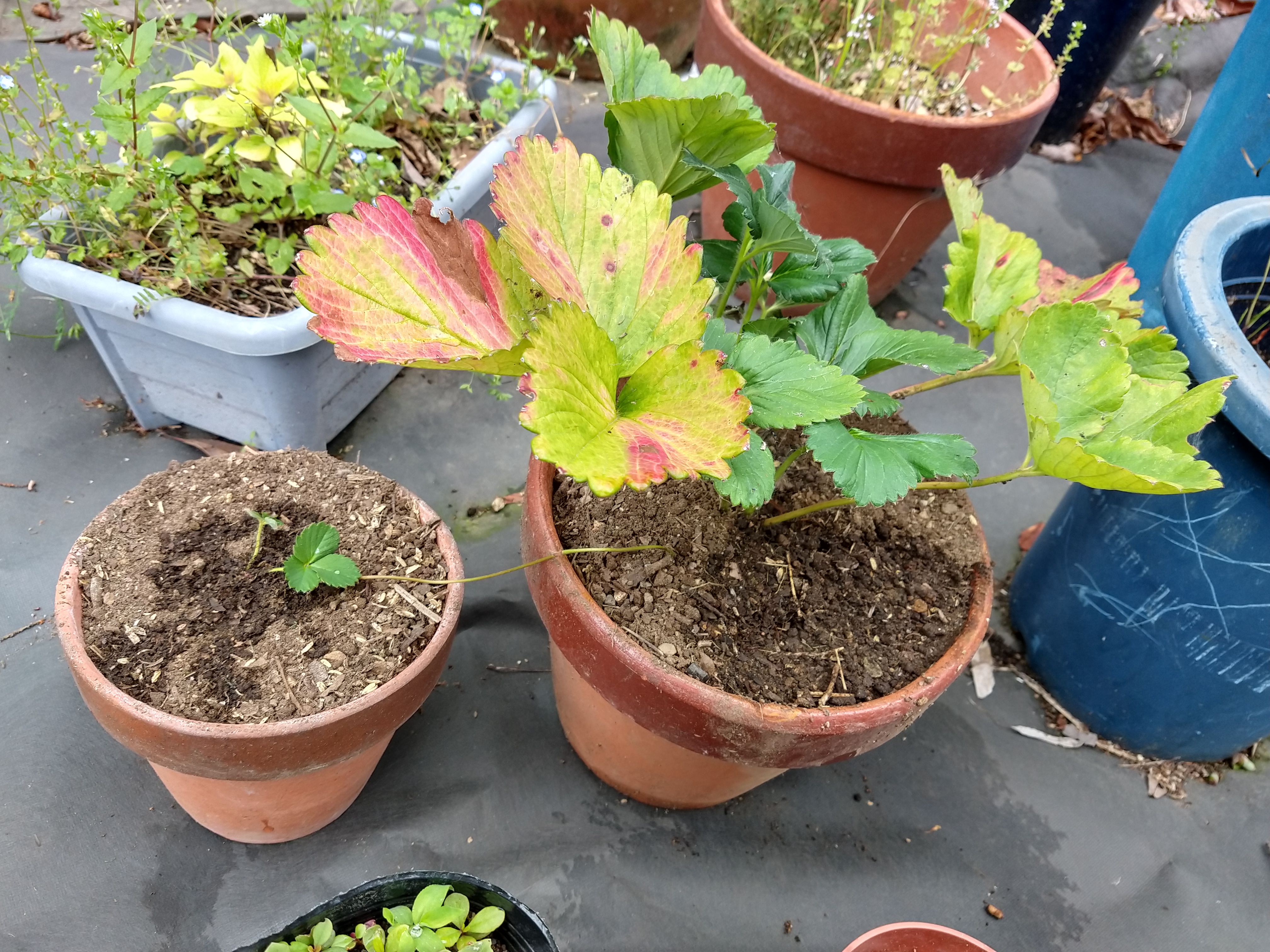
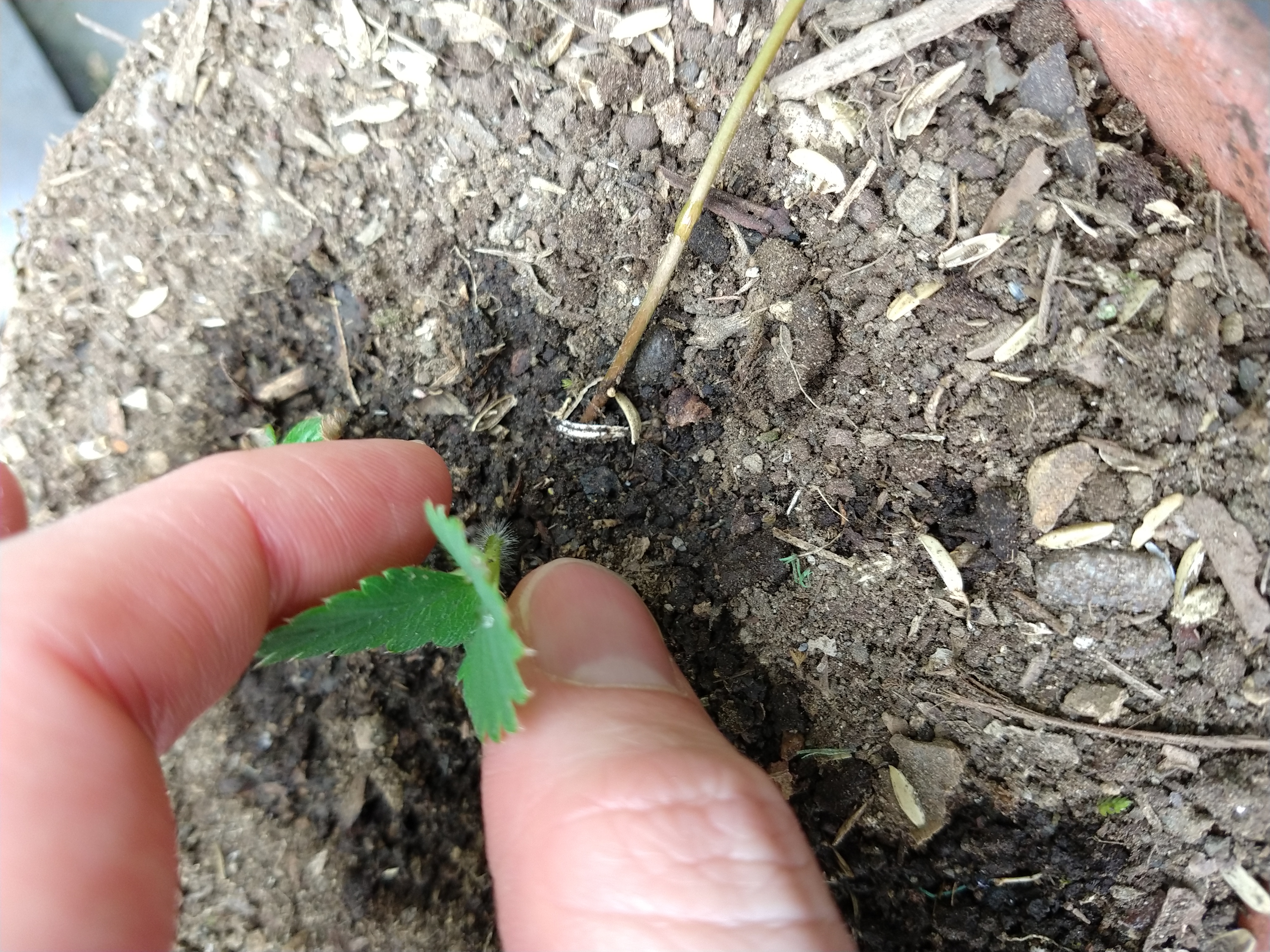
I bought a strawberry plant to slowly try to propagate into a strawberry patch. I tried staking down a runner with a twist tie. I'm interested to see if it works.

My blueberry plants are meager producers right now, but they're all alive for now... I was throwing my old coffee grounds in as mulch, but I think I'm going to stop doing that and just add them to the compost as I used to.

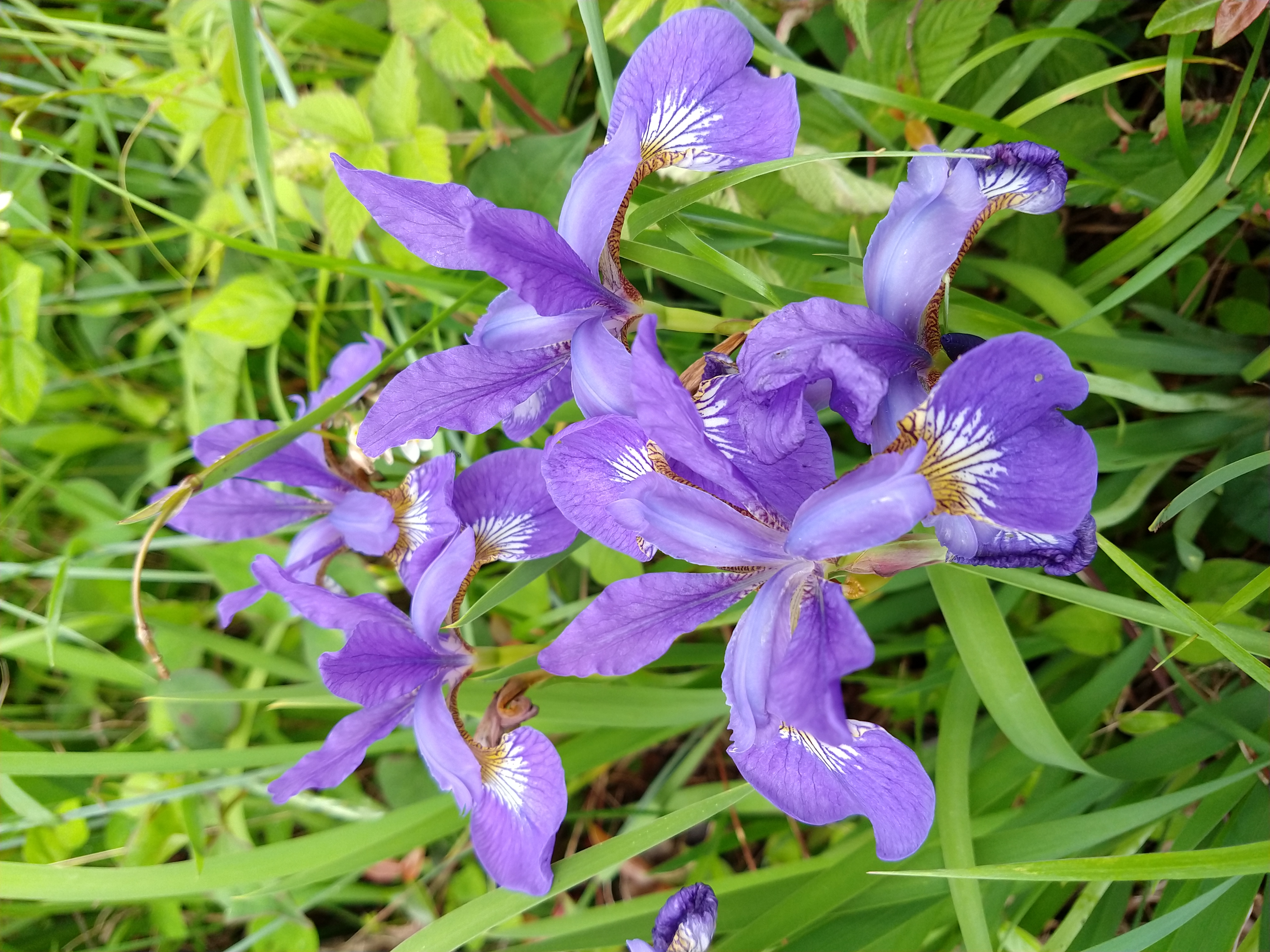
This year I put down some old landscaping cloth that I discovered lying around in rolls. I've decided to leave most of the rest of the non vegetable garden to nature and see what happens. I will still have to cut down some vines and prune some trees but it has already given me a few rewards... These irises were a surprise discovery, and this appears to be some kind of wild strawberry.
20210515_115936-COLLAGE.jpg
Herbs
Herbs
IMG_20210515_113843586_HDR.jpg
strawberry runner
strawberry runner
IMG_20210515_113852409.jpg
propagating strawberries
IMG_20210515_114638316.jpg
blueberry plant
blueberry plant
IMG_20210515_114824730.jpg
(siberian?) irises
(siberian?) irises
IMG_20210515_113915088.jpg
wild strawberries
wild strawberries
 
Barbara Manning
pioneer
Posts: 288
Location: Nikko, Japan Zone 7a-b 776 m or 2,517 ft
72
3
cat home care cooking food preservation medical herbs writing
  • Likes 1
  • Mark post as helpful
  • send pies
    Number of slices to send:
    Optional 'thank-you' note:
  • Quote
  • Report post to moderator
Thanks for the update. It's inspiring.
 
L. Johnson
gardener
Posts: 1877
Location: Japan, zone 9a/b, annual rainfall 2550mm, avg temp 1.5-32 C
968
2
kids home care trees cooking bike woodworking ungarbage
  • Likes 2
  • Mark post as helpful
  • send pies
    Number of slices to send:
    Optional 'thank-you' note:
  • Quote
  • Report post to moderator
It's been a while since I posted, just a general update covering a few things that are on my mind with respect to the garden.

This time of year is hard for me. With a climate similar to something like South Carolina or even Georgia in the USA it's much warmer and more humid than what I grew up in in the foothills of Appalachian Virginia. It seems like I have to force myself to get out there, lest the powerful force of nature that is wild plant life take over completely.

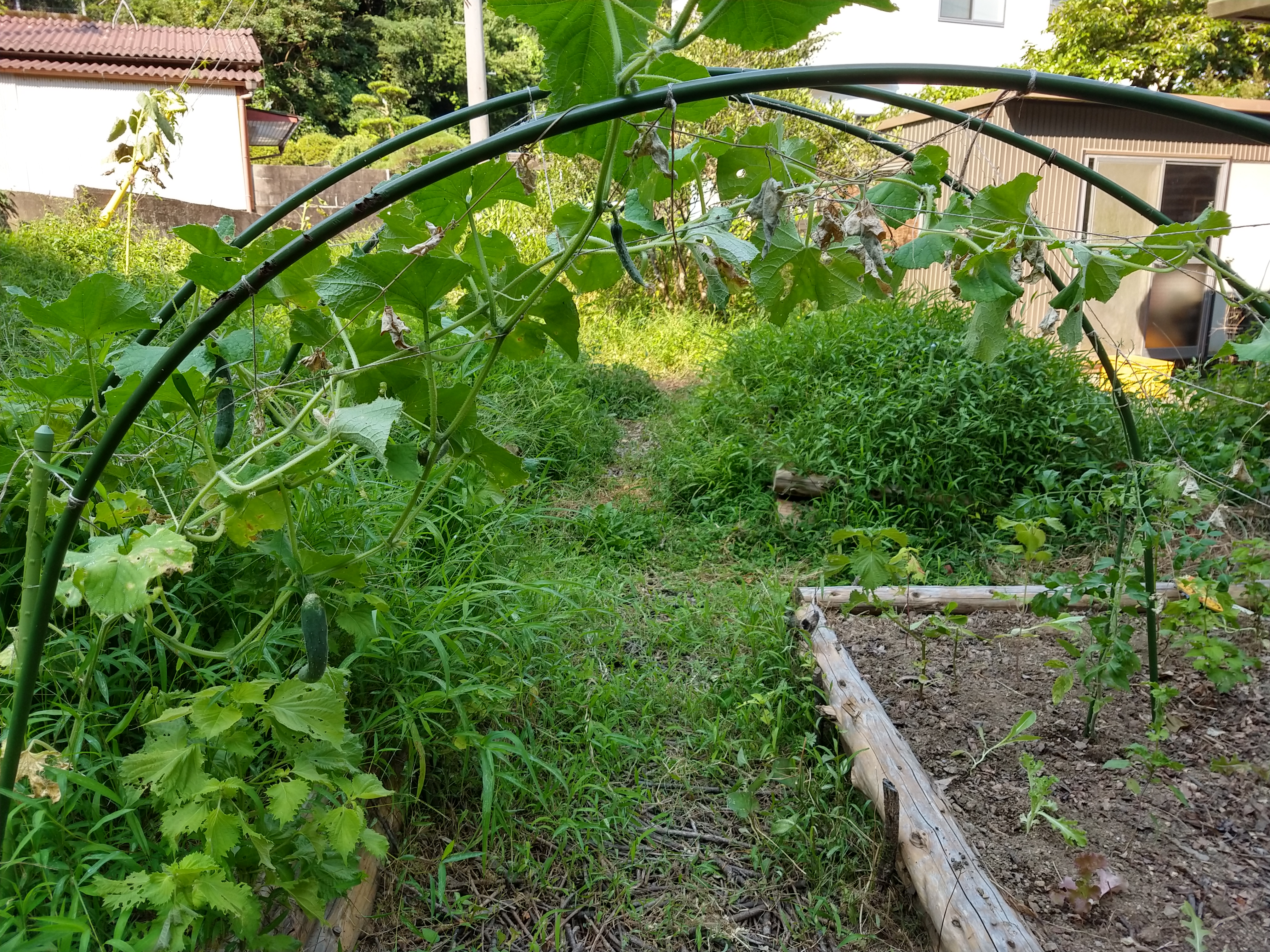
I seem to have lost most of the transplants that I bought to weed and pest pressure (i.e. neglect). One cucumber seems to have survived and is fruiting now.

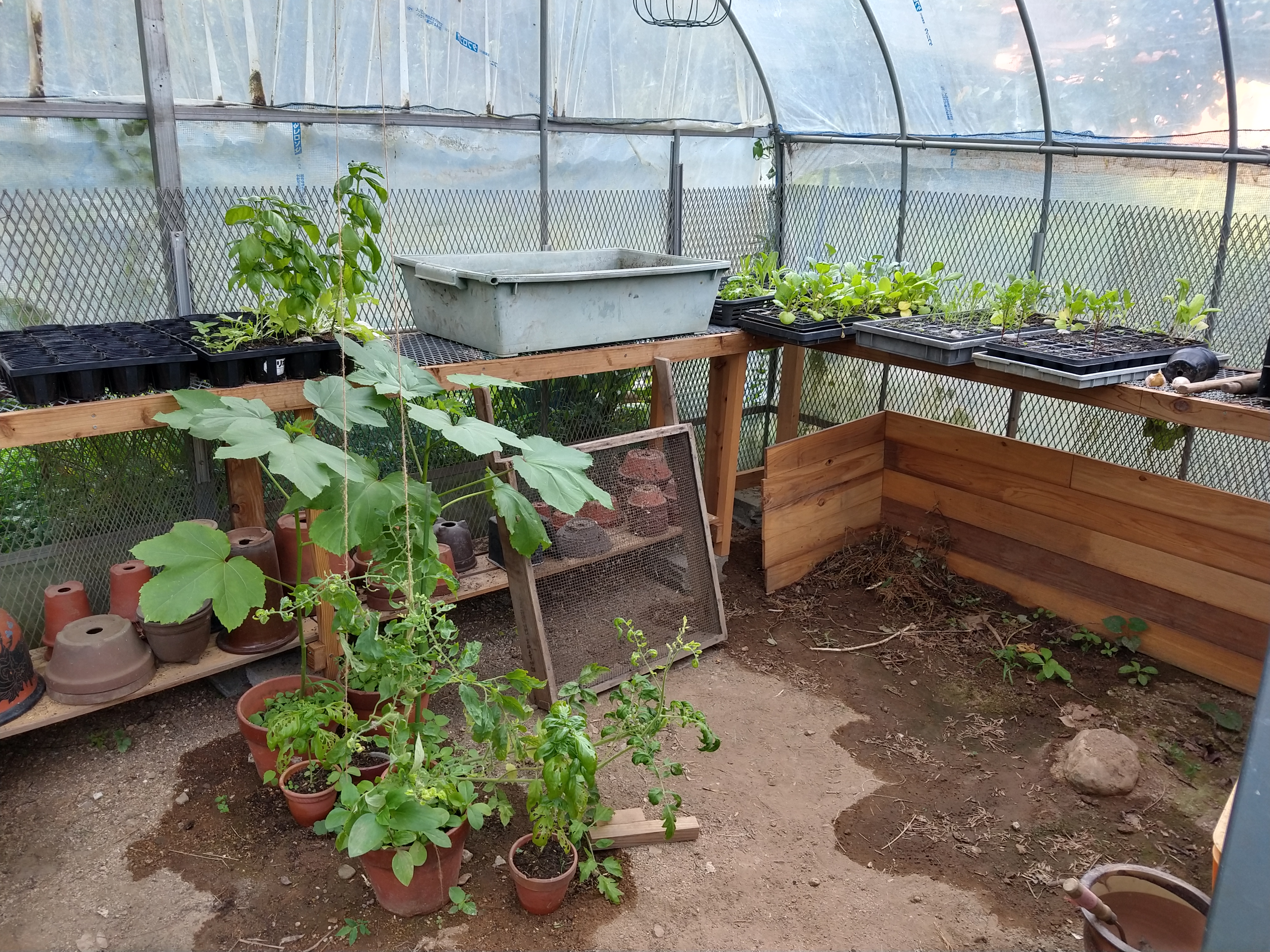
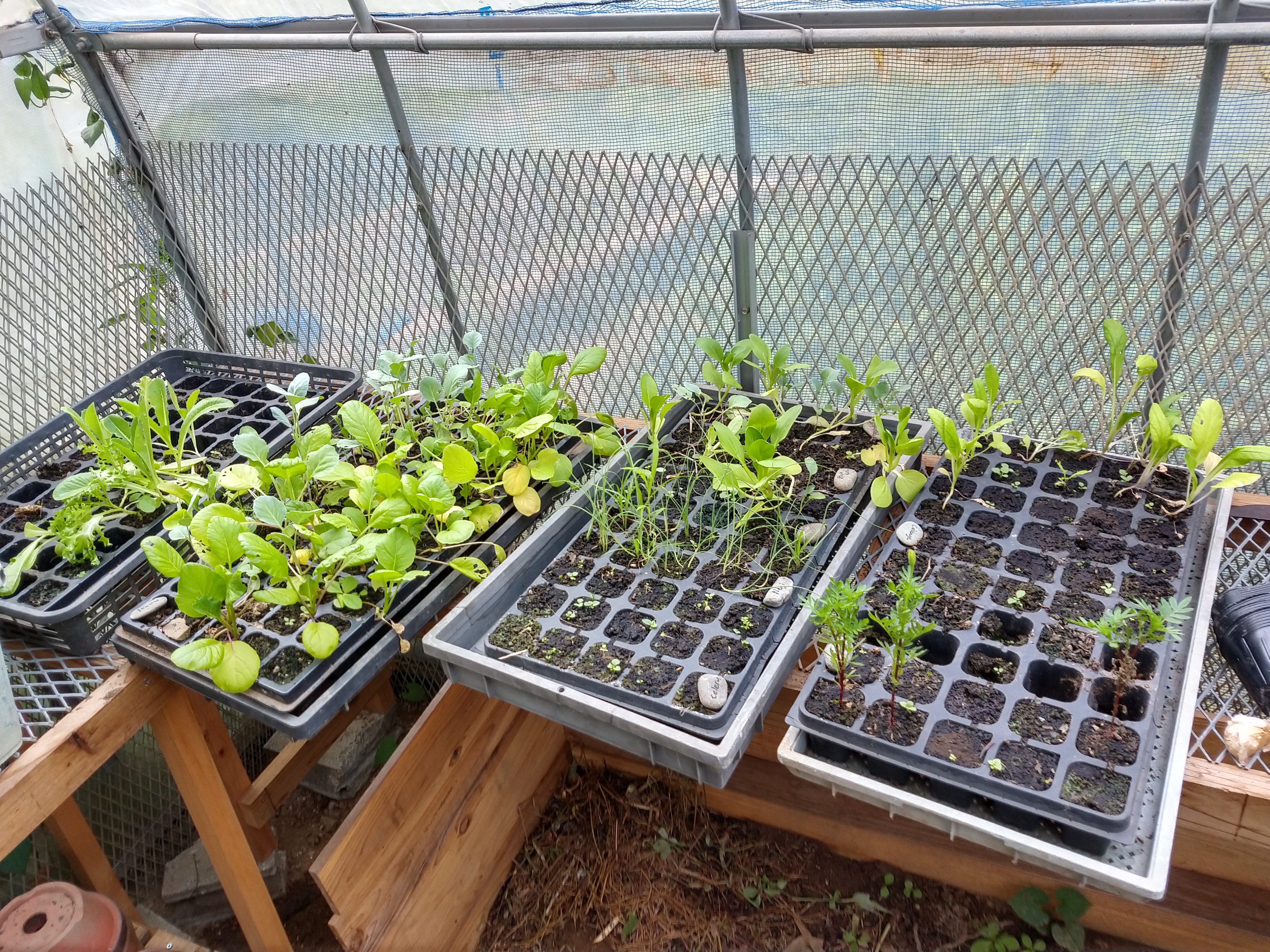
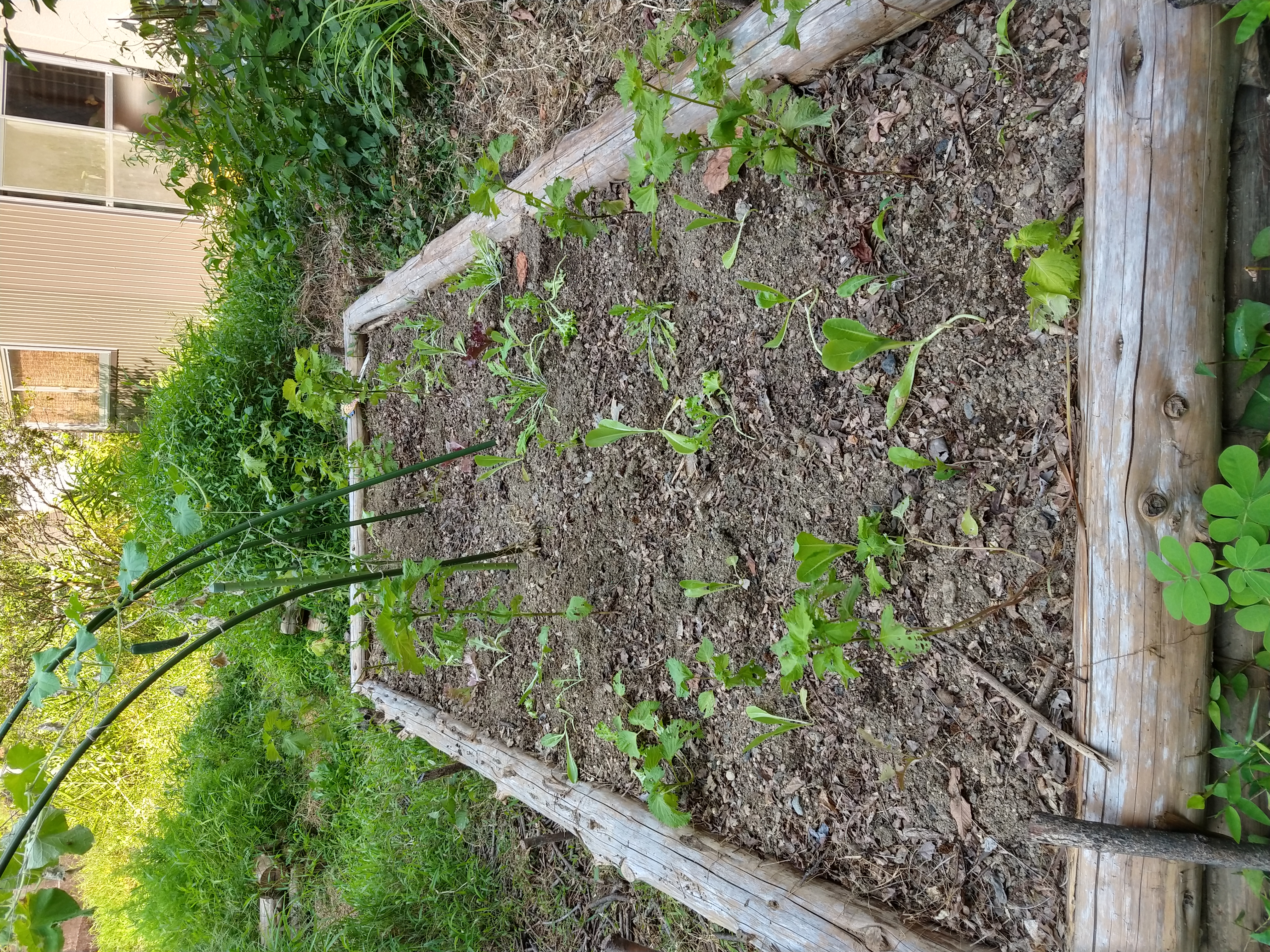
The survivors of my neglect from the seeds that I started in my greenhouse a couple months ago have begun going out into one raised bed. I'm mixing a variety of salad lettuce, mizuna, arugula, and volunteer green shiso. I also planted out one tomato plant to borrow the arch support I intended for another cucumber. They need watering once or twice a day in this heat (33C and up), or they start to wilt and suffer. The direct sown lettuce I did last year was much more deeply rooted and didn't care as much about water... but I think I was more active with watering then anyway.

The chayote vines seem to have downy mildew and are hurting badly. That's a first since I've been here, and I wonder if it's just the climate this year or if I really need to catch up on the pruning to get more airflow into the garden.

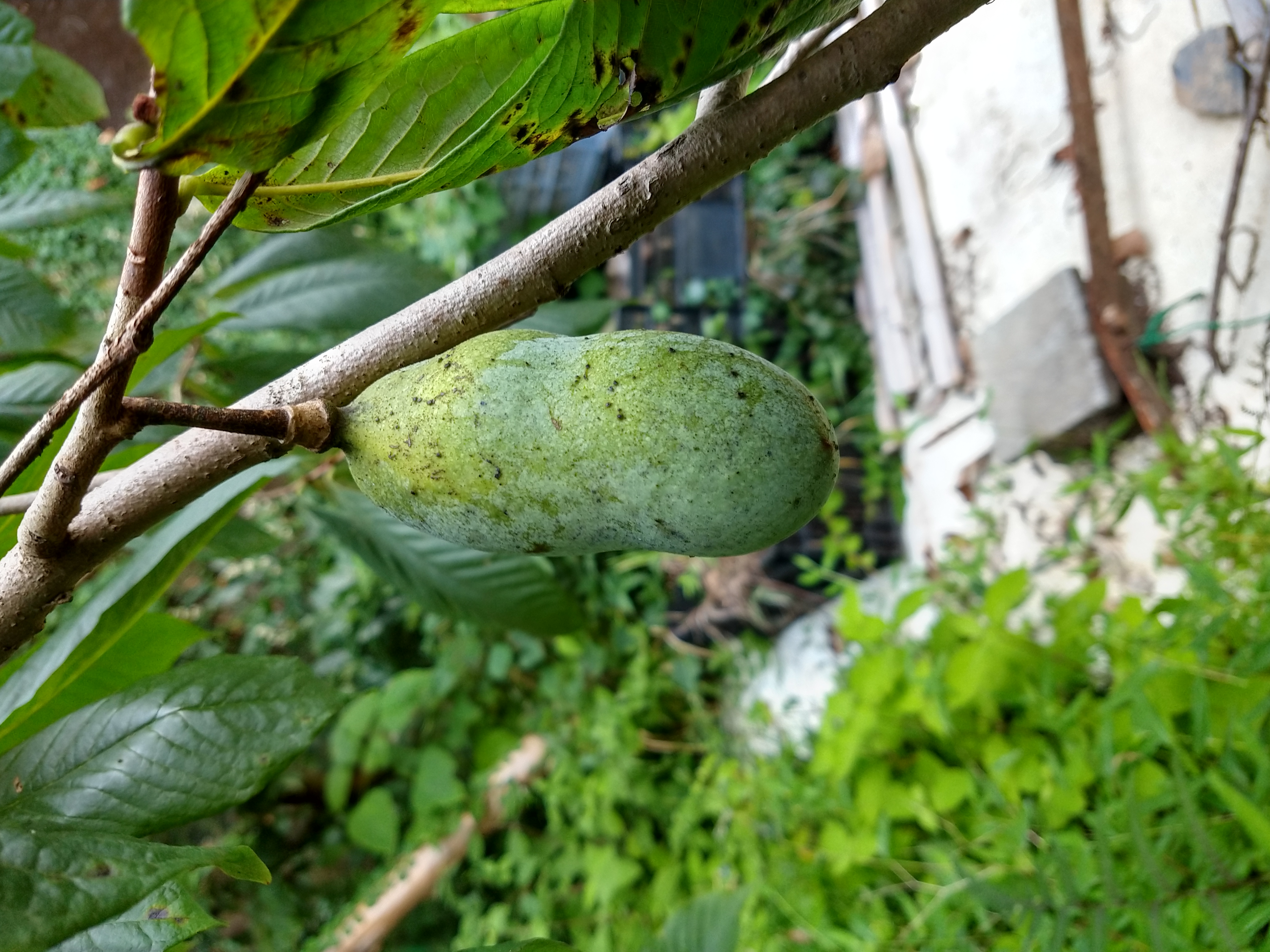
I have a few more pawpaw fruit this year than last, but still less than 10 I think. They're not really a favorite for any of us, so I don't mind the low yield.

Our grape vine has recovered nicely, but has a bit of black rot knocking off fruit here and there. Steve Thorn suggested I handpick the rotten fruit and dispose of them. Again, they suffer for my neglect... though I hope I'll be able to manage that better next year.

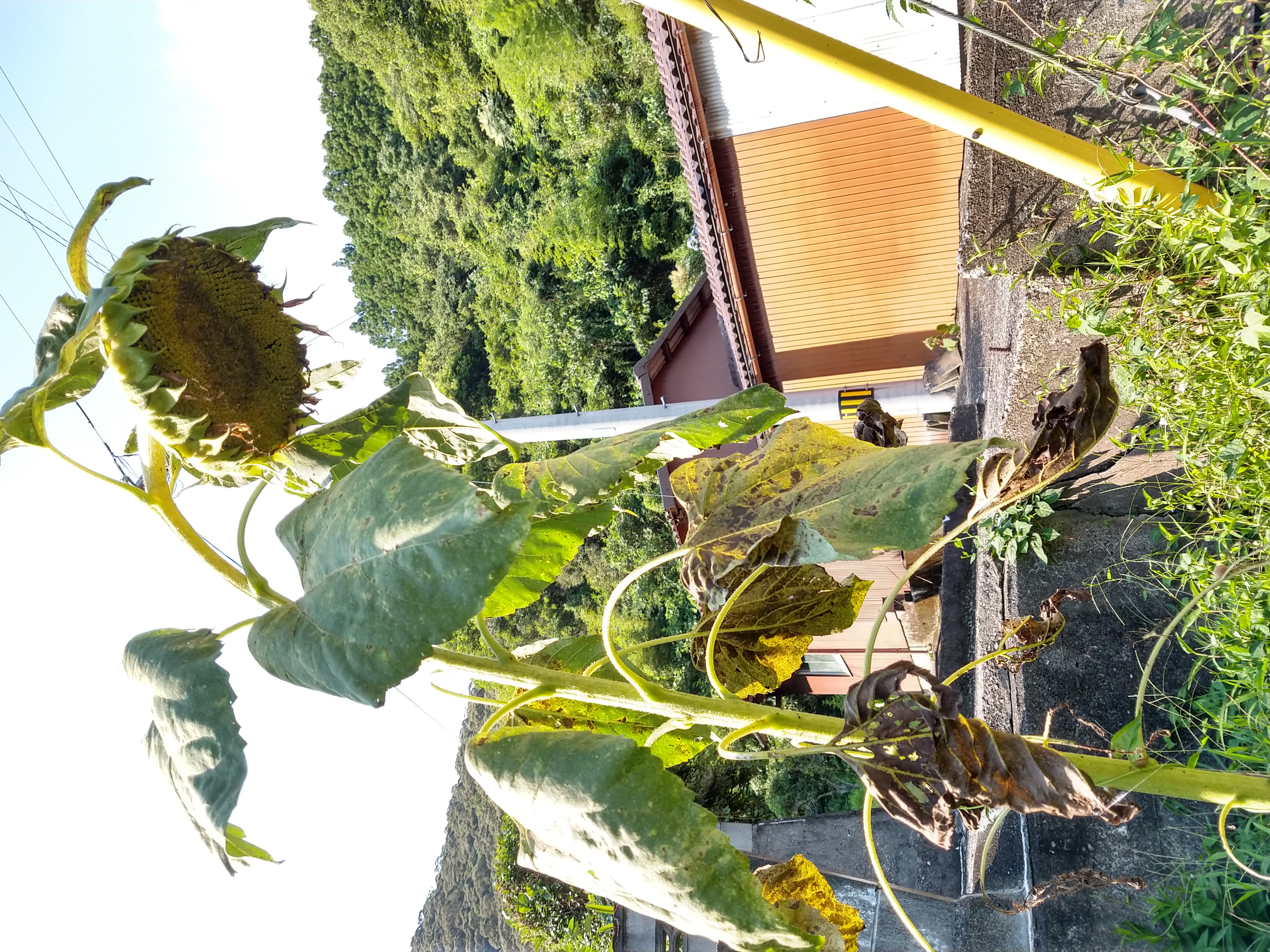
A couple sunflowers I forgot I planted grew nicely. I'm eagerly waiting for the seed head to finish maturing.

A paper wasp nest I'd been watching has a bunch of wasps flittering about it now, hunting in the garden for caterpillars. I catch sight of mantises and geckos eating various bugs here and there too. The ecosystem seems to be thriving well enough. I just need to find room for food crops to grow alongside all the bountiful green nature...

Mosquitoes are no longer a major invader in the house. We discovered their primary entry point was the kitchen ventilation fan, which we netted over and stopped the problem. Hurrah! They're still quite a pest outdoors, but I can live with that. They compete with the horseflies for my least favorite pest. I'm not sure what beneficial impact horseflies have on my garden, but they are mean blood suckers, and if you kill one it's buddies all come to see who the enemy is, and attack, relentlessly. Apparently a female can lay hundreds of eggs in a year... joy. I think I might have whacked that many one summer before I gave into the futility of it.

Some pictures attached.


IMG_20210729_152641713.jpg
Even the herb pots are overgrown with weeds!
IMG_20210729_152654199_HDR.jpg
My surviving okra, tomato, and basil plants
IMG_20210729_152701745_HDR.jpg
mostly brassicas
mostly brassicas
IMG_20210729_152727888_HDR.jpg
various salad seedlings planted out
IMG_20210729_152738547_HDR.jpg
surviving cucumber
surviving cucumber
IMG_20210729_152756176_HDR.jpg
pawpaw
pawpaw
IMG_20210729_152818716_HDR.jpg
sunflower
sunflower
 
L. Johnson
gardener
Posts: 1877
Location: Japan, zone 9a/b, annual rainfall 2550mm, avg temp 1.5-32 C
968
2
kids home care trees cooking bike woodworking ungarbage
  • Likes 1
  • Mark post as helpful
  • send pies
    Number of slices to send:
    Optional 'thank-you' note:
  • Quote
  • Report post to moderator
The weather is finally cooling down - it's only 27 C (80.6 F) this morning and peaking at 31 C  (87.8) with 79% humidity today, almost reasonable! So I could get out into the garden and catch up on a few things.

I scythed down the tall grass and urtica (some kind of nettle) around the garden and rediscovered my thornless blackberries. I pulled a bunch of bindweed where I could find it. I dropped a lot of old pruned tree branches and fully dried grasses and plants that had been sitting for several months and other plants down as mulch to delay the grass from growing too fast around the garden.

I'm still letting some vines be that I suspect may be Japanese mountain yams. If they are they should put out mukago - edible bulbils in the coming months.

This morning I was treated to the beautiful sight of near on a hundred dragonflies flitting over my raised beds - I'm hoping they were feasting on some pesties, but even if not they were a sight to see!

I enjoy seeing so many different creatures in the garden - spiders, mantises, wasps, grasshoppers, worms, butterflies, caterpillars, grubs, ants, centipedes, and many more I can't even identify. Some are certainly feasting on my vegetables... but others are certainly feasting on those!

Still... most of my plants aren't doing well with the pressure, but some are. I'm hoping to start saving seeds from survivors.

I last posted that the chayote seem to have downy mildew. And while that seems to still be true I believe they just powered through it... There's still some yellowed leaves, but the vines just kept making new ones and growing new tendrils where the diseased ones withered. Today I found the first flowers on it, small little bells. So the squash will be coming soon, despite disease. I'm interested to see if they will be negatively impacted or not. If not... then I'll have new found respect for this beast of a perennial.

I also got a good tip from a market gardener whose garden I often pass on my evening walks. I asked her what she was sowing, and she said chinese cabbage. I told her I'd planted some, but they were already all mostly eaten by bugs. She told me that they will do better planted late. So I'm going to try to plant another round and see if it will hold up any better.

I love talking to farmers and gardeners around the village. They are passionate about vegetables and while many use some pest control, a lot of people here avoid controlled agro-chems in favor of less widely harmful approaches. I often get recommended to use pyroligneous acid (木酢液) which is a popular pest control here, but I don't. Others use garlic or chili water, I don't. I used to squish some of the caterpillars manually. That was the preferred pest control method of my 88 year old next door neighbor/market gardener while she was still active. I might have more greens to eat if I did that... but I honestly don't have the time to get out into the garden that much these days, so I'm just hoping to breed pest resistant plants. And enjoy watching the bugs fight it out instead!

Speaking of bugs fighting it out, if you didn't know - Pokemon was developed by a game designer who wanted to share the rural experience of catching bugs with city kids who didn't have access to nature! Catching bugs is a very popular pastime in rural Japan - most any kid around here will get excited to talk about the ginyama dragonfly or giant stag beetle they caught during the summer.

I managed to harvest about 2 kg of chestnuts from our tree, it didn't produce so many this year and the leaves seem to be hurting from something as well. I still haven't figured out the best way to get the shells off the chestnuts, but I've only tried cooking them three times... so maybe I'll get it soon. The next method I'm going to try is oven-roasting followed by ambient steaming in a basket. If that doesn't work I'll be on the lookout for advice... They taste wonderful but it's a pain to eat a chestnut out of its shell with a spoon... Maybe I should make a chestnut scooping spoon as a future project...
 
L. Johnson
gardener
Posts: 1877
Location: Japan, zone 9a/b, annual rainfall 2550mm, avg temp 1.5-32 C
968
2
kids home care trees cooking bike woodworking ungarbage
  • Likes 3
  • Mark post as helpful
  • send pies
    Number of slices to send:
    Optional 'thank-you' note:
  • Quote
  • Report post to moderator
I have various things on my mind regarding the garden, I want to put them into words, so here we go.

Creating landraces in a small scale home garden
Goal: I want pest-resistant varieties of vegetables that grow well in my garden.

So I want to try to either find those varieties, or create them. I understand that landraces usually need to start with a lot of diversity to include healthy genetics for breeding.

Dilemma 1: Space - Being a small garden, only six raised beds and a few other open spaces and containers, I don't have that much room to experiment. Similarly cycling through dozens of varieties would take many years.

Dilemma 2: Cost - buying so many varieties of seeds of all the different vegetables I want will quickly overwhelm my low-budget for the garden - which is in part supposed to be a money-saving endeavor.

Possible solution: I have three friends and another few acquaintances that also have small gardens. They may be interested in similar projects. Splitting the cost of a wide variety of seeds might be attractive for all of us. Sharing in the project might also encourage us to keep records and find varieties that work for our gardens.

Old seed packets
I am sowing as many of the remaining old seed packets that I inherited that I can. I'm soon to be through with that phase of experimentation. If I can manage to save seeds from some of these packs they may have genes that allowed the seeds to survive for upwards of 15 years! Most of the seeds aren't viable, but a few are popping up. Some seem to have lost their viability only in the past season.

Chop and Drop
I'm having trouble creating as much compost as I want, and most of what I make doesn't get hot enough to kill grass seeds and other durable seeds, so I have ended up re-seeding my raised beds with unwanted plants in abundance. So recently I start shifting to just drying my cuttings in containers and then dropping them pretty thickly in areas where I want to slow down the plant growth. Theoretically it should help to build the soil quality back up too. I'm shifting to just composting as a kitchen waste solution and may start putting some or all of that into a bokashi fertilizer system.

Bokashi
A lot of people have problems with bokashi and it seems that most of the complaints are about commercialization of the process and high input cost. I think that makes sense because it's a Japanese technique that came out of an ecosystem where the main inputs are essentially free. Rice bran is free for the taking here. Rice hulls are often free too. Microorganisms are left in natto packs after you eat your beans in the morning. So if you have some buckets and some time you can basically make bokashi for free here.

That said, I haven't started actually doing it yet. This is one of my goals to help close our family's waste cycle, especially with things I have been to hesitant to throw onto the open compost heap - meat and bones especially.

Removing unwanted volunteers (weeding)
I want to make or improvise a tool I've seen used. It's like a weeding knife that you run through the soil to lift volunteer seedlings roots and then just drop them to let them decompose on the soil in place. I've been flip-flopping between leaving the culled plants on the surface and removing them from the raised beds entirely. I feel like leaving them on the bed should be better for the soil, but I'm also worried about attracting snails and slugs, which I already have way too many of. I guess I have a duck deficiency... but I don't know anyone nearby who keeps ducks, otherwise I'd invite them over for a snack.

Garden Journal
I've been having a hard time choosing or finding the right solution for a journal. I'm still very much a beginner gardener so I haven't fully appreciated what information I should be keeping. I'm beginning to get an idea as to what some of that information is though. For example I now know that to meet or exceed my family's consumption of green peppers we need 4-6 plants producing at one time. For okra, it's about the same. We eat a lot of tomatoes, so I doubt I could grow more than we can eat... because I haven't had much success with tomatoes yet. Salad lettuce, I went from overgrowing to failing to grow enough. I can't grow enough carrots to satisfy our needs either, and I need to do a much better job of timing and succession planting to effectively provide them too. I'm beginning to collect this information now, and I'm still not sure the best way to document it. Spreadsheets seem like the most effective means so I found a decent pre-made google sheet - https://thekingstableofsc.wordpress.com/2017/04/06/free-garden-management-spreadsheets/ Hopefully I can make good use of it.


Barbara Manning
pioneer
Posts: 288
Location: Nikko, Japan Zone 7a-b 776 m or 2,517 ft
72
3
cat home care cooking food preservation medical herbs writing
  • Likes 3
  • Mark post as helpful
  • send pies
    Number of slices to send:
    Optional 'thank-you' note:
  • Quote
  • Report post to moderator

L. Johnson wrote:
Old seed packets
I am sowing as many of the remaining old seed packets that I inherited that I can. I'm soon to be through with that phase of experimentation. If I can manage to save seeds from some of these packs they may have genes that allowed the seeds to survive for upwards of 15 years! Most of the seeds aren't viable, but a few are popping up. Some seem to have lost their viability only in the past season.

Garden Journal
I've been having a hard time choosing or finding the right solution for a journal. I'm still very much a beginner gardener so I haven't fully appreciated what information I should be keeping. I'm beginning to get an idea as to what some of that information is though. For example I now know that to meet or exceed my family's consumption of green peppers we need 4-6 plants producing at one time. For okra, it's about the same. We eat a lot of tomatoes, so I doubt I could grow more than we can eat... because I haven't had much success with tomatoes yet. Salad lettuce, I went from overgrowing to failing to grow enough. I can't grow enough carrots to satisfy our needs either, and I need to do a much better job of timing and succession planting to effectively provide them too. I'm beginning to collect this information now, and I'm still not sure the best way to document it. Spreadsheets seem like the most effective means so I found a decent pre-made google sheet - https://thekingstableofsc.wordpress.com/2017/04/06/free-garden-management-spreadsheets/ Hopefully I can make good use of it.


Re*Old seed packs   I've had some success with wetting an old, clean cloth or paper towel, putting the seeds on the surface and then placing the very dame cloth or paper towel  in a plastic baggie.  Let it sit in a warm sunny place for a few days, checking it daily if not twice a day. I've had seeds that are years old germinate that way.

Re: Journaling.  Forget finding the right solution.  Just write. Write about what you think, what's happening, the weather, how you feel about the garden.  Anything that comes to mind.  Over time and probably over the seasons you'll come to realize what is important and what is fun to document.  Just start writing about the garden, double space what you write so it's easier to edit later.  Good Luck!
 
What a show! What atmosphere! What fun! What a tiny ad!
Back the BEL - Invest in Permaculture
https://permies.com/w/bel-fundraiser
reply
    Bookmark Topic Watch Topic
  • New Topic