• Post Reply Bookmark Topic Watch Topic
  • New Topic
permaculture forums growies critters building homesteading energy monies kitchen purity ungarbage community wilderness fiber arts art permaculture artisans regional education skip experiences global resources cider press projects digital market permies.com pie forums private forums all forums
this forum made possible by our volunteer staff, including ...
master stewards:
  • Carla Burke
  • John F Dean
  • r ransom
  • Nancy Reading
  • Timothy Norton
  • Jay Angler
stewards:
  • paul wheaton
  • Pearl Sutton
  • Eric Hanson
master gardeners:
  • Christopher Weeks
  • M Ljin
gardeners:
  • thomas rubino
  • Megan Palmer
  • Benjamin Dinkel

Black nightshade

 
master gardener
Posts: 1490
Location: Zone 5
782
ancestral skills forest garden foraging composting toilet fiber arts bike medical herbs seed writing ungarbage
  • Likes 13
  • Mark post as helpful
  • send pies
    Number of slices to send:
    Optional 'thank-you' note:
  • Quote
  • Report post to moderator
I wanted to share some experiences with Black nightshade (Solanum ptychanthum), a native tomato relative that I love.

They are smaller than tomatoes, only getting around knee high at the greatest, and the berries are huckleberry sized. They are reliably self sowing (after all, they’re native!) and like to spread through compost that hasn’t been heated sufficiently to kill all the seeds. I haven’t had any success germinating them intentionally like tomato seeds, but they always pop up here and there.

The flavor of the black nightshade, I think, is better than that of tomatoes. Some may be surprised, having worked with a black nightshade relative such as garden huckleberry or wonderberry that are rumored to be tasteless. Black nightshade is like a small, black, sweet, highly flavorful tomato—like the best cherry tomatoes—but you can taste in their flavor something a little more reminiscent of potatoes. I attribute this earthier flavor to trace amounts of solanine rather than the brighter-flavored tomatine present in tomatoes.

In regards to “toxins”…. I do not worry about them. If a berry tasted bad (after the frost) I wouldn’t eat it. Alkaloids generally taste bitter or acrid, but a small amount of them is healthy for us and considered medicinal, and they give complexity of flavor to our foods. I believe all medicinal plant foods affect us subtly in ways that let us adapt to our environment and season, and the tiny amounts that give the plant flavor are not going to hurt us. It is like the question of tasteless cucumbers. Some time ago people ate cucumbers that had flavor, then they bred out all of the flavor. Now people are breeding flavorful cucumbers again. But this slight bitterness that gives the cucumbers flavor is likely cucurbitacin, a deadly toxin in large quantities!

In all fairness though, I eat nightshade berries whenever I can find them. They do get bitter after the frost so I don’t eat them at that point, but usually they are tasty and good. I consider eggplants more toxic-tasting than black nightshade and prefer the latter, but you’d have to eat a lot of either to get poisoned.

The more compost they get, clearly, the bigger, sweeter, and better the flavor. They are a good crop for people who can’t get tropical nightshades like eggplant, tomato, and pepper started properly, but would still like to have some nightshade fruit.

I have not tried this because they are not abundant enough (yet) here, and I like the berries too much, but in many countries the greens are an especially important source of food. They are boiled and then eaten as a nourishing staple green vegetable. Independent of humans they grow in river beaches and rich rocky ledges, but in association with humans and ruminants, they grow in pastures, gardens, middens, construction sites, and compost heaps.
 
Steward of piddlers
Posts: 6954
Location: Upstate New York, Zone 5b, 43 inch Avg. Rainfall
3617
monies home care dog fungi trees chicken food preservation cooking building composting homestead
  • Likes 10
  • Mark post as helpful
  • send pies
    Number of slices to send:
    Optional 'thank-you' note:
  • Quote
  • Report post to moderator
A great thread topic!

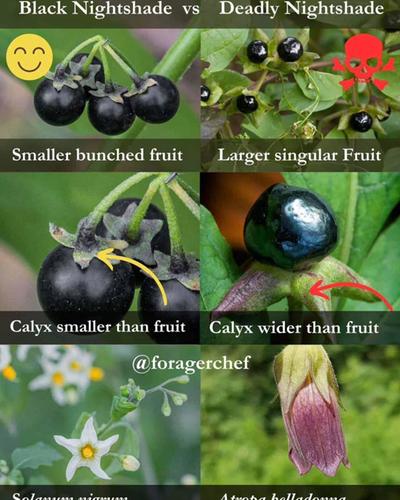
I only have become familiar in my gardening adventures with black nightshade after receiving some free 'volunteers' with some compost I imported on site. I have to admit, the term 'nightshade' invokes a small fear response inside because of all the stories I heard growing up. Thankfully though, it is not that hard to differentiate Black Nightshade from its more commonly feared cousin Deadly Nightshade.

Differences between Black and Deadly Nightshades


I haven't tasted one yet, but this thread gives me some inspiration so thank you.
 
steward
Posts: 18188
Location: USDA Zone 8a
4627
dog hunting food preservation cooking bee greening the desert
  • Likes 10
  • Mark post as helpful
  • send pies
    Number of slices to send:
    Optional 'thank-you' note:
  • Quote
  • Report post to moderator
The term nightshade is grossly overrated.

Growing various nightshade plants can be beneficial.

Nightshades are a rich supply of vitamins, minerals, and powerful antioxidants.

I a glad that you shared your love for this particular pant.
 
gardener
Posts: 3389
Location: Cascades of Oregon
881
  • Likes 8
  • Mark post as helpful
  • send pies
    Number of slices to send:
    Optional 'thank-you' note:
  • Quote
  • Report post to moderator
I'm familiar schwartzenberren, solanum nigrum. I purchased them from Baker Creek a few years ago and they return each year.
 
pollinator
Posts: 1324
Location: Milwaukie Oregon, USA zone 8b
152
  • Likes 6
  • Mark post as helpful
  • send pies
    Number of slices to send:
    Optional 'thank-you' note:
  • Quote
  • Report post to moderator
While I'm not brave enough to try eating the one I have growing in the yard (yet), I have left it to grow because it makes the birds and pollinators happy and isn't hurting anyone by befriending us all outdoors.
 
out to pasture
Posts: 12985
Location: Portugal
4004
goat dog duck forest garden books wofati bee solar rocket stoves greening the desert
  • Likes 4
  • Mark post as helpful
  • send pies
    Number of slices to send:
    Optional 'thank-you' note:
  • Quote
  • Report post to moderator
Black nightshade grows freely as a weed here in Portugal too.

Unfortunately I can't get over the fear factor of being raised to never go near little black nightshade berries - it's too deeply engrained in me and I just can't push through it.
 
I agree. Here's the link: http://stoves2.com
reply
    Bookmark Topic Watch Topic
  • New Topic