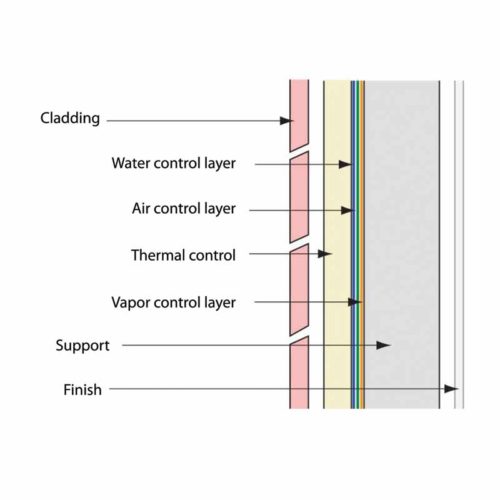
Traditionally for adobe it's assumed for the height to not exceed 10 widths of the wall, because the material is rather weak. Multilevel adobe does exist in Sanaa, but in most cases it's used for single floor construction. If I needed to build higher than one level I would use fired bricks/stones and either heavy timber ceiling/floor or vaulted ceiling/floor (which would require sufficient wall thickness, buttresses or bond beams to resist vault's spreading forces).
SIRE rammed earth allows for quite tall buildings. This one is 51 feet (15 m) tall:
https://sirewall.com/project/brinton-museum/
but it uses concrete slabs for floors so they definitely help to stabilize it. I think that SIRE wall could be the future of building materials, but at the same time I do not like it, because it's better fit for modernistic architecture and it would difficult to add architectural details within rammed wall that can be easily created with block by block (and brick by brick) construction.
For fire resistance adobe or solid fired brick walls (exterior and interior) would be the best. For stones - variation of their crystalline structures could make them behave in less consistent manner. Concrete, concrete blocks or lime block would be less resistant, because cement/lime starts decomposing around 400 C.
Masonry vaulted ceilings would be the best protection, followed by heavy timber roof structure. For timber - hardwood would be more difficult to ignite than softwood.
If timber is used for the roof, it's crucial to protect it by continuous masonry cornice traditionally built in the past from stone and in second half of the millennium from bricks. Not only it protects, but it makes the house looks next level better - by creating geometric border between the walls and the roof surfaces.
The roofing material of choice would be ceramic, followed by stone, concrete tiles and then metal. In case of masonry roof structure it would not matter much, but for timber one, the ceramic/stone tiles would be the best, especially if laid on clay mortar that would provide a lot of mass to absorb heat.
The next defense would be external metal shutters which protect the interior of the house from quickly heating by the sun (in fire prone areas usually extremely intense) but also protect the windows/interior from flying embers and heat radiation (if neighboring house is on fire). They would help immensely and are in regular use in southern Europe, but in US they were reduced to some plastic, non-functional, "decorative" gimmick. Very sad.
Painting the house white also helps to lower house overheating, but would also make it more resistant to infrared ignition. I'm astonished to not see more houses painted white in the sunny West//Southwest.
I call it "passive" fire proof design that will work without any maintenance, electronics, water, etc.
Of course no vegetation close to the house, would be the first and easiest area of improvement.








 4
4