
• Post Reply Bookmark Topic Watch Topic
  • New Topic
permaculture forums growies critters building homesteading energy monies kitchen purity ungarbage community wilderness fiber arts art permaculture artisans regional education skip experiences global resources cider press projects digital market permies.com pie forums private forums all forums
this forum made possible by our volunteer staff, including ...
master stewards:
  • Carla Burke
  • John F Dean
  • Nancy Reading
  • r ransom
  • Jay Angler
  • Timothy Norton
stewards:
  • paul wheaton
  • Pearl Sutton
  • Anne Miller
master gardeners:
  • Christopher Weeks
  • M Ljin
gardeners:
  • Jim Garlits
  • thomas rubino
  • William Bronson

2-wheel tiller advice (europe)

 
Posts: 5
  • Mark post as helpful
  • send pies
    Number of slices to send:
    Optional 'thank-you' note:
  • Quote
  • Report post to moderator
Helllo Permies!

I am in the process of purchasing a 2nd-hand 2-wheel tiller and I am seeking advice.

Where I live (mediterranean island with mostly idiot-but-cunning inhabitants, trying to avoid them by moving up in the mountains) 2nd-hand tillers are quire rare and expensive. I found one in some old man's garage. He has not used it. It's been there for 10 years (he says). The brand name is "S.E.P." and I guess it has a Yanmar engine since it says Yanmar at front. I also guess it is 6HP diesel (it says "6d" at front).

The owner bought it brand new and never used it.

I tried to pull the string-starter (manual rotary string etc.) and it seems to be stuck. It does not move at all. I have not started one of these machines before so I don't know if there is a break somewhere which stops the string of the starter to be pulled. Or if the engine is stuck? Cylinders rusty etc?

If you have any advise on the specific brand or in general about whether such equipment is worth to be salvaged and indeed if the prospects look good.

Many thanks,

b.
 
gardener
Posts: 3231
Location: Central Maine (Zone 5a)
1772
homeschooling kids trees chicken food preservation building woodworking homestead
  • Likes 2
  • Mark post as helpful
  • send pies
    Number of slices to send:
    Optional 'thank-you' note:
  • Quote
  • Report post to moderator
Welcome to Permies!

Unfortunately, I do not have much experience with engines, so I would not know what to be looking for. There are some really handy people around, and they might be able to give some guidance.
 
pollinator
Posts: 788
Location: SE Indiana
464
dog fish trees writing
  • Likes 5
  • Mark post as helpful
  • send pies
    Number of slices to send:
    Optional 'thank-you' note:
  • Quote
  • Report post to moderator
Without any idea of your needs and purposes my own idea would be to just forget the goofy thing and do my gardening without it. Even if they work you still have to maintain them, haul fuel, listen to the roar, and breath the exhaust. Working in the garden is much nicer just listening to the birds. I realize if you are wanting to raise a big garden to sell at market or something you might need machines but just for a single family I don't they are necessary at all and actually in the long run are counterproductive.
 
pollinator
Posts: 2935
Location: RRV of da Nort, USA
915
  • Likes 9
  • Mark post as helpful
  • send pies
    Number of slices to send:
    Optional 'thank-you' note:
  • Quote
  • Report post to moderator
Yanmar diesels are great water-cooled engines and I suspect the 6 hp air-cooled unit have the same reputation.  I would confirm for certain by any means necessary that it is diesel or some other fuel type, just so that you know what you might be getting in fuel costs and availability.  I'm a bit out of my element on gettign the engine unstuck, but most recommendations for internal combustion engines are to get some engine oil into the cylinder and let it sit for a fair amount of time to allow for the oil to penetrate around the piston.  [NOTE!  Our older Yanmar tractor has a 'decompression knob' for reducing cylinder compression temporarily...used for cold starts and odd engine shut-downs.  If your engine has this, it may allow for easier pulling of the cord once the oil has had time to lube the cylinder.] For a gasoline engine, this is as simple as removing the spark plug and adding some oil.  For a diesel, which does not have spark plugs, I'm not sure how to get oil into the combustion chamber without removing the fuel injector, but I suspect someone here or in your area could help with that.  If the unit really is new and unused, it may be a gem due to the quality and durability of Yanmar components.  If you can get it running, it sounds like a great find!

PS:   There is a "Support" tab in the following link which may offer some insights or assistance for you in your decision:  https://www.yanmar.com/global/about/technology/technical_review/2016/0427_2.html
 
A. Yossarian
Posts: 5
  • Likes 4
  • Mark post as helpful
  • send pies
    Number of slices to send:
    Optional 'thank-you' note:
  • Quote
  • Report post to moderator
For John Weiland:

NOTE!  Our older Yanmar tractor has a 'decompression knob' for reducing cylinder compression temporarily.


Spot on! Indeed, I learned that pulling the string without the decompression knob down/pushed/activated meets with a lot of resistance which I wrongly interpreted as "rusty piston" (I am not an engine expert, just a friend warned me about something like this happening occassionally). With the knob pushed (and clutch and safety pushbar both pressed) the engine started quite easily (I can't believe it's been sitting for 10 years, but it looks "scratch-less"). For anyone in the same situation: 1) pull the rope until it meets resistance from engine. Release. 2) push decompression knob down BUT don't hold it down (in my case it has a spring and moves slowly back to decactivated state once you pull the rope). 3) pull the rope. 4) Repeat from (2). Thank you.


For Mark Reed I hear you brother! I did this last year. Just a plow-fork which you push with foot. I did 10m x 10 rows. Unfortunately this year, after last year's manure it's a jungle down there. Still I think that carrying (actually letting it kind of slow-tilling, no wheels just tills) a 100kg machine down the slope-y narrow paths will prove a much bigger challenge. But I live in a place where cheap machinery (of good quality) is rare, so I feel I need to grab this opportunity.

For Matt McSpadden So true!, I am happy I joined.

 
John Weiland
pollinator
Posts: 2935
Location: RRV of da Nort, USA
915
  • Likes 6
  • Mark post as helpful
  • send pies
    Number of slices to send:
    Optional 'thank-you' note:
  • Quote
  • Report post to moderator

A. Yossarian wrote:.......(I can't believe it's been sitting for 10 years, but it looks "scratch-less").


Yeah, our Yannie tractor is just a champ in the same way.....can sit for months or a long year of storage and then fire right up when needed.  Sounds like you may have a winner there, A.Y.  Side note as well if it's diesel--even if diesel prices are on the rise, most small equipment goes a loooooong way on a liter of fuel.   Even with the somewhat high price of diesel in the US, I find that I seldom need to refill the tank since each liter seems to go much farther than the gasoline in my other power instruments.  Good luck!
 
A. Yossarian
Posts: 5
  • Likes 4
  • Mark post as helpful
  • send pies
    Number of slices to send:
    Optional 'thank-you' note:
  • Quote
  • Report post to moderator
John,

Sounds like you may have a winner there


yes. My only worry is that it is cumbersome to transport to the field. I have a pickup track which can fit it in but the plot is like 75m from the road along tiny inclined mountain paths. Sure I can narrow the width of the tiller by removing outermost knifes and can I add rubber tires (at a cost).

I am mentioning these because I saw 2 brand new tillers (or are they cultivators?) from STIHL and Husqvarna. They look more manuverable but I do not know their worth (for about 600m2=6000ft2 of not-too-hard soil, 3,4 times a year). They look like boutique tillers (to me) but some promo videos show them to work fine. E.g. STIHL MH700 and Husqvarna TF338. They are more-or-less the same price plus they have rubber wheels. They are less powerful (at 3.8kW and 5.2kW) and work with petrol.

Videos showcasing the modern tillers (Youtube warning):
STIHL MH600, $650, 4.4kW
STIHL MH700, $900, 5.2kW
Husqvarna TF230, $600,4.5HP
Husqvarna TF338, $900, 4.5HP

p.s. I think I can buy the Yanmar for about $750 (plus manual labour to owner's farm for a day).

If anyone has any experience with these 2 "modern" tillers, please share.

Edit: The Husqvarna models use a belt for transmitting power to the knives axle. The Yanmar/S.E.P. uses a gear. A bit plust for Yanmar I guess.
thanks
 
master steward
Posts: 15645
Location: Pacific Wet Coast
10028
duck books chicken cooking food preservation ungarbage
  • Likes 2
  • Mark post as helpful
  • send pies
    Number of slices to send:
    Optional 'thank-you' note:
  • Quote
  • Report post to moderator
I am no engine expert either, but the bit about oil is key. Over 10 years without use, I expect the oil will have all drained to the lowest point of gravity, and doing what is possible to get it spread around before starting the engine is helpful.

Hubby make us do that with our car as we don't use it often. It's standard transmission, so we turn the key one click, roll the car part way down the hill, which supposedly get the oil pumped around, and then turn the key further and when the engine's spun up, release the clutch.

A friend has diesel engine tillers and he can run them on used veggie oil from fast food places which is a good use for a waste product.
 
John Weiland
pollinator
Posts: 2935
Location: RRV of da Nort, USA
915
  • Likes 4
  • Mark post as helpful
  • send pies
    Number of slices to send:
    Optional 'thank-you' note:
  • Quote
  • Report post to moderator

A. Yossarian wrote:

If anyone has any experience with these 2 "modern" tillers, please share.

Edit: The Husqvarna models use a belt for transmitting power to the knives axle. The Yanmar/S.E.P. uses a gear. A bit plust for Yanmar I guess.
thanks


Is there anyway you can post a photo of the Yanmar tiller that you are looking at possibly purchasing?

From the video links that you provided, it looks as though the Stihl M700 is the only rear-tine tiller of the groud, whereas the others are front-tine tillers.  I've had the opportunity to use various tiller models of the years, in both front- and rear-tine configuration.  While I feel that front tine tillers are fine for already-loosened soil and for small areas where they can maneuver more tightly, rear tine tillers are easier on the body for long tilling runs, are better for breaking up hard, un-cultivated soil, and benefit greatly from the powered drive wheels.  I have a fairly simple tiller quite similar to the Troy-Bilt 'Pony' although slightly larger and heavier in weight.  By adjusting the depth pin height, one can regulate the speed over which you are travelling across the terrain since pushing down on the arms of the tiller promotes deeper penetration of the pin into the soil.  At full stop using this approach, the the wheels and tines will still spin.....by rocking the unit from side to side, you can dig up somewhat difficult hard soil fairly successfully.  I'm not sure how difficult this would be with a front tine tiller as I have not used one enough to have tested the technique.  I know of several owners of small gardens who keep their soil well cultivted throughout the year and simply use the 'Mantis'-style hand-held tillers for bed preparation and weeding, but our situation results in too many periods of hard-pan soil from rain/watering followed by baking heat.  

Jay, I have heard of using waste cooking oil as starter for home biodiesel production, for blending with diesel to reduce cost, and using straight as fuel in engines modified to use it, but I have not heard of using waste oil directly unblended in a diesel engine.  If you find an info source on that I would be quite interested in reading up on this.  Right now, I need to start dealing with ~200 gal of 'heating oil'....#2 grade diesel that we were using a few years back for our home furnace....that has been sitting unused in the tanks for over 2 years now.  Plan will be to use a fuel transfer set up to move some of that through a filter and into portable jugs to mix 1:1 with #1 diesel for the tractors.  Fingers crossed anyway...... ;-)
 
Steward and Man of Many Mushrooms
Posts: 6165
Location: Southern Illinois
1931
transportation cat dog fungi trees building writing rocket stoves woodworking
  • Likes 6
  • Mark post as helpful
  • send pies
    Number of slices to send:
    Optional 'thank-you' note:
  • Quote
  • Report post to moderator
Definitely not a diesel engine expert, but I seem to remember getting access to the cylinder (maybe through decompression valve) and adding just a tiny amount of diesel into the cylinder.  Let it sit.  Maybe tap somewhere on the engine block just to vibrate in a bit of the diesel.

Like others, I suspect that the issue is the cylinder froze from sitting so long.  If you can get the piston to move just a bit—even by introducing some vibrations, maybe you could work the diesel into the cylinder to lubricate The sleeve and piston.

It probably takes a while to work the diesel in, but there is not much to lose.


Eric
 
Jay Angler
master steward
Posts: 15645
Location: Pacific Wet Coast
10028
duck books chicken cooking food preservation ungarbage
  • Likes 5
  • Mark post as helpful
  • send pies
    Number of slices to send:
    Optional 'thank-you' note:
  • Quote
  • Report post to moderator

John Weiland wrote: Jay, I have heard of using waste cooking oil as starter for home biodiesel production, for blending with diesel to reduce cost, and using straight as fuel in engines modified to use it, but I have not heard of using waste oil directly unblended in a diesel engine.  


I know for sure that the waste cooking oil is put through filters, but there is some other process that it goes through before being used as "biodiesel". I understand that this isn't any cheaper than just regular diesel - or at least wasn't before the recent cost increases - but people do so to "help the environment" and stop large quantities of fast food oil from cluttering up our limited landfill space.

I also have been told that in the winter many users cut it with actual diesel because otherwise it thickens or solidifies if it gets too cold.
 
A. Yossarian
Posts: 5
  • Likes 1
  • Mark post as helpful
  • send pies
    Number of slices to send:
    Optional 'thank-you' note:
  • Quote
  • Report post to moderator

John Weiland wrote:
Is there anyway you can post a photo of the Yanmar tiller that you are looking at possibly purchasing?


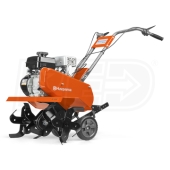
I don't have a photo ot the candidate item but the newer model looks like this. But in my case it has a Yanmar engine, it is diesel and has 2Forward, 1Rev gears.

Essentially, there are no rubber wheels except the iron discs (for guidance?) at both ends of the axle. I could not find in my country any rear-tine tiller models. Even the Stihl MH700 has a front single-wheel but from the videos I can see it is not powered (perhaps I am wrong).

Thank you all for your input!
 
John Weiland
pollinator
Posts: 2935
Location: RRV of da Nort, USA
915
  • Likes 2
  • Mark post as helpful
  • send pies
    Number of slices to send:
    Optional 'thank-you' note:
  • Quote
  • Report post to moderator
A-ha!....this is all coming clearer now. My first clue that I was not envisioning this properly was when you noted that the MH700 did not have drive wheels.  This was confusing to me ..... since I had only looked at the first few minutes of each linked video and clearly noticed rubber wheel for the MH700 attached to the drive axle.  What I was too impatient to see was that this tiller design is meant to remove the wheels when ready to use as a tiller and replace them on the shaft with the tilling tines.  Kind of a cool design in many ways.  

This brings me to a thought based on the video link here:  https://www.youtube.com/watch?v=IpQULFaSM5o     in which a BCS tiller....one of a the 'kings' of the walk-behind tractor world.....is shown with a front mower attachment and a rear 'sulky' which allows the operator to either stand or sit as the power and weight of the machine pulls you along.  So with regard to the design concept shown for the MH700 and possibly for the photo you provided, it appears that you might be able to source some drive wheels that would allow you to remove the tines temporarily. *If* you were able to have a machine with tractor wheels and a sulky, you might be able (depending on the terrain of your walking path) to store the tines below the seat on your sulky and 'ride' the machine down the path to your garden plot.  From there and assuming the exchange of the wheels for the tines is not too laborious, you could do so for the tilling job, and then reverse the process to get back to your transportation rig when finished. It appears that your walking distance is about the length of a football/soccer pitch, yes?  This might be doable if the equipment is up to the task, but much would depend on machine weight and engine power.

Anyway, just a thought.  My impression was that the European market was accustomed to rear-tine tillers like the Ferrari (pictured below) and Lombardini, but it appears the latter now are out-dated....they built small farm implements in earlier days before focusing on engines and then were bought by the American company Kohler engines.  Good luck with your decision!
Ferrari360.jpg
[Thumbnail for Ferrari360.jpg]
 
money grubbing section goes here:
building a better world rather than being angry at bad guys
https://wheaton-labs.com/bootcamp
reply
    Bookmark Topic Watch Topic
  • New Topic