• Post Reply Bookmark Topic Watch Topic
  • New Topic
permaculture forums growies critters building homesteading energy monies kitchen purity ungarbage community wilderness fiber arts art permaculture artisans regional education skip experiences global resources cider press projects digital market permies.com pie forums private forums all forums
this forum made possible by our volunteer staff, including ...
master stewards:
  • Carla Burke
  • Nancy Reading
  • paul wheaton
  • John F Dean
  • r ransom
  • Jay Angler
stewards:
  • Timothy Norton
  • Tereza Okava
  • Pearl Sutton
master gardeners:
  • Christopher Weeks
  • M Ljin
gardeners:
  • Jeremy VanGelder
  • Megan Palmer
  • Thekla McDaniels

C 4 plants

 
gardener
Posts: 3874
Location: Western Slope Colorado.
998
5
goat dog food preservation medical herbs solar greening the desert
  • Likes 14
  • Mark post as helpful
  • send pies
    Number of slices to send:
    Optional 'thank-you' note:
  • Quote
  • Report post to moderator
I have been considering C 4 plants , maybe because we are in another hot spell!


I don’t know a lot about C 4 plants, but I want to, and I think it’s valuable knowledge to have in our tool kits.  And as various regions get more heat, it might be good to know for the people in those regions.

Here’s a brief introduction to C4, or skip to Wikipedia, I have provided a link below.

We all know what photosynthesis is, it’s a really complex cycle completed by green plants utilizing solar energy to drive the reactions.  It removes CO2 from the air, is responsible for all green plants utilizing solar growth, and feeds plants as well as all other living things.

C4 plants provide 23% of primary production, though they are only 3 % of plants

Most plants capture or utilize 3 molecules of CO2 per cycle.  But there are about -8,000 plant species that utilize 4 CO2 per cycle.  Mostly these are heat loving plants, and when the weather gets hot they seem to explode… grow remarkably fast.

There is a weed in my region Kochia scoparia that fits the description, and ifentfied as C4.  Puncture vine- goathead- Tribulis terrestris as well.  And purslane.

Food crops, corn sorghum and sugar cane are also C4.

But what are the other 8000 plants?

It just seems like when we are planting pasture and designing polycultures we could include some of these plants… or maybe already have them.

I’m familiar with orchard grass as a cool season grass.  It grows in the spring and fall, but when it gets hot, it just appears to survive, and doesn’t begin actively growing until things cool off.  Big blue stem grass, on the other hand doesn’t grow much until it gets hot.  So, it seems the two would complement each other in a grazing plan.  Or soil carbon sequestration plan.

Anyway here’s a link for a more thorough definition of C4, a list of C4 plants.
https://en.wikipedia.org/wiki/List_of_C4_plants

 Do you already utilize these powerhouse plants?


master gardener
Posts: 2839
Location: Zone 5
1646
ancestral skills forest garden foraging composting toilet fiber arts bike medical herbs seed writing ungarbage
  • Likes 10
  • Mark post as helpful
  • send pies
    Number of slices to send:
    Optional 'thank-you' note:
  • Quote
  • Report post to moderator
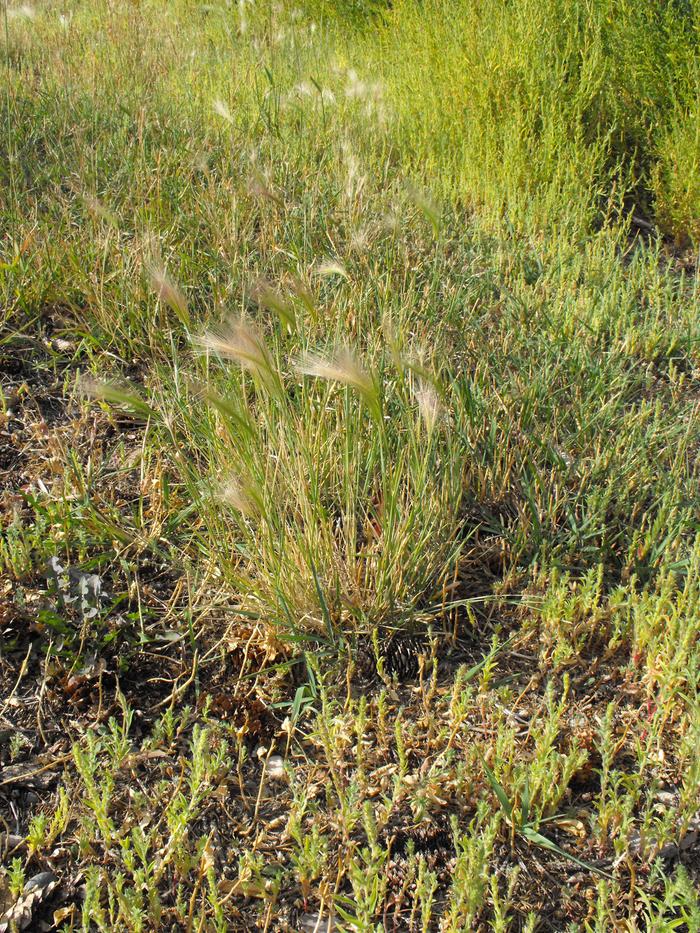
Most warm season grasses are C4, including corn, sorghum, panic grasses including millet…most of the ones that start growing once the danger of frost is passed. This also includes the big prairie grasses like the bluestems, indiangrass, and switchgrass.
 
pollinator
Posts: 1059
Location: Illinois
249
  • Likes 3
  • Mark post as helpful
  • send pies
    Number of slices to send:
    Optional 'thank-you' note:
  • Quote
  • Report post to moderator
I grow a lot of corn...
 
gardener
Posts: 2283
Location: Zone 6b
1490
forest garden fungi books chicken fiber arts ungarbage
  • Likes 5
  • Mark post as helpful
  • send pies
    Number of slices to send:
    Optional 'thank-you' note:
  • Quote
  • Report post to moderator
C4 plants have very high light saturation point so that the threshold is not reached even in full light in the middle of summer. C3 plants have a lower level less than half of that, meaning higher than certain light density, C3 plants can't do more photosynthesis. So it is good practice to interplant C4 and C3 in a polyculture.  Using tall C4 to provide shade for C3 and avoid damage from too much radiation. Cooler season C3 can be planted earlier in the understory,  providing soil cover all the time. In that case it leaves  no gap when C4 crops are harvested and the soil microbes get food source the whole time.

Another thing about C4 is that they can partly substitute sodium for potassium for osmosis control. That makes C4 plants resilient in arid and semi arid regions with high salinity.  Sometimes I give my plants diluted sea salt water, sodium isn't all bad. Of course concentration and timing is the key, be careful if you want to try.
 
Thekla McDaniels
gardener
Posts: 3874
Location: Western Slope Colorado.
998
5
goat dog food preservation medical herbs solar greening the desert
  • Likes 4
  • Mark post as helpful
  • send pies
    Number of slices to send:
    Optional 'thank-you' note:
  • Quote
  • Report post to moderator
Wow, I never heard about light saturation before. It certainly fits.

There’s a “new” trend here, called ag voltaic or some combination of agriculture and photovoltaic:
Solar panels above crop land and pasture.  I guess that explains why some plats do better under the solsr panels.

Lots to think about,
Thanks everyone
 
Posts: 121
Location: West central Minnesota
57
  • Likes 5
  • Mark post as helpful
  • send pies
    Number of slices to send:
    Optional 'thank-you' note:
  • Quote
  • Report post to moderator
Thekla,

"It just seems like when we are planting pasture and designing polycultures we could include some of these plants… or maybe already have them.

I’m familiar with orchard grass as a cool season grass.  It grows in the spring and fall, but when it gets hot, it just appears to survive, and doesn’t begin actively growing until things cool off.  Big blue stem grass, on the other hand doesn’t grow much until it gets hot.  So, it seems the two would complement each other in a grazing plan.  Or soil carbon sequestration plan."

You have this exactly right, C3 and C4 grasses complement each other in a grassland giving one a long grazing season. My grandfather used to call the native, warm season (C4) grasses "summer pasture". They were the go-to during the heat of the summer when the cool season (C3) grasses were taking a break. The warm season, prairie grasses are very deep rooted and can pull up subsoil moisture where the more shallow rooted cool season grasses will quit growing. There is a limit to what the prairie grasses can and will do during a prolonged hot and dry spell like we are having this summer in western, MN. The first instinct of the prairie plants is survival, and they will start dormancy early if needed. I am seeing that here right now. The native plants never go "all in" or they would not still be here. They survived the 1930's, still the hottest and dryest period for a large part of the US.
 
master steward
Posts: 16051
Location: Pacific Wet Coast
10499
duck books chicken cooking food preservation ungarbage
  • Likes 5
  • Mark post as helpful
  • send pies
    Number of slices to send:
    Optional 'thank-you' note:
  • Quote
  • Report post to moderator

Thekla McDaniels wrote: Most plants capture or utilize 3 molecules of CO2 per cycle.  But there are about ~8,000 plant species that utilize 4 CO2 per cycle.  Mostly these are heat loving plants, and when the weather gets hot they seem to explode… grow remarkably fast.


OK, I understand this part. I also know that some plants, like Burdock, can grow huge in my ecosystem, and they also have a good sized tap root, suggesting that like people say about growing Daikon, which also leaves a large tap root (but grows in cooler weather), do we know how much of this carbon just short cycles back into the atmosphere?

The carbon in trees stays stable for a very long time if we don't burn it or rot it (and it's slow to rot!) But many of the Wiki's C4 examples produce lots of greenery that I expect would decompose quite quickly.

It's the old problem with composting. Yes, you can make great compost and your growies will love it, but how much of the carbon just re-forms into CO2 and returns to the atmosphere?

Certainly, I have hope that the C 4 plants with large root systems, as Doug mentions, will keep more of that carbon underground and share it with lots of microbes. But does lots of above ground growth genuinely reflect the root system, and how much does the decomposition above ground when the weather cools, still represent a net gain compared to slow and steady plants?

That said, even if a large amount of greenery does decompose back into CO2, if it protects and shades the soil in the short term, this still makes it worthwhile.
 
Doug McEvers
Posts: 121
Location: West central Minnesota
57
  • Likes 4
  • Mark post as helpful
  • send pies
    Number of slices to send:
    Optional 'thank-you' note:
  • Quote
  • Report post to moderator
Jay,

You ask some great questions, this may answer some of them. The prairie does store carbon deeply, the above ground biomass is I believe not near as much as is below ground in the root system.

https://en.wikipedia.org/wiki/G._David_Tilman
 
Thekla McDaniels
gardener
Posts: 3874
Location: Western Slope Colorado.
998
5
goat dog food preservation medical herbs solar greening the desert
  • Likes 6
  • Mark post as helpful
  • send pies
    Number of slices to send:
    Optional 'thank-you' note:
  • Quote
  • Report post to moderator
Hi, Jay

The captured carbon does degrade, one way or another, eventually.  As Doug says, a lot of it gets deposited in the soil, supporting soil life, and forming incredibly rich soil.

They call photosynthesis “primary production”.  It supports all life forms indigenous to our planet.  When I exhale, the carbon dioxide in my breath was captured from the atmosphere by photosynthesis.  

The carbon dioxide released when we burn fossil fuels was also captured from the atmosphere through photosynthesis.

We can’t get away from it!  

The perennial C4 grasses put more carbon in the ground per acre, than an acre of forest.  I can’t find a resource for this exact statement, but I did find this:

https://sustainingourworld.com/2021/10/30/which-is-the-better-carbon-sink-forests-or-grasslands/

It states that carbon sequestered in the soil stays there.  Maybe that author doesn’t know that when the soil is tilled, the soil carbon oxidizes.  


Some warm season grasses, my favorite is big blue stem, have roots as deep as 20 feet.  And, you probably know the Elaine Ingham story:  when the top is cut or grazed the roots are stimulated to
release carbohydrate rich exudates.  That’s the “engine” that builds soil.


The way I think about it, the more photosynthesis the better, and your point is well taken and can’t be repeated too often.  Compost is great but it does cycle carbon back into the atmosphere.
 
Jay Angler
master steward
Posts: 16051
Location: Pacific Wet Coast
10499
duck books chicken cooking food preservation ungarbage
  • Likes 3
  • Mark post as helpful
  • send pies
    Number of slices to send:
    Optional 'thank-you' note:
  • Quote
  • Report post to moderator

Thekla McDaniels wrote: Some warm season grasses, my favorite is big blue stem, have roots as deep as 20 feet.  And, you probably know the Elaine Ingham story:  when the top is cut or grazed the roots are stimulated to
release carbohydrate rich exudates.  That’s the “engine” that builds soil.

The way I think about it, the more photosynthesis the better, and your point is well taken and can’t be repeated too often.  Compost is great but it does cycle carbon back into the atmosphere.


OK, this connects to some of the things I believe I have read before.

It seems that of particular importance is not just whether it's C 4 or C 3, but that the combination of C 4 plus very deep roots, is important for getting that carbon deep underground where it won't as easily or quickly return back to the atmosphere?

Burdock doesn't go anywhere as deep as 20 feet, particularly in the high clay, compacted soil that I've seen it growing in near me. But I'm also not sure that big blue stem would grow in my ecosystem, so as always, we have to work with what we can get.

I will need to do some research on some of the C 4 plants on the list, and see how easily I can determine both whether my ecosystem is warm enough for them, *and* how deep their roots are likely to grow in clay. Hopefully, that list will expand as the clay turns into soil.

I do think we desperately need to be sequestering more carbon in the soil. The trick is to mate theory and practice, and keep ourselves thinking and being flexible.
 
Thekla McDaniels
gardener
Posts: 3874
Location: Western Slope Colorado.
998
5
goat dog food preservation medical herbs solar greening the desert
  • Likes 2
  • Mark post as helpful
  • send pies
    Number of slices to send:
    Optional 'thank-you' note:
  • Quote
  • Report post to moderator

Jay Angler wrote:

I do think we desperately need to be sequestering more carbon in the soil. The trick is to mate theory and practice, and keep ourselves thinking and being flexible.


Well said!

We’ll have to be every bit as flexible as the ever changing world we live in!
 
Posts: 3
Location: Central Ohio
1
medical herbs solar
  • Likes 1
  • Mark post as helpful
  • send pies
    Number of slices to send:
    Optional 'thank-you' note:
  • Quote
  • Report post to moderator
I noticed in the Wikipedia article that the amaranth family is the largest family of C4 plants. I'm hoping the more edible varieties are among the C4 species because that becomes great all-purpose growing: Carbon sequestration, edible greens, and gluten-free grain (I have autoimmune celiac, so I love that I can grow my own GF flour).
 
Thekla McDaniels
gardener
Posts: 3874
Location: Western Slope Colorado.
998
5
goat dog food preservation medical herbs solar greening the desert
  • Likes 1
  • Mark post as helpful
  • send pies
    Number of slices to send:
    Optional 'thank-you' note:
  • Quote
  • Report post to moderator
Searching back in my garden memories, that makes a lot of sense.  One year I got a whole bed weeded, thought I was done.🤣  I was so young then!  Next thing that happened, a whole different crop of weed seedlings germinated and I got to weed again.  For the most part those new weeds were a purple amaranth.  That’s when I became aware of some of my assumptions and became conscious that seeds from different plants germinate under different conditions….  Learning has been so much fun, and gardens are good teachers!

And I began mulching weeded areas to prevent the warm season seed germination.

Next year I think I will try some amaranth in my garden.  There are so many and our summers are getting longer and hotter!
 
Posts: 365
24
9
  • Mark post as helpful
  • send pies
    Number of slices to send:
    Optional 'thank-you' note:
  • Quote
  • Report post to moderator
We were in a happy place.

We grew this incredible thick, juicy and soft sugarcane(grass family) and
we bought this electric juicer but it eventually burnt out.

You get carbon sequestration, juice and bagasse as soil cover.
What's not to like?

Look at this:

Just make sure you get the VFD version.

Ours used an electric trick to get a 3-phase motor to run on single
phase. You will probably need an electrician to wire a 230V outlet.

He has a gas version.

Discard the bits with a reddish core - some kind of infection.

 
I agree. Here's the link: http://stoves2.com
reply
    Bookmark Topic Watch Topic
  • New Topic