• Post Reply Bookmark Topic Watch Topic
  • New Topic
permaculture forums growies critters building homesteading energy monies kitchen purity ungarbage community wilderness fiber arts art permaculture artisans regional education skip experiences global resources cider press projects digital market permies.com pie forums private forums all forums
this forum made possible by our volunteer staff, including ...
master stewards:
  • Nancy Reading
  • Carla Burke
  • John F Dean
  • Timothy Norton
  • r ransom
  • Jay Angler
  • Pearl Sutton
stewards:
  • Devaka Cooray
  • Leigh Tate
  • paul wheaton
master gardeners:
  • Christopher Weeks
gardeners:
  • M Ljin
  • thomas rubino
  • Megan Palmer

Monocrop Question from a Beginner


Posts: 7
  • Mark post as helpful
  • send pies
    Number of slices to send:
    Optional 'thank-you' note:
  • Quote
  • Report post to moderator
My question is whether it is possible to combine a monocrop agricultural system with permaculture system. It's just me on 75 acres or so, and while I plan to have a biologically diverse "kitchen garden" for myself, my first reaction to cultivating the remaining 74 acres is to plant a single crop. Reasons being simplicity, work load, etc. I've never farmed on this scale before and my original reason was to maintain my agricultural zoning. Obviously, I'd also like to make a few extra bucks in the process if possible.

I've been doing a decent amount of reading/listening to permaculture resources and know there's lots of smart permies out there, so please feel free to offer any advise that could help me achieve my ultimate goal of a simple, productive acreage. By the way, crop I'm interested in planting is Quinoa, so any thoughts on that are welcome as well. Thanks.
 
steward
Posts: 7926
Location: Currently in Lake Stevens, WA. Home in Spokane
360
  • Mark post as helpful
  • send pies
    Number of slices to send:
    Optional 'thank-you' note:
  • Quote
  • Report post to moderator
A good read on Quinoa can be found here (use the "forward arrow" to flip to next pages):

http://www.nap.edu/openbook.php?record_id=1398&page=148
 
Posts: 700
Location: rainier OR
11
  • Mark post as helpful
  • send pies
    Number of slices to send:
    Optional 'thank-you' note:
  • Quote
  • Report post to moderator
next thing up from mono cropping for keeping things easy on the tractor owning farmer while still having some of the benefits of diversity might be strip plantings I kind of like this paper on the topic http://www.extension.iastate.edu/publications/pm1763.pdf
 
                                        
Posts: 12
  • Mark post as helpful
  • send pies
    Number of slices to send:
    Optional 'thank-you' note:
  • Quote
  • Report post to moderator
Monocropping and permacutlure are directly opposed. permaculture's etymology being "permanent agriculture" or "permanent culture", which certainly cannot be applied to conventional monocrop agriculture. One is sustainable-even beneficial, and the other is not.

A miss conception with permaculture is that it requires more time consuming work than convention agriculture. However, this is not so. Generally with a good system set up, a permaculture farmer generally only has to harvest.
 
                        
Posts: 508
3
  • Mark post as helpful
  • send pies
    Number of slices to send:
    Optional 'thank-you' note:
  • Quote
  • Report post to moderator
hey Ian, kudos to you for  investigating what options you might have.  It may be that permaculture farms eventually get to the point of pretty much only having to harvest  but it can be one hell of a lot of work to get to that stage, especially if you are on your own.  Just one example..planting a tree is work! I can't wrap my mind around one person trying to plant 75 acres of food forest by himself.

75 acres is a big chunk of land to deal with on your own. The idea of strip cropping that Brice suggested might be a really good way to compromise between getting swamped, doing nothing, or simply retreating back to a monocrop. 

Best of luck!
 
                              
Posts: 1
  • Mark post as helpful
  • send pies
    Number of slices to send:
    Optional 'thank-you' note:
  • Quote
  • Report post to moderator
ideologically permaculture and monoculture are opposed, but there are positive ways to grow food in large areas that promote permanence by building soil, organic matter, nutrients and retaining water etc...

I personally don't see the issue in combining two healthy systems if there are no other choices. Permaculture is not a religion thats perfect in every way, it's a set of (very important) tools that can be used on different areas to varying degrees of 'perfection'.

I have a 20acre yard with a permaculture system full of veggies, fruits, nuts, animals and forest... but I also have 600 acres of land that I simply cannot do full permaculture on. BUT, through no-till, intercropping, rotation with grazing, green and compost manuring, and no use of chemicals I am able to make a Positive contribution to an otherwise negative situation. If I could set aside an area to grow vegetables just for oil/fuel that would be even better!

that's my two-cents!


Posts: 123
Location: Northern New Mexico, USA
1
  • Mark post as helpful
  • send pies
    Number of slices to send:
    Optional 'thank-you' note:
  • Quote
  • Report post to moderator

davidpitman wrote:
A miss conception with permaculture is that it requires more time consuming work than convention agriculture. However, this is not so. Generally with a good system set up, a permaculture farmer generally only has to harvest.


Could you provide us with some names of some permaculture farmers in the USA who only have to harvest? Thanks.
 
Posts: 69
Location: Northern Tablelands, NSW, Australia
3
  • Mark post as helpful
  • send pies
    Number of slices to send:
    Optional 'thank-you' note:
  • Quote
  • Report post to moderator
Why not convert some of your 75 acres into mixed fruit and nut orchards including perhaps some sweet chestnuts. They'll provide a nice crop of carbs/proteins down the track, like a perennial grain crop. Once established they will be pretty low maintenance. Strip cropping between rows of orchard trees perhaps? I see no reason not to plant a cash crop or three while you're mulling over possibilities. Another possibility, long term of course, would be divide up your acres into smaller fields by planting hedegrows of perennial edibles. Lot's of options to explore.
 
Posts: 104
Location: Zone 6 - Missouri
8
  • Mark post as helpful
  • send pies
    Number of slices to send:
    Optional 'thank-you' note:
  • Quote
  • Report post to moderator
The first thing I'd consider would be a mixed-species grazing operation.  With some cattle, sheep, chickens, and possibly pigs, you can immediately start improving your land and soil food web (look into Holistic Planned Grazing or some of Joel Salatin's stuff if you haven't already).  The time commitment for keeping pastured animals in a regenerative grazing system is pretty low, especially if you're focused on summer stockers.  If you don't have much capital for initial cash outlay, you could consider doing "custom grazing", which means you would offer your services as a grazier to make grass-finished animals for someone else who actually owns and sells them.  There's a guy in Missouri who has done incredibly well with that model on leased land (extremely low overhead).

Starting out that way would allow you to start experimenting with gradually adding islands of forest gardens and ponds to increase diversity and edge, as well as increasing the number of marketable products you make.  This is something I'm doing on my ground, though I only have about 15 acres to work with in this way. 

I think that livestock are a little under-represented in most of the permaculture literature that I've read -- animals are an important part of sustainable ecosystems, and with a place of the size you're talking about it seems like it would be a great match.
 
Posts: 12
Location: Central Florida
  • Mark post as helpful
  • send pies
    Number of slices to send:
    Optional 'thank-you' note:
  • Quote
  • Report post to moderator

permacaper wrote:
The first thing I'd consider would be a mixed-species grazing operation.  With some cattle, sheep, chickens, and possibly pigs, you can immediately start improving your land and soil food web (look into Holistic Planned Grazing or some of Joel Salatin's stuff if you haven't already). 


I love this idea.

I would say that a monoculture is probably the worst thing you can do for your land and your soil. I am no expert but I do know that raising only one crop can lead to devastating consequences especially if you are not accustomed to growing on such a large scale. The issue with having one crop is that one disease, insect, or climatic condition could devastate your harvest. My main aim is maintaining and increasing the bio diversity of land. With monocultures you tend to be pushed towards depending on many different chemicals to prevent disease, pests, and weeds. These can come at a high cost.

On another note. Have you checked the regulations in your area state/county to be kept as ag land? Have you talked to your local agricultural extension office about your land and the possibilities? I am in Florida and here there are many loopholes that you can look into to maintain your agricultural tax exemptions without using the entirety of your land. Here many people who have large properties will plant pines on a area of their land which then turns into a forest but they use the rest of their land for whatever purpose they desire. I am sure its not quite so open and shut but I do know many people who dont 'farm' at all; they just have 10 acres of pines.

Just remember that 75 acres can be a lot of work if you have not looked into all your options and planned thoroughly you could end up biting off WAY more than you can chew.

Good luck
 
Posts: 112
Location: Mountain West of USA, Salt Lake City
1
  • Mark post as helpful
  • send pies
    Number of slices to send:
    Optional 'thank-you' note:
  • Quote
  • Report post to moderator
I like the idea of leasing the land for mixed grazing while slowly expanding a food forest.  You could bring in WWOOFers to help with planting.  Clones can be had for free from your neighbors if you learn to take cuttings.  Good luck, it sounds like you have an amazing situation.
 
gardener
Posts: 361
Location: Central New York State zone 5a
15
  • Mark post as helpful
  • send pies
    Number of slices to send:
    Optional 'thank-you' note:
  • Quote
  • Report post to moderator
No.
 
Posts: 2134
22
  • Mark post as helpful
  • send pies
    Number of slices to send:
    Optional 'thank-you' note:
  • Quote
  • Report post to moderator
        If people get holier than thou about things, then people suffer from the intolerance and attempt to bring others into line of the holy ones as before they suffered from the greed for example of sinful others maybe so it s not very good to be intransigent about rules. the only real answer to manipulations of one sort or another is to toughen up and learn to argue.
      People might usefully be inspired by some hunks of the permaculture's deas more than others. Should everyone live from their garden like the idea or not? I dont thinks so but i approve of the idea that we can live simply, from a garden being spread and about putting it to people that they dont maybe need too many possesions as long as you are talking to those who have an awfull lot not to those who have few poseeesiona and though it might seem counter intuitive those who are holier than thou do end up telling the poor to be even poorer.  Money can buy you company so i dont know how real it is to despise money maybe it does not buy you love but it is beter to have some comnapny than none even if that company is not terribly loving. People working for you is company and variety and a way of keeping in touch with the real world and learning.
  Making people think about how many material things they really want or that they might be able to keep themselves from a garden without too having to do too much, in the sense of what is called working like a chinese, seems to me to be a good idea and is part of bill mollisons ideas.
Exchanging work with neighbors is a great idea for those who dont have much money and want to make swales and berms but  then it needs social skills not all posses and position maybe if your position is very low you cant pull anyone into team work, I know being my husbands wife made me experience that, there is no way he wants me to have a part that is not very humble in a group. Stoppin gpeopl efrom having any credit is one way of taking all power from them and keepign it for yourself alone. agri rose macaskie.
 
Isaac Hill
gardener
Posts: 361
Location: Central New York State zone 5a
15
  • Mark post as helpful
  • send pies
    Number of slices to send:
    Optional 'thank-you' note:
  • Quote
  • Report post to moderator
Ok, yes it's obviously possible, but it goes against the idea of Permaculture. However, one of the commandments is to obtain a yield. You can do other things like interplant the monocrop with nitrogen fixers and so on, but then it isn't really a monocrop. There's a whole spectrum between hardcore Permaculture and industrial monoculture, but there is a line between monoculture and polyculture, of course, it isn't really possible to even HAVE a monoculture without a whole crap load of artificial inputs.  Ya digg? So, the real question is can YOU have a vast acreage of monoculture and live ethically?
 
rose macaskie
Posts: 2134
22
  • Mark post as helpful
  • send pies
    Number of slices to send:
    Optional 'thank-you' note:
  • Quote
  • Report post to moderator
 
i wrote this before i saw salamanders post so it overlaps a bit.
  If you want the nutrients to grow a lot of food from a crops, or you keep animals or buy manure or you buy chemical manure while if you have nitrogen producing plants and a few animals both of which increase the nutrients on the land you wont need to buy in nutrients you need to follow all his ideas if you are goin gto v¡avoid the use of chemical fetrilisers or bought manure.

I suppose that bill  mollisons way is a quicker, safer and cheaper way to get land working than others if you do al the things he suggests.  If i left my land to weeds to better the soil as i did the soil did  got better, that is in fifteen years but maybe, had i known and followed all bill mollisons ideas or his ideas and huglkulture, then my soil would have got better that much faster all his ideas being the hens and dcuks and nitrogen fixing  plants increasing the nutrients in the soil faster. If people are hungry telling them how to get their land into high productivity fast is important. if they are weekenders like me not so much.
Maybe with nitrogen producing trees as well as clover and other nitrogen fixing ground plants, you would you would get much more organic matter to better your soil sooner because as well as the ground plants roots and leaves bettering soils you would have the leaf fall of the trees to add organic matter and if the trees grew quicker because of the help to the soil from hens and ducks do there, leaf fall would be even bigger. I suppose you need to plant more plants at first than you will need when they grow for maximum leaf ftall production.
    Organic matter improves the texture of the soil, it makes  the soil airey warm and good at taking up and retaining more water and the whole bill mollison design would make more organic matter sooner than it was produced in my garden, i imagine, so it would be worth following al his directives on this account. The truth is my only nitrogen fixing tree one i grew from seed on my balcony and treated rather roughly, moved to the garden has hardly grown at all. I hardly watered it in the heat to help it get through the first summer till it established good roots though. Organic matter that is your texture  of the soil improving factor, so roots can move more easily through the soil and get less cold and water logged. your water and air holding capacity. Mineral particles separated by organic matter means more space between mineral particles  for air which is important for roots, as well as more organic material to soak up water like a dish cloth.
  The whole Mollison way should allow your soil to get better fast and without spending on fertilisers and i bought some bags of horse manure last year for my soft fruit and i decided a nitrogen fixing tree would be so much cheaper, only a bit more expensive than a sack of horse manure if you look around and buy cheap ones, smaller ones, and the trees would with any luck last for ever.
  A determination to show how people with very little funds can do it is one motive for following mollison  directives and giving a good example and another is to show farmers they dont have to buy expensive chemicals, they couldd relie on a healthy soil.
   Mixed crops also helps keep illness aways and so reduce pesticide bills, and be puttign less poison in the atmosphere. I read an article that said that because of herbicides and pesticides th ecountry wa sa more polluted place than towns are.
 
    I don't think Bill Mollisons ideas are so important for people who have plenty of food and dont need the fastest road to plentiful production in a small space as maybe some out of work people do need now. also people who dont live in climates where the balance between good and bad soil is so easily tipped, like deserts or near deserts dont need to take all bits of permaculture so seriously from day one. Soil can get spoilt everywhere and does.
     When i think of someone going out to make a go of things in a desert and see that they hope just one bit of permaculture will serve them, when it seems that they are not going to immediately implement all of the bits of the design, which should just roll once started, then i get scared for those people, the idea of them making a go of it in the desert even if they are going to put all bits into play still scares me for them. agri rose macaskie.
 
pollinator
Posts: 494
Location: Klickitat, WA (USDA zone 8, Sunset zone 5)
9
  • Mark post as helpful
  • send pies
    Number of slices to send:
    Optional 'thank-you' note:
  • Quote
  • Report post to moderator
"My question is whether it is possible to combine a monocrop agricultural system with permaculture system."

Depends on what you mean, really. Are you asking whether you can grow a monocrop in such a way that soil is built and conserved and water and air are not polluted? Yes, probably. But permaculture is a lot more than that. You can't maintain or increase diversity (which is a stand-in for long-term ecological and agricultural resilience), stack functions, and close the energy loops on inputs with such a lop-sided scheme.

I'm not sure why you'd want to do annual monocropping. It's economically insecure and the work does not decrease over time. If you are limited as to the time you can spend on producing crops, maybe you should start with hay/fodder to sell while planting a mixed orchard. If you need to grow an annual crop for income to support your other endeavors, that's understandable, but it should be part of a long-range plan that is moving you toward diversity and closed loops. I don't see how devoting almost all of your land to an annual monocrop would get you there.
 
Posts: 201
Location: Germany/Cologne - Finland/Savonlinna
1
  • Mark post as helpful
  • send pies
    Number of slices to send:
    Optional 'thank-you' note:
  • Quote
  • Report post to moderator

Ian Okanogan wrote:
My question is whether it is possible to combine a monocrop agricultural system with permaculture system.


By definition: No. You can't combine mono crop agriculture with permaculture principles. Mono crop means nothing but one sort of crop that's harvested. "Mono" = "One". They consume are high maintenance and there is no surplus to the soil. Therefore: You do not care for the soil. You break a principle.

Cover crops are crops aswell. Combine a cash crop with a cover crop and you have the most basic form of a  polyculture. You don't need 60 species to start with - just two.
 
Posts: 225
4
  • Mark post as helpful
  • send pies
    Number of slices to send:
    Optional 'thank-you' note:
  • Quote
  • Report post to moderator
If your primary concern is to keep your agricultural land use classification, and you want to contain costs and labor and keep things simple (while practicing stewardship that improves the land instead of degrading it) - then you might want to start by putting the land into pasture.

The pasture can be a mix of species - grasses, legumes, wildflowers. Once established, erosion on a pasture will be much lower than with a row crop like quinoa, the soil will be building itself up. The chance of complete failure is rather low with pasture. Pasture does not require unusual equipment for management and harvesting - in most places, you can find someone to cut and bale hay in return for a share of the crop or a modest fee.

Over time, a pasture can be transformed into other sorts of permaculture. You can add your own grazing animals and birds if that appeals to you. You can gradually add trees and shrubs and vines so that part of it is converted to a more typical permaculture ecosystem.
 
Posts: 204
Location: Germany, 7b-ish
4
  • Mark post as helpful
  • send pies
    Number of slices to send:
    Optional 'thank-you' note:
  • Quote
  • Report post to moderator

Ian Okanogan wrote:
..., so please feel free to offer any advise that could help me achieve my ultimate goal of a simple, productive acreage...


http://www.youtube.com/watch?v=W6HGKSvjk5Q

Hope you'll like it.
Cheers
 
                                      
Posts: 6
  • Mark post as helpful
  • send pies
    Number of slices to send:
    Optional 'thank-you' note:
  • Quote
  • Report post to moderator
no.... farming is an unjust situation. From eating crops to  growing them. the over production or corn, soy and wheat is a major pitfall in our country. We need to bring back heirloom crops, start saving seeds and give the middle finger to the government and monsantano. I don't have the answer but i know if i were a farmer, i would be doing the land, the people eating my food and myself a disservice by planting a mono crop.
 
John Polk
steward
Posts: 7926
Location: Currently in Lake Stevens, WA. Home in Spokane
360
  • Mark post as helpful
  • send pies
    Number of slices to send:
    Optional 'thank-you' note:
  • Quote
  • Report post to moderator
Each state (and/or county) has its own regulations on the requirements to qualify for Ag zoning.  If you state your location, other members who live in the region could chime in with suggestions for maintaining the status without degrading the land.

If you would be saving $200 per year in taxes, but degrading your soil's value by $200 each year, neither you, the state, nor your community would benefit.  I can understand the logic of putting a portion of the land into a monoculture cash crop.  Having a reliable source of income allows some leeway in the time/expenses of converting the remainder into a permaculture environment.  Sustainability is difficult to achieve without some form of income...taxes, utilities, fuel, as well as the commodities that you cannot raise yourself are expenses that must be addressed.

On 75 acres, I would consider 5 acres as a minimum for establishing a self sufficient food forest.  This would allow for a sustainable source of fruits, nuts, veggies and livestock.  You could set aside a portion of the 'other' land to grow hay and other winter fodder for your animals.
 
                        
Posts: 7
  • Mark post as helpful
  • send pies
    Number of slices to send:
    Optional 'thank-you' note:
  • Quote
  • Report post to moderator
Thanks for all the input. I'm in Okanogan County in north-central Washington, where it's pretty fertile. A cash srop is essentially what I'm looking to establish--it seems initially simpler to a novice like myself. Like I mentioned before, I would definitely establish a kitchen garden using permaculture principles on a few acres where i could get my bearings a bit, make the mistakes I'm going to make and then ultimately expand onto the rest of the property. In the meantime, I'm looking for a simple cash crop that will be straight forward, possibly being in a little money, improve the quality of the soil, and generally help get me in the swing of working a relatively large piece of land.

Again, thanks. I appreciate your opinions and welcome whatever else ya'll come up with.
 
                        
Posts: 7
  • Mark post as helpful
  • send pies
    Number of slices to send:
    Optional 'thank-you' note:
  • Quote
  • Report post to moderator
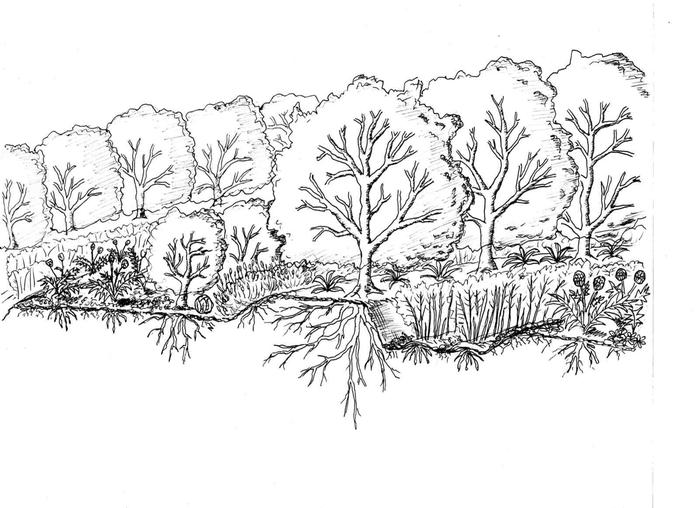
Thought I'd include a picture for fun.
Filename: untitled.pdf
File size: 33 Kbytes
 
Jonathan Byron
Posts: 225
4
  • Mark post as helpful
  • send pies
    Number of slices to send:
    Optional 'thank-you' note:
  • Quote
  • Report post to moderator
Nice pic. Grapes are one thing to consider, depending on your soil.  I hear your valley is an up and coming wine region.
 
John Polk
steward
Posts: 7926
Location: Currently in Lake Stevens, WA. Home in Spokane
360
  • Mark post as helpful
  • send pies
    Number of slices to send:
    Optional 'thank-you' note:
  • Quote
  • Report post to moderator
While quinoa might be worth more per bushel than wheat, unless you are certified organic, it might be more difficult to market.

For a good read on quinoa, go here:
http://www.nap.edu/openbook.php?record_id=1398&page=148

(use the "forward button" to get past the picture into the text).
Good luck.
 
                            
Posts: 126
Location: Ava, Mo, USA, Earth
  • Mark post as helpful
  • send pies
    Number of slices to send:
    Optional 'thank-you' note:
  • Quote
  • Report post to moderator
I'm in the Ozarks of southern Missouri, so things will be different here, but I'm officially a tree farmer.  My land is mostly woods and I am taxed at the ag rate.  My taxes on 50 acres are less than $20.  No, I didn't leave out any zeros.

If you plant any grain, you'll need a way to harvest it.  I don't think you're going to plant and harvest 70 acres of quinoa by hand.  Take the money you would have spent on equipment and by trees, bushes and cane fruit.  That and some legume ground covers will give you a start on a u-pick berry and fruit farm that saves you labor and helps heal the land.

Anyhow, that's a start on one idea that might work. 
 
pollinator
Posts: 4437
Location: North Central Michigan
59
  • Mark post as helpful
  • send pies
    Number of slices to send:
    Optional 'thank-you' note:
  • Quote
  • Report post to moderator
I'm not famliar with growing quinoa, however I do know it is a grain.

I'm wondering..could you plant rows of it between rows of fruit/nut/timber trees in bands..and then under plant the grains with say a root crop?

this would maybe give you a diversity of fruit and nut production with a main grain and root crop..the root crop could be dug after the grain would be harvested??

there may be another level that could be grown as well, but not being familiar with the particular grain's growth I don't know how it would compete

you probably could edge the entire thing with a hedge of jerusalem artichokes or say brambles
 
                        
Posts: 7
  • Mark post as helpful
  • send pies
    Number of slices to send:
    Optional 'thank-you' note:
  • Quote
  • Report post to moderator
If I were to consider and research some of the layering techniques that some people have mentioned, and if the land is currently in grain (essentially starting from scratch for permaculture purposes), are there some "rules of thumb" that I should know (or that you could refer me to)? Fruit production is the staple of my region, especially apples, cheriies, pears and peaches. I've certainly considered going that direction, but can people elaborate on how to incorporate these "layers" that have been mentioned; and also if there are any pairings or groupings that are particularly godd/bad. Thanks a lot Permies.
 
pollinator
Posts: 1459
Location: Midlands, South Carolina Zone 7b/8a
43
  • Mark post as helpful
  • send pies
    Number of slices to send:
    Optional 'thank-you' note:
  • Quote
  • Report post to moderator
Ian, I like Brendas suggestion of fruit trees.

Since maintaining your ag use is an understandable priority you might consider a sort grid of assorted fruit trees so that you can run machinery inbetween them.  That would accomplish two things:

One – to any outsiders it appears as if you are taking a contemporary approach to farming so your ag use intent cannot be challenged.

Two- it would allow you to run machinery in between them so that you can maintain the area somewhat while you are learning and planning new techniques.  It would be easy to become overwhelmed by 75 acres.

I am certain that your local forestry department would supply fruit tree seedlings that are hardy to your area for free or cheap.

In the meantime you could just take small bites of your property and start applying these techniques, as you learn them.

Your ideas will change as you get to know your property more intimately.  What you think will be best today will change and evolve with time and learning.  I would just take it a piece at a time.
 
John Polk
steward
Posts: 7926
Location: Currently in Lake Stevens, WA. Home in Spokane
360
  • Mark post as helpful
  • send pies
    Number of slices to send:
    Optional 'thank-you' note:
  • Quote
  • Report post to moderator
Another advantage to growing fruit/nut trees:
If for whatever reason, one year you fail to put in your 74 acres of cereals, your Ag zoning could become in jeopardy.  Everybody understands that an orchard is a long term ag enterprise, and you are not expected to plant new trees each year.  Simple seasonal maintenance such as pruning, weeding and feeding would fulfill your "ag" obligation.  It becomes permanent agriculture, whereas annual crops would require an annual seed and labor input to maintaining your status.

A combination of orchard and pasture areas would easily establish a permanent agricultural environment, with a minimum of labor, and specialized equipment.  You will need some pricey equipment to plant/harvest cereals, which are a low pay commodity.
 
pollinator
Posts: 426
16
  • Mark post as helpful
  • send pies
    Number of slices to send:
    Optional 'thank-you' note:
  • Quote
  • Report post to moderator
Why don't you monocrop beef cattle?
 
Jonathan Byron
Posts: 225
4
  • Mark post as helpful
  • send pies
    Number of slices to send:
    Optional 'thank-you' note:
  • Quote
  • Report post to moderator
But pasture fed beef is not quite a monocrop - the pasture is composed of many species of plants.
 
Posts: 192
Location: SW of France
2
  • Mark post as helpful
  • send pies
    Number of slices to send:
    Optional 'thank-you' note:
  • Quote
  • Report post to moderator
Fruit trees are nice idea but it is damn money and time consuming (75 acres !)

My two cents, plant a fodder forest (from seeds) to raise in a 5-10 years pigs or poultry in it,

For pigs : mulberry, oaks, persimons, grape, ets

For poultry : mulberry, pea schrub, elaeagnus spp., etc ...
 
                        
Posts: 7
  • Mark post as helpful
  • send pies
    Number of slices to send:
    Optional 'thank-you' note:
  • Quote
  • Report post to moderator
Can anyone give a little more advice on a tree fruit forest? I liked that suggestion from some people and have been reading up a bit. Are there any good resources people can point me to? Also, can people comment on what groupings work well with tree fruits, especially cherry/peach/apple. I'm new to the 7 layer approach od a whole food forest, so any direction is appreciated. Thanks.
 
John Polk
steward
Posts: 7926
Location: Currently in Lake Stevens, WA. Home in Spokane
360
  • Mark post as helpful
  • send pies
    Number of slices to send:
    Optional 'thank-you' note:
  • Quote
  • Report post to moderator
Here is an orchard tree supplier in WA.  They deal wholesale to the industry:

http://brandtsfruittrees.com/varieties/

And another wholesaler:

http://www.vanwell.net/commercial_pricing/commercial_price_list_-_u.s._pricing.html

 
Michael Radelut
Posts: 204
Location: Germany, 7b-ish
4
  • Mark post as helpful
  • send pies
    Number of slices to send:
    Optional 'thank-you' note:
  • Quote
  • Report post to moderator

Ian Okanogan wrote:
Can anyone give a little more advice on a tree fruit forest? I liked that suggestion from some people and have been reading up a bit. Are there any good resources people can point me to? Also, can people comment on what groupings work well with tree fruits, especially cherry/peach/apple. I'm new to the 7 layer approach od a whole food forest, so any direction is appreciated. Thanks.


Well, if I had 75 acres I wanted to put into broadacre permaculture, I'd spend a few bucks on a survey and soil test, and then ask Mr. Doherty do a plan:
http://www.lineaclave.org/web/images/stories/videos/Cursos/CDP2007Brihuega/Dia%202-B.flv

It might not be the most romantic approach, yet it's precise and time-saving.
 
Isaac Hill
gardener
Posts: 361
Location: Central New York State zone 5a
15
  • Mark post as helpful
  • send pies
    Number of slices to send:
    Optional 'thank-you' note:
  • Quote
  • Report post to moderator

Ian Okanogan wrote:
Can anyone give a little more advice on a tree fruit forest? I liked that suggestion from some people and have been reading up a bit. Are there any good resources people can point me to? Also, can people comment on what groupings work well with tree fruits, especially cherry/peach/apple. I'm new to the 7 layer approach od a whole food forest, so any direction is appreciated. Thanks.


"Edible Forest Gardens" by Dave Jacke and Eric Toensmeier will give you all the information needed for forest gardening in the temperate climate. It's kinda dense though. You can get a free PDF on library.nu
 
gardener
Posts: 866
Location: South Puget Sound, Salish Sea, Cascadia, North America
29
  • Mark post as helpful
  • send pies
    Number of slices to send:
    Optional 'thank-you' note:
  • Quote
  • Report post to moderator
Michael 'Skeeter' Pilarski at Friends of the Trees has been working in your biome for a while and may be able to hook you up with local growers.  Books are good, local knowledge is better.

With that kind of acreage pasture might be efficient for short term yield (so ditto PCGuy and others).  manage stocking rate and rotation to improve soils.  Any woody plant system for market will require up front capital.  Developing a nursery is important if you don't have capital, and that takes time.  Letting land go wild fallow without a plan could lead to other problems, depending on the neighborhood seed bank.

You could also look at leasing for hay, pasture or some other crop as an alternative, while bringing blocks into perennial systems as you develop functioning models at a small scale.

If you only get one yield from land, you are likely missing opportunities.  However, the idea that you wouldn't figure out how to just grow a row or field crop to pay the bills using responsible organic approaches, rotation and cover crops as you figure out your land sounds kind of strange to me -- almost like a religious taboo.  I have always interpreted Pc principles as pertaining to net system function, not a prohibition of certain activities during transition. 

Growing row crops between young orchard, or pasture for small stock is common practice in europe.
 
Feb-ROO-airy. I can't stop saying it this way. Help me tiny ad!
Learn Permaculture through a little hard work
https://wheaton-labs.com/bootcamp
reply
    Bookmark Topic Watch Topic
  • New Topic