• Post Reply Bookmark Topic Watch Topic
  • New Topic
permaculture forums growies critters building homesteading energy monies kitchen purity ungarbage community wilderness fiber arts art permaculture artisans regional education skip experiences global resources cider press projects digital market permies.com pie forums private forums all forums
this forum made possible by our volunteer staff, including ...
master stewards:
  • Carla Burke
  • Nancy Reading
  • John F Dean
  • r ransom
  • Jay Angler
  • Timothy Norton
stewards:
  • paul wheaton
  • Tereza Okava
  • Nicole Alderman
master gardeners:
  • M Ljin
  • Christopher Weeks
gardeners:
  • Jeremy VanGelder
  • thomas rubino
  • Megan Palmer

What type of pumps should I be looking for

 
pollinator
Posts: 239
Location: North Central Kentucky
63
dog trees chicken cooking sheep
  • Mark post as helpful
  • send pies
    Number of slices to send:
    Optional 'thank-you' note:
  • Quote
  • Report post to moderator
We have a pond that is going to be the primary water source for our sheep as well as irrigation for our orchard, but I need a way to pump water ~70 feet vertically to get to the top of the hill to a tank so I can run hoses out to the orchard and the livestock waterers.  I'm not sure what the best way to accomplish this is or what type of pumps I need to be looking into.  
 
steward
Posts: 16138
Location: Northern WI (zone 4)
5257
9
hunting trees books food preservation solar woodworking
  • Likes 1
  • Mark post as helpful
  • send pies
    Number of slices to send:
    Optional 'thank-you' note:
  • Quote
  • Report post to moderator
To help the advice to be in the right direction...

Do you have electricity at the pond or close to the same elevation?  A pump can push the water up to the tank from the pond, but can't suck it from the pond to the tank.

Do you need the pump to come on and off automatically?

Can a slow pump run continuously and overflow at the top of the hill?
 
Laurel Jones
pollinator
Posts: 239
Location: North Central Kentucky
63
dog trees chicken cooking sheep
  • Likes 2
  • Mark post as helpful
  • send pies
    Number of slices to send:
    Optional 'thank-you' note:
  • Quote
  • Report post to moderator

Mike Haasl wrote:To help the advice to be in the right direction...

Do you have electricity at the pond or close to the same elevation?  A pump can push the water up to the tank from the pond, but can't suck it from the pond to the tank.

Do you need the pump to come on and off automatically?

Can a slow pump run continuously and overflow at the top of the hill?


Thank you for asking these questions!  They are the ones I didn't even know to answer.

We can run power to the pond, or run a small generator there.  

I'd prefer that the pump be controlled manually (like plugging it in and unplugging it to turn it off and on, only pumping when necessary)

I'd prefer a pump that I can run and then turn off, slowish is OK, I can hang out for a little while, but we aren't living out at the land yet, so being able to run it for an hour or so to add some level to the tank and then shut it off and put things away when we leave.
 
Mike Haasl
steward
Posts: 16138
Location: Northern WI (zone 4)
5257
9
hunting trees books food preservation solar woodworking
  • Likes 1
  • Mark post as helpful
  • send pies
    Number of slices to send:
    Optional 'thank-you' note:
  • Quote
  • Report post to moderator
I'm guessing a simple sprinkler pump might do the trick for you:  Wayne 1hp sprinkler pump
It'll move about 400 gallons per hour with that amount of lift.  If you need more, there are bigger pumps.
 
pollinator
Posts: 613
136
  • Likes 3
  • Mark post as helpful
  • send pies
    Number of slices to send:
    Optional 'thank-you' note:
  • Quote
  • Report post to moderator
Any DC current pump will do.  DC means one can power off a battery, a vehicle, or a solar panel.  Make sure the pump is either a 'trash pump; or a utility pump with a filter set up on the inlet.  Pond Debris means the death of your pump; and if you are not there, sheep in trouble.  


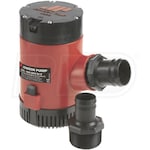
example of a DC utility pump
 
Laurel Jones
pollinator
Posts: 239
Location: North Central Kentucky
63
dog trees chicken cooking sheep
  • Likes 2
  • Mark post as helpful
  • send pies
    Number of slices to send:
    Optional 'thank-you' note:
  • Quote
  • Report post to moderator
Thank you guys so much!  I guess I was concerned with finding something that can handle enough of a head, but I'll check these out.  
 
Jack Edmondson
pollinator
Posts: 613
136
  • Likes 1
  • Mark post as helpful
  • send pies
    Number of slices to send:
    Optional 'thank-you' note:
  • Quote
  • Report post to moderator
They make DC well pull pumps also.  I don't see why one could not adapt a deep well pump to a pond situation.  

This one will give up to a 230 foot head lift.  
No affiliation.
 
pollinator
Posts: 1188
Location: Greybull WY north central WY zone 4 bordering on 3
363
hugelkultur trees solar woodworking composting homestead
  • Likes 1
  • Mark post as helpful
  • send pies
    Number of slices to send:
    Optional 'thank-you' note:
  • Quote
  • Report post to moderator
70 feet vertically is only roughly 35 psi.  Most irrigation and sprinkler pumps should manage this if they are just dumping into an open container.
 
pollinator
Posts: 6081
Location: Bendigo , Australia
559
plumbing earthworks bee building homestead greening the desert
  • Likes 1
  • Mark post as helpful
  • send pies
    Number of slices to send:
    Optional 'thank-you' note:
  • Quote
  • Report post to moderator
I would look at a piston pump, they are an older design but work very well when large volumes per minute or pressure is not needed.
 
Posts: 8
  • Likes 2
  • Mark post as helpful
  • send pies
    Number of slices to send:
    Optional 'thank-you' note:
  • Quote
  • Report post to moderator
The type of pump you should look for mostly depends on what you’re pumping (clean water vs. dirty water), how far it needs to move, and whether it needs pressure or just volume. For most small homestead or garden systems, people usually end up choosing between a submersible pump, a shallow well/jet pump, or a small transfer pump.

If the pump will sit in the water source (pond, cistern, or tank), a submersible pump is often the simplest option. They’re efficient because they push water instead of trying to pull it, which avoids a lot of suction limitations. They also tend to be quieter and easier to prime since they’re already underwater.

If your pump will sit outside the water source, like pulling from a shallow well or storage tank, then a jet pump or surface transfer pump might make more sense. These are easier to access for maintenance, but they usually need proper priming and they struggle if the lift is more than about 20–25 feet.

Another thing beginners sometimes overlook is flow rate vs. pressure.

If you’re moving water for irrigation or filling tanks, prioritise gallons per minute (GPM).

If you’re feeding sprinklers or household plumbing, you’ll also need adequate pressure (PSI).

A practical example: on many small properties people run a submersible pump in a pond or cistern feeding a storage tank uphill, then gravity-feed irrigation from there. It reduces pump cycling and keeps the system simple.

And just as a side note about online discussions: occasionally you’ll see unrelated phrases show up in threads (I once saw something like Premier Pitching Performance Baseball Remote Pitching Training dropped into a water pump discussion), which is usually just automated spam rather than useful advice so it’s worth focusing on the technical details instead.

Takeaway: figure out your water source, lift height, and required flow first. Once those are clear, the right pump type usually becomes pretty obvious.
 
Dewald Brevis
Posts: 8
  • Mark post as helpful
  • send pies
    Number of slices to send:
    Optional 'thank-you' note:
  • Quote
  • Report post to moderator
If you’re setting up or maintaining a pond, the right pump depends mostly on what you want the pump to do circulation, filtration, or a water feature like a fountain or waterfall. For most small setups, look for a submersible pond pump rated for continuous duty.

For beginners, the key specs to focus on are flow rate (GPH/LPH) and head height. A good rule of thumb is to circulate the full volume of your pond once every 1–2 hours. So if you’ve got a 1,000-liter pond, aim for a pump in the 500–1,000 LPH range (adjust higher if you’re running a filter or waterfall). Head height matters because pumps lose power the higher they have to push water so check the chart on the pump to make sure it still delivers enough flow at your required height.

If your goal is clear water, pair the pump with a filter system. If it’s more about aesthetic movement, like a small waterfall or fountain, choose a pump that prioritises steady flow rather than max output. Energy-efficient models are worth considering too if the pump will run 24/7.

From experience, many people overbuy on power and end up throttling the pump back. It’s often better to size it correctly from the start and keep plumbing simple.
takeaway: for the best pond pumps for small ponds https://easypro.com/collections/pond-pumps, choose a submersible pump with the right flow for your pond size, and double-check head height so you’re not losing performance where it counts.
 
I don't like that guy. The tiny ad agrees with me.
Willow Feeder Bundle: Movie, eBook and Plans
https://permies.com/wiki/359686/Willow-Feeder-Bundle-Movie-eBook
reply
    Bookmark Topic Watch Topic
  • New Topic