
• Post Reply Bookmark Topic Watch Topic
  • New Topic
permaculture forums growies critters building homesteading energy monies kitchen purity ungarbage community wilderness fiber arts art permaculture artisans regional education skip experiences global resources cider press projects digital market permies.com pie forums private forums all forums
this forum made possible by our volunteer staff, including ...
master stewards:
  • Carla Burke
  • Anne Miller
  • Nancy Reading
  • John F Dean
  • r ransom
  • paul wheaton
  • Timothy Norton
stewards:
  • Jay Angler
  • Pearl Sutton
  • Andrés Bernal
master gardeners:
  • Christopher Weeks
gardeners:
  • M Ljin
  • Thekla McDaniels
  • May Lotito

Northern oceanic tomatoes

 
gardener
Posts: 922
Location: Semi-nomadic, main place coastal mid-Norway, latitude 64 north
683
  • Likes 17
  • Mark post as helpful
  • send pies
    Number of slices to send:
    Optional 'thank-you' note:
  • Quote
  • Report post to moderator
So, as I wrote here, one of my far too many projects is to breed tomatoes (preferably a landrace) that do well in coastal mid-Norway. I'd also like them to grow okay from direct seeding. This year's results are in, and although there is only a very limited amount of success, it still gives me some hope that what I'm trying to do might just be possible.

I started the growing season by sowing some nine varieties of domestic tomatoes in one pot, some wilds (cheesmaniae, pimpinellifolium and galapagense) in a second, and a bunch of Lofthouse promiscuous in a third. I was fairly late sowing, and even later planting them out, since for various reasons we only arrived on our land around the middle of June. When planting the (still quite small) seedlings, I found a single volunteer plant already growing in the bed intended for tomatoes, which must originate from some random shop tomatoes we got last summer. It of course got included in the project.

The complete list of varieties for 2024:
-'Siberian'
-'Black Sweet Cherry'
-'Matt's Wild Cherry'
-'Canary Yellow'
-'Blue Ambrosia'
-'Bosque Blue'
-'Sungold' F2
-Some dwarf variety from my mother-in-law
-Some I got from a friend under the name black plum hybrid (since apparently it was a spontaneous hybrid)
-Volunteer from shop-bought tomatoes
-Lofthousers
-Solanum cheesmaniae (from two different seed companies)
-S. galapagense
-S. pimpinellifolium

I didn't keep track of what was what, except of what was domestic, wild, and Lofthouse, respectively. I also marked the volunteer plant. It's likely that some of the varieties never germinated at all (as there weren't many of each) or else died at some point.

The tomatoes started flowering in the beginning of August (suspect it would have been way earlier if not for the late transplanting). The first one to start was, surprisingly, a quite tiny S. cheesmaniae plant. The second, a couple of days later, was probably a 'Siberian'. After that, I don't remember exactly, but there was one plant (domestic) fairly early on whose stigma was extremely exserted, even before the flower had opened completely (see picture). I figured it had to be 'Blue Ambrosia', since that was the only one of the varieties planted I knew to have exserted stigma. Now, though, I have some doubts, given how the fruit turned out. Another noteworthy one was the volunteer plant. Its flower buds were odd. The sepals were long, and split away from each other in the tip of the bud, even very early in the bud development. None of the other plants had this trait. When the flowers opened, it turned out that it, too, had an exserted stigma, though not quite as much as the other plant.

When we had to leave our land for the year, in the beginning of September, none of the plants had ripe fruit, and only three had unripe fruits of any size: the (probably) 'Siberian', the one with extremely exserted stigma, and the volunteer. These three, together with the cheesmaniae that had been the first to start flowering and a random pimpinellifolium that seemed to be doing well, were dug up, planted in a pot and brought.

All three have since then ripened their fruit. The one with exserted stigma got cherry tomato sized, red fruits, slightly hairy, without any blue on them at all, leading me to doubt that it is 'Blue Ambrosia'. It might in fact be a 'Sungold' F2, but I don't remember the F1s having exserted stigmas. Nothing else on the list seems to fit. Odd...
The volunteer got a slightly larger, light red fruit, with only a few seeds in it. The fruit didn't taste like anything (like a standard industrial tomato). Not surprising. A few of the seeds started germinating while fermenting, so I lost them, and ended up with only about two good seeds. Boo! Well, I've got a cutting of the plant (which seems to be indeterminate) making some new flower buds right now. Hope for more seeds.

cheesmaniae-flower.jpg
The first to flower
The first to flower
exserted.jpg
Super exserted stigma (bad picture, sorry)
volunteer-buds.jpg
Buds of volunteer plant, note split bud tips
mystery-fruit.jpg
Fruit of exserted plant. Blue Ambrosia/Sungold/what?
 
author & steward
Posts: 7618
Location: Cache Valley, zone 4b, Irrigated, 9" rain in badlands.
3924
  • Likes 8
  • Mark post as helpful
  • send pies
    Number of slices to send:
    Optional 'thank-you' note:
  • Quote
  • Report post to moderator
Looks like a delightful project. Wishing you lots of joy with it.

For people in damp climates, I encourage exploring the genetics of pimpinelifolium, cheesmaniae, and galapagense. I really like working with SunGold (or SunSugar) F2.
 
pollinator
Posts: 3086
Location: RRV of da Nort, USA
1048
  • Likes 6
  • Mark post as helpful
  • send pies
    Number of slices to send:
    Optional 'thank-you' note:
  • Quote
  • Report post to moderator
I will go one step further than Joseph and say what a brave soul you are!  Are you growing these outside or in a greenhouse, like so much other production in Scandinavia?  I'd be curious to hear from others from the Pacific NW coast of the US on tomato production.  When living in Oregon, it seemed most would grow tomatoes inland and then truck them to the coast for sale, so difficult were the cool conditions on the coastal regions for tomato growth.  Great project!
 
Eino Kenttä
gardener
Posts: 922
Location: Semi-nomadic, main place coastal mid-Norway, latitude 64 north
683
  • Likes 4
  • Mark post as helpful
  • send pies
    Number of slices to send:
    Optional 'thank-you' note:
  • Quote
  • Report post to moderator

John Weiland wrote:I will go one step further than Joseph and say what a brave soul you are!  Are you growing these outside or in a greenhouse, like so much other production in Scandinavia?  I'd be curious to hear from others from the Pacific NW coast of the US on tomato production.  When living in Oregon, it seemed most would grow tomatoes inland and then truck them to the coast for sale, so difficult were the cool conditions on the coastal regions for tomato growth.  Great project!


Well, thank you! The idea is to try to breed some that can ripen outside without protection, preferably from direct seeding, so I grow them outside and will try sowing directly in the ground next year. If this is brave, or simply foolhardy, I don't know. Well, despite late planting there were some unripe fruits in the beginning of September, so my spontaneous feeling is that it might not be totally impossible.

Joseph Lofthouse wrote: Looks like a delightful project. Wishing you lots of joy with it.

For people in damp climates, I encourage exploring the genetics of pimpinelifolium, cheesmaniae, and galapagense. I really like working with SunGold (or SunSugar) F2.


Thank you! I don't really know if any of the galapagense even germinated. If they did, they must have been a very non-hairy variety so I mistook them for cheesmaniae. Have you seen a lot of the exserted stigma trait in Sungold F2? This one had the stigma out of the anther cone when the petals had barely started to turn yellow. I got quite a good batch of seeds off this plant, some selfed and some (hopefully) crossed with 'Siberian'. My pollination technique could really do with improving... Well, there's always next year.

I've also bought seeds for some new varieties. 'Quedlinburger Frühe Liebe' sounds promising, it's supposed to be one of the very earliest. Also got 'Stupice', 'Coldset' and 'Black prince', as well as some random cherry tomatoes  and a couple more varieties of the wild species. Looking forward to spring!
 
steward and tree herder
Posts: 15265
Location: Isle of Skye, Scotland. Nearly 70 inches rain a year
8866
6
transportation dog forest garden foraging trees books food preservation woodworking wood heat rocket stoves ungarbage
  • Likes 8
  • Mark post as helpful
  • send pies
    Number of slices to send:
    Optional 'thank-you' note:
  • Quote
  • Report post to moderator
Hi Eino - how are your tomatoes this year? I was so surprise to find this little one in my roots bed this year! I think the seed came from the compost I dressed the bed with in the spring, so was probably a random commercial tomato from my shop as I haven't grown tomatoes in a couple of years. It is doing well so far, but no fruit as yet.
tomato_volunteer_skye.jpg
Volunteer tomato flowering outside on Skye
 
Eino Kenttä
gardener
Posts: 922
Location: Semi-nomadic, main place coastal mid-Norway, latitude 64 north
683
  • Likes 10
  • Mark post as helpful
  • send pies
    Number of slices to send:
    Optional 'thank-you' note:
  • Quote
  • Report post to moderator
The 2025 tomato growing results are here, and it basically boils down to SUCCESS!

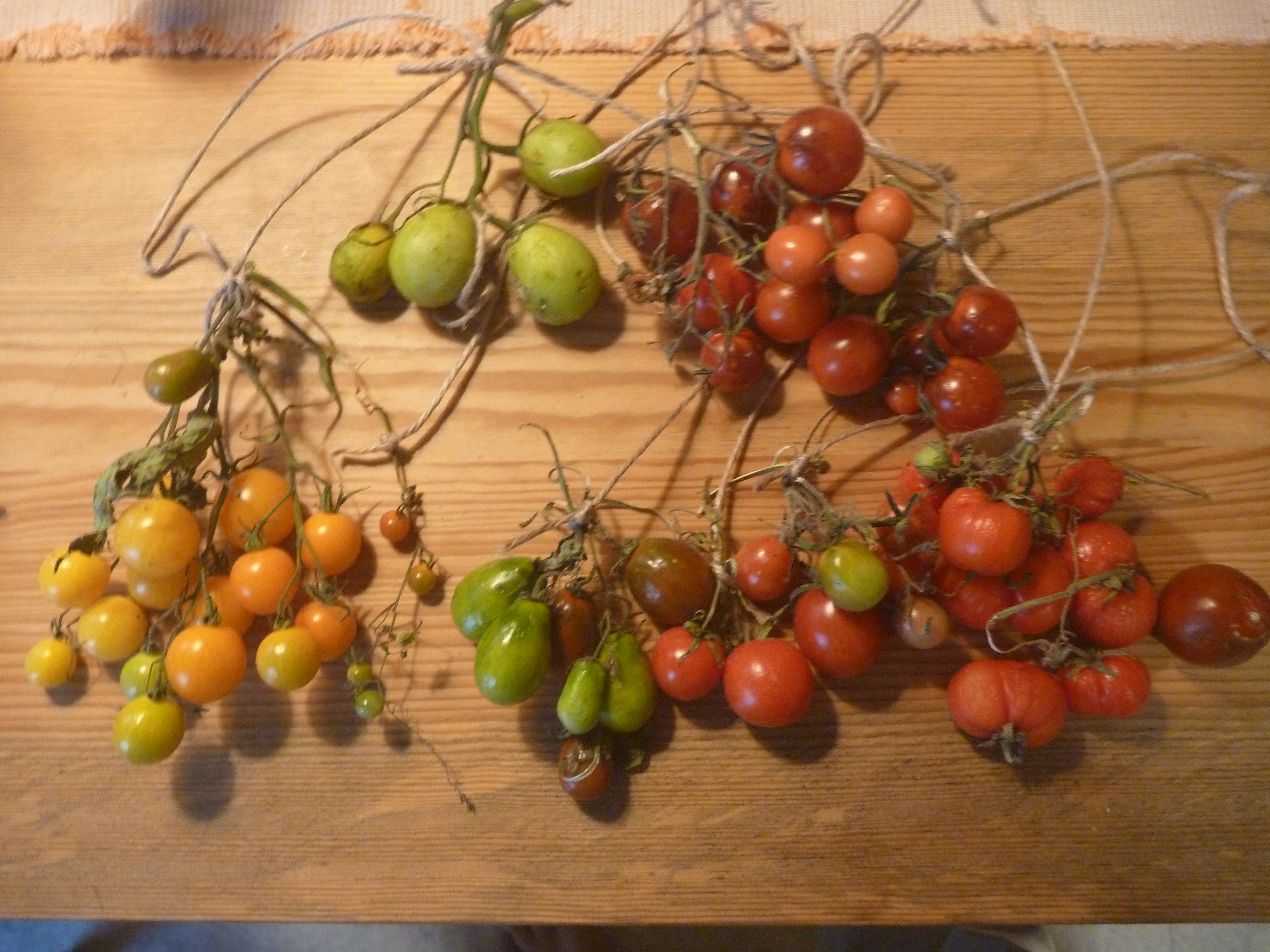
So, to start at the end of the story, I just opened up most of the tomatoes, which were harvested before we left the land for the year (end of September), and have been after-ripening indoors for about three weeks. It was a bit nervous, many of them looked ripe, but I was half expecting that the seeds would all be tiny, shrunken things since the fruits were harvested unripe. As it turns out, some, but not all, of the direct-seeded ones (which was most of them this year) did have a fair few tiny shrunken seeds, but almost all of the fruits that looked to be anywhere near full size also had some good-looking seeds. Yay!!!

Back to the beginning. I started the growing year in late May, by sowing a massive disorganized mix of tomato seeds. I also planted out the two best plants from last year, which were kept alive indoors over winter. The seeds germinated okay, even though it took a while. Then nothing much happened for the next month or so, with either the direct-seeded plants or the transplanted ones, due to an unusually cool and rainy June. We went around most of the month hoping for a shift in the weather, and, well... Careful what you wish for, it might come true.

A week or so into July, it stopped raining, and the temperatures went up to around 30 C. Then it stayed like that for a month. I'm not joking, we did not get ONE DROP OF RAIN in a MONTH. On the Norwegian coast. There were a few thunder storms, but they all passed us by. I think the maximum temperature was 34 C. A neighbour, who's been living in the area his whole life, said he's never seen anything like it.

The heat was a very mixed blessing. On the one hand, it was too hot to get much done in the daytime (for us wimpy cold-weather people), we had to be extremely careful with fire, and we had to haul water to our hilltop garden every day. On the other hand, it was brilliant to go swimming every day, and some plants got a real kick. Including the tomatoes.

The first of the tomato plants started flowering in the end of July (I think). One interesting thing is that the transplanted plants didn't really start flowering much earlier than the direct-seeded. There might have been a couple of days difference between one of the overwintered plants (almost certainly 'Blue Ambrosia') and a few of the earliest direct-seeded.

Since I sowed all the seeds intermixed, I don't really have anything except educated guesses when it comes to what's what. The first direct-seeded plant to start flowering was a yellow cherry tomato of some kind (no idea what it might be called). Then there were several potato-leaved plants that developed what looked like small, red beefsteak tomatoes. These might have been lofthousers, since I don't know that I got seeds for anything else beefsteak-like. Some sort of wild tomato, probably a cheesmaniae, was also among the earliest.

In order to stir up the genetics, I emasculated one or a couple of flowers on each plant once a few plants had started flowering, scraped some pollen off each anther cone, and dabbed mixed pollen on each stigma. This was done twice, with a week or so between. I also put pollen on the exposed stigma of other 'Blue Ambrosia' flowers.

A bit into August, the weather did another complete U-turn, and it went back to being mostly cool and rainy. The tomato plants didn't seem to mind too badly, the fruits kept growing, although the leaves on many plants started looking quite sad after a while.

The weather stayed cool and rainy until the end of August, when it turned again, and we got a mostly warm September. None of the tomatoes really developed any colour until a week or so after being harvested and moved indoors. Some are still ripening (notably the wild tomato mentioned above) so I'll give them a bit more time. The rest have had their seeds harvested and set to ferment.

All in all, the weather this year was definitely not "normal", so I don't know if this will work as well a more ordinary summer. I'll take any help I can get this early in the process, though. Hopefully, there are some hybrids between the earliest-blooming individuals among the seeds, so the population next year might be a bit better adapted. Fingers crossed!
P1010517.JPG
Harvest
Harvest
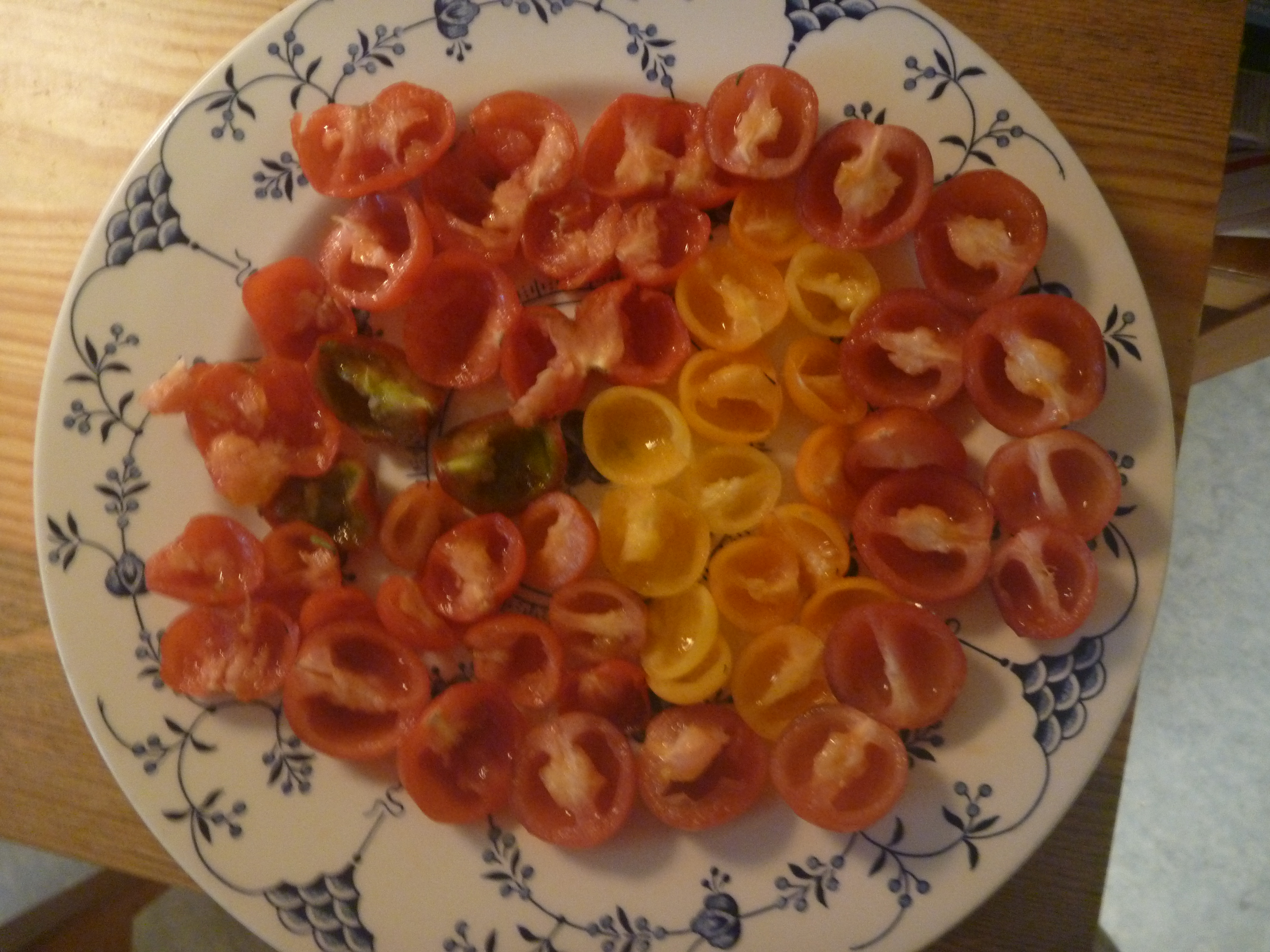
P1010524.JPG
Tomato tasting for the family after removing seeds
 
Eino Kenttä
gardener
Posts: 922
Location: Semi-nomadic, main place coastal mid-Norway, latitude 64 north
683
  • Likes 3
  • Mark post as helpful
  • send pies
    Number of slices to send:
    Optional 'thank-you' note:
  • Quote
  • Report post to moderator
Oh, and Nancy - are your plants still alive, or did you get frost? I noticed this year that the fruits keep growing, albeit slowly, even at cool temperatures (we had a lot of 12 degrees C in August).
 
Nancy Reading
steward and tree herder
Posts: 15265
Location: Isle of Skye, Scotland. Nearly 70 inches rain a year
8866
6
transportation dog forest garden foraging trees books food preservation woodworking wood heat rocket stoves ungarbage
  • Likes 4
  • Mark post as helpful
  • send pies
    Number of slices to send:
    Optional 'thank-you' note:
  • Quote
  • Report post to moderator
That is such a great second step Eino! Well done! My tomato never set any fruit (as expected) but we never got the stupid temperatures of Northern Europe this year either. A good year but not out of the ordinary.

Next year will be another exciting one for you - to sow your (hopefully crossed) seed and see what success you have with those.

It is very surprising that the direct sown plants caught up with the overwintered ones.... Just more vigorous plants somehow? I've never succeeded in overwintering tomatoes, I don't remember anyone saying that the seed sown ones caught up before, so that's definitely interesting.
 
master gardener
Posts: 7140
Location: Carlton County, Minnesota, USA: 3b; Dfb; sandy loam; in the woods
4589
8
forest garden trees books chicken food preservation cooking fiber arts seed woodworking homestead ungarbage
  • Likes 5
  • Mark post as helpful
  • send pies
    Number of slices to send:
    Optional 'thank-you' note:
  • Quote
  • Report post to moderator

Eino Kenttä wrote:All in all, the weather this year was definitely not "normal"


I wonder if that's even a thing right now. Is there a normal?

Nancy Reading wrote:It is very surprising that the direct sown plants caught up with the overwintered ones.... Just more vigorous plants somehow?


I've had it happen a couple years where the volunteers from last year's patch were the healthiest, most abundant tomatoes in my garden.

(I got 0 tomatoes this year for the first time ever.)
 
Eino Kenttä
gardener
Posts: 922
Location: Semi-nomadic, main place coastal mid-Norway, latitude 64 north
683
  • Likes 8
  • Mark post as helpful
  • send pies
    Number of slices to send:
    Optional 'thank-you' note:
  • Quote
  • Report post to moderator
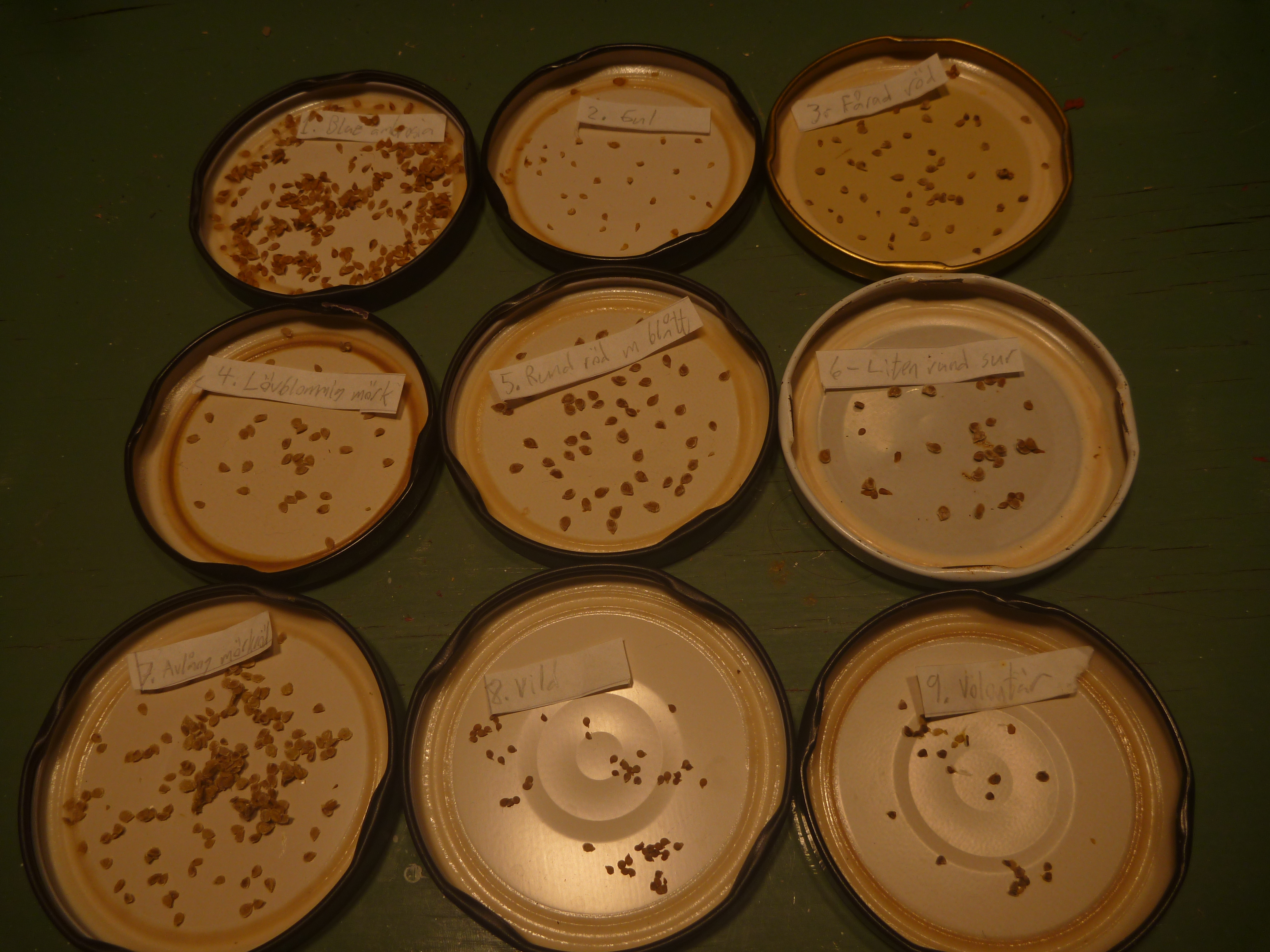
This year's seeds are dried, and there are quite a lot of them, actually. I've got them separated by "variety" as much as I can, so I can sow some from each mother plant next year. Number 1 and 9 (top left and bottom right in the picture) were transplants that germinated in the spring of 2024 and then overwintered indoors. The rest are all direct-seeded. I'd guess that all of them will prove to have at least some viable seeds, except possibly number 2 and 9 (yellow cherry tomato and random shop-tomato volunteer from last year, respectively). We'll see next year!
P1010539.JPG
Seeds!
Seeds!
 
Eino Kenttä
gardener
Posts: 922
Location: Semi-nomadic, main place coastal mid-Norway, latitude 64 north
683
  • Likes 10
  • Mark post as helpful
  • send pies
    Number of slices to send:
    Optional 'thank-you' note:
  • Quote
  • Report post to moderator
This is long overdue for an update. The growing year got a good start, in that last year's saved seeds germinated quite well (YAY!!! From direct seeding!) They got in the ground on the 16th of May, and the first of them had started germinating on the 26th. They grew well enough for a month or so. Then things, and specifically the weather, took a decisive turn for the worse. July and August were rainy and cool in the extreme, even by our northern seaside standards. There was apparently not a single day above 20 degrees C in all of July, supposedly the "worst" summer since 1981... We often wished we could send some (not all, just a bit) of the rain and cold southward, where it would no doubt have been appreciated as it deserves.

Needless to say, the tomatoes weren't all that happy with the weather. They still grew, albeit slowly, but didn't start flowering until towards the end of August. When we left the land a bit into September, there were still just four or five plants properly in flower, and a bunch more with buds of varying sizes. All the promising ones I dug up and brought, with the intention of crossing them indoors.

For whatever reason, the first round of cross-pollination attempts were a near-complete failure. I don't think this was due to my emasculation technique, since the pistils seemed to survive as long as could be expected. It seems like the anthers I used just produced very little pollen. Just two flowers in total, both in the same bunch, managed to set fruit, which have now started ripening. Most of the plants brought indoors are still alive, many with new buds developing, so there's still hope.

A couple of positive observations: Firstly, the plants grown from saved seeds (second generation) seemed to do way better than the new seeds I sowed in the same bed. They grew taller, stayed greener and more lush despite the rain, and mostly got further on the way towards flowering. I'll post some pictures tomorrow showing the difference. Some of this can no doubt be ascribed to selection effects: all the saved seeds from last year were from plants that did well then, while the "new genetics" patch probably contained a bunch of varieties that are just not at all suitable for the conditions. The difference did feel a bit too marked for that to be the only explanation, though. As far as I understand, there are two other possible factors. One is epigenetic changes. This probably has a very small impact, but it's hard to know for certain. The second is cross-breeding effects. I have reason to believe that quite some of my crosses last year were successful (see below). That would mean that some proportion of the plants from last year's seeds were exhibiting hybrid vigour/lack of inbreeding depression, which could account for them doing better. Also, it potentially might double the selection effects (different sets of genes suitable for the circumstances put together in one individual).

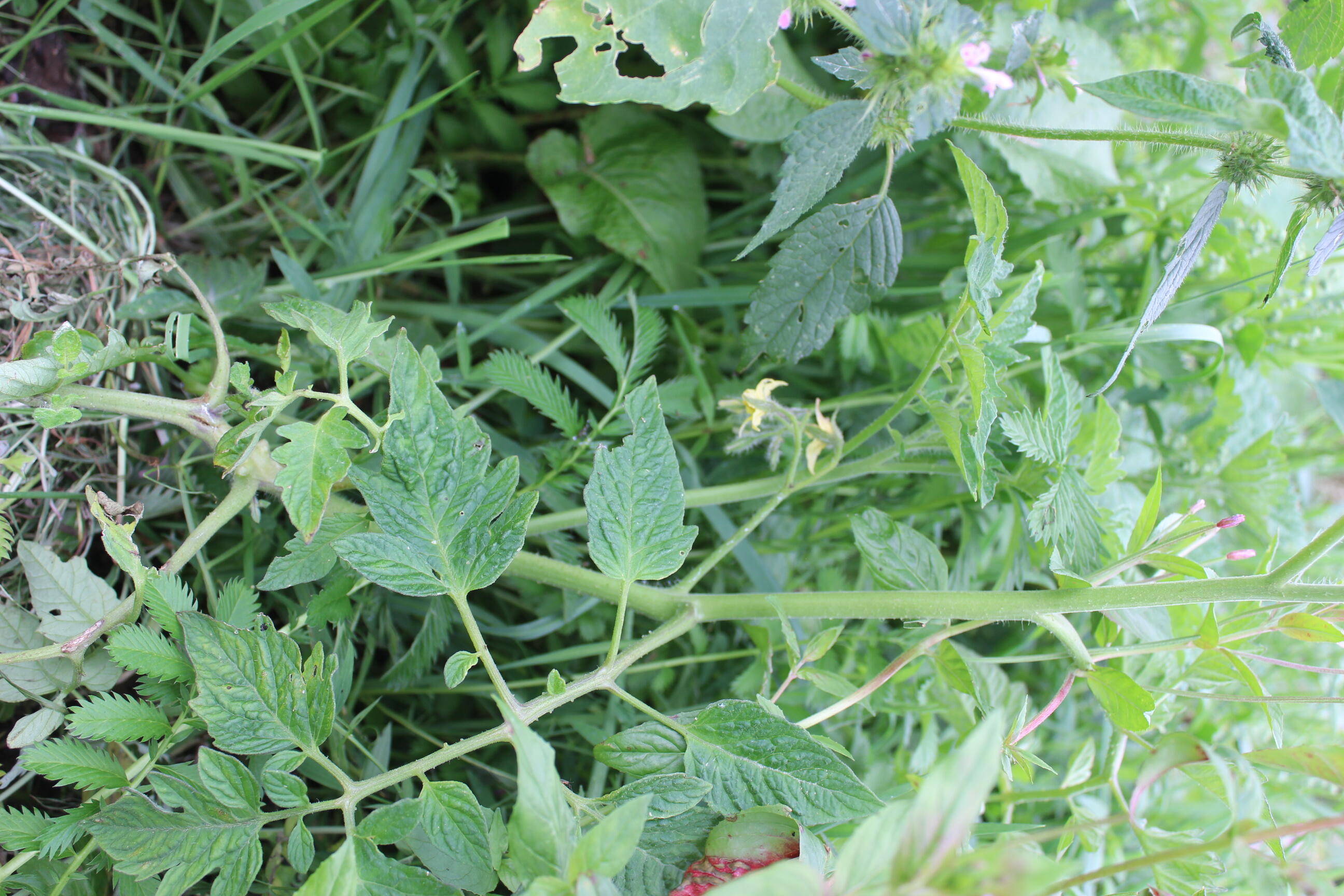
My certainty that at least some of the crosses were successful rests on the fact that a very large part of the most successful plants look intermediate between some wild tomato I grew last year (possibly a Solanum cheesmaniae) and a domestic tomato. The one that has fruits ripening now is one of them. The wild one had tiny fruits, not much more than bilberry-sized. This year's probable hybrid has fruits in-between these tiny ones and a standard cherry tomato, maybe gooseberry size. Another interesting thing with these likely hybrids, beyond the fact that they exist, is that a large part of them had exserted stigma to some degree. I wonder if it's just because they're all offspring of Blue Ambrosia? Or is exserted stigma related somehow to heterozygosity? If it was, then the non-exserted trait would be a self-reinforcing vicious circle of sorts: more enclosed stigma means more inbreeding, which means less heterozygosity and even more enclosed stigma.

So anyhow, in summary, a lot of challenges and some exciting developments. That has to add up to a good year, no? Sort of... I'll try to post some pictures tomorrow.
 
pollinator
Posts: 602
Location: UK
199
kids urban seed
  • Likes 3
  • Mark post as helpful
  • send pies
    Number of slices to send:
    Optional 'thank-you' note:
  • Quote
  • Report post to moderator
Good to hear the saved seed germinated from direct sowing again, that's the hard part sorted. After a summer that wet and cool, did any of the mother plants cope noticeably better than the rest? Those would be the ones I'd be keeping seed from first.
 
New rule: no elephants at the chess tournament. Tiny ads are still okay.
6 Ways to Keep Chickens, ebook - now FREE for a while
https://permies.com/t/138684/Ways-Chickens-ebook-FREE
reply
    Bookmark Topic Watch Topic
  • New Topic