• Post Reply Bookmark Topic Watch Topic
  • New Topic
permaculture forums growies critters building homesteading energy monies kitchen purity ungarbage community wilderness fiber arts art permaculture artisans regional education skip experiences global resources cider press projects digital market permies.com pie forums private forums all forums
this forum made possible by our volunteer staff, including ...
master stewards:
  • Carla Burke
  • Nancy Reading
  • John F Dean
  • r ransom
  • Jay Angler
  • Timothy Norton
stewards:
  • paul wheaton
  • Tereza Okava
  • Nicole Alderman
master gardeners:
  • M Ljin
  • Christopher Weeks
gardeners:
  • Jeremy VanGelder
  • thomas rubino
  • Megan Palmer

Critique my plan

 
pollinator
Posts: 512
Location: Klumbis Oh Hah, Zone 6
228
  • Likes 7
  • Mark post as helpful
  • send pies
    Number of slices to send:
    Optional 'thank-you' note:
  • Quote
  • Report post to moderator
It's come up in a few other threads now, so I'll just lay out here what is my plan for buying land and building a house on it.

Phase I: Land
1. Shop for land, buy land. (We live in Ohio now, but are targeting northern New Mexico. I have discussed my reasons for that elsewhere on this forum.)
2. Visit and camp out on the land at different times of year. Start thinking about where to put a house.
2a. Grade a driveway and campsite, if needed. (Hopefully something I could do with a small excavator rented for a day or two.)
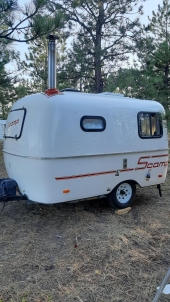
3. Get a camper/caravan/RV which we will use for travel and stay in it when we visit our land.
4. Dig a well if there is both no municipal water and no rain catchment available.

Phase II: Barn
5. Grade house site; dig swales, French drains as needed; etc. (stuff I can do with a small excavator rented for a week). Retain excavated soil for cob/adobe later.
6. Build a garage/shop/barn around the camper/caravan/RV., with room to store extra materials to build a house. This could be a kit build. It could also be a chance to experiment or try out different methods/materials.
7. Start gathering materials for the house.

Phase III: House
8. Build house. This will be done system by system (foundation, framing, cladding, etc.) and I won't list them all here. It will probably be a mix of "natural" and "conventional" methods/materials tailored to the site, my situation, my abilities, what I've got good access to, etc. Possibly there'll be gaps of time between building this or that system while I save money and acquire more materials (I expect at least some material will be salvage).

Phase IV:
9. Get rid of camper/caravan/RV?
10. Finish out part of garage/shop/barn as an ADU, where visitors can stay or which we can rent out.
 
Posts: 111
27
gear fiber arts building
  • Likes 6
  • Mark post as helpful
  • send pies
    Number of slices to send:
    Optional 'thank-you' note:
  • Quote
  • Report post to moderator
Sounds exactly like my plan except I want to keep the workshop for future projects and for food preservation.
 
Ned Harr
pollinator
Posts: 512
Location: Klumbis Oh Hah, Zone 6
228
  • Likes 6
  • Mark post as helpful
  • send pies
    Number of slices to send:
    Optional 'thank-you' note:
  • Quote
  • Report post to moderator

Daniel Andy wrote:Sounds exactly like my plan except I want to keep the workshop for future projects and for food preservation.


I plan to keep the workshop as well, just finishing out part of it as a place where we can host guests overnight (e.g. by then my kids will be grown and might have their own families--I want them to have a place to stay so they'll visit!)
 
steward
Posts: 18908
Location: USDA Zone 8a
4782
dog hunting food preservation cooking bee greening the desert
  • Likes 11
  • Mark post as helpful
  • send pies
    Number of slices to send:
    Optional 'thank-you' note:
  • Quote
  • Report post to moderator
I have started from scratch like you are dreaming of at least three times.

The last property save me a bundle of money because it already had electricity, a well and shell of a unfinished house.

This is a lot to consider when folks find out how much it costs to have electricity brought to the property.

This is a lot to consider when folks find out how much it costs to have a well dug.

Will folks need financing to pay for these?  Is financing available for these items?  I don't know since I have never done that.  This scares me to no end.

Finding financing to build a house might be doable.

My suggestion is to save a bundle of money so this dream can come true.

Keep in touch with the real estate market so that there is knowledge in what land will cost in the future.
 
Ned Harr
pollinator
Posts: 512
Location: Klumbis Oh Hah, Zone 6
228
  • Likes 9
  • Mark post as helpful
  • send pies
    Number of slices to send:
    Optional 'thank-you' note:
  • Quote
  • Report post to moderator
Anne Miller, thanks for reminding me what I forgot to include in my post!

I looked up the costs of digging a well several months ago. I learned it's commonly in the $10-15K range. Good to know, though I consider that a backup option if I can't get municipal water or do rainwater catchment for some reason.

If the cost of bringing electricity from the grid is higher than a solar setup I'll do a solar setup. This will be in northern NM after all, where solar is trued & true and there is much know-how & resources available locally.

With regard to both of the above, going off-grid is not my goal, just something I am open to as an option if needed.

I am already saving for this, and my saving will increase in the coming years as my income goes up. After 10-15 years I expect to be able to pay out of pocket for much of if not the entire project, plus I've planned it in incremental phases as you see, so I can continue to earn & save as I'm building.

I do some of my daydreaming on Zillow now and then, peeping what's for sale in northern NM, so that is how I keep up with the relevant sector of the real estate market.
 
Anne Miller
steward
Posts: 18908
Location: USDA Zone 8a
4782
dog hunting food preservation cooking bee greening the desert
  • Likes 8
  • Mark post as helpful
  • send pies
    Number of slices to send:
    Optional 'thank-you' note:
  • Quote
  • Report post to moderator
We have an off grid property.  Solar and rainwater catchment works well for a weekender property.

I know we have folks that live off grid with both solar and rainwater catchment though I feel it is a learning process that would be good to start learning to live like that now.

It did not work for my husband otherwise we would be living there now.

I am glad we bought our property where we live when we did as there is no way we could it buy today.  I am just hoping no one sells their property causing my taxes to go where I cannot afford them.
 
master steward
Posts: 15416
Location: Pacific Wet Coast
9783
duck books chicken cooking food preservation ungarbage
  • Likes 11
  • Mark post as helpful
  • send pies
    Number of slices to send:
    Optional 'thank-you' note:
  • Quote
  • Report post to moderator
Ned Harr wrote:

I looked up the costs of digging a well several months ago. I learned it's commonly in the $10-15K range. Good to know, though I consider that a backup option if I can't get municipal water or do rainwater catchment for some reason.


Where I live, I am in a small bubble of the Municipality where the Municipal water pipes don't service. The rules are such that if we were to want that water, we would have to pay the entire price of extending the pipes from the current location, past our house, to the far edge of our property. The cost might exceed what you've been quoted for the well.

Luckily, we have two excellent wells on the property! But making sure you know how far away the Municipal water pipes are when you put an offer on a property that isn't serviced would be a good plan. No Municipal water pipes also means no fire hydrants. One neighbor whose since moved, dug a pond which they kept filled from their well during the high-risk part of our year for forest fires/grass fires. Even if you have Municipal water, some rainwater catchment for fire safety would not be an unreasonable plan as part of the "barn" build.

and wrote:

If the cost of bringing electricity from the grid is higher than a solar setup I'll do a solar setup.


If you are on a well, no electricity means no water... sigh... the joys of being more independent! There are many people who either have a small back-up generator, or now, a small stand-alone solar system, for when grid electricity is not available. *Many* caravans now have roof-top solar either built in or as add-ons, so depending on what you end up with, keeping the caravan as back-up/family guest accommodation, may have that benefit. If the well is deep, it may take a lot of power to pump the water up.
 
Posts: 21
Location: PNW 8B
17
forest garden plumbing chicken
  • Likes 11
  • Mark post as helpful
  • send pies
    Number of slices to send:
    Optional 'thank-you' note:
  • Quote
  • Report post to moderator
The basics of your idea are almost exactly the plan that my aunt and uncle executed back in the '00s, living in Idaho and developing the Oregon place where I'm living now. They weren't into the permaculture thing per se, and they had the complexities of logging it first, but similar basic idea.

They had a cute old Airstream trailer for the temporary residence, but ended up selling it. If they hadn't, I would have put a roof over it and kept it as guest quarters.

Digging the well took 2 tries for them, which cost much more than they anticipated.

You can arbitrage money vs time and speedrun to rain catchment with a cheap steel carport.

Arrange your tasks so you will have dug some holes in the ground before you go in with an excavator. It's good to know what you're actually digging into and whether there are any special concerns to dealing with it, or special uses for it. It'd suck to, for instance, discard a clay layer to put your driveway in and then later realize you wanted that clay to line a pond with. Not the end of the world, as you can get more from future earthworks, but planning ahead can maximize the potential to stack functions. This might happen organically if you dig an outhouse in your early camping visits.

If you can find a good deal on a singlewide manufactured, a tiny home, or even a large prefab shed with delivery, that may out-compete the RV option.

If you're going to be away from the site for weeks to months at a time while you've got valuable things there, consider security. An old shipping container can be a decent option for lockable storage. A camera system may or may not be desirable. Being on good terms with the neighbors, very important. It worked for my aunt and uncle in part because my parents are on the adjoining property and were happy to walk over and check on things once in awhile.

By rural social norms, at least out here, land that's not owned by anyone who bothers to keep trespassers off becomes semi-public by default, and falls into semi-public use.
 
pollinator
Posts: 1504
Location: Milwaukie Oregon, USA zone 8b
181
  • Likes 5
  • Mark post as helpful
  • send pies
    Number of slices to send:
    Optional 'thank-you' note:
  • Quote
  • Report post to moderator
The advantage to a phased plan like this is that you can save up chunks of money and do each thing, land, utilities, house, etc. each time you save enough money up for it.  Obviously land with a finished house is more spendy than land without one so this makes sense.
 
I agree. Here's the link: http://stoves2.com
reply
    Bookmark Topic Watch Topic
  • New Topic