|

|
|
|
|

|

|

|

|

|
 6
6


 10
10
Visit Redhawk's soil series: https://permies.com/wiki/redhawk-soil
How permies.com works: https://permies.com/wiki/34193/permies-works-links-threads


 8
8
Invasive plants are Earth's way of insisting we notice her medicines. Stephen Herrod Buhner
Everyone learns what works by learning what doesn't work. Stephen Herrod Buhner
6
John Daley Bendigo, Australia The Enemy of progress is the hope of a perfect plan
Benefits of rainfall collection https://permies.com/t/88043/benefits-rainfall-collection
GOOD DEBT/ BAD DEBT https://permies.com/t/179218/mortgages-good-debt-bad-debt
5
The First Axiom of Life: Don’t do dumb things.
7
![[Thumbnail for 20260502_184412.jpg]](/t/372381/a/288535/20260502_184412.jpg "Filename: 20260502_184412.jpg
Description:") 6
7
6
7
Daniel Andy wrote:Caravans are objectively superior, for one simple reason: your motor transport is not permanently connected to your home.
......
“The most important decision we make is whether we believe we live in a friendly or hostile universe.”― Albert Einstein
10
John Weiland wrote:
Daniel Andy wrote:Caravans are objectively superior, for one simple reason: your motor transport is not permanently connected to your home.
......
I was wondering about this option as the discussion unfolded. I'm not in the market for an RV type of dwelling, but if I were, I would consider a pick-up truck that could couple with a 5th wheel hitch and also have a car dolly off the back of the towed trailer. As noted, you can always park the trailer if the truck is needed, but additionally with a car dolly, you have another vehicle for buzzing around while the truck/trailer takes a rest. The trailer may still have all of the squeaks and clanks while it's moving, but if most driving is done with all passengers riding in the truck, you won't hear all of that noise! Finally, I've heard that 5th-wheel trailers are easier to back up than standard bumper ball hitch rigs...assuming of course the car dolly is not attached.
4
In North America, the term caravan is obscure. A caravan is an RV, and going RVing would be caravanning. Most caravan designs would probably be called a travel trailer, or in some cases a fifth wheel or camper trailer. Caravans can go to RV parks or some camp sites— not trailer parks, which usually communities of semi-permanent structures called mobile homes. However, sometimes they can be actual collections of trailers with wheels that are very mobile.
Invasive plants are Earth's way of insisting we notice her medicines. Stephen Herrod Buhner
Everyone learns what works by learning what doesn't work. Stephen Herrod Buhner
4
John Daley Bendigo, Australia The Enemy of progress is the hope of a perfect plan
Benefits of rainfall collection https://permies.com/t/88043/benefits-rainfall-collection
GOOD DEBT/ BAD DEBT https://permies.com/t/179218/mortgages-good-debt-bad-debt
3

 8
8
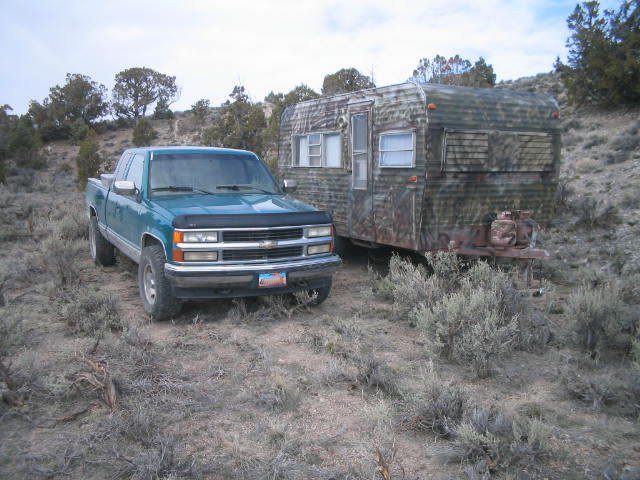 9
9
"You must be the change you want to see in the world." "First they ignore you, then they laugh at you, then they fight you, then you win." --Mahatma Gandhi
"Preach the Gospel always, and if necessary, use words." --Francis of Assisi.
"Family farms work when the whole family works the farm." -- Adam Klaus
10
If you want to try homesteading/permaculture/whatever-you-wanna-call-it, and the only thing stopping you is the price tag on land, PM me. I have more space than I need and I'm willing to share 
8
Josh Warfield wrote:I've been living for nearly a decade in a van (Ford Transit) which I built out myself. The main reason I would never want to live in a commercially manufactured RV is that much of the interior tends to be made with oddly specific custom components. The sink drain isn't just a regular sink drain, it's a special RV sink drain. Likewise for the breaker box, and the propane connections, and the door hinges and handles. If anything ever breaks, you probably can't just go to the nearest Ace Hardware or Home Depot and get a one-for-one replacement. You need to find a special RV parts store, and even then there's a good chance that they'll have to order the part and you'll need to wait for it to ship. And it will likely cost twice what the equivalent thing would cost that isn't the "RV version" of the thing. I strongly prefer my house to be built with components that are as easily replaceable as possible.
Douglas Alpenstock wrote:Providing a place for other people to park their RV's (at a daily/monthly fee) is quite possibly a better investment than actually owning one. My 2c.
5
![[Thumbnail for Screenshot_20260523_113757_Samsung-Browser.jpg]](/t/372381/a/289829/Screenshot_20260523_113757_Samsung-Browser.jpg "Filename: Screenshot_20260523_113757_Samsung-Browser.jpg
Description:")


 7
9
9
7
9
9
Ned Harr wrote:Therefore I want to know specifically what makes RVs such a no-no from a purchasing standpoint. I'm not afraid of fixing stuff or replacing stuff in a house or in a car--is an RV that much different from either? What's the big problem?
![[Thumbnail for RV.jpg]](/t/372381/a/289933/RV.jpg "Filename: RV.jpg
Description:")
"The genius of American farm experts is very well demonstrated here: they can take a solution and divide it neatly into two problems." -Wendell Berry
9
Mediterranean climate, hugel trenches, fabulous clay soil high in nutrients, self-watering containers with hugel layers, keyhole composting with low hugel raised beds, thick Back to Eden Wood chips mulch (distinguished from Bark chips), using as many native plants as possible....all drought tolerant.
5
Ned Harr wrote:
I think a Transit is an interesting choice for a build-out, given the lack of 4WD options (if I'm remembering right) and Ford's notorious mechanical and electrical issues (at least in my experience & observation--I drive a Transit Connect for my work van) though I do consistently like the ergonomics on Fords if you exclude the area under the hood. I'm sure some people get lucky with Fords. Curious how you've fared with the Transit and what are your thoughts about the other van options.
"All we have to decide is what to do with the time that is given us." ~ Tolkien
8
"When the whole world is running towards a cliff, he who is running in the opposite direction appears to have lost his mind." C.S. Lewis
Visit https://themaineingredient.com for organic, premium dried culinary herbs that are grown, processed, and packaged in the USA.

|
Laborare non amo - latin for "I do not like to work" - thanks tiny ad
Come Visit Wheaton Labs!
https://permies.com/wiki/367505/Visit-Wheaton-Labs
|