• Post Reply Bookmark Topic Watch Topic
  • New Topic
permaculture forums growies critters building homesteading energy monies kitchen purity ungarbage community wilderness fiber arts art permaculture artisans regional education skip experiences global resources cider press projects digital market permies.com pie forums private forums all forums
this forum made possible by our volunteer staff, including ...
master stewards:
  • Carla Burke
  • John F Dean
  • Nancy Reading
  • r ransom
  • Jay Angler
  • Timothy Norton
stewards:
  • paul wheaton
  • Pearl Sutton
  • Anne Miller
master gardeners:
  • Christopher Weeks
  • M Ljin
gardeners:
  • Jim Garlits
  • thomas rubino
  • William Bronson

Building 100 AH LiFePo4 Battery Box

 
Posts: 140
26
  • Likes 3
  • Mark post as helpful
  • send pies
    Number of slices to send:
    Optional 'thank-you' note:
  • Quote
  • Report post to moderator

John Weiland wrote:I think this was mentioned further above and don't really want to start a whole new "New life for old inverters" topic.  As I rummaged around over the weekend, I realized that my earlier delving into inverters resulted in the the acquisition of 2 separate 1000W modified sine-wave inverters.  It seems now the general consensus is to use these on a very limited class of powered items.....resistance heaters, incandescent bulbs, single-speed motors, etc.  Just wondering if these should be scrapped or recycled somehow as pure sine wave inverters now seem less expensive than the were 20 years ago....?  Thoughts?.....do others still use these modified sine wave units for dedicated jobs?  Thanks!


I feel your pain - I have 2 or 3 12 Vdc 1000 watt modified sine wave inverters from about 15 years ago, and I'd be willing to use one for testing with resistive loads, but in the past year, I've only bought 24 or 48 Vdc pure sine wave inverters, and I really don't want to start investing in 12 Vdc inverters again.
 
Allen Jackson
Posts: 140
26
  • Likes 2
  • Mark post as helpful
  • send pies
    Number of slices to send:
    Optional 'thank-you' note:
  • Quote
  • Report post to moderator
Tomorrow's forecast is for "AM Clouds / PM Sun", although at 2 pm, it's still expected to be 62% cloudy... Nearly 0 % chance of precipitation, so the evening sunset should be very annoying to westbound drivers...

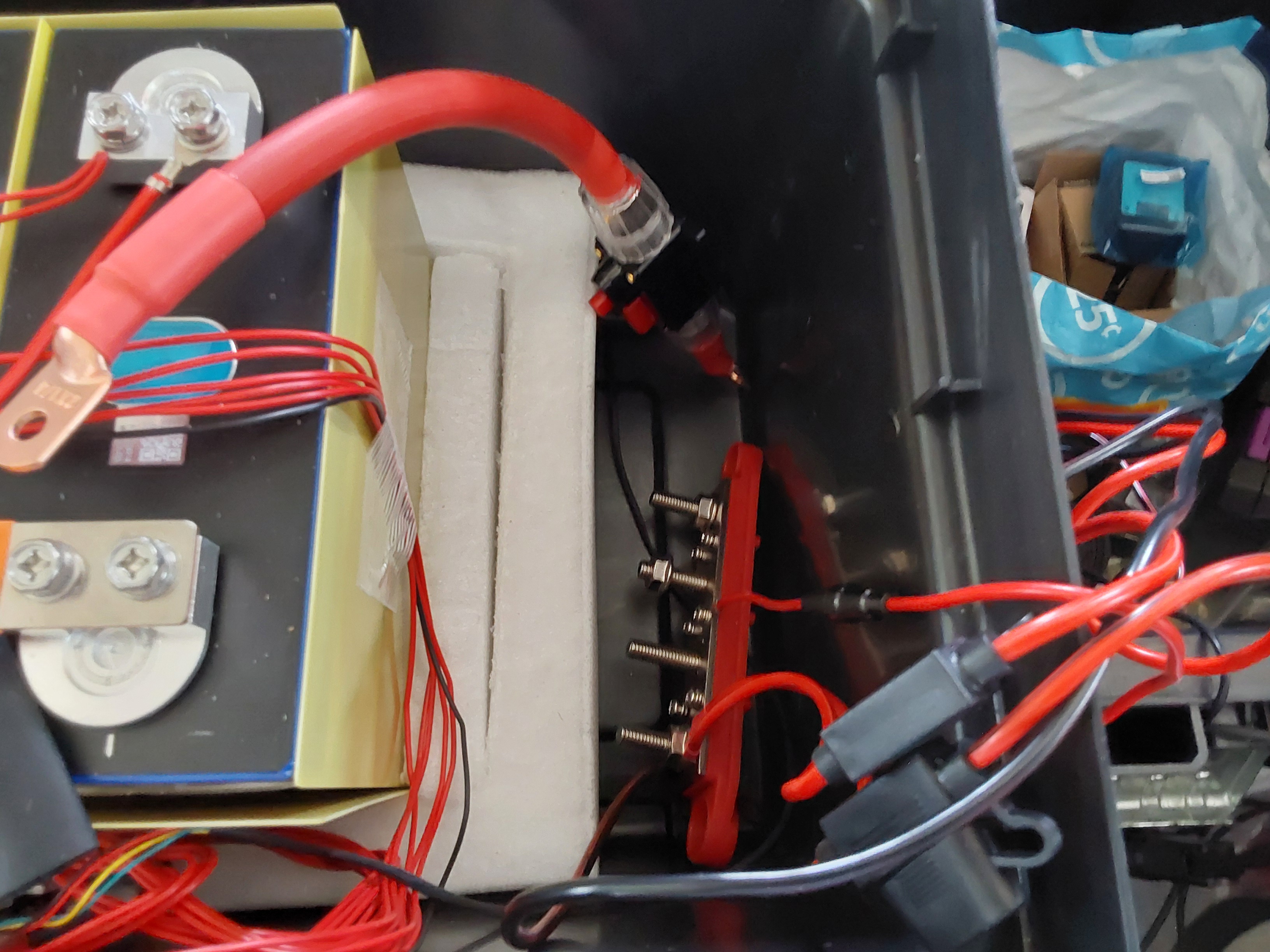
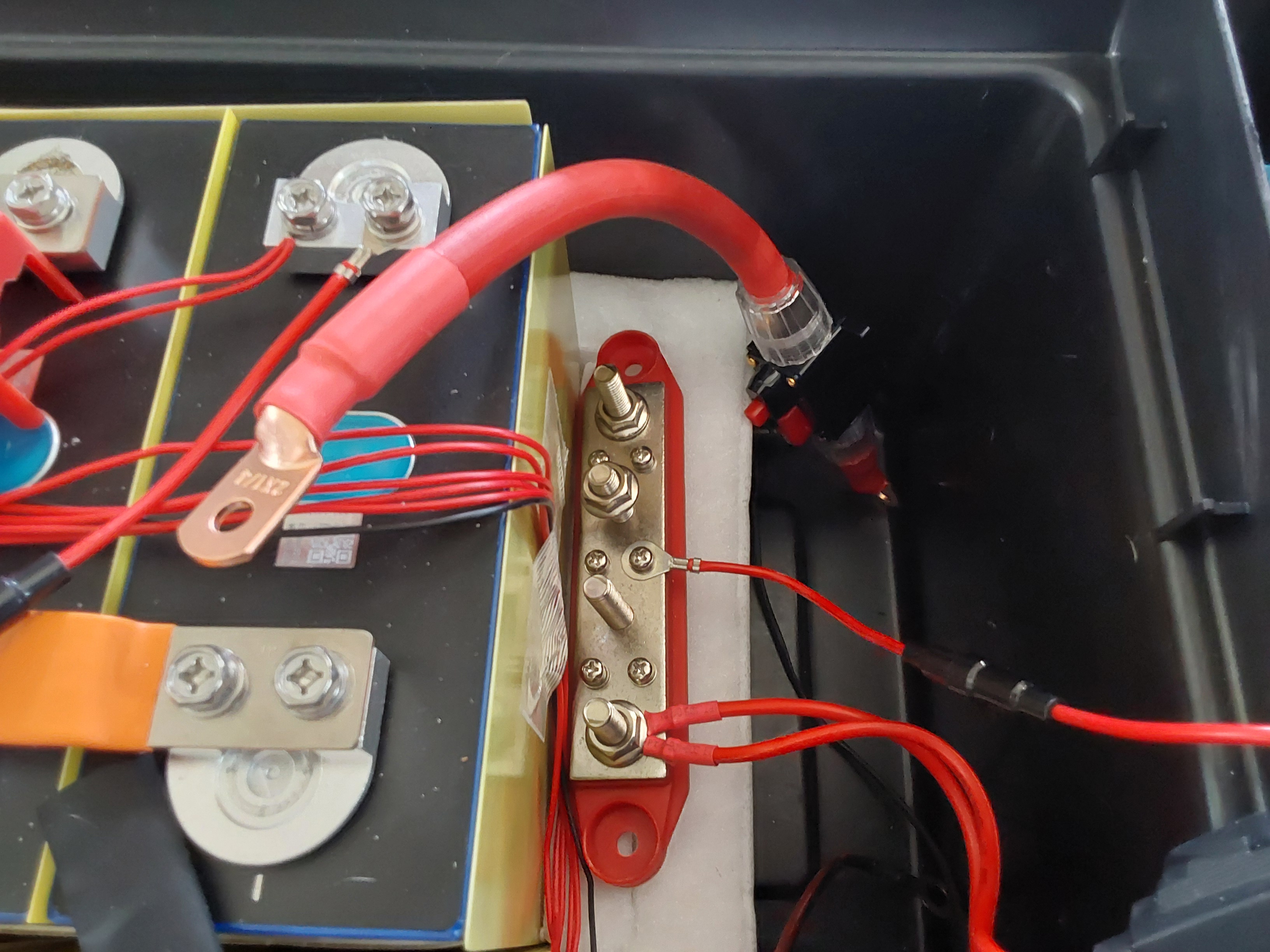
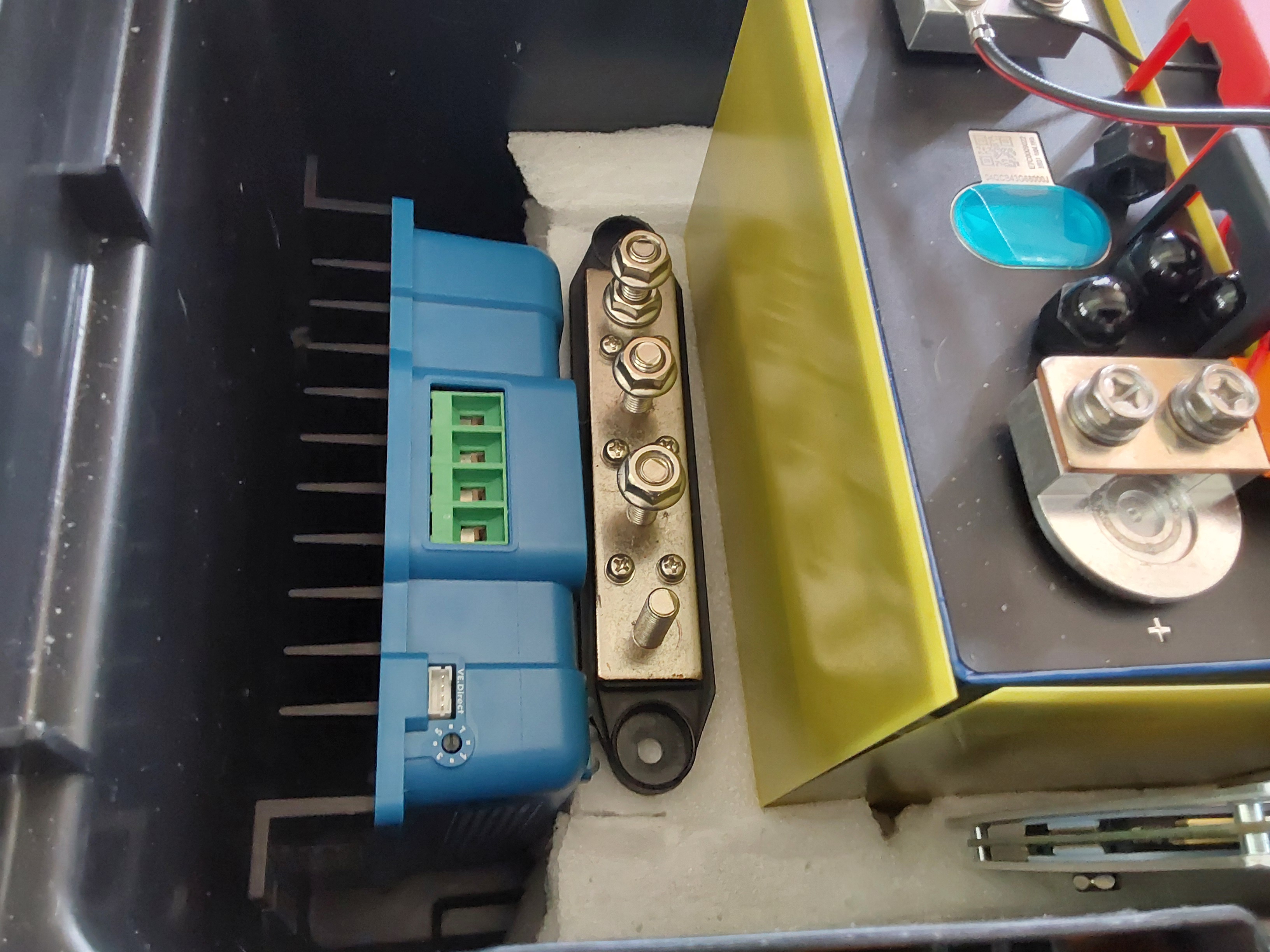
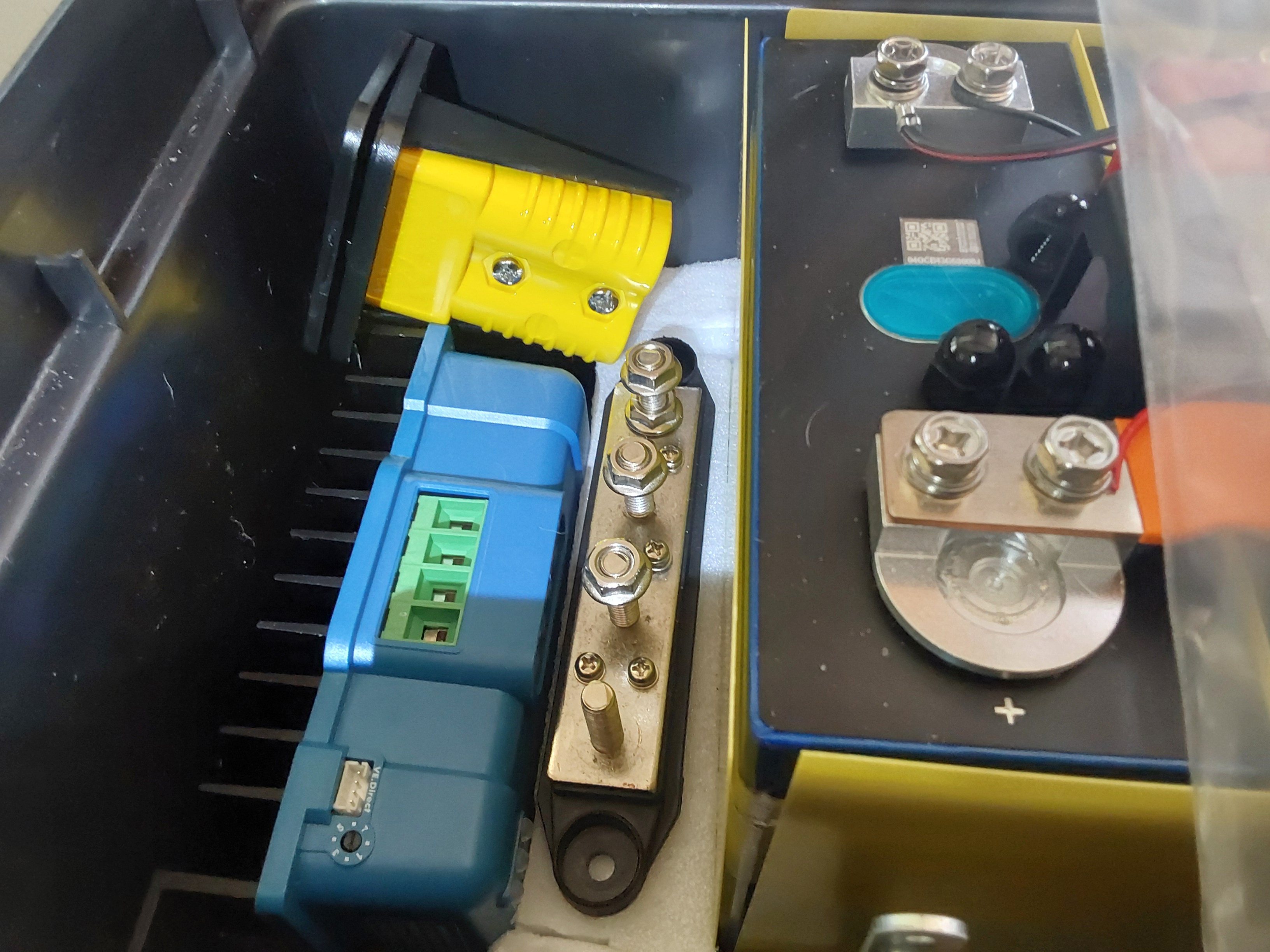
I have no currently scheduled jobs or service calls, so barring emergencies, I should be able to finish up this build enough to be presentable (for a badge bit). I've gone back and forth about the placement of the bus bars, but I realized that putting them on their sides at the bottom, would save space, but make them inaccessible, so that wouldn't work out well. I've split them up with positive and negative on opposite ends of the battery, which makes it a lot safer to work on too.  After the bus bars are placed, the rest of the placement is easy and mostly falls into place, since the wiring for everything else is much more flexible than the main bus bar feeders are.

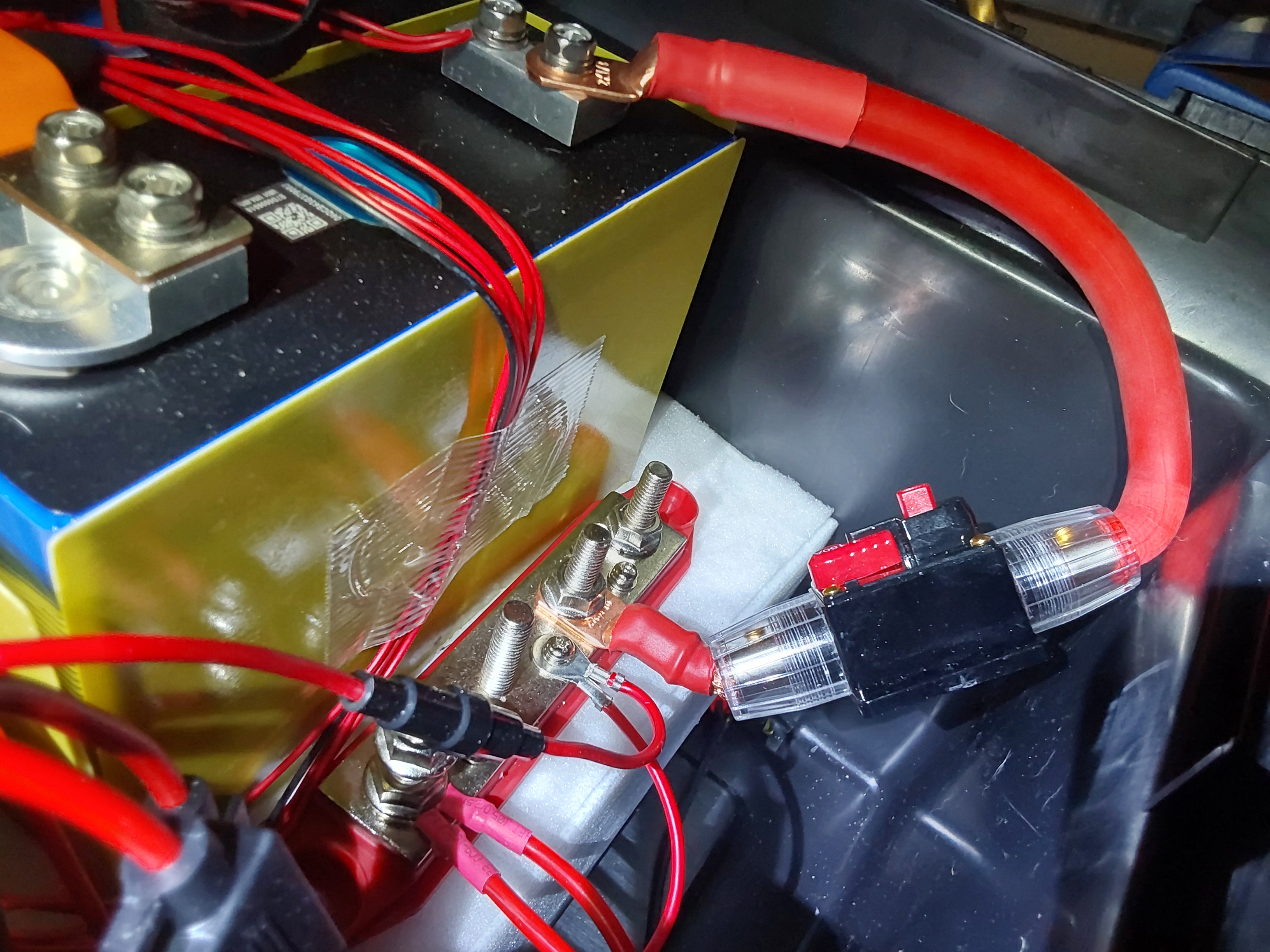
The positive cable was more of a challenge because of the need/desire to put a breaker on it.
1000011515.jpg
The most space-efficient place to put this is deep down here, but there's no tool access to connect anything else later!
1000011516.jpg
These look like better options for general access and use, but getting the positive cable attached?!?
1000011517.jpg
The negative side has far less drama...
1000011523.jpg
Where the positive cable has landed.
Where the positive cable has landed. I cut off the insulation and just used heatshrink to get more bend.
 
pollinator
Posts: 2923
Location: RRV of da Nort, USA
905
  • Likes 4
  • Mark post as helpful
  • send pies
    Number of slices to send:
    Optional 'thank-you' note:
  • Quote
  • Report post to moderator
That build is coming together nicely, Allen!   I'm wondering what the decision process was that had you deciding to put the charge controller inside the box instead of mounted with the solar panels...?  I can see where you want the flexibility of the panels to be able to charge batteries of different voltages, but I was thinking about the possibility of having 3 or more (eg, 12V, 24V, 48V, etc) controllers mounted behind the surface of a master solar panel.  The master would/could be daisy-chained in series or parallel to achieve the power desired, and the charge controller chosen for the appropriate task.  Switching between controllers could be a bit of a task, but here again there may be a way to simplify by using a master bus-bar making the transition from one voltage to another easier to enact.  Am I correct also in observing that many charge controllers now (a) can handle a wider range of input DC voltage and (b) automatically detect the voltage of the battery bank to which it is attached?  This might imply that one controller would be sufficient irrespective of the number of solar panels (up to a point, of course) to charge batteries or banks of various voltages (12, 24, 36, 48, 72V, etc.)  This would obviate the need for multiple controllers, simplifying the system once again. Possible?
 
Allen Jackson
Posts: 140
26
  • Likes 4
  • Mark post as helpful
  • send pies
    Number of slices to send:
    Optional 'thank-you' note:
  • Quote
  • Report post to moderator

John Weiland wrote:That build is coming together nicely, Allen!   I'm wondering what the decision process was that had you deciding to put the charge controller inside the box instead of mounted with the solar panels...?  I can see where you want the flexibility of the panels to be able to charge batteries of different voltages, but I was thinking about the possibility of having 3 or more (eg, 12V, 24V, 48V, etc) controllers mounted behind the surface of a master solar panel.  The master would/could be daisy-chained in series or parallel to achieve the power desired, and the charge controller chosen for the appropriate task.  Switching between controllers could be a bit of a task, but here again there may be a way to simplify by using a master bus-bar making the transition from one voltage to another easier to enact.  Am I correct also in observing that many charge controllers now (a) can handle a wider range of input DC voltage and (b) automatically detect the voltage of the battery bank to which it is attached?  This might imply that one controller would be sufficient irrespective of the number of solar panels (up to a point, of course) to charge batteries or banks of various voltages (12, 24, 36, 48, 72V, etc.)  This would obviate the need for multiple controllers, simplifying the system once again. Possible?


That's easy - the 3rd controller is sitting there because it fit... I figure if I need or want to use it, I have it handy, and I can either pull it out and use it externally, or I could hardwire it into place and maybe drill some vent holes or mount a fan on the outside of the toolbox if heat became a problem.

It's really not practical to tie the controllers to the panels vs the battery, because they're prone to unpredictable behavior when they are not powered by the battery. They (at least these Victrons) only do auto-detect of the battery voltage the first time they're connected to the battery, and they don't work properly if connected only to solar panels. After the initial setup, they won't automatically detect a new battery without a factory reset, wiping any saved data.

One IS theoretically sufficient to charge a suitable battery, but only if the other factors are also suitable and suitable for sufficient amount of time to do so. For the real world, most of the time, we don't get to choose the weather or the weather window, so being able to make the most of the gaps in the clouds I could, is the reason why I choose to have multiple controllers in parallel (it's considerably cheaper than having a single controller that can handle the full capacity of the combined ones). Remember that my 0.5C rate is 157 amps for this battery, and I'm not getting close to that with this build.

Right now, on Amazon, the Victron 100 amp controller is $487.50.  The 100 V 50 amp one is $162. They don't appear to have a 150 amp model. Since it costs less to get 50% greater capacity, that is appealing to me ๐Ÿ™‚. The total current capacity of the charge controller system is really the major bottleneck to how fast you can charge for most folks - once they start acquiring solar panels (and then they wonder why they aren't getting as much power from the solar panels as they hoped for)...

I came to that point because I started buying solar panels before I bought a controller, but when I finally had a sunny day to test everything out, I discovered how poor my initial choice of charge controller was, but it was past the return period and the product could technically still be used. Now that I have a much better understanding of the system limitations, I will be planning every future build/purchase to optomize the charging as the highest priority. I will use the larger 70 amp controller on the 24 volt system, and if I get more solar, I will still stick to the 50 amp controllers until I'm no longer working on 24 volt systems (switched to 48 volt systems). Until then, the smaller controllers are married to this battery, and even after, the smaller ones are not likely to be changed out, as only the 150 volt one could work on a 48 volt system anyway.
20260520_110550.jpg
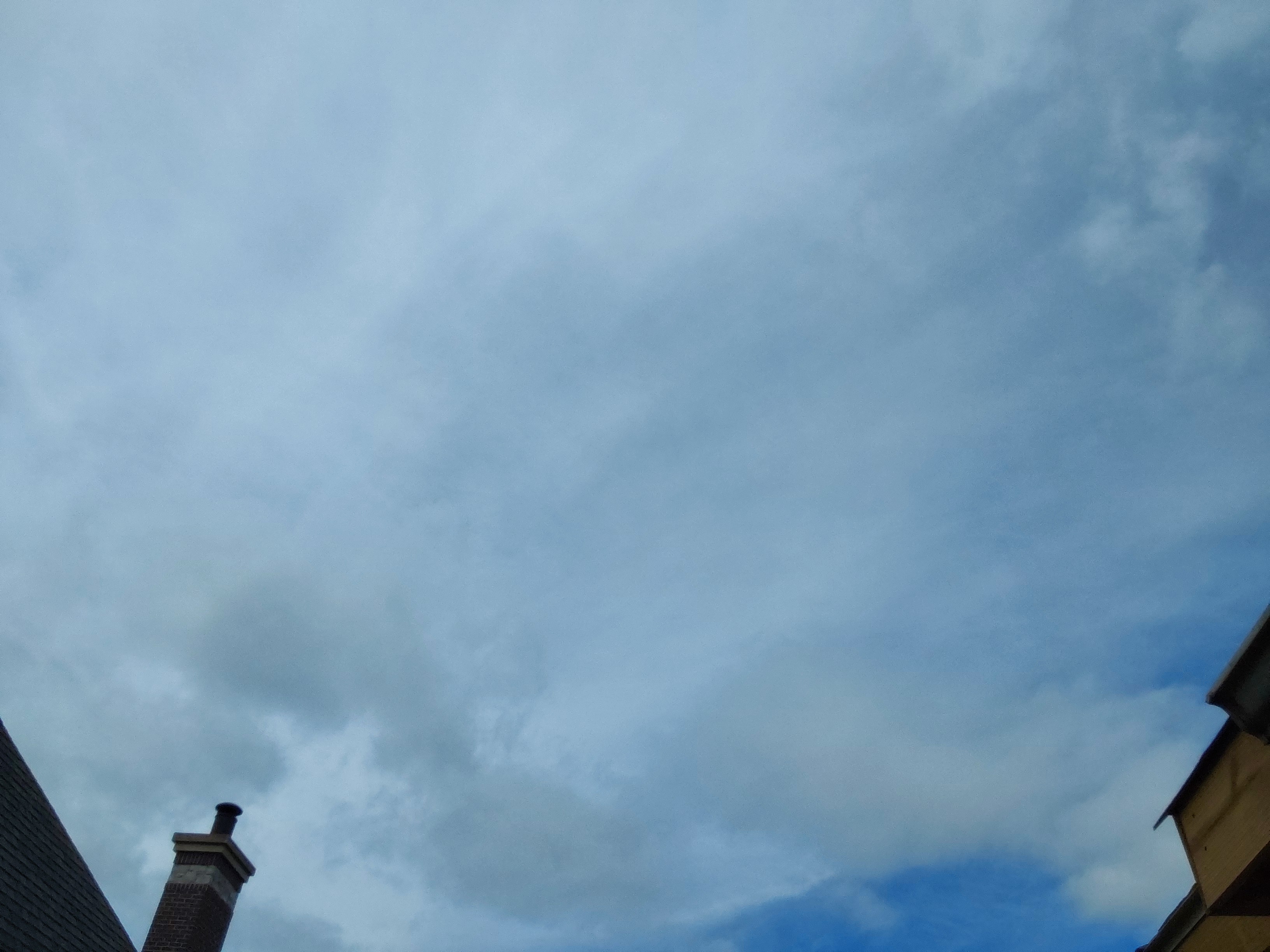
The beautiful skies this morning...
 
Allen Jackson
Posts: 140
26
  • Likes 4
  • Mark post as helpful
  • send pies
    Number of slices to send:
    Optional 'thank-you' note:
  • Quote
  • Report post to moderator

Allen Jackson wrote:Correction:  For example, my 100 | 30 controller has an upper limit of 100 volts but below that, I can connect 1200 watts of panels (3S2P 24 Vdc panels, running about 63 Vdc and nominally 31 20.5 amps) - and still never get much more than 400 watts of charging power (on my 12 volt system), because it maxes out at 30 amps...  


3 x 24.5 volt panels in series = 73.5 volts, but under load/charging, the voltage will drop off to about 63 Vdc.

Likewise 2 x 10.2 amp panels in parallel, will produce a max current of 20.4 amps. Be careful using "Y" connectors too much, because the MC4 connector spec limits those connectors to a max current of 30 amps. You can't just keep parallelling panels repeatedly, or you risk overloading/burning out the MC4 connectors downstream.

I have one more placement challenge - if I were to ever want to use this box with an inverter, where I put that connector?!? If I put it on the end where the 3rd charge controller is sitting, it will interfere with pulling it out and I'll need to wire it in place before covering it up (the block of wood with the DIN rail breakers is slated to go over the negative bus bar).

The positive end of the box will be cluttered up with the other load connections and switches, so that's still a challenge.

The other problem I noticed, is that I only have 4 of the black SB50 connectors, and if I'm going to actually use them for the solar/high-voltage inputs, I'll need 3 on the box for the 3 charge controllers, and 3 more for the cable harnesses to connect each to its own solar array... I think I'll leave the 3rd controller wired, but not terminated on the solar input for now, so I can cover it up and move on (for now), as I can't get more black SB50 shells before next week at this point and I really don't want to cut this corner for safety reasons.
1000011532.jpg
Anderson SB175 panel mount connector here will block removal of the controller
 
Steward and Man of Many Mushrooms
Posts: 6149
Location: Southern Illinois
1921
transportation cat dog fungi trees building writing rocket stoves woodworking
  • Likes 5
  • Mark post as helpful
  • send pies
    Number of slices to send:
    Optional 'thank-you' note:
  • Quote
  • Report post to moderator
Allen,

I like your clean build and the bus-bar connection.  I had thought about using a bus-bar but I could not figure out where I would put it in my build.  My alternative was the copper bolt that I used as a common termial.


Nice, clean design!


Eric
 
Allen Jackson
Posts: 140
26
  • Likes 4
  • Mark post as helpful
  • send pies
    Number of slices to send:
    Optional 'thank-you' note:
  • Quote
  • Report post to moderator
I really like those specific bus bars because they have both the 4 large studs, and 6 additional M4 screws that can be used for smaller current connections, like the minor loads (USB ports, etc. ).  They are also (tin-plated) copper.

I also kinda feel guilty about hijacking your thread... Sorry?
 
John Weiland
pollinator
Posts: 2923
Location: RRV of da Nort, USA
905
  • Likes 4
  • Mark post as helpful
  • send pies
    Number of slices to send:
    Optional 'thank-you' note:
  • Quote
  • Report post to moderator
Also adding in here a belated apology, Eric, if this has been too much take-over of your original thread.  In my defense, I was inspired by your build and am always grateful to do a new project alongside of others.....bouncing ideas back and forth with others seems more productive to me and this thread has delivered and hopefully will induce others interested to give it a try.

Now to chip in with another question:  Victron sells a battery balancer for monitoring and controlling two 12V batteries, serially connected for 24V.  As I look across some of the DC-based irrigation pumps, certainly 12V alone do exist, but 24V starts to get you into more serious gallons-per-minute territory.  My current gas-powered pump with 2" ports delivers optimally ~9500 gallons per hour (~150 gal/minute), but with my head height and garden hose step-down assembly, I'm probably putting out ~15-20 gal/minute.   I could tolerate a reduction for watering the garden but feel I need to get close to those pump specs, otherwise I may end up spending good $$$ on an system with inadequate flow.  From the surface of the river to ground-level in the garden is no more than 30 ft of height, even adding the additional 3-4 feet for the end of the hose being in held during watering.

Anyway, if I go 24V, I would be interested in either (A) recharging each 12V battery separately, then reconnecting them to run the pump, or (B) using the Victron balancer and a charge controller that can do 24V and just solar-charge the serial-connected battery duo.  Even during dry periods, we can go 2-3 days between watering since the clay soil holds water quite well....and would allow a few days for recharging the batteries.  Note, I'm not so interested in direct PV panel to pumps set-ups since I prefer watering at dusk to reduce water evaporation immediately after watering.  Thoughts?  Thanks!...
 
Allen Jackson
Posts: 140
26
  • Likes 4
  • Mark post as helpful
  • send pies
    Number of slices to send:
    Optional 'thank-you' note:
  • Quote
  • Report post to moderator
Do you have the specs of the pump?

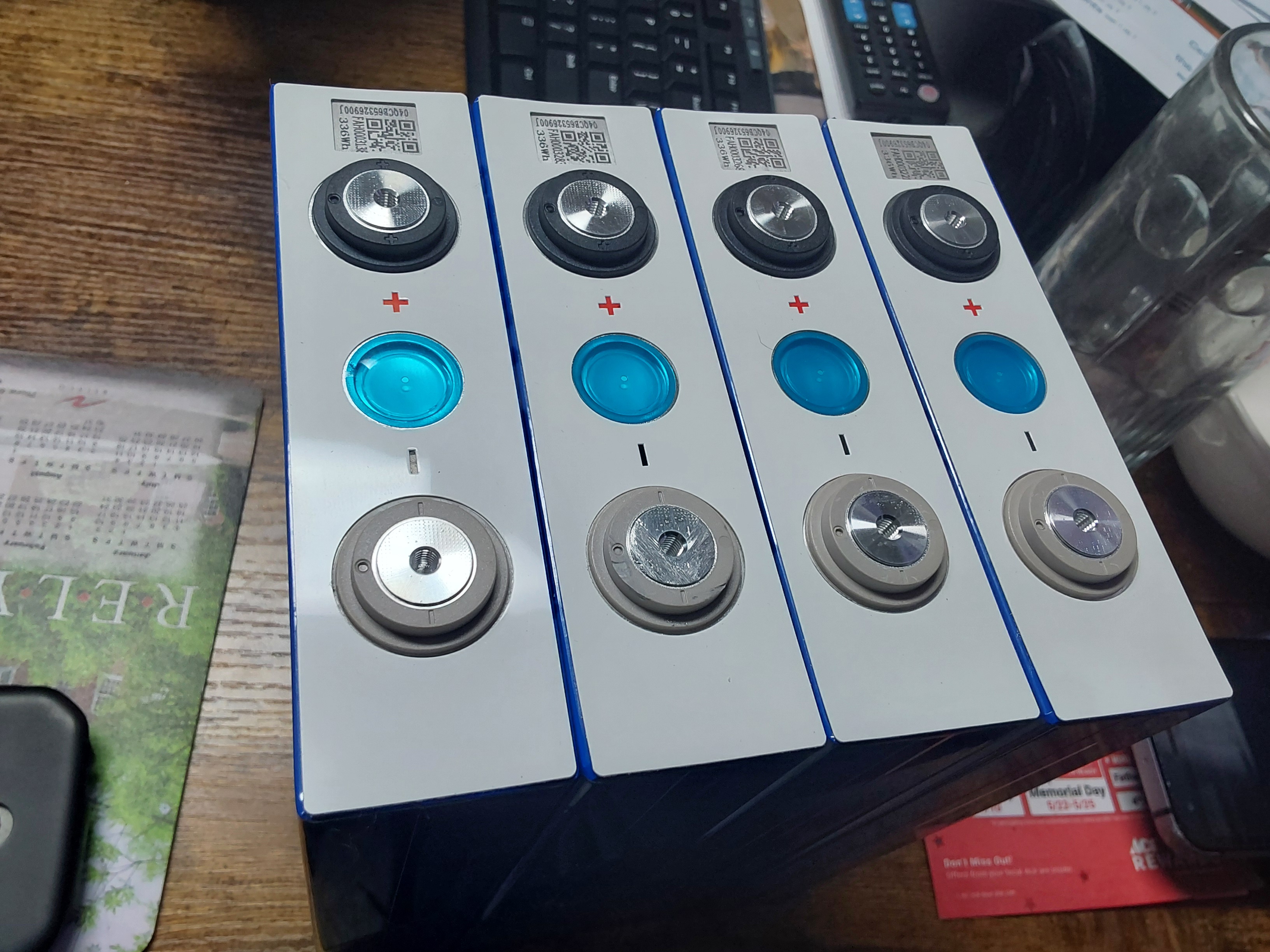
And I broke down and bought a set of 100 Ah batteries for a R2-D2 replica I was building, as a major upgrade to the old 12 Vdc sealed lead acid battery. Mine didn't come with any bus bars or terminal screws, or separator sheets, but I'll sort it out. (I think they're M4 holes?)
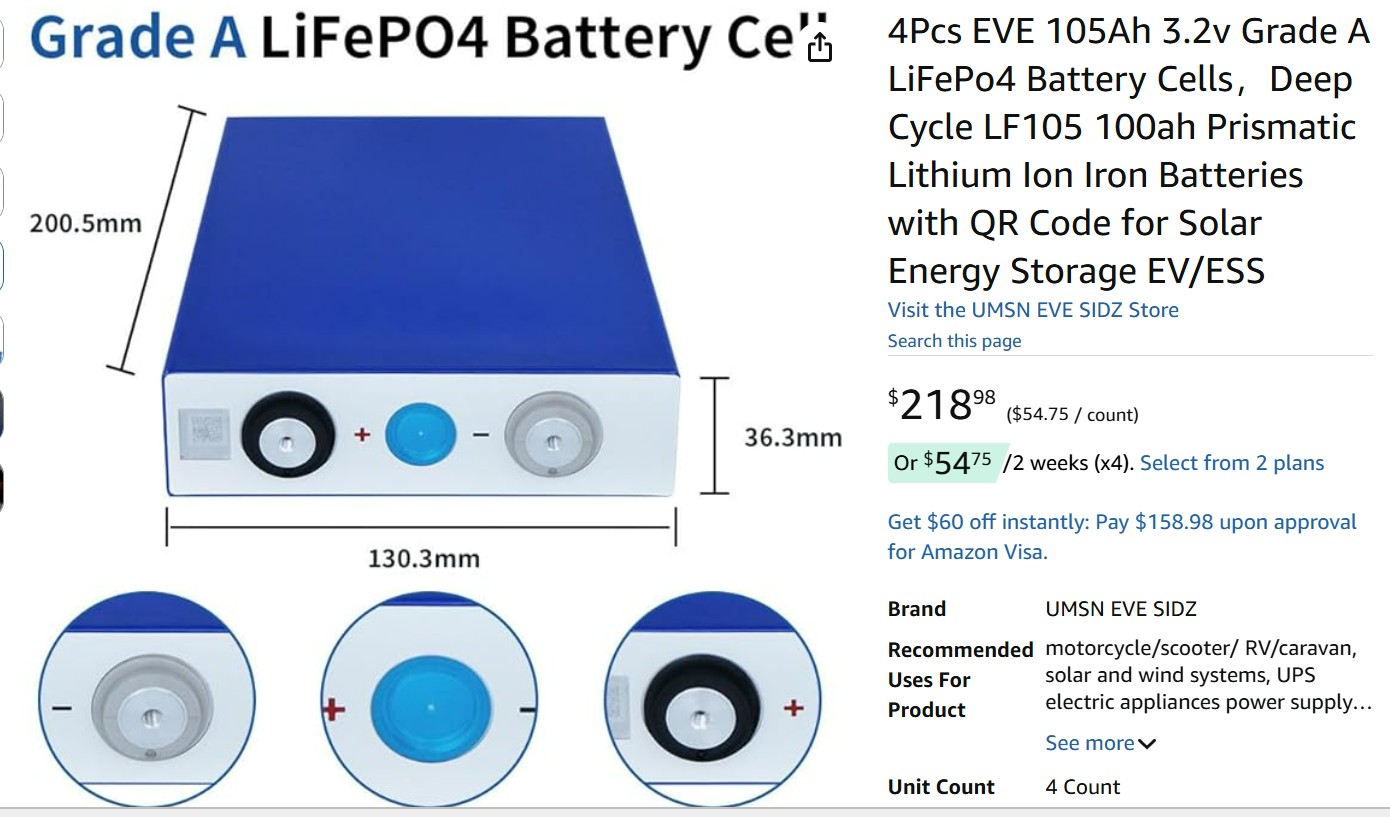
20260522_231512.jpg
100 AH LiFePo4 Cells
 
John Weiland
pollinator
Posts: 2923
Location: RRV of da Nort, USA
905
  • Likes 5
  • Mark post as helpful
  • send pies
    Number of slices to send:
    Optional 'thank-you' note:
  • Quote
  • Report post to moderator

Allen Jackson wrote:Do you have the specs of the pump?

Mine didn't come with any bus bars or terminal screws, or separator sheets, but I'll sort it out. (I think they're M4 holes?)


I will track down pump specs for a next post.

Do your cells look like the ones I recently bought (below).....mine also did not come with bolts or bus-bars or separator sheets, so I purchased those separately.  And yes, M4 bolt size for the terminals.
100AhEVE.jpg
prismatic cells
prismatic cells
 
Eric Hanson
Steward and Man of Many Mushrooms
Posts: 6149
Location: Southern Illinois
1921
transportation cat dog fungi trees building writing rocket stoves woodworking
  • Likes 5
  • Mark post as helpful
  • send pies
    Number of slices to send:
    Optional 'thank-you' note:
  • Quote
  • Report post to moderator
Guys, no apologies needed.  Thatโ€™s the whole purpose!!

Eric
 
Allen Jackson
Posts: 140
26
  • Likes 2
  • Mark post as helpful
  • send pies
    Number of slices to send:
    Optional 'thank-you' note:
  • Quote
  • Report post to moderator
They look like an exact match. If these fit well enough, I'll try to get 12 more, but if not, then maybe only 4 more
 
Eric Hanson
Steward and Man of Many Mushrooms
Posts: 6149
Location: Southern Illinois
1921
transportation cat dog fungi trees building writing rocket stoves woodworking
  • Likes 6
  • Mark post as helpful
  • send pies
    Number of slices to send:
    Optional 'thank-you' note:
  • Quote
  • Report post to moderator
Guys,

I have been massively tied up at school these last three weeks or so, so I have not had the time to post as often as I would have likedโ€”senior finals, senior grades, graduation.  Add to this that I in the last two weeks I missed five days of school due to back problems, having a first rate chiropractor work on me, and then have a minor surgical procedure (lumbar steroid injection).  And I still have this last week of juniors in my U.S. History class, which owing to my absences, are massively behind.

What I am trying to say is that I have read with great interest how both of your projects have gone.  I have been able to read a little here and there,  but I have hardly had any opportunity to post anything significant.  But it has been great to read how your projects are developing, and thanks for the kind words!  That bit actually is humblingโ€”in the best way.  Maybe in a couple of weeks I can get a chance to restart production and finish what I started.

In the meantime, keep the thread alive!!


Eric
 
Allen Jackson
Posts: 140
26
  • Likes 7
  • Mark post as helpful
  • send pies
    Number of slices to send:
    Optional 'thank-you' note:
  • Quote
  • Report post to moderator
Your health is far more important, without it, not much else will matter.  Speedy recovery from your back problems, AND your semester
 
Allen Jackson
Posts: 140
26
  • Likes 5
  • Mark post as helpful
  • send pies
    Number of slices to send:
    Optional 'thank-you' note:
  • Quote
  • Report post to moderator

John Weiland wrote:

Allen Jackson wrote:Do you have the specs of the pump?

Mine didn't come with any bus bars or terminal screws, or separator sheets, but I'll sort it out. (I think they're M4 holes?)


I will track down pump specs for a next post.

Do your cells look like the ones I recently bought (below).....mine also did not come with bolts or bus-bars or separator sheets, so I purchased those separately.  And yes, M4 bolt size for the terminals.


Mine are apparently sold as "100 Ah" cells, and yours are "105 Ah" cells. I'm a little concerned about the "3C" listing on mine, because I don't want to put 300 amp bus bars on this set... Nice to know the capacity is there, but I don't expect to ever use that unless I were to get a set of 8 for a 4S2P configuration to replace my car battery, with a 600 amp current capacity. If I use the old 40 amp BMS the I won't have to worry about it, & I can just use 6 AWG wire to connect them.

The ones I bought:
https://www.amazon.com/dp/B0GFFSFWWN?

I must add, I'm having trouble reconciling a 300 amp terminal connection that's held together with only an M4 screw... I might need to drill the holes out and tap to at least M6?
 
Allen Jackson
Posts: 140
26
  • Likes 5
  • Mark post as helpful
  • send pies
    Number of slices to send:
    Optional 'thank-you' note:
  • Quote
  • Report post to moderator
If my numbers are correct, 1/2" soft copper pipe (type M) has a cross-sectional wall size that's just over that of 2 AWG wire (33.8 sq mm vs 33.6 sq mm), so flattened copper pipe would make a good bus bar, with at least a current capacity of 190 amps (at 105 degrees C). I could use 3/4" copper pipe instead, but that doesn't seem necessary & I haven't run the numbers on anything larger yet.

3/4" type M copper pipe appears to have a cross-sectional area that's just over the size of 1/0 copper wire, and can probably handle equivalent current to that.

1" type M copper appears to have a cross-sectional area that's just over halfway between 2/0 and 3/0 copper cable...

My homework/showing my work, just to allow others to check my figures:

{Nominal outside diameter of the pipe/2 squared x Pi (radius squared x Pi)} - {nominal inside diameter of the pipe/2 squared x Pi} should equal just the area of the wall thickness.

Conversion of square inches to square mm is done by multiplying the sq inches x 25.4 x 25.4 (squared).

Most of the charts showing pipe sizes are listing in SAE/English units, ie. inches, not metric, but the chart I found showing wire gage equivalents was a chart showing everything in metric (mm). Wire sizes larger than 4/0 use the metric system anyway.  The European norm is to use a comma delimited where Americans are accustomed to using a period, so be mindful of that when reading that chart.

https://www.sab-cable.com/cables-wires-harnessing-temperature-measurement/technical-data/cables-and-wires/american-cable-stranding.html

Types K and L are thicker walled pipe, so they could support even higher current than these examples.

https://pexuniverse.com/copper-pipe-dimensions-specs

After finding the next smaller size wire on the chart, one can then cross-reference the ampacity charts for that size wire, using whichever temperature column one is willing to insulate to.  This post is dedicated to my high school math teacher Ms. Klingsic, who insisted that EVERYONE wants to see my work... ๐Ÿ˜‰


Allen Jackson
Posts: 140
26
  • Likes 4
  • Mark post as helpful
  • send pies
    Number of slices to send:
    Optional 'thank-you' note:
  • Quote
  • Report post to moderator
I've been up to no good again...

Very warm and sunny day, but I chose not to work on the outdoor testing of this, and instead, work on some polish and trim details.

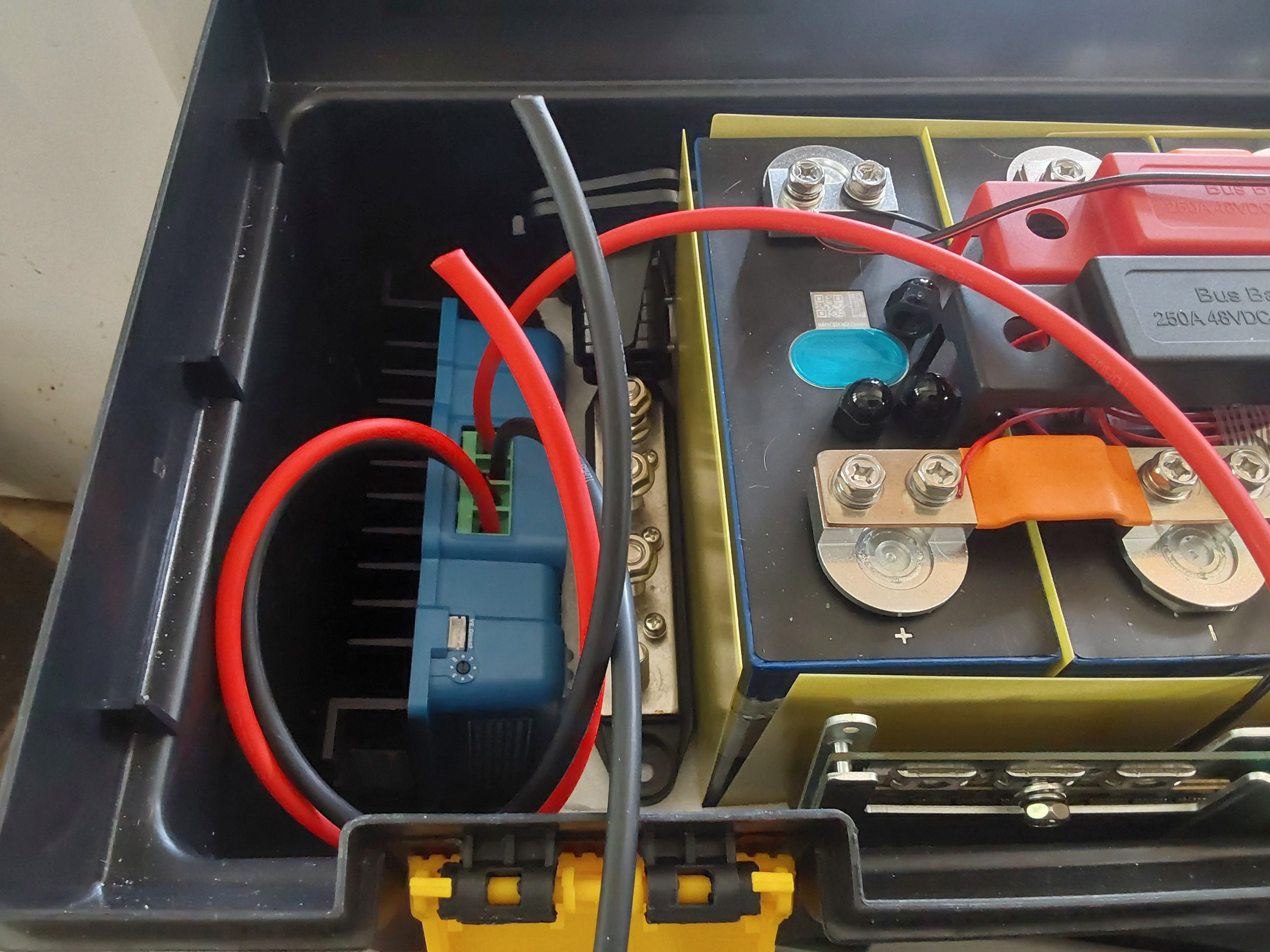
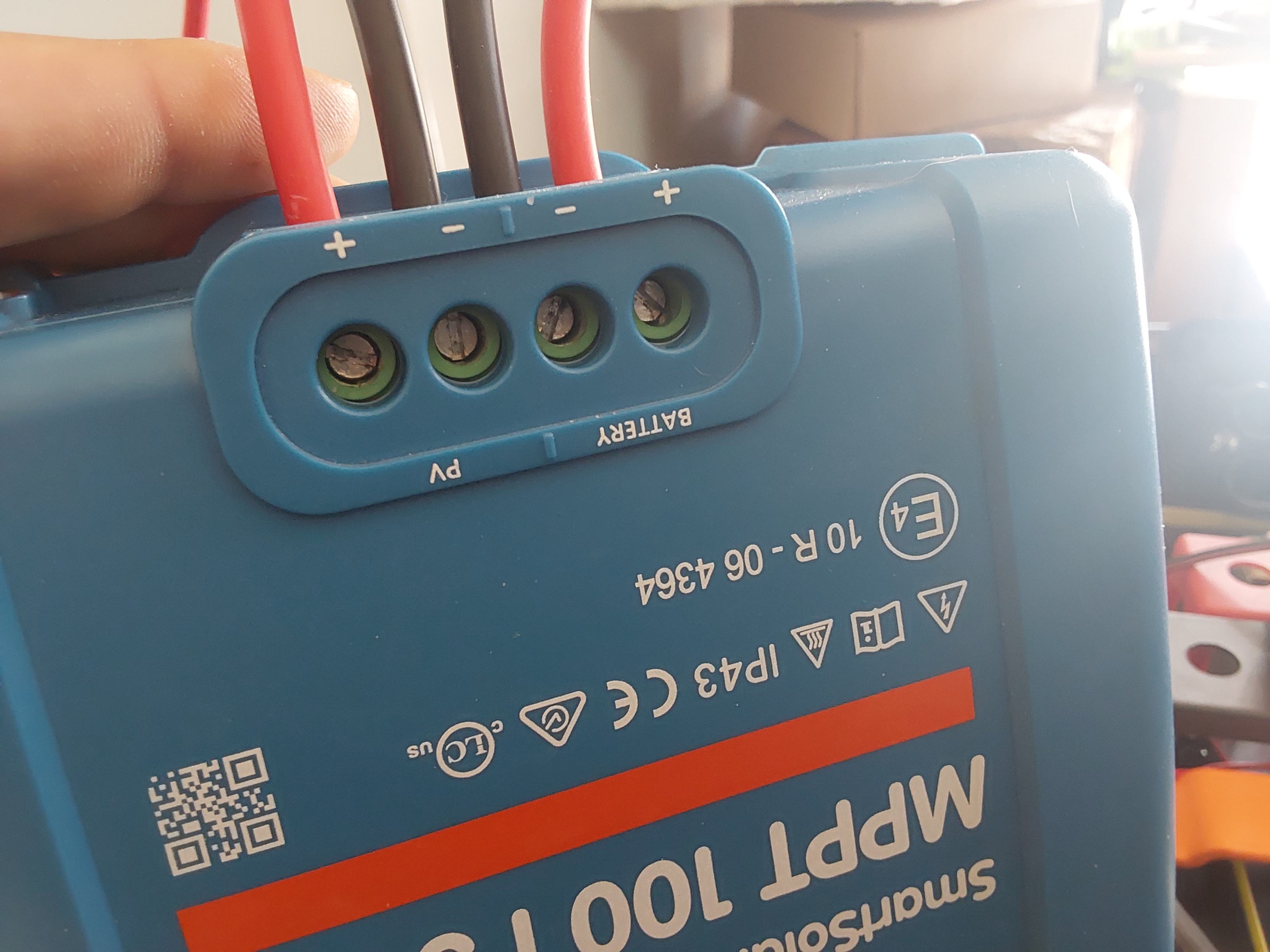
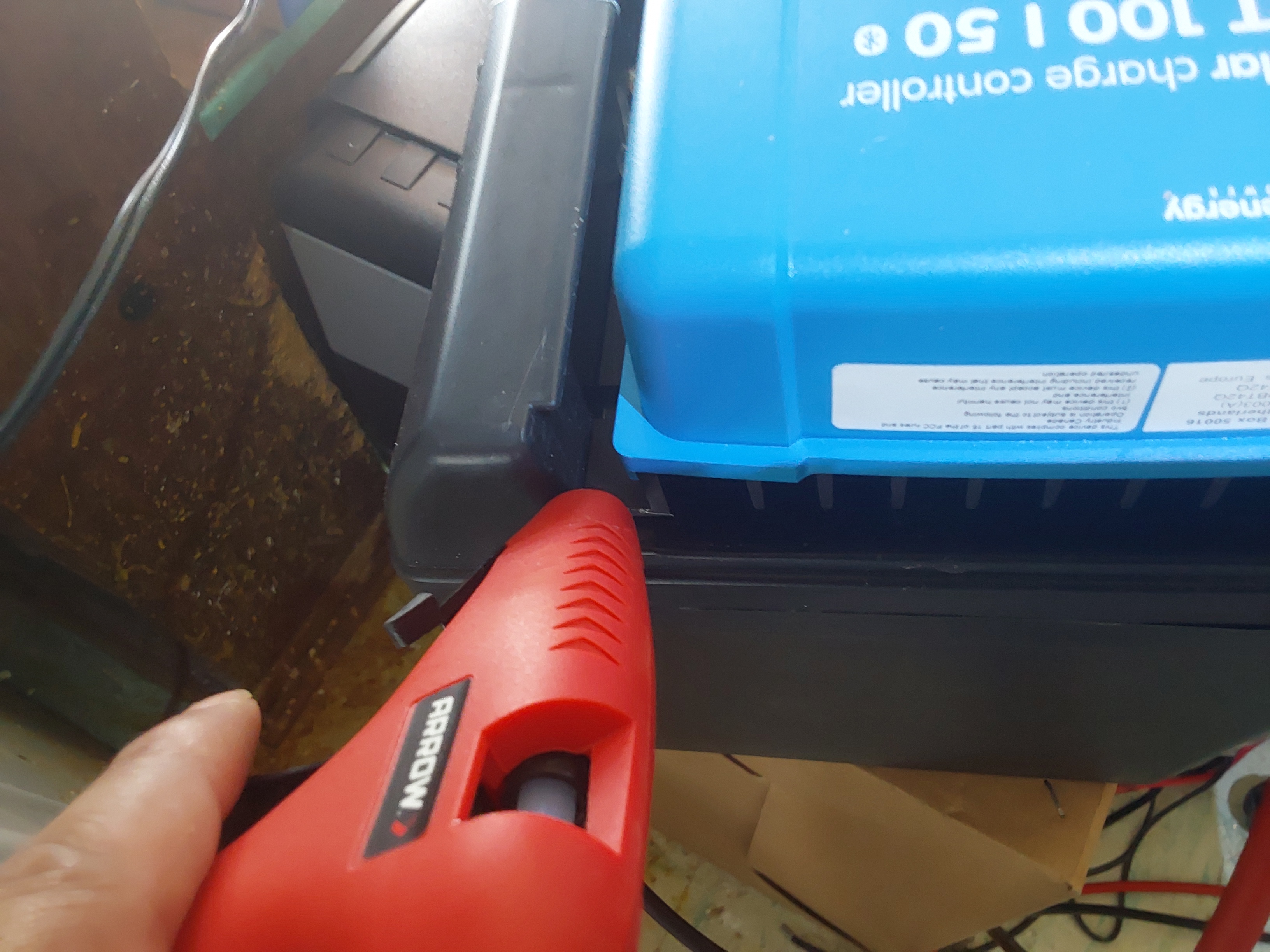
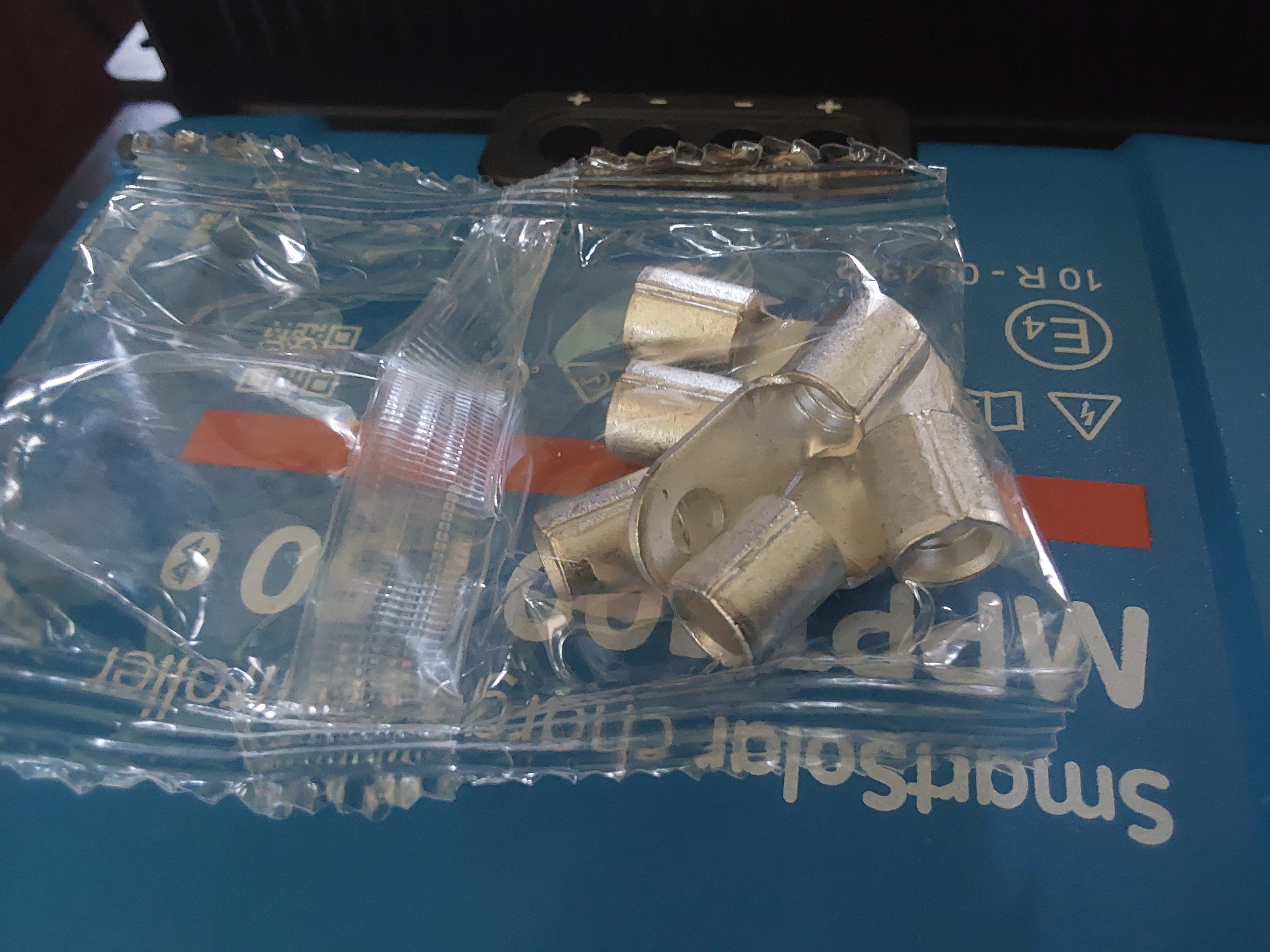
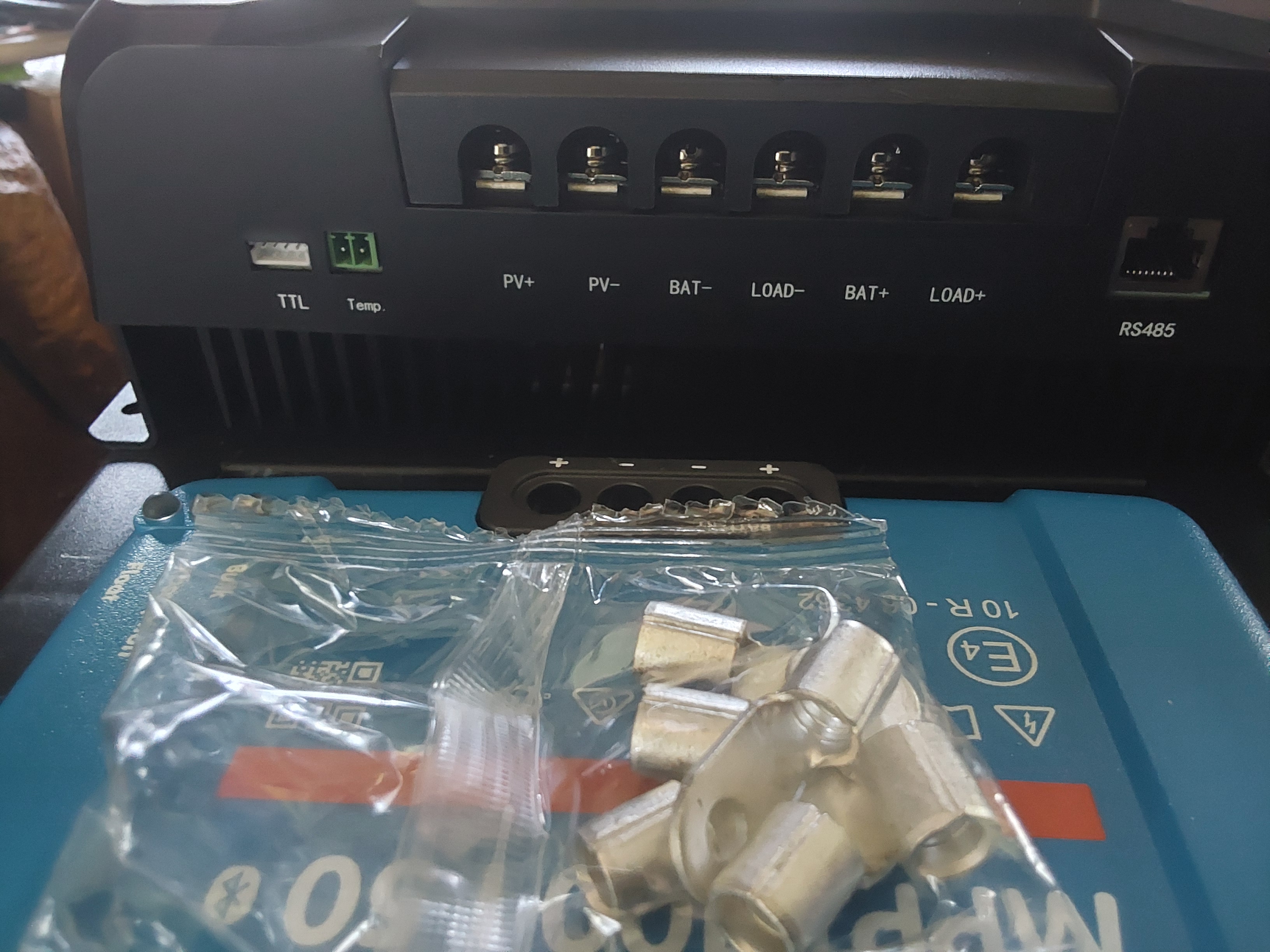
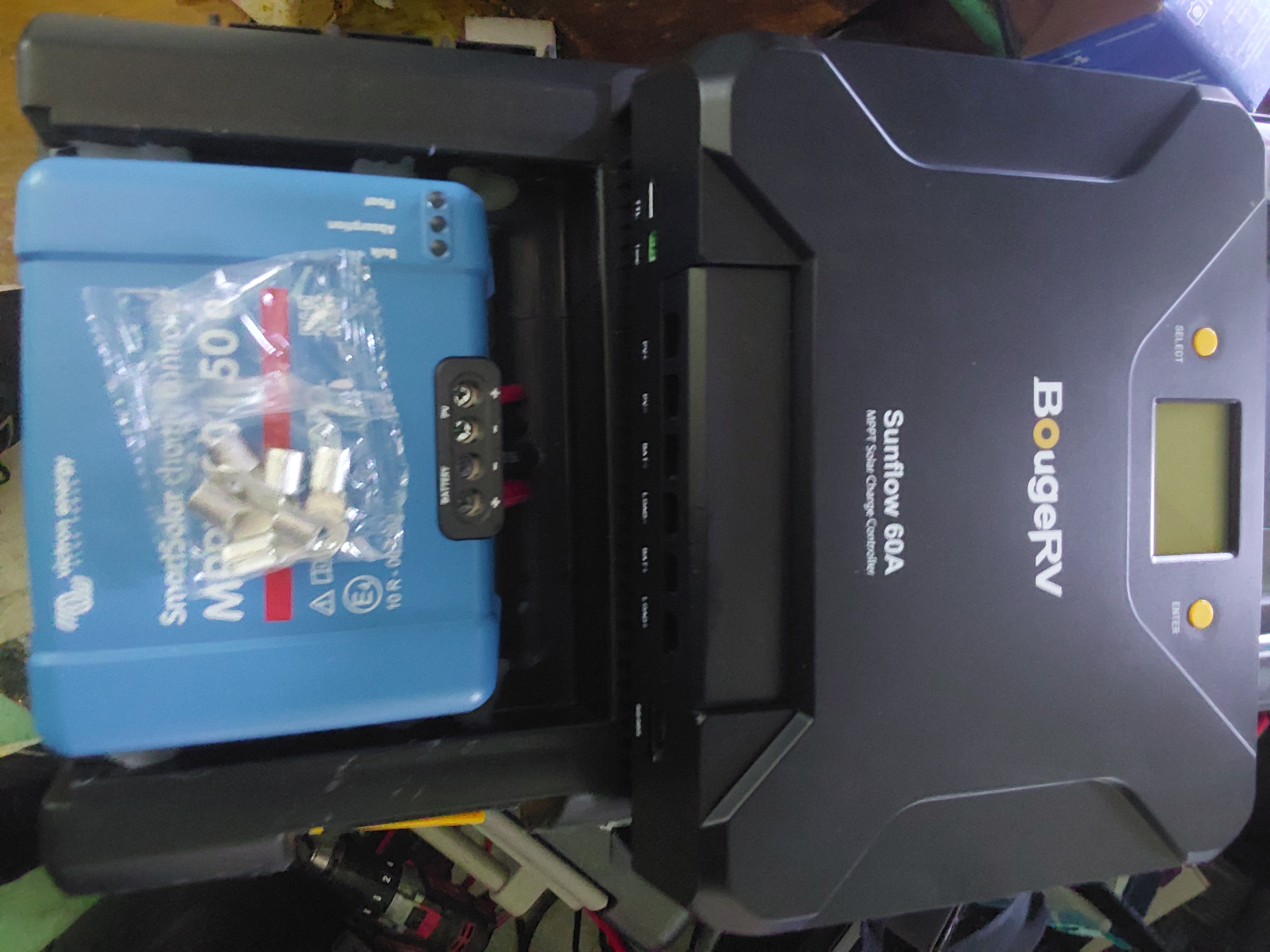
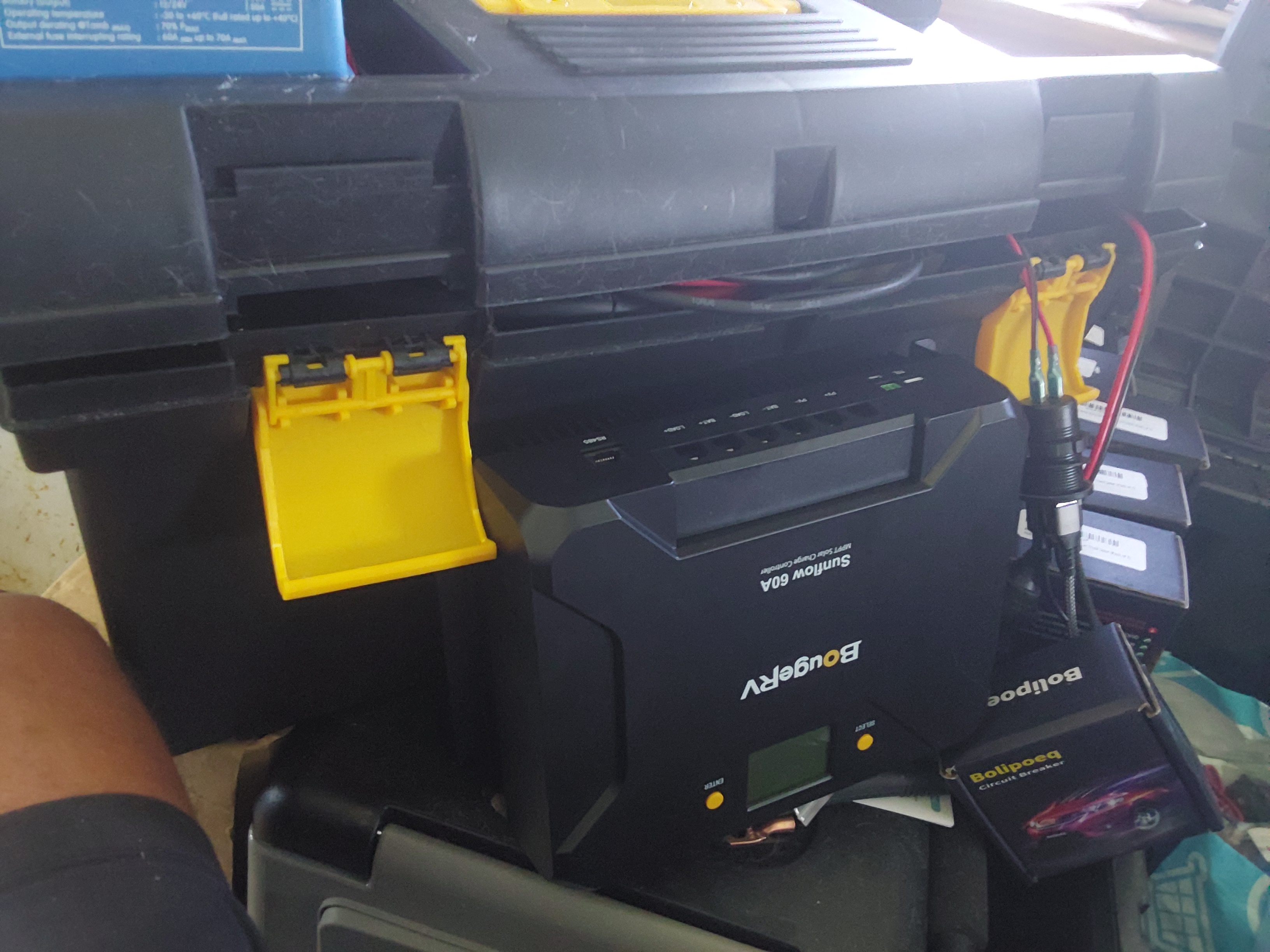
I discovered hot glue - the world may never be the same now! The 50 amp controller is now firmly in place (and I drilled holes in the toolbox, so I can't return it now!). It's mostly wired - still need to terminate the solar end of those wires at a DC disconnect breaker.

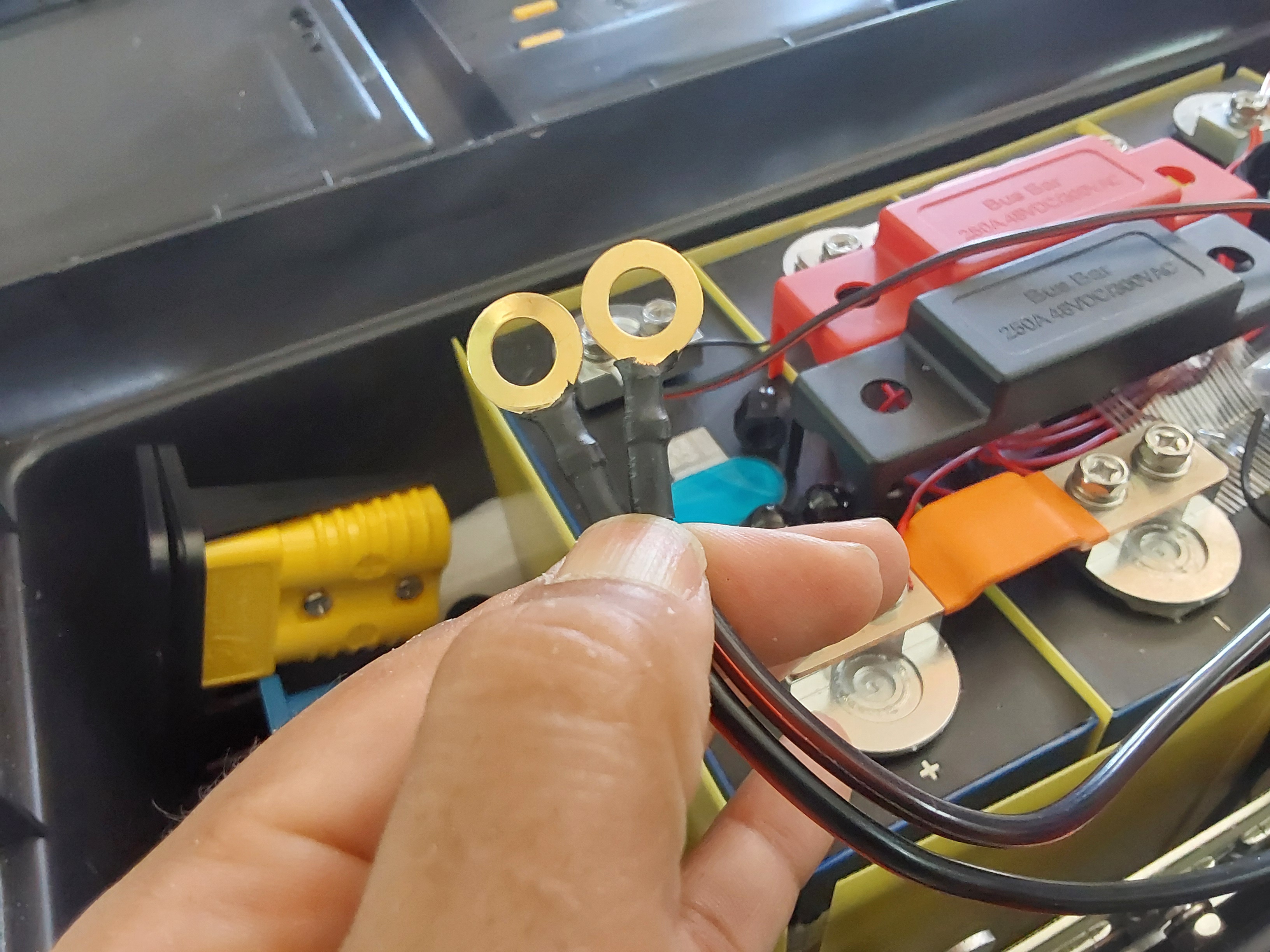
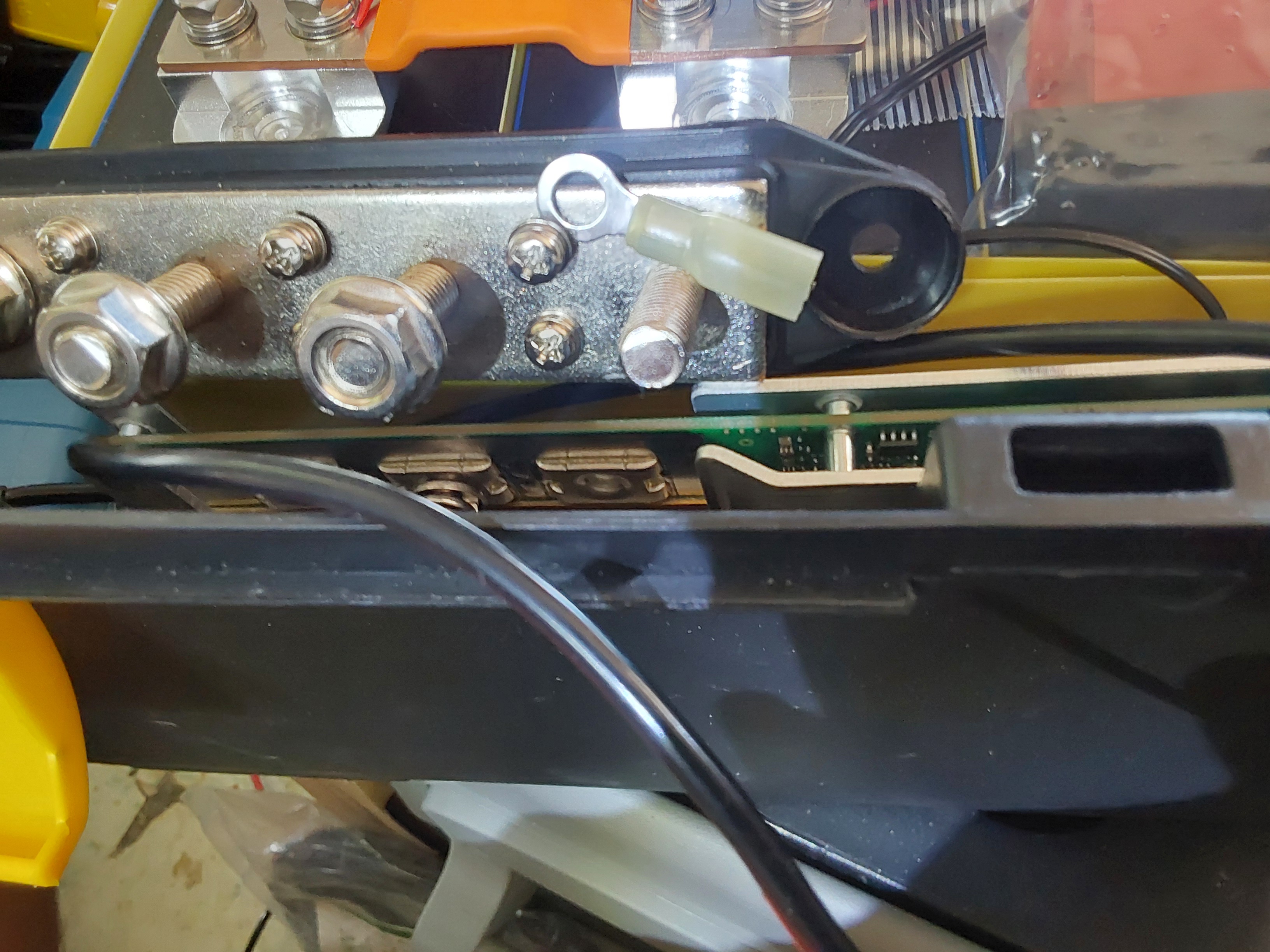
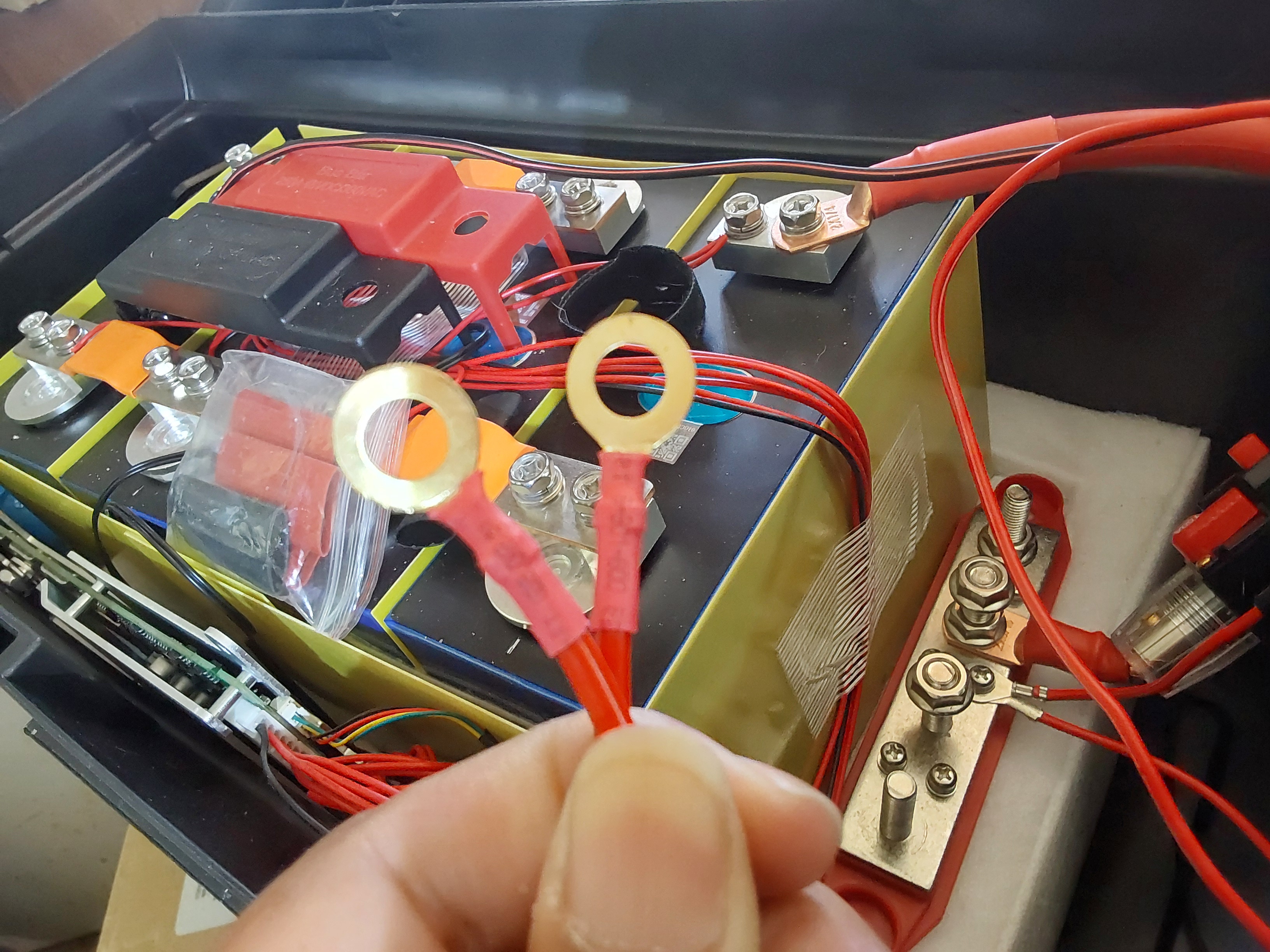
I've cut off the 5/16" ring terminals on the 12 Vdc outlets (can't return them now either!) and re-terminated with 10-12 GA 1/4" ring terminals, so I can move them to the smaller (M4) screws on the bus bars and save the 5/16" studs for higher current connections.

I have ran wires to the 30 amp (idle) charge controller, because it will be buried when everything else is in place and there's no way to get tool access to connect to it later without tearing everything apart. Only a few more connections to the negative bus bar, then I can move on to the positive end of the toolbox.

The charge controllers in the lid will have their battery breakers hot-glued inset in the lid, and the negatives will connect directly to the negative bus bar. I've done a test fit with the breakers in the hollow area above the handle in the lid, and I can still close the top.
1000011533.jpg
We can do better than this - we have additional M4 connection points!
1000011534.jpg
Have crimp, will travel?
1000011535.jpg
[Thumbnail for 1000011535.jpg]
1000011537.jpg
And for the positive side too
1000011538.jpg
[Thumbnail for 1000011538.jpg]
1000011548.jpg
Must pre-connect this one, won't be able to later!
1000011549.jpg
The terminal screws need to be accessed from the side that will be facing into the bus bar.
1000011550.jpg
THIS IS A HORRIBLE PLACE TO GET STRAY WHISKERS! DON'T!
1000011572.jpg
I found a hot glue gun!
1000011573.jpg
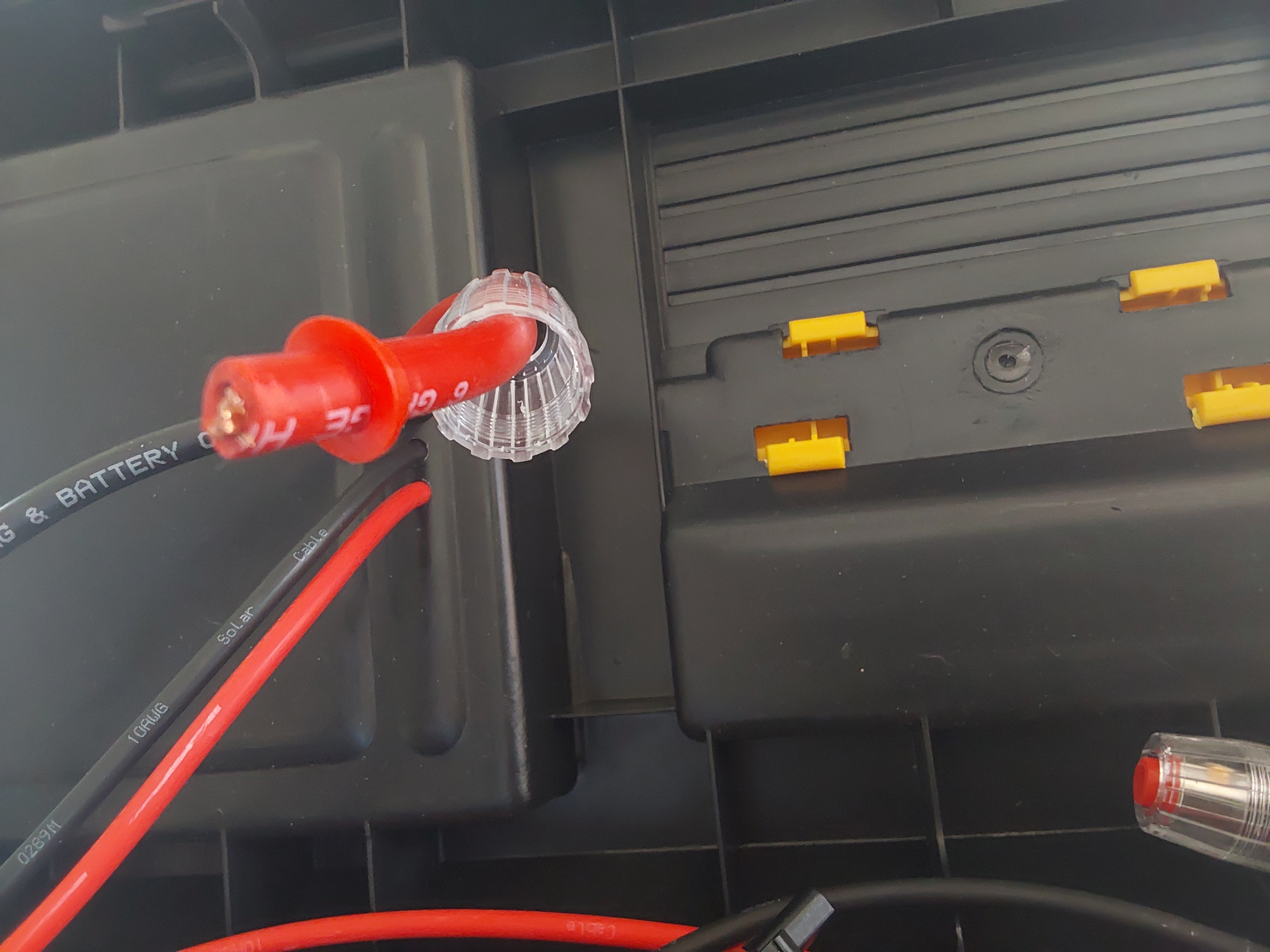
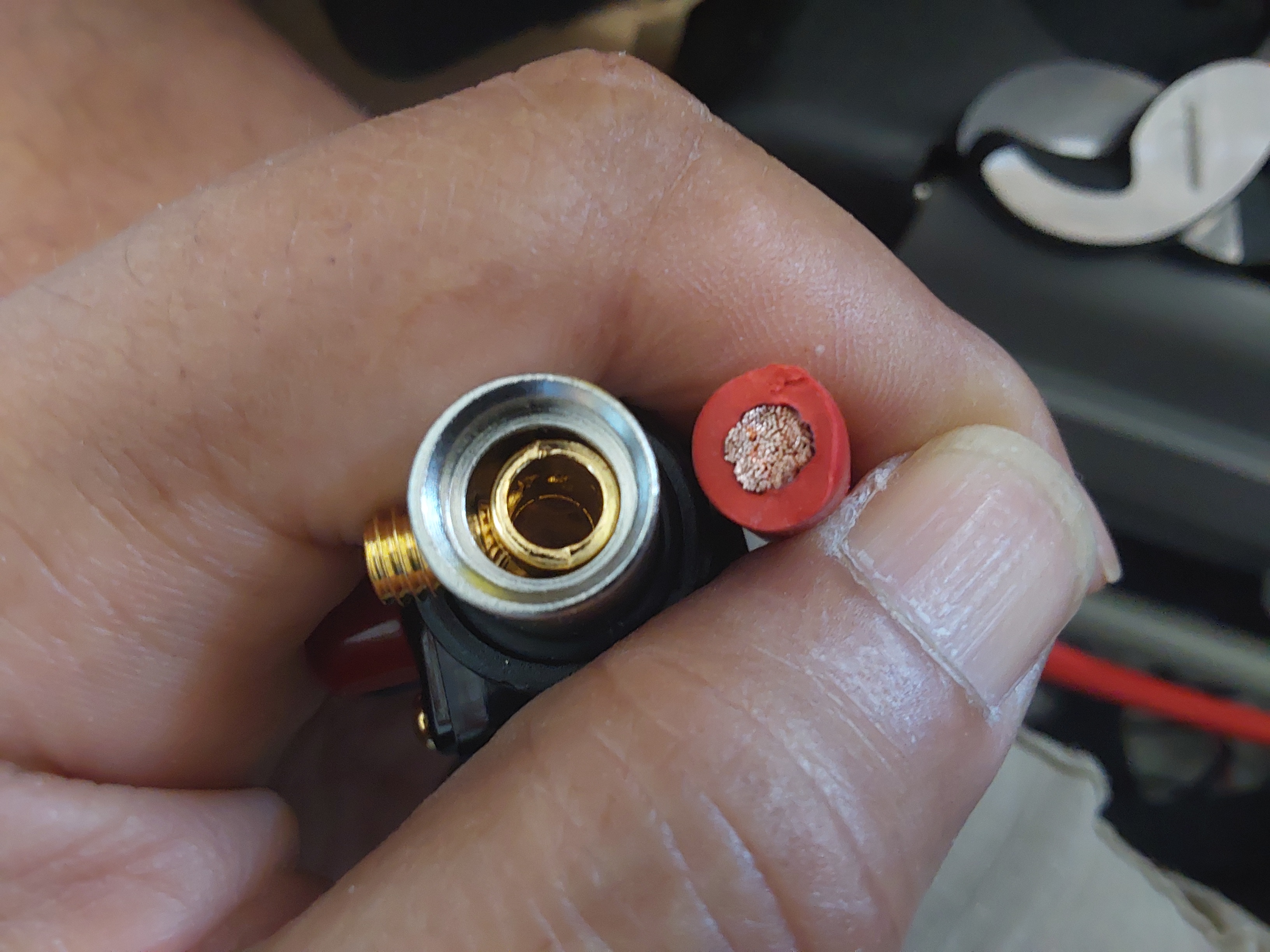
Those cheap breakers will fit this size wire, including the ferrule and the weatherseal
1000011575.jpg
It may look tight, but it fit
1000011576.jpg
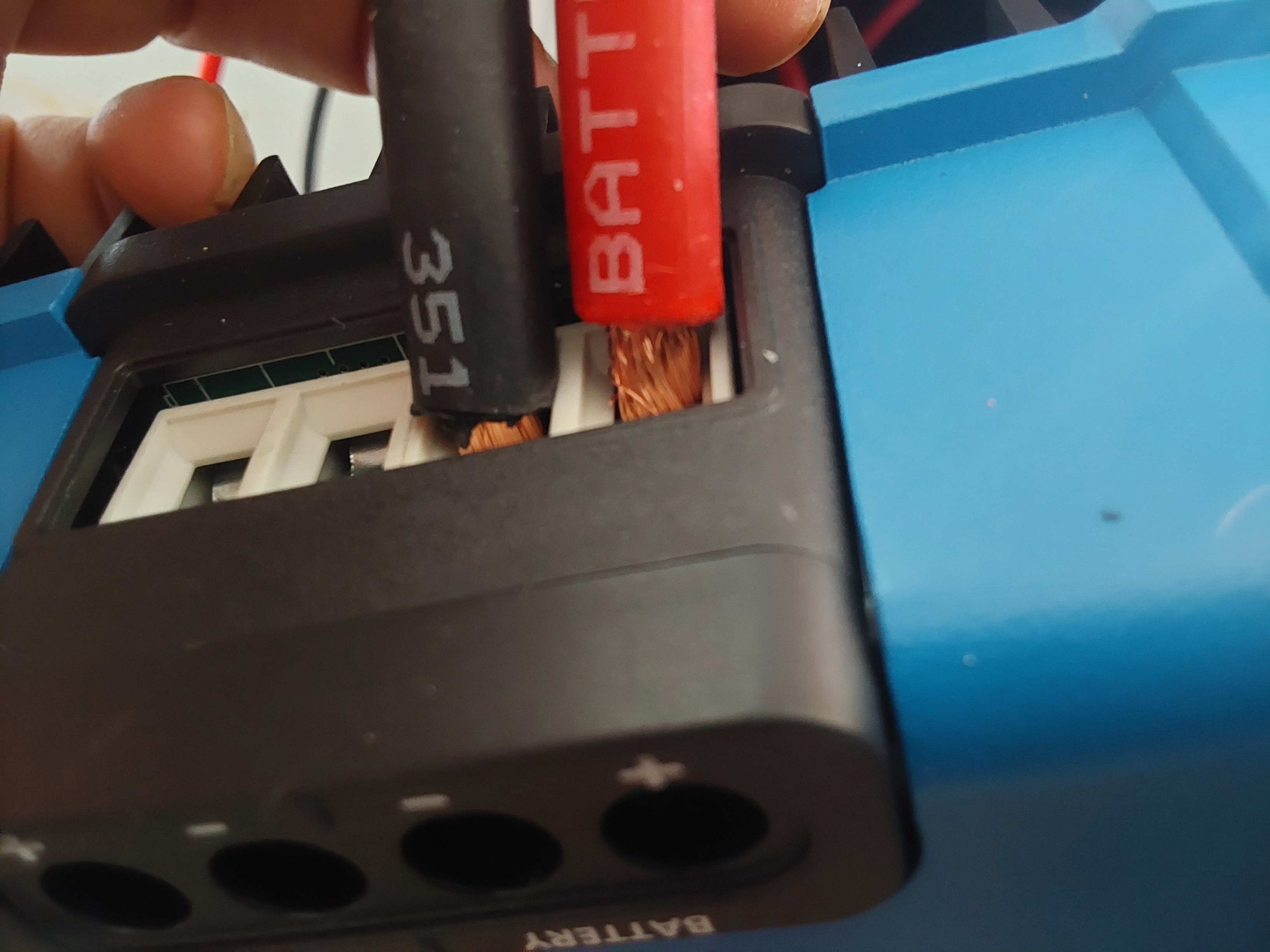
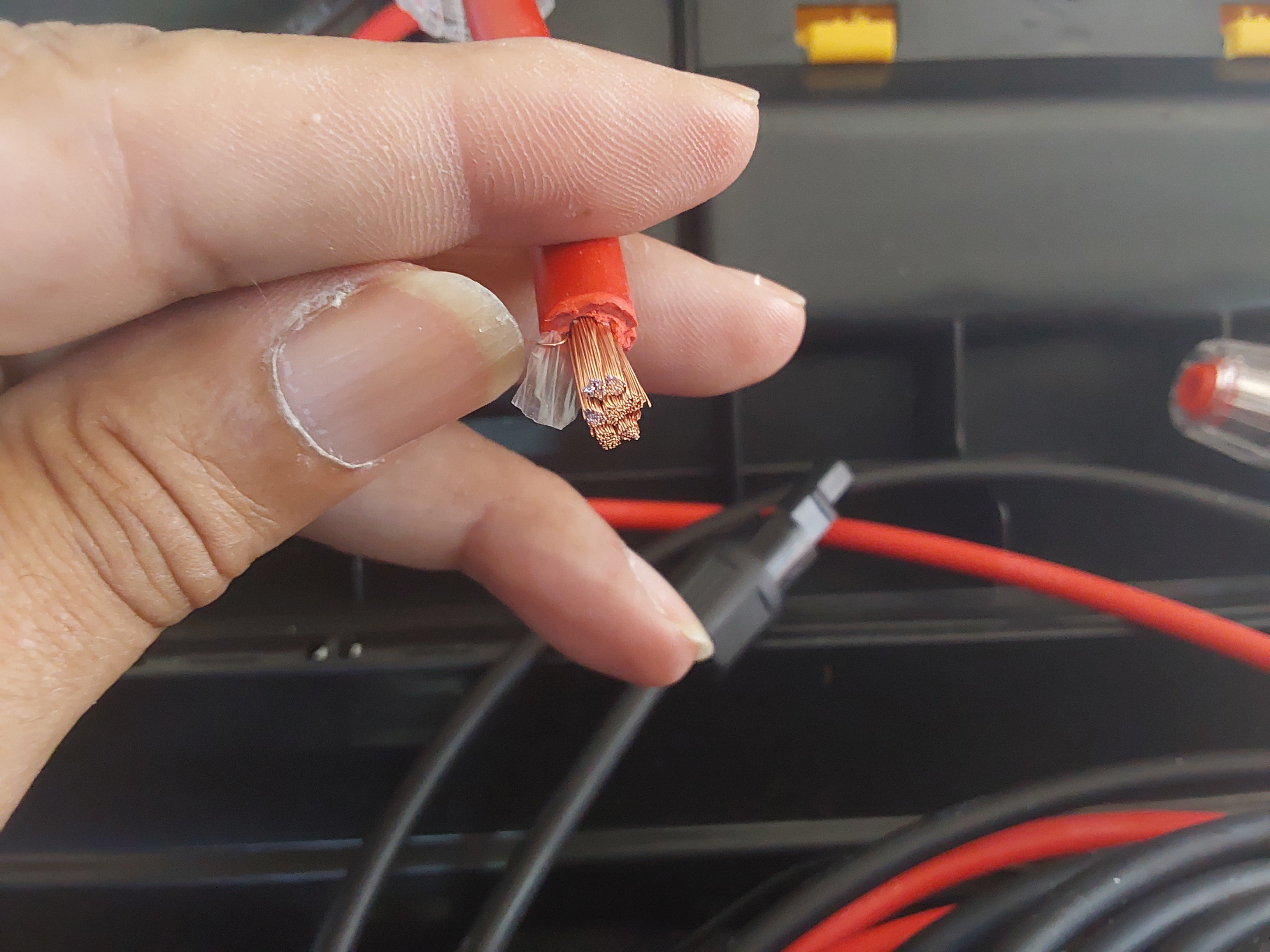
When stripping wire, make sure there's no extra "skin" that should be removed, or your connection will suffer!
When stripping wire, make sure there's no extra
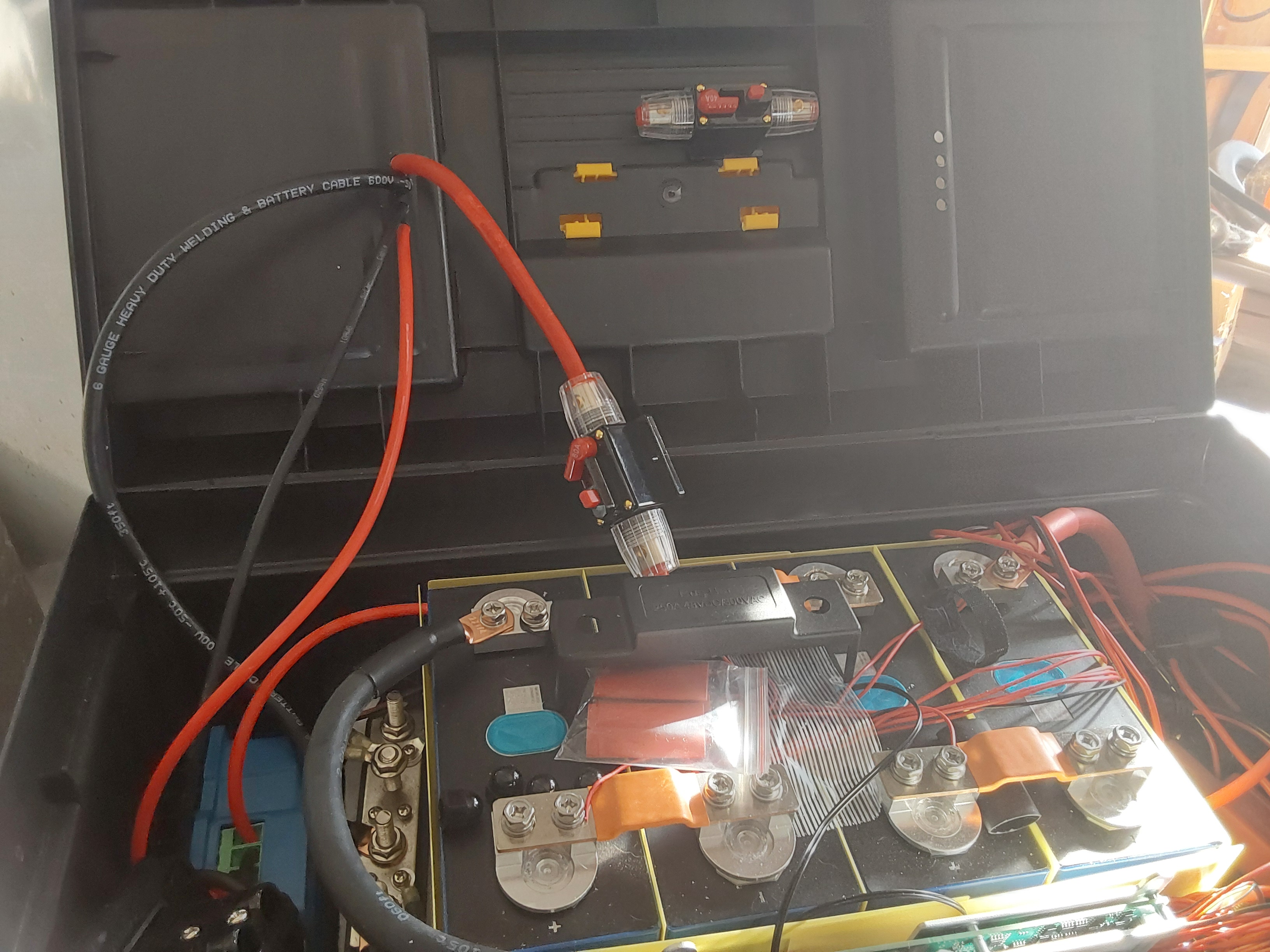
20260525_180627.jpg
It will fit, and there's enough play to open/close the lid too.
 
John Weiland
pollinator
Posts: 2923
Location: RRV of da Nort, USA
905
  • Likes 5
  • Mark post as helpful
  • send pies
    Number of slices to send:
    Optional 'thank-you' note:
  • Quote
  • Report post to moderator
Wow....that is a nice, snug and well-organized build, Allen!

I agree that I was a bit taken aback by the M4-size terminals, but am dealing mostly with 100A or much less juice for my intended needs.  I think my cells will do 2C discharge for a bit, but I don't anticipate using this first attempt assembly for much but powering light-duty loads.  Also, unlike your box, the one I bought did not allow for upright orientation of the cells....they are laying on their side in order to allow for the BMS laying across the cells.  That said, I was at the store over the weekend looking at new ammo box offerings and saw a 'next-size-up' version (Plano) that may allow for a 24V build in that box.  I'm looking at pumps like the one below for the summer garden irrigation efforts.  

The specs are a bit below what my gas pump offers, but I'm realizing as well, as I do tests with a yard hydrant vs. exterior house spigot vs indoor sink tap just how much a role here is played by the conduit size shuttling the water from point A to point B.  Thus, our home well pump at between 40 - 60 psi delivers about 10 gal/min. of water flow out the yard hydrant, but a much lower rate out of an indoor sink tap.  It makes sense when you think about the 3/8" fittings on the indoor sinks versus the ~1-1.25" pipe and couplers running from the ballast tank and well pump directly to that hydrant. I'm hoping that the pump or one similar will serve my needs with the battery and a solar charging system set up near the water source.

All the same, based on the specs below for the top two pumps (12V vs 24V), I may be able to get by with the 12V system.....still need to crunch numbers, ponder wants vs needs, and finalize the plans. But I need to shake a leg since we're fast approaching summer heat:  After a touch of 32F last Wednesday, we are over 90F today!
ElectricPumpSpecs.jpg
[Thumbnail for ElectricPumpSpecs.jpg]
 
Allen Jackson
Posts: 140
26
  • Likes 4
  • Mark post as helpful
  • send pies
    Number of slices to send:
    Optional 'thank-you' note:
  • Quote
  • Report post to moderator
1 horsepower = 746 watts. DC power (in watts) = volts x amps.

For a 4-cell LiFePO4 battery, the voltage is nominally 12.8 Vdc, so you can multiply each horsepower rating x 746, then divide the result by 12.8 volts to get the ideal current required from the battery with 0 losses.  If you have the wattage already, you can skip that first step and just divide by the voltage.

Divide that by the system efficiency to get the real-world current draw. That should give you a better idea of whether you're really needing to go to a 24 Vdc system, in terms of current requirements, and the duty cycle will determine how many (more?) Ah of capacity you might need.
 
John Weiland
pollinator
Posts: 2923
Location: RRV of da Nort, USA
905
  • Likes 5
  • Mark post as helpful
  • send pies
    Number of slices to send:
    Optional 'thank-you' note:
  • Quote
  • Report post to moderator

Allen Jackson wrote:....... If you have the wattage already, you can skip that first step and just divide by the voltage.

Divide that by the system efficiency to get the real-world current draw. That should give you a better idea of whether you're really needing to go to a 24 Vdc system, in terms of current requirements, and the duty cycle will determine how many (more?) Ah of capacity you might need.


Yeah, I was using the "kW" column to estimate a *running* power requirement of 370W, but this does not factor in any efficiency fudge-factor or start-up surge.  Here's my terrible math:  I'm estimating that at 32 ft of height from pump to delivery point I could end up getting ~ 4 gal/min flow rate based on their chart.  If I had one 24V battery at 100 Ah capacity then assuming *ideal* numbers, this might deliver 2400W for 1 hr or 800W over 3 hr, so that is triple the amount of time that I usually water and the power estimate is double the running watt needs of the pump. Most irrigation pumps I know are 'continuous duty' so the pump would be expected to run full time for the 1-1.5 hr of use...watering usually 2-3 nights per week. I'm using the GPH column value of 238 at a pumping head height of 32 ft....likely double the actual height from pump to delivery point.  And then there is the 3/4" hose.....  

So several factors, but is this estimate approach at least in the ball park?  Thanks!
 
Allen Jackson
Posts: 140
26
  • Likes 4
  • Mark post as helpful
  • send pies
    Number of slices to send:
    Optional 'thank-you' note:
  • Quote
  • Report post to moderator
More toys came in the mail today - I now have (I think) all the remaining parts I need to complete this build. I can hook up & use all 3 charge controllers with these parts.  Now I just need to get the time to do it!
20260526_175137.jpg
[Thumbnail for 20260526_175137.jpg]
Black SB50 shells with terminal contacts for 10 AWG wire (for higher voltage connections)
 
Allen Jackson
Posts: 140
26
  • Likes 3
  • Mark post as helpful
  • send pies
    Number of slices to send:
    Optional 'thank-you' note:
  • Quote
  • Report post to moderator
A nearly PERFECT day for solar, ruined by having to work (inside)...
20260602_152957.jpg
[Thumbnail for 20260602_152957.jpg]
 
John Weiland
pollinator
Posts: 2923
Location: RRV of da Nort, USA
905
  • Likes 4
  • Mark post as helpful
  • send pies
    Number of slices to send:
    Optional 'thank-you' note:
  • Quote
  • Report post to moderator

Allen Jackson wrote:A nearly PERFECT day for solar, ruined by having to work (inside)...


For those of us in hot humid areas that also provide good solar, nice to know that companies like EG4 and probably others are now selling mini-splits and window AC units with direct connections to solar panels.  Those units also have regular 120VAC plugs for when sunshine is not providing.

https://signaturesolar.com/all-products/high-efficiency-appliances/

 
Allen Jackson
Posts: 140
26
  • Likes 5
  • Mark post as helpful
  • send pies
    Number of slices to send:
    Optional 'thank-you' note:
  • Quote
  • Report post to moderator
I've been looking at those for a few years, and the reason I haven't pulled the trigger, is that I saw a YouTube video where someone showed you could be both more flexible with a DIY battery/inverter and an off-the-shelf mini-split AND do it cheaper too.

The most common question I see on those product pages, is whether there's any way to use the solar panels for any other purpose when AC wasn't needed. With a DIY battery/inverter, you can plug in anything that you want, not just the mini-split.  Not to mention that I already have the batteries, inverter, and nearly everything but the solar panels (and a place to put them...)

The EG4 hybrid units will allow it to run from either grid or solar power, but won't allow the solar to power anything else.

I've got intentions to build a large "pergola" I can mount solar panels to, but my wife keeps trying to plant shade trees there โ˜น๏ธ

Recent changes to the NEC require solar panels installed on building roofs have module-level shutdown capabilities, in case a firefighter needed to cut through the roof to save lives during a structure fire, without worry about being shocked/electrocuted. They later ammended the code to exclude "ground-mounted arrays", because no one will ever need to chop through those panels to access & save a life. I believe that a pergola so equipped, without any walls, would qualify as such a ground mounted array, thus saving the considerable extra expense of needing all components to drop down to below 30 Vdc in 15 seconds, or whatever the new ridiculous standard has become.

In the same update, they separated battery energy storage systems, recognizing that it's impossible to get such a system to go down to zero volts in a hurry safely, and the best they can do is require clear hazard labeling and a rapid shutdown switch for the inverter.
 
Posts: 8
  • Likes 2
  • Mark post as helpful
  • send pies
    Number of slices to send:
    Optional 'thank-you' note:
  • Quote
  • Report post to moderator
I ran into the same headache with BMS instructions and ended up sketching my own wiring map just to keep things straight. One thing that helped me was taping the balance leads in order before plugging anything in, so nothing crossed over in the chaos. Mixing packs of different ages can work, but I always let them rest at the same voltage before tying them together to keep the BMS from fighting.
 
John Weiland
pollinator
Posts: 2923
Location: RRV of da Nort, USA
905
  • Likes 2
  • Mark post as helpful
  • send pies
    Number of slices to send:
    Optional 'thank-you' note:
  • Quote
  • Report post to moderator

Allen Jackson wrote:........

I've got intentions to build a large "pergola" I can mount solar panels to, but my wife keeps trying to plant shade trees there โ˜น๏ธ


Build that scaffolding high enough...and she can *still* plant her shade trees there!.... ;-)

I'm going to assume that your experience(s) with pure sine wave inverters, with decent conversion efficiencies and robust circuitry, are a large part of that approach and I can say I'm encouraged for some of my own less experienced thinking in this realm.  As noted, I'm looking at getting a pond pump up and running, 12V or 24V preferred.  But I'm running into issues of availability and pump diversity here as compared to AC powered units for which there are many!  If I'm looking at a fractional horsepower pump that may draw around 500 - 700W, then a 120VAC pump would, at the high end, be needing ~6 amps, or from the 12V battery side of the inverter, ~60 amps.  If my battery selection revolves around 100Ah units, then at least one more would be needed I feel for watering jobs (continuous pump duty) that typically take from 40 - 50 minutes to complete.  Clearly, I would have to consider safety factors like inverter efficiency and inverter and battery overheating concerns.  But there certainly would be a lot more diversity in pump design and engineering in the 120VAC smorgasbord than what I've seen in the 12/24VDC listings.  Let me know if I'm missing something, but for pumping from a murky river, I'm leaning toward centrifugal-style continuous-duty pumps that can handle some silt and solids, even as I always use a filter screen on the end of the intake hose.  Thanks for responses here and for the insights into the A/C and heat-pump powering options.

PS --  Pergola's are the rage up here.....I'll have to take advantage of that trend (....when I order a next case of bifacial solar panels.... lol).
 
Allen Jackson
Posts: 140
26
  • Likes 3
  • Mark post as helpful
  • send pies
    Number of slices to send:
    Optional 'thank-you' note:
  • Quote
  • Report post to moderator
This is sorta what I have in mind, but subbing the retractable shade with solar panels and maybe larger...

https://www.youtube.com/watch?v=r5TZx7krOaE&pp=ygUWd29vZCBieSB3cmlnaHQgcGVyZ29sYQ%3D%3D

He lives in the northern Illinois area, and appears to have many of the same local building code restrictions I do.
 
I agree. Here's the link: http://stoves2.com
reply
    Bookmark Topic Watch Topic
  • New Topic