• Post Reply Bookmark Topic Watch Topic
  • New Topic
permaculture forums growies critters building homesteading energy monies kitchen purity ungarbage community wilderness fiber arts art permaculture artisans regional education skip experiences global resources cider press projects digital market permies.com pie forums private forums all forums
this forum made possible by our volunteer staff, including ...
master stewards:
  • Devaka Cooray
  • Carla Burke
  • John F Dean
  • Nancy Reading
  • Timothy Norton
  • r ranson
stewards:
  • Jay Angler
  • Pearl Sutton
  • paul wheaton
master gardeners:
  • Christopher Weeks
  • M Ljin
gardeners:
  • thomas rubino
  • Eino Kenttä
  • Jeremy VanGelder

Sunken or Raised Beds For Mediterranean Climate

 
Posts: 27
Location: Rethymno, Crete
5
  • Likes 2
  • Mark post as helpful
  • send pies
    Number of slices to send:
    Optional 'thank-you' note:
  • Quote
  • Report post to moderator
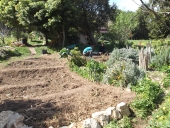
I live on Crete which is a typical Mediterranean climate with very hot, dry summers and mild, moderately wet winters. I'm having trouble with the area that I've put in our main veggie garden knowing what to do...the first year I made raised beds which worked fine throughout the fall/winter/spring but as soon as the heat started they were constantly drying out and the water was just running off them and down onto the path. So this year I got the idea to reverse it and make sunken beds to capture that water so it's actually going down to the plants and went to a lot of work and effort to reconfigure it all, but now it seems to cause problems at this time of year whenever we get a big rain event they become soggy and waterlogged and the clay soil doesn't help...what should I do, anyone got any ideas?

*edit* I should also mention that the main garden area is on a slight slope, if that changes anything, and the beds are oriented parallel to the slope.
 
master steward
Posts: 7929
Location: southern Illinois, USA
2963
goat cat dog chicken composting toilet food preservation pig solar wood heat homestead composting
  • Mark post as helpful
  • send pies
    Number of slices to send:
    Optional 'thank-you' note:
  • Quote
  • Report post to moderator
Just going from your post, do you need both?
 
Dareios Alexandre
Posts: 27
Location: Rethymno, Crete
5
  • Mark post as helpful
  • send pies
    Number of slices to send:
    Optional 'thank-you' note:
  • Quote
  • Report post to moderator
You mean both raised and sunken beds? Yeah maybe but of course that would be an inefficient use of space when I can only use one or the other depending on the season...

John F Dean wrote:Just going from your post, do you need both?

 
Posts: 15
Location: Rhode Island
  • Likes 2
  • Mark post as helpful
  • send pies
    Number of slices to send:
    Optional 'thank-you' note:
  • Quote
  • Report post to moderator
My climate isn't anything like yours, but just going on intuition and what I've researched over the years I would say sinking the beds down might be the way to go. Maybe even digging on the spot and filling it with organic matter like a Hugelkultur mound. That would store more water and gradually decompose into wonderful compost. Good luck with whatever route you choose!
 
Posts: 772
Location: Sierra Nevada foothills, 350 m, USDA 8b, sunset zone 7
165
  • Mark post as helpful
  • send pies
    Number of slices to send:
    Optional 'thank-you' note:
  • Quote
  • Report post to moderator
I live in hot summer Mediterranean climate in a continentalized version - with high summer temperatures and light night freezes in December, January. Due to foothill location the sun is more intense than lower elevations.
Anything that would be left elevated and in full sun would be dried in very short time. It would have to be watered probably 4 times a day or more.
This year I have tried to do sunken beds, by using tractor single plow to go 30 cm deep. I have planted cucurbits and okra and used woodchip mulch around plants mixed with some manure. The watering in the sunken beds was easy and the water was staying around the plants, but... the berms created by the trencher worked as solar lens, accumulating heat and radiating into the plants. As a result I got only 2 watermelons (citron, so not even a regular sweet one) and zero melons, zero cucumbers, 1 zucchini, zero beans and maybe 10 okra pods. Pumpkins got fried the fastest. Out of 40 tomatoes, 5 survived, but as usually they did not produce fruits due to high temperatures and when they produced them in late October it was too late for them to ripe as usually. Pretty ridiculous and pathetic for a large garden.
For the next year I will fill the trenches with compost and will continue flat gardening. I'm also going to set up drip irrigation for the vegetables as watering 3 times per day by hand and in scorching sun takes quite a lot of time and effort.

 
steward
Posts: 18094
Location: USDA Zone 8a
4612
dog hunting food preservation cooking bee greening the desert
  • Mark post as helpful
  • send pies
    Number of slices to send:
    Optional 'thank-you' note:
  • Quote
  • Report post to moderator
I live in Texas where it is hot with drought.

sunken beds are what many folks recommend.

Here is an article that might help or be of interest to some:

https://permies.com/t/152917/permaculture/sunken-bed-time-tips
 
Posts: 112
Location: Klamath-Siskiyou CA
22
monies trees tiny house
  • Mark post as helpful
  • send pies
    Number of slices to send:
    Optional 'thank-you' note:
  • Quote
  • Report post to moderator
This question was raised previously (by OP) here, perhaps best to merge or continue with that discussion?

https://permies.com/t/361408/Raised-Beds-Mediterranean-Climate
 
pollinator
Posts: 373
39
  • Mark post as helpful
  • send pies
    Number of slices to send:
    Optional 'thank-you' note:
  • Quote
  • Report post to moderator
Drip irrigation is most likely the key, as our friend  points out.  As soon as water is seen running off the bed, it's time to get dripping , and slowly.  Even without expense, you can choose the option called redneck drip:
Just pop a nail hole in a clean empty milk jug near the bottom.  Refill them each morning for a few days, then adjust the timing  (+ or minus) after water is detectable deep in the bed.  
 
steward & author
Posts: 43874
Location: Left Coast Canada
16786
9
art trees books chicken cooking fiber arts
  • Likes 1
  • Mark post as helpful
  • send pies
    Number of slices to send:
    Optional 'thank-you' note:
  • Quote
  • Report post to moderator
Raised beds, but dug deep compared to top soil.  That way it keeps the water in the soil during the summer, but the top foot of the bed can drain in wet weather.

Mine are about 8 inches high sides, but dig down about 3 feet

You probably don't need to dig that deep if you have rainfall at least once a month in summer (ours is about 4 to 6 months without rain) or will warter it.
 
this llama doesn't want your drama, he just wants this tiny ad for his mama
Support permies and give beautiful gifts to gardeners: permaculture playing cards.
https://gardener-gift.com/
reply
    Bookmark Topic Watch Topic
  • New Topic