• Post Reply Bookmark Topic Watch Topic
  • New Topic
permaculture forums growies critters building homesteading energy monies kitchen purity ungarbage community wilderness fiber arts art permaculture artisans regional education skip experiences global resources cider press projects digital market permies.com pie forums private forums all forums
this forum made possible by our volunteer staff, including ...
master stewards:
  • Nancy Reading
  • Carla Burke
  • John F Dean
  • Timothy Norton
  • r ransom
  • Jay Angler
  • Pearl Sutton
stewards:
  • Devaka Cooray
  • Leigh Tate
  • paul wheaton
master gardeners:
  • Christopher Weeks
gardeners:
  • M Ljin
  • thomas rubino
  • Megan Palmer

Short junkpole fence ideas for your consideration

 
steward
Posts: 16068
Location: Northern WI (zone 4)
5169
9
hunting trees books food preservation solar woodworking
  • Likes 9
  • Mark post as helpful
  • send pies
    Number of slices to send:
    Optional 'thank-you' note:
  • Quote
  • Report post to moderator
This is an idea I had a month ago when high winds blew down some of the standard junkpole fences at Wheaton Labs. I figured I'd flesh it out a bit more in the hopes that this encourages an experiment out there.

Background: My metal wavy fence has kept deer out of my food forest for 5+ years. I have a multitude of other deer fences using pallets and/or metal remesh. The guiding principle is that two fences 4' high and 4' apart won't let deer get through due to their worries about depth perception and not wanting to land on something.  Another principle I use is that if a solid fence is taller than a deer, they aren't going to stand up and look to see what's on the other side.  I'm dealing with white tails where I've heard the 4' high, 4' apart rule works.  My remesh fence is 5' high and 5' apart.  I'd assume for muleys and elk 5-6' high and apart would be a good idea.

Design options:
1. Diggable ground (the Abbey). Put posts in the ground that are 6' tall. Build solid/tight junk pole fence that's also 6' tall. The deer can't see through it so they won't jump it.
   By being shorter
       The pieces are more uniform and easier to keep tight
       The wind can't blow it over as easily
       More fence per lb of junkpole

2. Rocky ground. Build rockjacks and do the same as above.  The rockjacks don't have to work as hard and won't be as easy to tip over

3. Linear double fence (like a standard 4' high 4' apart double fence)
Put up short posts or rockjacks on the usual spacing with a loose junkpole fence.  Just tight enough to keep them from pushing through it.  Then add a second horizontal pole 4-6' inside of that fence.  Kinda like a hitching rack.  They'll see that second fence/obstruction and not jump the outer fence.  The inner one can be held up with more posts in the ground or extensions/structure from the rock jacks.

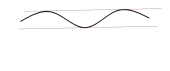
4. Wavy Shorty Junk pole fence:
Put a post or rock jack on a closer spacing than normal.  Say 8-10 feet.  But lay them out in a zig zag pattern.  Build a low loose junkpole fence following the zigs and zags.  This will keep the deer from poking through.  Take longer junk poles and run them horizontally from alternating posts.  So one pole runs from post 1 to post 3.  Another goes from 2-4.  Another from 3-5.  This gives you two horizontal hitching post obstructions that are 5' off the ground and 5' apart.  For bonus protection, lay an additional junk pole between those two runs.  The zig zag will help the rock jacks or posts support each other.  You might be able to build rockless rock jacks for this system  
fence1.png
[Thumbnail for fence1.png]
fence2.png
[Thumbnail for fence2.png]
 
master gardener
Posts: 5728
Location: Carlton County, Minnesota, USA: 3b; Dfb; sandy loam; in the woods
3236
8
forest garden trees books chicken food preservation cooking fiber arts seed woodworking homestead ungarbage
  • Likes 8
  • Mark post as helpful
  • send pies
    Number of slices to send:
    Optional 'thank-you' note:
  • Quote
  • Report post to moderator
I read that report of all the fences being blown over...maybe in Esteban's boot-BEL thread. I wondered about making 3/4 of the junkpoles short. So the fence as a whole unit would still retain the 8-10' height or whatever is normal, but would form a much looser comb against the wind, and hopefully let it through instead of resisting it and losing.


Posts: 40
17
  • Likes 5
  • Mark post as helpful
  • send pies
    Number of slices to send:
    Optional 'thank-you' note:
  • Quote
  • Report post to moderator
I think that they use tall junkpole fences at Wheaton Labs to keep the wild turkeys out. Of course this design could be really good in a place that doesn't have that kind of nibbler.

We needed a permanent fence that would keep flighty chickens (layers) in and keep the deer and the wild turkeys out. We experimented with a few designs that all ended up being awful. And when we tried this design, the fence went up mighty fast and cheap.

 
pioneer
Posts: 1040
Location: Inter Michigan-Superior Woodland Forest
192
7
transportation gear foraging trees food preservation bike building solar writing woodworking wood heat
  • Likes 3
  • Mark post as helpful
  • send pies
    Number of slices to send:
    Optional 'thank-you' note:
  • Quote
  • Report post to moderator
Was there any sort of assessment of what the failure point(s) were from the windstorm?
 
Mike Haasl
steward
Posts: 16068
Location: Northern WI (zone 4)
5169
9
hunting trees books food preservation solar woodworking
  • Likes 5
  • Mark post as helpful
  • send pies
    Number of slices to send:
    Optional 'thank-you' note:
  • Quote
  • Report post to moderator
Nothing specific that I know of.  I believe mainly high winds pushed them over, as opposed to trees crushing them.  So the failure was likely fasteners giving out on the horizontals or rock jacks tipping over. Contributed heavily by the fence being a 12' high sail in some cases.
 
Coydon Wallham
pioneer
Posts: 1040
Location: Inter Michigan-Superior Woodland Forest
192
7
transportation gear foraging trees food preservation bike building solar writing woodworking wood heat
  • Likes 1
  • Mark post as helpful
  • send pies
    Number of slices to send:
    Optional 'thank-you' note:
  • Quote
  • Report post to moderator
I recall Paul podcasting in the past about boots/SKIPpers using the wrong kind of fasteners despite his wishes. I want to say that screws were failing and nails worked much better, but can't remember that part for sure.

I know rock jacks were tipped over, but on the lab the posts were either uprooted or snapped off, or the cross supports failed, right? Knowing more about the various failure points would help improve repair/replacement efforts...
 
master steward
Posts: 14745
Location: Pacific Wet Coast
9071
duck books chicken cooking food preservation ungarbage
  • Likes 2
  • Mark post as helpful
  • send pies
    Number of slices to send:
    Optional 'thank-you' note:
  • Quote
  • Report post to moderator

Coydon Wallham wrote:Was there any sort of assessment of what the failure point(s) were from the windstorm?


We don't have junkpole to make fences, but we do have wind...

1. My experience has been that many screws sheer off, where nails will just bend. If getting nails in is an issue, one can use pilot holes - more time, but less risk of splitting wood.

2. I've read of many places that use the "double fence" system. It uses a lot more material, but if done secure at the bottom, it can double as chicken paddocks if you make some portable fence sections to divide the area. Portable has the advantage that you can make the "paddock du jour"* larger or smaller depending on the number of chickens and the time of year.

3. I've also read, but not tested that horizontal bars out from the fence that make the fence "look bigger" can help discourage deer, but I suspect it would be an open invitation to wild turkeys and definitely to Muscovy ducks!

4. Storms have been getting larger. Was this "above average" or "atypical direction".  Looking at the ground outside the fence could help with either. Large brush piles and starting deer/turkey resistant wind breaks might be a long term help. I think somewhere under one of permies windstorm related threads, there are images which help you calculate how far from the fence the barrier needs to be to get the job done. I am sure that for "slowing" wind, a perforated barrier (like three rows of off-set trees) is more effective than a solid wall (according to the experts.)

*I find that quality of forbs vs chicken density vs # of days vs soil moisture, is key to not damaging the paddock. It takes observation.
 
Mike Haasl
steward
Posts: 16068
Location: Northern WI (zone 4)
5169
9
hunting trees books food preservation solar woodworking
  • Likes 4
  • Mark post as helpful
  • send pies
    Number of slices to send:
    Optional 'thank-you' note:
  • Quote
  • Report post to moderator
I have solid pallet fences that are about 4.5' high and the chickens don't jump onto or over them.
 
I agree. Here's the link: http://stoves2.com
reply
    Bookmark Topic Watch Topic
  • New Topic