• Post Reply Bookmark Topic Watch Topic
  • New Topic
permaculture forums growies critters building homesteading energy monies kitchen purity ungarbage community wilderness fiber arts art permaculture artisans regional education skip experiences global resources cider press projects digital market permies.com pie forums private forums all forums
this forum made possible by our volunteer staff, including ...
master stewards:
  • Carla Burke
  • Nancy Reading
  • John F Dean
  • r ransom
  • Jay Angler
  • Timothy Norton
stewards:
  • paul wheaton
  • Pearl Sutton
  • Tereza Okava
master gardeners:
  • Christopher Weeks
  • M Ljin
gardeners:
  • thomas rubino
  • Jeremy VanGelder
  • Megan Palmer

Paint made from gum Arabic and hydrated lime? For use on cob.

 
steward
Posts: 22560
Location: Pacific Northwest
13281
13
homeschooling hugelkultur kids art duck forest garden foraging fiber arts sheep wood heat homestead
  • Likes 14
  • Mark post as helpful
  • send pies
    Number of slices to send:
    Optional 'thank-you' note:
  • Quote
  • Report post to moderator
I'm currently teaching kids how to make fairy houses out of natural materials (the roofing went well. I'll try to update that thread soon. I forgot to take pictures today).

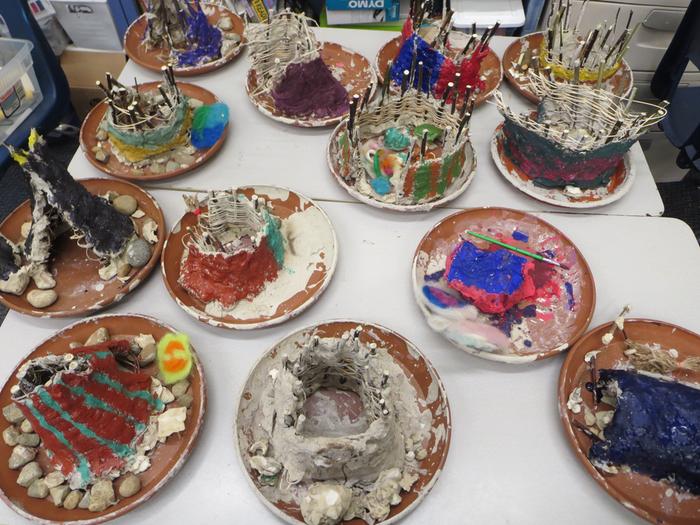
Anyway, most of the students already painted their wattle & daub houses with milk paint.

Picture taken before we made roofs. So many pretty colors!


But, not all the kids had a chance to paint their houses. Some were sick or absent. And,  have one student who is allergic to milk. Milk paint is full of the casein that most milk allergies are based on. I'd like to make a paint that's (A) Easier to make than having to warm up milk, add vinegar, wait 8 hours, and wait for it to strain, and (B) is something my student with milk allergies can use.

I was wondering about adding lime to pigment and gum arabic. Earlier in the school year, I had my students write their names in hieroglyphs. I was initially going to have them paint on wood...but the wood I had was dark. It looked terrible painted! So, I decided to plaster it. Then the kids would get to paint on limestone like the Egyptians. They'd make their own limestone cartouches!

When I did that plastering, the first thing I tried was just mixing water with hydrated lime powder and applying that to the board. It just dusted right off when dried. So, I thought, "What if I add gum arabic?"

I couldn't find anything online telling me not to add gum Arabic, so I gave it a whirl. It worked! The lime stuck to the boards (albeit a bit gritty because the lime wasn't slacked), and it took a lot of coats to turn it white (largely because lime isn't that opaque). But, none of it dusted off, and the kids were able to draw and paint on the limestone boards without issue.

When I get a chance, I'm going to take pictures of said limestone Egyptian cartouches and post them here. I'll also try to share any results of the pigment + lime + gum arabic experiment.

Has anyone else tried painting daub/cob with lime + pigment + gum Arabic paint, or something similar?
 
pollinator
Posts: 1474
Location: Milwaukie Oregon, USA zone 8b
174
  • Likes 5
  • Mark post as helpful
  • send pies
    Number of slices to send:
    Optional 'thank-you' note:
  • Quote
  • Report post to moderator
I think you're such a great teacher Nicole, you make learning fun for the kids.
 
Nicole Alderman
steward
Posts: 22560
Location: Pacific Northwest
13281
13
homeschooling hugelkultur kids art duck forest garden foraging fiber arts sheep wood heat homestead
  • Likes 6
  • Mark post as helpful
  • send pies
    Number of slices to send:
    Optional 'thank-you' note:
  • Quote
  • Report post to moderator
I finally got some time tonight to test things out. I wish I'd had time earlier more than a few days before when kids will be painting with it. But, life is busy and I've got too many class projects going all over the place!

Anyway, what I tried today was:
  • 1 part: Gum arabic + water mixture (about 50/50 mixture of gum arabic and water)
  • 1 part: Slacked lime! (After my adventures in frescos, I put some hydrated lime in a big yogurt bucket and covered with water. That was March 17th. There's some nice slacked lime in there now!)
  • 1 part: Pigment
  • (optional) 1 part: Kaolin clay


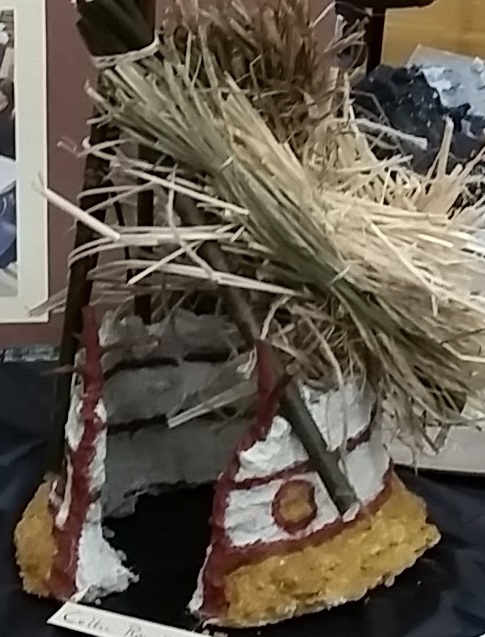
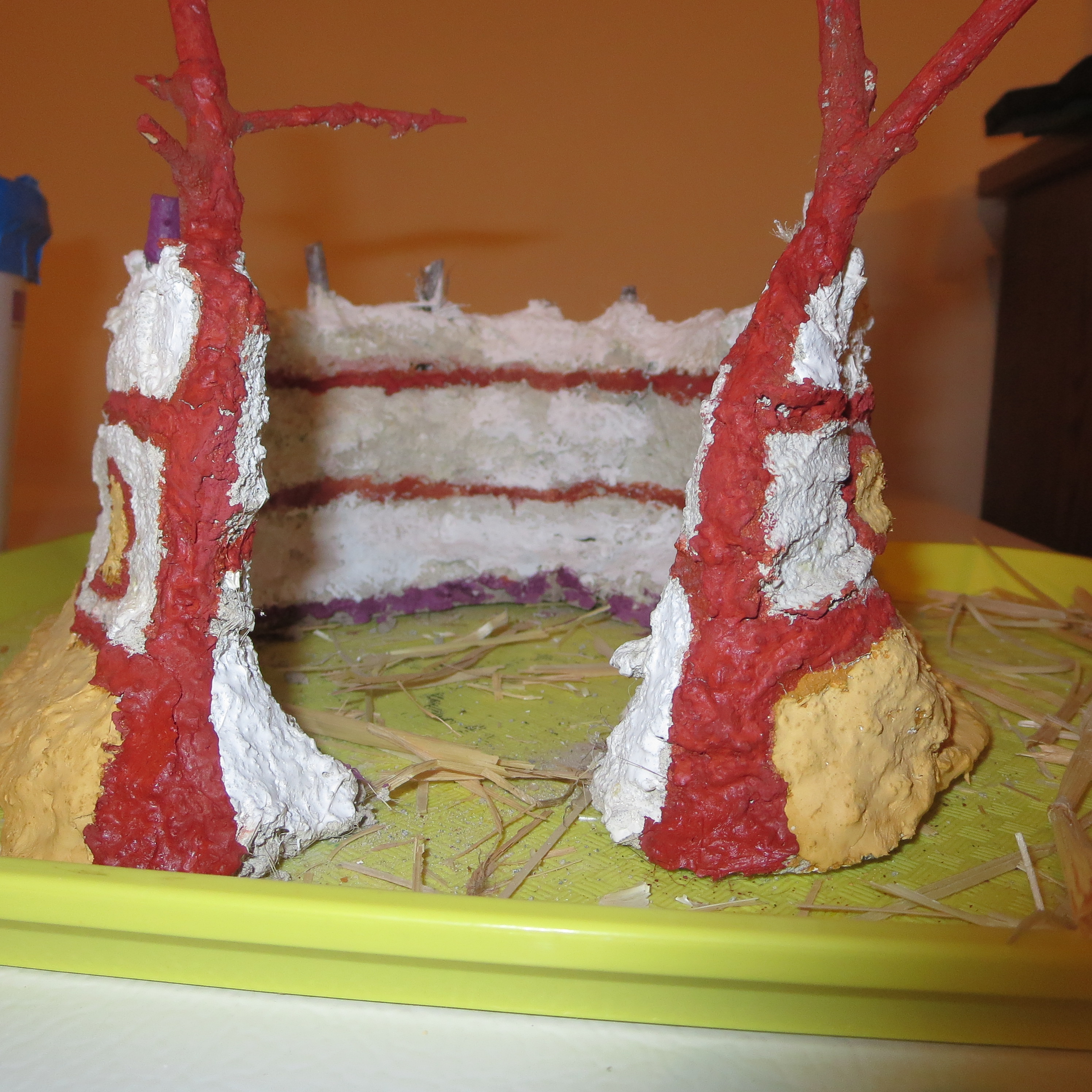
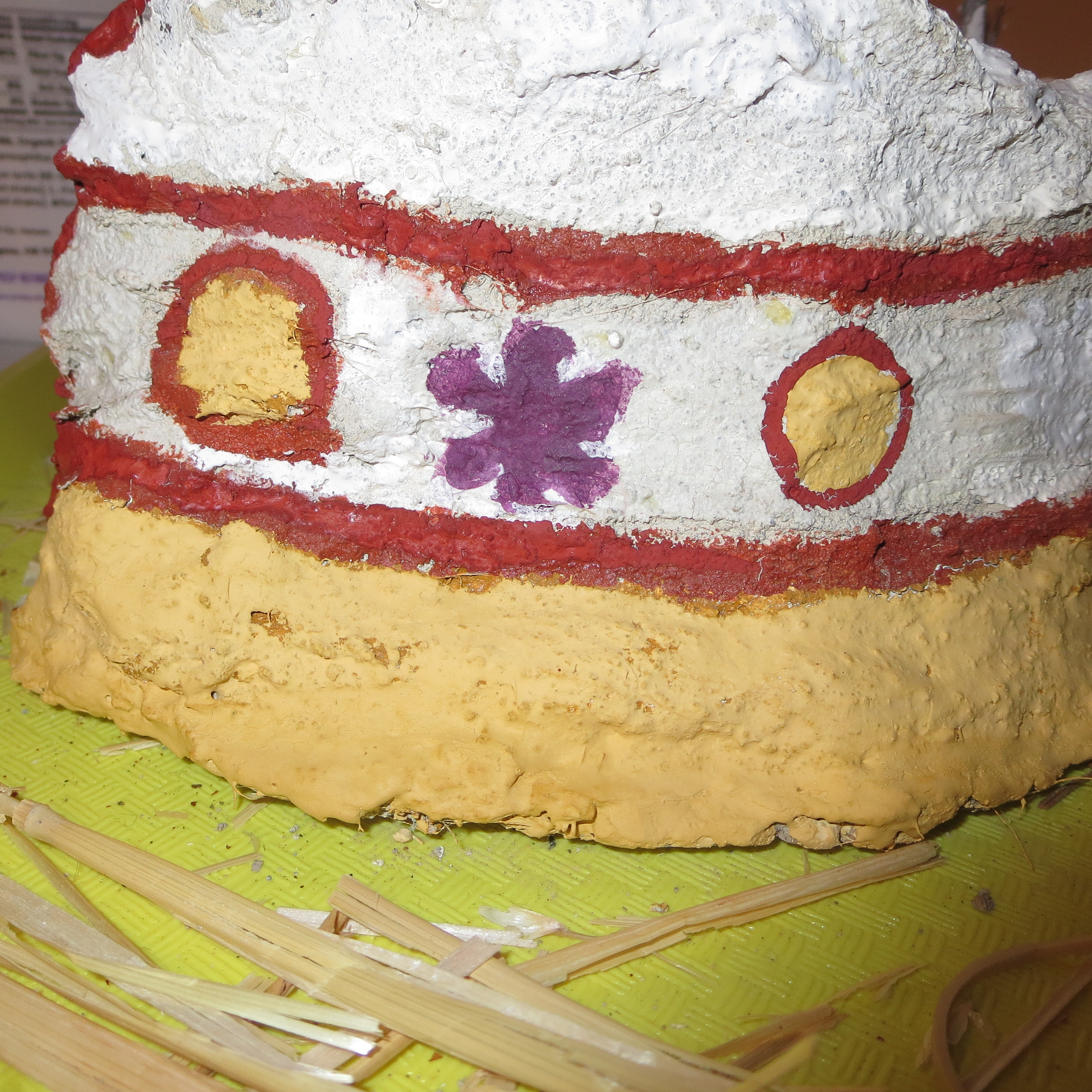
All those numbers are really hazy, as I eyeballed everything. I applied the paint to my old wattle and daub miniature house. I really should have taken a true before picture, as a lot of the daub had cracked and some paint was chipping off. Alas, I did not. Here's a waaaay before picture (before the daub and paint cracked...2 years ago).


Here's some of my observations:

  • It's really easy to make this mixture way too watery! At first I was matching the amount of gum arabic mixture to the amount lime + pigment. This made a super runny paint! It was more of a lime wash...which would be really hard for kids to use!
  • Adding more pigment fixed the runniness issue. This is what I did for the purple color. It made for a much more vibrant color, which was nice. I'm hoping the gum arabic is strong enough to hold both the lime and the pigment together and to the wall!
  • When I mixed up new white, I made it too runny again. This time, instead of adding calcium carbonate (white pigment), I added kaolin clay, figuring that clay paint is a thing. Of course, clay paint is usually done with wheat paste to hold it together. But, gum arabic does holding/sticking, so hopefully it'll work. This mixture was nice and thick, and helped smooth over cracks and (maybe) stick some cracked daub pieces together. We'll test whether it actually stuck stuff together tomorrow!
  • When I made the yellow paint, I used both kaolin and yellow ocher. Yellow ochre is a a clay, too, so this made for a nice, thick paint. It made things very smooth. The daub, even when not cracked, was still very rough and bumpy. The kaolin clay + pigment made a nice thick paint. The kaolin did lighten the color, though.
  • When I did the red, I used red iron oxide for the pigment, and didn't add any clay. I wanted a bright, vibrant red. This was  roughly equal parts pigment, gum arabic mixture, and lime. This mixture was pretty nice, and not made too light by the lime. This red got painted largely over the top of the milk paint.
  • I wanted to test the lime paint over the milk paint for a few reasons. (1) some kids will probably want to paint over their milk paint. I should make sure nothing bad happens! and (2) I just really wanted to fix up my little house! Painting is addictive!


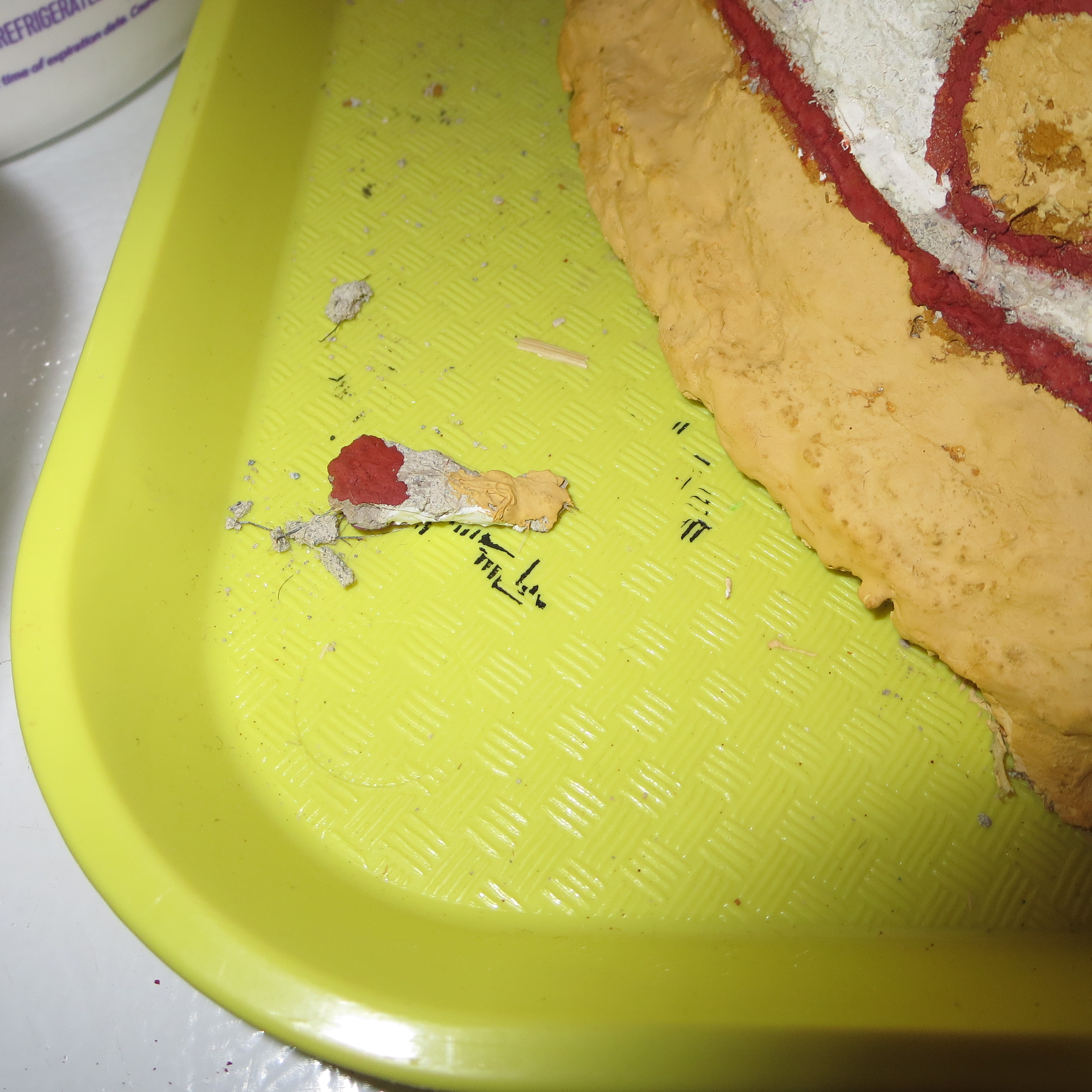
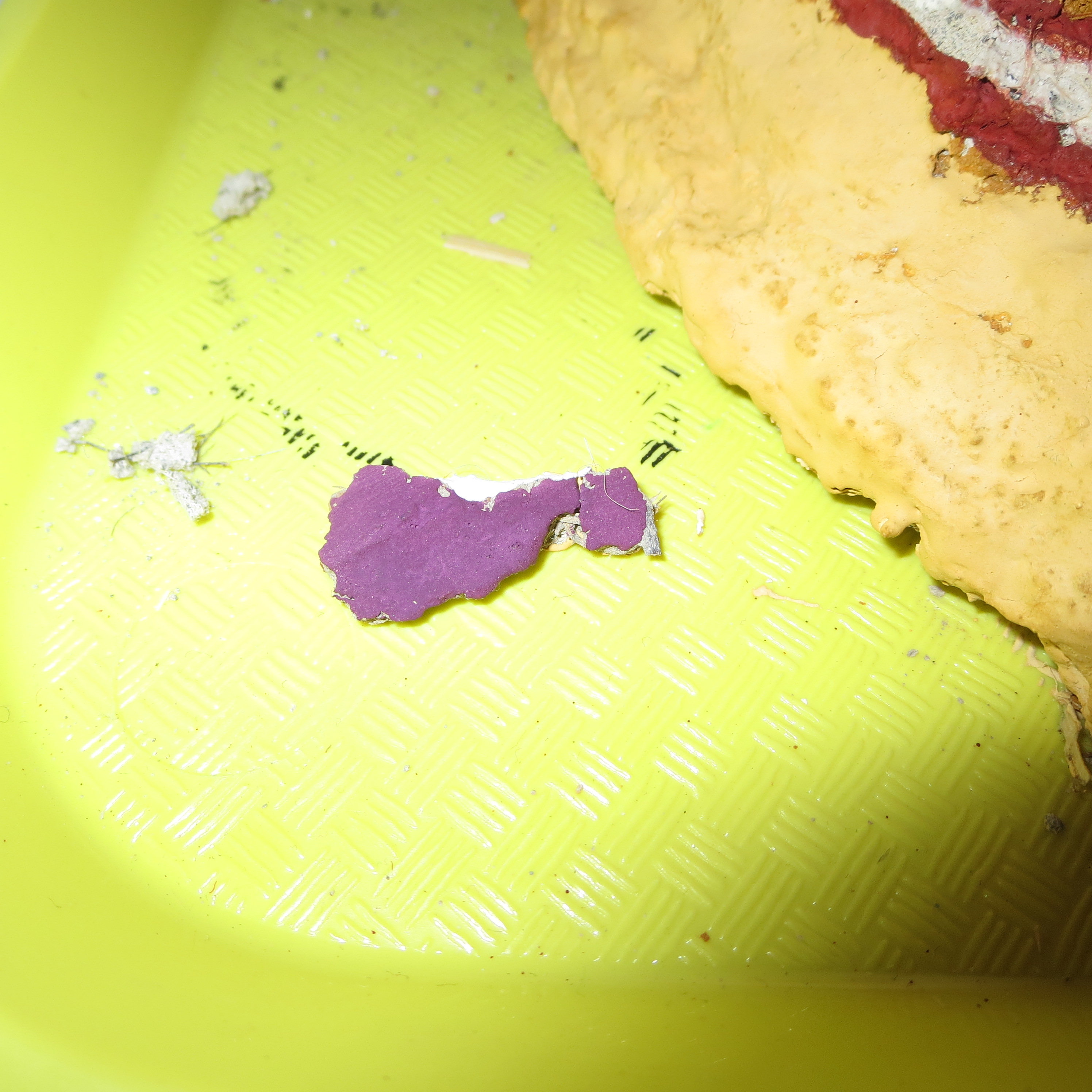
I also painted all four colors on a piece of raw daub that had cracked off. We'll see how that does!

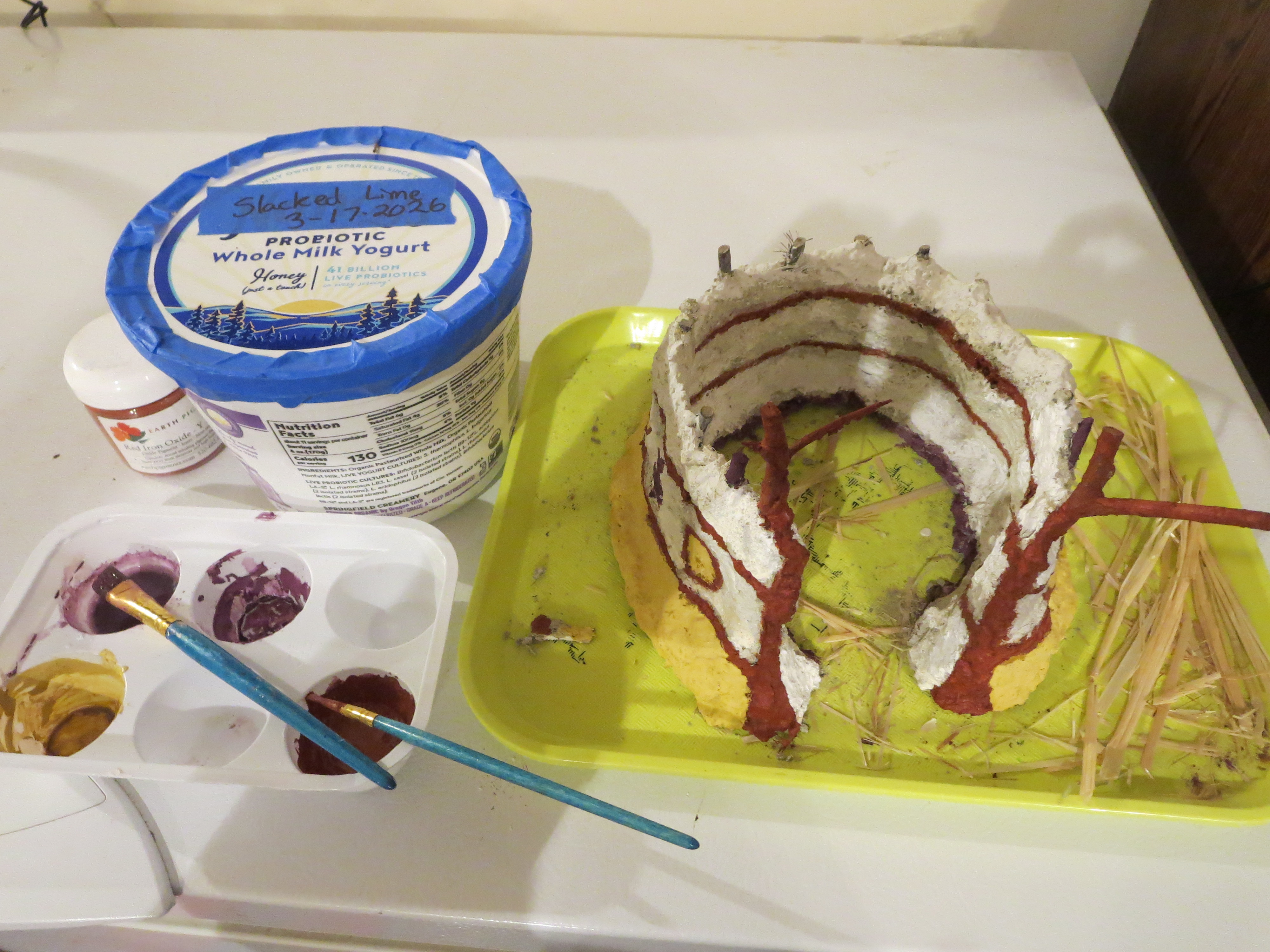
Please excuse my terribly un-aesthetic pictures, taken after midnight on my freezer. But, hey, it has my milk paint walls in the background, so that's something!
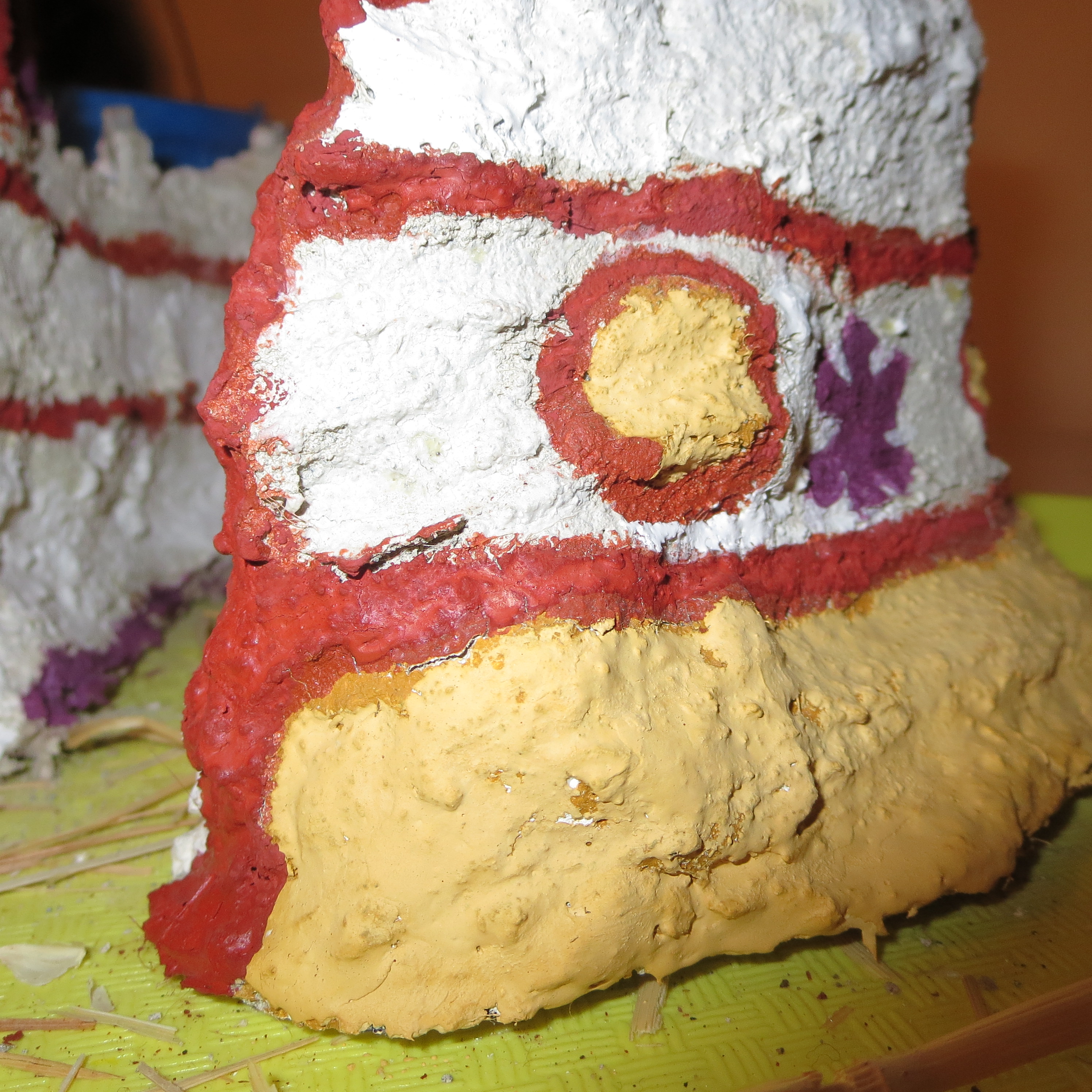
IMG_1298.JPG
I wasn't kidding. It's a yogurt bucket with slacked lime. Mochi container for mixing paint. Ugly yellow tray.
IMG_1301.JPG
The bits of darker gold is the original yellow ochre milkpaint. You can see the smoothing action of the yellow clay paint
IMG_1302.JPG
The flash shows the brighter white of the new lime+clay+gum arabic paint....and it made my wall red. Weird.
IMG_1303.JPG
My little test piece. This side is red and yellow. The edge is white.
IMG_1304.JPG
This side is all purple
IMG_1306.JPG
The middle stripe shows the old milk paint. You can see how bumpy it is compared to the new yellow paint below.
 
Nicole Alderman
steward
Posts: 22560
Location: Pacific Northwest
13281
13
homeschooling hugelkultur kids art duck forest garden foraging fiber arts sheep wood heat homestead
  • Likes 4
  • Mark post as helpful
  • send pies
    Number of slices to send:
    Optional 'thank-you' note:
  • Quote
  • Report post to moderator
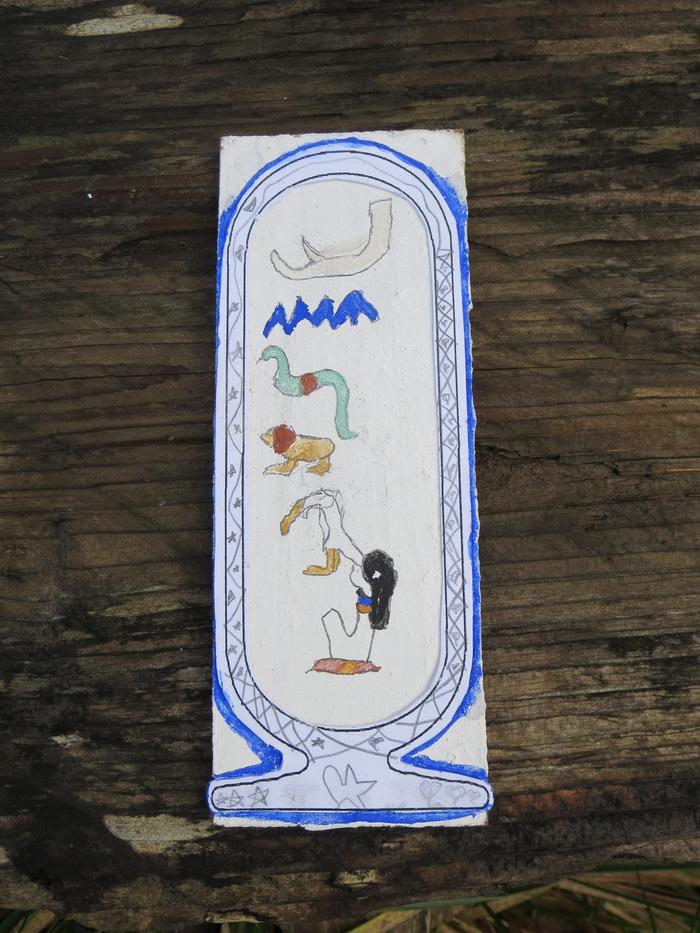
Looking online, the biggest problem people have with clay and lime paints is that they dust off. When I'd made my little Egyptian cartouche boards, plastered with lime, that was the biggest problem: it dusted right off. When I added the gum Arabic to that paint, it didn't dust off.

Cartouche with a background of lime + gum arabic on wood. Hieroglyphs made with water color and pencil


I went over to test the paint on my little house. I also compared the tests to the milk paint I painted my den's walls with almost two years ago. I'm expecting the milk paint to be stronger, since it's had nearly 2 years for the lime to calcify....compared to just 10 hours for my lime + gum arabic paint.

    Test 1: I rubbed on the white, red, yellow and purple paints with my finger. I could not see any paint coming off. But, they're all pretty close to my skin color, so it's hard to tell.

    Test 2: I scraped the paint with my fingernail, and it did come off...much like if you scrape at chalk or limestone. But, if I scrape at 2-year old milk paint on my den wall with my fingernail, it comes off, too, with about the same amount of effort. Most paints come off if you scrape at them, honestly.

    Test 3: I rubbed at the paint with a black cloth. I had to rub hard to get a faint amount of color. That seems pretty good! The red paint (no clay) seemed a bit sturdier than the yellow (which had clay)--probably because there was less gum arabic percentage in the clay paint. I then rubbed at the milk paint on my den wall with the black cloth. The paint came off, but I needed to rub more and the amount of color on my cloth was less.


In summary: My 10 hour old lime + gum arabic + pigment is about as good at my 2-year old milk paint on my den's wall.

I haven't tested them against water erosion. But, honestly, my milk paint doesn't hold up against more than a season or two of outdoor weather, especially if it doesn't have an "outdoor fixative" and isn't sealed with oil (see me repainting my milkpaint sign. The homemade milk paint did not do as well as the store-bought Real Milk paint. And, all of it did better than milk paint I've made from scratch and painted outside. I'd made milk paint with a Forest School group, and they'd painted LOTs of surfaces, , and nearly all of the paint was gone after a year unless it was sheltered from the rain.)
 
Nicole Alderman
steward
Posts: 22560
Location: Pacific Northwest
13281
13
homeschooling hugelkultur kids art duck forest garden foraging fiber arts sheep wood heat homestead
  • Likes 4
  • Mark post as helpful
  • send pies
    Number of slices to send:
    Optional 'thank-you' note:
  • Quote
  • Report post to moderator
Wandering around the internet, I've noticed a few things. This article, by the Mud Home about limewashes, sums it up pretty well:

The Mud Home wrote:Note: You need a binder like wheatpaste or casein to help seal the limewash, otherwise your whitewash may remain dusty, and can leave marks on clothes. If you can source good quality mature lime putty, a binder may not be necessary.


(1) If you use high-quality slacked lime, made from quicklime and not from hydrated lime, it might not need a binder. High quality slacked lime is really expensive (I know, because I've bought it before!)

(2) Common binders are wheat and milk/casein.

I'm trying to avoid things that kids/parents might be allergic to with this recipe, so both the wheat and milk/casein are out. This mixture is supposed to be an alternative for the kids who are allergic to the milk paint. Both wheat and milk add as natural glues to stick the pigment to the surface. Gum arabic has that roll in watercolors. While it might not be as good, I'm thinking it's decent enough  to be used as an alternative. So far, it's testing pretty good.
 
pollinator
Posts: 6056
Location: Bendigo , Australia
562
plumbing earthworks bee building homestead greening the desert
  • Likes 2
  • Mark post as helpful
  • send pies
    Number of slices to send:
    Optional 'thank-you' note:
  • Quote
  • Report post to moderator
Is Milk Paint the stuff you speak of?
'Milk paint is an ancient, eco-friendly, and non-toxic paint made from milk protein (casein), lime, and natural pigments.
Sold as a powder, it is mixed with water for a durable, matte finish ideal for furniture restoration, "shabby chic" rustic looks, and children's toys.
It is zero-VOC, breathable, and provides a unique matte look. '
 
Nicole Alderman
steward
Posts: 22560
Location: Pacific Northwest
13281
13
homeschooling hugelkultur kids art duck forest garden foraging fiber arts sheep wood heat homestead
  • Likes 2
  • Mark post as helpful
  • send pies
    Number of slices to send:
    Optional 'thank-you' note:
  • Quote
  • Report post to moderator

John C Daley wrote:Is Milk Paint the stuff you speak of?
'Milk paint is an ancient, eco-friendly, and non-toxic paint made from milk protein (casein), lime, and natural pigments.
Sold as a powder, it is mixed with water for a durable, matte finish ideal for furniture restoration, "shabby chic" rustic looks, and children's toys.
It is zero-VOC, breathable, and provides a unique matte look. '


I used milk paint for most of the kids houses, and have made it frequently in the past (even painted my whole den with it). But, one of my students is allergic to casein, so I need something else. She's also allergic to nuts and probably other things, so I'm going to veer away from using wheat paste, too, just in case.

Thus, I'm trying to make "milk paint" without the milk/casein for a binder. I'm trying gum arabic as a binder, but I don't think it's as strong as a binder as casein. So far, though, it seems to be working.
 
To do a great right, do a little wrong - shakespeare. twisted little ad:
Learn Permaculture through a little hard work
https://wheaton-labs.com/bootcamp
reply
    Bookmark Topic Watch Topic
  • New Topic