• Post Reply Bookmark Topic Watch Topic
permaculture forums growies critters building homesteading energy monies kitchen purity ungarbage community wilderness fiber arts art permaculture artisans regional education skip experiences global resources cider press projects digital market permies.com pie forums private forums all forums
this forum made possible by our volunteer staff, including ...
master stewards:
  • Carla Burke
  • Nancy Reading
  • John F Dean
  • r ransom
  • Jay Angler
  • Timothy Norton
stewards:
  • paul wheaton
  • Tereza Okava
  • Nicole Alderman
master gardeners:
  • M Ljin
  • Christopher Weeks
gardeners:
  • Jeremy VanGelder
  • thomas rubino
  • Megan Palmer

Avoiding plastic in food - a measurable difference in just one week

 
gardener
Posts: 972
Location: Ontario - Zone 6a or 4b, depending on the day
687
dog foraging trees tiny house books bike bee
  • Likes 24
  • Mark post as helpful
  • send pies
    Number of slices to send:
    Optional 'thank-you' note:
  • Quote
  • Report post to moderator
Avoiding plastic in my cookware and kitchen has been an ongoing goal of mine. When I talk about it, I have often been told that it's not worth doing, as there are so many other sources of plastics in our lives that avoiding plastic contact with food isn't worth the effort, or that the plastic in food is an insignificant source of plastic in the human body.

Anyway, a study in Nature Medicine just came out showing that avoiding plastic in your diet/kitchen can reduce the plastic compounds (phtalates and bisphenols) in your urine in just 1 week!  (By 30+%, depending on what intervention/compound was tested).

https://www.nature.com/articles/s41591-026-04324-7

Other interesting take aways:
- Plastic packaging upstream matters - including things like buying produce in plastic packaging, or that produce previously being handled on plastic (so! Grow your own whenever possible if avoiding plastic matters to you!)
- Both avoiding plastic packaging/plastic touching food, and avoiding plastic in your kitchen made a difference, independently of each other - so achieving 'perfect' avoidance wasn't necessary to reduce exposure (by 30+%!).
- Almost 60% reduction in bisphenols was possible
- individually packaged items are significantly worse for plastic contamination than bulk packaged.
- plastic in food prep appliances matters - possibly also in dishwashers...
- Avoiding plastic tends to lead to a healthier diet
- Even researchers attempting to provide a non-plastic diet struggle to provide plastic free food thanks to upstream contamination
- Researchers speculated some plastic compounds may be stored in adipose tissue.
- Avoiding plastic contact in personal care products (shampoos, soaps, etc) also made a difference
- Study participants who had the lowest levels before the study were those who 'rarely consumed fast food, highly processed foods, foods in plastic packaging or microwaved foods in plastic'


This study has definitely reaffirmed my decision to avoid plastics in my food choices and refuse to microwave items in plastic. I'm now seriously considering my remaining food contact plastic usage, the largest of which is freezer bags for storing vegetables in my freezer. I'm also considering my personal care products which I tend to buy in bulk but are stored long term, in plastic...
 
master steward
Posts: 15321
Location: Pacific Wet Coast
9676
duck books chicken cooking food preservation ungarbage
  • Likes 18
  • Mark post as helpful
  • send pies
    Number of slices to send:
    Optional 'thank-you' note:
  • Quote
  • Report post to moderator
There's a fellow who does Youtube shorts that I've tripped over a few times. His goal is to replace plastic utensils with equivalent wooden ones.

The Japanese made many of their kitchen utensils out of bamboo.

We had a maple tree come down recently. I should have a look at some of the branches with a mind to making a wooden spoon with an angled flat edge so it would scrape a saucepan as well as spoon it out.
 
Rusticator
Posts: 9745
Location: Missouri Ozarks
5359
7
personal care gear foraging hunting rabbit chicken cooking food preservation fiber arts medical herbs homestead
  • Likes 15
  • Mark post as helpful
  • send pies
    Number of slices to send:
    Optional 'thank-you' note:
  • Quote
  • Report post to moderator
My favorite wooden spoons and utensils are all either bamboo, maple, or olive wood...
 
Catie George
gardener
Posts: 972
Location: Ontario - Zone 6a or 4b, depending on the day
687
dog foraging trees tiny house books bike bee
  • Likes 15
  • Mark post as helpful
  • send pies
    Number of slices to send:
    Optional 'thank-you' note:
  • Quote
  • Report post to moderator
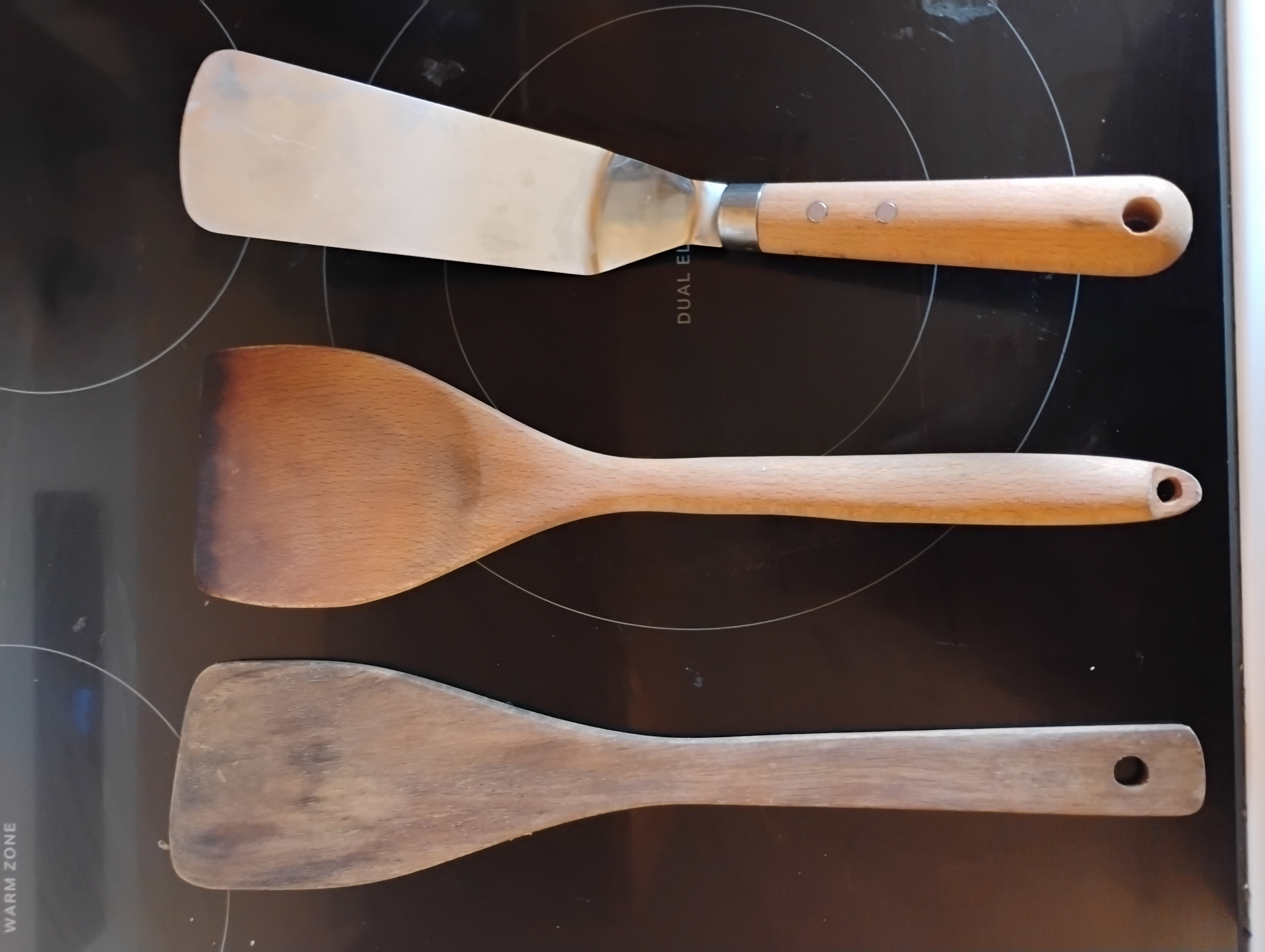
Jay - I have two wooden spatulas/scrapers similar to what you describe and I LOVE them. One is called a 'wok Turner' and great for scraping frying pans/woks. The other was I think an 'angled Turner' and is perfect for scraping the corners of pots.

When I packed up to put my things in storage, years ago, I threw out all the kitchen utensils that I hated. Basically everything plastic, and anything 'coated', many things I'd bought as a cheap university student, and been too cheap to replace because they worked well enough. Several years later, after buying a house and unpacking, I discovered I had almost no kitchen utensils and went on an emergency buying spree at IKEA,(while refusing to buy plastic). I have slowly rebuilt my kitchen and am very happy with it.

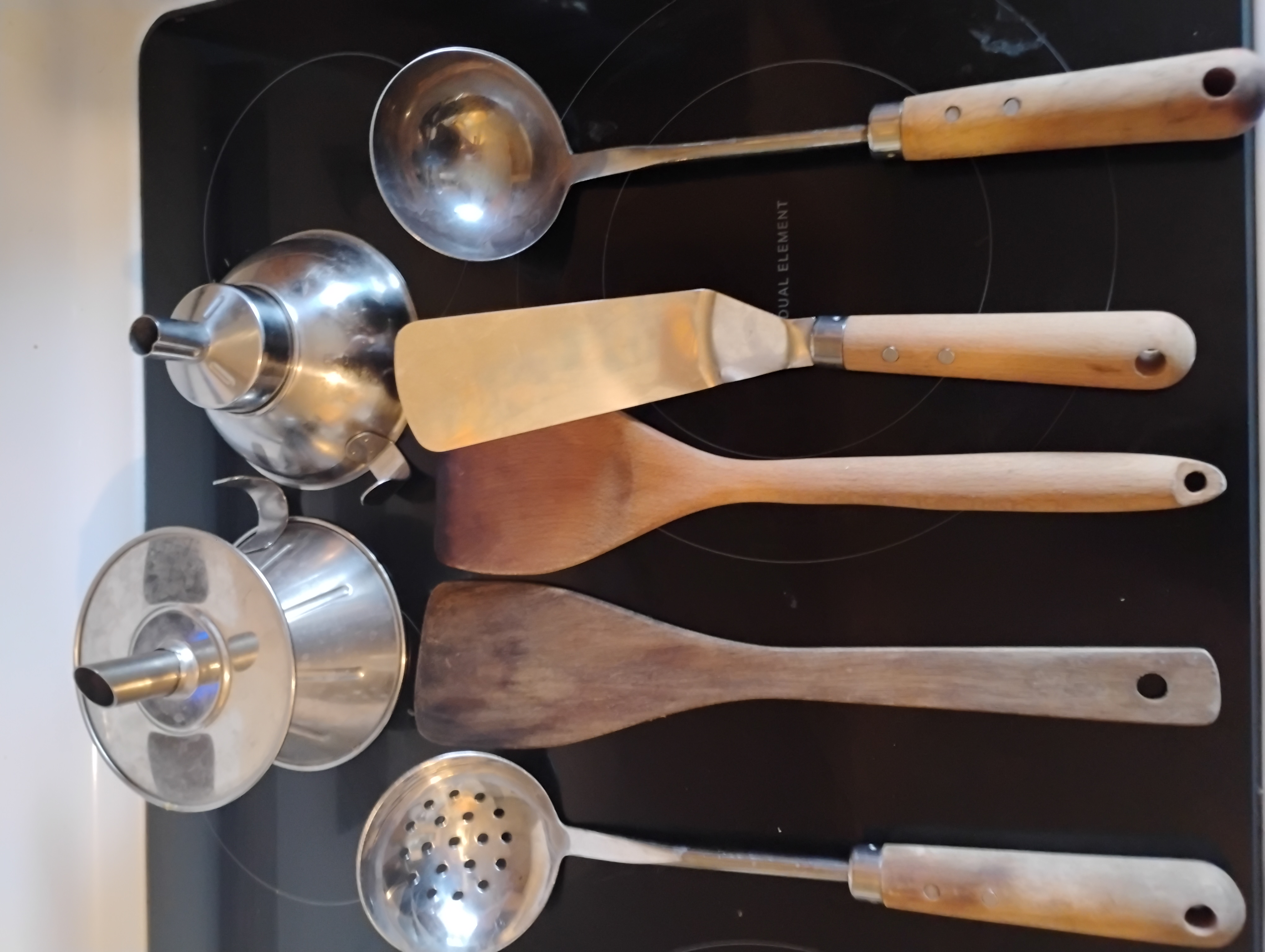
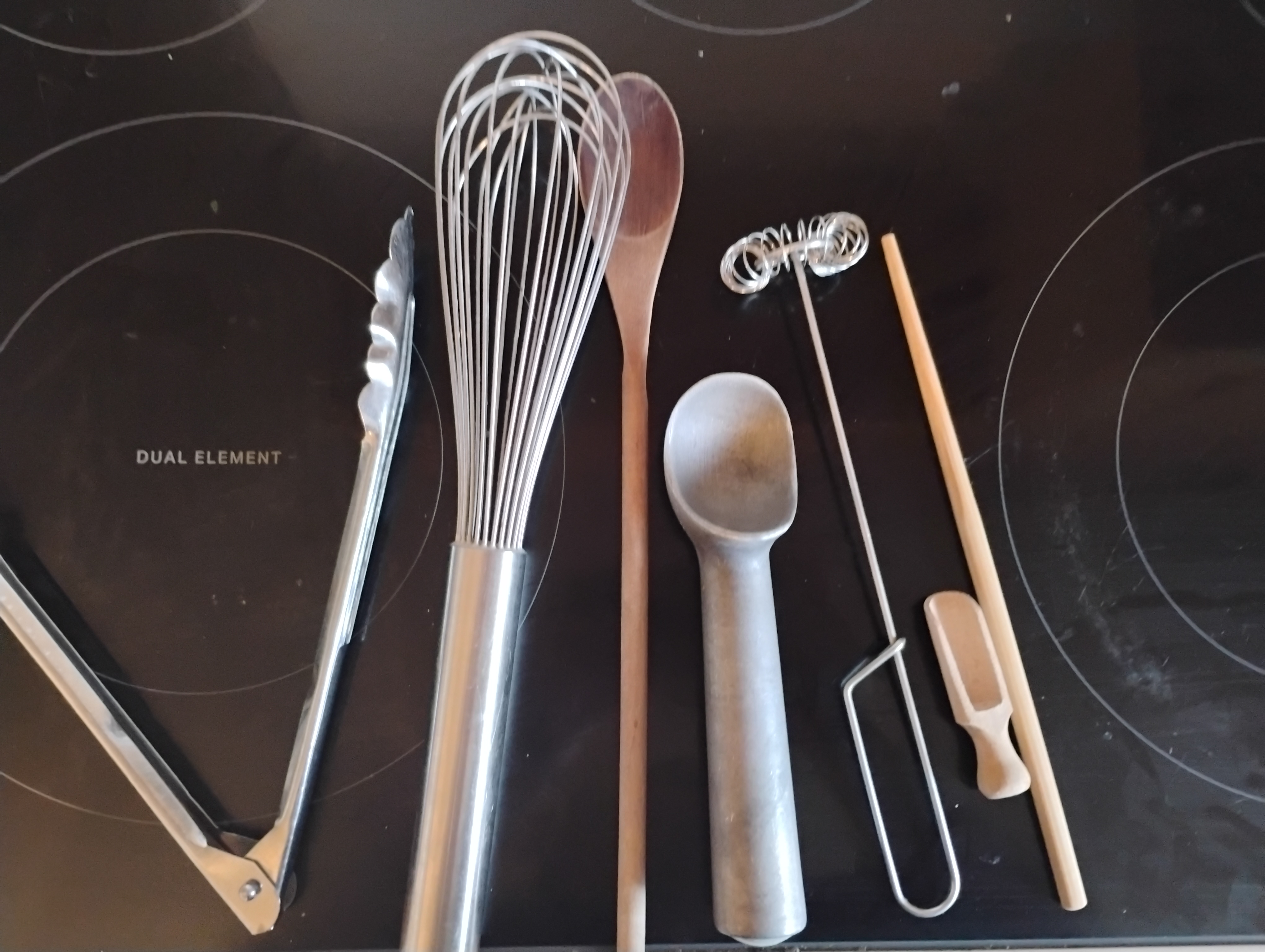
I've attached pics of my favourite/most used plastic free kitchen utensils. They don't feel like 'settling', I am genuinely annoyed not to have them when I go to other people's houses and cook with their utensils, the metal and wood work better than plastic.

3-great-plastic-free-utensils.jpg
My most used 3 plastic free kitchen utensils
IMG_20260422_072900604.jpg
My 'bought all at once from IKEA frequently used plastic free utensils"
plastic-free-kitchen-utensils.jpg
My mostly garage sale collection of other random useful plastic free kitchen utensils I use
Other random useful plastic free kitchen utensils
 
master gardener
Posts: 6359
Location: Carlton County, Minnesota, USA: 3b; Dfb; sandy loam; in the woods
3813
8
forest garden trees books chicken food preservation cooking fiber arts seed woodworking homestead ungarbage
  • Likes 12
  • Mark post as helpful
  • send pies
    Number of slices to send:
    Optional 'thank-you' note:
  • Quote
  • Report post to moderator
That's great. I'm constantly on the lookout for ways to replace plastic without making life miserable. We have replaced every bit of plastic that touches hot food in our kitchen except for one tiny Calphalon saucepan with teflon or whatever coating. We have plastic-bodied food processor and blender jar (but also a stainless-steel blender jar). And we have some plastic cutting boards, but they only get used occasionally when all the wood is dirty or occupied. And we still have some silicone utensils -- silicone spatulas are so useful, I just don't know what to replace them with and maybe silicone isn't as bad as most plastic (la la la I can't hear you ).

But so much of the food we buy comes in plastic and there's no decent alternative. Hopefully the market will move things in that direction.
 
master steward
Posts: 8535
Location: southern Illinois, USA
3435
goat cat dog chicken composting toilet food preservation pig solar wood heat homestead composting
  • Likes 11
  • Mark post as helpful
  • send pies
    Number of slices to send:
    Optional 'thank-you' note:
  • Quote
  • Report post to moderator
Hi Christopher,

We are in a similar place. I have one small non stick  skillet hanging in the kitchen.  I can’t remember the last time it was used. Utensil wise, we have wood and metal. I do have one silicone spatula for the above skillet.  I suspect that my wife may have some silicone in her baking supplies.  In general, she is more anti plastic than I am…so I doubt if any plastic she has actually gets used.

 
Catie George
gardener
Posts: 972
Location: Ontario - Zone 6a or 4b, depending on the day
687
dog foraging trees tiny house books bike bee
  • Likes 10
  • Mark post as helpful
  • send pies
    Number of slices to send:
    Optional 'thank-you' note:
  • Quote
  • Report post to moderator

I think that’s a really practical way to look at things – starting with high impact/commonly used items, and things touching hot food, and then considering where there’s diminishing returns for improvement. I also try to prioritize storing acidic and oily food in glass vs. plastic where possible.

I ask myself -would spending the money to replace an item 1) make a significant difference in exposure, and 2) make enjoying/prepping food easier, or harder?  

I’m not likely to reduce my plastic exposure if I were to remove all my convenience appliances that have plastic, and find myself instead eating more prepackaged food!

I have one coated kitchen appliance – a rice cooker that claims to be PFAS free (what chemicals it uses in the coating, and if they are better or worse, is up for debate!). Most of my pots have plastic handles.  

My blender is made of glass, but has a plastic lid.  My food processor is plastic.  I don’t worry about my plastic mandoline, either, despite being perfectly capable of switching to a knife and wooden board, the time savings are worth it for canning/processing, and I use them infrequently.

I have a few plastic food storage containers that sometimes end up in the freezer, but leftovers are stored in glass casserole dishes. I have a silicone spatula I’m unlikely to abandon, and I break out the silicone muffin pans when I have too much muffin batter to fit in my metal muffin pans (or sometimes for freezing individual portions).  I do try to make sure silicone I use is from a reputable brand.

I’m slowly converting my kitchen storage of things like beans, flour, sugar, spices, etc, from plastic containers to glass pickle jars/jam jars/mason jars. I would like to move away from storing things in their plastic bags long term, partially for ease of organization.

I have zero interest in trying to replace my very good kitchen knives, which have plastic handles, with wood-handled versions I’d need to be more careful with.

Freezer bags are definitely the sticky thing I haven’t figured out how to improve yet. I don’t find glass jars practical for freezing vast quantities of vegetables, and I really don’t have the energy/interest to attempt to can more than I already do. My dehydrator is mostly plastic. Would switching to commercial produce in the winter, be lower plastic contact? I doubt it.

And attempting to find low-plastic grocery items feels like a lost cause. I don’t think I could afford to switch to the fancy mayonnaises, sauces, juices, etc, in glass jars. I could potentially commit to canning more convenience foods – things like barbeque sauces, ketchup, mustard, etc that hang around in the fridge for ages. I already make my own hot sauces and relish.
 
John F Dean
master steward
Posts: 8535
Location: southern Illinois, USA
3435
goat cat dog chicken composting toilet food preservation pig solar wood heat homestead composting
  • Likes 10
  • Mark post as helpful
  • send pies
    Number of slices to send:
    Optional 'thank-you' note:
  • Quote
  • Report post to moderator
Hi Catie,

For solids such as meats we place them in a brown lunch bag. That bag is then shrink wrapped in plastic.  Why a brown lunch bag?  For reasons I will never know, we seem to have hundreds of the things. I suspect they were included in a box of something we wanted at an auction decades ago.
 
Posts: 98
Location: Central Iowa, Zone 5b
26
personal care foraging urban chicken bike bee
  • Likes 18
  • Mark post as helpful
  • send pies
    Number of slices to send:
    Optional 'thank-you' note:
  • Quote
  • Report post to moderator
Like 80% of plastic has been removed from our kitchen. There's little things you never think of thou. What I thought was paper tea bags have been our problem. Turns out they mix plastic into the paper tea bags so they don't disintegrate into your hot tea water, some paper bags as well do this now. So we switched to bulk tea from a small local online tea store that Iv gotten to vend next to at a few events and like. (Shout out to Under The Mountain Apothecary) But my son didnt like the added steps nor did he want to learn how to use a tea strainer. Until I mentioned the plastic in the tea bag thing.(He has like 3 mugs a day) Im not sure wev ever mentioned the problem of micro plastics to him but he just nodded sagely and grumbled about god damn micro plastics invading his brain. So I asked him where he had learned about them. His friends, online and its now included in joke insults apparently. He also seems to know way more about the dangers of micro plastics the I do. So my 10 year old schooled me in the ickyness of plastic and then I schooled him in the art of a tea strainer. Win-Win situation.
 
Jay Angler
master steward
Posts: 15321
Location: Pacific Wet Coast
9676
duck books chicken cooking food preservation ungarbage
  • Likes 12
  • Mark post as helpful
  • send pies
    Number of slices to send:
    Optional 'thank-you' note:
  • Quote
  • Report post to moderator

Catie George wrote:
I think that’s a really practical way to look at things – starting with high impact/commonly used items, and things touching hot food, and then considering where there’s diminishing returns for improvement.


This for sure - low hanging fruit first.

Most of my pots have plastic handles.  


Safety from burns vs safety from plastic. I tend to rinse/wash my hands frequently when cooking, and the pot handles don't touch the food, so I try not to sweat the small stuff.

I have a silicone spatula I’m unlikely to abandon,


Yep - that makes 3 of us. They are just too good at what they do. Particularly when I'm dealing with sticky sourdough batter!

I’m slowly converting my kitchen storage of things like beans, flour, sugar, spices, etc, from plastic containers to glass pickle jars/jam jars/mason jars.


Finding large mouthed glass jars, with lids that are easy to get off is an issue. I have some lovely baking bins that I bought years ago, and they just work so well for baking that I haven't the heart to get rid of them. Considering plastic gets brittle with age, I'm amazed they're still doing their job. It is a constant balance between plastic's convenience vs healthier, but less convenient alternatives.

Yes, I have seen the odd stainless steel canisters, but the size I would want are very pricey and hard to come by. Similarly, trying to dip out of the paper bags flour comes in is a nuisance. I would have to make a perfect size bag to line my current plastic canisters!

Freezer bags are definitely the sticky thing I haven’t figured out how to improve yet.


I've been mulling this over. Normally, I blanch and cool my green beans and put them in a small plastic bag, then put a group of small bags into a good quality larger freezer bag. I'm wondering if the compromise might be to make some bee's wax cotton cloth bags to replace the small bags, and rely on the outer bag for keeping freezer burn at bay.  What do people think of this idea?
 
gardener
Posts: 667
Location: Suffolk County, Long Island NY, Zone: 7b (new 2023 map)
350
7
forest garden foraging food preservation cooking writing seed ungarbage
  • Likes 10
  • Mark post as helpful
  • send pies
    Number of slices to send:
    Optional 'thank-you' note:
  • Quote
  • Report post to moderator
My county banned plastic grocery and takeout bags March 2020.  Around the same time, "New York State adopted the nation's strongest state ban of expanded polystyrene, single-use foam food and beverage containers, and polystyrene loose fill packaging materials, commonly known as packing peanuts. In 2024, the state law was amended to include a ban on certain expanded polystyrene foam containers that are used for cold storage."
We actually are taken aback now when we travel and are handed a plastic bag at a store.
But plastic is everywhere.  For at least a decade I have been using glass food storage containers, the lids I have replaced with stretch silicone lids, which are also problematic. Now I found some food covers that kind of look like shower caps. I use wax paper bags to pack husband's sandwiches. Bar soap & 100% cotton soap saver bags.  Toothpaste tablets. Basically I have been avoiding plastic/single-use like the plague, and it's still difficult.  I do enjoy the challenge.
 
John F Dean
master steward
Posts: 8535
Location: southern Illinois, USA
3435
goat cat dog chicken composting toilet food preservation pig solar wood heat homestead composting
  • Likes 4
  • Mark post as helpful
  • send pies
    Number of slices to send:
    Optional 'thank-you' note:
  • Quote
  • Report post to moderator
I noticed our non stick skillet developed some scratches, so it hit the garbage.  
 
peep peep peep tiny ad peep peep
montana community seeking 20 people who are gardeners or want to be gardeners
https://permies.com/t/359868/montana-community-seeking-people-gardeners
    Bookmark Topic Watch Topic
  • New Topic