• Post Reply Bookmark Topic Watch Topic
  • New Topic
permaculture forums growies critters building homesteading energy monies kitchen purity ungarbage community wilderness fiber arts art permaculture artisans regional education skip experiences global resources cider press projects digital market permies.com pie forums private forums all forums
this forum made possible by our volunteer staff, including ...
master stewards:
  • Carla Burke
  • Nancy Reading
  • John F Dean
  • r ransom
  • paul wheaton
  • Jay Angler
  • Timothy Norton
stewards:
  • Pearl Sutton
  • Tereza Okava
  • Nicole Alderman
master gardeners:
  • Christopher Weeks
gardeners:
  • M Ljin
  • Megan Palmer
  • Pete Podurgiel

Storing liquid inoculants for biochar

 
gardener
Posts: 4645
811
7
forest garden fungi trees food preservation bike medical herbs
  • Likes 9
  • Mark post as helpful
  • send pies
    Number of slices to send:
    Optional 'thank-you' note:
  • Quote
  • Report post to moderator
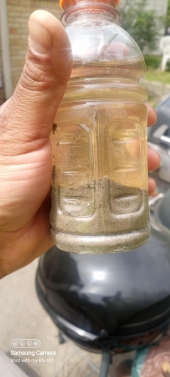
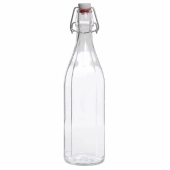
I mainly charge my biochar with liquid inoculants because it's faster.   Warning: this post might make you slightly uncomfortable. The main liquid inoculant that I use is urine.  I used to store it in plastic fruit juice containers on the back patio.  Then I realized that it was more convenient to have it in the bathroom.  Then I realized that I might not want to have so much plastic in my soil.  I started storing the urine in wine bottles.  I realized that pouring it into the wine bottles was somewhat difficult. Then I started saving up spaghetti sauce jars, which are glass.  Now there isn't any urine stored in plastic jars, but I may transfer it from the bathroom to outside in a plastic jar.  I am considering leaving more old glass spaghetti sauce jars in the bathroom to avoid the plastic altogether.  As always, I welcome anyone with a better idea.

John S
PDX OR
 
steward & manure connoisseur
Posts: 5392
Location: South of Capricorn
3403
dog rabbit urban cooking writing homestead ungarbage
  • Likes 11
  • Mark post as helpful
  • send pies
    Number of slices to send:
    Optional 'thank-you' note:
  • Quote
  • Report post to moderator
Just saying, this sounds like the start of a hell of a limerick.

I wanted to water the garden with pee
but how to save it without plastick-y?
A bottle of wine
Will do really fine
to give my plants lots of nitrogen, you see!
(sorry)

I love the idea of horrifying guests with wine bottles full of pee. I also am way too butterfingers to permit there to be glass in my bathroom, I'm afraid.
We don't have this particular problem but I think I'd probably produce it as needed and use when fresh, since this particular resource is pretty abundant, let's say!
 
gardener
Posts: 5771
Location: Cincinnati, Ohio,Price Hill 45205
1376
forest garden trees urban
  • Likes 11
  • Mark post as helpful
  • send pies
    Number of slices to send:
    Optional 'thank-you' note:
  • Quote
  • Report post to moderator
I see stainless steel water bottles at the thrift store for cheap, and even the new ones are reasonable, considering their longevity.
One 64oz stainless steel "growler"  is plenty of pee to be transporting at once.
32oz is probably enough.
For bulk storage outside, consider a metal coffee carafe or an percolator.
Top the pee with a layer of vegetable oil to keep it from interacting with air.
For a huge storage vessel , get an old water heater.

 
Posts: 96
Location: Rhode Island, USA
36
  • Likes 12
  • Mark post as helpful
  • send pies
    Number of slices to send:
    Optional 'thank-you' note:
  • Quote
  • Report post to moderator
And here I've been running out to the compost pile every three beers like a dope!
 
John Suavecito
gardener
Posts: 4645
811
7
forest garden fungi trees food preservation bike medical herbs
  • Likes 10
  • Mark post as helpful
  • send pies
    Number of slices to send:
    Optional 'thank-you' note:
  • Quote
  • Report post to moderator
As Archie Bunker used to say, "You know Edith, you don't really buy beer.  You just rent it for awhile!"

John S
PDX OR
 
pollinator
Posts: 1661
Location: NW California, 1500-1800ft,
541
2
hugelkultur dog forest garden solar wood heat homestead
  • Likes 5
  • Mark post as helpful
  • send pies
    Number of slices to send:
    Optional 'thank-you' note:
  • Quote
  • Report post to moderator
I just inoculate with compost extract supplemented with kelp and rock dust. By my understanding, the microbes in the compost extract will then tilt towards nitrogen fixators if no N is added, and air is 79% N so plenty is available. My wife barely tolerates carboys of homemade cider and wine, and if I started filling one with pee I’d likely come home to an intervention.
 
master pollinator
Posts: 5968
Location: Canadian Prairies - Zone 3b
1786
  • Likes 6
  • Mark post as helpful
  • send pies
    Number of slices to send:
    Optional 'thank-you' note:
  • Quote
  • Report post to moderator

Mike Farmer wrote:And here I've been running out to the compost pile every three beers like a dope!


No no, that's a brilliant way to burn off the extra calories!
 
Douglas Alpenstock
master pollinator
Posts: 5968
Location: Canadian Prairies - Zone 3b
1786
  • Likes 7
  • Mark post as helpful
  • send pies
    Number of slices to send:
    Optional 'thank-you' note:
  • Quote
  • Report post to moderator
To answer the OP: if I can't jog out to the compost heap or a friendly tree, I deposit my Vitamin P in a container 2/3 full of dry char. This not only inoculates the char, but the increased pH and the absorption qualities of the char means there is no smell.
 
Posts: 22
Location: Prague, Czech Republic, Europe, USDA Zone 6b
4
  • Likes 6
  • Mark post as helpful
  • send pies
    Number of slices to send:
    Optional 'thank-you' note:
  • Quote
  • Report post to moderator
Hi everybody,
Be careful when using urine as a fertilizer (inoculant), as it contains sodium chloride, excess amounts of which are excreted from the human body through urine. If you fertilize your garden beds heavily with urine, you will end up salinizing them with sodium chloride (table salt).
 
Douglas Alpenstock
master pollinator
Posts: 5968
Location: Canadian Prairies - Zone 3b
1786
  • Likes 8
  • Mark post as helpful
  • send pies
    Number of slices to send:
    Optional 'thank-you' note:
  • Quote
  • Report post to moderator

Pavel Hochmut wrote:Hi everybody,
Be careful when using urine as a fertilizer (inoculant), as it contains sodium chloride, excess amounts of which are excreted from the human body through urine. If you fertilize your garden beds heavily with urine, you will end up salinizing them with sodium chloride (table salt).


The dose makes the poison. I think this could be a concern in a closed system like container gardening or hydroponics. In larger gardens with deeper soil, I suspect that the volume of organic matter in living soil provides a buffer, and rainfall (leaching) also plays a role.

I doubt that I could drink enough beer to poison my garden. (Though in my younger days I may have been open to that challenge. )

An interesting question, though, is whether biochar absorbs NaCL in greater or lesser quantities. I wonder if the inevitable traces of ash, high in K, would buffer against absorption in the same way it does in the human body.
 
gardener
Posts: 2984
Location: Zone 4b/5a
1763
ancestral skills forest garden foraging composting toilet fiber arts bike medical herbs seed writing ungarbage
  • Likes 5
  • Mark post as helpful
  • send pies
    Number of slices to send:
    Optional 'thank-you' note:
  • Quote
  • Report post to moderator
I’ve found that the half gallon mason jars they use to sell raw milk around here are perfect for that and many other things. They have a jar return program for a discount, but really, the jar is worth it!

I have friends who have a woodworking business. They heap up piles of sawdust (/shavings) and add the urine to the sawdust to make compost. Since I gave them some spawn, the piles have been exploding into wine caps and blewits more or less constantly. I’ve had no such luck with the mushrooms.
 
Pavel Hochmut
Posts: 22
Location: Prague, Czech Republic, Europe, USDA Zone 6b
4
  • Likes 3
  • Mark post as helpful
  • send pies
    Number of slices to send:
    Optional 'thank-you' note:
  • Quote
  • Report post to moderator

M Ljin wrote:I’ve found that the half gallon mason jars they use to sell raw milk around here are perfect for that and many other things. They have a jar return program for a discount, but really, the jar is worth it!

I have friends who have a woodworking business. They heap up piles of sawdust (/shavings) and add the urine to the sawdust to make compost. Since I gave them some spawn, the piles have been exploding into wine caps and blewits more or less constantly. I’ve had no such luck with the mushrooms.


Hi,I just read about your woodprocessing friends mixing sawdust and shavings with urine to make compost. As with 9 years of raw experience with Terra Preta, I must say: they are sitting on a massive gold mine, but using it very inefficiently!Ordinary composting causes a catastrophic loss of carbon and nitrogen. If they convert that sawdust through a precise process into stable HUMUS and authentic Terra Preta, they will stop wasting material and achieve results that go way beyond any ordinary scale. People often cannot even comprehend the massive biological power they are wasting here.In fact, this could be an incredible business opportunity for them—utilizing their wood waste to produce high-value Terra Preta, or at least one of its essential component parts, for the local market. They don't necessarily have to manufacture the complete TP themselves. Let's be completely honest: the replication process is highly complex and is absolutely no walk in the park. However, separating its individual stages from one another will greatly ease and simplify the entire procedure. They could produce just one crucial part, someone else nearby can supply the second, and other participants in this multi-stage supply chain could process and complete the final Terra Preta, while the final partner packages and sells it, with everyone sharing the profits based on merit and agreement. This decentralized community business model could work beautifully!If such a supply chain network is successfully formed, I would be more than happy to participate in it in some way with my experience, because none of us are ever smart enough alone.Because I see immense potential in this decentralized approach, I am launching a completely new thread dedicated exclusively to building this cooperative network. You can find it under the title: "Business Challenge: Building a Multi-Stage Community Supply Chain for Terra Preta".This is a direct invitation not only for your friends, but for everyone on this forum: all woodprocessors with surpluses of hardwood waste, farmers with excess horse or cattle manure, and anyone with free processing capacities, storage facilities, or assembly options for the final product—stop throwing the "treasure" you have in the palm of your hand into the bottomless pit of ordinary composting. It is a highway to hell—a never-ending cycle of constant composting and endless, unnecessary hard work. Moreover, those of you who have a surplus of raw material or logistics can build a great business out of it.If anyone shows a genuine interest, you are more than welcome to visit me in Prague and inspect my results "in situ". I would gladly send a physical sample of my TP to the US, but unfortunately, without abnormally complex and expensive phytosanitary and customs procedures, it simply won't pass through customs—I know that for a fact.In my upcoming 15-chapter manual, which I will do my best to release here on the Marketplace by the end of October 2026, I describe exactly how to handle wood waste, charcoal, and nitrogen to build a highly stable soil system that may run autonomously for decades, if not centuries or millennia.As for the subsequent management, my Terra Preta system uses highly advanced, rapid liquid ferments applied precisely when the plants need them most—with zero heavy lifting. Precise biochemical processes can even rapidly break down traditionally stubborn organic materials like bone meal into immediately available nutrients within days. However, these specific, revolutionary liquid fertilizer techniques and exact formulas will be the exclusive subject of my second e-book scheduled for release in mid-2027.You can follow all updates about the upcoming e-book and the preview package directly in my main thread here:permies.comStay tuned, because you are just one step away from turning waste into a great business and closing the loop perfectly!
 
Pavel Hochmut
Posts: 22
Location: Prague, Czech Republic, Europe, USDA Zone 6b
4
  • Likes 2
  • Mark post as helpful
  • send pies
    Number of slices to send:
    Optional 'thank-you' note:
  • Quote
  • Report post to moderator

Douglas Alpenstock wrote:

Pavel Hochmut wrote:Hi everybody,
Be careful when using urine as a fertilizer (inoculant), as it contains sodium chloride, excess amounts of which are excreted from the human body through urine. If you fertilize your garden beds heavily with urine, you will end up salinizing them with sodium chloride (table salt).


The dose makes the poison. I think this could be a concern in a closed system like container gardening or hydroponics. In larger gardens with deeper soil, I suspect that the volume of organic matter in living soil provides a buffer, and rainfall (leaching) also plays a role.

I doubt that I could drink enough beer to poison my garden. (Though in my younger days I may have been open to that challenge. )

An interesting question, though, is whether biochar absorbs NaCL in greater or lesser quantities. I wonder if the inevitable traces of ash, high in K, would buffer against absorption in the same way it does in the human body.


Hi!
You are absolutely right about the beer challenge!
From a mass balance perspective, you cannot cheat physics. An immediate analysis of "beer urine" might show a lower concentration of NaCl because it is diluted.
However, in a 24-hour total window, a beer drinker and a normal person excrete roughly the exact same amount of table salt—assuming the beer drinker wasn't stuffing himself with salted herrings!

NaCl indeed blocks soil life.
Instead of random experiments with raw waste, it is much safer to skip urine application to the soil and turn to stable soil structures, as e.g. Terra Preta is, where other liquid fertilization options are available. But never urine.

I solved these balances years ago.You can check out my primary thread with live updates and photos here:permies.com
 
Douglas Alpenstock
master pollinator
Posts: 5968
Location: Canadian Prairies - Zone 3b
1786
  • Likes 1
  • Mark post as helpful
  • send pies
    Number of slices to send:
    Optional 'thank-you' note:
  • Quote
  • Report post to moderator
I find that urine is a small but useful component of my soil building process. I don't apply it directly to soil or garden, but I will apply it on the dripline of established trees. In any case, the dilution factor is huge and the results speak for themselves. I agree that caution is reasonable, but I would never say never.
 
The longest recorded flight time of a chicken is 13 seconds. But that was done without this tiny ad:
12 Better World books +12 SKIP books +12 Cob Style DVDs
https://permies.com/wiki/380865/World-books-SKIP-books-Cob
reply
    Bookmark Topic Watch Topic
  • New Topic