|

|
.png)
|

|

|

|
|
|
|
|
|
|
|

|

|
|

|

|
 12
12


 12
12


 8
8
r ransom wrote:I guess I'm sort of thinking: if they can make a whole world from trash and stuff, maybe I can make my world better by making the things that don't exist yet? Maybe.
How Permies works: https://permies.com/wiki/34193/permies-works-links-threads
My projects on Skye: The tree field, Growing and landracing, perennial polycultures, "Don't dream it - be it! "
6
r ransom wrote:What is this called where they make tiny worlds?
'Diorama' comes to mind.
Om is where the heart is.
12
Murder Is Her Hobby: Frances Glessner Lee and The Nutshell Studies of Unexplained Death
...explores the surprising intersection between craft and forensic science. It also tells the story of how a woman co-opted traditionally feminine crafts to advance the male-dominated field of police investigation and to establish herself as one of its leading voices.
Frances Glessner Lee (1878−1962) crafted her extraordinary “Nutshell Studies of Unexplained Death” — exquisitely detailed miniature crime scenes — to train homicide investigators to “convict the guilty, clear the innocent, and find the truth in a nutshell.” These dollhouse-sized dioramas of true crimes, created in the first half of the 20th century and still used in forensic training today, helped to revolutionize the emerging field of homicide investigation.
Lee, the first female police captain in the U.S., is considered the “mother of forensic science” and helped to found the first-of-its kind Department of Legal Medicine at Harvard University when the field of forensics was in its infancy. At the time, there was very little training for investigators, meaning that they often overlooked or mishandled key evidence, or irrevocably tampered with crime scenes. Few had any medical training that would allow them to determine cause of death. As Lee and her colleagues at Harvard worked to change this, tools were needed to help trainees scientifically approach their search for truth. Lee was a talented artist as well as criminologist, and used the craft of miniature-making that she had learned as a young girl to solve this problem. She constructed the Nutshells beginning in the 1940s to teach investigators to properly canvass a crime scene to effectively uncover and understand evidence. The equivalent to “virtual reality” in their time, her masterfully crafted dioramas feature handmade objects to render scenes with exacting accuracy and meticulous detail.
Every element of the dioramas—from the angle of miniscule bullet holes, the placement of latches on widows, the patterns of blood splatters, and the discoloration of painstakingly painted miniature corpses—challenges trainees’ powers of observation and deduction. The Nutshells are so effective that they are still used in training seminars today at the Office of the Chief Medical Examiner in Baltimore.
...
The exhibition also highlights the subtly subversive quality of Lee’s work, especially the way her dioramas challenge the association of femininity with domestic bliss and upend the expected uses for miniature making, sewing, an other crafts considered to be "women's work." Also evident is her purposeful focus on society's “invisible victims," whose cases she championed. Lee was devoted to the search for truth and justice for everyone, and she often featured victims such as women, the poor, and and people living on the fringes of society, whose cases might be overlooked or tainted with prejudice on the part of the investigator. She wanted trainees to recognize and overcome any unconscious biases and to treat each case with rigor, regardless of the victim.
As the Nutshells are still active training tools, the solutions to each remain secret. However, the crime scene “reports” (written by Lee to accompany each case) given to forensic trainees are presented alongside each diorama to encourage visitors to approach the Nutshells the way an investigator would.
Murder Is Her Hobby: Frances Glessner Lee and The Nutshell Studies of Unexplained Death is the first public display of the complete series of nineteen studies still known to exist. For the first time since 1966, 18 pieces on loan to the museum from the Harvard Medical School via the Maryland Office of the Chief Medical Examiner, will be reunited with the “lost nutshell,” on loan from the Society for the Protection of New Hampshire Forests, courtesy of the Bethlehem Heritage Society. The exhibition is organized by Nora Atkinson, The Lloyd Herman Curator of Craft.
6
Invasive plants are Earth's way of insisting we notice her medicines. Stephen Herrod Buhner
Everyone learns what works by learning what doesn't work. Stephen Herrod Buhner
10
10
The first thing to remember is that these scales are used by several different hobbies/subcultures, so terminology will vary.
Most scales are ratio-based. Honestly the easiest way to shop is to keep a ruler near you as you shop and translate the given dimensions of the miniature you're looking at into their equivalent real world sizes.
1/6: one inch equals six inches. A six foot tall person is a 12-inch doll. This is Barbie doll scale and is rarely used for dioramas. (American Girl scale is even bigger, at 1:3.)
1/12: One inch equals one foot (12 inches). A six-foot-tall person is a doll six inches high. This is the most common scale for dollhouses and sometimes called “full scale”. Widest selection of minis, but imho too big a scale for a book nook. (I have come to this conclusion the hard way, as I am currently building one. Easy to source minis, but it will need to be a very small scene to fit into a book nook at this scale. Mine has one desk and one chair.)
1/24: one inch equals two feet. Sometimes called “half scale”. Roughly equivalent to model railroad G scale (one of the largest common model railroad scales).
1/48: one inch equals four feet. Sometimes called “quarter scale”. Equivalent to model railroad O scale.
1/56: one inch equals four feet eight inches, which to my humble eye is basically indistinguishable from quarter scale. This is Dungeons and Dragons (or tabletop role playing game, TTRPG) miniature scale. Unlike the dollhouse and model railroading worlds, D&D doesn’t go by a ratio-based scale because most people use the same one, in which the standard height of a person (ok, a Medium creature) is, traditionally, 28mm. You'll sometimes see "32mm" in this subculture, because mini size has crept up over the years as painters have clamored for ever more details to paint. This is supposed to represent a "larger than life" character, not a separate scale.
1/72: one inch equals six feet. Most common scale for wargaming, but imho very little selection outside of the military realm. If you ever want to do a WW2 diorama, though, they have got you COVERED.
1/87: one inch equals 7.25 feet. This is model railroad HO scale, easily the most common railroad scale. Lots of selections, particularly in terrain/scenery. You’ll have to get imaginative if you're focusing on a period of history before the invention of trains, however, as the manufacturers of model railroads understandably do not focus on the pre-railroad era.
1/144: one inch equals twelve feet. Sometimes called “dollhouse for a dollhouse“ scale. Used in war gaming and things like ship dioramas, but it’s really hard to see people (much less anything smaller) at that scale.
10
8
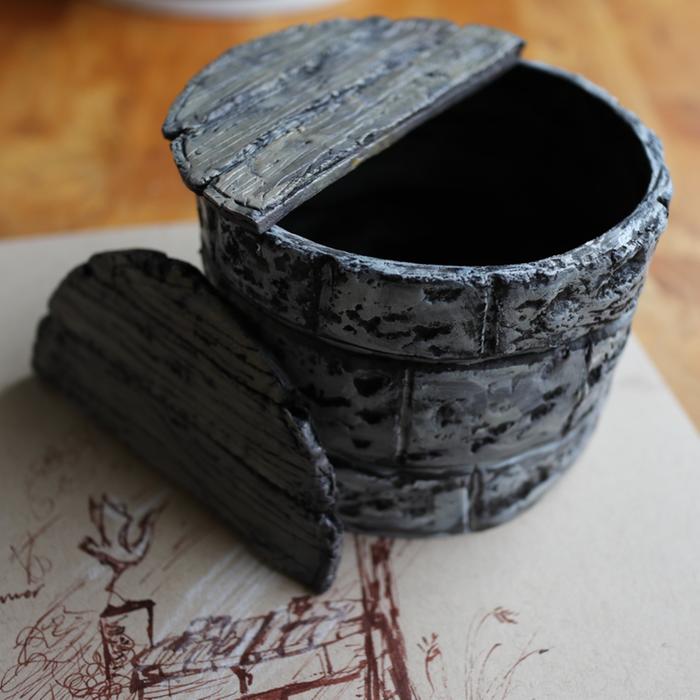
I bet a lot of these materials could be replaced with more upcycling like paperclay.
Visit Redhawk's soil series: https://permies.com/wiki/redhawk-soil
How permies.com works: https://permies.com/wiki/34193/permies-works-links-threads


 9
9
 4
2
5
4
2
5
r ransom wrote: So I started wondering if there are any temperate woods that might be growing around the place that would do the same job? Smooth, not much grain, soft enough to dent with a fingernail, easy to cut with a craft knife, warps little when in small pieces. Not stringy.
Visit Redhawk's soil series: https://permies.com/wiki/redhawk-soil
How permies.com works: https://permies.com/wiki/34193/permies-works-links-threads
5
4
2
5
6
How Permies works: https://permies.com/wiki/34193/permies-works-links-threads
My projects on Skye: The tree field, Growing and landracing, perennial polycultures, "Don't dream it - be it! "
4
3
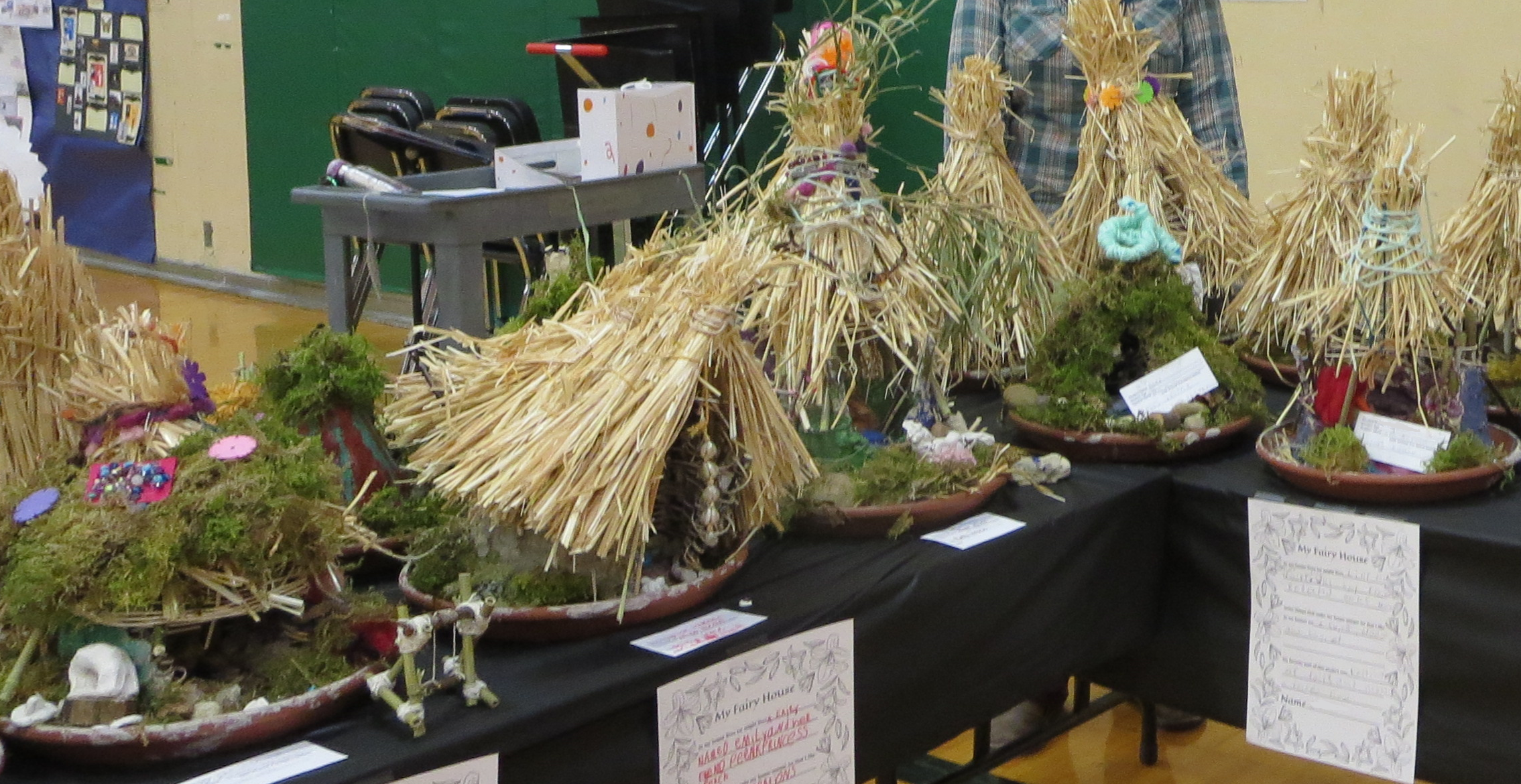
Nancy Reading wrote:I think it would also be a great way to get a feel for different natural building methods. Miniature cob or roundwood buildings....
~Permies FAQ ~ Dragons, Fairies and even a Mini-Paul! ~ You Know You're a Permie When...~ All About Permies, including tutorials ~Herbal Hugel Spiral of Randomness!~Tricks to Keep the Dirt from Sliding off a Hugel~List of Cascadia Bloggers and Facebook Pages!~



|
I met your mom on a Carribean cruise and she said you would help me and this tiny ad:
Heat your home with the twigs that naturally fall of the trees in your yard
http://woodheat.net
|