• Post Reply Bookmark Topic Watch Topic
  • New Topic
permaculture forums growies critters building homesteading energy monies kitchen purity ungarbage community wilderness fiber arts art permaculture artisans regional education skip experiences global resources cider press projects digital market permies.com pie forums private forums all forums
this forum made possible by our volunteer staff, including ...
master stewards:
  • Carla Burke
  • Nancy Reading
  • John F Dean
  • r ransom
  • paul wheaton
  • Jay Angler
  • Timothy Norton
stewards:
  • Pearl Sutton
  • Tereza Okava
  • Nicole Alderman
master gardeners:
  • Christopher Weeks
gardeners:
  • M Ljin
  • Megan Palmer
  • Pete Podurgiel

Advice on garden planning

 
Posts: 50
Location: Wales, UK
15
  • Likes 7
  • Mark post as helpful
  • send pies
    Number of slices to send:
    Optional 'thank-you' note:
  • Quote
  • Report post to moderator
Hi I'm new to growing.
I've just finished cutting back the brambles on my new allotment plot and am looking at designing the goal layout of the plot.

I am in Cornwall England, hardiness zone 9a. My plot has little to no shade so I've decided to re orient my shed to form some shade to sit in. I am trying to feed two adults on a budget, bonus if I can share extra and would like my plot to also be visually interesting and a nice place to be.
I would also like to use this plot to work on some of the SKIP projects, although tall hugely type structures aren't allowed. I have to ask permission to add sheds, poly tunnels, greenhouses, trees and ponds.

How do you decide on a garden layout?
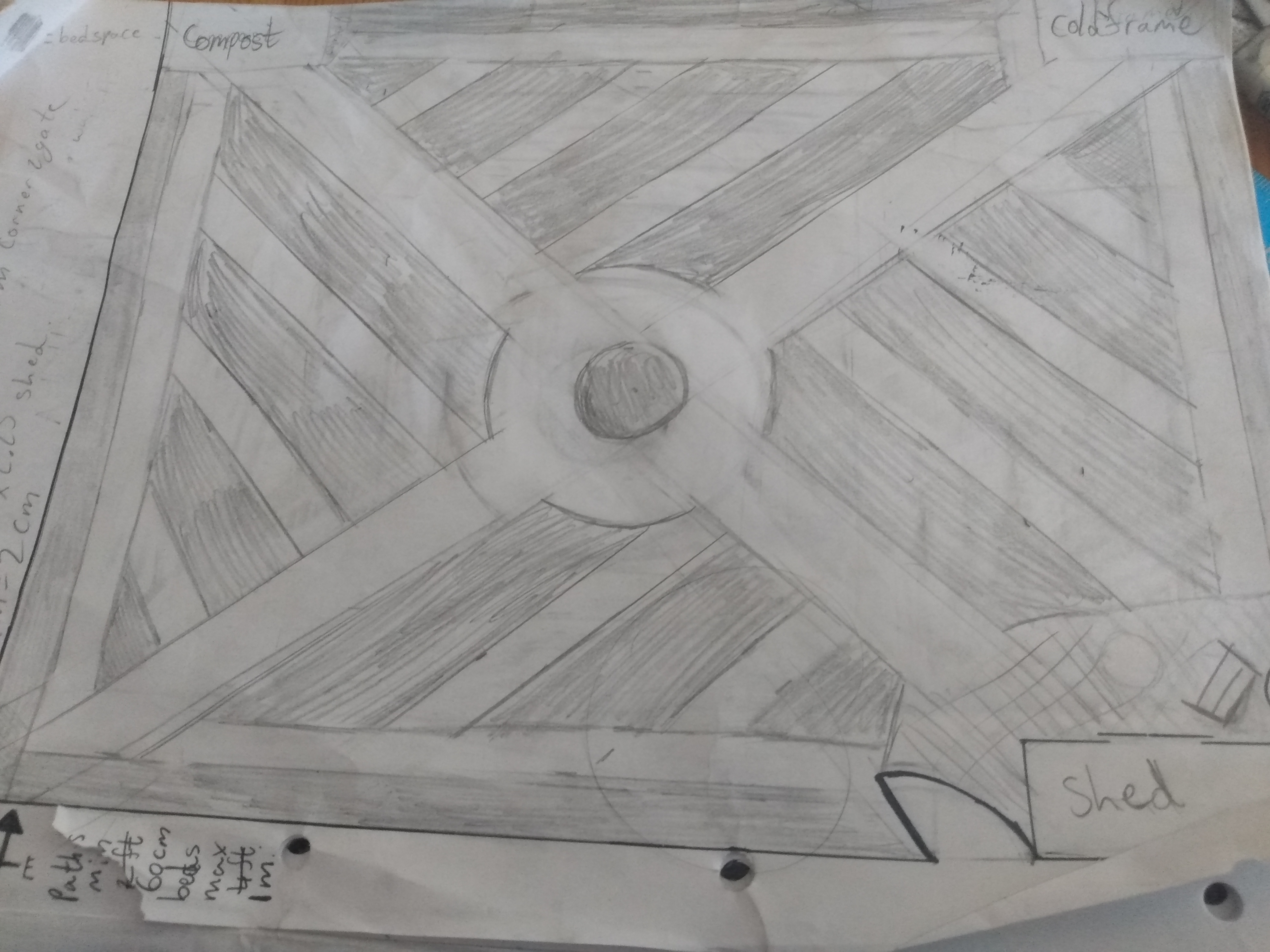
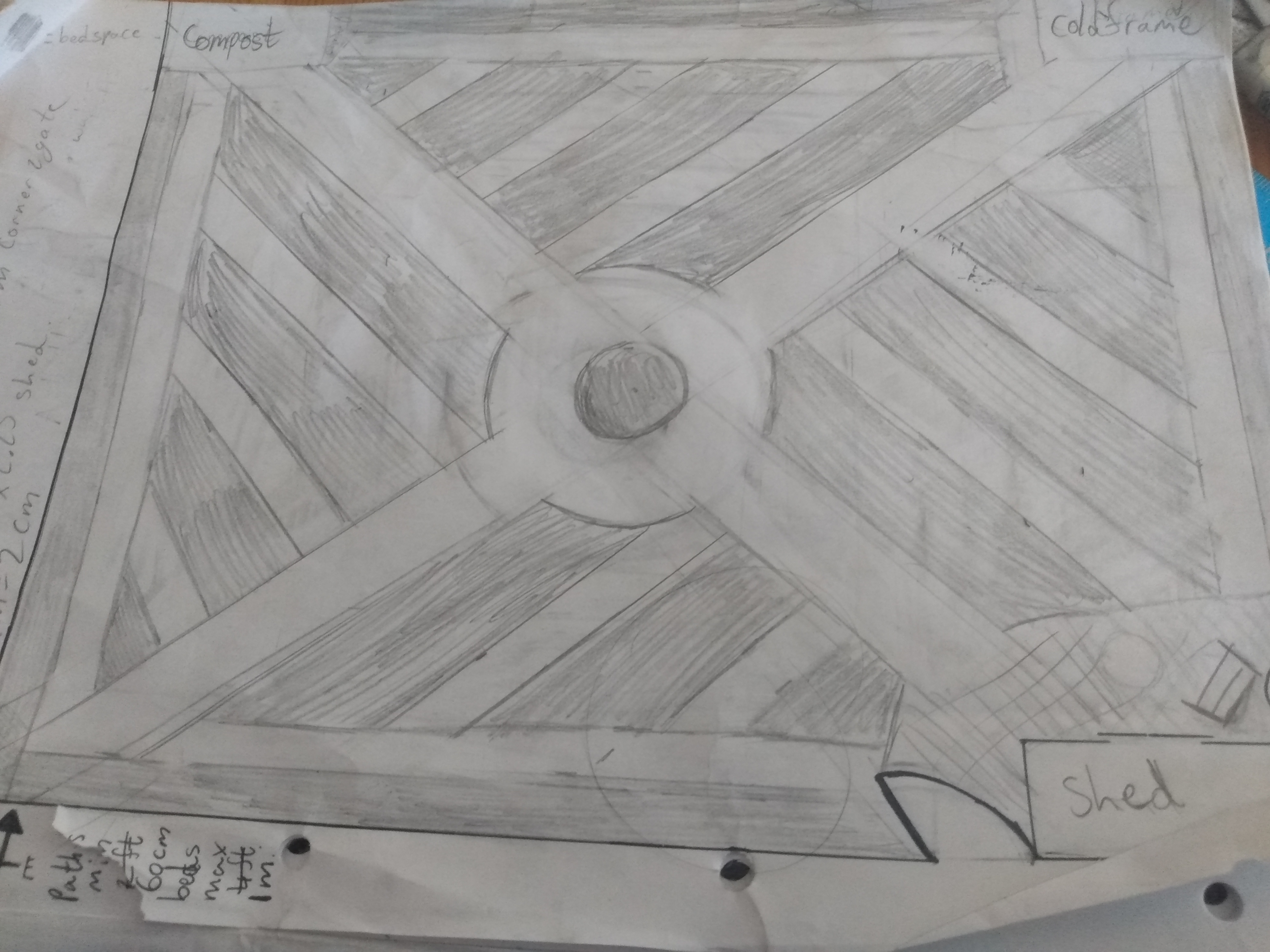
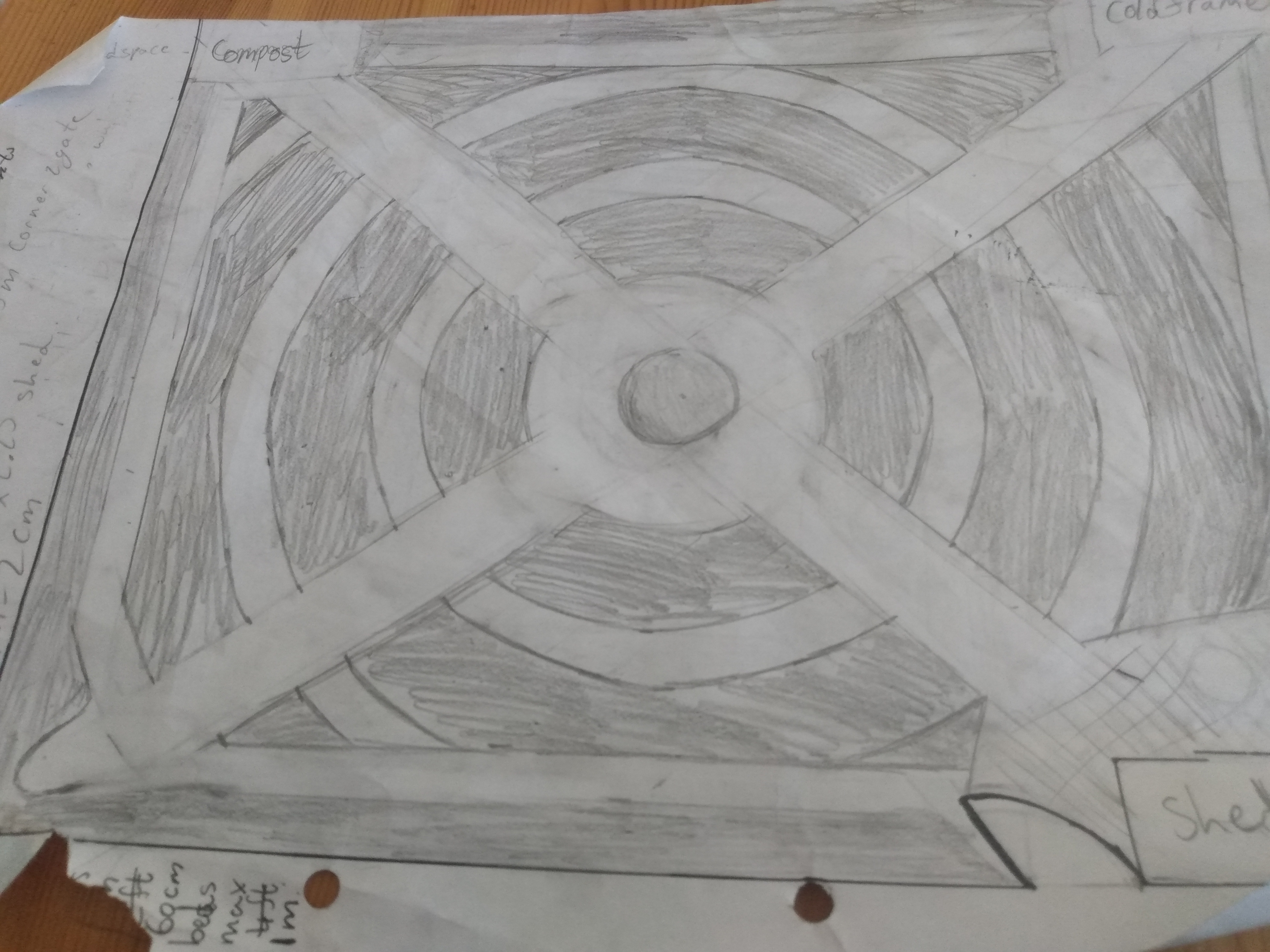
Can you see any problems with my initial idea sketches?
Beds are the greyed out zones

Edited to add dimensions: plot is 9.7 by 12.6 meters my initial designs are based on 4ft main paths 2 foot small paths and 4 ft beds

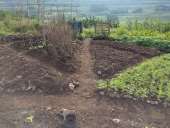
Photos of the plots current condition included
IMG_20260812_114222655.jpg
Idea 1
Idea 1
IMG_20260812_114222655.jpg
Idea 2
Idea 2
IMG_20260812_124142288.jpg
Idea 3
Idea 3
IMG_20260810_210548256.jpg
[Thumbnail for IMG_20260810_210548256.jpg]
IMG_20260810_210550841.jpg
[Thumbnail for IMG_20260810_210550841.jpg]
IMG_20260810_210553289.jpg
[Thumbnail for IMG_20260810_210553289.jpg]
IMG_20260810_210606167.jpg
[Thumbnail for IMG_20260810_210606167.jpg]
 
steward & manure connoisseur
Posts: 5376
Location: South of Capricorn
3384
dog rabbit urban cooking writing homestead ungarbage
  • Likes 5
  • Mark post as helpful
  • send pies
    Number of slices to send:
    Optional 'thank-you' note:
  • Quote
  • Report post to moderator
Hey Natalie, that's a good-sized plot you have there! How exciting!! I like your design, the only thing I would add is to think about how shade/sun will work as the sun moves across the sky (planting taller things so they don't shade out the littler ones, etc). Other than that, looks great and I look forward to seeing how it all grows up for you!! If you're in 9a, you should be able to start some things right away, are you getting any rain?
 
Natalie Hogg
Posts: 50
Location: Wales, UK
15
  • Likes 5
  • Mark post as helpful
  • send pies
    Number of slices to send:
    Optional 'thank-you' note:
  • Quote
  • Report post to moderator

Tereza Okava wrote:Hey Natalie, that's a good-sized plot you have there! How exciting!! I like your design, the only thing I would add is to think about how shade/sun will work as the sun moves across the sky (planting taller things so they don't shade out the littler ones, etc). Other than that, looks great and I look forward to seeing how it all grows up for you!! If you're in 9a, you should be able to start some things right away, are you getting any rain?


Sadly we are currently in a drought there are some potato plants from the previous plot holder that are holding on but everything I've put in the ground while clearing has just not germinated at all from how dry it is.
 
Tereza Okava
steward & manure connoisseur
Posts: 5376
Location: South of Capricorn
3384
dog rabbit urban cooking writing homestead ungarbage
  • Likes 4
  • Mark post as helpful
  • send pies
    Number of slices to send:
    Optional 'thank-you' note:
  • Quote
  • Report post to moderator
Unfortunately this year is a hard one, I think I'd be trying to start things in the house, if possible, it has to let up at some point and then you can put them in the ground. I have a friend up in northern Wales (a bit south of Mold) and the pictures she's sent me are jaw-dropping (and i was there a few years ago in 'the hottest august ever recorded'.... at this point everything is a record).

Stay cool and good luck!
 
master pollinator
Posts: 409
Location: UK
152
kids urban seed
  • Likes 7
  • Mark post as helpful
  • send pies
    Number of slices to send:
    Optional 'thank-you' note:
  • Quote
  • Report post to moderator
Cornwall 9a is honestly a great base to work from. Given the drought, worth leaning toward things that handle a bit of stress once established, courgettes, squash, and most legumes tend to cope. Lettuce will just bolt the second it gets warm and dry so maybe save that for autumn.
 
steward and tree herder
Posts: 14282
Location: Isle of Skye, Scotland. Nearly 70 inches rain a year
7955
6
transportation dog forest garden foraging trees books food preservation woodworking wood heat rocket stoves ungarbage
  • Likes 7
  • Mark post as helpful
  • send pies
    Number of slices to send:
    Optional 'thank-you' note:
  • Quote
  • Report post to moderator
I like both your designs - the way you can go in various directions from the shed is good. Are you going to collect rainwater from the roof? You can at least direct it to adjacent plants that might appreciate a little more water (rhubarb?). Do you have a water source on site? Can you use a hose or do you need to use a watering can? Having easy access to carrying water is worth a thought, although obviously you would want to minimise that.
Are you planning on perennials at all? Those (once established) ought to be more drought tolerant.
I find small beds can be difficult to prepare and plant - those might be ideal for perennials, or support plants though.

Other things to consider perhaps:
Is 4 feet the right width of beds for you. Most gardening books seem to suggest that, but I find it a little wide to reach the middle by hand.
Having regular sized beds can make it easier to set up protecting structures for season extension or insect/bird netting, if this is something you are likely to want to do.
It looks like you are thinking of a 4 year rotation. Does this fit with the plants you actually want to grow, or will a 5 or 6 year rotation ft better? I do a simple 4 year rotation, mainly because I lose track and each time have to work out from remembering what one of my plots had, where everything else must have been. I can never remember which way round I am going either! But I haven't got clever enough to work out how much I need of anything - I'm just happy when something grows for me!
What is going on your paths? A grass path can be a useful source of mulch (and a less useful source of weeds...) but having a path the right width for your mower makes life easier.

I love planning gardens! Good luck for a super season next year. I would look to try and get some green manures in, and maybe some overwintering crops like broad beans? winter radish might be another possibility.
 
Natalie Hogg
Posts: 50
Location: Wales, UK
15
  • Likes 6
  • Mark post as helpful
  • send pies
    Number of slices to send:
    Optional 'thank-you' note:
  • Quote
  • Report post to moderator

Nancy Reading wrote:I like both your designs - the way you can go in various directions from the shed is good. Are you going to collect rainwater from the roof? You can at least direct it to adjacent plants that might appreciate a little more water (rhubarb?). Do you have a water source on site? Can you use a hose or do you need to use a watering can? Having easy access to carrying water is worth a thought, although obviously you would want to minimise that.
Are you planning on perennials at all? Those (once established) ought to be more drought tolerant.
I find small beds can be difficult to prepare and plant - those might be ideal for perennials, or support plants though.

Other things to consider perhaps:
Is 4 feet the right width of beds for you. Most gardening books seem to suggest that, but I find it a little wide to reach the middle by hand.
Having regular sized beds can make it easier to set up protecting structures for season extension or insect/bird netting, if this is something you are likely to want to do.
It looks like you are thinking of a 4 year rotation. Does this fit with the plants you actually want to grow, or will a 5 or 6 year rotation ft better? I do a simple 4 year rotation, mainly because I lose track and each time have to work out from remembering what one of my plots had, where everything else must have been. I can never remember which way round I am going either! But I haven't got clever enough to work out how much I need of anything - I'm just happy when something grows for me!
What is going on your paths? A grass path can be a useful source of mulch (and a less useful source of weeds...) but having a path the right width for your mower makes life easier.

I love planning gardens! Good luck for a super season next year. I would look to try and get some green manures in, and maybe some overwintering crops like broad beans? winter radish might be another possibility.


Yes I intend to collect water there are three waterbutts that came with the plot, but aren't currently connected to the shed roof. There is a communal water tower on site, it is watering can only.

I already have rhubarb on the plot, I think it needs dividing. I would like to get more perennials eventually, a fruit tree in the central circle at least but it is unlikely the first year. Any more perennials I get I plan to stick in the outer edge beds.

I copied the bed and path measurements from a CSA non profit I volunteer at, I can kneel on those paths and reach the middle from a kneel.

I'm not sure about using netting, the CSA doesn't use it, so I hadn't thought about it and was planning on going with cold hardy crops and cover cropping for winter mostly, with the cold frame to supplement.

This is my first time growing a garden myself so I thought a four year rotation was as complicated as I wanted to take things. Are there plants that need a longer rotation?

I don't have access to power so mowing at the plot would be difficult, though grass would make a good mulch source. There is a free pile of wood chips that gets replenishes on site so that's probably what I will use for my paths.

I'm vaguely planning that for my first year I only get two of the segments up and running with 'proper' production and cover the other two with cover crops and pollinator plants. Winter cover cropping/ winter veg planting the first segments isn't bad shout, will that work as I plan to use the cardboard with compost and biomass overwinter bed set up method?


pioneer
Posts: 482
130
cat trees urban
  • Likes 8
  • Mark post as helpful
  • send pies
    Number of slices to send:
    Optional 'thank-you' note:
  • Quote
  • Report post to moderator
My recollection is that leading horticulturist Iain "Tolly" Tolhurst has worked out a 19 year rotation for their walled garden at Tolhurst Organic in South England.  That includes two different types of green manure break crops!
 
Nancy Reading
steward and tree herder
Posts: 14282
Location: Isle of Skye, Scotland. Nearly 70 inches rain a year
7955
6
transportation dog forest garden foraging trees books food preservation woodworking wood heat rocket stoves ungarbage
  • Likes 5
  • Mark post as helpful
  • send pies
    Number of slices to send:
    Optional 'thank-you' note:
  • Quote
  • Report post to moderator

Natalie Hogg wrote:I'm not sure about using netting, the CSA doesn't use it, so I hadn't thought about it and was planning on going with cold hardy crops and cover cropping for winter mostly, with the cold frame to supplement.


Each site is different, some people have such problems with pigeons that they struggle to grow any cabbage like plants. There are other ways of dealing with that if you do find out you have a problem. Maybe look around and ask whether other site members have a problem at all.

This is my first time growing a garden myself so I thought a four year rotation was as complicated as I wanted to take things. Are there plants that need a longer rotation?


I believe four is the minimum that is recomended. If you have a club root or an onion rot problem, those can stay in the soil for much longer. In practise though it is difficult to create a true rotation of crop families as many 'weeds' are in the brassica family (e.g bittercress) and mustard and radish (both brassica) are used as green manures. Having a good diversity of crops and including flowering and scented plants will help just as much as the rotation in my opinion.

I don't have access to power so mowing at the plot would be difficult, though grass would make a good mulch source. There is a free pile of wood chips that gets replenishes on site so that's probably what I will use for my paths.


a push -mower is not as much work as you might think (and are often available for free as gathering dust in people's sheds...), however if you have access to woodchip that's great!

I'm vaguely planning that for my first year I only get two of the segments up and running with 'proper' production and cover the other two with cover crops and pollinator plants. Winter cover cropping/ winter veg planting the first segments isn't bad shout, will that work as I plan to use the cardboard with compost and biomass overwinter bed set up method?


Starting small and not trying to do too much is generally a pretty good idea - many beginner gardeners get disheartened because they try and do too much and the weeds get on top of them.
I think whether it is best to wintercrop or sheet mulch depends on what the site and soil is like. If it is in good heart and full of perennial weeds, then maybe a cover crop is best - it acts as a 'nutrient battery' holding the goodness from the soil which is then returned in the form of biomass in the spring. You can see and deal with the perennial weeds as they reappear. If you mulch perennial weeds over winter I think this can actually feed them and they sometimes return bigger the following year. Sheet mulch is great if the soil needs a bit of a boost and the weeds are mainly annuals. The main thing is to cover the soil with one or the other, rather than leaving it bare soil to leach all the goodness out and giving the weeds a head start in spring!
 
pollinator
Posts: 323
Location: Middlebury, Vermont zone 5a
112
forest garden books food preservation fiber arts medical herbs homestead
  • Likes 9
  • Mark post as helpful
  • send pies
    Number of slices to send:
    Optional 'thank-you' note:
  • Quote
  • Report post to moderator
Having a fruit tree in the center would certainly be pretty, but it does  give shade, which most vegetables don't like, and their roots would absorb most of the water and they might impede you from working the soil.  If you must have a fruit tree, maybe consider putting it at the most northerly spot, but with you wanting annual vegetables, I'd be a little leery.   I think your design is beautiful, but keep in mind that the general rule is to have taller things to the north and shorter things to the south so that all get enough light.

I don't know how long you intend to keep the plot or if you'll eventually own your own land, but I have a number of permaculture gardens here which mainly consist of fruit and nuts.  I do also have asparagus, rhubarb, and mushrooms--perennial vegetables, and I have found it pretty effortless while saving a boatload of money. I do have to prune, but I've come to really enjoy that; it gets me out in the colder months.  I also had underestimated how long just the act of harvesting takes, let alone preserving all of the bounty.  Because of the bounty, I've extended my skillset to include all sorts of preservation techniques. I even make my own wine...the only real expense is the sugar, and that's not that much compared to buying a bottle of wine! I now do ferments, freeze-drying, canning, etc. These are all new skills that I can attribute to permaculture.  I also am able to give a lot away, which gives me great pleasure.

Maybe if you keep your tree in the center, you could have a variety ofbush-type fruit under its potential canopy. Actually, there is a method called "Grow a Little Fruit Tree" that keeps trees quite small.  You can buy the book, but there is also a free video that really incapsulates the process very nicely.  The author has a picture of her standing next to an apple tree that is under five feet but just loaded with fruit.  It was that image that convinced me to try it.  So far, all of my trees have done just fine, although it is scary to lop off a newly purchased tree to be knee high!  

If planted at around the same time, the roots would work together and not then have to be disturbed.  Other than that, I don't have much to offer because it's a zone 4/5 here where I live!  Well, maybe one more thing, either cover every inch of soil with growing things (strawberries make an excellent groundcover) and/or mulch any exposed soil to improve the soil and to keep moisture in.  Have fun with it.  There is great satisfaction to be had from gathering things that you've grown yourself!
 
pollinator
Posts: 318
Location: North FL, in the high sandhills
128
  • Likes 5
  • Mark post as helpful
  • send pies
    Number of slices to send:
    Optional 'thank-you' note:
  • Quote
  • Report post to moderator
Check this, or any of his other books:

Martin Crawford

https://permies.com/t/16041/Book-Review-Creating-Forest-Garden

more food forest than garden but plenty of useful crossover.
 
pollinator
Posts: 54
7
  • Likes 9
  • Mark post as helpful
  • send pies
    Number of slices to send:
    Optional 'thank-you' note:
  • Quote
  • Report post to moderator
Natalie - i’m in year 2 of a start-from-scratch garden. One thing i regret was having too many narrow paths ~2 ft. My wheeling cart that i use for mulch, dirt, compost, tools… everything, needs ample roadway. Since i built boxes i am locked in. So i would gladly trade smaller beds for bigger cartways. Something to consider.

Also, be extra generous to yourself to have area(s) for compost boxes. It might seem like a waste but it is so handy to have areas to throw plant wastage in, and when you have compost boxes you will be amazed at how much compostable material pops up, falls from trees, or finds its way to you.
 
pollinator
Posts: 451
136
2
dog trees books bee medical herbs
  • Likes 2
  • Mark post as helpful
  • send pies
    Number of slices to send:
    Optional 'thank-you' note:
  • Quote
  • Report post to moderator

Barbara Simoes wrote:Having a fruit tree in the center would certainly be pretty, but it does  give shade...


Yes, fruit trees can get pretty large if allowed to do so. However, it makes sense for manageability reasons to keep them small. There's a wonderful book called Grow a Little Fruit Tree by Ann Ralph that explains how to do so. And it doesn't need to be dwarf varieties, either. In fact, she recommends not growing dwarf varieties and explains why in her book. I decided to follow her method after recently moving to a property with an old pear tree on it. It's still producing copious amounts of fruit, but more than half of them need to be reached by ladder which is not ideal. The tree also needs pruning which, again, will require a ladder. So the new fruit trees I just planted are being kept small. They have responded very well so far.
 
So glamorous! Now do this tiny ad!
Paul Wheaton's Permaculture and Homesteading Stuff
https://permies.com/w/stuff
reply
    Bookmark Topic Watch Topic
  • New Topic