• Post Reply Bookmark Topic Watch Topic
  • New Topic
permaculture forums growies critters building homesteading energy monies kitchen purity ungarbage community wilderness fiber arts art permaculture artisans regional education skip experiences global resources cider press projects digital market permies.com pie forums private forums all forums
this forum made possible by our volunteer staff, including ...
master stewards:
  • Carla Burke
  • Nancy Reading
  • John F Dean
  • r ransom
  • paul wheaton
  • Jay Angler
  • Timothy Norton
stewards:
  • Pearl Sutton
  • Tereza Okava
  • Nicole Alderman
master gardeners:
  • Christopher Weeks
gardeners:
  • M Ljin
  • Megan Palmer
  • Pete Podurgiel

Chance's Garden Everything Forum Blog

 
Posts: 231
Location: Payson, Utah, US of A - Zone6B/High Desert/4500' /14" Rainfall
136
  • Likes 10
  • Mark post as helpful
  • send pies
    Number of slices to send:
    Optional 'thank-you' note:
  • Quote
  • Report post to moderator
Oh the potential. Oh the power. Oh the joy.
PXL_20260814_003431652.jpg
[Thumbnail for PXL_20260814_003431652.jpg]
 
Chance Lunceford
Posts: 231
Location: Payson, Utah, US of A - Zone6B/High Desert/4500' /14" Rainfall
136
  • Likes 4
  • Mark post as helpful
  • send pies
    Number of slices to send:
    Optional 'thank-you' note:
  • Quote
  • Report post to moderator
Also, since the question was asked when I first posted the picture of the seeds, here are the seed companies represented in the picture above:

- Experimental Farm Network
- Going To Seed
- Matt's Peppers (Tiny plastic baggies)
- Small Island Seed Co (manila pouches)
- My own saved seed

And, here are the companies I intend to order with over the winter:

- Adaptive Seeds
- Grand Prismatic Seed Co
- Snake River Seed Co
- Two Seeds In A Pod
- Uprising Seeds
- Sheffield's Seed
- Wild Garden Seed
- Wild Mountain Seed
- Miss Penn's Mountain Seeds
- American Meadows

Maybe more, I usually end up ordering from Baker Creek because I'm a sucker for the pictures.

A lot of the companies I order from are small groups or individuals doing interesting and individual things. I like supporting their work.
 
Chance Lunceford
Posts: 231
Location: Payson, Utah, US of A - Zone6B/High Desert/4500' /14" Rainfall
136
  • Likes 10
  • Mark post as helpful
  • send pies
    Number of slices to send:
    Optional 'thank-you' note:
  • Quote
  • Report post to moderator
My philosophy on seeds is complex, but here are some points:

- I try to gather as many varieties as I can, especially when I'm trialling something new
- I save seed from just about everything I eat
- I always order way more seed than I need, and I share a lot of what I order with friends and community
- I usually expose my core crops to hardship trials in order to jumpstart the selection process, because resilience is the basis for a successful landrace
- I love trying new things, whether it's new species or new varieties, and I infuse novelty into my projects every year
- I aim for naturalization with all my core crops, so I can keep a self-perpetuating genetic bank in the margins of the wilderness near me and, while the naturalized stock often aren't the most suited for culinary uses, they do produce some surprises (in a previous home, where I lived for ten years, I had a naturalized population of currant tomatoes which often crossed with my intentional tomatoes to produce tiny little hybrids, the favorite of which was a cross with a black plum tomato with green shoulders that resulted in super-tresses of dark pear shaped tomatoes about the size of the distal phalanx on my pinky finger) and I often sow seed saved from my yarden into the naturalized population, just to see what happens
- I will always save seed, and I'll likely enter the seed trade in the future, but I'll always also purchase seeds from small-time vendors because I want to support the critical work that their seeds represent
 
Chance Lunceford
Posts: 231
Location: Payson, Utah, US of A - Zone6B/High Desert/4500' /14" Rainfall
136
  • Likes 6
  • Mark post as helpful
  • send pies
    Number of slices to send:
    Optional 'thank-you' note:
  • Quote
  • Report post to moderator
Ouch. My heart.

It's rough watching my plant buddies taking a beatdowns from the hail that's been falling for 30 minutes.

We need the moisture, and we've seen around an inch in the last two days, which is a miracle, and I'm grateful.

I'm just also suffering watching my friends take damage.
 
Chance Lunceford
Posts: 231
Location: Payson, Utah, US of A - Zone6B/High Desert/4500' /14" Rainfall
136
  • Likes 5
  • Mark post as helpful
  • send pies
    Number of slices to send:
    Optional 'thank-you' note:
  • Quote
  • Report post to moderator
Here's a link to a cool little blackberry post I made. If you like my thread here, you'll probably enjoy the project.

https://permies.com/t/378796/berry/Preserving-Local-History-Blackberry-Form#3836990
 
Chance Lunceford
Posts: 231
Location: Payson, Utah, US of A - Zone6B/High Desert/4500' /14" Rainfall
136
  • Likes 11
  • Mark post as helpful
  • send pies
    Number of slices to send:
    Optional 'thank-you' note:
  • Quote
  • Report post to moderator
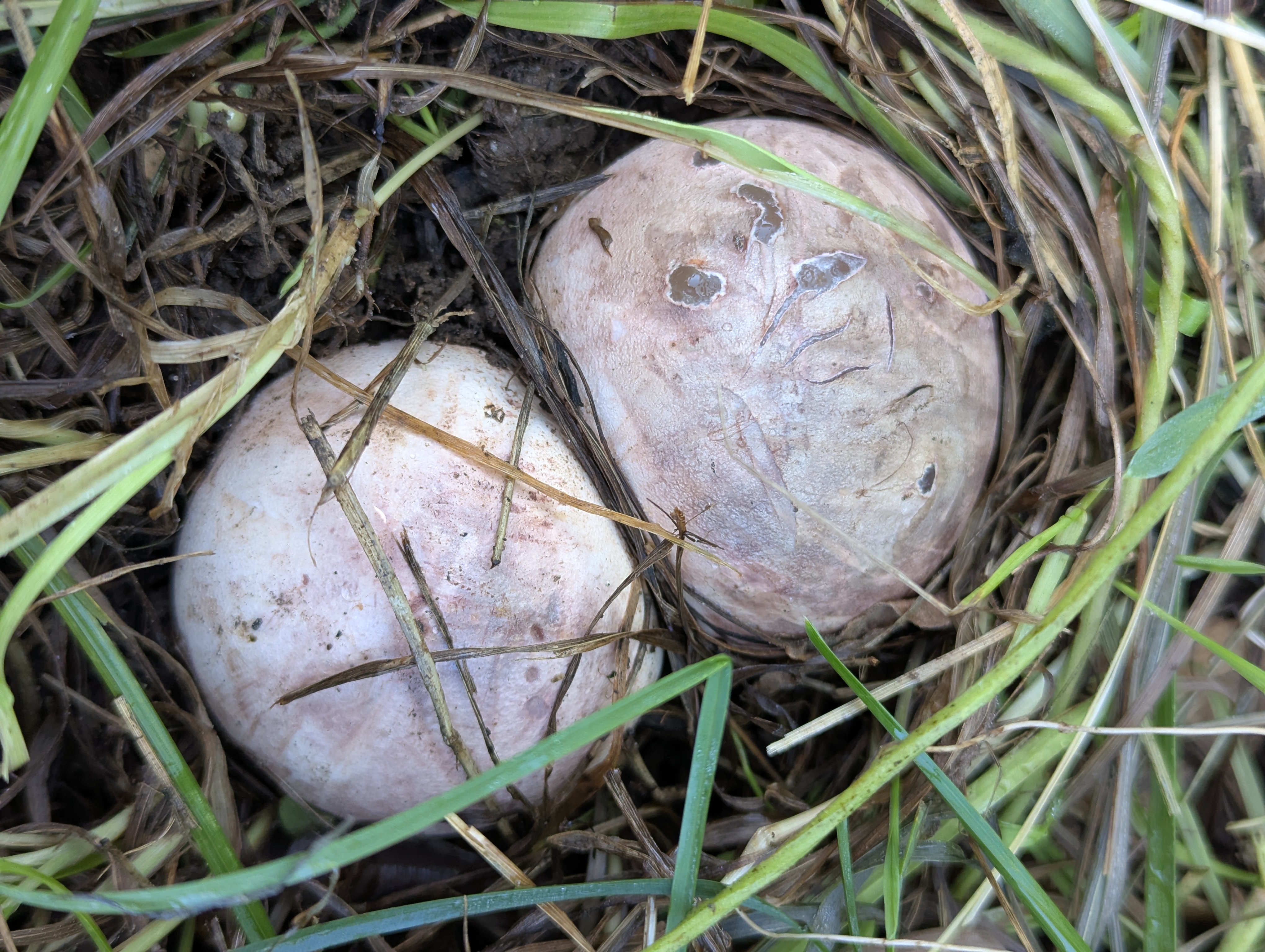
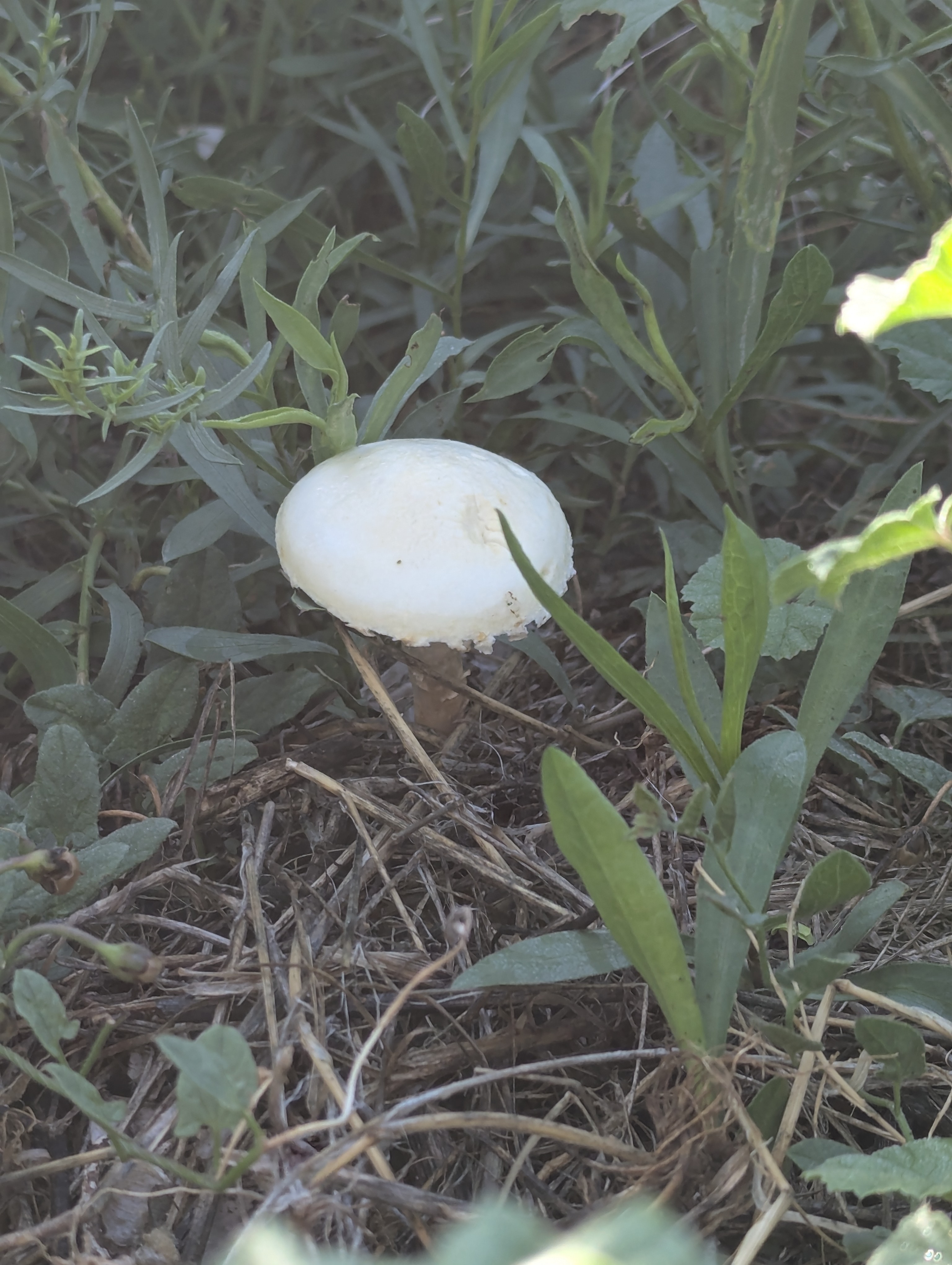
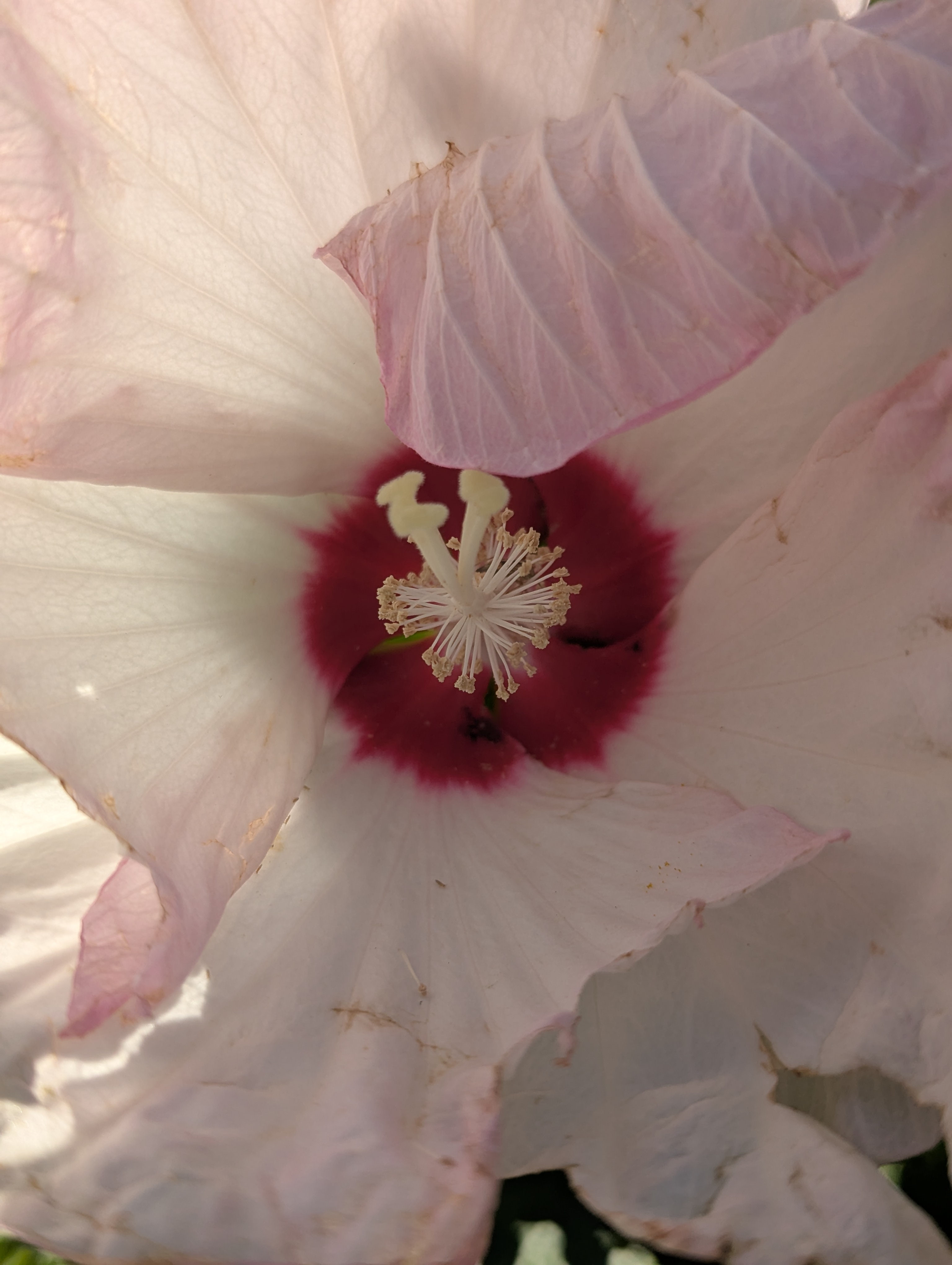
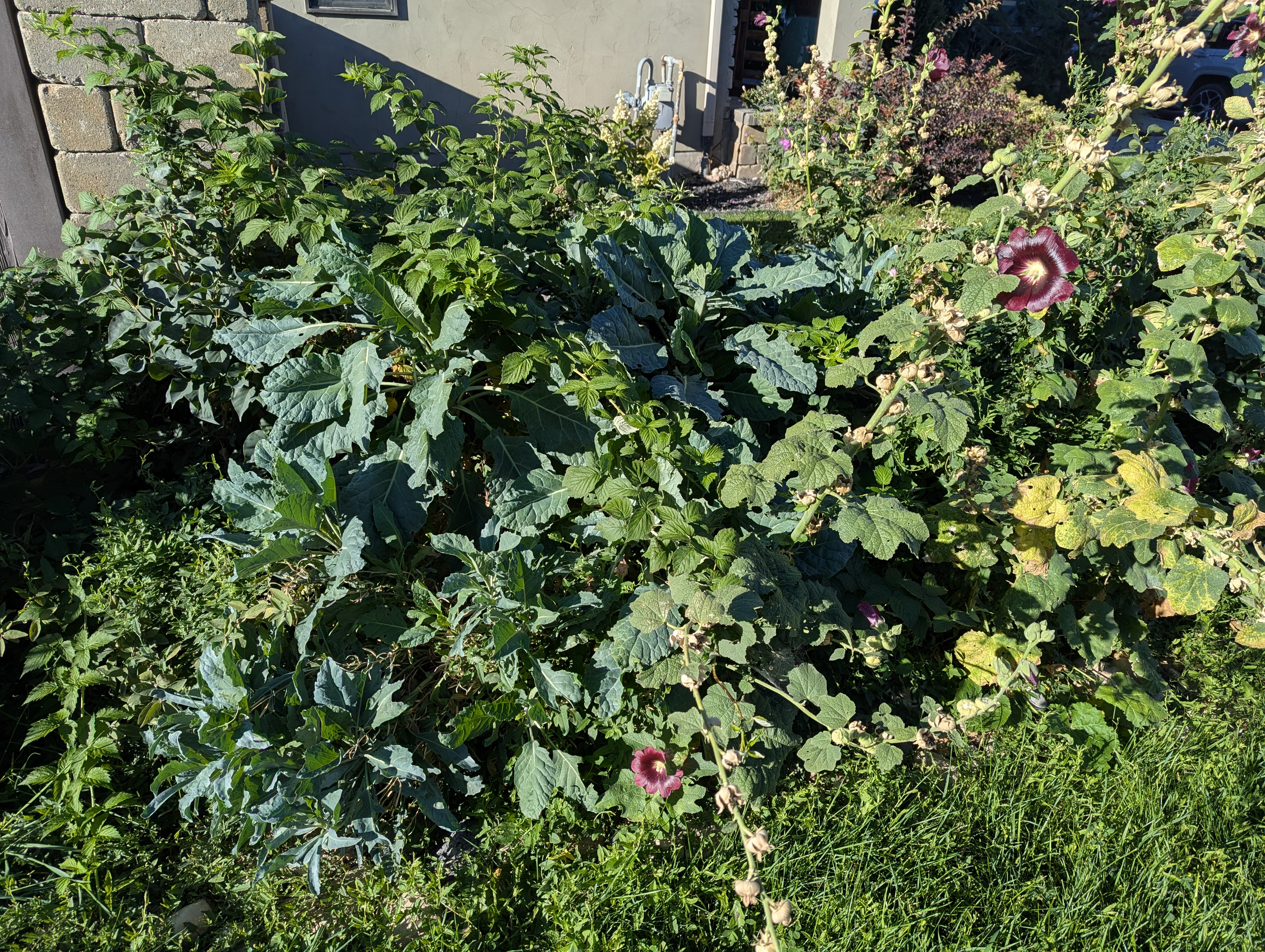
Photos from the yarden this morning.
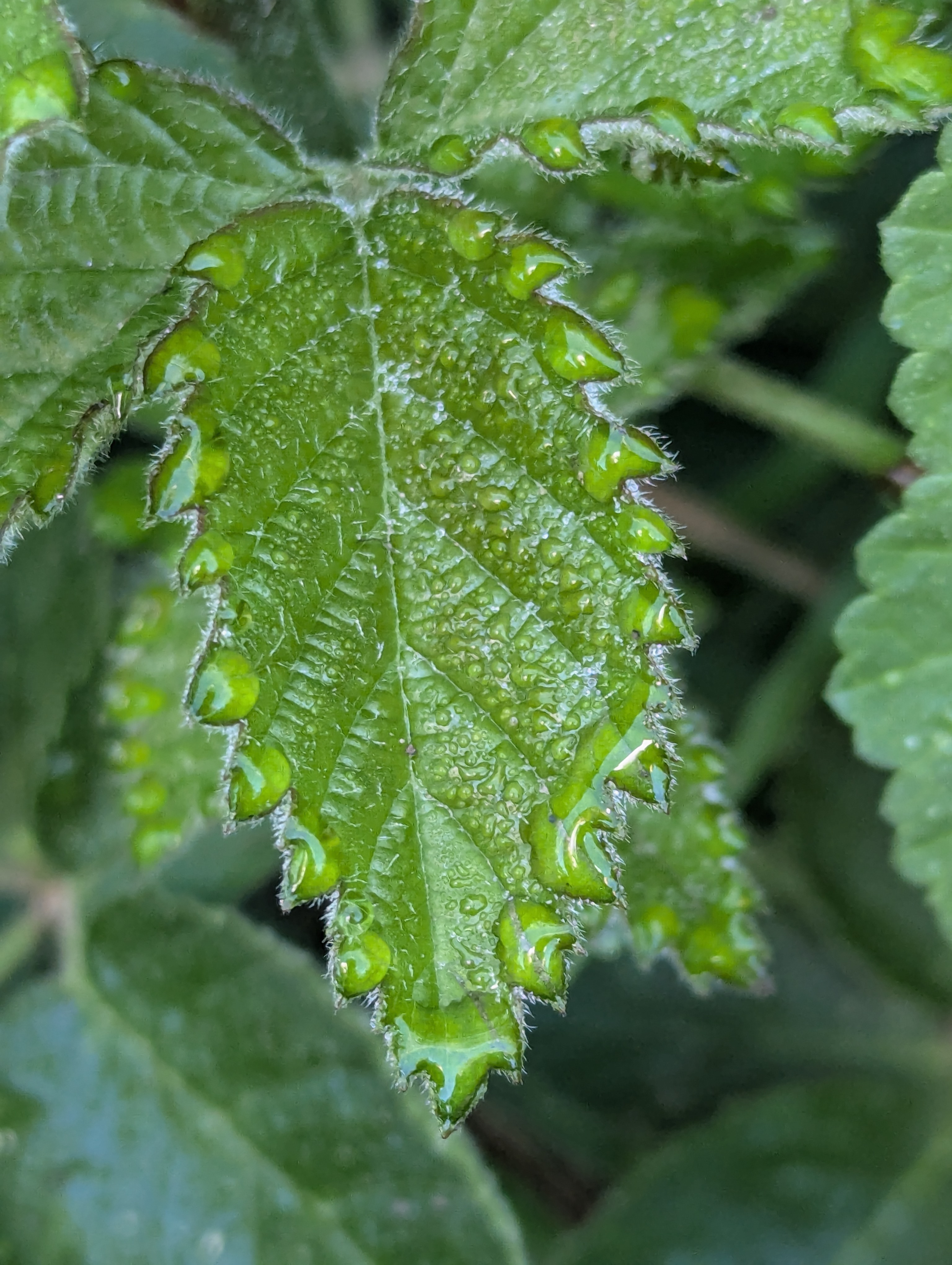
PXL_20260815_143119973.jpg
Blackberry pearl necklace
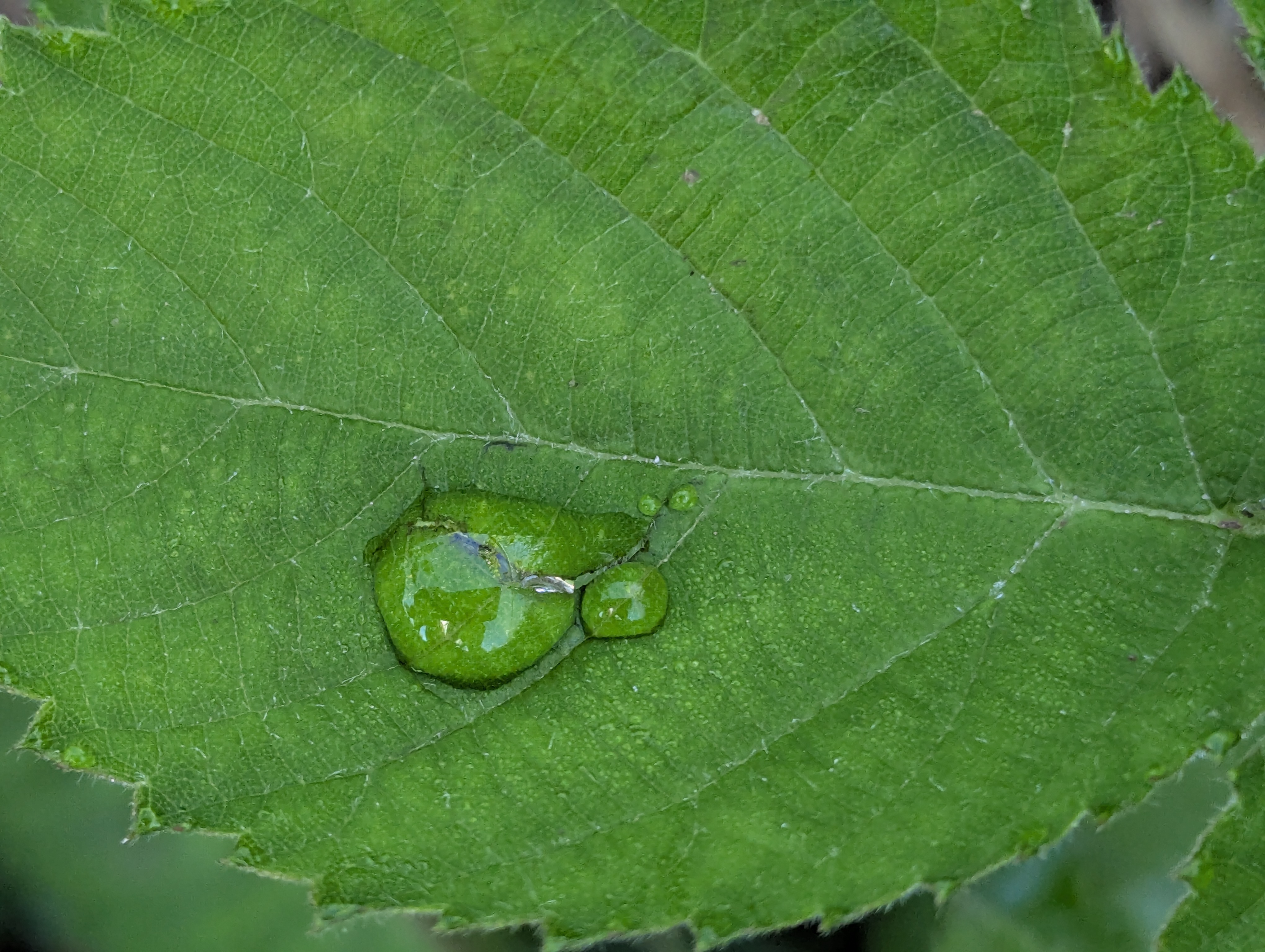
PXL_20260815_143202052.jpg
Look closer, and see me looking back
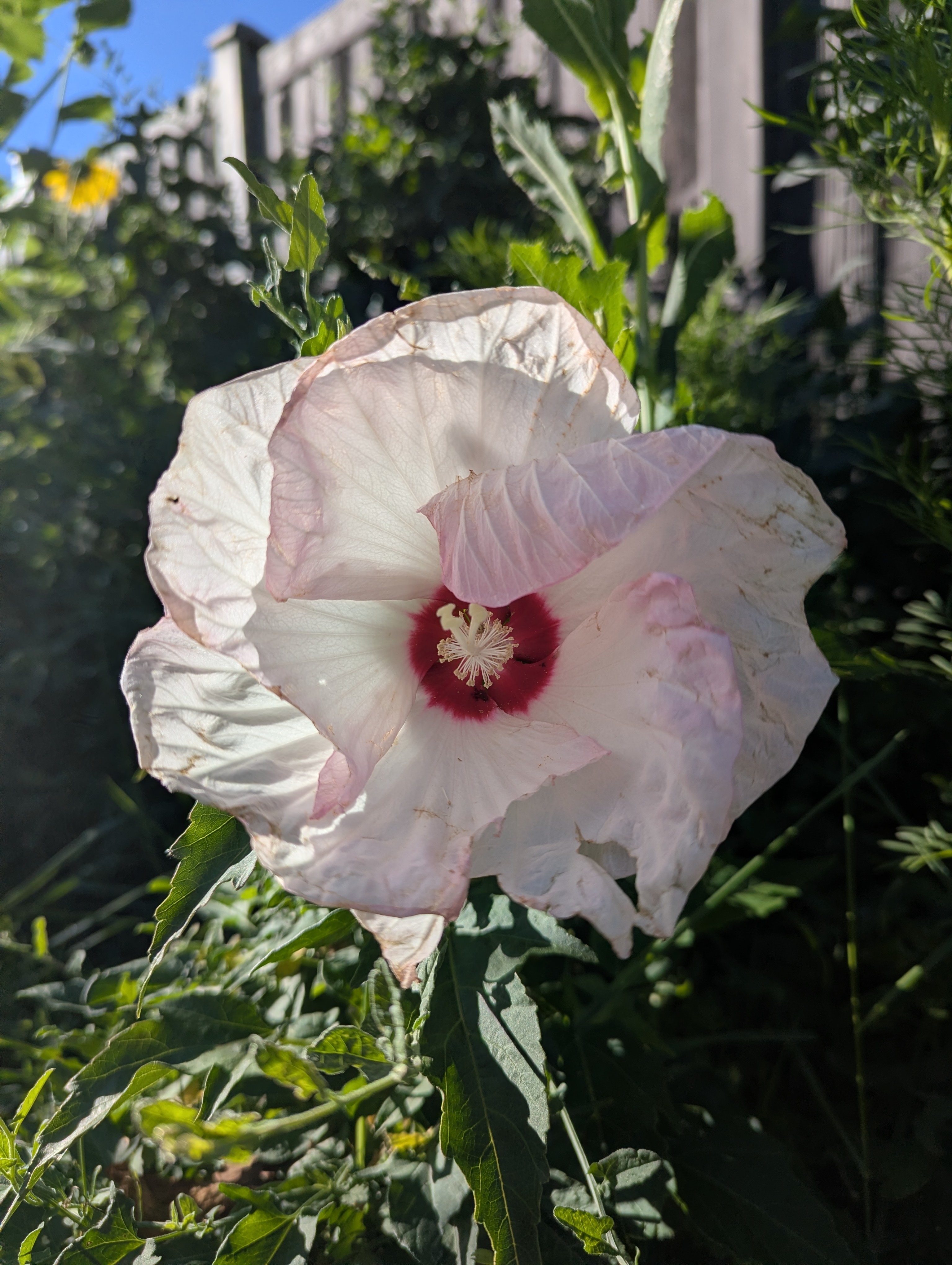
PXL_20260815_143657762.jpg
Hi! Biscus
Hi! Biscus
PXL_20260815_143257086.jpg
Puffball fungi looking like eggs
PXL_20260815_143227876.jpg
Another fungi friend
PXL_20260815_143707613.jpg
A closer look
A closer look
PXL_20260815_143740496.jpg
One of my favorite yarden patches, long lived kake, black raspberries, and stuff
 
Chance Lunceford
Posts: 231
Location: Payson, Utah, US of A - Zone6B/High Desert/4500' /14" Rainfall
136
  • Likes 8
  • Mark post as helpful
  • send pies
    Number of slices to send:
    Optional 'thank-you' note:
  • Quote
  • Report post to moderator
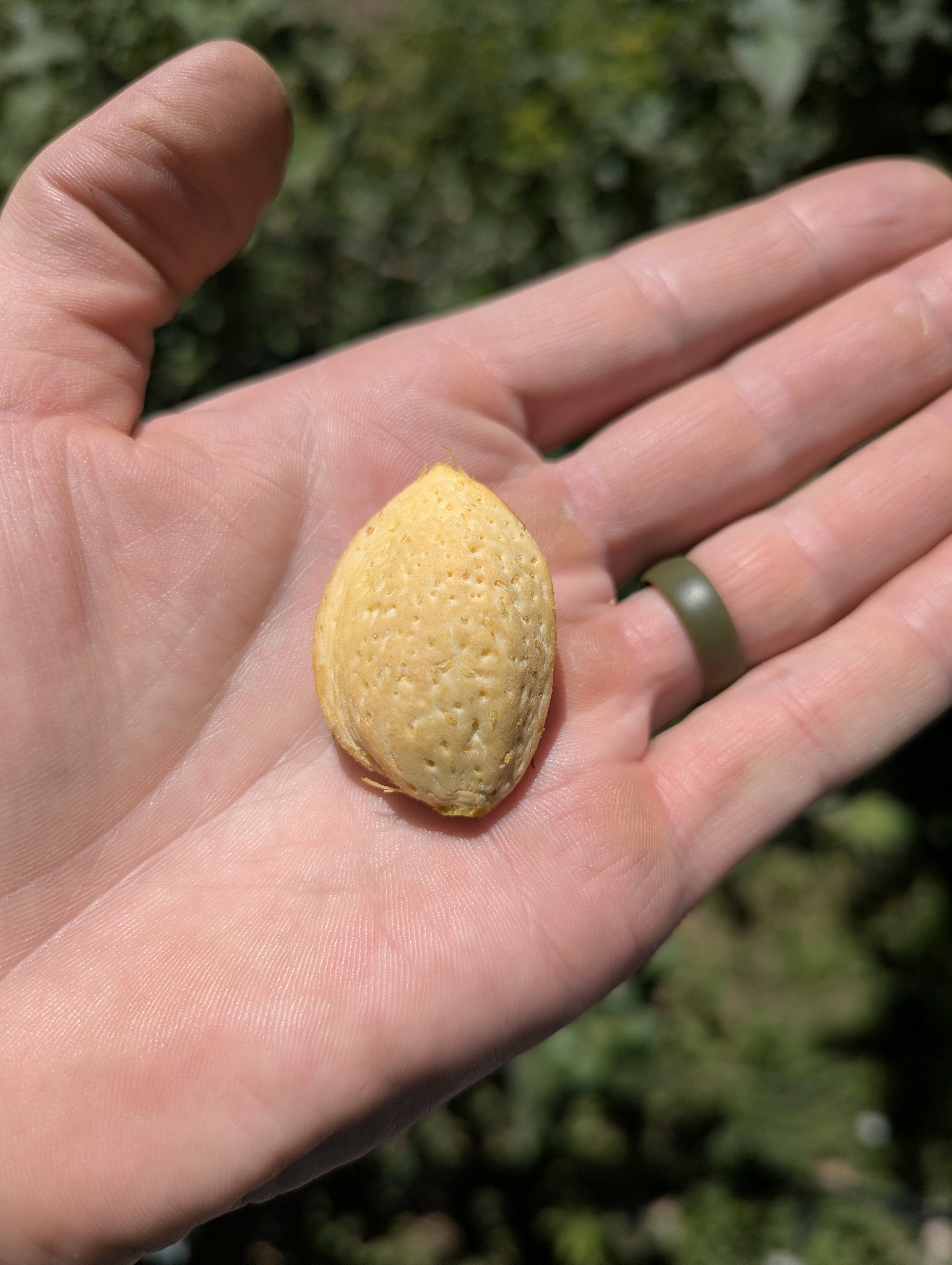
This is the first (and only, for this year) almond I've ever grown.

I'm gonna plant it.

Heh.
PXL_20260815_184821498.jpg
I bet it's delicious, but I'll never know.
 
Chance Lunceford
Posts: 231
Location: Payson, Utah, US of A - Zone6B/High Desert/4500' /14" Rainfall
136
  • Likes 10
  • Mark post as helpful
  • send pies
    Number of slices to send:
    Optional 'thank-you' note:
  • Quote
  • Report post to moderator
Here's an idea I've been pondering over for awhile now.

It's a combination of a perpetual lumber system, a breeding program which can be directed in multiple directions simultaneously, a generational wealth sustainer, a teacher of long-term thinking and patience, and some other stuff.

Here's what I'm thinking, in a loose outline:

- Plant a shit-ton of seedlings of a given species, interspersed with grafted varieties, and heavily over plant in an area large enough that you can plan out a harvesting schedule that runs for between 10-50 years (depending on species, goals, ecosystem, etc). Ideally, sowing an outrageous amount of seed and thinning from there.
- It's s successional thinning process that will set the stage for what's to come. Here's how:
    - First year is a brutal year, you're looking to thin something that is still overcrowded, but there's no room for laggards, wimps, disease succumbers, insect magnets, or any other 1st stage criterion you're selecting for
    - Second year is also brutal, because you're thinning now to something that is merely very crowded, rather than overcrowded, and because you're also being ruthless about undesirable traits in the context of your system.
    - Years 3-5 get more fun, because now that you've cleared out the stuff that was obviously outside your needs, you get to start paying closer attention to the individual trees, even if you're going to be removing almost all of them eventually. Thin any more obviously poor candidates during this time, and you're also likely to begin the next phase.
    - For fruit trees, for the most part, you're now getting fruit and 5 years of growth will tell you a large part of the vigor/disease) pest story too, even if you've still a lot to learn. Make sure to keep track of blooming times, ripening times, and other features you want to select for in your fruit. Also keep track of which specimens are displaying the best timber traits, and keep those around. For nut trees, you're still going to be a ways off from any kind of real production, but if you have a precocious specimen, make sure to take note of it. You'll also be able to make a lot of determinations about vigor/disease/pest management at this point.
- For the next couple of years, also, we're ready to begin creating coppice specimens for harvesting stick fuel, and for creating rootstock for grafting the promising specimens for growing out elsewhere. These coppiced trees can keep this cycle going for a long, long time. There isn't a ton of economic gain in this phase, quite yet, but the right species can also be used for weaving, and a good bunch of the fruit and nut varieties could also be peeled and chipped to create fuel for smoking meat, and you can of course create char. All of those things are either marketable or usable at home.
- Okay, now we're really getting into things, because by year ten, we need to have thinned down to our (semi)permanent spacing. This means giving what remains the room to grow to maturity. Not all (or, necessarily, any) will grow to full maturity, but we're giving space to do so right now.
- By now you should have also recognized your cornerstone specimens for the fruit trees, and the early nut trees will be giving you an idea of where to take them as well, plus the timber lines should be emerging more clearly now. These cornerstones are the best ones you've selected, and they'll stay in place to serve as genetic anchors via seed stock, scion stock, and root stock. They'll be the basis of your now growing nursery business. Depending on the quality of the fruit, you can take that to market for high dollar as "heirloom" or "specialty" produce. If it's crappy, you can sell it or use it as fodder. By now, you should have put in place, or be working towards putting into place, a silvopasture system (or at least a paddock-shift system in the autumn to finish pigs and waterfowl and give them that fruity/nutty flavor people pay 5x for, and you can even set up a deal with a local rancher and butcher, then split the profits as you will). The nuts you are getting will only increase from this point forward, and they'll begin to emerge as a profitable market option and/or a massive caloric addition to your family and community.
- From this point forward, you'll also be harvesting increasingly valuable lumber. But, here's the catch, you're only going to be doing so according to your full, 15-50 year harvesting schedule. This means, take the number of trees you have growing in the system, divide that by the number of years you're planning on running the cycle, and that's how many trees you're removing each year now. This is a critical component. So, let me say it again:
- You're only harvesting at replacement rates from now on.
- At some point, you'll find your cornerstone nut specimens as well.
- Using companion planting at the base of the trees with vegetables, bush/shrub/vine fruit, herbs, and cut flowers that ripen/bloom in synchrony with the trees will help improve market options and personal/community sustenance.
- Obviously, for the nut trees and to a limited extent the fruit trees, the longer you allow the system to extend, the more valuable both the lumber and the orchard will be, but you've got to decide what works for you and you're generations.
- You'll have the following options (not exhaustive) for income streams:
    - Firewood
    - Smoker wood (at a premium vs firewood)
    - Orchard harvests, either via traditional methods or U-Pick
    - Premium quality, millable lumber for furniture and flooring (this is the money maker)
    - A nursery business, with a special connection to local orchardists and home growers due to market connections and regional suitability, which can also be an online nursery when ready (at a premium for online, because of specialty/exclusive breeding work).
    - There are many more I have in my notes, but what would you add?
- It should be mentioned here that, as you've probably guessed, you're going to be replacing your trees with your own homegrown specimens, for the most part. This will include grafts and seedlings from the cornerstone trees as well as promising new specimens that deserve further trialling. This is how you'll ensure your stock never sucks. You'll want to bring in occasional new specimens from outside your gene pool so you can keep things fresh and explore new possibilities.
- Importantly, this is where you teach your descendants how to manage this system. With a decent parcel, say 5-15 acres, you could make a living which would sustain your family if you were attentive to your finances and lived within your means, and managed the system with diligence and intelligence. It could also be the most powerful wealth builder you could ask for, on top of a career elsewhere. With something larger, you could bring in hundreds of thousands of dollars per year in lumber alone, and do it in a way which could be sustained perpetually. Your family could, from that point forward, never have to work for anybody else ever again.
- Obviously, as you progress, you can leverage your existing system into attaining more land to build out a larger or supplemental system until you're operating a large enough system to sustain your family and more.

That's the basic outline. Obviously, you can get into the deep with this, considering site, species, circumstance, etc...

What say you about this?
 
Chance Lunceford
Posts: 231
Location: Payson, Utah, US of A - Zone6B/High Desert/4500' /14" Rainfall
136
  • Likes 4
  • Mark post as helpful
  • send pies
    Number of slices to send:
    Optional 'thank-you' note:
  • Quote
  • Report post to moderator
I like to use sunflower stalks as short lived posts. I cut the ends on a bias to allow for easier penetration into the soil.

You can put a glove on and run your hand down the stalk and pull all the leaves off in one fell swoop.
PXL_20260815_212013520.MP.jpg
[Thumbnail for PXL_20260815_212013520.MP.jpg]
PXL_20260815_212021538.jpg
[Thumbnail for PXL_20260815_212021538.jpg]
 
steward and tree herder
Posts: 14321
Location: Isle of Skye, Scotland. Nearly 70 inches rain a year
7978
6
transportation dog forest garden foraging trees books food preservation woodworking wood heat rocket stoves ungarbage
  • Likes 3
  • Mark post as helpful
  • send pies
    Number of slices to send:
    Optional 'thank-you' note:
  • Quote
  • Report post to moderator

Chance Lunceford wrote:Here's an idea I've been pondering over for awhile now.

It's a combination of a perpetual lumber system, a breeding program which can be directed in multiple directions simultaneously, a generational wealth sustainer, a teacher of long-term thinking and patience, and some other stuff.

Here's what I'm thinking, in a loose outline:

- Plant a shit-ton of seedlings of a given species, interspersed with grafted varieties, and heavily over plant in an area large enough that you can plan out a harvesting schedule that runs for between 10-50 years (depending on species, goals, ecosystem, etc). Ideally, sowing an outrageous amount of seed and thinning from there.

(zip)

That's the basic outline. Obviously, you can get into the deep with this, considering site, species, circumstance, etc...

What say you about this?


I love the long term thinking....
I'd add diversity rather than having a single species. Who knows what will do well in a given decade?
 
Steward of piddlers
Posts: 8183
Location: Upstate New York, Zone 5b, 43 inch Avg. Rainfall
4804
monies home care dog fungi trees chicken food preservation cooking building composting homestead
  • Likes 6
  • Mark post as helpful
  • send pies
    Number of slices to send:
    Optional 'thank-you' note:
  • Quote
  • Report post to moderator
I'm loving all the photos of your yarden! I'm trying to do the same on my little plot. Thank you for the inspiration.
 
Chance Lunceford
Posts: 231
Location: Payson, Utah, US of A - Zone6B/High Desert/4500' /14" Rainfall
136
  • Likes 1
  • Mark post as helpful
  • send pies
    Number of slices to send:
    Optional 'thank-you' note:
  • Quote
  • Report post to moderator

Nancy Reading wrote:

I love the long term thinking....
I'd add diversity rather than having a single species. Who knows what will do well in a given decade?


How would you manage diversity? Would you do something, a la Permaculture Orchard, and run an offset repeating NAP pattern?

One thing is for sure, if you can get trees with worthy lumber to multi-decade maturity, you're gonna find a premium market for it. Especially now, since most lumber operations run softwoods on a hurry-up schedule.

I like your idea of diversifying the system. I'm also interested to hear all your ideas for managing the diversity in an efficient manner.

One more idea I have while I'm thinking about it is alternating NAP rows with nut rows. Could also throw in other species on a NAP, nut, other fruit, nut, NAP, etc...

Thanks for getting me pondering.
 
Chance Lunceford
Posts: 231
Location: Payson, Utah, US of A - Zone6B/High Desert/4500' /14" Rainfall
136
  • Likes 4
  • Mark post as helpful
  • send pies
    Number of slices to send:
    Optional 'thank-you' note:
  • Quote
  • Report post to moderator

Timothy Norton wrote:I'm loving all the photos of your yarden! I'm trying to do the same on my little plot. Thank you for the inspiration.


How big's your plot? I'm on just over a quarter acre.
 
Timothy Norton
Steward of piddlers
Posts: 8183
Location: Upstate New York, Zone 5b, 43 inch Avg. Rainfall
4804
monies home care dog fungi trees chicken food preservation cooking building composting homestead
  • Likes 6
  • Mark post as helpful
  • send pies
    Number of slices to send:
    Optional 'thank-you' note:
  • Quote
  • Report post to moderator
I'm somewhere in the area of a third of an acre. I live right on the edge of a village so I'm backed up to woodland. It is really incredible what you can still do when your footage is limited. I keep figuring out new ways to create growing spaces because I stumble upon new plants I want to grow!
 
Chance Lunceford
Posts: 231
Location: Payson, Utah, US of A - Zone6B/High Desert/4500' /14" Rainfall
136
  • Likes 4
  • Mark post as helpful
  • send pies
    Number of slices to send:
    Optional 'thank-you' note:
  • Quote
  • Report post to moderator

Timothy Norton wrote:I'm somewhere in the area of a third of an acre. I live right on the edge of a village so I'm backed up to woodland. It is really incredible what you can still do when your footage is limited. I keep figuring out new ways to create growing spaces because I stumble upon new plants I want to grow!


Stop telling my story back to me. Heh.

There does seem to be always just enough room for whatever I'm determined to add next.
 
Chance Lunceford
Posts: 231
Location: Payson, Utah, US of A - Zone6B/High Desert/4500' /14" Rainfall
136
  • Likes 6
  • Mark post as helpful
  • send pies
    Number of slices to send:
    Optional 'thank-you' note:
  • Quote
  • Report post to moderator
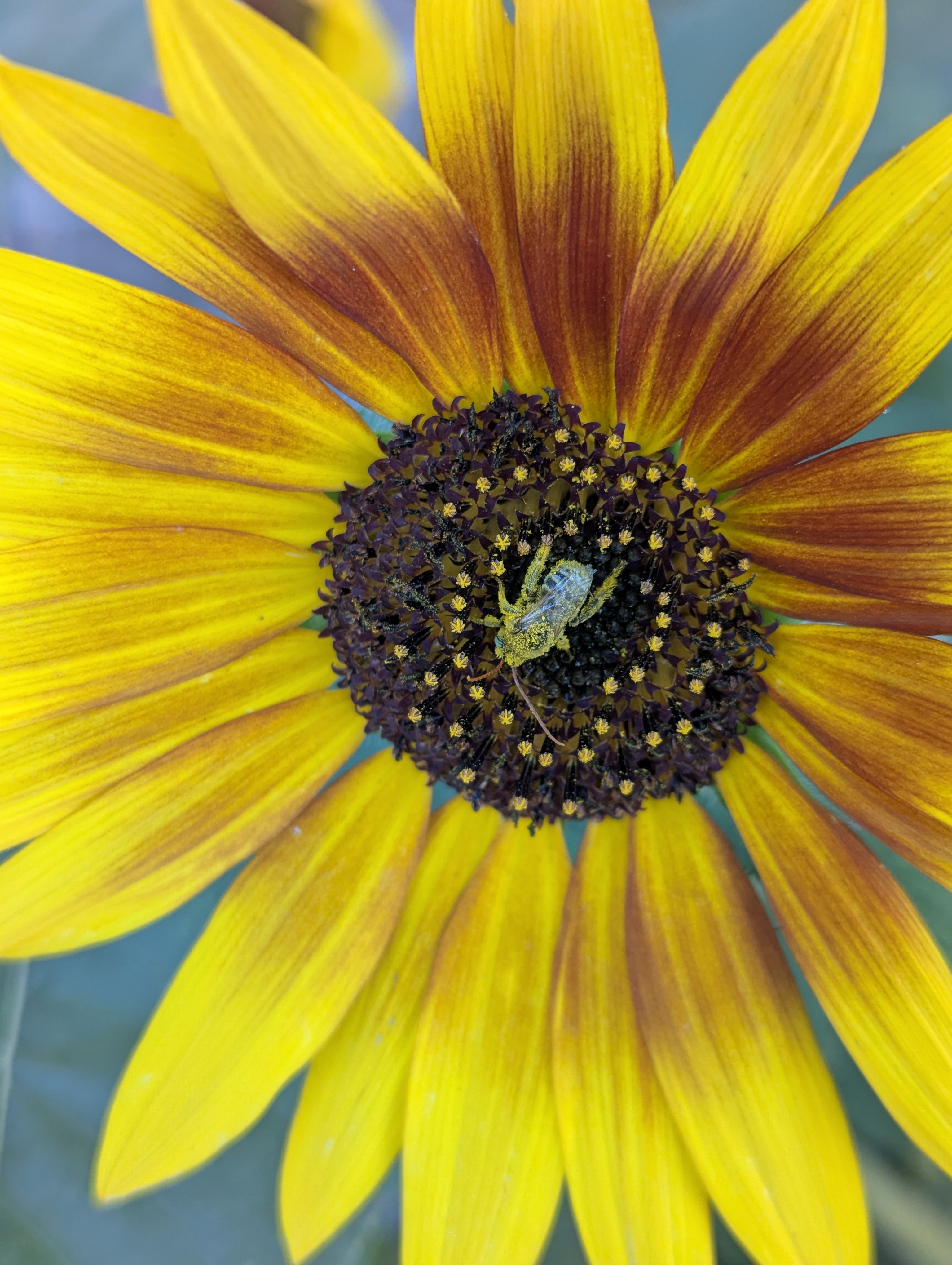
Look Closer ™️
PXL_20260816_143604974.jpg
pollen covered blue bee on a yellow flower
 
Nancy Reading
steward and tree herder
Posts: 14321
Location: Isle of Skye, Scotland. Nearly 70 inches rain a year
7978
6
transportation dog forest garden foraging trees books food preservation woodworking wood heat rocket stoves ungarbage
  • Likes 5
  • Mark post as helpful
  • send pies
    Number of slices to send:
    Optional 'thank-you' note:
  • Quote
  • Report post to moderator
I planted my coppice trees in little blocks of different species. I think this is generally a better way than complete intermingling, since different trees will grow at different rates and the faster growing ones could otherwise out complete the slower ones. It makes it easier for me to harvest the coppice wood, and I guess that would be true for high timber too if that were the objective. I don't know much about trees for lumber though, so there may be better ways of achieving diversity.
 
Chance Lunceford
Posts: 231
Location: Payson, Utah, US of A - Zone6B/High Desert/4500' /14" Rainfall
136
  • Likes 2
  • Mark post as helpful
  • send pies
    Number of slices to send:
    Optional 'thank-you' note:
  • Quote
  • Report post to moderator
Interesting, Nancy. What species do you grow for coppicing?
 
Chance Lunceford
Posts: 231
Location: Payson, Utah, US of A - Zone6B/High Desert/4500' /14" Rainfall
136
  • Likes 9
  • Mark post as helpful
  • send pies
    Number of slices to send:
    Optional 'thank-you' note:
  • Quote
  • Report post to moderator
Some photos from my family hike yesterday. I collected seed from mountain lupine, yarrow, aster, and rocky mountain bee plant.

My family and I practice the stoic "memento mori" meditation when we encounter death in the wild. Contemplating our mortality and the imperatives this builds into our lives.

We walked among Autumn's first caresses. We saw the coniferous aftermath of a squirrel meal. We rejoiced at the beauty. We avoided flying murderers. My daughters didn't complain, and even led the charge on some bushwhacking.

It was a great hike.
PXL_20260816_232229285.MP.jpg
[Thumbnail for PXL_20260816_232229285.MP.jpg]
PXL_20260816_235436229.jpg
[Thumbnail for PXL_20260816_235436229.jpg]
PXL_20260816_235608869.jpg
[Thumbnail for PXL_20260816_235608869.jpg]
PXL_20260817_005114690.jpg
[Thumbnail for PXL_20260817_005114690.jpg]
PXL_20260817_011731525.jpg
[Thumbnail for PXL_20260817_011731525.jpg]
PXL_20260817_011930178.jpg
[Thumbnail for PXL_20260817_011930178.jpg]
PXL_20260817_012058974.jpg
[Thumbnail for PXL_20260817_012058974.jpg]
PXL_20260817_012431981.jpg
[Thumbnail for PXL_20260817_012431981.jpg]
PXL_20260817_014021276.jpg
[Thumbnail for PXL_20260817_014021276.jpg]
PXL_20260817_014328412.jpg
[Thumbnail for PXL_20260817_014328412.jpg]
 
Chance Lunceford
Posts: 231
Location: Payson, Utah, US of A - Zone6B/High Desert/4500' /14" Rainfall
136
  • Likes 2
  • Mark post as helpful
  • send pies
    Number of slices to send:
    Optional 'thank-you' note:
  • Quote
  • Report post to moderator

Chance Lunceford wrote:

- Adaptive Seeds
- Grand Prismatic Seed Co
- Snake River Seed Co
- Two Seeds In A Pod
- Uprising Seeds
- Sheffield's Seed
- Wild Garden Seed
- Wild Mountain Seed
- Miss Penn's Mountain Seeds
- American Meadows


UPDATE:

I have orders in with Adaptive, Uprising, and American Meadows. I also ordered some lovely flower seeds from Eden Bros. I'm also looking to put together a swarm of runner beans to get a nice perennial population established here in my yarden, so I'll be piecing together maximum diversity along that channel as well.
 
Chance Lunceford
Posts: 231
Location: Payson, Utah, US of A - Zone6B/High Desert/4500' /14" Rainfall
136
  • Likes 5
  • Mark post as helpful
  • send pies
    Number of slices to send:
    Optional 'thank-you' note:
  • Quote
  • Report post to moderator
Found this on Seed Savers, and I will be trying this:
Screenshot_20260818-173058.png
Mmmmmm
Mmmmmm
 
Chance Lunceford
Posts: 231
Location: Payson, Utah, US of A - Zone6B/High Desert/4500' /14" Rainfall
136
  • Likes 8
  • Mark post as helpful
  • send pies
    Number of slices to send:
    Optional 'thank-you' note:
  • Quote
  • Report post to moderator
I had a jujube that didn't wake up. It's August, and it was still passing the scratch test.

I followed a hunch, and I pruned it.

I was yesterday years old when I discovered that the pruning woke it up. I had an interspecific hybrid cherry plum that didn't wake up, but it was dead when I went to do the same to it.

Whaddyagonnado?

Still, it's good to know that a pruning might wake up a sleepy tree.
PXL_20260819_122225587.jpg
[Thumbnail for PXL_20260819_122225587.jpg]
PXL_20260819_122233366.jpg
[Thumbnail for PXL_20260819_122233366.jpg]
PXL_20260819_122240511.jpg
[Thumbnail for PXL_20260819_122240511.jpg]
 
Chance Lunceford
Posts: 231
Location: Payson, Utah, US of A - Zone6B/High Desert/4500' /14" Rainfall
136
  • Likes 2
  • Mark post as helpful
  • send pies
    Number of slices to send:
    Optional 'thank-you' note:
  • Quote
  • Report post to moderator
Cliff England has done such awesome work. I'm going to bring some of his stuff in next year. Pretty excited.
 
Nancy Reading
steward and tree herder
Posts: 14321
Location: Isle of Skye, Scotland. Nearly 70 inches rain a year
7978
6
transportation dog forest garden foraging trees books food preservation woodworking wood heat rocket stoves ungarbage
  • Likes 5
  • Mark post as helpful
  • send pies
    Number of slices to send:
    Optional 'thank-you' note:
  • Quote
  • Report post to moderator

Chance Lunceford wrote:Interesting, Nancy. What species do you grow for coppicing?


Sorry Chance, just catching up!
The answer is a bit of a lot of things! So far the common alder (alnus glutinosa) and hazel (UK) are doing the best for me. Birch (silver) is only seeming to have 50% survival after coppicing, but has also been patchy in growth from the start. Aspen and willow (various) also doing well. I might coppice my wych elm for the first time this year. See my tree field thread if you want a bedtime read...
 
Chance Lunceford
Posts: 231
Location: Payson, Utah, US of A - Zone6B/High Desert/4500' /14" Rainfall
136
  • Likes 3
  • Mark post as helpful
  • send pies
    Number of slices to send:
    Optional 'thank-you' note:
  • Quote
  • Report post to moderator
I'll be digging in. I skimmed, and it looks like a wonderful project.
 
Chance Lunceford
Posts: 231
Location: Payson, Utah, US of A - Zone6B/High Desert/4500' /14" Rainfall
136
  • Likes 5
  • Mark post as helpful
  • send pies
    Number of slices to send:
    Optional 'thank-you' note:
  • Quote
  • Report post to moderator
Just harvested the topsets from my walking onions.

Gonna give a bunch to my Dad to plant, maybe some to my neighbors, but I have more than a hundred bulbils.

I'll plant at least 20 in my yarden and spread the joy of walking onions further, but I'll plant all of those that aren't claimed by my friends and family.

I'll also reserve at least 15 for my project area. That'll be an awesome spot.

By the by, the walking onions need some work, genetics wise. They don't seed. The bulbils are a mutation.in that direction, I reckon, but I've this year started interplanting other onions in with them in the hopes that a cross which produces topsets and seed both will arise in a multiplying onion with tasty, small bulbs in the soil.

Basically, a walking onion that seeds, because it's otherwise perfect.
PXL_20260822_142124730.jpg
[Thumbnail for PXL_20260822_142124730.jpg]
 
master steward
Posts: 16137
Location: Pacific Wet Coast
10595
duck books chicken cooking food preservation ungarbage
  • Likes 5
  • Mark post as helpful
  • send pies
    Number of slices to send:
    Optional 'thank-you' note:
  • Quote
  • Report post to moderator
Have you ever tried blanching and peeling the bulbils for recipes calling for pearl onions?
Yes, I am encouraging our local walking onion to take over the universe, but they still create far more bulbils than I can use...
 
steward & bricolagier
Posts: 16352
Location: SW Missouri
12847
2
goat cat fungi books chicken earthworks food preservation cooking building homestead ungarbage
  • Likes 7
  • Mark post as helpful
  • send pies
    Number of slices to send:
    Optional 'thank-you' note:
  • Quote
  • Report post to moderator
Toss them into vacant areas, they are awesome guerilla gardening things!!
I also just flat give away a bunch.
I want them to take over the world!! :D
 
Chance Lunceford
Posts: 231
Location: Payson, Utah, US of A - Zone6B/High Desert/4500' /14" Rainfall
136
  • Likes 5
  • Mark post as helpful
  • send pies
    Number of slices to send:
    Optional 'thank-you' note:
  • Quote
  • Report post to moderator

Jay Angler wrote:Have you ever tried blanching and peeling the bulbils for recipes calling for pearl onions?
Yes, I am encouraging our local walking onion to take over the universe, but they still create far more bulbils than I can use...


I have, and they're actually delightful for fresh eating. I was snacking on a few with my daughters yesterday.
 
Chance Lunceford
Posts: 231
Location: Payson, Utah, US of A - Zone6B/High Desert/4500' /14" Rainfall
136
  • Likes 5
  • Mark post as helpful
  • send pies
    Number of slices to send:
    Optional 'thank-you' note:
  • Quote
  • Report post to moderator

Pearl Sutton wrote:Toss them into vacant areas, they are awesome guerilla gardening things!!
I also just flat give away a bunch.
I want them to take over the world!!


Oh yes, that's exactly what I'm doing with a portion of them. My project area is a guerilla food forest adjacent to a city park with wooded areas leading into wilderness which has a bare dirt canal running through the summer.

That's the area of my focus right now.

Blackberries, raspberries, pawpaws and walking onions are going in this year. Whatever seedling fruit trees I get rolling next year from the stratified and pot planted seeds this year will get planted as well.

Little by little, I'm building a secret sanctuary for my community. They'll discover it in time.
 
Chance Lunceford
Posts: 231
Location: Payson, Utah, US of A - Zone6B/High Desert/4500' /14" Rainfall
136
  • Likes 4
  • Mark post as helpful
  • send pies
    Number of slices to send:
    Optional 'thank-you' note:
  • Quote
  • Report post to moderator
I came across a cool website today, if you want to learn about different varieties of plants and their history:

https://cropnerd.com/

The two screenshots are the site's mobile landing page and the details about Siskiyou blackberry (selected at random just to demonstrate).

It's not a comprehensive site, but it's working towards it.
Screenshot_20260824-191618.png
[Thumbnail for Screenshot_20260824-191618.png]
Screenshot_20260824-191746.png
[Thumbnail for Screenshot_20260824-191746.png]
 
Chance Lunceford
Posts: 231
Location: Payson, Utah, US of A - Zone6B/High Desert/4500' /14" Rainfall
136
  • Likes 9
  • Mark post as helpful
  • send pies
    Number of slices to send:
    Optional 'thank-you' note:
  • Quote
  • Report post to moderator

Chance Lunceford wrote:

In the picture below, you'll notice the sliced peaches which I've circled in green.

They have a beautiful blood-splashed trait in the flesh. Flesh is otherwise a rich yellow, and these are fully clingstone.

Speaking of stones, I pulled one and the other split, but left the kernel intact, so I'm going to plant the kernel immediately, and I'll stratify the intact stone before planting later.

By the way, the peach was favored by 3/5 over all the plums, plumcot, and apricot sliced up beside them. Everybody liked the peach. It was a bit tart, with delectable aroma, great firm texture, and outrageous juiciness.

It's official:

The Slaughterhouse Peach is a keeper.

NOTE: One of my kids calls them the Pig's Bum peaches. We'll see which one sticks.


Just grabbed the last ripe Slaughterhouse Peaches. Three were ready. There were some ripe mini peaches, about the size of a walnut, but I didn't grab those underdeveloped peaches. I immediately buried one of the peaches whole, because it was about a week overripe and was too soft to enjoy.

The other two were served up after dinner. Delicious and super juicy. It really is an outstanding peach. They're on the smaller side, and clingstone, but those traits don't deter me like they do for some folks.

Keep in mind, too, that a our freaky late snow and freeze in Utah killed off 99% of our tree blossoms this year. That this peach produced at all is remarkable. Definitely excellent genetics for the region.

I'm going to propagate the tree itself, but I'm also planting all the seeds from the peaches I harvested.

ALSO NOTE:

How perfect is it that the Slaughterhouse Peach has the blood trait?
PXL_20260824_235328706.jpg
[Thumbnail for PXL_20260824_235328706.jpg]
PXL_20260825_025205844.jpg
[Thumbnail for PXL_20260825_025205844.jpg]
 
Chance Lunceford
Posts: 231
Location: Payson, Utah, US of A - Zone6B/High Desert/4500' /14" Rainfall
136
  • Likes 5
  • Mark post as helpful
  • send pies
    Number of slices to send:
    Optional 'thank-you' note:
  • Quote
  • Report post to moderator
Just planted cherry, peach, plum, and pluot seeds in pots with my youngest daughter, who enjoys being my "garden buddy" the most of my three girls.

We planted some walking onion bulbils, too.

😊
 
gardener
Posts: 2945
Location: Zone 4b/5a
1730
ancestral skills forest garden foraging composting toilet fiber arts bike medical herbs seed writing ungarbage
  • Likes 6
  • Mark post as helpful
  • send pies
    Number of slices to send:
    Optional 'thank-you' note:
  • Quote
  • Report post to moderator
Was that some winter savory earlier in one of your pictures? I’ve been harvesting some from my bush and it has been quite delicious. It was also good when I had a sore throat—I made a strong tea with savory and wild sarsaparilla leaves and it helped.
 
Chance Lunceford
Posts: 231
Location: Payson, Utah, US of A - Zone6B/High Desert/4500' /14" Rainfall
136
  • Likes 7
  • Mark post as helpful
  • send pies
    Number of slices to send:
    Optional 'thank-you' note:
  • Quote
  • Report post to moderator

M Ljin wrote:Was that some winter savory earlier in one of your pictures? I’ve been harvesting some from my bush and it has been quite delicious. It was also good when I had a sore throat—I made a strong tea with savory and wild sarsaparilla leaves and it helped.


Correct, great catch. That one's not as obvious as some others. I love both winter and summer savory, but this winter savory grows like crazy and volunteers readily but not aggressively. Good stuff.
 
Chance Lunceford
Posts: 231
Location: Payson, Utah, US of A - Zone6B/High Desert/4500' /14" Rainfall
136
  • Likes 5
  • Mark post as helpful
  • send pies
    Number of slices to send:
    Optional 'thank-you' note:
  • Quote
  • Report post to moderator
I love melons. They're likely my favorite category of fruit, though maybe it's berries instead... anyway,

You might like other fruit better, but I argue that the best fruit eating experience you can have is eating a cold, ripe, seeded watermelon on a hot summer day after getting sweaty doing something physically demanding.

Get a bunch of that rind in ya too, for the extra citrulline and the resulting increased blood flow.

Pickled watermelon rinds are a good treat, and I made a blended watermelon rind smoothie from a recipe I saw on YouTube the other day that was pretty tasty. Fiber enough for all your...fiber needs

Muskmelons and cucumber-like melons and little oddball melons are all wonderful foods too. Some of the best pickles come from immature melons in this category.

By the time I've gotten all my seeds in this year, I'll have around 3 dozen varieties of melons in hand, in addition to the survivors of my hardship trials in 2025, some seed mixes from Going To Seed and the saved seed from store bought melons this year.

Gonna be an exciting year for melons at the Lunceford home next year.
 
It's hard to fight evil. The little things, like a nice sandwich, really helps. Right tiny ad?
try homesteading without the stress and anxieties of buying a homestead
https://wheaton-labs.com/bootcamp
reply
    Bookmark Topic Watch Topic
  • New Topic