• Post Reply Bookmark Topic Watch Topic
  • New Topic
permaculture forums growies critters building homesteading energy monies kitchen purity ungarbage community wilderness fiber arts art permaculture artisans regional education skip experiences global resources cider press projects digital market permies.com pie forums private forums all forums
this forum made possible by our volunteer staff, including ...
master stewards:
  • Carla Burke
  • John F Dean
  • Nancy Reading
  • r ransom
  • Jay Angler
  • Timothy Norton
stewards:
  • paul wheaton
  • Pearl Sutton
  • Anne Miller
master gardeners:
  • Christopher Weeks
  • M Ljin
gardeners:
  • Jim Garlits
  • thomas rubino
  • William Bronson

Worms

 
gardener
Posts: 957
Location: Galicia, Spain zone 9a
259
2
dog duck chicken cooking food preservation fiber arts pig bike bee solar ungarbage
  • Likes 3
  • Mark post as helpful
  • send pies
    Number of slices to send:
    Optional 'thank-you' note:
  • Quote
  • Report post to moderator
This morning I planted willows along a border for future use as baskets, wattle and daub thingies and firewood. Our Workawayer dug the holes for me (No way I could do that!) and I planted. As I filled in each hole (12 trees) I looked for worms. Not one. Not a single one. Now, I live in Galicia, an abundantly green and productive part of Spain, with the ideal climate - our seasons do what it says on the tin. But clearly, donkey years (or should that be mule years, or even oxen) have taken its toll with constant ploughing and the soil is dead. The only parts of our 5 year tenured-land is where I have mulched with paper and hay and gradually with compost. There we have worms.
Is anyone else as scared as me?
 
author
Posts: 241
Location: Ireland
37
homeschooling forest garden fish trees bee
  • Likes 5
  • Mark post as helpful
  • send pies
    Number of slices to send:
    Optional 'thank-you' note:
  • Quote
  • Report post to moderator
What I read from that Amanda is that where we do the right thing, we bring back the worms. Where we do the wrong thing, we drive them away. It's pretty much like that in every other area of our environment and society as well. Yes it's scary to watch the evidence unfold of the damage being done by conventional farming, building, pharming, banking, planning, transport, landscape management etc. but it's also encouraging to see the many constructive things that we can and are doing as well that can help to rebuild, regenerate, revitalise and enrich ourselves, our land and our society.

Here's to hope for the future :-)
 
pollinator
Posts: 873
Location: Thunder Bay, Ontario, Canada
181
  • Likes 1
  • Mark post as helpful
  • send pies
    Number of slices to send:
    Optional 'thank-you' note:
  • Quote
  • Report post to moderator
The amount of worms per acre of healthy soil is around the same mass as an elephant. And worms do indeed migrate to where the conditions are more favorable. I expect your underground elephant is somewhere nearby, you'll just need to coax it out

5 years ago I inherited a large garden with not one worm in it. After pumping organic matter into the soil, and not applying any chemicals, I almost always get a worm when I scoop out some soil.
 
gardener
Posts: 6836
Location: Arkansas - Zone 7B/8A stoney, sandy loam soil pH 6.5
1777
hugelkultur dog forest garden duck fish fungi hunting books chicken writing homestead
  • Likes 3
  • Mark post as helpful
  • send pies
    Number of slices to send:
    Optional 'thank-you' note:
  • Quote
  • Report post to moderator

Amanda Launchbury-Rainey wrote:This morning I planted willows along a border for future use as baskets, wattle and daub thingies and firewood. Our Workawayer dug the holes for me (No way I could do that!) and I planted. As I filled in each hole (12 trees) I looked for worms. Not one. Not a single one. Now, I live in Galicia, an abundantly green and productive part of Spain, with the ideal climate - our seasons do what it says on the tin. But clearly, donkey years (or should that be mule years, or even oxen) have taken its toll with constant ploughing and the soil is dead. The only parts of our 5 year tenured-land is where I have mulched with paper and hay and gradually with compost. There we have worms.
Is anyone else as scared as me?


Willow is great for many things, firewood is not really one of those things, willow will burn up fast and it doesn't burn hot like oak or hickory or even ash or aspen.

Compost is always a friend to the soil especially the microorganism world part of soil, the more you can spread the better the soil can become. Compost teas are a great way to get every benefit of compost without needing tons of it.
If the area was farmed, the first thing to think about is de-compacting, this can be done at the same time you are doing the water control structures.
Getting life into the soil by using compost or composted manures is the most efficient method of building your soil back into health, it will just take some time to get to that point.
Fortunately you live in one of the "near perfection" areas of the planet, so all you need to do is make compost and spread it both by using compost as mulch and using compost teas.

Redhawk
 
Mandy Launchbury-Rainey
gardener
Posts: 957
Location: Galicia, Spain zone 9a
259
2
dog duck chicken cooking food preservation fiber arts pig bike bee solar ungarbage
  • Likes 4
  • Mark post as helpful
  • send pies
    Number of slices to send:
    Optional 'thank-you' note:
  • Quote
  • Report post to moderator
Compost is always a friend to the soil especially the microorganism world part of soil, the more you can spread the better the soil can become. Compost teas are a great way to get every benefit of compost without needing tons of it.
If the area was farmed, the first thing to think about is de-compacting, this can be done at the same time you are doing the water control structures.
Getting life into the soil by using compost or composted manures is the most efficient method of building your soil back into health, it will just take some time to get to that point.
Fortunately you live in one of the "near perfection" areas of the planet, so all you need to do is make compost and spread it both by using compost as mulch and using compost teas.

Redhawk

We are making compost and mulching as fast as we can collect the materials! We have a long way to go.
 
gardener
Posts: 3794
Location: Western Slope Colorado.
935
5
goat dog food preservation medical herbs solar greening the desert
  • Likes 5
  • Mark post as helpful
  • send pies
    Number of slices to send:
    Optional 'thank-you' note:
  • Quote
  • Report post to moderator
I just read about the three kinds of earthworms in Colorado.

I have alkaline soil, varying depths over limestone (maybe) benches… anyway stone benches.  It’s dry too.

The big worms, night crawlers have “permanent” burrows.  The red wriggler worms don’t go underground… live in leaf piles, compost.  Neither of these survives freezing… except possibly as an egg?

So, to get worms into my soil, I need to protect from freezing, and keep the soil moist.  I’m thinking of a few loads of wood chips…. and wetting it down… the wood chips, but especially the ground beneath.  When I have achieved that, buying healthy night crawlers fishing worms.

So, here are my questions, does this sound viable, and should I provide food for the worms?  Seems like they will need something to eat!  I could get a bale of alfalfa and put it in a 3-4 inch layer before I get the chips delivered.  Do the worms need alfalfa, or would hat or straw or corn stalks do?  If I usedalfalfa pellets, would they rot too fast for the worms?

I am planning for them to overwinter, growing and reproducing.  In the spring, I thought i could make furrows in the wood chips, and plant in them.

I don’t know much about worms, what else might they need?

Thanks so much.


steward
Posts: 19204
Location: USDA Zone 8a
4841
dog hunting food preservation cooking bee greening the desert
  • Likes 4
  • Mark post as helpful
  • send pies
    Number of slices to send:
    Optional 'thank-you' note:
  • Quote
  • Report post to moderator
Loads of wood chips, yes! What other organic material do you have to offer?  Compost?
 
Posts: 50
Location: Southeastern Pennsylvania (Zone 7a)
12
  • Likes 5
  • Mark post as helpful
  • send pies
    Number of slices to send:
    Optional 'thank-you' note:
  • Quote
  • Report post to moderator
I think if you have healthy soil, worms will come, and you won't need to add any. Wood chips and leaf matter and mulch should all help attract them!
 
Thekla McDaniels
gardener
Posts: 3794
Location: Western Slope Colorado.
935
5
goat dog food preservation medical herbs solar greening the desert
  • Likes 4
  • Mark post as helpful
  • send pies
    Number of slices to send:
    Optional 'thank-you' note:
  • Quote
  • Report post to moderator
Hi Anne,
Organic matter?  None to speak of, unfortunately.  I might be able to pick up a few bags of leaves from the sidewalk in a nearby town in the fall, but it wouldn’t amount to much.

There’s a layer of darker topsoil, but it’s certainly not deep enough to protect the worms from freezing.

I have been doing more reading, and have developed some confusion over how cold an earthworm can tolerate.  Some sources say they survive freezing if the rewarming is gradual.

What I want is to create conditions that the worms will be actively growing and reproducing all winter.

Seems like they will need food, and the coniferous wood chips available from the local sawmill don’t seem like they bring much ready to eat carbon or fungi.

Looks like I am talking myself into the idea that a mix of organics would be best!


Thekla McDaniels
gardener
Posts: 3794
Location: Western Slope Colorado.
935
5
goat dog food preservation medical herbs solar greening the desert
  • Likes 5
  • Mark post as helpful
  • send pies
    Number of slices to send:
    Optional 'thank-you' note:
  • Quote
  • Report post to moderator

Syd Smith wrote:I think if you have healthy soil, worms will come, and you won't need to add any. Wood chips and leaf matter and mulch should all help attract them!


My soil isn’t that healthy, yet. 🤣  I was seeing the worms as a means to speed the process to healthy soil…. Trying to understand what makes habitat to support them.
 
steward and tree herder
Posts: 13771
Location: Isle of Skye, Scotland. Nearly 70 inches rain a year
7512
6
transportation dog forest garden foraging trees books food preservation woodworking wood heat rocket stoves ungarbage
  • Likes 4
  • Mark post as helpful
  • send pies
    Number of slices to send:
    Optional 'thank-you' note:
  • Quote
  • Report post to moderator
The woodchip might act as insulation, but I think the worms will need a range of decomposing organic material.

I sometimes find my worms curled up in a little ball to hibernate. I think they do that when it is too cold or dry to move around.

do worms hibernate
sussex wildlife trust agrees with me on that.

No idea how cold they can tolerate. I have heard that worm bins need protection in cold weather, but the worms seem to be fine in my compost bin and soil here (mild frosts only).
 
Thekla McDaniels
gardener
Posts: 3794
Location: Western Slope Colorado.
935
5
goat dog food preservation medical herbs solar greening the desert
  • Likes 3
  • Mark post as helpful
  • send pies
    Number of slices to send:
    Optional 'thank-you' note:
  • Quote
  • Report post to moderator
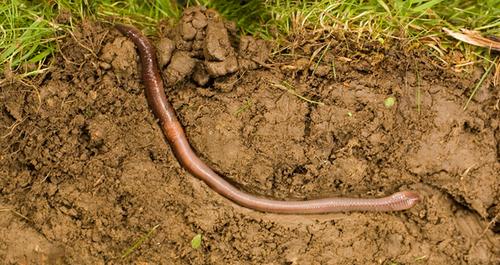
Nice looking worm, Nancy.

I’m envious!

I took some photos of my target area to show the soil profile and how little organic matter already exists.
 
Nancy Reading
steward and tree herder
Posts: 13771
Location: Isle of Skye, Scotland. Nearly 70 inches rain a year
7512
6
transportation dog forest garden foraging trees books food preservation woodworking wood heat rocket stoves ungarbage
  • Likes 2
  • Mark post as helpful
  • send pies
    Number of slices to send:
    Optional 'thank-you' note:
  • Quote
  • Report post to moderator

Thekla McDaniels wrote:Nice looking worm, Nancy.


Oh it's not one of mine! That photo is from the sussex wildlife trust site. Mine are looking pretty good now though - much improved from the pale sad looking ones I started with.
 
Thekla McDaniels
gardener
Posts: 3794
Location: Western Slope Colorado.
935
5
goat dog food preservation medical herbs solar greening the desert
  • Likes 4
  • Mark post as helpful
  • send pies
    Number of slices to send:
    Optional 'thank-you' note:
  • Quote
  • Report post to moderator
First photo is of the general appearance of the ground.

The second shows the soil profile.  It’s a prairie dog burrow.  

The third is a glimpse of the subsoil.  This is what I see whenever the prairie dogs get busy with an excavation.  Plenty of clay, some gravel.

To me it looks like it could be transformed into marvelous rich fertile soil.

We’re in our hottest part of summer.  Beginning in mid august I can probably begin to wet the ground which will be beneath the wood chips.
IMG_5188.jpeg
[Thumbnail for IMG_5188.jpeg]
IMG_5186.jpeg
[Thumbnail for IMG_5186.jpeg]
IMG_5187.jpeg
[Thumbnail for IMG_5187.jpeg]
 
Nancy Reading
steward and tree herder
Posts: 13771
Location: Isle of Skye, Scotland. Nearly 70 inches rain a year
7512
6
transportation dog forest garden foraging trees books food preservation woodworking wood heat rocket stoves ungarbage
  • Mark post as helpful
  • send pies
    Number of slices to send:
    Optional 'thank-you' note:
  • Quote
  • Report post to moderator

Thekla McDaniels wrote:To me it looks like it could be transformed into marvelous rich fertile soil.
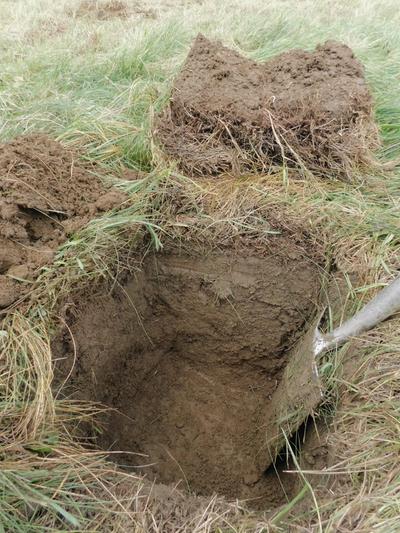


I don't see why not! Here's a test pit of my field when I started improving my vegetable area:

soil test pit

It actually doesn't look so bad in my picture, but the grass roots only penetrate the top couple of inches as it is so compacted, and the water was running off the surface rather than soaking in. I needed to put air in my soil (through digging and organic matter). I think water and organic matter are the key for you. The worms will survive your dry summer curled up in their mucus sealed balls, but they will need some moisture to move around and breed.
Another suggestion for you is some sort of cover crop - like fodder radish. That would add organic material deep in the soil, and probably get killed off in your winter. Follow that with woodchip in spring to insulate and add longer lasting carbon and introduce the worms in spring too. They might get going before the summer heat kicks in and have two active seasons, spring and autumn.
gift
 
My PEP Badge Tracker: An easier way to track your PEP Badge Progress
will be released to subscribers in: soon!
reply
    Bookmark Topic Watch Topic
  • New Topic