posted 7 years ago
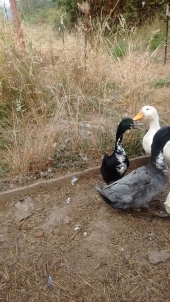
I have some teenager Khaki females and I've seen some of the same behavior and I *know* they're females. I try not to intervene as it is just like children learning to settle their differences - it is a "life skill". I will intervene if: 1. a bird submits but the aggressor doesn't appear to be accepting the submission, 2. a bird submits and them tries to run away and the aggressor doesn't let them, or 3. if it develops into a full-blown fight that goes long enough for someone to get hurt. The other day my youngest and middle adult drakes (Muscovy) had a tiff, but later they were hanging as if they were best friends. I had watched the altercation, and it broke off when the younger one tried to run and the middle one gave a short chase before letting him go. That's what I want to see - small squabbles that get worked out and with the rest of the group coalescing on the excitement acting as a distraction rather than a cheering committee.
If I find I have an actual bully on my hands, I name it "Dinner". Those signs are more like: A) the "not letting her run away" behavior, B) taking a swipe at a bird minding its own business, C) chasing the victim away from food constantly, and D) just general harassing a bird constantly. In this situation, step one is to examine the victim carefully - flocks tend to chase off a sick bird. Step two is for the human to act as "Top Duck" and be assertively dominant towards the aggressive bird. Step three is to separate the aggressive bird into something like a dog crate where it can see its better behaved companions having fun and getting treats. I only actually use the "Dinner" option as a last step.
Learning to "speak duck" happens through watching the ducks interact with each other as well as with their humans. They have personalities and preferences which we can only learn through observation. For me, that's the part of animal keeping I enjoy the most - entertainment with benefits.




.png)



 1
1