• Post Reply Bookmark Topic Watch Topic
  • New Topic
permaculture forums growies critters building homesteading energy monies kitchen purity ungarbage community wilderness fiber arts art permaculture artisans regional education skip experiences global resources cider press projects digital market permies.com pie forums private forums all forums
this forum made possible by our volunteer staff, including ...
master stewards:
  • Carla Burke
  • Nancy Reading
  • r ransom
  • John F Dean
  • paul wheaton
  • Jay Angler
stewards:
  • Timothy Norton
  • Pearl Sutton
  • Tereza Okava
master gardeners:
  • Christopher Weeks
  • M Ljin
gardeners:
  • Jeremy VanGelder
  • Matt McSpadden
  • thomas rubino
  • Likes 2
  • Mark post as helpful
  • send pies
    Number of slices to send:
    Optional 'thank-you' note:
  • Quote
  • Report post to moderator

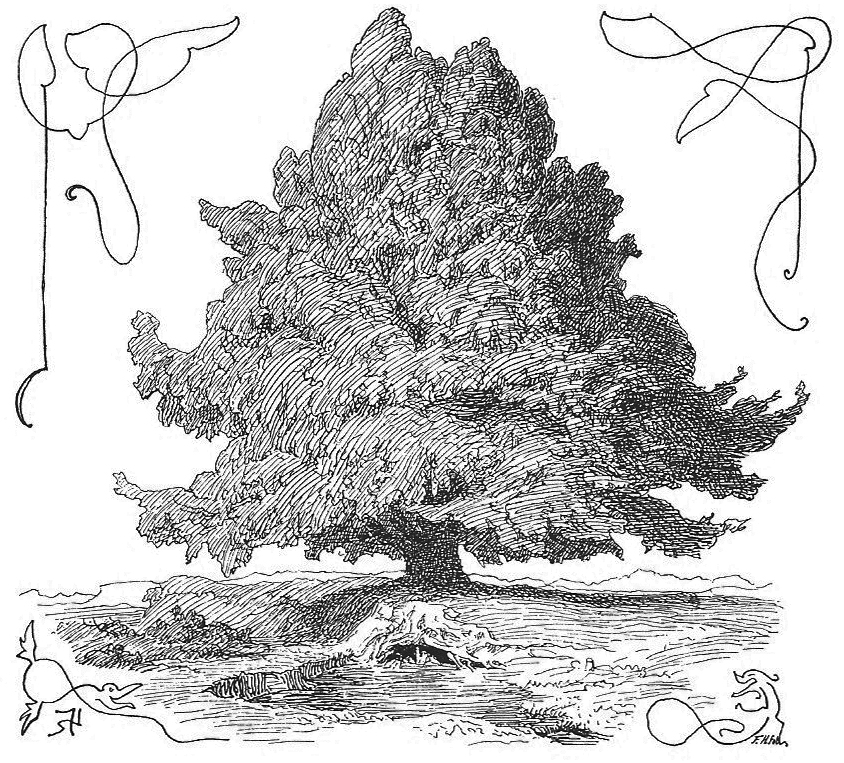
The world tree Yggdrasil. At the foot of the tree is a well, which is presumably Urðarbrunnr. No caption or title provided in the work, but the illustration appears in a section of Grímnismál labeled "Om Yggdrasil" (Danish: "about (or "around", depending on context) Yggdrasil").


NameHHV 0%H [kJ/kg]ReferenceCoppiceable?ProductivityProductivity refOther uses?
Fraxinus excelsior, White Ash; Fresno in Argentina.20,75Phyllis #226yes--fodder
Robinia pseudoacacia; Black Locust; Acacia Blanca in Argentina19,71Phyllis #1225yes---
Eucaliptus camaldulensis, Red Gum; Eucaliptus colorado in Argentina19,42Phyllis #1247----

Which are your favourite?

Are you aware of any papers relating to productivity of theses species? I mean, tons of wood, per species, per planting scheme, per climatic area. I would like to add this information as well.
COMMENTS:
 
Rocket Scientist
Posts: 997
Location: Province of Granada, Andalucía, Spain
727
6
cooking rocket stoves woodworking wood heat
  • Likes 5
  • Mark post as helpful
  • send pies
    Number of slices to send:
    Optional 'thank-you' note:
  • Quote
  • Report post to moderator
Hey Pablo, interesting topic. Would you add a column for "coppicig possible" or something?
Productivity in weight per area per year would indeed be super interesting.
Also another column for "other uses" for stacking functions
 
master steward
Posts: 14899
Location: Pacific Wet Coast
9232
duck books chicken cooking food preservation ungarbage
  • Likes 4
  • Mark post as helpful
  • send pies
    Number of slices to send:
    Optional 'thank-you' note:
  • Quote
  • Report post to moderator
Yes, they have been coppicing for firewood in places for over a thousand years, so finding good locally adapted plants for that approach makes a huge amount of sense. ( Coppice Agroforestry by Mark Krawczyk : review here https://permies.com/wiki/203188/Coppice-Agroforestry-Tending-Trees-Product )

I'll also suggest that people know the ecosystem requirements of trees - some will hog water to get that excellent growth, which then denies water to native, locally adapted trees.

And please don't plant monocultures - most coppiced areas use more than one species, and only chop relatively small areas on any one year, and have been shown to improve diversity of birds and amphibians, whereas monocultures tend to reduce biodiversity.

 
pollinator
Posts: 155
Location: Mid-Atlantic zone 5ish
34
forest garden trees woodworking wood heat
  • Likes 3
  • Mark post as helpful
  • send pies
    Number of slices to send:
    Optional 'thank-you' note:
  • Quote
  • Report post to moderator

Jay Angler wrote:Yes, they have been coppicing for firewood in places for over a thousand years, so finding good locally adapted plants for that approach makes a huge amount of sense. ( Coppice Agroforestry by Mark Krawczyk : review here https://permies.com/wiki/203188/Coppice-Agroforestry-Tending-Trees-Product )

I'll also suggest that people know the ecosystem requirements of trees - some will hog water to get that excellent growth, which then denies water to native, locally adapted trees.

And please don't plant monocultures - most coppiced areas use more than one species, and only chop relatively small areas on any one year, and have been shown to improve diversity of birds and amphibians, whereas monocultures tend to reduce biodiversity.


Coppice Agroforestry is a great reference for this. It builds on data presented in Edible Forest Gardens textbooks.

Personally I am planting hazels, hybrid poplars, Chinese chestnuts and chinquapin chestnuts, black locusts, and Osage orange. These are not all only for firewood but most of them are intended for resprout-forestry and firewood eventually. Especially the seedling hazelnuts, locust, and Osage orange - what isn't usable for garden construction will go to wood stoves.
Staff note (Jay Angler) :

Permies page on Edible Forest Gardens Volume 1 and 2 by Dave Jacke and Eric Toensmeier
https://permies.com/wiki/20162/Edible-Forest-Gardens-Volume-Dave

 
steward and tree herder
Posts: 12618
Location: Isle of Skye, Scotland. Nearly 70 inches rain a year
6541
6
transportation dog forest garden foraging trees books food preservation woodworking wood heat rocket stoves ungarbage
  • Likes 8
  • Mark post as helpful
  • send pies
    Number of slices to send:
    Optional 'thank-you' note:
  • Quote
  • Report post to moderator
My understanding is that calorific value is pretty closely related to density, so denser wood ('harder' in popular parlance) has more calorific value.

My favourites so far are Alder (Alnus glutinosa) and Silver Birch (Betula pendula) - They have been the fastest growing coppiceable trees for me here. Spruce also grows fast, but is cut once rather than 'cut and come again'! Alder has the added advantage of being a Nitrogen fixing tree.

I have a willow hybrid of some sort (I don't know what as it came as a cutting) which grows very quickly too. I'm hoping this will be even more productive for me in the wetter areas. I just cut a bit of it this year as it was damaged in summer winds last year - We'll see how well it burns.
 
Posts: 3
  • Likes 5
  • Mark post as helpful
  • send pies
    Number of slices to send:
    Optional 'thank-you' note:
  • Quote
  • Report post to moderator
My preferred tree is Black Locust.   They're hardy here in Western NY,  are great nitrogen fixers and grow relatively fast and make great firewood and fence posts.  The only negatives I've found is that they are harder to split than ash, and the thorns on the smaller branches are sharp and obnoxious, but nowhere near as bad as those on the Osage Orange trees I have.  Although the Osage makes a great hot burning firewood, it's thorns are really nasty - it was planted originally as a hedge fence, known as being "bull tough and hog tight" - and once mature, getting rid of it is difficult.  Our native Ash trees were a staple firewood for a long time, being hot burning and easy to split (straight grained), but have fallen prey to the Emerald Ash Borer.  I'm cutting the diseased ones now for firewood, and have hopes for the future for some of the stumps which have sprouted new growth.  Hope springs eternal.
 
a fool thinks himself to be wise, but a wise man knows himself to be a fool - shakespeare. foolish tiny ad:
Large Lot for Sale Inside an Established Permaculture Community — Bejuco, Costa Rica
https://permies.com/t/366607/Large-Lot-Sale-Established-Permaculture
reply
    Bookmark Topic Watch Topic
  • New Topic