• Post Reply Bookmark Topic Watch Topic
  • New Topic
permaculture forums growies critters building homesteading energy monies kitchen purity ungarbage community wilderness fiber arts art permaculture artisans regional education skip experiences global resources cider press projects digital market permies.com pie forums private forums all forums
this forum made possible by our volunteer staff, including ...
master stewards:
  • paul wheaton
  • Anne Miller
  • Carla Burke
  • Nancy Reading
  • John F Dean
  • Timothy Norton
  • Jay Angler
stewards:
  • r ransom
  • Pearl Sutton
  • Tereza Okava
master gardeners:
  • Christopher Weeks
gardeners:
  • M Ljin
  • Megan Palmer
  • Kate Downham

Garden Failures...

 
gardener
Posts: 2323
Location: Zone 6b
1560
forest garden fungi books chicken fiber arts ungarbage
  • Likes 9
  • Mark post as helpful
  • send pies
    Number of slices to send:
    Optional 'thank-you' note:
  • Quote
  • Report post to moderator
In the past few years I put lots of efforts on returning the plant residues to soil, building up soil organic matters and having chicken manure as my main organic fertilizer. However, certain plants are getting increasingly challenging to grow and when they do, they have lots of pest pressure in mid season. These plants include kale, radish and maxima squashes.

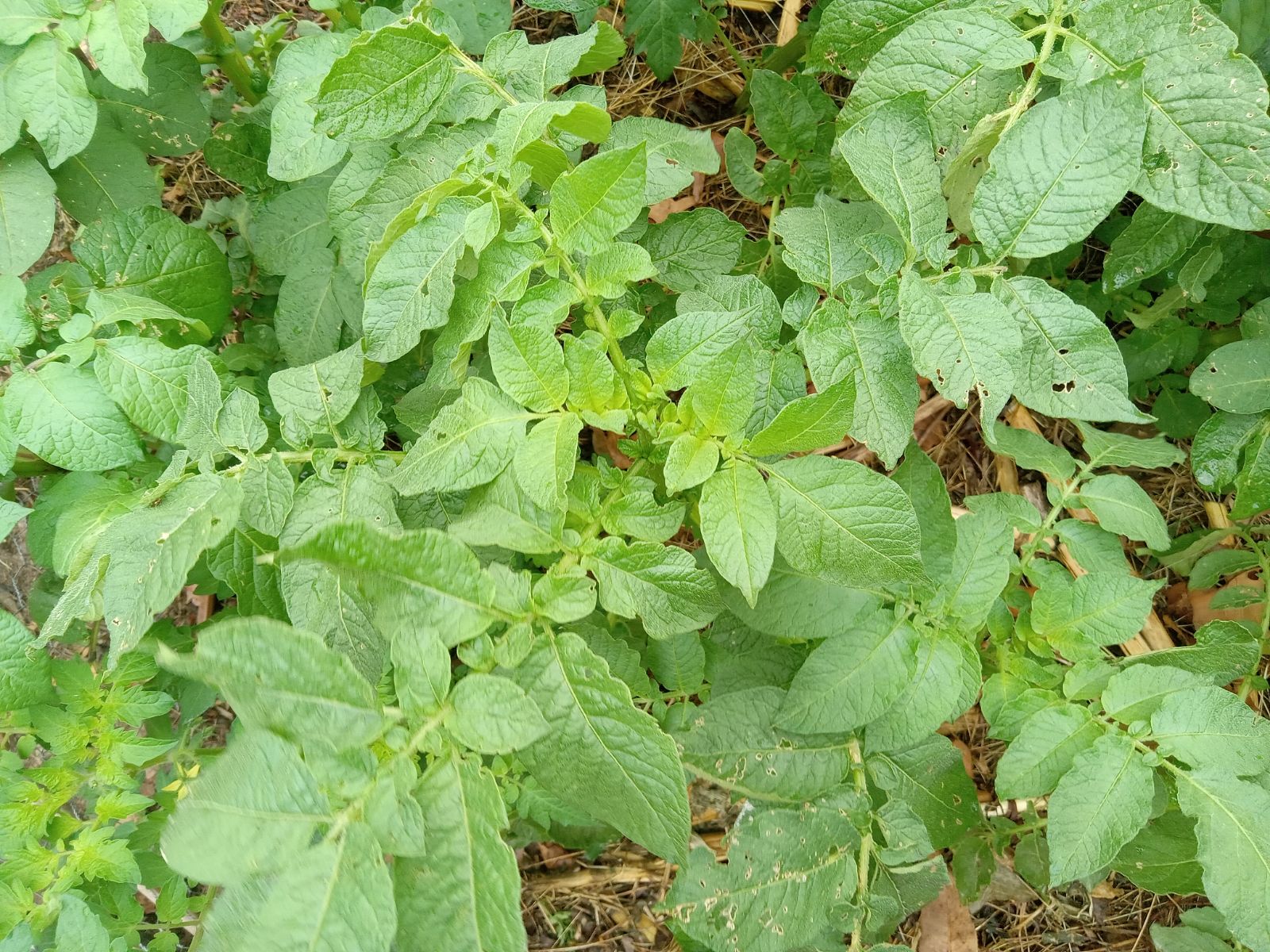
I have been confused for a long time and this year I grew corn and saw unmistakable signs of sulfur deficiency. When I looked closer, many other crops were showing signs too, but less noticeable. I applied Epson salt to stunted plants it quickly triggered growth spurts in all of them. Since Mg is a micronutrient and I didn't see Mg deficiency prior, the effects were not from addition of magnesium.  To confirm my speculation, I did another soil test with sulfur included ( S not included in basic $20 soil test from MU extra $5 for SO4 test) and the number is very low at 6 ppm. In farm land soil, 15 ppm is considered the critical level.

Sulfur is the fourth macro nutrient plants need and works synergistically with nitrogen. There's a global decline in soil S due to less deposit from air pollution. In some places it has become the rate limiting factor in crop yield. I have harvested lots of food from my garden in the past years and don't return nutrients as humaure so Sulfur is leaving the system. I do have chickens fed with purchased feeds. Apparently, inputs from chicken manure is not enough to replenish what's lost especially if grains in the feed are also grown in S deficient soil.

My garden soil has gradually decreased S level due to nutrient removal and tie-up in fruit trees. High demand veggies are the first to be affected since they are like canary in a coal mine. Oilseed, cruciferous, allium and legume are all well known high S crops. Low S-demand crops are showing more pest issues because the soil amended with compost has a higher nitrogen to sulfur ratio. The harvests will thus have a lower nutritional value too. In the long run, I am going to correct the deficiency with gypsum and elemental sulfur.Mystery solved and I consider all these garden failures are blessings in disguise.  Now I have a better understanding of soil health and nutrition balancing. I am going to grow all the challenging crops again next year and see if they will do better.

IMG_20241107_074129.jpg
Potato grown in compost. New growth light green
IMG_20241107_074126.jpg
Tomato s deficiency new growth light green
 
                                    
Posts: 129
Location: Perth, Western Australia
13
cat duck forest garden composting toilet rocket stoves composting
  • Likes 4
  • Mark post as helpful
  • send pies
    Number of slices to send:
    Optional 'thank-you' note:
  • Quote
  • Report post to moderator
As someone said, where to start.

I had a plague of snails and slugs. So I got some ducks. But planting in a sandy soil, with free range ducks in a Mediterranean climate - not much would survive. Strangely, a single zucchini plant did and even produced a good crop. That encouraged me. So I decided to go with wicking beds. (Old bath tubs do well.) But the ducks jumped up into them - yum, they thought. A low fence stopped that. Except in the winter, when there is torrential rain, everything grows like mad and then the fence bends over.

After a couple of years, the gum tree roots found their way past the bath plugs and into the tubs. That took me a while to work out.

But, I'm still going.
 
May Lotito
gardener
Posts: 2323
Location: Zone 6b
1560
forest garden fungi books chicken fiber arts ungarbage
  • Likes 13
  • Mark post as helpful
  • send pies
    Number of slices to send:
    Optional 'thank-you' note:
  • Quote
  • Report post to moderator
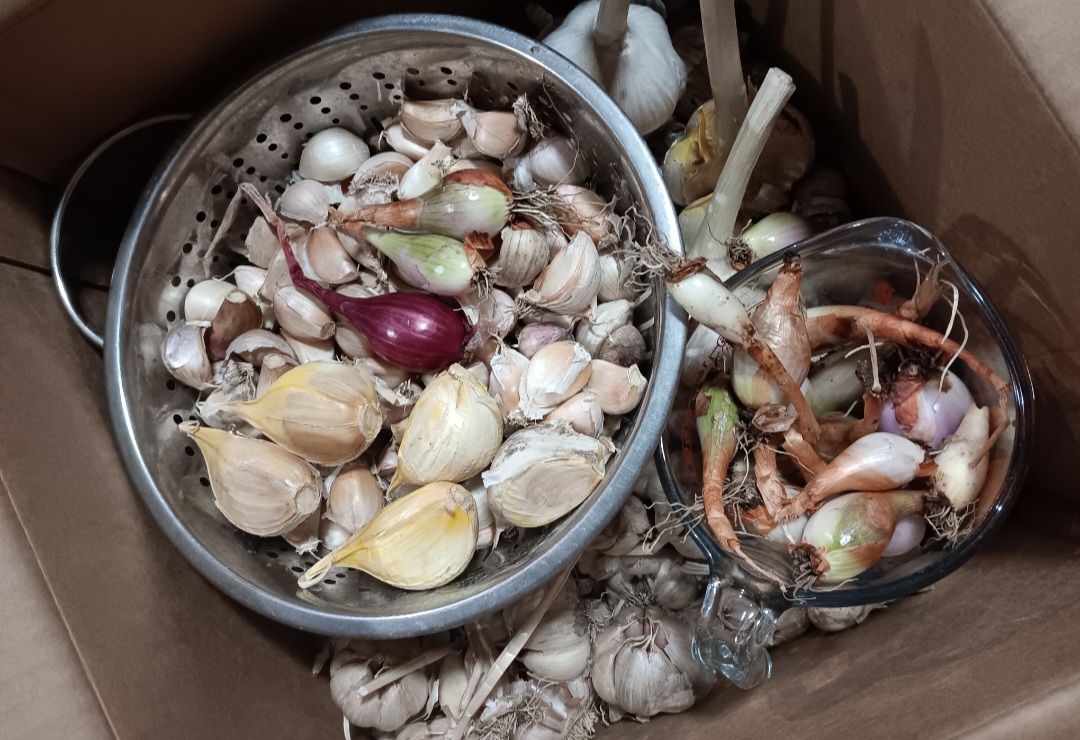
I grew onions from sets this year and they got one size bigger at harvest! Maybe if I keep replanting them they will reach fist size in three years. I have no problem with garlic and elephant garlic. Why they are so different being in the same plant family?
20260928.jpg
Allium harvest onion smaller than garlic clove
 
master pollinator
Posts: 5488
Location: Due to winter mortality, I stubbornly state, zone 7a Tennessee
2472
7
forest garden foraging books food preservation cooking fiber arts bee medical herbs
  • Likes 7
  • Mark post as helpful
  • send pies
    Number of slices to send:
    Optional 'thank-you' note:
  • Quote
  • Report post to moderator
I also am bad at onions. Question, were they onions, or shallots, which are supposed to be smaller?
 
Posts: 69
Location: Central Kansas. Zone: 6b
32
kids cat foraging trees urban cooking
  • Likes 12
  • Mark post as helpful
  • send pies
    Number of slices to send:
    Optional 'thank-you' note:
  • Quote
  • Report post to moderator
I've always heard the onion sets just do not get as big. You're supposed to plant the little green plants for large nice onions.  I don't understand the biology behind the difference so I can't explain it.

I don't have a picture to go with this but my failure is definitely rhubarb.  I think I've killed at least five rhubarb since I've been in my current location. I think first I'm afraid to over water them so they dry out and die, or on wet years they get diseases or drown in my heavy clay soil.

I'm going to try really really hard this year to get in early on the Going to Seed giveaway and get some rhubarb seeds. Maybe they'll be tougher.
 
May Lotito
gardener
Posts: 2323
Location: Zone 6b
1560
forest garden fungi books chicken fiber arts ungarbage
  • Likes 9
  • Mark post as helpful
  • send pies
    Number of slices to send:
    Optional 'thank-you' note:
  • Quote
  • Report post to moderator
Those were big box store onion sets sold in Spring, maybe not suitable for my daylength/temperature combination. Local feed stores also offer onion sets I will try those next time. I started onion from seeds as well. They germinated fine, grew a few inches and eventally withered away.
 
Joylynn Hardesty
master pollinator
Posts: 5488
Location: Due to winter mortality, I stubbornly state, zone 7a Tennessee
2472
7
forest garden foraging books food preservation cooking fiber arts bee medical herbs
  • Likes 5
  • Mark post as helpful
  • send pies
    Number of slices to send:
    Optional 'thank-you' note:
  • Quote
  • Report post to moderator
One year I bought shallot sets not knowing the difference. But again, my onions have always been small.
 
master steward
Posts: 8933
Location: southern Illinois, USA
3845
goat cat dog chicken composting toilet food preservation pig solar wood heat homestead composting
  • Likes 6
  • Mark post as helpful
  • send pies
    Number of slices to send:
    Optional 'thank-you' note:
  • Quote
  • Report post to moderator
This years garden was a disaster. The only positive was that I put handful of sweet potato slips in a bucket of dirt last June. I forgot about them. Anyway I got over 5 pounds of sweet potatoes out of it.
 
pioneer
Posts: 535
145
cat trees urban
  • Likes 7
  • Mark post as helpful
  • send pies
    Number of slices to send:
    Optional 'thank-you' note:
  • Quote
  • Report post to moderator
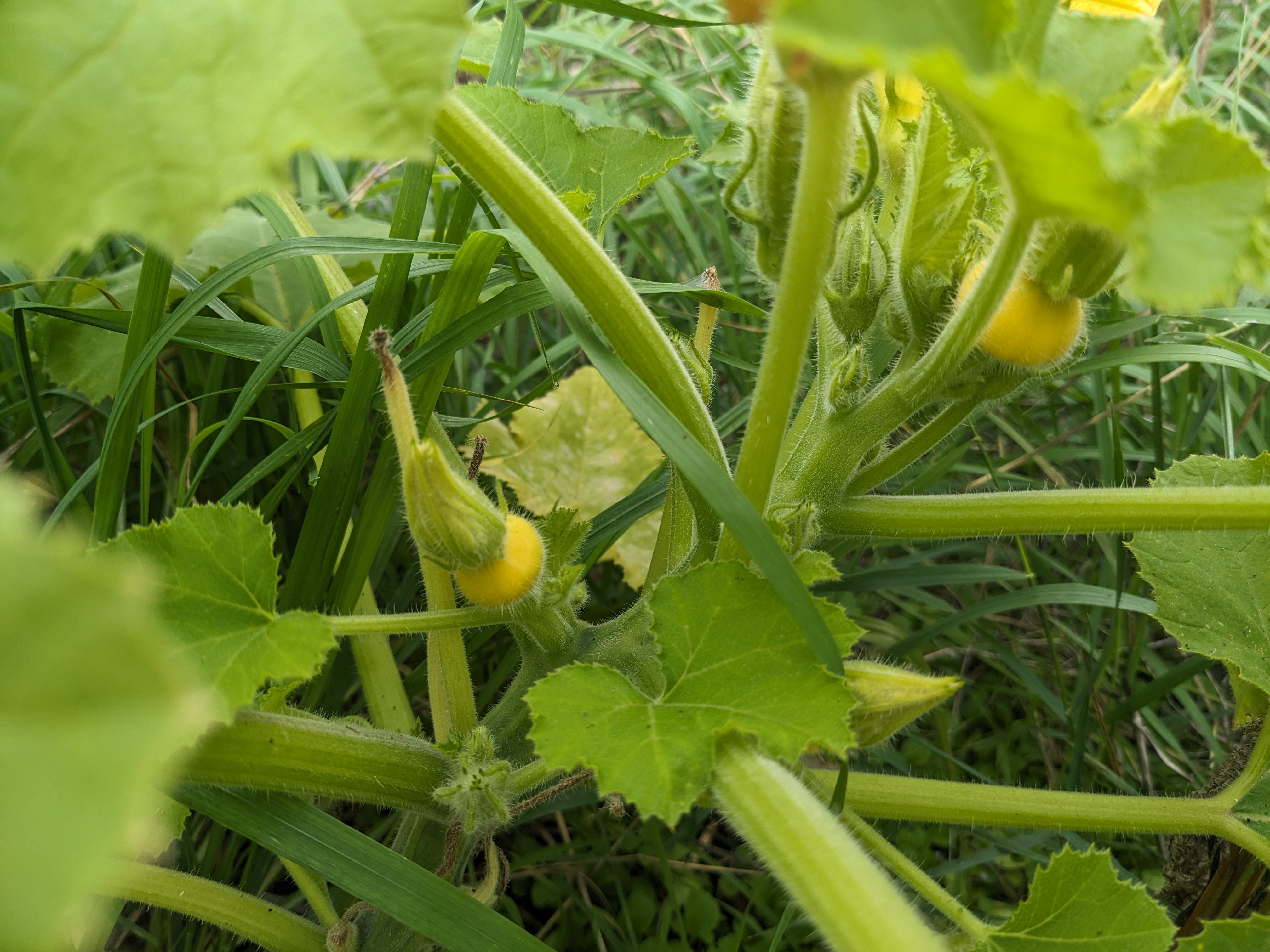
Over 5 weeks since we finally got useable rain after heatwaves & droughts from late May on, we're still in drought.  There's a 1 in 4 chance we won't get enough rain over the winter to end that.

We watered our courgettes (zucchini) all summer, and only got our first two fruitlets last week.

So if we get an unseasonably warm October, we might just get two courgettes total from four plants ..
2026-09-25-Two-Yellow-Courgette-Fruitlets.jpg
Two yellow courgette fruitlets
 
pollinator
Posts: 79
Location: Belgium, alkaline clay on the Escaut river. USDA 8b, 14" rain/y.
46
forest garden foraging cooking
  • Mark post as helpful
  • send pies
    Number of slices to send:
    Optional 'thank-you' note:
  • Quote
  • Report post to moderator
Hello,
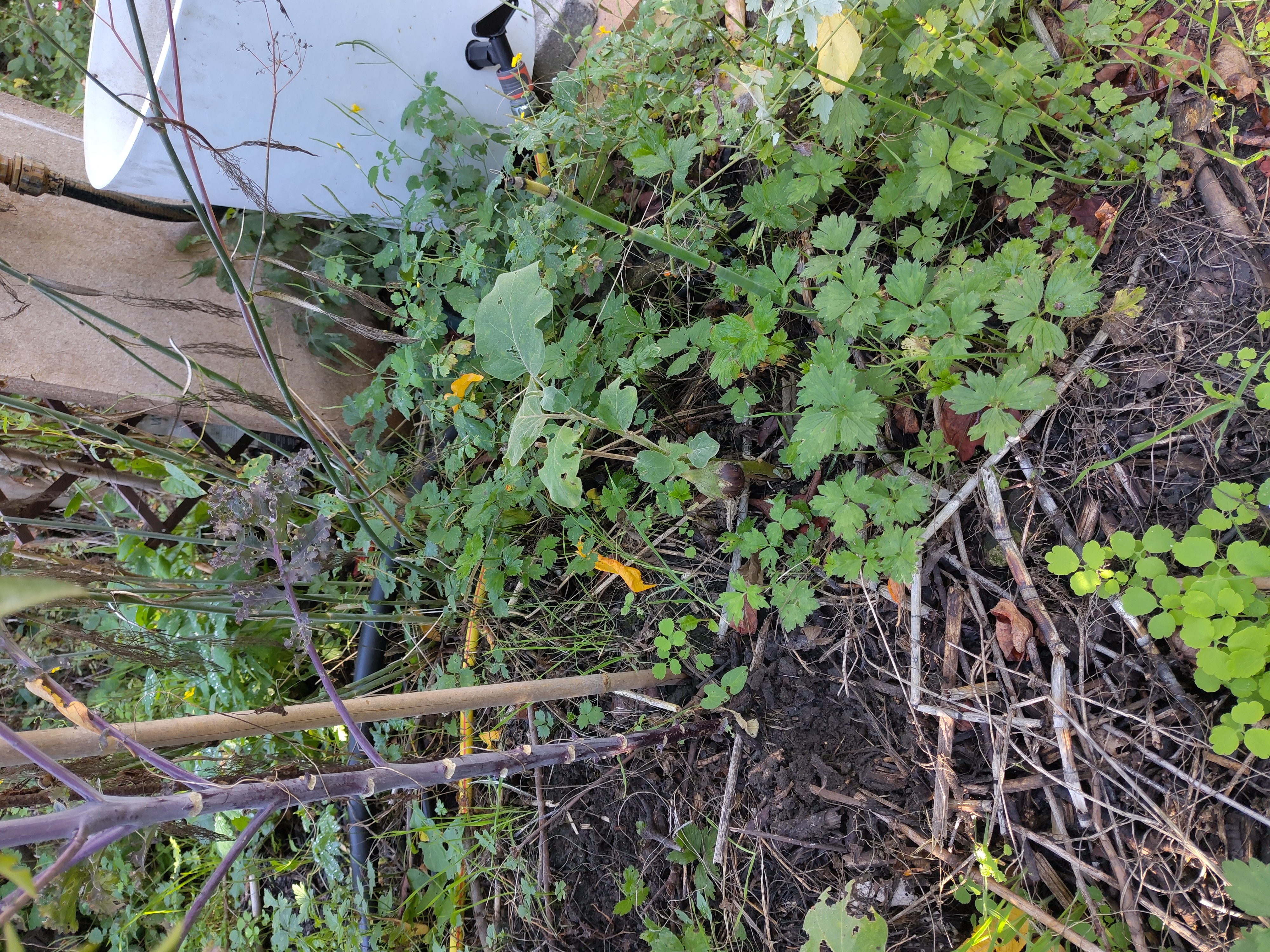
same here, the first courgette was harvested two weeks ago and first and maybe only (cherry) tomatoes around a week ago.
I will never surrender though... Like an eggplant fruiting in october.
Below the special "Halloween slimy skeleton" purple kale, both planted in may.
Nettles, plantain and goutweed are bouncing back however.
Have a nice evening,
Oliver
IMG_20261001_170532.jpg
eggplant in the middle, defoliated kale on the left.
 
Paper jam tastes about as you would expect. Try some on this tiny ad:
Infographic to consider the best heat - all costs
https://permies.com/w/heat
reply
    Bookmark Topic Watch Topic
  • New Topic