• Post Reply Bookmark Topic Watch Topic
  • New Topic
permaculture forums growies critters building homesteading energy monies kitchen purity ungarbage community wilderness fiber arts art permaculture artisans regional education skip experiences global resources cider press projects digital market permies.com pie forums private forums all forums
this forum made possible by our volunteer staff, including ...
master stewards:
  • Carla Burke
  • John F Dean
  • r ransom
  • Nancy Reading
  • Timothy Norton
  • Jay Angler
stewards:
  • paul wheaton
  • Pearl Sutton
  • Eric Hanson
master gardeners:
  • Christopher Weeks
  • M Ljin
gardeners:
  • thomas rubino
  • Megan Palmer
  • Benjamin Dinkel

Talk me out of (or into) a ukulele

 
steward & author
Posts: 44475
Location: Left Coast Canada
17151
9
art trees books chicken cooking fiber arts
  • Likes 9
  • Mark post as helpful
  • send pies
    Number of slices to send:
    Optional 'thank-you' note:
  • Quote
  • Report post to moderator
I hope this will pass, but a sleepless night bread an increasingly strong desire to buy and learn to play a ukulele, or other similar string instrument.  That's all I can think about, playing music for my goose who loves song time.

I would play music like this


Only...i am not musical. Music is something I enjoy listening to,  i can tell my George formby from my queen (fun fact, it's the same ukulele).  But that's nearly my limit.

On a good day I can count to four.  In elementary school band, they put me as 3rd triangle (the one that doesn't play) and suggested I avoid music in my future.

And yet, there is a drive in me to identify the skills I am worst at in this world and test myself against them.

Ukulele are supposedly affordable, make a variety of music, and easy to learn.  Now, could I do this for under $50CAD?  Or hopefully, someone will talk me out of it?
 
r ransom
steward & author
Posts: 44475
Location: Left Coast Canada
17151
9
art trees books chicken cooking fiber arts
  • Mark post as helpful
  • send pies
    Number of slices to send:
    Optional 'thank-you' note:
  • Quote
  • Report post to moderator
perhaps there are other instruments in the same price range that will play medieval music better?  Apparently the ukulele is based on a Portuguese mini guitar thing.  
 
master gardener
Posts: 1604
Location: Zone 5
823
ancestral skills forest garden foraging composting toilet fiber arts bike medical herbs seed writing ungarbage
  • Likes 7
  • Mark post as helpful
  • send pies
    Number of slices to send:
    Optional 'thank-you' note:
  • Quote
  • Report post to moderator
Absolutely do it! I believe in everybody learning something about music if they like it. And the ukulele is an instrument with a lot of potential.

I believe you can re-string and/or re-tune a ukukele to be similar to the portugese instrument. I am not sure the exact tuning though.

I have a baglamas, which was given to me as a gift. It had an oversized bridge and so I made and adjusted a new one and it sounds good now. It is easy to play too, a tiny lute with only three courses of strings. I am not sure how much it cost, but it was being sold as a touristy thing at a gift stand in Greece and the frets were worn so it might have been sold used. Some of them that I see for sale online are quite expensive comparatively.

If you are up for a woodworking project, it could be interesting to try making a gourd or mountain banjo. Banjo music can sound quite medieval, especially considering the short drone string.

A project that I’ve been contemplating is to make a banjo that instead of a skin, has a regular lute body but the same drone string and tuning…

I do hope this wasn’t overwhelming as music is my passion.
 
r ransom
steward & author
Posts: 44475
Location: Left Coast Canada
17151
9
art trees books chicken cooking fiber arts
  • Likes 5
  • Mark post as helpful
  • send pies
    Number of slices to send:
    Optional 'thank-you' note:
  • Quote
  • Report post to moderator
As much as I would love to, making it from scratch probably won't work for me.  I'll always wonder if the problems are a lack of skill in music or a lack of skill in making.  

Thinking about this, I did play the violin for a short while and I could do the fingering back then.  Only just.  I have stubby short fingers, so I don't have enough reach for something like a guitar.

But I think I would want a ukulele with 23 inch tall or more.  The 21" ones seem to be smaller fingering, but the next few sizes have the same space... I think.  I'm confused now.

 
gardener
Posts: 1728
Location: Proebstel, Washington, USDA Zone 6B
1110
3
wheelbarrows and trailers kids trees earthworks woodworking
  • Likes 8
  • Mark post as helpful
  • send pies
    Number of slices to send:
    Optional 'thank-you' note:
  • Quote
  • Report post to moderator
I won't try to talk you out of it! Simple string instruments are a lot of fun. I have a Cigar Box Guitar and a mountain dulcimer. Strumming around on them feels good.

I built my own cigar box guitar. Learning how to make the scale on the neck taught me a lot about the physics of music. When you hold down a string in its very middle and strum, the string vibrates twice as fast as it does if you don't hold it down. And that makes an octave. I watched a lot of videos first, including this one by NightHawkInLight.


Whether you make or buy a ukelele, it will be worthwhile.


r ransom
steward & author
Posts: 44475
Location: Left Coast Canada
17151
9
art trees books chicken cooking fiber arts
  • Likes 3
  • Mark post as helpful
  • send pies
    Number of slices to send:
    Optional 'thank-you' note:
  • Quote
  • Report post to moderator
That is such a beautiful sound.


Question.

How well does learning one instrument translate to learning another?
 
r ransom
steward & author
Posts: 44475
Location: Left Coast Canada
17151
9
art trees books chicken cooking fiber arts
  • Likes 3
  • Mark post as helpful
  • send pies
    Number of slices to send:
    Optional 'thank-you' note:
  • Quote
  • Report post to moderator
A very strong argument in favour of learning.


But i would have to relearn how to read?
 
Jeremy VanGelder
gardener
Posts: 1728
Location: Proebstel, Washington, USDA Zone 6B
1110
3
wheelbarrows and trailers kids trees earthworks woodworking
  • Likes 6
  • Mark post as helpful
  • send pies
    Number of slices to send:
    Optional 'thank-you' note:
  • Quote
  • Report post to moderator

r ransom wrote:
How well does learning one instrument translate to learning another?


It translates surprisingly well. My little bit of middle-school guitar experience helped me learn how to play my fretless, 3 string cigar box guitar. I picked up mountain dulcimer last fall. Those are strung the opposite way to guitars, with the high string closer to your face. And I was surprised that it isn't hard to transition from one instrument to the other.

Probably the simplest stringed instrument to build is a canjo. It takes a stick, a can, some wire and some screws.
 
r ransom
steward & author
Posts: 44475
Location: Left Coast Canada
17151
9
art trees books chicken cooking fiber arts
  • Likes 3
  • Mark post as helpful
  • send pies
    Number of slices to send:
    Optional 'thank-you' note:
  • Quote
  • Report post to moderator
What i really like is something like the mandolin, but they are crazy expencive.

If I can learn the ukulele, is it close enough to the mandolin or lute?  They have strings, so it can't be that different.

Or am I dreaming?
 
author & pollinator
Posts: 1504
Location: Blue Ridge Mountains
511
food preservation cooking medical herbs writing homestead
  • Likes 5
  • Mark post as helpful
  • send pies
    Number of slices to send:
    Optional 'thank-you' note:
  • Quote
  • Report post to moderator
I play a baritone uke occasionally.  Guitar and mandolin are my main instrument and tenor banjo is the current obsession.  Playing uke really helped me learn chord melody on guitar.  I highly recommend it and they are great for travel.  I love the old stuff - Roy Smeck and all that.  So, so having a light, little instrument I can strum old jazz tunes on is perfect for me.  A banjo uke may be in the near future.....
 
Judson Carroll
author & pollinator
Posts: 1504
Location: Blue Ridge Mountains
511
food preservation cooking medical herbs writing homestead
  • Likes 4
  • Mark post as helpful
  • send pies
    Number of slices to send:
    Optional 'thank-you' note:
  • Quote
  • Report post to moderator

r ransom wrote:What i really like is something like the mandolin, but they are crazy expencive.

If I can learn the ukulele, is it close enough to the mandolin or lute?  They have strings, so it can't be that different.

Or am I dreaming?


I did a video on how to buy a good quality, inexpensive mandolin and set it up.  But, the basics are to look for solid wood, not composite, check the top to make sure the bracing is good and be sure the neck is comfortable.  I have owned several, including very valuable antique mandolins.  I paid $75 for my current favorite!

 
Judson Carroll
author & pollinator
Posts: 1504
Location: Blue Ridge Mountains
511
food preservation cooking medical herbs writing homestead
  • Likes 4
  • Mark post as helpful
  • send pies
    Number of slices to send:
    Optional 'thank-you' note:
  • Quote
  • Report post to moderator

r ransom wrote:That is such a beautiful sound.


Question.

How well does learning one instrument translate to learning another?


Mostly well.  The exception is violin.... the bow is a beast to learn!  I play guitar, bass, uke, mandolin, 3 types of banjo, tenor guitar, harmonica and a little piano.... probably a few others, but music is a language.  If you learn music, it is just a matter of getting used to different instruments.  Focus on scales and chord construction.  Then, all you really need to know is how an instrument is tuned.
 
M Ljin
master gardener
Posts: 1604
Location: Zone 5
823
ancestral skills forest garden foraging composting toilet fiber arts bike medical herbs seed writing ungarbage
  • Likes 3
  • Mark post as helpful
  • send pies
    Number of slices to send:
    Optional 'thank-you' note:
  • Quote
  • Report post to moderator

r ransom wrote:What i really like is something like the mandolin, but they are crazy expencive.

If I can learn the ukulele, is it close enough to the mandolin or lute?  They have strings, so it can't be that different.

Or am I dreaming?


I believe you can rearrange the strings and tune a ukulele to mandolin tuning. But the mandolin has four courses of doubled strings—so two of each ring out the same note at the same time. And I don’t know if most ukuleles can accommodate steel strings (which would make it more mandolin-like). Mandolin is also played with a pick which is unusual for nylon-stringed instruments. If you wanted to learn it as a step towards mandolin that might make sense.

As for lute, that is the entire family of instruments—all of the instruments above except the mountain dulcimer, violin, piano, etc. are lutes. It usually refers to ones with a rounded back but there are countless different kinds.
 
Judson Carroll
author & pollinator
Posts: 1504
Location: Blue Ridge Mountains
511
food preservation cooking medical herbs writing homestead
  • Likes 4
  • Mark post as helpful
  • send pies
    Number of slices to send:
    Optional 'thank-you' note:
  • Quote
  • Report post to moderator

M Ljin wrote:

r ransom wrote:What i really like is something like the mandolin, but they are crazy expencive.

If I can learn the ukulele, is it close enough to the mandolin or lute?  They have strings, so it can't be that different.

Or am I dreaming?


I believe you can rearrange the strings and tune a ukulele to mandolin tuning. But the mandolin has four courses of doubled strings—so two of each ring out the same note at the same time. And I don’t know if most ukuleles can accommodate steel strings (which would make it more mandolin-like). Mandolin is also played with a pick which is unusual for nylon-stringed instruments. If you wanted to learn it as a step towards mandolin that might make sense.

As for lute, that is the entire family of instruments—all of the instruments above except the mountain dulcimer are lutes. It usually refers to ones with a rounded back but there are countless different kinds.


You could tune a uke to a 5ths tuning, but you couldn't use steel strings.  The 5ths tuning is much higher tension.  I have tuned my baritone like a tenor guitar, CGDA, but it is hard not to break a string.  A little, soprano uke might do mandolin tuning GDAE.  But, I think standard tuning would be best long term.  Any books or videos you learn from will use standard tuning.
 
r ransom
steward & author
Posts: 44475
Location: Left Coast Canada
17151
9
art trees books chicken cooking fiber arts
  • Likes 4
  • Mark post as helpful
  • send pies
    Number of slices to send:
    Optional 'thank-you' note:
  • Quote
  • Report post to moderator
The library has 30 books on learning the ukulele.   I put 24 on hold.

I expected them to have more books as it's a popular instrument locally...or was about 10 years ago.
 
r ransom
steward & author
Posts: 44475
Location: Left Coast Canada
17151
9
art trees books chicken cooking fiber arts
  • Likes 2
  • Mark post as helpful
  • send pies
    Number of slices to send:
    Optional 'thank-you' note:
  • Quote
  • Report post to moderator
Any suggestions on a good book to get started?

I want to play style where the instrument is the melody and i don't have to sing.  What is that called?
 
Judson Carroll
author & pollinator
Posts: 1504
Location: Blue Ridge Mountains
511
food preservation cooking medical herbs writing homestead
  • Likes 4
  • Mark post as helpful
  • send pies
    Number of slices to send:
    Optional 'thank-you' note:
  • Quote
  • Report post to moderator

r ransom wrote:Any suggestions on a good book to get started?

I want to play style where the instrument is the melody and i don't have to sing.  What is that called?


I really like the old Roy Smeck books, but it depends on the style of music you want to play.  The old guys, pre 1940 or so, all played chord melody style because that is how early jazz was played.  Later, when folk, rock and modern pop became more popular, playing single note melodies became more common.  Most of the Hawaiian players do both.  Either way, a basic method book that shows simple, 3 note chords and basic scales is the place to start.

But.... if anyone ever needs a good mandolin book, I just published one!  https://www.amazon.com/dp/B0G7XXKVHZ
 
r ransom
steward & author
Posts: 44475
Location: Left Coast Canada
17151
9
art trees books chicken cooking fiber arts
  • Likes 1
  • Mark post as helpful
  • send pies
    Number of slices to send:
    Optional 'thank-you' note:
  • Quote
  • Report post to moderator


Pure entertainment,  possibly.  It helps me decide that maybe I need more than $50 to start.

Loving the Wednesday Addams vibes
 
r ransom
steward & author
Posts: 44475
Location: Left Coast Canada
17151
9
art trees books chicken cooking fiber arts
  • Mark post as helpful
  • send pies
    Number of slices to send:
    Optional 'thank-you' note:
  • Quote
  • Report post to moderator

Judson Carroll wrote:

r ransom wrote:Any suggestions on a good book to get started?

I want to play style where the instrument is the melody and i don't have to sing.  What is that called?


I really like the old Roy Smeck books, but it depends on the style of music you want to play.  The old guys, pre 1940 or so, all played chord melody style because that is how early jazz was played.  Later, when folk, rock and modern pop became more popular, playing single note melodies became more common.  Most of the Hawaiian players do both.  Either way, a basic method book that shows simple, 3 note chords and basic scales is the place to start.

But.... if anyone ever needs a good mandolin book, I just published one!  https://www.amazon.com/dp/B0G7XXKVHZ


Thanks.

Looks like your book is on Amazon canada too!

I have a horrible feeling that buying books will be more expensive than the instrument.
 
r ransom
steward & author
Posts: 44475
Location: Left Coast Canada
17151
9
art trees books chicken cooking fiber arts
  • Likes 3
  • Mark post as helpful
  • send pies
    Number of slices to send:
    Optional 'thank-you' note:
  • Quote
  • Report post to moderator
For people who know how to play musical instruments, when do they play it?  Or is it always just practice?

With tv, radio, and busy lives, it feels like there is very little occasion to just play music for music's sake. Or am I wrong?

If I did learn, I would play for my chickens.  They put up with my terrible singing every night, so maybe they would like this better?

But what do normal people do?
 
Judson Carroll
author & pollinator
Posts: 1504
Location: Blue Ridge Mountains
511
food preservation cooking medical herbs writing homestead
  • Likes 6
  • Mark post as helpful
  • send pies
    Number of slices to send:
    Optional 'thank-you' note:
  • Quote
  • Report post to moderator

r ransom wrote:For people who know how to play musical instruments, when do they play it?  Or is it always just practice?

With tv, radio, and busy lives, it feels like there is very little occasion to just play music for music's sake. Or am I wrong?

If I did learn, I would play for my chickens.  They put up with my terrible singing every night, so maybe they would like this better?

But what do normal people do?


At first, it takes an hour a day, every day.  After a few years 10-15 minutes will do.  Leave it where you will see it regularly and just grab it in a spare minute. Most of the best players practice while watching tv.  Jerry Garcia and Joe Pass would just run scales and such while zoning out, developing muscle memory. Others, like Barney Kessel dedicated specific hours in a day for structured practice, but playing guitar was his job. The other end of the spectrum isn't healthy - John Coltrane would practice for more than 24 hours straight just playing variations on the C scale, modes and arpeggios.  That was driven both by an obsessive personality and drugs, and it probably killed him.  A lot of pros barely practice at all, but play live and jam several nights a week. Amateurs shouldn't push too hard - keep it fun. Finger soreness will be an issue for the first year or so, so don't play so much that it hurts or you'll stop. Coltrane did have some good advice - learn everything, practice everything, but once you have all that down, forget about structure and just play what you feel.  Always hum along when you solo so the hands connect with the brain, ear and voice.  Your instrument should become a second voice eventually.  Be sure to tap your foot because rhythm is the most important thing.  BTW, a lot of the successful rock and folk players I have met know very little about music theory and do what they do with just a few basic chords and pentatonic (5 note) scales.  You can do a lot with 3 chords and a few notes.
 
Judson Carroll
author & pollinator
Posts: 1504
Location: Blue Ridge Mountains
511
food preservation cooking medical herbs writing homestead
  • Likes 1
  • Mark post as helpful
  • send pies
    Number of slices to send:
    Optional 'thank-you' note:
  • Quote
  • Report post to moderator
BTW, be sure to pull up some Ukulele Ike, Cliff Edwards on youtube.  He was the voice of Jimny Crickett and a fantastic musician.  His life was tragic, but his talent was immense.  He mixed chord melody with excellent single note soling that really put him on par with the greatest jazz guitarists of the era.  He also played a mean kazoo!
 
Jeremy VanGelder
gardener
Posts: 1728
Location: Proebstel, Washington, USDA Zone 6B
1110
3
wheelbarrows and trailers kids trees earthworks woodworking
  • Likes 7
  • Mark post as helpful
  • send pies
    Number of slices to send:
    Optional 'thank-you' note:
  • Quote
  • Report post to moderator

r ransom wrote:For people who know how to play musical instruments, when do they play it?  Or is it always just practice?


For me it's all about where I keep the instrument. I keep my dulcimer on top of my hutch. So I often take it down after supper. My CBG and harmonica are upstairs in my room. So I play those before bed. That's rough-house time with my boys, when we try to get their last bit of energy out. So a bit of dancing before bed works well.

When I practiced the harmonica I often kept one in my pocket. I watched a lot of youtube lessons back then, and would practice some of the songs and techniques on occasion. Something in my brain divides "practicing" the harmonica from "playing with" the stringed instruments. I get more enjoyment from playing than from practicing, so I don't pull out my harmonica very often any more.
 
Posts: 40
Location: Zone 7b, 600', Sandy-Loam, Cascadian Maritime Temperate
24
  • Likes 5
  • Mark post as helpful
  • send pies
    Number of slices to send:
    Optional 'thank-you' note:
  • Quote
  • Report post to moderator
I'd say give the Uke a whirl, why not!?  I got a Ukulele for my nephew, and I play around on it a bit - fun!
As to the question of when do people play their musical instrument, I keep my classical guitar ready in a multi-use space where I can play often without having to go get things and setup things.  
Playing almost every day is best for my heart.  Making music is cheap therapy, and I get much joy from it - just playing guitar and singing-- by myself most often, though making music with others magnifies the joy and therapeutic value manifold.
Also playing for chickens is good stuff!  Perhaps unsurprisingly, my chickens always responded positively to me playing the old standby, Cluck Old Hen.
 
 
r ransom
steward & author
Posts: 44475
Location: Left Coast Canada
17151
9
art trees books chicken cooking fiber arts
  • Likes 1
  • Mark post as helpful
  • send pies
    Number of slices to send:
    Optional 'thank-you' note:
  • Quote
  • Report post to moderator
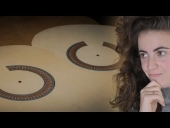
I floated on the youtube algorithm, allowing it to guide me through as many absolute beginners ukulele tutorials as it could find.

After two days, this is the first one that began with tuning.


I'm also thrilled to see a device that will turn and tune the pegs for me, but alas, expencive.

I like her style and I think that this might be the person to guide me through the first few weeks.  At first the "look up" was a bit annoying, until I realized, every time she said that, my attention had wavered.  A few do that "look up" thing, especially women teachers.  It makes me think of elementary school.  But if it works...

Here is a playlist for here 30 day starting lessons. (Mostly putting here so I can find it again)


I don't know.   Still undecided.   $50cad is a lot of money for me to invest in something I'm unsure about.   It looks like I would need to save up a lot more than that to have a good start.  

And what if my chickens don't like it?
 
r ransom
steward & author
Posts: 44475
Location: Left Coast Canada
17151
9
art trees books chicken cooking fiber arts
  • Likes 2
  • Mark post as helpful
  • send pies
    Number of slices to send:
    Optional 'thank-you' note:
  • Quote
  • Report post to moderator
How likely is this style of playing for a beginner?

This book presents 37 pieces of Renaissance guitar music transcribed for solo fingerstyle ukulele together with the author’s recordings of every transcription. Moreover, a generous introduction provides a brief history of the Renaissance guitar, tips on period ornamentation and musicianship, recommended recordings, and invaluable resources for further research of your own. Throughout Europe, the Renaissance guitar was a popular instrument in the middle of the sixteenth century. Its composers left us a treasure-trove of music, from rustic dances to chansons and elaborate fantasias. Five-hundred years later, this music fits beautifully on the Renaissance guitar’s musical descendant, the ukulele. The Renaissance guitar and the ukulele share an almost identical tuning. As the transcriptions in this book are written in standard notation and tablature, any type of ukulele, from soprano to baritone—as well as the top four strings of the guitar— can be used to play them. Most of the pieces are in standard gCEA or GCEA tuning; the seven pieces in the second section of the book, however, require low-G tuning to render the counterpoint as written. It’s also possible for guitar and baritone uke players to read the tablature provided. The music will sound a perfect 4th lower than the notation, but as there was no standard pitch in the time of the Renaissance guitar, modern players should feel no obligation to play this music at fixed pitch. If you wish to read from the tablature and sound in the same key as the notation for ensemble purposes, guitar and baritone uke players merely need to place a capo at the fifth fret. With a certain sense of historical irony, the music of the Renaissance guitar is here reborn on modern fretted instruments.


It sounds perfect, but is it possible?
 
r ransom
steward & author
Posts: 44475
Location: Left Coast Canada
17151
9
art trees books chicken cooking fiber arts
  • Likes 2
  • Mark post as helpful
  • send pies
    Number of slices to send:
    Optional 'thank-you' note:
  • Quote
  • Report post to moderator
The ukulele i have my eyes on has GCEA and is concert size (23in).

Can this machine do the low g the description described without changing strings?
 
gardener
Posts: 4511
722
7
forest garden fungi trees food preservation bike medical herbs
  • Likes 3
  • Mark post as helpful
  • send pies
    Number of slices to send:
    Optional 'thank-you' note:
  • Quote
  • Report post to moderator
I highly recommend the baritone ukulele.  It doesn't have the same chords as the little ukes.  It is easy to learn like other ukuleles, but it is bigger and makes a bigger sound, like a small guitar.  You can look at guitar chord books, of which there are zillions, and figure out how to do the harder chords. The baritone uke uses the same chords as a guitar, but simpler, because there are only 4 strings instead of 6.  I play regularly with another guy in town. It's really fun.  I also play the piano and sing.  I tried to play the regular guitar, but the quick chord changes were pretty difficult. I didn't have an hour a day.  It always sounded kind of "off", but now it's great.

JohN S
PDX OR
 
r ransom
steward & author
Posts: 44475
Location: Left Coast Canada
17151
9
art trees books chicken cooking fiber arts
  • Mark post as helpful
  • send pies
    Number of slices to send:
    Optional 'thank-you' note:
  • Quote
  • Report post to moderator
The bigger ones look lovely. listening on youtube, the bigger ones would be more my sound.

However, there seems to be a massive price jump once we go over 23in (concert).  If I'm going to save up enough to get started before the end of the year, I think the 23 in will be my only choice (the 21in one looks too small for my fat fingers and sounds more Hawaiian and less medieval)

 
John Suavecito
gardener
Posts: 4511
722
7
forest garden fungi trees food preservation bike medical herbs
  • Mark post as helpful
  • send pies
    Number of slices to send:
    Optional 'thank-you' note:
  • Quote
  • Report post to moderator
There seem to be a lot of them on Amazon for $99-$199.
John S
PDX OR
 
r ransom
steward & author
Posts: 44475
Location: Left Coast Canada
17151
9
art trees books chicken cooking fiber arts
  • Likes 1
  • Mark post as helpful
  • send pies
    Number of slices to send:
    Optional 'thank-you' note:
  • Quote
  • Report post to moderator

John Suavecito wrote:There seem to be a lot of them on Amazon for $99-$199.
John S
PDX OR


My budget is $50 Canadian dollars.

I should be able to save that much by my birthday.
 
r ransom
steward & author
Posts: 44475
Location: Left Coast Canada
17151
9
art trees books chicken cooking fiber arts
  • Mark post as helpful
  • send pies
    Number of slices to send:
    Optional 'thank-you' note:
  • Quote
  • Report post to moderator
So, tentative budget looks like this:

Remembering that I'm still not convinced that this is a path for me.

and in Canadian dollars which seem to be taking one heck of a dive in the last few days.  Rounded up to accommodate some tax and stuff.

$55 starter, all wood, concert (23in) size ukulele.
$30 for Renaissance book which I am still uncertain will match my instrument.
$5 for clip on tuner

$13 for extra "hi G" set of Aquila strings.  (Optional).

I can use the library to get me through the basics.  But I can't rely on it to teach the styke I want to learn.

I don't have a phone so the clip on tuner is a must.

The reviews on the ukuleles I'm considering all suggest quickly upgrading the strings.  As this makes a big difference to an affordable instrument.   So maybe that's not optional?

Anything missing?


I can swing this budget without hardship, but it does mean reducing other areas.  But I don't know enough about the topic to know if it's worth it.  When I lay it out like this, it seems an extravagant expense for something I'm likely going to give up on in a week.

I wish I knew more about the book as that seems to be my major sticking point.
 
pollinator
Posts: 5534
Location: Canadian Prairies - Zone 3b
1529
  • Likes 5
  • Mark post as helpful
  • send pies
    Number of slices to send:
    Optional 'thank-you' note:
  • Quote
  • Report post to moderator
Vancouver Public Library lends musical instruments, including ukeleles.
 
M Ljin
master gardener
Posts: 1604
Location: Zone 5
823
ancestral skills forest garden foraging composting toilet fiber arts bike medical herbs seed writing ungarbage
  • Likes 4
  • Mark post as helpful
  • send pies
    Number of slices to send:
    Optional 'thank-you' note:
  • Quote
  • Report post to moderator

r ransom wrote:How likely is this style of playing for a beginner? [/url]

This book presents 37 pieces of Renaissance guitar music transcribed for solo fingerstyle ukulele together with the author’s recordings of every transcription. Moreover, a generous introduction provides a brief history of the Renaissance guitar, tips on period ornamentation and musicianship, recommended recordings, and invaluable resources for further research of your own. Throughout Europe, the Renaissance guitar was a popular instrument in the middle of the sixteenth century. Its composers left us a treasure-trove of music, from rustic dances to chansons and elaborate fantasias. Five-hundred years later, this music fits beautifully on the Renaissance guitar’s musical descendant, the ukulele. The Renaissance guitar and the ukulele share an almost identical tuning. As the transcriptions in this book are written in standard notation and tablature, any type of ukulele, from soprano to baritone—as well as the top four strings of the guitar— can be used to play them. Most of the pieces are in standard gCEA or GCEA tuning; the seven pieces in the second section of the book, however, require low-G tuning to render the counterpoint as written. It’s also possible for guitar and baritone uke players to read the tablature provided. The music will sound a perfect 4th lower than the notation, but as there was no standard pitch in the time of the Renaissance guitar, modern players should feel no obligation to play this music at fixed pitch. If you wish to read from the tablature and sound in the same key as the notation for ensemble purposes, guitar and baritone uke players merely need to place a capo at the fifth fret. With a certain sense of historical irony, the music of the Renaissance guitar is here reborn on modern fretted instruments.


It sounds perfect, but is it possible?


When I started learning guitar, it was mostly one-note melodies at the same time as learning chords. Later on I used an old book which taught lots of English country dances, renaissance music, etc. I think it is very possible, especially considering guitar is similar but larger and more strings.
 
Judson Carroll
author & pollinator
Posts: 1504
Location: Blue Ridge Mountains
511
food preservation cooking medical herbs writing homestead
  • Likes 7
  • Mark post as helpful
  • send pies
    Number of slices to send:
    Optional 'thank-you' note:
  • Quote
  • Report post to moderator
Don't forget used instruments - check pawn shops, thrift stores, charity shops and online.
 
r ransom
steward & author
Posts: 44475
Location: Left Coast Canada
17151
9
art trees books chicken cooking fiber arts
  • Likes 1
  • Mark post as helpful
  • send pies
    Number of slices to send:
    Optional 'thank-you' note:
  • Quote
  • Report post to moderator

Judson Carroll wrote:Don't forget used instruments - check pawn shops, thrift stores, charity shops and online.


Very good idea.  Used ukulele (concert size and bigger) start at $300 locally.  Almost double for person to person sales.  I don't know why they are so expencive.

But I'm keeping an eye out.  Thrifting season starts about easter here.
 
r ransom
steward & author
Posts: 44475
Location: Left Coast Canada
17151
9
art trees books chicken cooking fiber arts
  • Likes 3
  • Mark post as helpful
  • send pies
    Number of slices to send:
    Optional 'thank-you' note:
  • Quote
  • Report post to moderator

Douglas Alpenstock wrote:Vancouver Public Library lends musical instruments, including ukeleles.


That is wonderful!

Mine doesn't have that yet, but I'll put a request in when I pick up my books.
 
r ransom
steward & author
Posts: 44475
Location: Left Coast Canada
17151
9
art trees books chicken cooking fiber arts
  • Likes 4
  • Mark post as helpful
  • send pies
    Number of slices to send:
    Optional 'thank-you' note:
  • Quote
  • Report post to moderator

M Ljin wrote:

r ransom wrote:How likely is this style of playing for a beginner?

This book ..., the music of the Renaissance guitar is here reborn on modern fretted instruments.


It sounds perfect, but is it possible?


When I started learning guitar, it was mostly one-note melodies at the same time as learning chords. Later on I used an old book which taught lots of English country dances, renaissance music, etc. I think it is very possible.



This gives me heart
 
A feeble attempt to tell you about our stuff that makes us money
Learn Permaculture through a little hard work
https://wheaton-labs.com/bootcamp
reply
    Bookmark Topic Watch Topic
  • New Topic