• Post Reply Bookmark Topic Watch Topic
  • New Topic
permaculture forums growies critters building homesteading energy monies kitchen purity ungarbage community wilderness fiber arts art permaculture artisans regional education skip experiences global resources cider press projects digital market permies.com pie forums private forums all forums
this forum made possible by our volunteer staff, including ...
master stewards:
  • Carla Burke
  • Nancy Reading
  • John F Dean
  • r ransom
  • Jay Angler
  • Timothy Norton
stewards:
  • paul wheaton
  • Tereza Okava
  • Nicole Alderman
master gardeners:
  • M Ljin
  • Christopher Weeks
gardeners:
  • Jeremy VanGelder
  • thomas rubino
  • Megan Palmer

Three Sisters Year 4

 
pollinator
Posts: 928
Location: Illinois
211
  • Likes 17
  • Mark post as helpful
  • send pies
    Number of slices to send:
    Optional 'thank-you' note:
  • Quote
  • Report post to moderator
2026 is here. Time to start a new thread on my 3-sisters efforts.
Last year was fairly successful. Corn produced 50 bushels/acre. About 190 pounds from 3000 square feet. Beans also did very well, though no 'official' measurement since a lot was picked green. Squash was a total bust with very heavy insect damage.
Incidental crops like sunflowers, tobacco, and flowers did well. These I do not plant but simply allow them to reseed themselves and grow as volunteers. Tomatoes almost always do well as volunteers, but in 2025 did poorly.

I am planning a couple of things to change. First, I will add companion plants around the squash. I have read that radishes and marigolds may help prevent squash bugs and borers from finding the squash. I am somewhat skeptical but it's worth a try.
Second, I received a gift of 6 new corn varieties so will add a few rows of those to the mix.

2026 will be the third year with no added chemical inputs. No fertilizers, insecticides or herbicides. I may carry in black dirt to improve some of the heavy clay.
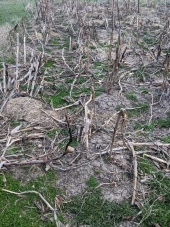
The garden now:
PXL_20260108_161530623.jpg
Garden in January
Garden in January
 
Thom Bri
pollinator
Posts: 928
Location: Illinois
211
  • Likes 7
  • Mark post as helpful
  • send pies
    Number of slices to send:
    Optional 'thank-you' note:
  • Quote
  • Report post to moderator
Some pics of hills:
PXL_20260108_161550981.jpg
Corn hills
Corn hills
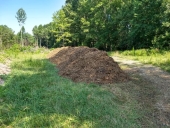
PXL_20260108_161700565.NIGHT.jpg
Mulched hay
Mulched hay
 
Thom Bri
pollinator
Posts: 928
Location: Illinois
211
  • Likes 8
  • Mark post as helpful
  • send pies
    Number of slices to send:
    Optional 'thank-you' note:
  • Quote
  • Report post to moderator
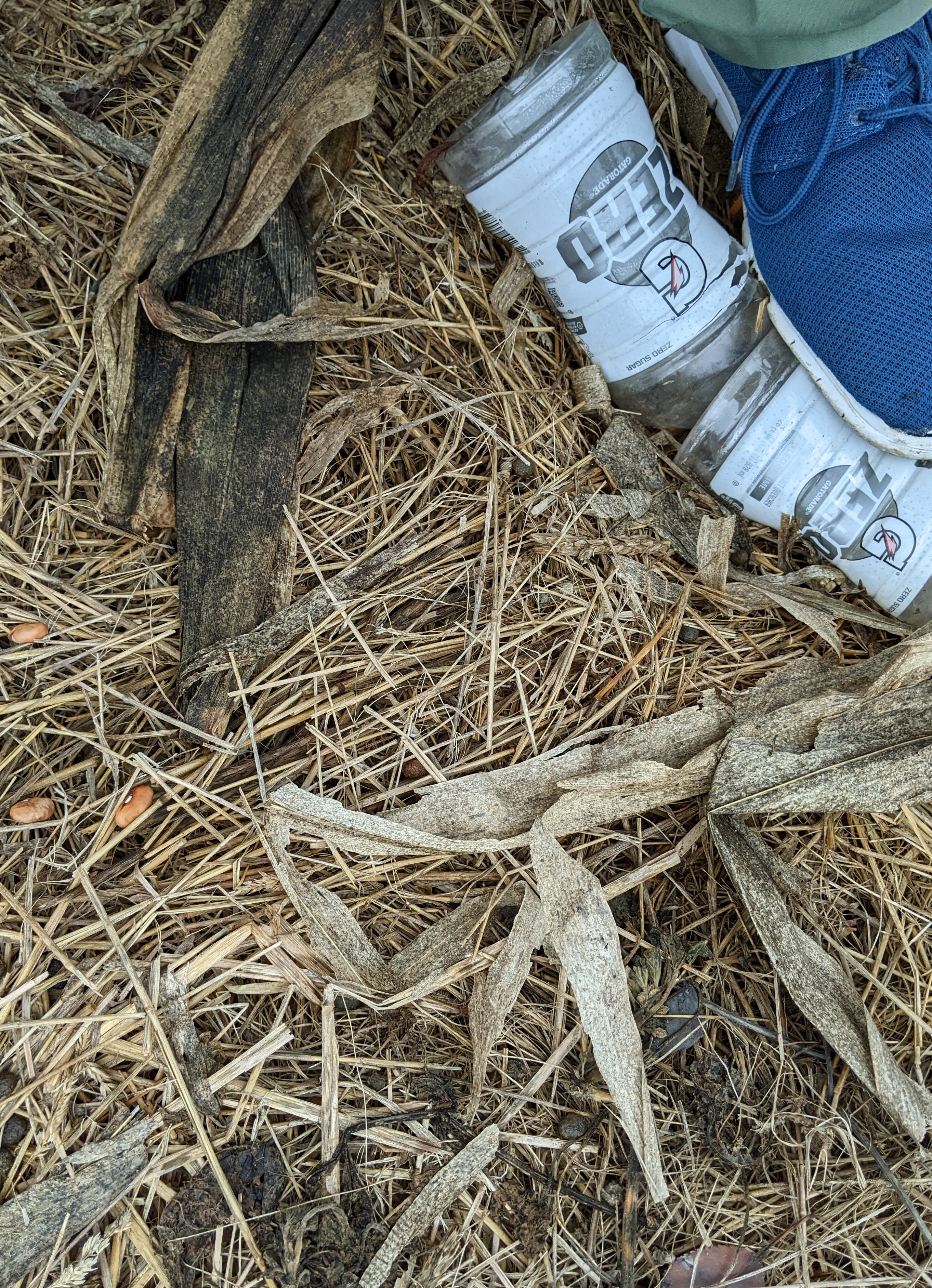
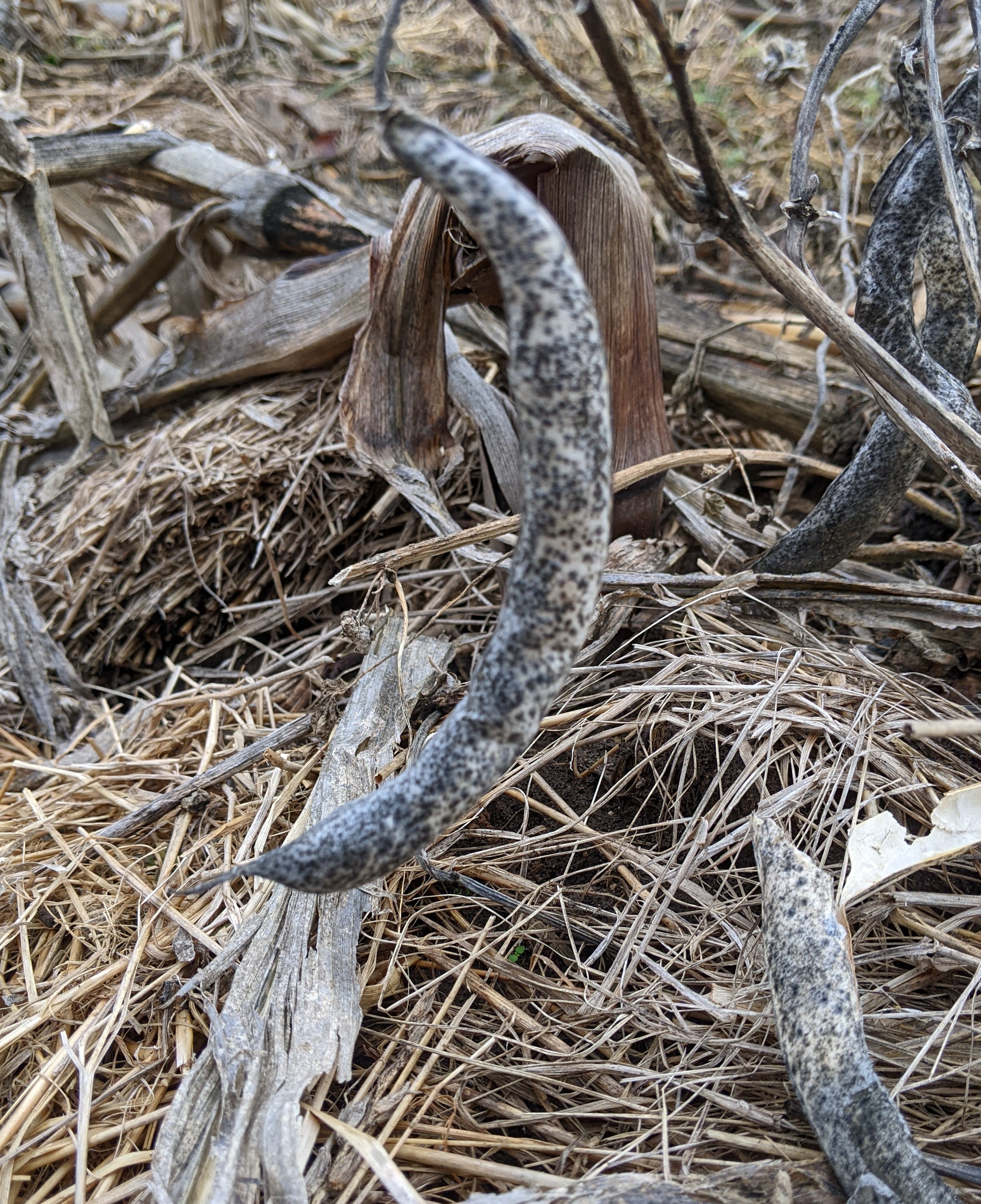
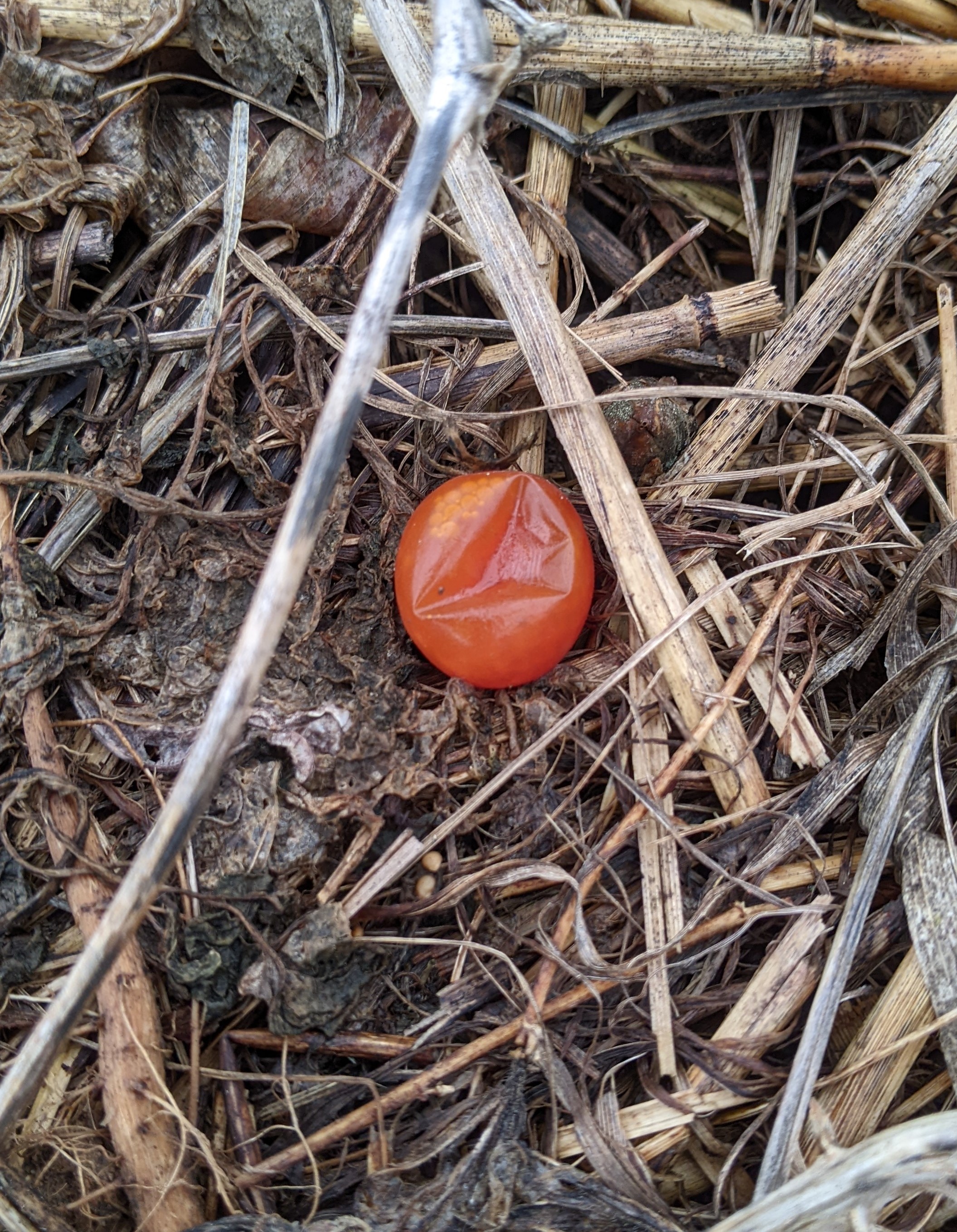
Seeds for volunteers:
PXL_20260108_161713150.jpg
Bean
Bean
PXL_20260108_161806234.jpg
Tobacco
Tobacco
PXL_20260108_161832371.jpg
Tomato
Tomato
 
Thom Bri
pollinator
Posts: 928
Location: Illinois
211
  • Likes 8
  • Mark post as helpful
  • send pies
    Number of slices to send:
    Optional 'thank-you' note:
  • Quote
  • Report post to moderator
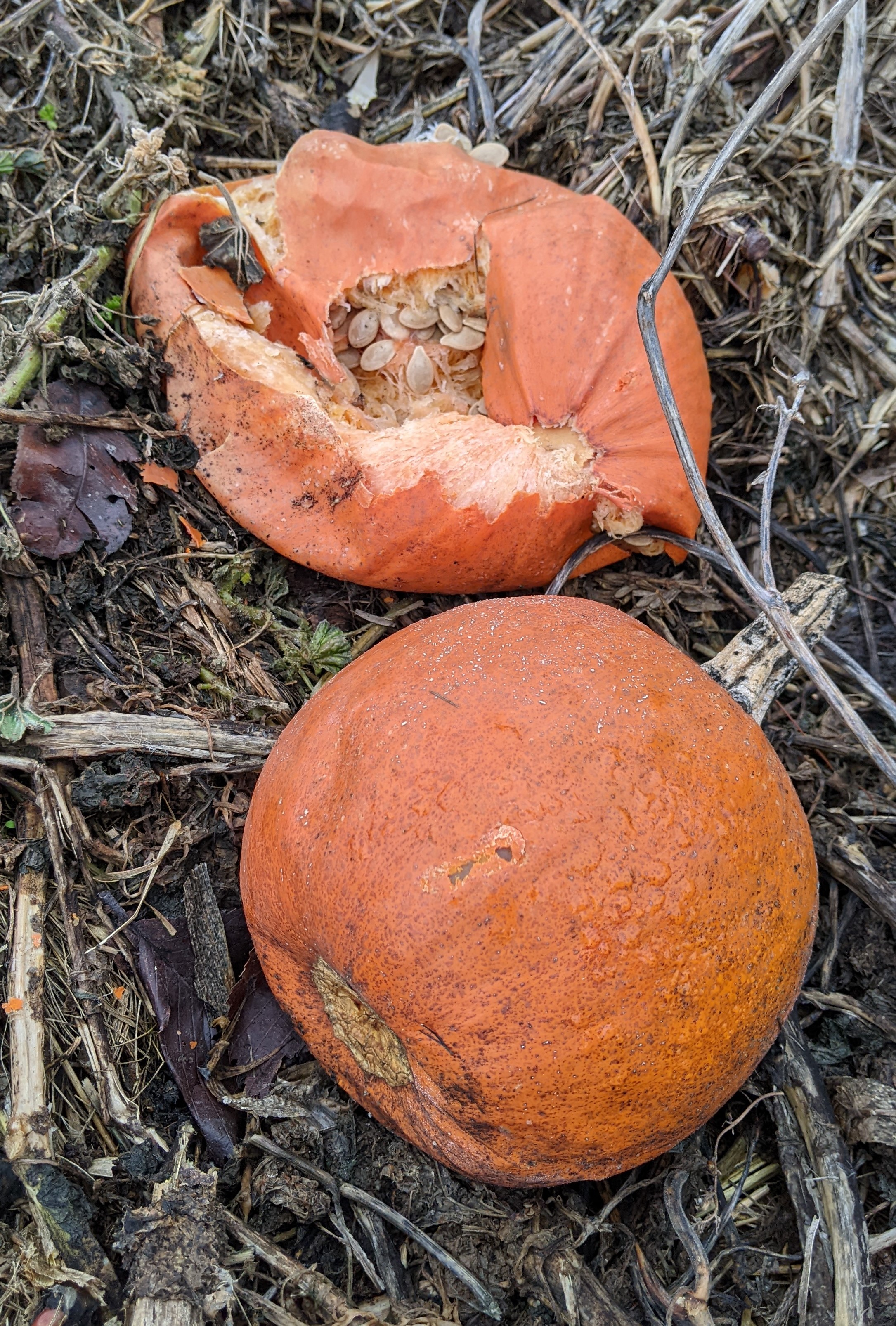
More volunteer seeds:
PXL_20260108_161921009.jpg
Sunflower
Sunflower
PXL_20260108_161938897.jpg
Marigold
Marigold
PXL_20260108_162037787.jpg
Pumpkin
Pumpkin
 
pollinator
Posts: 1801
Location: southern Illinois, USA
357
  • Likes 9
  • Mark post as helpful
  • send pies
    Number of slices to send:
    Optional 'thank-you' note:
  • Quote
  • Report post to moderator
What varieties of squash were you growing?  I've had good results in multiple situations with the Seminole pumpkins and their relatives.  They seem to keep on growing and producing in spite of bugs, borers, mildew and the rest.  The vines do like to climb, though, so you might have to discourage them from climbing the corn and sunflowers, since the squashes might break them down with their weight as they grow.  Many times I've had to get a long pole to fish them down out of the trees and bushes!
 
Thom Bri
pollinator
Posts: 928
Location: Illinois
211
  • Likes 3
  • Mark post as helpful
  • send pies
    Number of slices to send:
    Optional 'thank-you' note:
  • Quote
  • Report post to moderator

Alder Burns wrote:What varieties of squash were you growing?  I've had good results in multiple situations with the Seminole pumpkins and their relatives.  They seem to keep on growing and producing in spite of bugs, borers, mildew and the rest.  The vines do like to climb, though, so you might have to discourage them from climbing the corn and sunflowers, since the squashes might break them down with their weight as they grow.  Many times I've had to get a long pole to fish them down out of the trees and bushes!


I have been growing Japanese Kabocha squash, since that's what my wife strongly prefers. This year I will add Red Kuri, another Japanese variety. Both are Maxima varieties, so tend to be susceptible to bugs. But no point in growing anything we won't eat.

Regarding climbing, it's a thing. I walk through a few times a week and move the vines to where I want them. Even the beans can pull down corn eventually, especially if there is a strong wind.
 
pollinator
Posts: 1492
Location: Milwaukie Oregon, USA zone 8b
176
  • Likes 2
  • Mark post as helpful
  • send pies
    Number of slices to send:
    Optional 'thank-you' note:
  • Quote
  • Report post to moderator
Best wishes with this year's 3 sisters and friends!
 
Thom Bri
pollinator
Posts: 928
Location: Illinois
211
  • Likes 11
  • Mark post as helpful
  • send pies
    Number of slices to send:
    Optional 'thank-you' note:
  • Quote
  • Report post to moderator
Ground the first corn from the 2025 season today. Still have a lot left over from 2024. I suppose I'll feed it to the squirrels and birds and gophers.
PXL_20260111_214729447.jpg
Grinding corn with a blender
PXL_20260111_214749147.jpg
Purple flint corn
Purple flint corn
 
pollinator
Posts: 386
Location: Illinois, Zone 6b
101
fish foraging hunting food preservation cooking woodworking
  • Likes 12
  • Mark post as helpful
  • send pies
    Number of slices to send:
    Optional 'thank-you' note:
  • Quote
  • Report post to moderator
I for one, look forward to this thread every year. So much good experience shared. Successes & failures are all learning opportunities. Many people try a 3 Sisters garden once & fail at some aspect of it, but the continuous evolution of yours is nice to follow.
 
Riona Abhainn
pollinator
Posts: 1492
Location: Milwaukie Oregon, USA zone 8b
176
  • Likes 5
  • Mark post as helpful
  • send pies
    Number of slices to send:
    Optional 'thank-you' note:
  • Quote
  • Report post to moderator
Hey Tom, do you find that feeding the squirrels purposefully keeps them out of your newly planted seeds?  Like if you distract them over here they won't dig up and eat what's over _there?
 
Thom Bri
pollinator
Posts: 928
Location: Illinois
211
  • Likes 10
  • Mark post as helpful
  • send pies
    Number of slices to send:
    Optional 'thank-you' note:
  • Quote
  • Report post to moderator

Cy Cobb wrote:I for one, look forward to this thread every year. So much good experience shared. Successes & failures are all learning opportunities. Many people try a 3 Sisters garden once & fail at some aspect of it, but the continuous evolution of yours is nice to follow.


Today is April 1st. I had promised myself I wouldn't do any gardening until today. Moved some straw bales around and put out the rain gauge today and that was all. Too chilly this morning and strong winds. Hoping tomorrow is warm enough to do some clean-up.

Cy did you want some corn seeds this year?

I may not get any results from my Nigerian corn this year. Friend reports that she gave the seeds to her sister who has a farm. Sister gave corn to her workers, who pretended to plant it but actually stole the seeds and took them home! So it is possible my corn is growing in some hidden garden in Nigeria, or maybe he just ate it.
 
Thom Bri
pollinator
Posts: 928
Location: Illinois
211
  • Likes 8
  • Mark post as helpful
  • send pies
    Number of slices to send:
    Optional 'thank-you' note:
  • Quote
  • Report post to moderator

Riona Abhainn wrote:Hey Tom, do you find that feeding the squirrels purposefully keeps them out of your newly planted seeds?  Like if you distract them over here they won't dig up and eat what's over _there?


No idea. I don't worry about the squirrels much. I think because there is so much stuff growing that they don't target my seeds especially? Also, I tend to way over-plant seeds so maybe they do eat a lot but enough are left over?

But last year I had to replant maybe 1/3 of the corn hills because something ate the sprouts or maybe the seeds did not grow. Deer and groundhogs and maybe birds are worse there than squirrels. I have read about old-times farmers soaking a bucket of grain in water then dumping it out near the field to distract critters from the new seed.

I do think putting out sunflowers is helpful against deer. They seem to strongly prefer sunflowers to corn so if both are growing the sunflowers get eaten down to the roots but the corn isn't bothered much.
 
Cy Cobb
pollinator
Posts: 386
Location: Illinois, Zone 6b
101
fish foraging hunting food preservation cooking woodworking
  • Likes 8
  • Mark post as helpful
  • send pies
    Number of slices to send:
    Optional 'thank-you' note:
  • Quote
  • Report post to moderator
I think I'm good on seed this year. Thanks for lookin' out.

I ordered some South American giant varieties online (mostly dent), but when I received them, they were heavily weevil damaged, some moldy, & generally looked old. I spent way too much for seeds that have no return option & may not grow. Rolling the dice here to try something exotic & will likely regret it. We'll see though. I keep changing my mind on what I want to grow & how I want to grow it. Just when I think I'm settled with a logical plan, the kid in me wants to grow all the things & just have fun with the variety.

On another note, I'm going to take my first foray into bottle/birdhouse type gourds this year. I've grown vining pumpkins for a few years now & wanted to try something similar, but new to me.

Happy growing!

 
Thom Bri
pollinator
Posts: 928
Location: Illinois
211
  • Likes 12
  • Mark post as helpful
  • send pies
    Number of slices to send:
    Optional 'thank-you' note:
  • Quote
  • Report post to moderator
We ate the very last squash from last fall today. Still very good. They get sweeter as time passes. Of course I saved some seeds!
So far have not done any work on the garden. Depending on weather I hope to get out tomorrow and dig up or cover with straw some grass growing into the edges.
Still about a month from any planting. Aiming at May first. I have planted earlier, but don't see much advantage. One year due to weather I didn't plant until June, and saw no deficit.
 
Thom Bri
pollinator
Posts: 928
Location: Illinois
211
  • Likes 8
  • Mark post as helpful
  • send pies
    Number of slices to send:
    Optional 'thank-you' note:
  • Quote
  • Report post to moderator
Did a bit of work today, first of this year. Spreading straw around the garden edges to smother the encroaching grass, and digging up some grass clumps. 45 minutes. 2 and 6/10 inches of rain in the gague.
As with the last few years I am charting time spent, activity effort level low/medium/high, and any rainfall amount. It was warm, sunny and very windy.
 
gardener
Posts: 2199
Location: Zone 6b
1387
forest garden fungi books chicken fiber arts ungarbage
  • Likes 6
  • Mark post as helpful
  • send pies
    Number of slices to send:
    Optional 'thank-you' note:
  • Quote
  • Report post to moderator
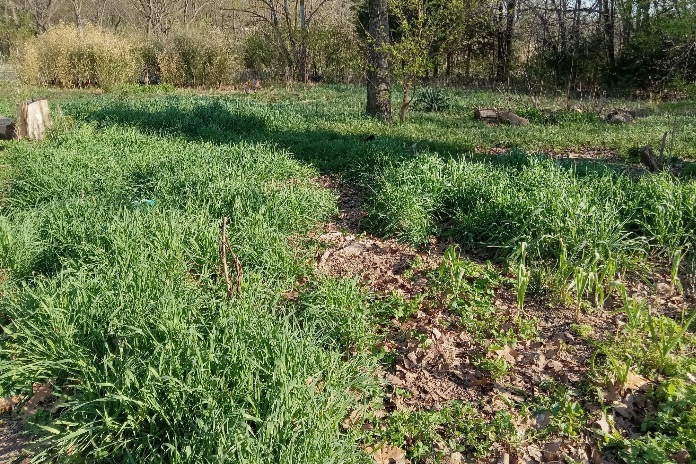
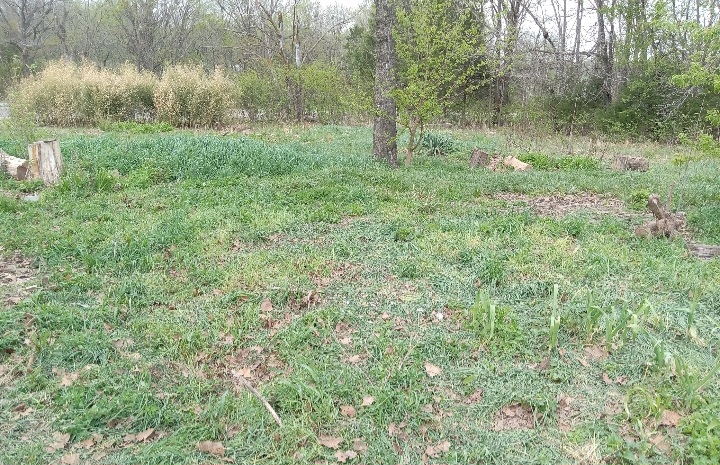
I sowed winter rye cover crops in this year's corn patch. Spring in my area arrived 2-3 weeks early and forecast called for a dryer and warmer summer so I will be terminating them soon.
20260408.jpg
Winter rye cover crop
 
Thom Bri
pollinator
Posts: 928
Location: Illinois
211
  • Likes 6
  • Mark post as helpful
  • send pies
    Number of slices to send:
    Optional 'thank-you' note:
  • Quote
  • Report post to moderator
About 2 and a half hours work over the last two days, not intense.
Over 7 inches of rain so far this month! It's great because we were so short rain since last summer and the winter was fairly dry. Lots of storms this week. The tornado siren in town went off three days in a row!
Two pics show how I am attempting to control water loss. The corn is planted in hills and between the hills are are low sumps, small pits where water collects and sits. This started accidentally, as I scooped dirt up to form the hills, but after the first year I started making the low areas deliberately deeper, hoping that the low areas will collect water and prevent it running off, leading to more deep soil moisture. Without harming the corn roots with waterlogged soil close to the corn base.
 
Thom Bri
pollinator
Posts: 928
Location: Illinois
211
  • Likes 7
  • Mark post as helpful
  • send pies
    Number of slices to send:
    Optional 'thank-you' note:
  • Quote
  • Report post to moderator
Trouble loading pics today. Will try one at a time. Slow speed internet!
PXL_20260418_192338624.jpg
[Thumbnail for PXL_20260418_192338624.jpg]
 
Thom Bri
pollinator
Posts: 928
Location: Illinois
211
  • Likes 6
  • Mark post as helpful
  • send pies
    Number of slices to send:
    Optional 'thank-you' note:
  • Quote
  • Report post to moderator
Water control
PXL_20260418_192346998.jpg
[Thumbnail for PXL_20260418_192346998.jpg]
 
Thom Bri
pollinator
Posts: 928
Location: Illinois
211
  • Likes 11
  • Mark post as helpful
  • send pies
    Number of slices to send:
    Optional 'thank-you' note:
  • Quote
  • Report post to moderator
The hills are supposed to serve various purposes. One is temperature. The hills dry and warm earlier than flat ground, so seeds can be planted sooner. Also, cold air sinks, and some studies suggest that hilling prevents frost damage.
Hills also are permanent. Each year I plant into the same spots, so no tillage is necessary, saving lots of work and time. I can build up the soil quality selectively, exactly where the corn is planted. The dirt is a thin layer of topsoil on top of heavy clay. Hilling concentrates the topsoil where the seeds are. Since it is not walked on and not tilled, it becomes very soft, good for root growth.
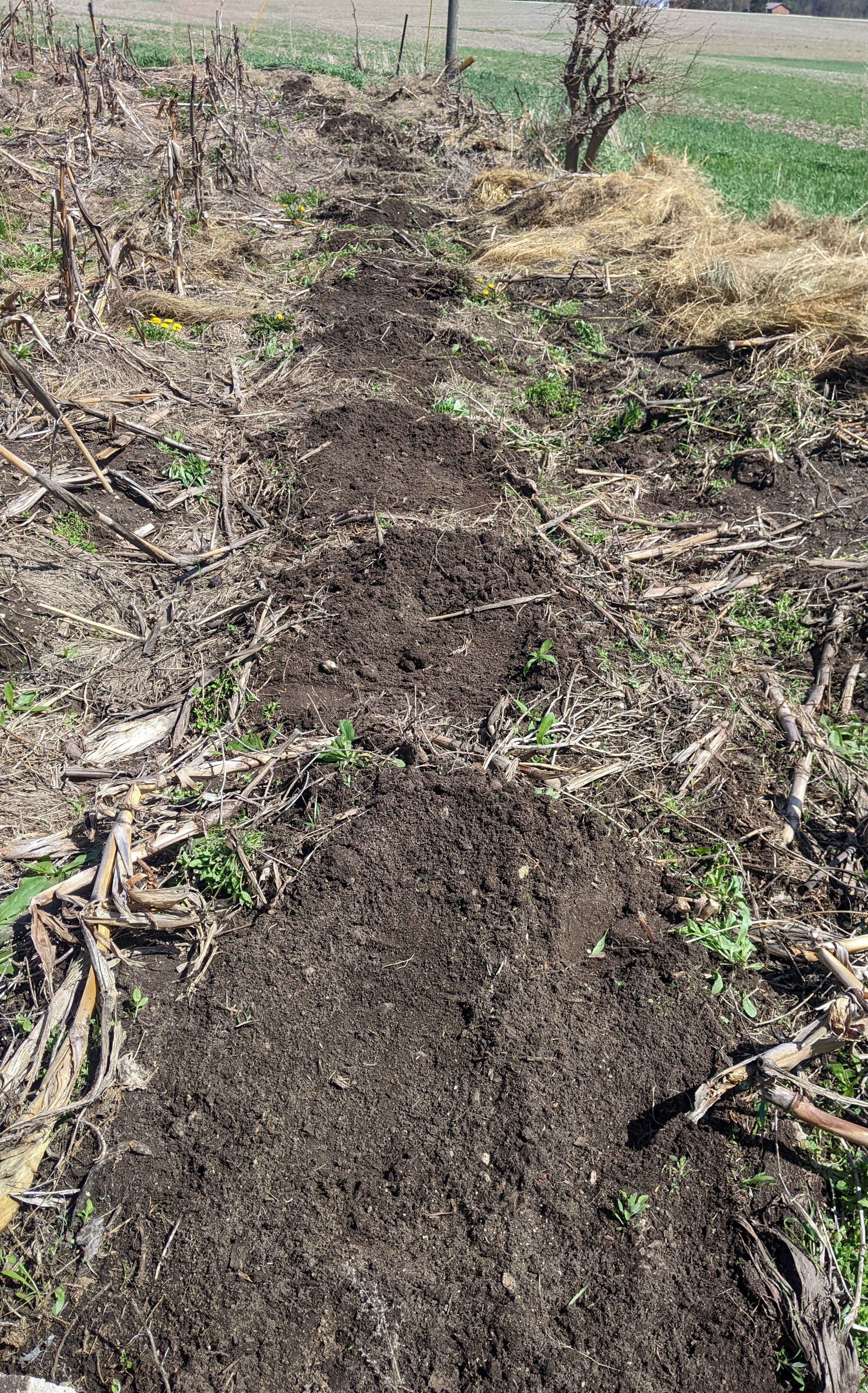
Pic shows hills prepped for planting. I use a heavy hoe to skim the top layer off removing the young weeds and making a flat spot to plant. Later after the corn sprouts I will scoop that dirt back around the corn bases for support. Today I did 18 hills and yesterday 16. It only took about a half hour total.
Gradually over the next two weeks I'll do the whole plot. So it's low work spread out over a long time, very easy. Planting planned for early May.
PXL_20260418_191903518.jpg
corn hills spring prep
 
Thom Bri
pollinator
Posts: 928
Location: Illinois
211
  • Likes 10
  • Mark post as helpful
  • send pies
    Number of slices to send:
    Optional 'thank-you' note:
  • Quote
  • Report post to moderator
Hills not yet prepped. Lots of weeds. This year mostly dandelions since I made no effort to remove them last year. Also some white clover. I make strong efforts to remove grass and tall weeds, not much for short weeds. Last year was very dry so everything got a deep cover of hay so lots of the weeds got smothered.

PXL_20260418_191923269.jpg
[Thumbnail for PXL_20260418_191923269.jpg]
 
Thom Bri
pollinator
Posts: 928
Location: Illinois
211
  • Likes 8
  • Mark post as helpful
  • send pies
    Number of slices to send:
    Optional 'thank-you' note:
  • Quote
  • Report post to moderator
An hour prepping hills for planting. Smoothed the tops of 72 hills. Now just over half done. Today was the first day rated 'medium' effort. By 'medium' I mean I felt tired and a bit achy at the end, but could have continued working if it were necessary. I figure it will take 2-3 more days to clear all the hills.

I have planted peas on about 36 hills, one or two seeds per hill. Today I planted soybeans between the hills. Hopefully they will get a good start before being shaded by growing corn. No beans planted yet.

In my home garden I found 3 little peach trees. I dug them up and transplanted to edge of my peach grove. There are several more peach sprouts that I will transplant when they are a bit bigger.
 
Thom Bri
pollinator
Posts: 928
Location: Illinois
211
  • Likes 5
  • Mark post as helpful
  • send pies
    Number of slices to send:
    Optional 'thank-you' note:
  • Quote
  • Report post to moderator
Planted 3 rows of sweet corn today. It's pretty early to be planting, and it's a very small, early variety, so hoping for some very early sweet corn this year. Then in a week I will plant the longer season corn, and if I feel energetic a third planting later.

Tried this last year and total planning failure! It was so dry that nothing sprouted. Finally I replanted it all, then it rained and everything came up at once, the whole plot in one giant wave of corn. Mostly small ears, but we were literally eating 20+ ears of corn every day, just two people. This spring has had good rains so hopeful.

This not in my totally organic 3 sisters plot, this is on the edge of a conventionally farmed field and pretty much ends up the opposite of organic.
 
Thom Bri
pollinator
Posts: 928
Location: Illinois
211
  • Likes 9
  • Mark post as helpful
  • send pies
    Number of slices to send:
    Optional 'thank-you' note:
  • Quote
  • Report post to moderator
Weather chilly again. Nighttime temps predicted near freezing. Cold rain. I had planned to plant corn soon but may wait. Corn needs warm soil to sprout.
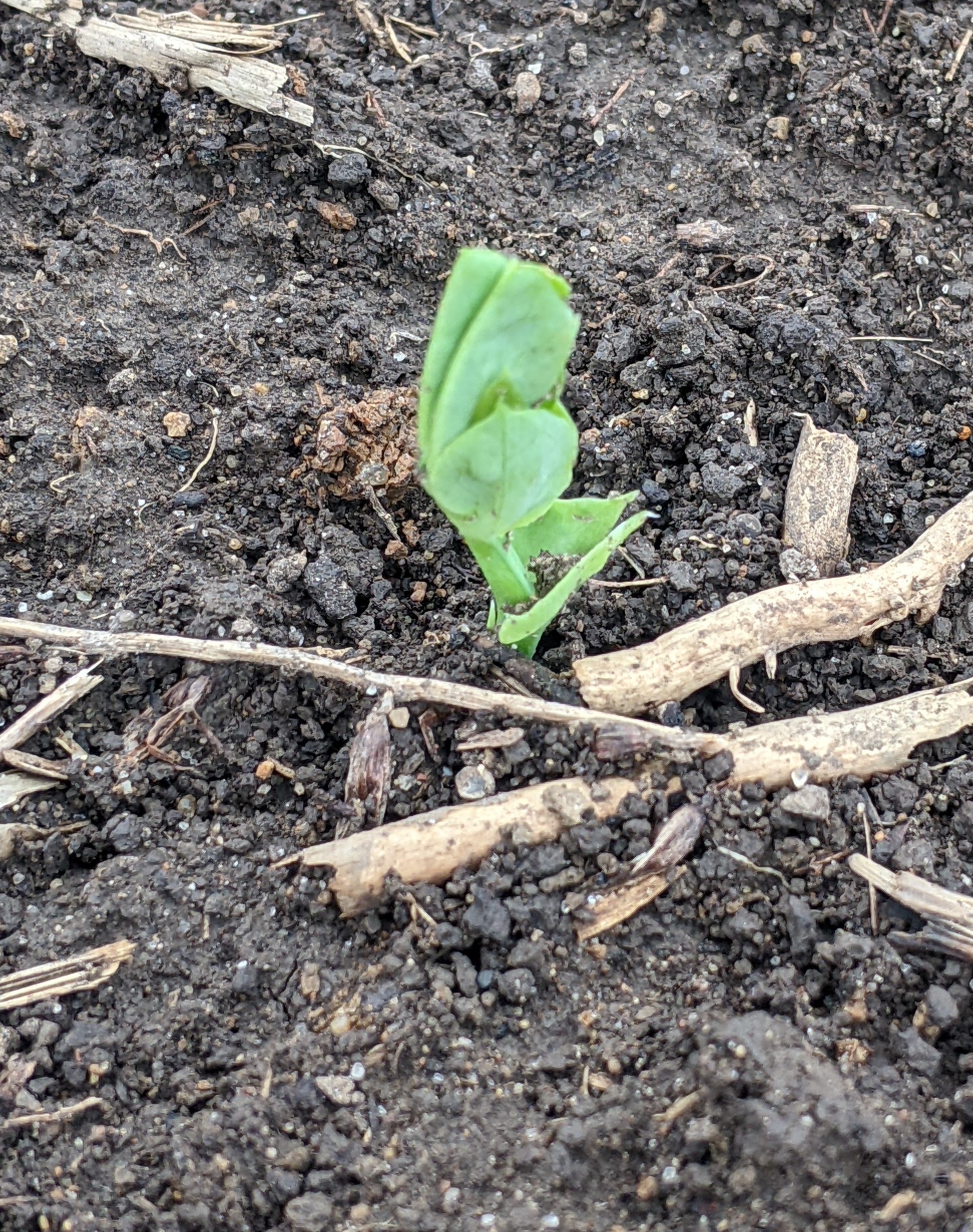
New 3-sisters pics. First sprouting pea, planted on the 18th, so ten days. Planted on the same hill the corn will be planted on in a week or so:
PXL_20260428_145316839.jpg
Sprouting Pea
Sprouting Pea
 
Thom Bri
pollinator
Posts: 928
Location: Illinois
211
  • Likes 8
  • Mark post as helpful
  • send pies
    Number of slices to send:
    Optional 'thank-you' note:
  • Quote
  • Report post to moderator
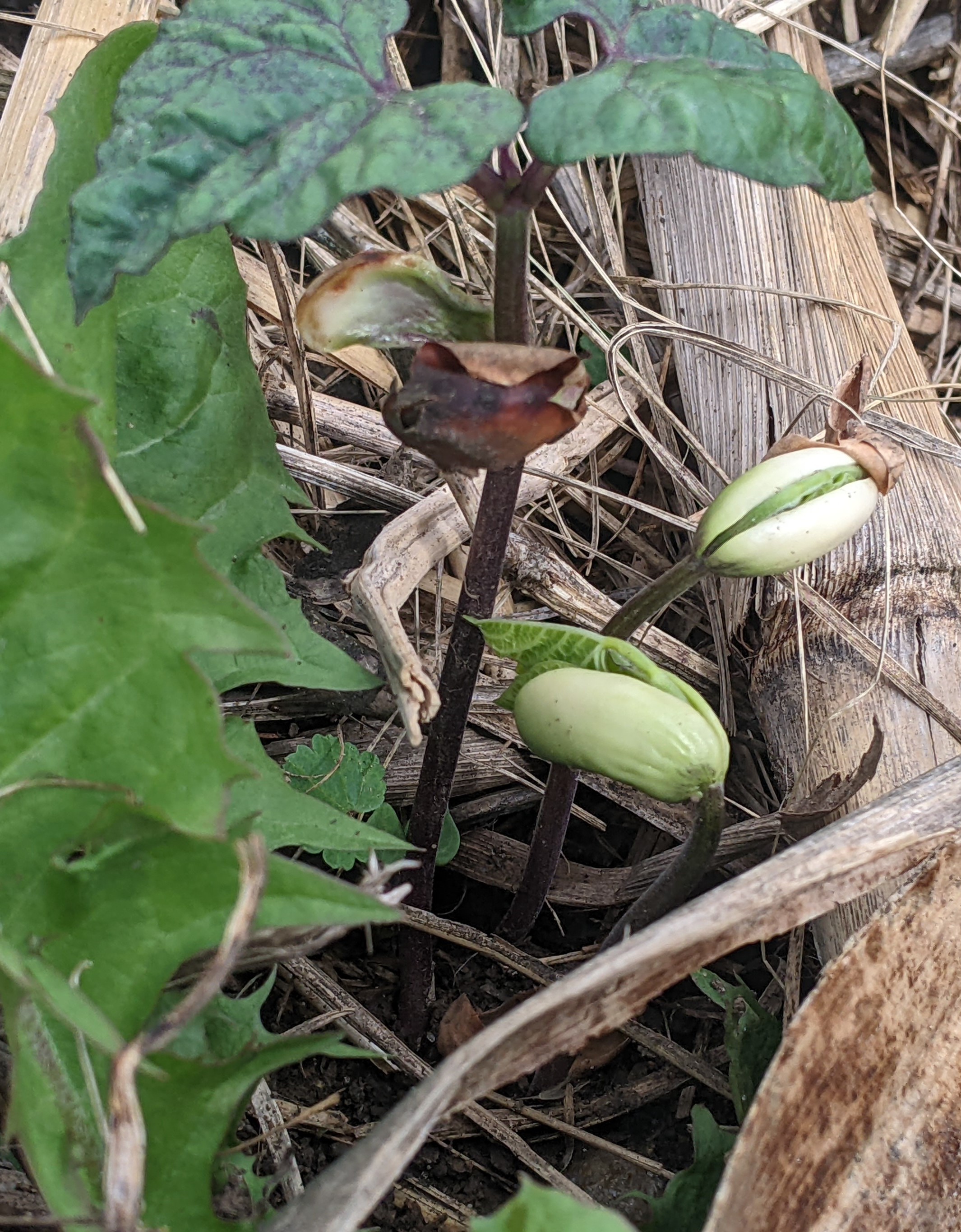
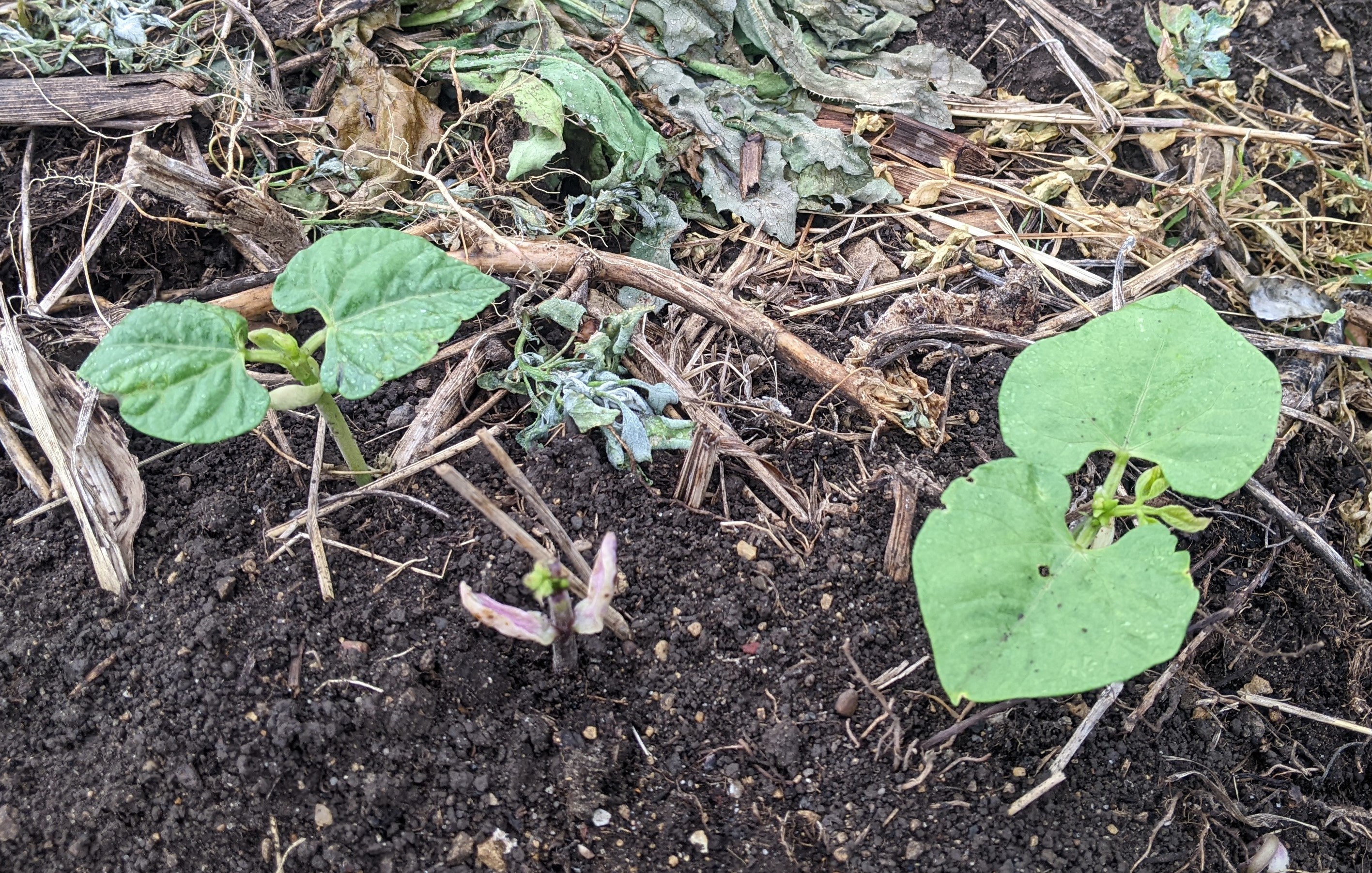
And first volunteer of the year.
PXL_20260428_145248113.jpg
Volunteer Beans
Volunteer Beans
 
Posts: 111
25
  • Likes 7
  • Mark post as helpful
  • send pies
    Number of slices to send:
    Optional 'thank-you' note:
  • Quote
  • Report post to moderator
The water management between the hills is clever. Keeping that moisture in the low spots rather than letting it run off makes a real difference in a dry year. Curious how the early corn planting goes, planting into cold soil is always a gamble but sometimes it just sits there and waits for warmth rather than rotting.
 
Thom Bri
pollinator
Posts: 928
Location: Illinois
211
  • Likes 9
  • Mark post as helpful
  • send pies
    Number of slices to send:
    Optional 'thank-you' note:
  • Quote
  • Report post to moderator

Joao Winckler wrote:The water management between the hills is clever. Keeping that moisture in the low spots rather than letting it run off makes a real difference in a dry year. Curious how the early corn planting goes, planting into cold soil is always a gamble but sometimes it just sits there and waits for warmth rather than rotting.


In theory there should be a measurable difference between hill-planted and row-planted corn. In the early 1900s there was a lot of debate between farmers and a lot of research done at ag colleges. They found no real difference in final yield, probably because row planting also has some advantages, mainly by spacing the plants more evenly.

But for me there is an advantage not captured in those trials. By using hills, widely spaced, I can intercrop other plants and get pretty good yields of secondary crops as well as corn. Since I am not selling the corn, it doesn't matter if I get a few bushels less. Modern research suggests that the total productivity of mixed plots is higher, even though each individual crop has lower productivity.

As far as early planting into cold soil, it's a gamble. Some years I get good results and other years not. This year I planted some peas and carrots VERY early an got almost no germination. Other years it has worked very well. I have no idea what the difference is. Last year I planted corn pretty early in May and replanted about 1/3 of it 20 days later. I save lots of seeds so having to replant isn't a problem, just an annoyance. But if I had limited seed I'd wait longer.
 
Thom Bri
pollinator
Posts: 928
Location: Illinois
211
  • Likes 8
  • Mark post as helpful
  • send pies
    Number of slices to send:
    Optional 'thank-you' note:
  • Quote
  • Report post to moderator
I received 3 packs of popcorn seeds for Christmas this year. Planted 3 rows today in a separate plot. I will add a few of these seeds in with my 3 sisters corn to add some genetic variety later in May. Black, red and pink corn.

Frost in the forecast the next few nights.
 
gardener
Posts: 969
Location: Ontario - Zone 6a or 4b, depending on the day
682
dog foraging trees tiny house books bike bee
  • Likes 10
  • Mark post as helpful
  • send pies
    Number of slices to send:
    Optional 'thank-you' note:
  • Quote
  • Report post to moderator
I will be following this with interest again this year.

I tried the 3 sisters method for the second time last year, and had poor success. I think by the time it's past last frost here, it seems to also be past spring rains, so the hills become a detriment. Rain was long, long past by the time it was bean planting time, with 1 ft tall corn. I did have success with no racoon predation on my corn, after focusing on surrounding the corn hills with squash, which I had read deterred them.  The hills were a challenge to irrigate. it was also a brand new garden, and weeds were a major challenge, since I started it with filling under weedy grass.

My plan is to plamt my corn this year in a block, completely surrounded by a circle of squash. I'll try  to plant beans on the edges. Sort of 'best of both worlds'  idea.
 
Thom Bri
pollinator
Posts: 928
Location: Illinois
211
  • Likes 9
  • Mark post as helpful
  • send pies
    Number of slices to send:
    Optional 'thank-you' note:
  • Quote
  • Report post to moderator

Catie George wrote:I will be following this with interest again this year.

I tried the 3 sisters method for the second time last year, and had poor success. I think by the time it's past last frost here, it seems to also be past spring rains, so the hills become a detriment. Rain was long, long past by the time it was bean planting time, with 1 ft tall corn. I did have success with no racoon predation on my corn, after focusing on surrounding the corn hills with squash, which I had read deterred them.  The hills were a challenge to irrigate. it was also a brand new garden, and weeds were a major challenge, since I started it with filling under weedy grass.

My plan is to plamt my corn this year in a block, completely surrounded by a circle of squash. I'll try  to plant beans on the edges. Sort of 'best of both worlds'  idea.


The '3 sisters' is kind of untrue anyway. What records we have show that lots of stuff the old natives planted was in monocultures anyway. Particularly squash which loses a lot of production when together with corn.

I worked in a small village in Central America for 2 years. People still tilled with oxen pulling scratch plows, and hoes. They mostly didn't intercrop much. Some squash and occasionally beans were planted together with the corn.

Do what works for you and ignore most of what you read on the internet!

By the way, grass is by far my worst weed. About the only thing that works for me is to absolutely bury it under mulch and I still spend more time killing grass than almost any other activity.
 
Catie George
gardener
Posts: 969
Location: Ontario - Zone 6a or 4b, depending on the day
682
dog foraging trees tiny house books bike bee
  • Likes 7
  • Mark post as helpful
  • send pies
    Number of slices to send:
    Optional 'thank-you' note:
  • Quote
  • Report post to moderator

Thom Bri wrote:

The '3 sisters' is kind of untrue anyway. What records we have show that lots of stuff the old natives planted was in monocultures anyway. Particularly squash which loses a lot of production when together with corn.

I worked in a small village in Central America for 2 years. People still tilled with oxen pulling scratch plows, and hoes. They mostly didn't intercrop much. Some squash and occasionally beans were planted together with the corn.

Do what works for you and ignore most of what you read on the internet!

By the way, grass is by far my worst weed. About the only thing that works for me is to absolutely bury it under mulch and I still spend more time killing grass than almost any other activity.


3 sisters is traditional local to me, but I wonder at changing climate.

I strongly believe the most traditional way to garden is to experiment until you find something that works and feeds you, with as little effort as possible.  I think 'doing what works' is a far longer tradition in agricultural history than any prescriptive planting regime.

When my mom was a child, her family planted lots of things in mounded rows to avoid plants drowning and didn't irrigate their vegetable patch almost ever.  This worked for the first ~175 years my family lived in this region.

Now I need to irrigate in the summer and plant in level beds. Probably the other change is I am using hand tools and planting more densely vs. horses/oxen/tractor to plow between rows, which does increase water needs, even as it dramatically lowers how large of a garden I need for a given amount of production.

My worst weeds are grass, creeping Bellflower, and chicory. Bellflower loves mulch, but if I can keep everything else under control, then I have time to hand pull the creeping Bellflower.

I have mulled trying 3 sisters again in a few years when I have weeds more in control, but planting corn in pits instead of mounds. The pits would boost the soil moisture for the corn, and allow me to easily hill it up a bit later.
 
Posts: 6
1
  • Likes 10
  • Mark post as helpful
  • send pies
    Number of slices to send:
    Optional 'thank-you' note:
  • Quote
  • Report post to moderator
Appreciate this share ~ this will help my budding gardening knowledge a lot.  Interested in seeing if that radish and marigold idea will prove fruitful for the squash

Right now, I'm growing a basil, green pepper, carrot combo; the goal being the root stacking/vertical partitioning helps the plants to compete less for resources; and also to improve the taste of the basil and peppers.  So far, I've been focused on pruning the basil, so it gives space to the peppers.  Also, I've been getting snails off the plants, watering deeply and relatively frequently, and considering next steps for fertilizer / plant food.  This might be one of my first projects I've done on my own, so it means a lot to me.  It's always a tougher, but more rewarding learning process when you learn alone.
 
Thom Bri
pollinator
Posts: 928
Location: Illinois
211
  • Likes 5
  • Mark post as helpful
  • send pies
    Number of slices to send:
    Optional 'thank-you' note:
  • Quote
  • Report post to moderator
The volunteer beans shown in the pic above are frost-killed. The pea survived.
 
May Lotito
gardener
Posts: 2199
Location: Zone 6b
1387
forest garden fungi books chicken fiber arts ungarbage
  • Likes 5
  • Mark post as helpful
  • send pies
    Number of slices to send:
    Optional 'thank-you' note:
  • Quote
  • Report post to moderator
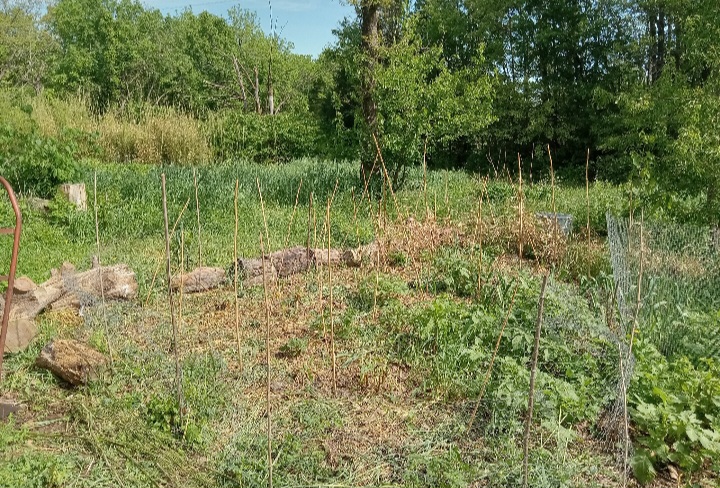
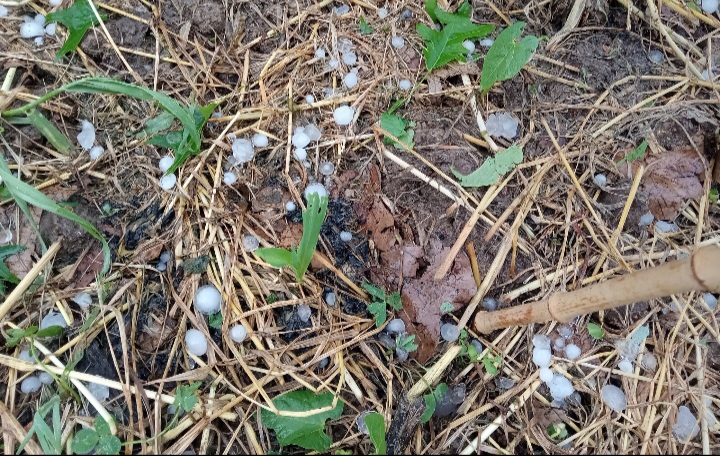
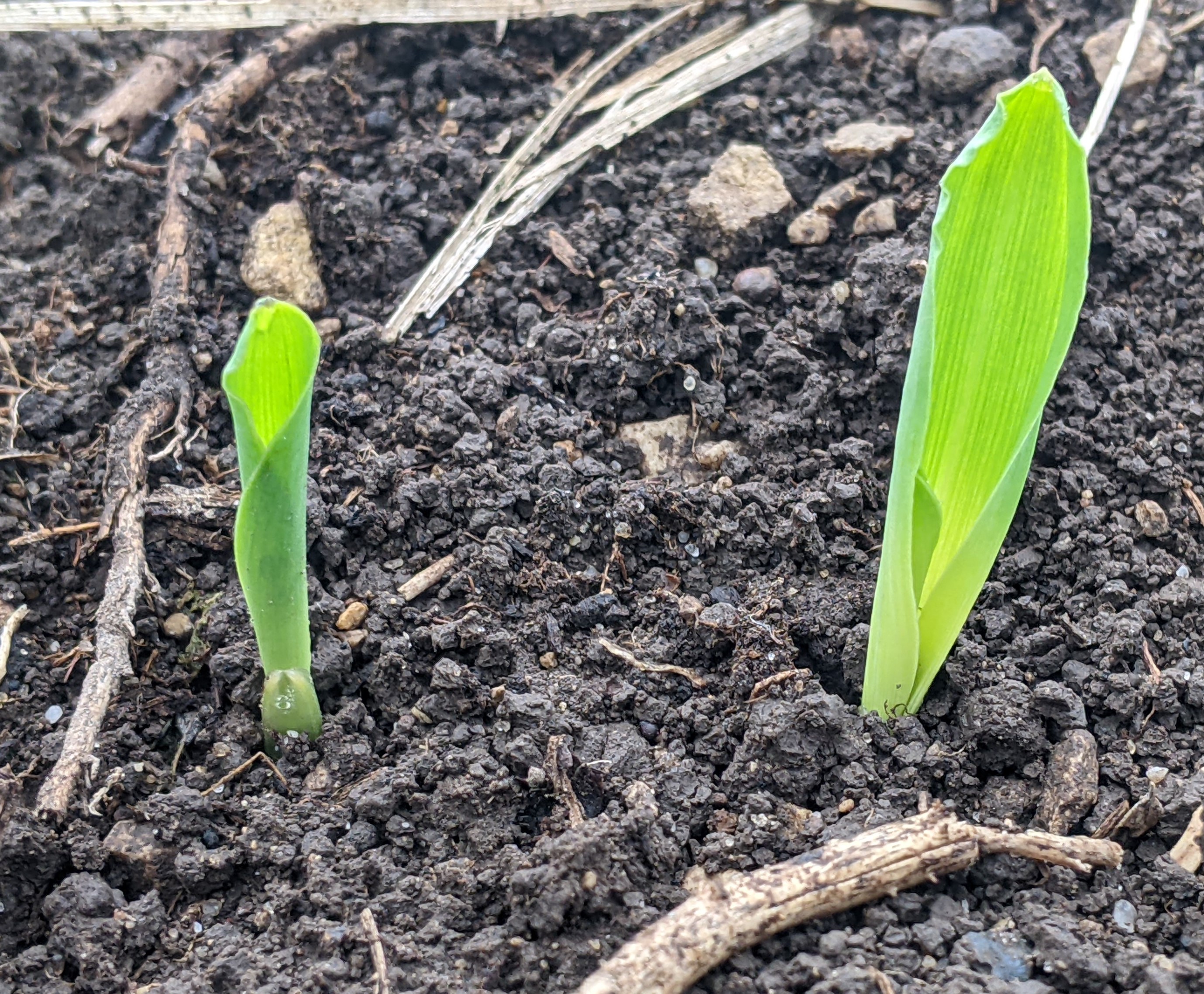
I planted about two dozen each of corn and bean seeds into the winter rye residues on April 15th. Both sprouted in about 10 days then two hail storms hit the area. Seedlings mostly dodged the damage and have bean growing quickly. This planting date has been the earliest for me and hopefully it will extend the season a bit as several of the corn plants are Inca giant.
20260409.jpg
Winter rye cut down April 09
20260430.jpg
 2 weeks after planting
2 weeks after planting
20260427.jpg
Seedlings
Seedlings
 
Thom Bri
pollinator
Posts: 928
Location: Illinois
211
  • Mark post as helpful
  • send pies
    Number of slices to send:
    Optional 'thank-you' note:
  • Quote
  • Report post to moderator
May, looking forward to seeing the results.
 
what if we put solar panels on top of the semi truck trailer? That could power this tiny ad:
Permaculture Adventure Bundle - 43 digital goods for freaky cheap!
https://permies.com/w/permaculture-adventure
reply
    Bookmark Topic Watch Topic
  • New Topic