|

|

|

|
|

|
|
|
|
|
|
|
|

|
|

|

|

|
 12


 14
For all your Montana Masonry Heater parts (also known as) Rocket Mass heater parts.
Visit me at
dragontechrmh.com Once you go brick you will never go back!
12
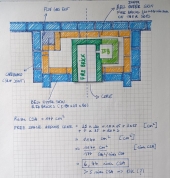
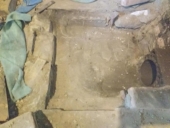
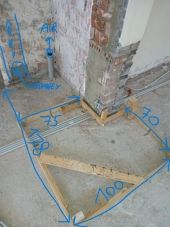
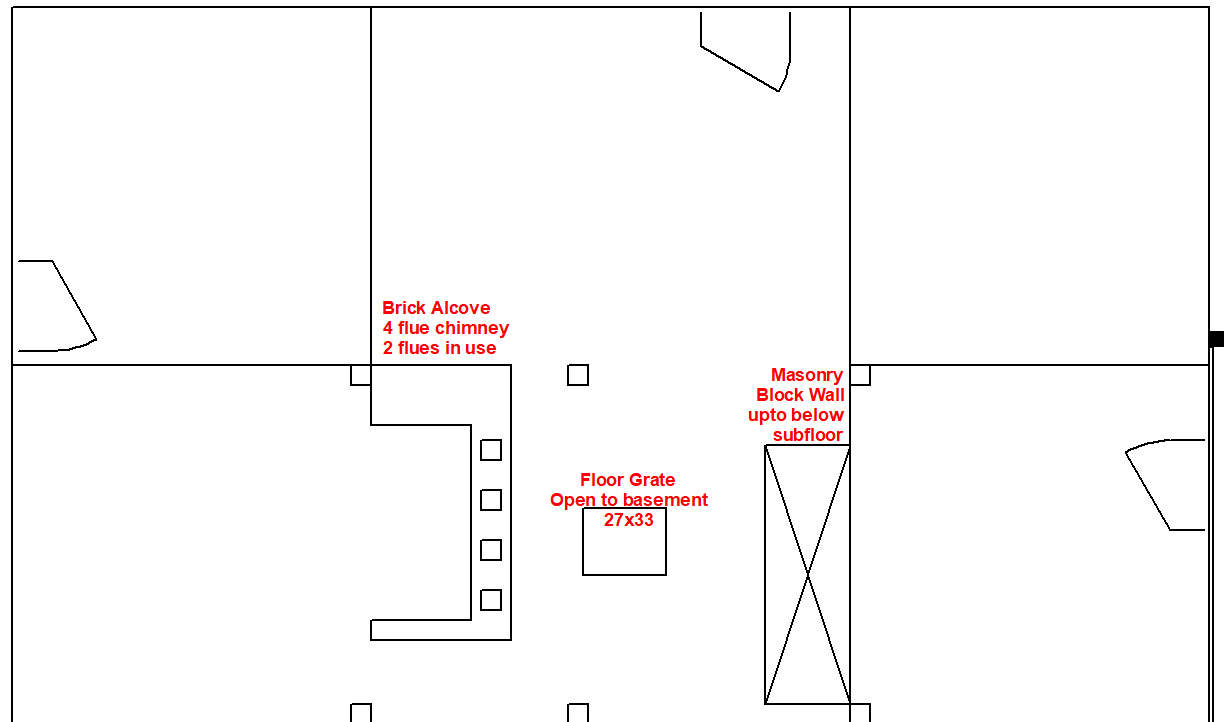
Jim St Laurent wrote:The heater will be located in the basement, and the main bell will extend upward into the floor space above, ending at about 15 inches above finished floor height. I’ve already completed the heat‑load calculations, and a 7.5" system should let me run one full burn during the shoulder seasons and two full burns per day in mid‑winter, which fits my heating plan well.
Jim St Laurent wrote:Right now I’m considering either a Sidewinder or a DSRv2 core. I’m leaning toward the Sidewinder because of the compact footprint, but I’d appreciate input from anyone who has built both.
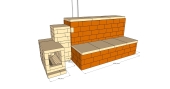
Jim St Laurent wrote:I’m pretty much locked in on using a double‑masonry bell, with the flue vent exiting high in the basement. I’m also kicking around the idea of a raised core to move the heater away from the concrete floor and make fire starts easier for me.
I’d really appreciate any advice, examples, or lessons learned that could help me refine this design before I start building.
Jim St Laurent wrote:Questions:
• Which core type gives the smallest footprint at 7.5"?
Jim St Laurent wrote:• Can a Sidewinder exit into the bell from any of the four directions — left, right, front, or back?
Jim St Laurent wrote:• Is there a repository of SketchUp (.skp) heater designs? I found some of Peter van den Berg's designs already. Ideally something using imperial firebrick sizes (9×4.5×2.5") or splits.
regards, Peter
4
Peter van den Berg wrote:
The whole of the batchrocket family consists of four main designs, being: the first generation with a high riser, the DSR2, DSR3 and the Shorty. All those designs can theoretically be built as sidewinders, where the riser or afterburner area is placed beside the firebox instead of behind it. That said, the first gen and Shorty are built multiple times as sidewinders now, I don't know of any DSR2 like that and just of one DSR3 built as sidewinder. The smallest footprint comes with the DSR3, no doubt, because there isn't a separate afterburner space behind or beside it, but on top instead. At the same time, the DSR3 is a real pig to build as a first one and get it right at the same time, I won't recommend that approach.
Cedric
4


 1
'What we do now echoes in eternity.' Marcus Aurelius
How Permies Works Dr. Redhawk's Epic Soil Series
 4
Jim St Laurent wrote:A 7½ inch core delivers about 42 kWh per load, which calls for a bell ISA in the range of 120–150 sq ft.
Using the ISA table below, I’m trying to understand how to get the most heat high up into the living space Bell surface area.
ISA for a 12‑ft Tall Square Bell (5 ft basement + 7 ft living space)
| **Side (in)** | **Side (ft)** | **ISA @ 12 ft tall |
| ------------------ | ------------------- |------------------------ |
| 24″sq | 2.0 | 84.0 |
| 32″sq | 2.6667 | 113.78 |
| 40″sq | 3.3333 | 147.78 |
| 48″sq | 4.0 | 176.0 |
Jim St Laurent wrote:Questions:
1. Would an oversized bell store more heat higher up into the living space? either more ISA or more thermal mass in the top section
Jim St Laurent wrote:2. Will insulating the core where appropriate help?
Jim St Laurent wrote:3. Would a clever bell cover design with more internal surface area, that won't hold fly ash be an improvement?
Jim St Laurent wrote:Based on our discussions, I’m leaning toward an up‑venting Shorty core paired with a 40‑inch square bell and a insulated block wall foundation.
Jim St Laurent wrote:I can accept some heat loss into the basement, knowing that part of it will return as gentle warmth through the flooring above. My main goal is to retain as much of the core’s output as possible up into the living space.
regards, Peter
1
|
Until you dig a hole, plant a tree, water it and make it survive, you haven't done a thing - Wangari Maathai
Heat your home with the twigs that naturally fall of the trees in your yard
http://woodheat.net
|