
• Post Reply Bookmark Topic Watch Topic
  • New Topic
permaculture forums growies critters building homesteading energy monies kitchen purity ungarbage community wilderness fiber arts art permaculture artisans regional education skip experiences global resources cider press projects digital market permies.com pie forums private forums all forums
this forum made possible by our volunteer staff, including ...
master stewards:
  • paul wheaton
  • Anne Miller
  • Carla Burke
  • Nancy Reading
  • John F Dean
  • Timothy Norton
  • Jay Angler
stewards:
  • r ransom
  • Pearl Sutton
  • Tereza Okava
master gardeners:
  • Christopher Weeks
gardeners:
  • M Ljin
  • Megan Palmer
  • Kate Downham

Engineer Approved Systems for Kitchen Sink Water

 
Posts: 6
1
  • Likes 12
  • Mark post as helpful
  • send pies
    Number of slices to send:
    Optional 'thank-you' note:
  • Quote
  • Report post to moderator
Hello,

I hope that you all are having a great start to your week.

So, a few months ago I purchased a small (half acre) raw lot in the northwest part of Virginia. Yesterday, I visited the Virginia Department of Health to get some guidance. (Side note: I have two neighbors and they both cleared their land, planted grass lawns and build two-story suburban houses in the mountains... Different vibe...Permits required) I'm not sure if this county gets commission from septic system sales or they just like don't like to think hard. But when I told the guy that I'm going with an incinerating (or composting) toilet, and greywater filtration with subsurface irrigation (for trees), and educated him on Virginia's laws that allow both... He looked at me like I drop in from mars and was asking him to give over his beloved dog. After twenty minutes, we ended with him saying that if I can find an professional engineer that would be willing to design and stamp it, then they would consider it as long as doesn't violate any of their regulations. Every sentence he had was to either discourage me from my path and/or to lead me to accepting to go the septic route. Though, I have no interest in installing a septic because that would require me to clear about half the trees from my land. With greywater reuse and composting, it doesn't make logical sense to me that over thirty trees would have to be cut down just so one human could wish his dishes.

I've called a few engineers around here and they seem like they are only willing (or know how) to design traditional septic or septic systems with aerobic additions.

All that to say, does anyone know of any engineer approved way of handling kitchen sink wastewater? Or know of any engineer that designs less intrusive ways of dealing with kitchen sink water? I would also be interest in engineers from other states and countries. As long as I could get a solid design in front of a Virginia engineer for consideration and independent evaluation. Oh also, here in Virginia, according to the law, kitchen sink water is considered blackwater - not greywater. Thank you in advance for any suggestions or references.
 
gardener
Posts: 3337
Location: Central Maine (Zone 5a)
1927
homeschooling kids trees chicken food preservation building woodworking homestead
  • Likes 17
  • Mark post as helpful
  • send pies
    Number of slices to send:
    Optional 'thank-you' note:
  • Quote
  • Report post to moderator
Hi,
I agree that alternatives to a traditional septic system should be easier to implement. Unfortunately, I do not have any suggestions for engineers... but I do have something to ask if you have thought about.

What happens down the road when this property sells? Most of us hope to be on a property for life, but things happen and circumstances change. If you put money into this property getting it the way you want... and then someone tries to buy it.. what will the bank /mortgage company think? This is a difficulty with many natural building techniques that are far from ordinary... many banks and mortgage companies will not loan money for that property which will severely limit who you can sell it to.

I don't know what your property looks like or what your budget is... but there are small septic systems that should fit in a fairly small area that shouldn't need as many trees to be cut. You don't have to use the system.
 
Rocket Scientist
Posts: 1124
Location: Province of Granada, Andalucía, Spain
923
6
cooking rocket stoves woodworking wood heat
  • Likes 15
  • Mark post as helpful
  • send pies
    Number of slices to send:
    Optional 'thank-you' note:
  • Quote
  • Report post to moderator
Hey M,

first of all congratulations on your purchase. And for thinking outside the septic tank concept!
You're right. With a composting toilet and a working grey water system the septic tank is not necessary. And the saved trees might benefit from water and nutrients.

I really hope you'll encounter a designer/engineer for your system.
Are there no companies that specialize in grey water use around? In Europe I could come up with at least a couple of leads.

Matt, I can understand the direction you're going. But if you design it the right way (with a potential septic tank that get's added later on by the new owners or you before selling) I don't see the problem.


master steward
Posts: 19887
Location: USDA Zone 8a
4987
dog hunting food preservation cooking bee greening the desert
  • Likes 14
  • Mark post as helpful
  • send pies
    Number of slices to send:
    Optional 'thank-you' note:
  • Quote
  • Report post to moderator
Welcome to the forum.

I don't really know though I suspect that any engineer would charge more than I would want to pay.

Some states/counties allow folks to DIY their septic system so maybe that is an option for you to design something with small footprint.

Here in Texas, as far as I know folks are allowed to drain into a tank that is pumped out when needed. We had ours install next to the house.

What if I never needed to have my tank pumped? Would anyone know?

Here different counties have different rules. .

And yes, most places consider kitchen sink water black water because it has food (meat) particles and oils.
 
master steward
Posts: 16446
Location: Pacific Wet Coast
10974
duck books chicken cooking food preservation ungarbage
  • Likes 11
  • Mark post as helpful
  • send pies
    Number of slices to send:
    Optional 'thank-you' note:
  • Quote
  • Report post to moderator
Congrats on buying land.
My brain is at the questions stage:
What are you plans for the land?  Do you plan to build a house and if so, how big? Here, the size of the septic system required is mostly calculated based on the number of bedrooms.

If I was building a house and the area wasn't keen on alternatives to septic, I would try to make sure I roughed in the connections, so that a future owner didn't have to break up concrete to change things.

Do you have a "super wet season"? We do, and the person I know who installed a kitchen blackwater system, has a valve under the sink so he could choose to send the water to the city in the winter, but use the water for his garden in the summer. The summer system went through a tree chip filter, then through a three stage bathtub system with reeds and cattails, before going underground to water his perennials from under the soil.

Wrong country to help with the engineer, but there looks like there are resources on the web. I don't know if any of Brad Lancaster's work covers it, but I'm sure I've seen some library books on the subject. Those would at least have models you can show the officials.
 
M. Scrog
Posts: 6
1
  • Likes 12
  • Mark post as helpful
  • send pies
    Number of slices to send:
    Optional 'thank-you' note:
  • Quote
  • Report post to moderator

Matt McSpadden wrote:Hi,
I agree that alternatives to a traditional septic system should be easier to implement. Unfortunately, I do not have any suggestions for engineers... but I do have something to ask if you have thought about.

What happens down the road when this property sells? Most of us hope to be on a property for life, but things happen and circumstances change. If you put money into this property getting it the way you want... and then someone tries to buy it.. what will the bank /mortgage company think? This is a difficulty with many natural building techniques that are far from ordinary... many banks and mortgage companies will not loan money for that property which will severely limit who you can sell it to.

I don't know what your property looks like or what your budget is... but there are small septic systems that should fit in a fairly small area that shouldn't need as many trees to be cut. You don't have to use the system.


Hello Matt,

Thank you for the response. That is a good point, I haven't thought about it in that way. Though, I still wouldn't cut down my trees so someone could get a conventional loan on it. If anything I would put it up for sell on a owner finance website such as billyland.com.

So, here in Virginia the minimal size for a septic tank is 750 gallons. The minimum allowable absorption trench bottom area for that would be 400sqft. With leach fields being installed trenches that are typically 2 to 3 feet wide and about 6 to 9 feet apart. With 2 foot wide trenches it would be about 200 linear feet and 134 linear feet for 3 foot wide trenches. Which would be about a 1,200 to 2,000 sqft footprint for the leach field. This doesn't include where the tank would go and the minimum required setback from trees from the leach field. Which is a minimum of 10 feet aways from all trees. It's a lot of land disturbance just to wash a few dishes.
 
M. Scrog
Posts: 6
1
  • Likes 6
  • Mark post as helpful
  • send pies
    Number of slices to send:
    Optional 'thank-you' note:
  • Quote
  • Report post to moderator

Benjamin Dinkel wrote:Hey M,

first of all congratulations on your purchase. And for thinking outside the septic tank concept!
You're right. With a composting toilet and a working grey water system the septic tank is not necessary. And the saved trees might benefit from water and nutrients.

I really hope you'll encounter a designer/engineer for your system.
Are there no companies that specialize in grey water use around? In Europe I could come up with at least a couple of leads.

Matt, I can understand the direction you're going. But if you design it the right way (with a potential septic tank that get's added later on by the new owners or you before selling) I don't see the problem.


Thank you Benjamin. It took me a very long time to find a property in the right location, for a reasonable price, and without an HOA. Yeah, I hope that I'm able to find an engineer that is willing to think outside the box. You would think that it wouldn't be that hard... They are engineers (problem solvers) and we have sent many people to outer space... I think we should be able to find an minimally invasive / straightforward way to handle some waste water from a kitchen sink coming from a 400sqft house. haha
 
M. Scrog
Posts: 6
1
  • Likes 8
  • Mark post as helpful
  • send pies
    Number of slices to send:
    Optional 'thank-you' note:
  • Quote
  • Report post to moderator

Anne Miller wrote:Welcome to the forum.

I don't really know though I suspect that any engineer would charge more than I would want to pay.

Some states/counties allow folks to DIY their septic system so maybe that is an option for you to design something with small footprint.

Here in Texas, as far as I know folks are allowed to drain into a tank that is pumped out when needed. We had ours install next to the house.

What if I never needed to have my tank pumped? Would anyone know?

Here different counties have different rules. .

And yes, most places consider kitchen sink water black water because it has food (meat) particles and oils.


Hi Anne,

Thank you for welcoming me to the forum. Though, I'm actually not new here, I'm just one of the many casualties of Yahoo's recent internal spam filter which made it where I couldn't receive my login email for you all... So, I got locked out of my permies account and had to create this account with my Gmail.  

I wish that I could do pump and haul here in Virginia. Though, that method in Virginia is reserved for emergency and temporary cases. Due to the legal structure and requirements, I would have better odds winning a large lottery jackpot... For a drawing that I didn't buy a lottery ticket for... haha One of the main problems here is that without a Virginia Department of Health permit, you can't receive a building permit for your home. The sad part is that they are so close to being homestead friendly. Rainwater harvesting, composting toilets, greywater subsurface reuse... all approved. Just no clear path for kitchen sink water.
 
M. Scrog
Posts: 6
1
  • Likes 5
  • Mark post as helpful
  • send pies
    Number of slices to send:
    Optional 'thank-you' note:
  • Quote
  • Report post to moderator

Jay Angler wrote:Congrats on buying land.
My brain is at the questions stage:
What are you plans for the land?  Do you plan to build a house and if so, how big? Here, the size of the septic system required is mostly calculated based on the number of bedrooms.

If I was building a house and the area wasn't keen on alternatives to septic, I would try to make sure I roughed in the connections, so that a future owner didn't have to break up concrete to change things.

Do you have a "super wet season"? We do, and the person I know who installed a kitchen blackwater system, has a valve under the sink so he could choose to send the water to the city in the winter, but use the water for his garden in the summer. The summer system went through a tree chip filter, then through a three stage bathtub system with reeds and cattails, before going underground to water his perennials from under the soil.

Wrong country to help with the engineer, but there looks like there are resources on the web. I don't know if any of Brad Lancaster's work covers it, but I'm sure I've seen some library books on the subject. Those would at least have models you can show the officials.
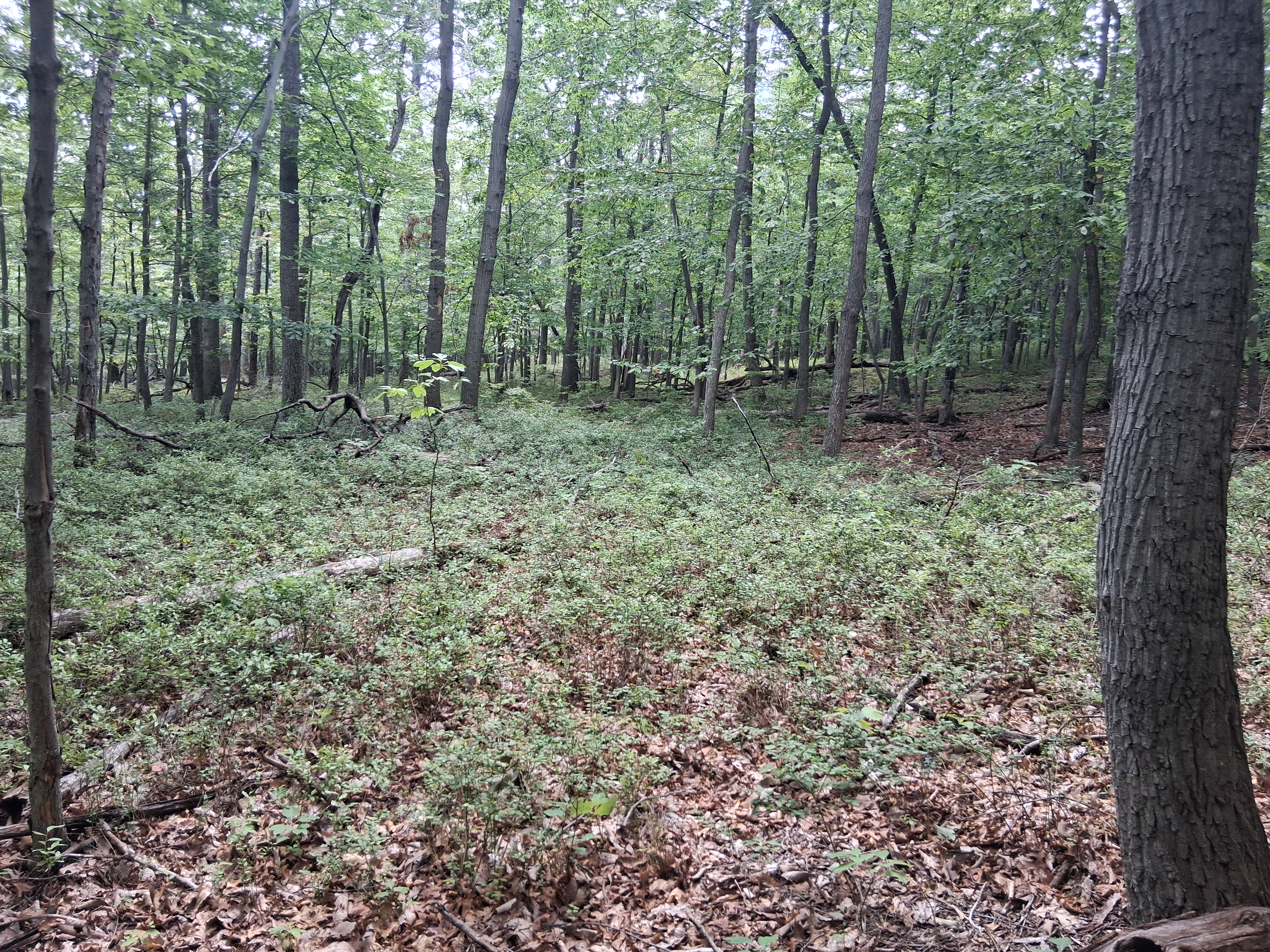


Thanks for the information Jay. Yeah, So I'm going to personally build a small 400sqft home (1bedroom/1bathroom/1 loft) on my land. It's kind of perfect because the land naturally has a little opening already.

That is true about the septic size being calculated by the number of rooms. But Virginia has it where it's always a minimal of two rooms - even if you have a studio. I'll include a picture of the spot where I'm going to build my house. We receive around 40 inches of rain annually. Which is nice because I'll be using a rainwater system for my drinking water.
20260817_134359.jpg
[Thumbnail for 20260817_134359.jpg]
 
pollinator
Posts: 6334
Location: Bendigo , Australia
608
plumbing earthworks bee building homestead greening the desert
  • Likes 7
  • Mark post as helpful
  • send pies
    Number of slices to send:
    Optional 'thank-you' note:
  • Quote
  • Report post to moderator
I am surprised to read the comment

It's a lot of land disturbance just to wash a few dishes.


Remember the issue is public health.
Evaporative reed beds are available and may work where you are, but the 40 inches of rainfall may be an issue, I have seen them in more arid areas.

There maybe an alternative that suits your case, I will think about it, but it seems the local authority has thought about it by having a minimum size of leech field.
The issue is really,' Managing a septic system in a heavily treed area requires strict distance rules and
physical barriers to keep aggressive tree roots from breaking pipes and clogging the drain field.'
From a quick search here are some alternatives, some of which I had forgotten about.
"
Top Alternatives to Septic Fields in Treed Areas

• Aerobic Treatment Units (ATUs) / AWTS:
These systems inject oxygen into a multi-stage tank to break down waste much faster and cleaner than standard anaerobic septic tanks.
Because the effluent is far cleaner, it requires a much smaller footprint or can be routed through subsurface drip irrigation tubing that weaves safely around tree trunks without needing a massive gravel leach field.
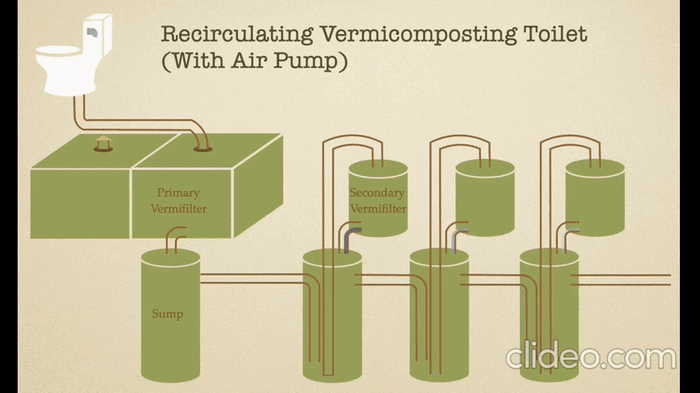
• Worm Farm Waste Systems:
An eco-friendly biological system (such as certified Australian worm systems) uses specialized earthworms and microbes inside a sealed tank to convert blackwater, greywater, and organic waste into safe, odorless liquid and worm castings.
The liquid effluent can be managed with low-impact surface or subsurface irrigation, avoiding deep trenching near tree roots.
• Mound Systems or Sand Filters:
If you must use soil dispersal in a shallow or root-dense forest floor, a raised sand mound or compact media filter (like the Ecoflo biofilter) elevates or shrinks the absorption zone above the heavy root network.
 
M. Scrog
Posts: 6
1
  • Likes 7
  • Mark post as helpful
  • send pies
    Number of slices to send:
    Optional 'thank-you' note:
  • Quote
  • Report post to moderator

John C Daley wrote:I am surprised to read the comment

It's a lot of land disturbance just to wash a few dishes.


Remember the issue is public health.
Evaporative reed beds are available and may work where you are, but the 40 inches of rainfall may be an issue, I have seen them in more arid areas.

There maybe an alternative that suits your case, I will think about it, but it seems the local authority has thought about it by having a minimum size of leech field.
The issue is really,' Managing a septic system in a heavily treed area requires strict distance rules and
physical barriers to keep aggressive tree roots from breaking pipes and clogging the drain field.'
From a quick search here are some alternatives, some of which I had forgotten about.
"
Top Alternatives to Septic Fields in Treed Areas

• Aerobic Treatment Units (ATUs) / AWTS:
These systems inject oxygen into a multi-stage tank to break down waste much faster and cleaner than standard anaerobic septic tanks.
Because the effluent is far cleaner, it requires a much smaller footprint or can be routed through subsurface drip irrigation tubing that weaves safely around tree trunks without needing a massive gravel leach field.
• Worm Farm Waste Systems:
An eco-friendly biological system (such as certified Australian worm systems) uses specialized earthworms and microbes inside a sealed tank to convert blackwater, greywater, and organic waste into safe, odorless liquid and worm castings.
The liquid effluent can be managed with low-impact surface or subsurface irrigation, avoiding deep trenching near tree roots.
• Mound Systems or Sand Filters:
If you must use soil dispersal in a shallow or root-dense forest floor, a raised sand mound or compact media filter (like the Ecoflo biofilter) elevates or shrinks the absorption zone above the heavy root network.


Hi John,

I appreciate your response. I guess I'm surprised that you're so surprised about my comment. J/K. When you say "Remember the issue is public health." I agree, but I don't think it's the only important variable within the decision making process. And I certainly don't think that it gives us a blank check to justify being poor stewards of our land. Everyone has their personal opinions on land management, and I respect that. I'm sure that this is an easier decision for other people than it is for me. Mostly if they are trying to build a homestead on a flat desert land. However, that isn't the case for my land. My property is full of life and is currently part of a health eco system. To understand my position, think about it this way. My property is located in a mountainside forest community that contains about 3,000 private lots. On average, the lots are about .5 of an acre in size. Now, if we all build and clear half of our lots due to installing traditional septic system, it would be around 750 acres of tree loss. Though, this would only be true if all the property owners wanted to keep as many trees as possible. However, most of my neighbors are clearing their entire lot. Like I said, this isn't an issue for most, but it kind of hurts my heart that we don't have a clear legal pathway for living more in harmony with nature. Only giving the people options that require them to turn their land upside-down and justifying it with the catch-all phrase "public health" is absolutely... My land is perfect, and I want to fit within it - not flip it just so I can justify washing my kitchen plates.


Thank you for the information on the worm farm waste system. I didn't know that was even a thing. Very interesting.
 
John C Daley
pollinator
Posts: 6334
Location: Bendigo , Australia
608
plumbing earthworks bee building homestead greening the desert
  • Likes 12
  • Mark post as helpful
  • send pies
    Number of slices to send:
    Optional 'thank-you' note:
  • Quote
  • Report post to moderator
M ,I appreciate your concerns and share them.
My point is not about knocking down trees for the septic, its about whether the block is suitable in the first place.
I am aware many people dont agree with us, but the wrong land is being used for housing and the wrong approach is being used by those house holders.
My small place is in a forest, surrounded by it, I have no neighbours at all, so its wild bush as we say here all around. 7500 Hectares!
Many people question why I dont clear it and I rudely remind them to think about what I am doing and what they are saying.
Conserving the bush is a bit like recycling, its for others to do!

All the best with it anyway.
 
Posts: 179
Location: PA
23
  • Likes 6
  • Mark post as helpful
  • send pies
    Number of slices to send:
    Optional 'thank-you' note:
  • Quote
  • Report post to moderator
Local laws usually have the last say. Check out books and videos by a lady named Laura Allen. She has a wealth of 8nfo on how to rig up or retrofit to use grey water to water your plants etc.
 
Anne Miller
master steward
Posts: 19887
Location: USDA Zone 8a
4987
dog hunting food preservation cooking bee greening the desert
  • Likes 6
  • Mark post as helpful
  • send pies
    Number of slices to send:
    Optional 'thank-you' note:
  • Quote
  • Report post to moderator
I do not know what types of septic system are allowed in Virginia though there are system that do not require the trees to be cut down.

I have read that if you have a drip dispersal system or plastic chamber system instead of a traditional gravel trench, the risk of root clogging is much lower, meaning trees can safely live closer. Drip tubes are buried shallowly with tiny emitters that resist root intrusion.
 
I agree. Here's the link: http://stoves2.com
reply
    Bookmark Topic Watch Topic
  • New Topic