• Post Reply Bookmark Topic Watch Topic
  • New Topic
permaculture forums growies critters building homesteading energy monies kitchen purity ungarbage community wilderness fiber arts art permaculture artisans regional education skip experiences global resources cider press projects digital market permies.com pie forums private forums all forums
this forum made possible by our volunteer staff, including ...
master stewards:
  • Carla Burke
  • Nancy Reading
  • John F Dean
  • r ransom
  • paul wheaton
  • Jay Angler
  • Timothy Norton
stewards:
  • Pearl Sutton
  • Tereza Okava
  • Nicole Alderman
master gardeners:
  • Christopher Weeks
gardeners:
  • M Ljin
  • Megan Palmer
  • Pete Podurgiel

Will pit fruits grown from seed breed true

 
master pollinator
Posts: 457
Location: UK
167
kids urban seed
  • Likes 7
  • Mark post as helpful
  • send pies
    Number of slices to send:
    Optional 'thank-you' note:
  • Quote
  • Report post to moderator
Plums from pip are a bit of a lottery, you probably won't get an exact copy of the parent tree, but you'll very likely end up with something that still fruits fine. Worth a go with 30 pips. The fridge stratification method does work, though planting some directly in a pot in autumn and leaving outside can work just as well if Austria winters are cold enough to do the stratification naturally.
 
steward and tree herder
Posts: 14518
Location: Isle of Skye, Scotland. Nearly 70 inches rain a year
8204
6
transportation dog forest garden foraging trees books food preservation woodworking wood heat rocket stoves ungarbage
  • Likes 4
  • Mark post as helpful
  • send pies
    Number of slices to send:
    Optional 'thank-you' note:
  • Quote
  • Report post to moderator
Hi Sabine, welcome to permies!

How many trees do you want to end up with? I think with 30 seeds you could probably just plant them where you want the tree to grow. Maybe five or six seeds per location? I'd suggest putting five or six in a pot with some growing medium out of the way of critters as a back up as well. I'm pretty sure in Austria you'd get a natural vernalisation to chill the seeds naturally.
 
Joao Winckler
master pollinator
Posts: 457
Location: UK
167
kids urban seed
  • Likes 2
  • Mark post as helpful
  • send pies
    Number of slices to send:
    Optional 'thank-you' note:
  • Quote
  • Report post to moderator
The fridge stratification method should work well for UK plums. Worth trying a few, plums do come reasonably true from seed compared to apples which are a real lottery. Just be patient, they can take a few weeks to sprout even after stratifying.
 
master steward
Posts: 16265
Location: Pacific Wet Coast
10753
duck books chicken cooking food preservation ungarbage
  • Likes 5
  • Mark post as helpful
  • send pies
    Number of slices to send:
    Optional 'thank-you' note:
  • Quote
  • Report post to moderator
Sabine, I would definitely give it a go. Even if you don't get what your wanted, you might get something equally delightful. We have a volunteer plum tree in our field. The fruit is much smaller than either of our modern grafted plum trees, but the fruit is delicious out of hand, and makes great jam.

If you end up with too much of a good thing, ask around and you may be able to get scion for grafting to give you a longer harvest window.
 
Jay Angler
master steward
Posts: 16265
Location: Pacific Wet Coast
10753
duck books chicken cooking food preservation ungarbage
  • Likes 7
  • Mark post as helpful
  • send pies
    Number of slices to send:
    Optional 'thank-you' note:
  • Quote
  • Report post to moderator
There are 5 acres of forest beside our homestead with roads on two sides. I was drying and jamming liters of plums last week. Every time my scrap bowl filled up with plum pits, I walked down the road and pitched them a handful at a time into the forest edge.

The squirrels may find some - but they may even bury some.

If they germinate, the deer may eat them... sigh...

But maybe, just maybe, some of them will both germinate and outgrow the browsing deer, and years from now, people will wonder where these wonderful plum trees came from.

I think this is a version of, "pay it forward"!
 
Posts: 16
2
  • Likes 9
  • Mark post as helpful
  • send pies
    Number of slices to send:
    Optional 'thank-you' note:
  • Quote
  • Report post to moderator
I am  in zone 8b, Puget Sound WA, USA, experimenting with just allowing some windfall plums to sprout in place and see what happens. With cherries, this is happening in my front yard near an existing sweet cherry tree. One of these volunteers is now 3 feet tall and bore its first few cherries this year. I am happy to report that they were exactly what was expected. I have 5 or 6 of the seedlings in the yard now. I let them get a foot tall or so and then move them or pot them to share.
 
pollinator
Posts: 3577
Location: Meppel (Drenthe, the Netherlands)
1233
dog forest garden urban cooking bike fiber arts
  • Likes 9
  • Mark post as helpful
  • send pies
    Number of slices to send:
    Optional 'thank-you' note:
  • Quote
  • Report post to moderator
Hi. I have several trees from planted pits/stones (including at least one not planted by me, but by the birds).
There's a cherry tree; I planted the pit from a large dark red cherry, I got a tree with smaller, lighter red cherries. But the taste is good.

Then there's a sort of plum, with small yellowish fruit (first fruit this year, only one, good taste). That's probably planted by birds. Maybe I have more of these trees (that haven't yet fruited) ...

And there's a peach (or nectarine). I know I planted the stone, but forgot what exact fruit it was. The tree had flowers, but no fruits yet.

I have a different fruit tree too from seed I planted. It's a loquat. A very good grower, but it blooms in winter ... when there are no pollinators here

 
Jay Angler
master steward
Posts: 16265
Location: Pacific Wet Coast
10753
duck books chicken cooking food preservation ungarbage
  • Likes 6
  • Mark post as helpful
  • send pies
    Number of slices to send:
    Optional 'thank-you' note:
  • Quote
  • Report post to moderator

Inge Leonora-den Ouden wrote: I have a different fruit tree too from seed I planted. It's a loquat. A very good grower, but it blooms in winter ... when there are no pollinators here :-(  


That's what tiny paintbrushes are for! My peach tree often blooms before there are many pollinators flying because of wet, windy weather. The tree produces more fruit if the bees are about, but I pollinate just enough flowers that I know I'll get a few liters!
 
rocket scientist
Posts: 556
Location: in the Middle Earth of France (18), zone 8a-8b
353
2
hugelkultur dog tiny house chicken composting toilet cooking building sheep rocket stoves homestead composting
  • Likes 8
  • Mark post as helpful
  • send pies
    Number of slices to send:
    Optional 'thank-you' note:
  • Quote
  • Report post to moderator
Hi Sabine,
Welcome to Permies!

You could divide your plum pits and put 15 in pots outside in the rain and weather over winter. This you could do right now - mix some local soil and compost, put your pits into the mix at a depth that is equal to the thickness or height of the pit and cover the pots with some wire mesh to keep hungry mice out of them.
The other 15 pits you could save to fridge-germinate in February as mentioned here above.

Good luck!
 
Posts: 6
Location: Chicago, IL
8
dog urban
  • Likes 14
  • Mark post as helpful
  • send pies
    Number of slices to send:
    Optional 'thank-you' note:
  • Quote
  • Report post to moderator

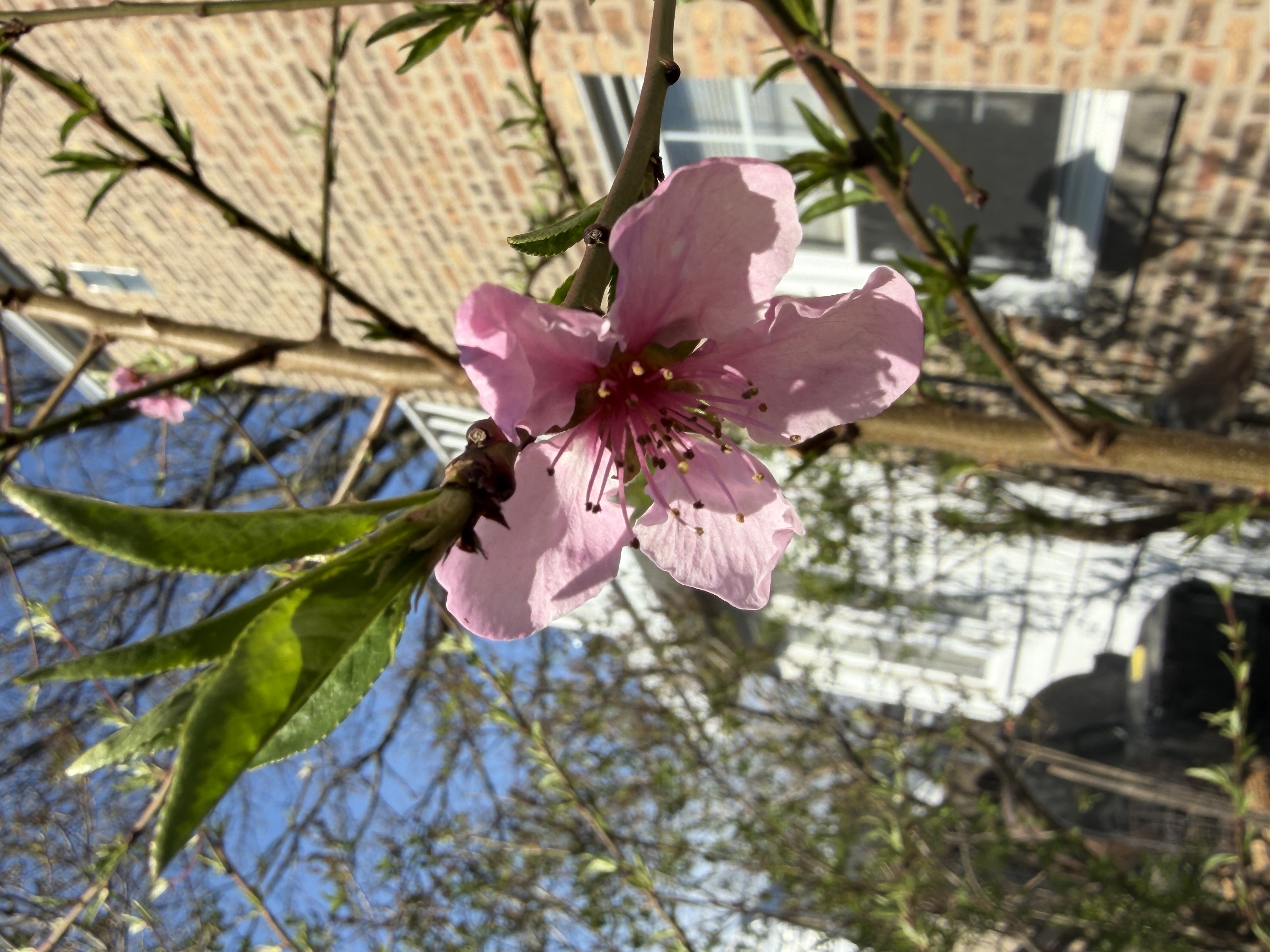
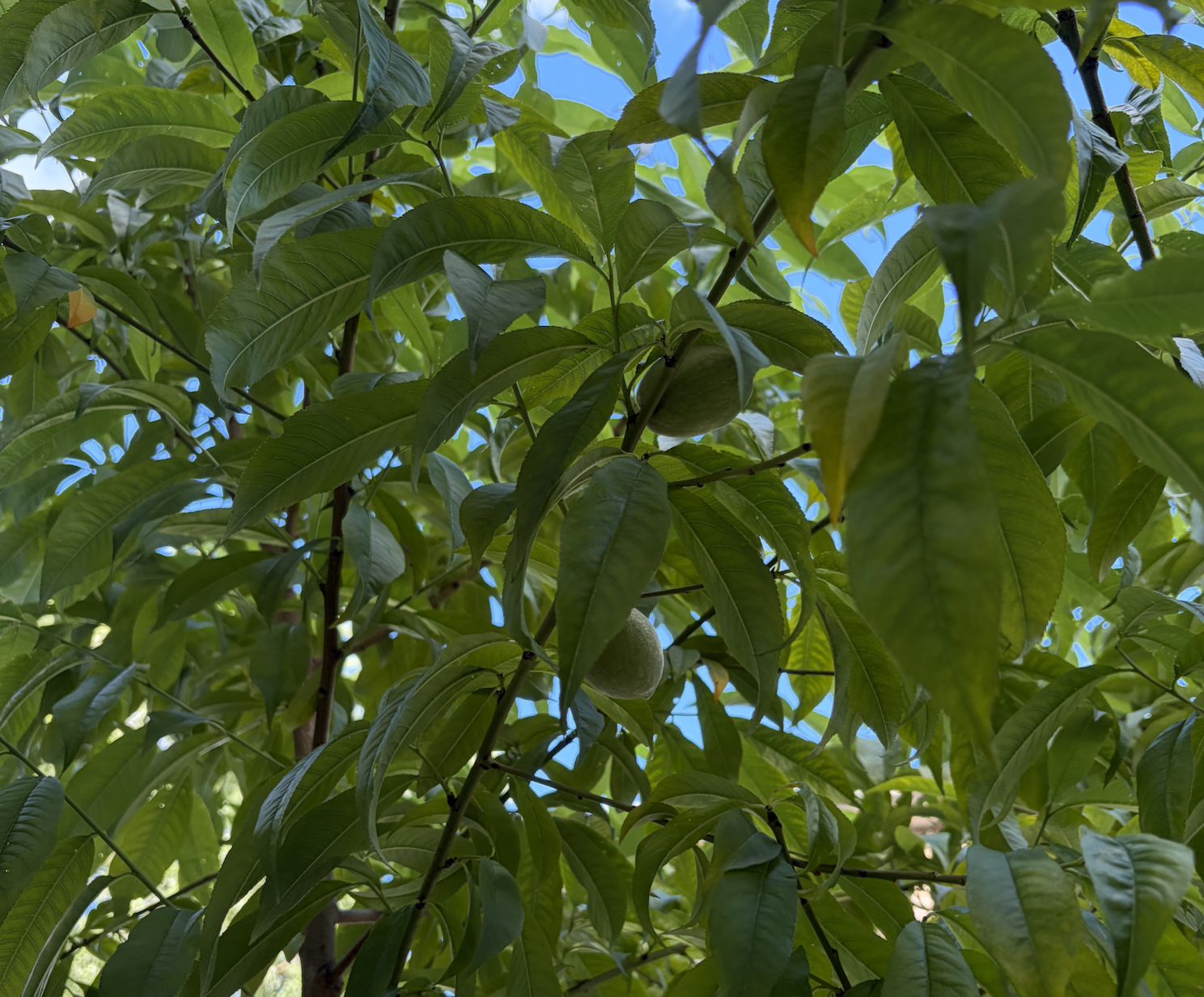
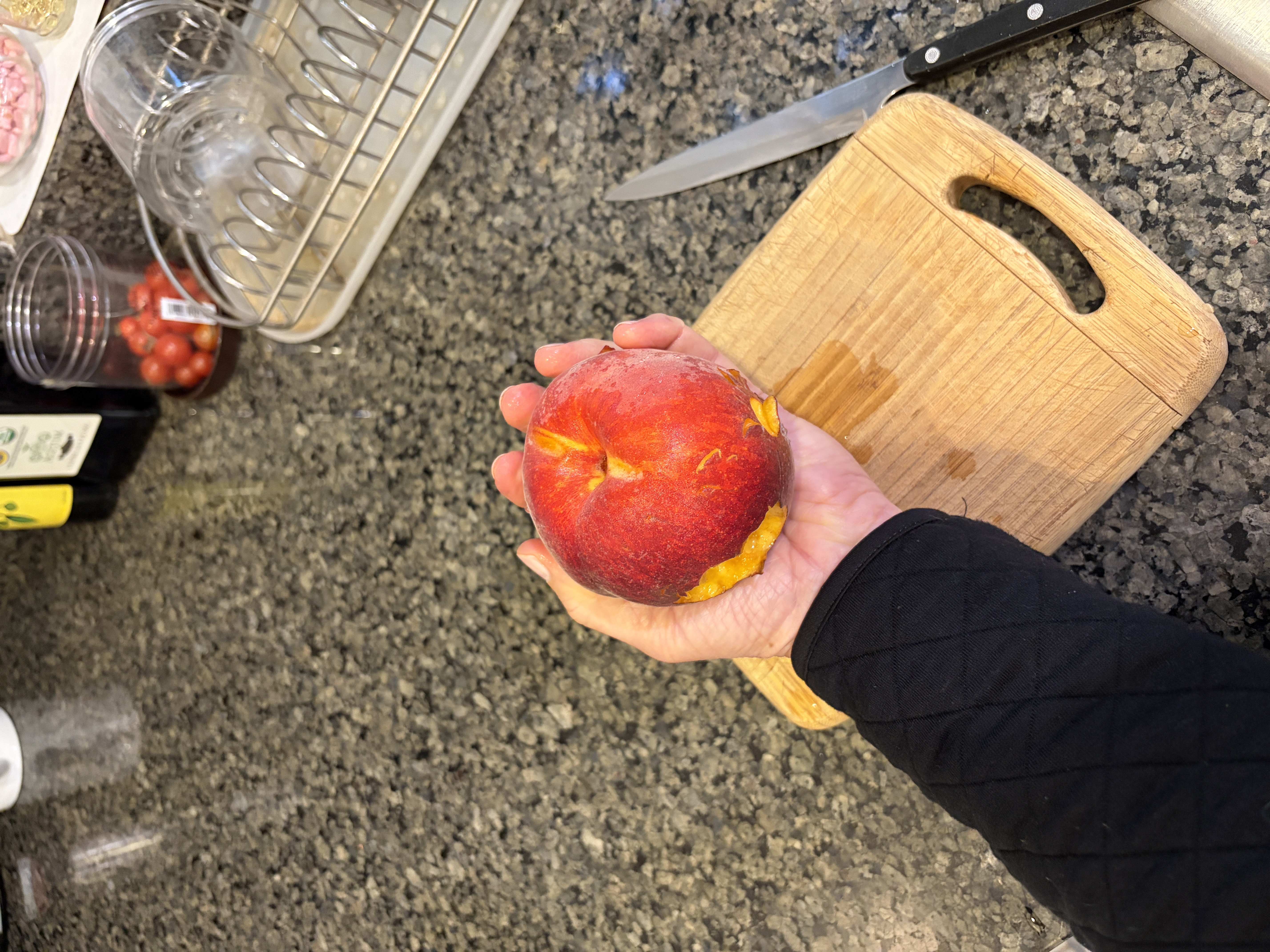
Our volunteer peach tree's first flush: produced 2 fruits this year- large and hard. I should have harvested them and set them on the counter to ripen, instead of waiting until they were starting to soften.  Found them on the ground last night with bites and ants.  Some judicial cutting and washing, and we were still able to taste one of them.  I'll save the stone, and try to plant elsewhere along our southern edge for maybe a second tree.  (When I say southern edge, I mean a strip of land 6 feet wide next to our neighbor's driveway. In Chicago proper, our homestead is measured in feet, not acres.)   Our old German neighbors turn their compost directly into their flower and veggie beds, so I'm guessing a squirell moved the pit and buried it in our yard.    A previous poster mentioned paint-brush help with pollination.  I would love to hear more about that, as I remember seeing more than 2 blossoms in the Spring.
April-11.JPG
April 11, 2026
April 11, 2026
June-12.png
June 12, 2026
June 12, 2026
Sept16.JPG
Sept. 16, 2026
Sept. 16, 2026
 
Inge Leonora-den Ouden
pollinator
Posts: 3577
Location: Meppel (Drenthe, the Netherlands)
1233
dog forest garden urban cooking bike fiber arts
  • Likes 6
  • Mark post as helpful
  • send pies
    Number of slices to send:
    Optional 'thank-you' note:
  • Quote
  • Report post to moderator

Jay Angler wrote:

Inge Leonora-den Ouden wrote: I have a different fruit tree too from seed I planted. It's a loquat. A very good grower, but it blooms in winter ... when there are no pollinators here :-(  


That's what tiny paintbrushes are for! My peach tree often blooms before there are many pollinators flying because of wet, windy weather. The tree produces more fruit if the bees are about, but I pollinate just enough flowers that I know I'll get a few liters!


Thank you. I'll try it.
 
Jay Angler
master steward
Posts: 16265
Location: Pacific Wet Coast
10753
duck books chicken cooking food preservation ungarbage
  • Likes 7
  • Mark post as helpful
  • send pies
    Number of slices to send:
    Optional 'thank-you' note:
  • Quote
  • Report post to moderator
It's good to refresh our memories about the general parts of a flower, and what they do.


The anther is where the pollen is. Pollen can be quite obvious in a flower like a squash, but be almost microscopic on some flowers.

Many flowers want to receive pollen from a different (non-clone) plant, like a different variety of peach, but some are less fussy.

The pollen needs to land on the top of the stigma to do its job. There are thin tubes in the style that lead the pollen down to the ovule. (It's not the same in all plants - https://en.wikipedia.org/wiki/Pollination for more detail.)

So if you're trying to hand pollinate, you need to use something delicate like a soft paintbrush or cotton swab. You need to dab it first on the anthers of one blossom, and second on the stigma of a second.

I try to only pollinate a single flower in a cluster on a fruit tree, as it's better for the tree not to have too much fruit too close together.

If a tree has a lot of flowers, I'm known to cheat and pick a blossom and smoosh its anthers against another flower's stigma. I'll use a single blossom on about 5 other flowers, but by then it's pretty much disintegrating in my hand.

If the weather's being weird, I try to do a bit of this every few days for a week or so. The trouble is remembering to...

Hand pollinating in no way replaces good pollinators. However, it usually does get me some fruit when the weather's bad enough that I'm not seeing any pollinators out visiting. One good, sunny afternoon, can make the world of difference. I will admit, I make a fairly lousy bee!
 
Eileen McCabe
Posts: 16
2
  • Likes 5
  • Mark post as helpful
  • send pies
    Number of slices to send:
    Optional 'thank-you' note:
  • Quote
  • Report post to moderator

Jay Angler wrote:It's good to refresh our memories about the general parts of a flower, and what they do.


The anther is where the pollen is. Pollen can be quite obvious in a flower like a squash, but be almost microscopic on some flowers.

Many flowers want to receive pollen from a different (non-clone) plant, like a different variety of peach, but some are less fussy.

The pollen needs to land on the top of the stigma to do its job. There are thin tubes in the style that lead the pollen down to the ovule. (It's not the same in all plants - https://en.wikipedia.org/wiki/Pollination for more detail.)

So if you're trying to hand pollinate, you need to use something delicate like a soft paintbrush or cotton swab. You need to dab it first on the anthers of one blossom, and second on the stigma of a second.

I try to only pollinate a single flower in a cluster on a fruit tree, as it's better for the tree not to have too much fruit too close together.

If a tree has a lot of flowers, I'm known to cheat and pick a blossom and smoosh its anthers against another flower's stigma. I'll use a single blossom on about 5 other flowers, but by then it's pretty much disintegrating in my hand.

If the weather's being weird, I try to do a bit of this every few days for a week or so. The trouble is remembering to...

Hand pollinating in no way replaces good pollinators. However, it usually does get me some fruit when the weather's bad enough that I'm not seeing any pollinators out visiting. One good, sunny afternoon, can make the world of difference. I will admit, I make a fairly lousy bee!


This link does not work. Have you pollinated corn before? Do you know if pollination needs to be from a different plant or the same one?
Staff note (Jay Angler) :

I tried fixing the link above to : https://en.wikipedia.org/wiki/Pollination
Please try that.
This article is about specifically hand pollinating corn. Corn is wind pollinated, not insect.
https://seedsavers.org/corn-pollination/
Hope that helps

 
Inge Leonora-den Ouden
pollinator
Posts: 3577
Location: Meppel (Drenthe, the Netherlands)
1233
dog forest garden urban cooking bike fiber arts
  • Likes 6
  • Mark post as helpful
  • send pies
    Number of slices to send:
    Optional 'thank-you' note:
  • Quote
  • Report post to moderator

Jay Angler wrote:It's good to refresh our memories about the general parts of a flower, and what they do.


...


Thank you Jay. This clear picture gives me the proper English names of flower-parts for which I only know the Dutch names.
 
Joao Winckler
master pollinator
Posts: 457
Location: UK
167
kids urban seed
  • Likes 3
  • Mark post as helpful
  • send pies
    Number of slices to send:
    Optional 'thank-you' note:
  • Quote
  • Report post to moderator
Sabine, yes you can absolutely try growing it from the pip. Stratify in the fridge in damp compost or sand for a couple months, then pot it up in early spring. Plums are more likely to produce something decent from seed than apples, though it won't be identical. You might get a slightly different fruit or a slower/earlier cropper, but worth trying if you have 30 pits to experiment with.
 
His name is Paddy. Paddy O'Furniture. He's in the backyard with a tiny ad.
Build a better world. Literally.
https://wheaton-labs.com/bootcamp
reply
    Bookmark Topic Watch Topic
  • New Topic