• Post Reply Bookmark Topic Watch Topic
  • New Topic
permaculture forums growies critters building homesteading energy monies kitchen purity ungarbage community wilderness fiber arts art permaculture artisans regional education skip experiences global resources cider press projects digital market permies.com pie forums private forums all forums
this forum made possible by our volunteer staff, including ...
master stewards:
  • Carla Burke
  • John F Dean
  • Nancy Reading
  • r ransom
  • Jay Angler
  • Timothy Norton
stewards:
  • paul wheaton
  • Pearl Sutton
  • Anne Miller
master gardeners:
  • Christopher Weeks
  • M Ljin
gardeners:
  • Jim Garlits
  • thomas rubino
  • William Bronson

Cultivated thistles... globe artichokes, cardoons... ??

 
pollinator
Posts: 3946
Location: Kent, UK - Zone 8
751
books composting toilet bee rocket stoves wood heat homestead
  • Mark post as helpful
  • send pies
    Number of slices to send:
    Optional 'thank-you' note:
  • Quote
  • Report post to moderator
Globe Artichokes

What do you folks make of these? I have had a couple of globe artichokes in for some years now and just divided them so I now have about 20 plants in the ground. I personally like the globes, but my wife objects that they are a lot of faff for not much food. From a lazy gardening perspective once they are established they seem pretty indestructible, they are deep rooted so don't need irrigating. The only downer is that I seem to get a tingling mouth when I eat them - I've read that this is a fairly common reaction and likely linked to my hayfever.

Cross reactions
Allergies to a specific pollen are usually associated with OAS reactions to other certain foods. For instance, an allergy to ragweed is associated with OAS reactions to banana, watermelon, cantaloupe, honeydew, zucchini, and cucumber. This does not mean that all sufferers of an allergy to ragweed will experience adverse effects from all or even any of these foods. Reactions may be associated with one type of food, with new reactions to other foods developing later. However, reaction to one or more foods in any given category does not necessarily mean a person is allergic to all foods in that group.

Alder pollen: almonds, apples, celery, cherries, hazel nuts, peaches, pears, parsley, strawberry, raspberry
Birch pollen: almonds, apples, apricots, avocados, bananas,[10] carrots, celery, cherries, chicory,[11] coriander, fennel, fig,[12] hazel nuts, kiwifruit, nectarines, parsley, parsnips, peaches, pears, peppers, plums, potatoes, prunes, soy, strawberries, wheat; Potential: walnuts[13]
Grass pollen: fig,[12] melons, tomatoes, oranges, celery, peach [14]
Mugwort pollen : carrots, celery, coriander, fennel, parsley, peppers, sunflower
Ragweed pollen : banana, cantaloupe, cucumber, green pepper, paprika, sunflower seeds/oil, honeydew, watermelon, zucchini, echinacea, artichoke, dandelions, honey (if bees pollinate from wild flowers), hibiscus or chamomile tea

Possible cross-reactions (to any of the above): berries (strawberries, blueberries, raspberries, etc), citrus (oranges, lemons, etc), grapes, mango, figs, peanut, pineapple, pomegranates, watermelon

Source - wikipedia


Cardoons
I know some people have tried cardoons - a variety bred for a stem which is edible when forced. I guess this would make a good early season green? I've never really gone in for crops that need manually forcing as my gardening is usually time limited. Anyone like to chip in who has experience with forcing cardoons?
How early do they come in the spring? What do you do to force them? Do you get worthwhile quantities?

Wild thistles
I know we are supposed to love all thistles for their soil benefits, but I'm personally not keen on them. I like to be able to walk around barefoot in summer and the thistles we get around here make that pretty much impossible. Has anyone actually found a use for wild thistles that couldn't be replaced by, say, dandelions for the long taproot, or some other permie plant?

Finally

Are there any other cultivated thistle family plants I should know about? Seems like a perennial that puts down a strong tap root and grows vigorously without irrigation should be high on the list of likely candidates for cultivation by permie plant breeeders. Is there one cultivated for thick edible tasty roots for example?
 
pollinator
Posts: 4721
Location: Zones 4-5 Colorado
496
3
hugelkultur forest garden fungi books bee greening the desert
  • Mark post as helpful
  • send pies
    Number of slices to send:
    Optional 'thank-you' note:
  • Quote
  • Report post to moderator
Eat the weeds !

http://www.eattheweeds.com/thistle-touch-me-not-but-add-butter-2/
 
pollinator
Posts: 784
Location: West Yorkshire, UK
338
  • Mark post as helpful
  • send pies
    Number of slices to send:
    Optional 'thank-you' note:
  • Quote
  • Report post to moderator

Miles Flansburg wrote:Eat the weeds !

http://www.eattheweeds.com/thistle-touch-me-not-but-add-butter-2/


I occasionally eat raw uncultivated thistles--I like the taste of them much better than dandelions I eat the central vein/stalk on the leaves,after stripping off the spines; they're a bit like celery, I think. I only eat the ones that come up in my own garden, and I don't think I actually had any last year.

Michael, I'm wondering what kind of harvest you get from each artichoke plant? I personally love artichokes, but don't have any at present. I also wonder if you can eat their leaf stalks the same as cardoons and uncultivated thistles?
 
steward and tree herder
Posts: 13506
Location: Isle of Skye, Scotland. Nearly 70 inches rain a year
7343
6
transportation dog forest garden foraging trees books food preservation woodworking wood heat rocket stoves ungarbage
  • Likes 4
  • Mark post as helpful
  • send pies
    Number of slices to send:
    Optional 'thank-you' note:
  • Quote
  • Report post to moderator
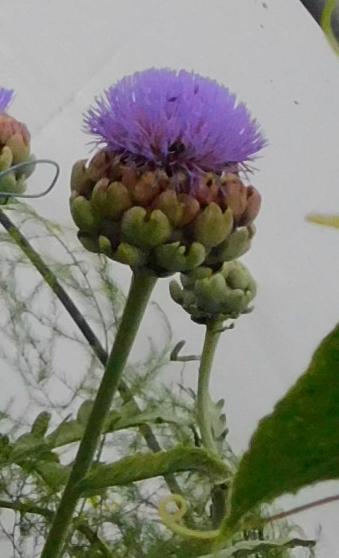
I'm hoping to increase my globe artichoke plant population. Yes they are a bit of a faff to eat, but nice as a rather messy snack whilst watching a film - just dip the scales in melted butter - yummy! We sell tins of prepared artichoke hearts, so I think if I had enough that might be something else to try.

I have grown cardoons in the past, only one turned out to be perennial, and I never got round to eating any of the stems. I've read someone on the outer isles has good success with it though, so I have more seed to try this year.

Bonus - thistles are so pretty! It's worth just growing them for the flowers.
artichoke.jpg
artichoke flower
artichoke flower
 
steward
Posts: 19064
Location: USDA Zone 8a
4821
dog hunting food preservation cooking bee greening the desert
  • Likes 3
  • Mark post as helpful
  • send pies
    Number of slices to send:
    Optional 'thank-you' note:
  • Quote
  • Report post to moderator
I think thistle make the prettiest flowers.  I save them dried for flower arrangements.

That artichoke flower is the prettiest I have seen.

Unfortunely, thistles like my patio so I say bye bye ...
 
pollinator
Posts: 1820
Location: southern Illinois, USA
370
  • Likes 8
  • Mark post as helpful
  • send pies
    Number of slices to send:
    Optional 'thank-you' note:
  • Quote
  • Report post to moderator
Milk thistle makes pretty good greens.  They only have the spines around the edges of the large leaves, so you pick them with gloves and then snip off the spines with scissors, you can then handle, cut up, and cook the greens like any other greens.
 
pollinator
Posts: 555
Location: Oz; Centre South
188
trees books cooking fiber arts writing
  • Likes 6
  • Mark post as helpful
  • send pies
    Number of slices to send:
    Optional 'thank-you' note:
  • Quote
  • Report post to moderator
Maybe not thistles as such but in the same family (Asteraceae) how about lettuce?   Also chicory and endive and the common sow thistle.  Worth a check through to ID the edibles amongst them, and it's recommended that they be picked young. Bon appetit!
Edit:- see also Judson Carroll's post  https://permies.com/t/373856/Spring-Forging-Cookbook-Wild-Grapes  also include an edible thistle
 
gardener
Posts: 1235
Location: France, Burgundy, parc naturel Morvan
585
forest garden fish fungi trees food preservation cooking solar wood heat woodworking homestead
  • Likes 7
  • Mark post as helpful
  • send pies
    Number of slices to send:
    Optional 'thank-you' note:
  • Quote
  • Report post to moderator
Cardoons are great to eat like artichokes. I have an ex from the south of France, she said, "they look fine, let's try them, i've eaten these my whole life". She loved them. my Artichokes stay small waste hjgh and struggle to produce flowers. Cardoons get monstrous and fill with bugs that party for weeks there. I hung an empty bucket in the left flower for scale. This one is easily 5 years and gets a lot of nutrients because my compost is next to it, others are more modest in size, but easily 5 times my average artichokes plants.
The seeds need to be chiseled out with a hammer when fresh, but if you leave them outside in a corner the heart will rot and they will be easily removable or sprout in the flower. They'll be perfectly viable for years after.

Bettina-2026-06-05-04.49.33.jpg
cardoonflowerbugparty.jpg]
Bettina-2026-06-05-04.49.42.jpg
hugecardoon.jpg]
 
The moth suit and wings road is much more exciting than taxes. Or this tiny ad:
building a permaculture community with hands on gardening and natural building
https://wheaton-labs.com/bootcamp
reply
    Bookmark Topic Watch Topic
  • New Topic