• Post Reply Bookmark Topic Watch Topic
  • New Topic
permaculture forums growies critters building homesteading energy monies kitchen purity ungarbage community wilderness fiber arts art permaculture artisans regional education skip experiences global resources cider press projects digital market permies.com pie forums private forums all forums
this forum made possible by our volunteer staff, including ...
master stewards:
  • Carla Burke
  • John F Dean
  • r ransom
  • Nancy Reading
  • Timothy Norton
  • Jay Angler
stewards:
  • paul wheaton
  • Pearl Sutton
  • Eric Hanson
master gardeners:
  • Christopher Weeks
  • M Ljin
gardeners:
  • thomas rubino
  • Megan Palmer
  • Benjamin Dinkel

Cam makes a Machete from Scrap...because why not

 
gardener
Posts: 461
Location: Northern Ontario, Canada
317
goat dog gear books bike building
  • Likes 15
  • Mark post as helpful
  • send pies
    Number of slices to send:
    Optional 'thank-you' note:
  • Quote
  • Report post to moderator
When I first got into metalworking back in 2020, I remember visiting the scrapyard to get myself a big piece of sheet steel to weld on top of. It was rusted and pitted, but I didn't care. All I needed was a surface to weld on that wouldn't catch fire when hit with sparks. So the 50lb-ish 3/16" sheet of steel was what I grabbed. For the three years I've been messing with welding it has served me faithfully, catching all the sparks and spatter without batting an eye.

Fast forward to last night, when I got a whim to make a machete. No I am not angry, and no I am not out for revenge. I just think they look cool!

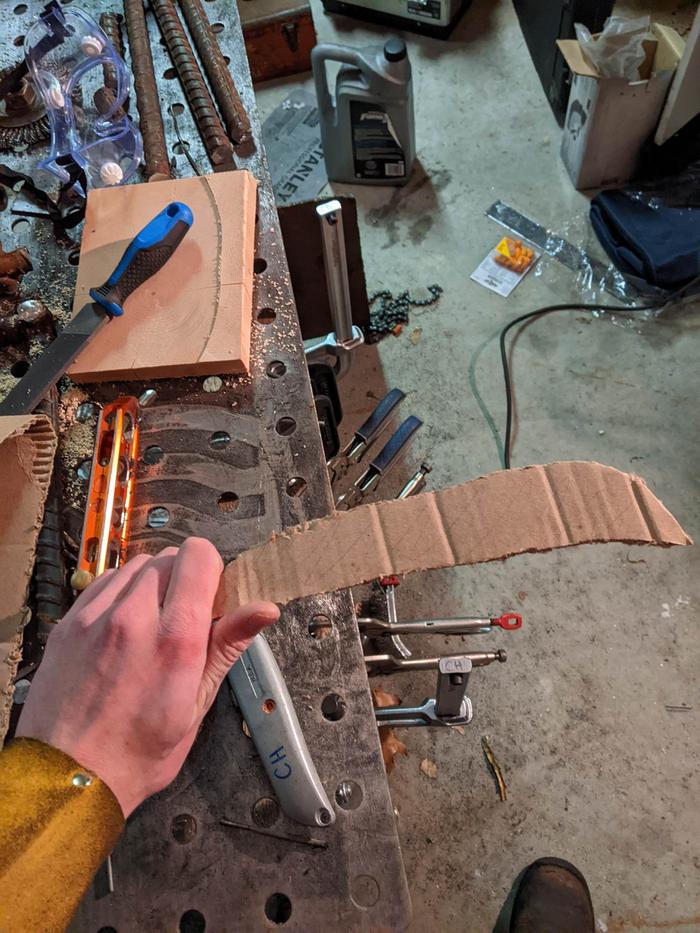
I started by sketching a shape on cardboard and cutting it out.
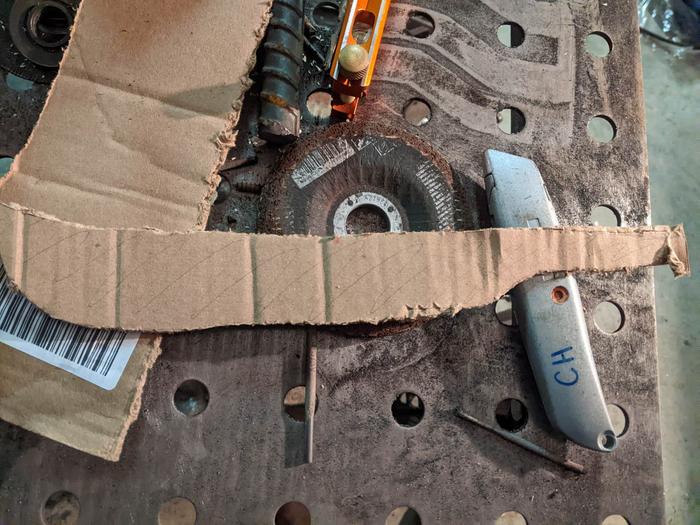


Then I transferred the shape to the steel with soapstone.


Then I got out my little grinder, threw a cutoff wheel on, and got slicing.
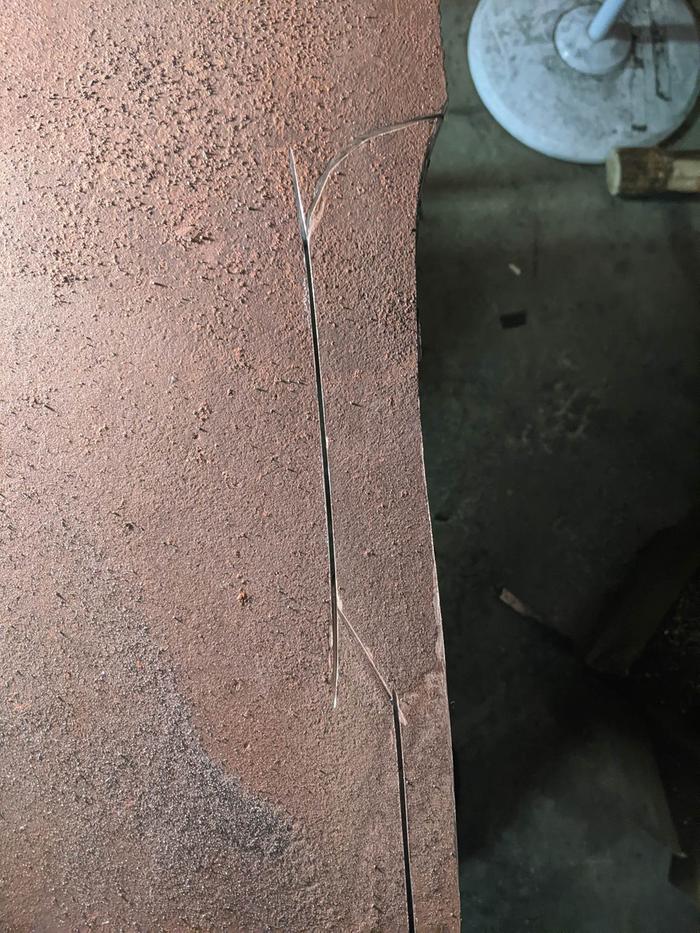


Once I got the straighter parts finished, I worked on the curve. If you've ever been curious how to cut tight curves with an angle grinder, this is how I do it.

If you don't know, cutoff wheels on angle grinders can be death traps if not used properly. They are reinforced to be strong in the direction of cutting, but they are not designed to be flexed. They are so flimsy I can easily snap one in two with just my hands - and I bet you can too. The issue with that is if the blade is flexed too much while cutting, it will break while spinning anywhere from 8000-11,000rpm. That means pieces will fly everywhere, very fast, including potentially into you. This is the reason I have not only safety glasses but also a face shield or welding helmet on when using cutoff wheels.

Safety lesson over. So say you want to cut a curve but you don't have a plasma cutter or flame set up, and your metal is too thick for a hack saw or your dremel...it's time to notch! I make many small slices straight to the curve, then I work at cutting off those small pieces. This was I can make each small cut relatively straight, which avoids flexing the wheel.


If I can't quite finish a cut, I grab my pliers and flex the small piece back and forth until it eventually snaps off.

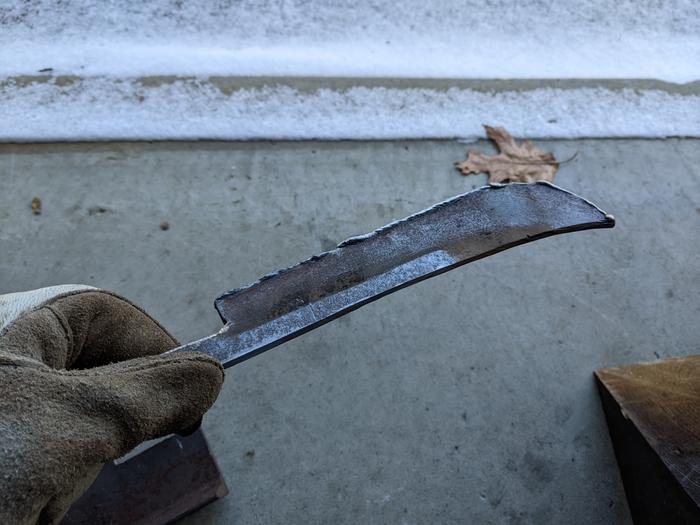
Then it's just a process of cleaning up the edges with a grinding wheel. Here is what I finished with last night.
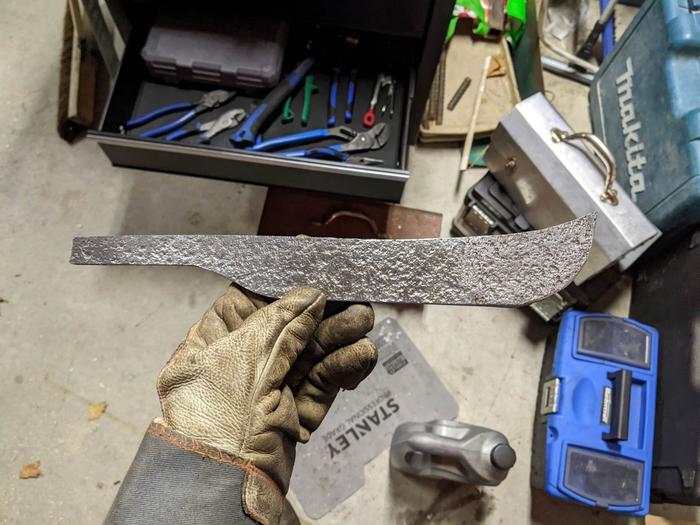


This morning I tried comparing my cutout to our kitchen knives. I noticed my handle was a full inch shorter than the kitchen knives, so I cut a notch out to lengthen the handle. This is the final result, up until the time of writing at least.
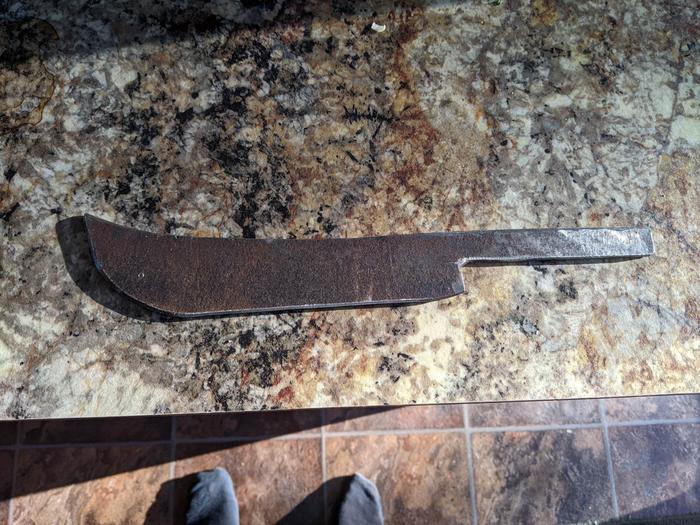
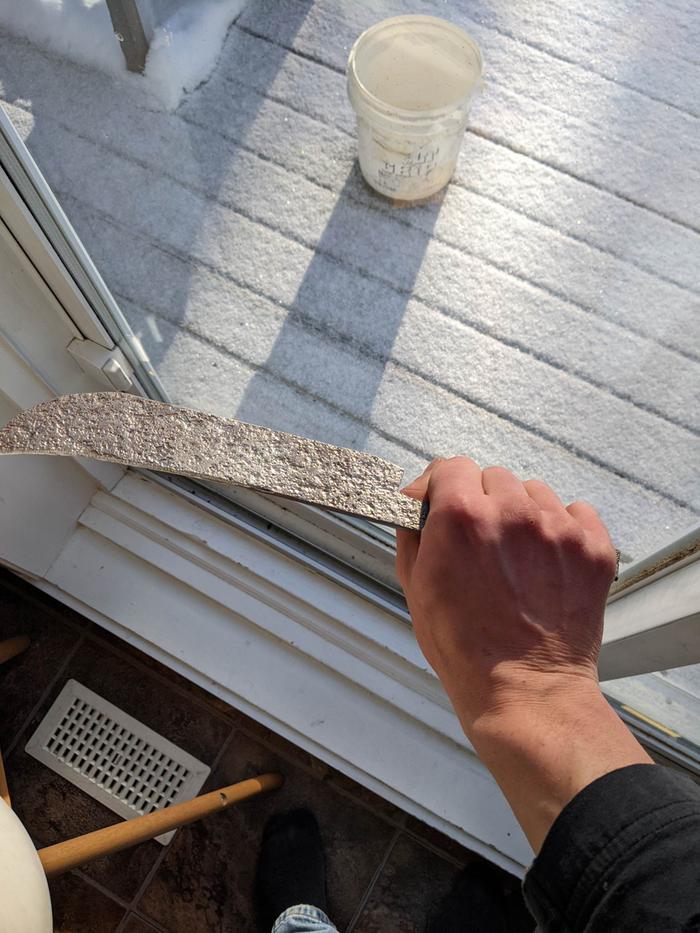


Now this is only mild steel I'm working with. So even if I get it razor sharp, it will not hold an edge for long. So the next step is to run one or two weld passes on the cutting edge with my old hardfacing rods. Hardfacing rods are normally used to help prevent wear in heavy equipment such as tractor buckets or the teeth on the digger claws. They lay down a layer of high carbon steel that will take all the abrasion from rocks and sand instead of the steel from the bucket or teeth. For more info see this site. To give my machete an edge that will last, at least for a while, this is a great option.

Now don't think I'm saying this will make a machete that will last like a properly forged one would...not even close! But for a fun project that could see use lopping small branches off of deadfall, I think it's a great idea. More to come as I hardface the edge and get it sharpened up.

 
Cam Haslehurst
gardener
Posts: 461
Location: Northern Ontario, Canada
317
goat dog gear books bike building
  • Likes 8
  • Mark post as helpful
  • send pies
    Number of slices to send:
    Optional 'thank-you' note:
  • Quote
  • Report post to moderator
So the machete edge has been hard-faced. If that isn't a real term, I apologize because I am now making it one.


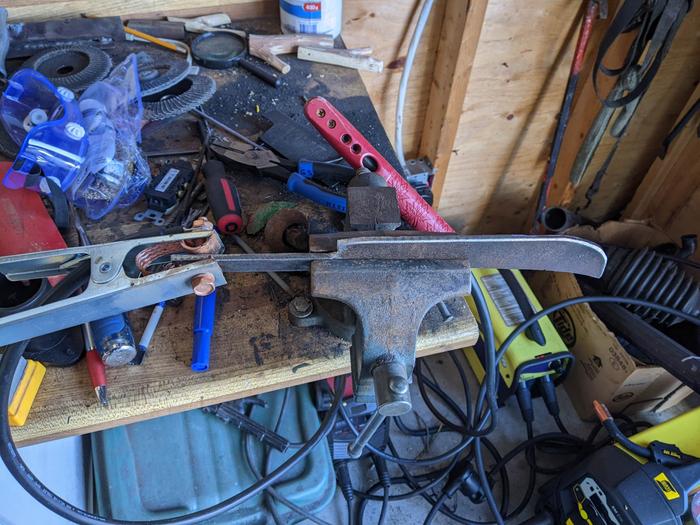
Here was my setup. Ground clamp right on the workpiece, and the edge where the weld goes is ground to shiny steel.  Welder was set to 112amps DC positive, otherwise known as reverse polarity. I ran it quite cold because I was welding on the edge of 3/16" (4mm) material so it's very easy to melt right through and make a mess.


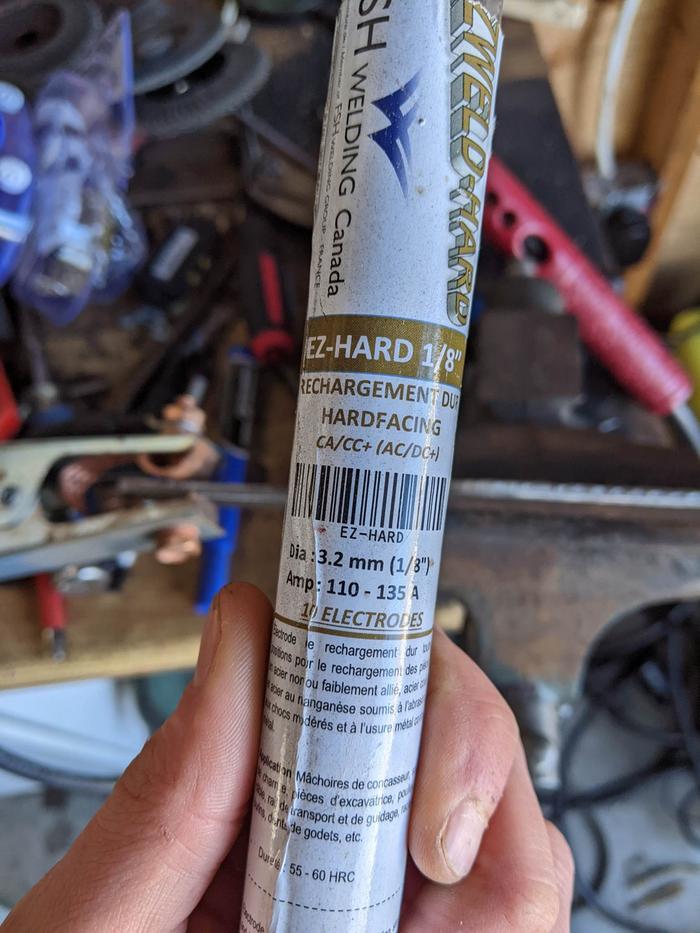
Here is the package for the hardfacing rods.


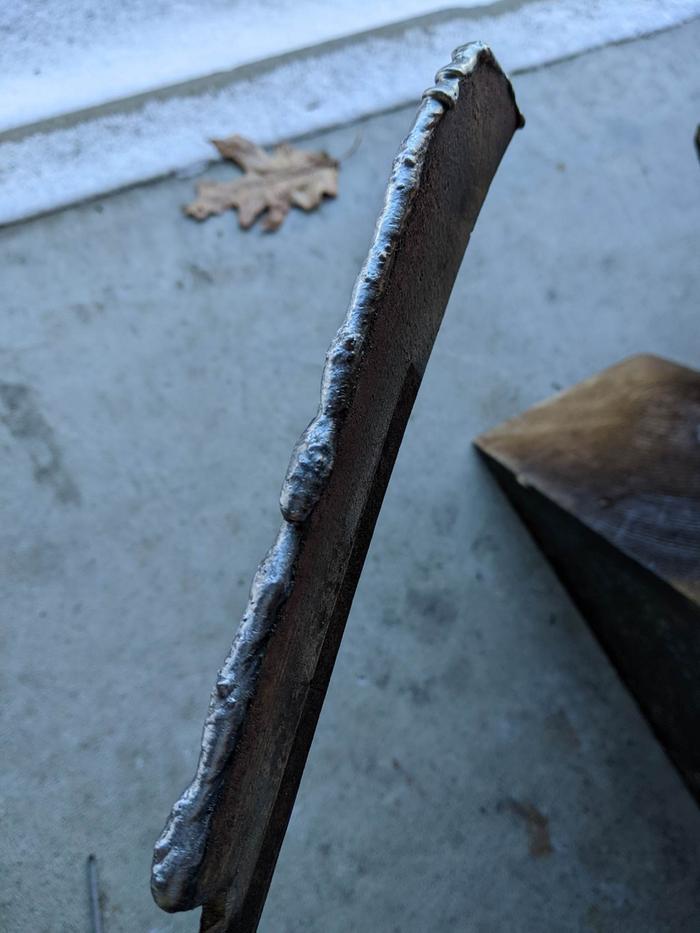
There it is from the side with one pass complete.


Here it is closer up. I ended up running a second pass to both fill in any low spots and to build up the edge more. I needed to keep a fairly speedy travel speed to avoid completely melting the edge.

I tested the beads afterwards too with a file. First I filed part of the tang. The file easily bit into the mild steel. Then I tried to file the hard faced edge. The file merely skipped across, not even leaving a mark. Impressive!

Next up is sharpening.
 
pollinator
Posts: 5520
Location: Canadian Prairies - Zone 3b
1523
  • Likes 3
  • Mark post as helpful
  • send pies
    Number of slices to send:
    Optional 'thank-you' note:
  • Quote
  • Report post to moderator
I'm curious to see if the hardfacing holds up to machete use. I wonder if there might be a bit of flex.
 
Cam Haslehurst
gardener
Posts: 461
Location: Northern Ontario, Canada
317
goat dog gear books bike building
  • Likes 5
  • Mark post as helpful
  • send pies
    Number of slices to send:
    Optional 'thank-you' note:
  • Quote
  • Report post to moderator

Douglas Alpenstock wrote:I'm curious to see if the hardfacing holds up to machete use. I wonder if there might be a bit of flex.


Me too, this is an interesting experiment for me! It's definitely more challenging to do than my kindling cracker blade, because there's only so much steel to dissipate the heat. Curious to see how it turns out. i flattened the beads out tonight, and will be sharpening it soon. Photos to come!
 
gardener
Posts: 1877
Location: Japan, zone 9a/b, annual rainfall 2550mm, avg temp 1.5-32 C
967
2
kids home care trees cooking bike woodworking ungarbage
  • Likes 2
  • Mark post as helpful
  • send pies
    Number of slices to send:
    Optional 'thank-you' note:
  • Quote
  • Report post to moderator
Cool project. Sometimes I wish I had a thinner machete like blade. All my natas are really thick and heavy.

Your machete seems on the shorter side, but that has its advantages too.

I don't understand the welding of a bead on the edge? Is this like making a laminate blade? Edit: Ahh I found where you talked about this. I missed it on the first read:

So even if I get it razor sharp, it will not hold an edge for long. So the next step is to run one or two weld passes on the cutting edge with my old hardfacing rods. Hardfacing rods are normally used to help prevent wear in heavy equipment such as tractor buckets or the teeth on the digger claws. They lay down a layer of high carbon steel that will take all the abrasion from rocks and sand instead of the steel from the bucket or teeth. For more info see this site. To give my machete an edge that will last, at least for a while, this is a great option.  

 
pollinator
Posts: 544
Location: Ban Mak Ya Thailand Zone 11-12
218
forest garden fish plumbing chicken pig
  • Likes 3
  • Mark post as helpful
  • send pies
    Number of slices to send:
    Optional 'thank-you' note:
  • Quote
  • Report post to moderator
Interesting project especially with the steel you use.

I made once a Kukri Knife and a Viking Sword from old leaf springs.
The Kukri knife is still in proper use at my cousin's farm and performs very well.

The sword went into bits because I obviously failed to quench and temper it properly (too long sword too small oven my guess)

Lots of things can go badly wrong so be careful before you try to whack down the first bush.
 
I agree. Here's the link: http://stoves2.com
reply
    Bookmark Topic Watch Topic
  • New Topic