posted 2 years ago
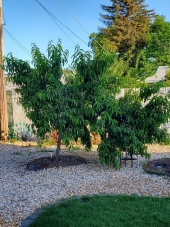
As with most things, it depends. When pruning fruit trees, I'm usually responding to the amount of growth over the past season, and taking into account some idealised "future tree" that I want. A healthy peach tree in its prime years can put on a lot of growth. This ends up crowding the interior of the crown, which responds by dying back and creating a hollowed out shape, with the future productivity of the tree concentrated out at the perimeter.
In a natural setting, a likely outcome to unchecked growth is that long branch extensions lead to breakage, usually from a combination of weight and leverage and exacerbated by wind. The highest risk for this is when the fruit is maturing and if there's a lot of it on the tree, so if you're doing the no prune thing, then thinning fruit is important if you don't want your tree to get ripped up. You'll also get bigger fruit if there are fewer of them competing for resources.
A large limb breaking off the tree can be anything from a setback to a terminal event. The wound could damage the tree badly enough that it starts to die. Or, it could just open up a section of the crown to emergent shoots and reinvigorate the tree. A lot depends on the health and type of tree...some species are better at renewal than others, and in our climate peaches are among the worst. Apples, pears, some plums, persimmons, and feijoas are just about indestructible at our place. Peaches, on the other hand, I plan on replacing within 5-7 years because that's about all I get out of the average tree before it succumbs to one malaise or another.
When they're young and vigorous, I tend to remove about 1/3 of the previous season's growth with each pruning to open up the structure and reduce the length of leaders. That helps keep them compact and avoid crowding, and also means I don't need to thin as much fruit in the summer.



.png)


 3
3