
• Post Reply Bookmark Topic Watch Topic
  • New Topic
permaculture forums growies critters building homesteading energy monies kitchen purity ungarbage community wilderness fiber arts art permaculture artisans regional education skip experiences global resources cider press projects digital market permies.com pie forums private forums all forums
this forum made possible by our volunteer staff, including ...
master stewards:
  • Nancy Reading
  • Carla Burke
  • John F Dean
  • Timothy Norton
  • r ransom
  • Jay Angler
  • Pearl Sutton
stewards:
  • Devaka Cooray
  • Leigh Tate
  • paul wheaton
master gardeners:
  • Christopher Weeks
gardeners:
  • M Ljin
  • thomas rubino
  • Megan Palmer

Hybrid systems/understanding the placement of mass in a system

 
Posts: 1
  • Likes 5
  • Mark post as helpful
  • send pies
    Number of slices to send:
    Optional 'thank-you' note:
  • Quote
  • Report post to moderator
Good morning all,

My wife and I are designing/planning/envisioning a home to (tao willing) be built this year. I have some background in strawbale construction in the desert, but now find myself building in the mountains of north Carolina, approximately 30 minutes to the NW of Asheville. I am interested in the use of mass and plaster as the primary means of moisture mitigation and am interested in hybrid systems, or rather the system that fits that funny venn diagram of practicality, function, and my personal interests.

What I am running into is I guess what I would describe as a limit of my understanding. I have a general grasp on moisture movement, air tightness, mass vs insulation, ect., but I am feeling some hickups on placement/order, and as some of the systems that are popping out of my ravings are getting increasingly unique I have been wanting a second opinion (or third or fourth).

This is the system in question:
(Interior) Clay plaster, 2x4 stud with rockwool, 2 1/2" cavity filled with earth (this is my primary question), 2x4 stud with rock wool, sheathing, tar paper, rain screen, wood siding (exterior)

My primary curiosity is in the placement of the mass and insulation in the double stud system. Simplicity has me wanting to put the insulation in the stud bays, but is there a better order for these materials to be placed?

Thanks for your time,
Cole Staats
 
master steward
Posts: 8213
Location: southern Illinois, USA
3145
goat cat dog chicken composting toilet food preservation pig solar wood heat homestead composting
  • Mark post as helpful
  • send pies
    Number of slices to send:
    Optional 'thank-you' note:
  • Quote
  • Report post to moderator
Hi Cole,

Welcome to Permies.
 
master rocket scientist
Posts: 6993
Location: latitude 47 N.W. montana zone 6A
4024
cat pig rocket stoves
  • Likes 2
  • Mark post as helpful
  • send pies
    Number of slices to send:
    Optional 'thank-you' note:
  • Quote
  • Report post to moderator
Hi Cole, Welcome to Permies!
I'm afraid your question is way beyond my building knowledge.
Hopefully, someone with experience in natural building will chime in to guide you.
I will comment on how much rain and fog you will get in the NC mountains.
Stunningly beautiful when the sun shines, but cold, dark, and damp in the fog and rain. (exactly like North Western Montana.)
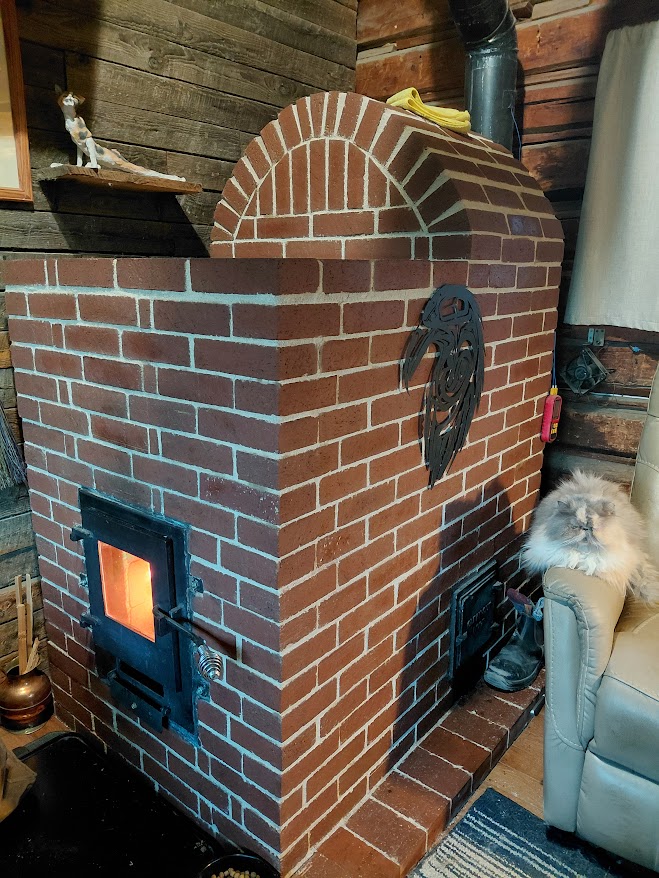
Are you planning on an RMH masonry heater to keep it nice, dry, and toasty warm?
20251209_164720.jpg
6" Shorty Core Batchbox
 
pollinator
Posts: 412
Location: Klumbis Oh Hah, Zone 6
170
  • Likes 2
  • Mark post as helpful
  • send pies
    Number of slices to send:
    Optional 'thank-you' note:
  • Quote
  • Report post to moderator
The house I want to build one day (hopefully tao wills it for me as well) will have a masonry fireplace of some sort--RMH, Russian fireplace, pizza oven, whatever--centrally located in the largest open part of the house. The idea is that its heat would then radiate in all directions, rather than half of it basically heating up an exterior wall.

I think the reason so many fireplaces get built on exterior walls is to make the exhaust ducting simpler, maybe some legacy effect too from when the chimney brick was part structural? But it seems to me if you can safely vent the exhaust up and across and then out, locating your fireplace more middlerer is betterer.
 
steward
Posts: 18356
Location: USDA Zone 8a
4658
dog hunting food preservation cooking bee greening the desert
  • Likes 6
  • Mark post as helpful
  • send pies
    Number of slices to send:
    Optional 'thank-you' note:
  • Quote
  • Report post to moderator
If I were building a house with double stud walls, I would put the insulation against the exterior wall.

Though I feel for a super passive solar home the cavity would be filled completely with insulation.

Though it depends on what type of insulation you are using.

 
master steward
Posts: 14671
Location: Pacific Wet Coast
8984
duck books chicken cooking food preservation ungarbage
  • Likes 6
  • Mark post as helpful
  • send pies
    Number of slices to send:
    Optional 'thank-you' note:
  • Quote
  • Report post to moderator

Ned Harr wrote:I think the reason so many fireplaces get built on exterior walls is to make the exhaust ducting simpler...


I was told at one time that the code changed to disallow central chimneys because a chimney on an outside wall reduces the risk of a chimney fire burning the entire house down, and increases the chances of Humans getting out of the house before the fire blocks them in.

However, there are plenty of ways to reduce the risk of chimney fires, and of reducing the risk of fires from other causes, and reducing the toxicity of objects inside the typical house, and, and, and!

Building codes are written for reasons, but sometimes they are written to solve one problem regardless of whether that makes other factors less efficient.  Some of the builds written about here on permies talk about "double wall insulated stove pipe," which is more expensive. I've sees less written about how to get that pipe through a wall or ceiling safely, but I know there's a badge bit related to the issue, so I just may not have explored the right corner of permies yet?

But please everyone, always consider fire exit routes if you're going to have something hot and potentially fire starting in a home where people will be sleeping. I like my permies alive and not toasted, thank you very much!
 
Posts: 837
Location: Sierra Nevada foothills, 350 m, USDA 8b, sunset zone 7
186
  • Likes 10
  • Mark post as helpful
  • send pies
    Number of slices to send:
    Optional 'thank-you' note:
  • Quote
  • Report post to moderator
Mass should be on the interior - this way it works as thermal battery making the building more resistant to temperature swings, preventing quick cooling or quick heating by the elements. It also prevents vapor condensation (behind interior insulation).
Thermal mass works best when the lowest and highest 24 hour temperatures are below and above comfortable temperature.
Exterior insulation on the mass also reduces noise levels compared to interior mass insulation.
 
pollinator
Posts: 472
58
  • Likes 5
  • Mark post as helpful
  • send pies
    Number of slices to send:
    Optional 'thank-you' note:
  • Quote
  • Report post to moderator
Actually that area is not always damp and cold, as the Blue Ridge mountains form somewhat of a rain shadow.  Asheville itself is the sunniest major city in NC, and the highest peak near this location is less than 6500' elevation.  Gorgeous part of the world to build, I am envious, to be honest
 
I agree. Here's the link: http://stoves2.com
reply
    Bookmark Topic Watch Topic
  • New Topic