
• Post Reply Bookmark Topic Watch Topic
  • New Topic
permaculture forums growies critters building homesteading energy monies kitchen purity ungarbage community wilderness fiber arts art permaculture artisans regional education skip experiences global resources cider press projects digital market permies.com pie forums private forums all forums
this forum made possible by our volunteer staff, including ...
master stewards:
  • Carla Burke
  • Nancy Reading
  • r ransom
  • John F Dean
  • paul wheaton
  • Jay Angler
stewards:
  • Timothy Norton
  • Pearl Sutton
  • Tereza Okava
master gardeners:
  • Christopher Weeks
  • M Ljin
gardeners:
  • Jeremy VanGelder
  • Matt McSpadden
  • thomas rubino

PDF sewing patterns, do you use them?

 
author & steward
Posts: 5913
Location: Southeastern United States - Zone 7b
3692
7
goat cat forest garden foraging food preservation fiber arts medical herbs writing solar wood heat homestead
  • Likes 8
  • Mark post as helpful
  • send pies
    Number of slices to send:
    Optional 'thank-you' note:
  • Quote
  • Report post to moderator
Maybe I'm reluctant to adapt with the times, but for some reason I'm hesitant to purchase PDF sewing patterns. I see things I'd like to sew, but can't bring myself to hit the purchase button. Maybe it's because I've never used one, maybe it's because I don't have a printer, or maybe it's because it's something new, I don't know. I'd have to pay for the pattern and then pay to have it printed out. I'm guessing they print out on standard (U.S.) letter size paper? Are they better than the old fashioned tissue paper patterns? More work? I'd love to get some permies' takes on PDF sewing patterns.
 
steward & manure connoisseur
Posts: 4932
Location: South of Capricorn
2899
dog rabbit urban cooking writing homestead ungarbage
  • Likes 9
  • Mark post as helpful
  • send pies
    Number of slices to send:
    Optional 'thank-you' note:
  • Quote
  • Report post to moderator
I don't, but mostly because my printer is constantly in a state of disrepair and my sewing style is more "what-the-hell" than preprinted pattern. if i found a pattern that looked promising i'd totally buy a PDF. (that said, I live in a place where i have a print shop that's a 10-min walk from my house and I often have things printed for my work at a really reasonable price). I assume if you're in north america you might have a public library where you can print them out cheaply, if you don't have a neighborhood print shop.

I have bought PDFs of knitting and crochet patterns online, many of them, with never a problem. If anything, you're usually buying directly from the pattern designer, who responds quickly to issues or, even better, has an extensive archive of info on Ravelry, for example, if you need help.
 
Leigh Tate
author & steward
Posts: 5913
Location: Southeastern United States - Zone 7b
3692
7
goat cat forest garden foraging food preservation fiber arts medical herbs writing solar wood heat homestead
  • Likes 4
  • Mark post as helpful
  • send pies
    Number of slices to send:
    Optional 'thank-you' note:
  • Quote
  • Report post to moderator
I've used PDF knitting and crochet patterns too. Once printed out they're just like following a book. I'm not sure about having to run off a bunch of sheets and piece the pattern together.
 
Posts: 9
Location: Pacific Northwest USA
6
  • Likes 7
  • Mark post as helpful
  • send pies
    Number of slices to send:
    Optional 'thank-you' note:
  • Quote
  • Report post to moderator
Good question, Leigh Tate,  in re: PDF sewing patterns.

Never used for sewing. Have purchased PDF for knitting and crochet.

I have been sewing for 62 years. I made my first dress when I was 8 years old. Mostly tissue paper patterns. I started designing and making my own patterns when in college. I have also made patterns from finished clothes that people want copied.

Since I do not have a home printer, if I were to use a PDF pattern, I would have to go to the nearest print shop (2 miles away) or to the local library...3 miles away in another direction. I would question how much distortion the downloaded file would carry to the copier. Also consider that copiers have gotten better over time and distortion has been reduced. Not certain I would trust it if I were a novice.

I probably would not bother with a PDF.
 
pollinator
Posts: 766
Location: West Yorkshire, UK
321
  • Likes 7
  • Mark post as helpful
  • send pies
    Number of slices to send:
    Optional 'thank-you' note:
  • Quote
  • Report post to moderator
When I had a working printer, I did;  but it was a hassle!  I have a stash of patterns from charity shops, and also have experimented with altering those patterns--and even drafting patterns from scratch, after watching a lot of youtube videos.  Here's one I watched to draft a pajama top pattern for my five year old daughter.
 
I watched another set of videos about drafting for children, and learned how to add more ease into the pattern (can't remember this video, sorry!).  I also used the same method to draft a bodice pattern for her Barbie; and another video to draft both daughter's and Barbie's trousers.


(Ed to try to get youtube links working)

 
author & steward
Posts: 7476
Location: Cache Valley, zone 4b, Irrigated, 9" rain in badlands.
3725
  • Likes 8
  • Mark post as helpful
  • send pies
    Number of slices to send:
    Optional 'thank-you' note:
  • Quote
  • Report post to moderator
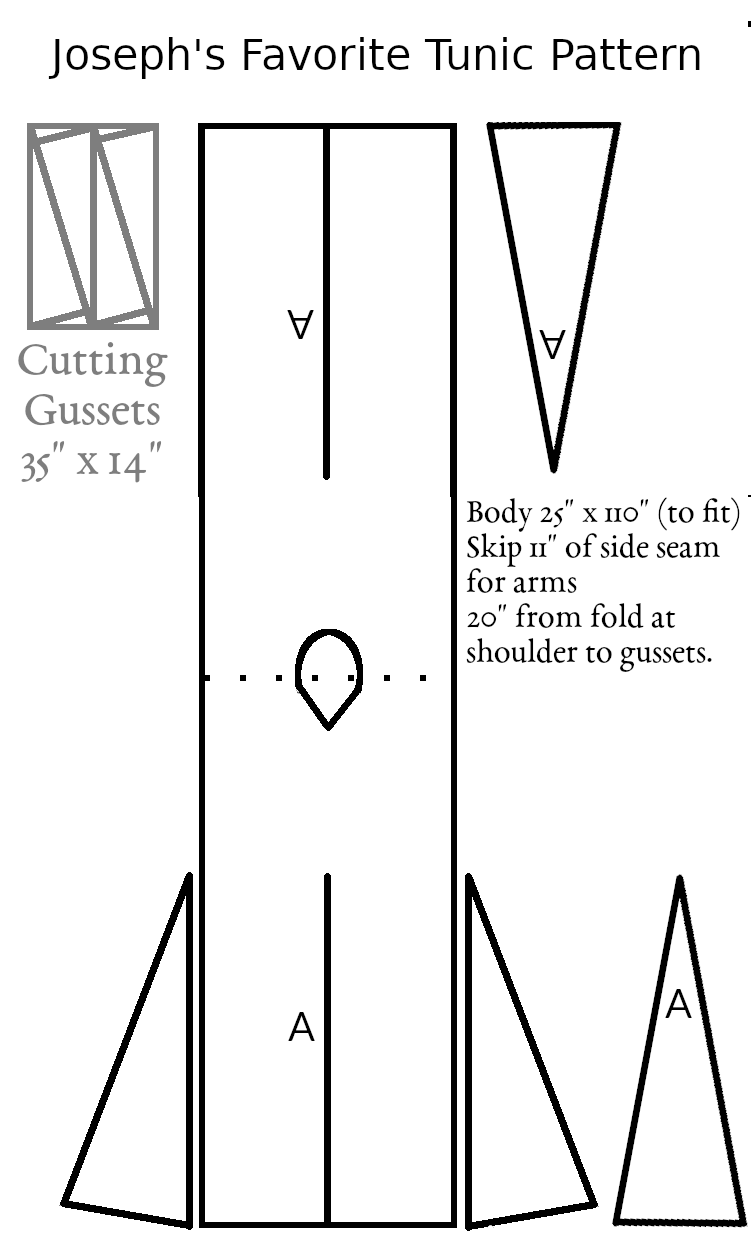
I draft my own patterns. Sometimes by reverse-engineering a beloved piece of clothing. Other times, I draft from scratch.
josephs-tunic.png
favorite tunic pattern
 
gardener
Posts: 415
Location: Southern Ontario, 6b
306
cat forest garden food preservation cooking writing ungarbage
  • Likes 8
  • Mark post as helpful
  • send pies
    Number of slices to send:
    Optional 'thank-you' note:
  • Quote
  • Report post to moderator
I'm mostly a modder of existing pieces. I have both copied existing pieces to make patterns as well as basically making up my own.
I have a good stash of older patterns but I usually have to alter them pretty heavily to get them to fit right so they are used more like guidelines.
For me, a PDF pattern would just have enough front loaded hassle that I cant see how it would be worth it.
And that's not even getting into how often the sizes I need are often just blown up versions of smaller sizes so they are non functional as patterns.
 
pollinator
Posts: 219
Location: zone 6a, ish
137
forest garden fungi trees food preservation cooking homestead
  • Likes 10
  • Mark post as helpful
  • send pies
    Number of slices to send:
    Optional 'thank-you' note:
  • Quote
  • Report post to moderator
I've used printed pdf patterns before, but never for a large garment like a dress; I think one was a cover for my stand mixer, a few for sewn hats and diaper covers/ soakers, that kind of thing (no more than like a dozen pieces of paper).  I like them, though the lining up and taping is kind of a pain.  

The heavier paper has pros and cons: the printer paper doesn't tear if you sneeze on it like the tissue patterns, but it's not as flexible when pinning it to fabric.  I've only used them with quilter's cotton or thicker fabrics; I suspect for a lighter weight material you'd have to use pattern weights and/or trace with tailor's chalk rather than pinning.

As for questions of paper size, the pattern should say what to use.  I don't know if UK/ Euro/ Asian patterns would be any different (I think the standard for the rest of the world is A-4? so maybe it's just taken as given, like the metric system?)--I honestly don't know enough about how pdf files scale when you change the paper size, though.  If it doesn't state the paper size on the download page, ask the seller or chat/ email customer service, they could probably clarify.

I've only used free patterns, but I wouldn't hesitate to spend money on a pdf if it was something I really wanted and was too complex to figure out myself.  The cost of the paper is pretty minimal; I have no idea what it might be at your local library or copy shop or whatever, but the last time I got photocopies made (from a pdf) I paid US$0.20 per page.  The pattern should have the number of pages in the description, so you can guesstimate the cost to print before buying the pdf.  

Speaking of free patterns, you could use one to do a test run before buying a big pattern--something like a hat or a tea cozy or whatever, as long as it's big enough to span multiple pages.  Just google "[whatever thing you want to make] + free pattern pdf" and skip all the AI garbage and the pinterest links.  Or, if you just want to get the feel for using taped-together printer paper, tape together some printer paper and trace an existing pattern onto it (or draw out your own, whatever) and use that to play around with different fabrics.

Oh!  Almost forgot--not all pdf patterns have seam allowances.  They'll usually tell you if they do or don't, and what size the allowance is.  For me, it's a pain to have to do my own seam allowances and that might be a dealbreaker for me if I were going to spend real, actual money on a pattern.
 
Posts: 13
4
  • Likes 8
  • Mark post as helpful
  • send pies
    Number of slices to send:
    Optional 'thank-you' note:
  • Quote
  • Report post to moderator
I've just started getting into sewing. Many sources of PDF patterns seem to have one that's free so you can see what their patterns are like, e.g. I used Walk the Plank PJs as a starter project, and I'm currently working on Roemeria Pants (which I've printed, assembled, and coarsely cut out and am now working on adjusting).

They seem to commonly come with 3 options (though check, not all will have all of these):
- Letter Sized (and A4) for printing at home
- A0 for a large format you can get printed at a copy shop and some sewing stores now offer this service as well.
- Projector files you can use to trace onto paper without printing - there's a whole projector set up you need for this, I have not investigated.

They usually have a sizing square you can check, and a guide of which pages you need to print for different sizes & options. Many have layers in the PDF which let you choose to print only the size(s) you want. Depending on the pattern you may or may not need to trim the pages before taping them together, and they seem to do different things to help you line them up. Both of the ones I've done so far have labelled each page with a letter/number like "B3".

I've done it by printing letter sized pages at home. Carefully lining up and taping 40 pages together does take a bit of time, but was a nice simple calming activity. It probably happens that you can get out of alignment in a way that ads up but the tissue paper patterns seem to fold and crinkle easily as well which could cause similar issues. Walk the Plank is just one very large piece at 1X and while some pages were definitely slightly off by the time I went to add the next ones, it was all fine in the end. For Roemeria, which has a front and back leg piece plus lots of smaller bits, I cut out chunks of pattern pieces as I was assembling so I didn't have to deal with more than about 3x7 pages at a time.

The sewing store near me charges $5.50 CAD per A0 page, I expect copy shops may be cheaper. The Walk the Plank fits on 2 A0 pages (which need to be taped together), the Roemaria are on 2 for "regular" and 3 for "plus" sizes (but all pattern pieces fit on a single page so no taping). If you need to get it printed somewhere anyways I'd do that!

I do need to figure out a good way to store them as they can be quite bulky. I traced out the Walk the Plank pattern with my adjustments onto some lighter weight slightly transparent paper I had on a roll (not sure what it was originally purchased as - a little heavier than what I'd call tissue paper).

There's lots of indie pattern companies now that only do PDF, and the companies that offer both PDF and printed often have a wider size range in PDF.
 
Posts: 51
9
3
  • Likes 7
  • Mark post as helpful
  • send pies
    Number of slices to send:
    Optional 'thank-you' note:
  • Quote
  • Report post to moderator
I mostly use PDF patterns, just because paper patterns can be hard to come by or non-existent for some pattern makers.  PDFs can be a pain, though, for patterns that include lots of pieces or very large pieces (lots of tape!).  The lines don't always match up perfectly from sheet to sheet (though the clothes have always turned out fine - the misalignment is minimal).  Bonuses: some PDF patterns come in digital layers, so you can print out only the size(s) you want.  If I end up loving a pattern, I usually end up tracing it onto tracing paper from the PDF printout to reduce bulk.
 
Posts: 38
Location: Zone 8a
15
  • Likes 5
  • Mark post as helpful
  • send pies
    Number of slices to send:
    Optional 'thank-you' note:
  • Quote
  • Report post to moderator
I haven't used pdf patterns for clothes, but I have used them for small items, like stuff animals. Nothing I would need to scale up.

I have 3 sewing machines.  2 are buried in a closet and 1 is jammed under a table.  We are in the 7th year of the 2 year remodel plan.

BUT when I could reach one,  I liked to experiment with sewing.

My grandmother would be deeply disappointed, but I think reverse engineering or remaking clothing is easier than decoding the symbols on the tissue patterns. .

I have enjoyed watching this woman on YouTube.  
https://youtube.com/@refashionistasheri?si=7eO6BY3n5Ud_JEHs  

She has some interesting ideas.
 
Be reasonable. You can't destroy everything. Where would you sit? How would you read a tiny ad?
permaculture thorns, A Book About Trying to Build Permaculture Community - draft eBook
https://permies.com/wiki/123760/permaculture-thorns-Book-Build-Permaculture
reply
    Bookmark Topic Watch Topic
  • New Topic