
• Post Reply Bookmark Topic Watch Topic
  • New Topic
permaculture forums growies critters building homesteading energy monies kitchen purity ungarbage community wilderness fiber arts art permaculture artisans regional education skip experiences global resources cider press projects digital market permies.com pie forums private forums all forums
this forum made possible by our volunteer staff, including ...
master stewards:
  • Carla Burke
  • Nancy Reading
  • John F Dean
  • r ransom
  • Jay Angler
  • Timothy Norton
stewards:
  • paul wheaton
  • Tereza Okava
  • Nicole Alderman
master gardeners:
  • M Ljin
  • Christopher Weeks
gardeners:
  • Jeremy VanGelder
  • thomas rubino
  • Megan Palmer

What are the advantages grasses carry in the permaculture setting.

 
gardener
Posts: 1212
Location: France, Burgundy, parc naturel Morvan
562
forest garden fish fungi trees food preservation cooking solar wood heat woodworking homestead
  • Likes 4
  • Mark post as helpful
  • send pies
    Number of slices to send:
    Optional 'thank-you' note:
  • Quote
  • Report post to moderator
I've been fighting grass for a long time now, but as the project is expanding i have to say i'm losing control. In some beds where i satrted without grasses it has crept back in and is quite dominating. As there is a heatwave i get up early to make use of the cool mornings and noticed how much dew grasses collect. Sometimes i pull it and mycelium seems fed by it..

In the past i have had a fight with yarrow. I removed it and later i observed that in my tree nursery trees that were surrounded by yarrow fared better. It made me realize my mistake and have been restoring the yarrow population after reading it's a healer plant.

I wonder if something similar goes for grasses? I am well aware that the word grass is misleading as there are so many species with differing qualities, but i would like to get a bit more nuanced about it and i'm curious what people have to say about it.
 
steward
Posts: 18897
Location: USDA Zone 8a
4781
dog hunting food preservation cooking bee greening the desert
  • Likes 3
  • Mark post as helpful
  • send pies
    Number of slices to send:
    Optional 'thank-you' note:
  • Quote
  • Report post to moderator
I like grass though not all grasses are created equal.

What kind of grass do you battle?

Do you chop and drop before it goes to seed?

Grasses that spread underground by rhizomes are the ones that I would not like to have.

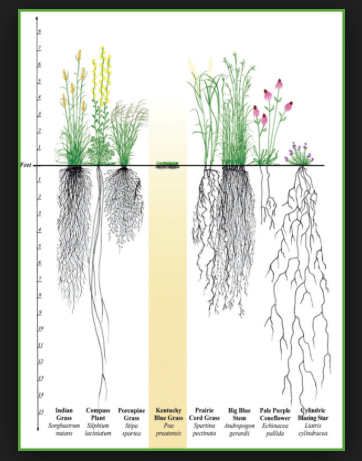
Deep rooted grasses and native grasses sometimes build up soil fertility.
 
master gardener
Posts: 6404
Location: Carlton County, Minnesota, USA: 3b; Dfb; sandy loam; in the woods
3848
8
forest garden trees books chicken food preservation cooking fiber arts seed woodworking homestead ungarbage
  • Likes 1
  • Mark post as helpful
  • send pies
    Number of slices to send:
    Optional 'thank-you' note:
  • Quote
  • Report post to moderator
I hate the perennial runner grasses that constantly invade my garden beds. I'd love for this thread to show me that I'm wrong and chart a path for living in harmony with them, but I'm starting out with a murderous bias against them. (Grain-bearing grasses, I love!)
 
Posts: 87
30
  • Likes 1
  • Mark post as helpful
  • send pies
    Number of slices to send:
    Optional 'thank-you' note:
  • Quote
  • Report post to moderator
The US corn belt was formerly tallgrass prairie. Farmers are still taking advantage of the fertility the prairie built over those many years, 150 plus years and counting on some of the earlier homesteaded farms. We are at 146 years here since my great grandfather, Christopher settled here. We have declared our farm to be a living, learning, and sharing farm. Slightly under one half of this farm is tillable acres and the balance is in long term grassland, some native and some restored. We started comprehensive soil health testing last fall on our differing land use acres. The native grassland is running between 4 and 5 % organic matter vs the 2 % or less for the tillable acres. It is thought that each percent of soil organic matter (SOM) is equal to about 20 pounds of nitrogen per acre. As we build our SOM on the tillable acres the need for purchased fertilizer will be much less, we are working at growing our own fertility. This will be accomplished with crop rotation and cover crops. A really true balanced rotation would include about 5 years in grassland to maintain long term fertility. Charles Darwin placed stones in a pasture and observed the stones sank 7" into the soil surface after 29 years, nearly 1/4" of topsoil was built each year with help off the grassland and the earthworms.

Getting back to the garden and its fertility. I have learned some in watching the garden and its organic transformation and we are applying this to our production acres. If you saw my garden right now you might say what a mess ! But when you till a bit around the potato plants the earthworms have put out the "do not disturb" sign. So we carefully garden with the grasses and the oats planted a month ago. The garden plants get daylighted and the rest is left to grow and build the soil. I keep the annual grasses from going to seed with an occasional mowing during the summer. I am a member of the Minnesota Soil Health Coalition. Here are the soil building tenants.

Reduce disturbance
Cover the soil
Increase diversity
Keep a living root
Integrate livestock when possible
 
I agree. Here's the link: http://stoves2.com
reply
    Bookmark Topic Watch Topic
  • New Topic