• Post Reply Bookmark Topic Watch Topic
  • New Topic
permaculture forums growies critters building homesteading energy monies kitchen purity ungarbage community wilderness fiber arts art permaculture artisans regional education skip experiences global resources cider press projects digital market permies.com pie forums private forums all forums
this forum made possible by our volunteer staff, including ...
master stewards:
  • Carla Burke
  • John F Dean
  • Nancy Reading
  • r ransom
  • Jay Angler
  • Timothy Norton
stewards:
  • paul wheaton
  • Pearl Sutton
  • Anne Miller
master gardeners:
  • Christopher Weeks
  • M Ljin
gardeners:
  • Jim Garlits
  • thomas rubino
  • William Bronson

Spring house input

 
Posts: 18
2
  • Likes 5
  • Mark post as helpful
  • send pies
    Number of slices to send:
    Optional 'thank-you' note:
  • Quote
  • Report post to moderator
This seems like the most appropriate forum for this, but I'm not super sure! We have been in our property for a year, and it includes an old masonry spring house. The spring house is certainly much older than the house itself, which is from the 1950s.

It's a seepage spring, not active flowing, but it has standing water and fills actively from the seeping walls when it rains. It's unclear whether it has any inlet beyond seepage, but I don't think so. It has an outflow pipe that drains (slowly) underground out towards the small catchment pond, which is artificial and just a dug out pond a few feet below the usual water table (and the pond then has an overflow pipe that drains into a dry creek bed downstream). The spring house used to also house the well for the house's drinking water, but everything (spring house, pond) went dry in a drought about 25 years ago, and the house was put on municipal water, so the well is no longer used (though the aboveground hardware is still at least partly present in the spring house channel).

The roof of the spring house is also clearly very new, but the walls themselves... not so much. There is a fair amount of crumbling of the masonry and damage, both inside, and outside where it's aboveground, especially at the corners and the tops of the walls. We plan to look into repairs, and they will probably be substantial and complicated.

The question really is... what should we do with it?? It's extremely cool and we love it! But we do have modern refrigeration. Maybe someday, when we're more established, we'll experiment with making cheese, and it might be good for that, but we're not there yet. Last year we also had such a severe local drought that it all went dry again, so I guess we can't completely rely on it. It is also a big enough structure that the temperature inside is actually not well regulated except down in the water (which is where you would store dairy, so okay, but ideally the rest of a spring house structure can serve as cold but not frozen storage). We could try to insulate it better (and maybe keep out critters! Right now it's fully open under the eaves so small animals can come right in and nest in there). But at the moment, it doesn't really work as a root cellar: the air does get below freezing in cold winter temperatures, and it gets hot in the summer, with such a high ceiling and rafters. I'd love suggestions and ideas for what to do with such a cool piece of our property!! Thanks!!
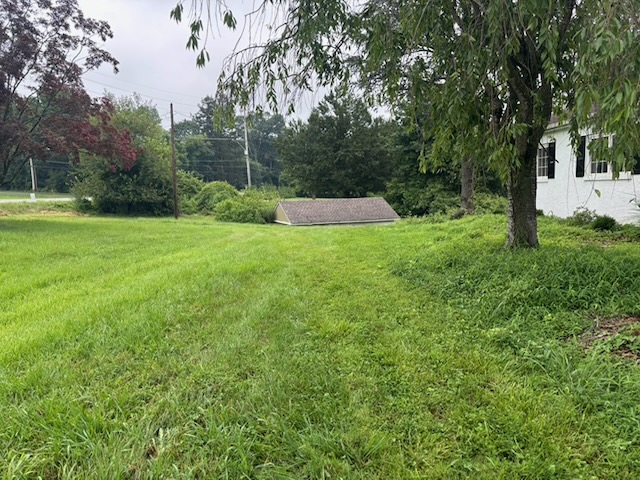
IMG_9424.jpeg
Spring house roof seen from the front lawn
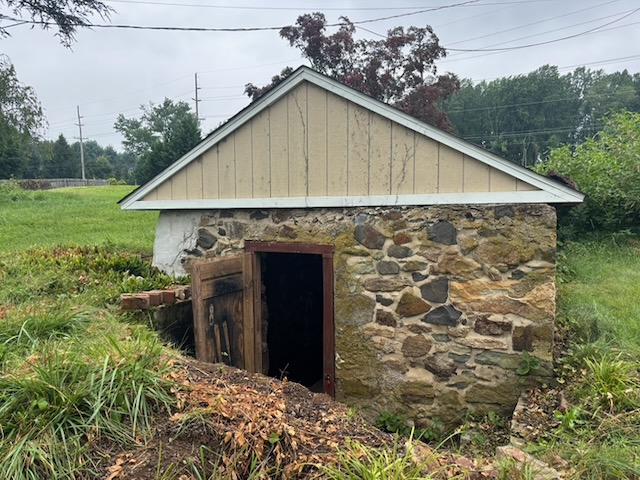
IMG_9425.jpeg
Entrance to the spring house
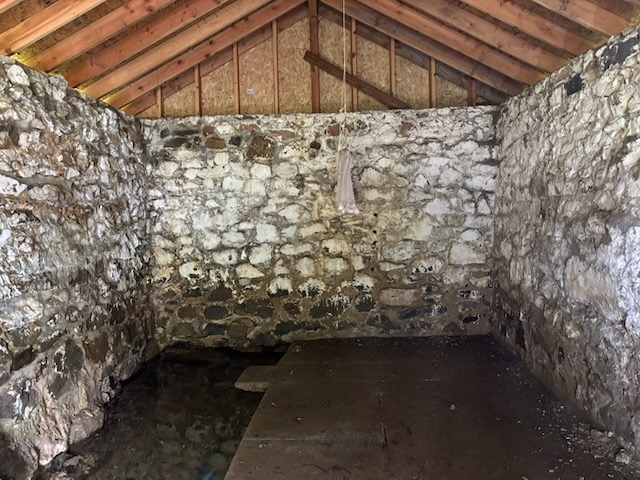
IMG_9427.jpeg
Inside the spring house. I briefly experimented with storing garlic in there (and also installed a temperature monitor), but it got too hot in the summer and cold in the winter.
 
steward
Posts: 19097
Location: USDA Zone 8a
4823
dog hunting food preservation cooking bee greening the desert
  • Likes 2
  • Mark post as helpful
  • send pies
    Number of slices to send:
    Optional 'thank-you' note:
  • Quote
  • Report post to moderator
That looks like it might make a good root cellar.

Or maybe a tornado shelter if where you live is prone to those.
 
steward and tree herder
Posts: 13537
Location: Isle of Skye, Scotland. Nearly 70 inches rain a year
7353
6
transportation dog forest garden foraging trees books food preservation woodworking wood heat rocket stoves ungarbage
  • Likes 2
  • Mark post as helpful
  • send pies
    Number of slices to send:
    Optional 'thank-you' note:
  • Quote
  • Report post to moderator
Oh that is pretty cool (in both senses!)

If the eaves are open it is not surprising that the temperature varies so much. I suspect that if you blocked gaps and insulated the roof you might find the temperature range was much more suitable for cool food storage - a slightly damp coolish place is ideal for many vegetables and drier shelves for pantry items and seeds perhaps.

The stonework doesn't look bad in the photos (mind you photos can be deceptive....). I suspect to make it into dry storage or for alternative uses would be much more work though.
How big is the interior?
 
pollinator
Posts: 869
Location: Clemson, SC ("new" Zone 8a)
212
11
  • Likes 3
  • Mark post as helpful
  • send pies
    Number of slices to send:
    Optional 'thank-you' note:
  • Quote
  • Report post to moderator

Nancy Reading wrote:If the eaves are open it is not surprising that the temperature varies so much. I suspect that if you blocked gaps and insulated the roof you might find the temperature range was much more suitable for cool food storage - a slightly damp coolish place is ideal for many vegetables and drier shelves for pantry items and seeds perhaps.


Clearly closing the gaps in the eaves and adding insulation to the ceiling would be a good first step.  If I wanted to explore the potential for this structure as something like a root cellar, I'd also consider berming earth higher on all sides.  That would go a long way towards stabilizing the temperature through the seasons.  You have the advantage that the masonry walls should be impervious to soil contact.
 
Posts: 263
18
3
  • Likes 2
  • Mark post as helpful
  • send pies
    Number of slices to send:
    Optional 'thank-you' note:
  • Quote
  • Report post to moderator
What is your location vis a vis summer highs and winter lows outdoor air temperatures?

or your

Annual outdoor air temperature (often abbreviated as AOAT or MAAT for Mean Annual Air Temperature).

There are a number of ways to increase the depth of your seep well, even in these rather tight, little room, low ceiling situations.

"How to drill a water well yourself using a power drill. And a water jet."

https://youtu.be/xQRhsoSCXvg?si=ubzzyZDizhS4wCwy

My feeling is that if you're getting surface water that the ground water level is not that much further underground.

Only time and drilling, will let you know.
 
Posts: 51
Location: Mason County, WA USA:Ha; Harstine gravel ashy sandy loam
38
duck rabbit chicken medical herbs bee solar wood heat rocket stoves
  • Likes 3
  • Mark post as helpful
  • send pies
    Number of slices to send:
    Optional 'thank-you' note:
  • Quote
  • Report post to moderator
What a beautiful little structure, Syd - that is just picturesque as can be...   I second the comments about some insulation / closure for the gaps, a good start would be to line the interior of the roof / area above the stone with double bubble radiant insulation onto furring strips attached across the rafters, silver portion facing outward, leaving an air envelope between the interior roof surface and the reflective surface. It will mediate the heat, and won't mold under any conditions. The interior that you see would be the white surface interior layer.

What about repurposing it for growing medicinal or culinary mushrooms?
Could you stack shitake plugged logs inside there???
Turkey tail or Lion's mane or Reishi mushrooms could perhaps grow well if there was a small amount of venting to facilitate some air exchange at the ground level just before the roof begins, and a small window (preferably north facing to help trigger fruiting) was placed in one of the gable ends)
If you can modulate the temperature swings, it seems like a good place to experiment with growing mushrooms.... damp.... dark....

Let us know what you decide to do with it!
 
pollinator
Posts: 133
46
  • Likes 3
  • Mark post as helpful
  • send pies
    Number of slices to send:
    Optional 'thank-you' note:
  • Quote
  • Report post to moderator
A quick glance at the roof indicates it is far newer than the original one.  I wonder if the original roof was, perhaps sod?  That would allow for cooler inside temperatures than this chipboard and shingle one.  I would be careful and regularly test any water seeping in as this is shallow enough to allow seepage of surface water.  Any animals around the lawn could be providing bacteria that would not be helpful.  Placing closed cell foam on the outside of the walls would be much less picturesque, but good to keep out surface seepage with associated fungi, bacteria, etc. and maintaining temperatures more in a continuous range. The zone indicates much of NC and the upland region of SC, North Georgia (outside taller mountainous areas) and much of north Alabama.  Current soil temps at 8" down are showing temps in the mid-to upper 70's.  I would not suggest this would work as a decent tornado shelter. That roof is not likely structurally attached to the walls and even then, the cement on what appears to be limestone looks quite old and showing its age.  Does the home have a basement?  I would guess not or it would be wetter than this. In the areas most commonly identified as zone 8a, tornadoes have a bad habit of hiding until they pounce.  It is not a good idea to have a shelter outside the home in such areas, too much exposed travel in potentially deadly conditions.

The vegetation beyond the springhouse in the first picture with the home appears to be heading down into a channel.  That would indicate potential for flooding and if so, the remnants of a flood in a building like this are less than desirable.

It definately looks cool and I really wish it could be easily modified to be worth the upkeep.  Perhaps there are other homes with such structures in the area?  If so, ask the owners if they know what they were used for.  On meditating on the photo of the interior, what if the roof was modified to a greenhouse and then used for starting plants in the spring.  I could really see that as a use since drought would be past the plant starting portion of the season, but the chances of frost past February inside would be minimal.  Any open water on the floor would help to maintain a frost-free growing area with favorable humidity.  Just a wild thought.
 
I agree. Here's the link: http://stoves2.com
reply
    Bookmark Topic Watch Topic
  • New Topic