Today's photos are all of the Rat-tailed maggot/Drone fly (most commonly Eristalis tenax). These showed up in a garbage can of cow pies that has been soaking in water to soften for cob making. If you see these in a natural body of water, it means there is a serious pollution issue. They are only attracted to stagnant water with an abundance of organic matter (usually manure). If these weren't in a plastic garbage can, then pretty foul stuff would be leaching into the ground water. They use their tail as an extendable breathing tube so they can live and feed underwater. The pupae usually are found somewhere drier and have some little horns sticking out. The adults mimic honey bees, but have only one pair of wings and will usually have a more darting and hovering flight pattern. The adults feed on nectar and act as beneficial pollinators. This adult has just emerged from the pupal case and its wings and exoskeleton aren't quite stiff yet and the coloring is dull (sorry the focus is a bit off).
I find these maggots particularly disgusting but didn't know anything about the other stages, or even the name. So, thanks and it's good to know they are beneficial. I'll try to look on them in a different light from now on. There are lots in my bins of soaking seaweed.
It makes sense that the rat-tailed maggots would be in your seaweed water, Sue, as i read about people getting them in their comfrey tea. We have obviously made that water pretty foul and they are trying to help clean up.
Today i've got something nicer to look at: growies!
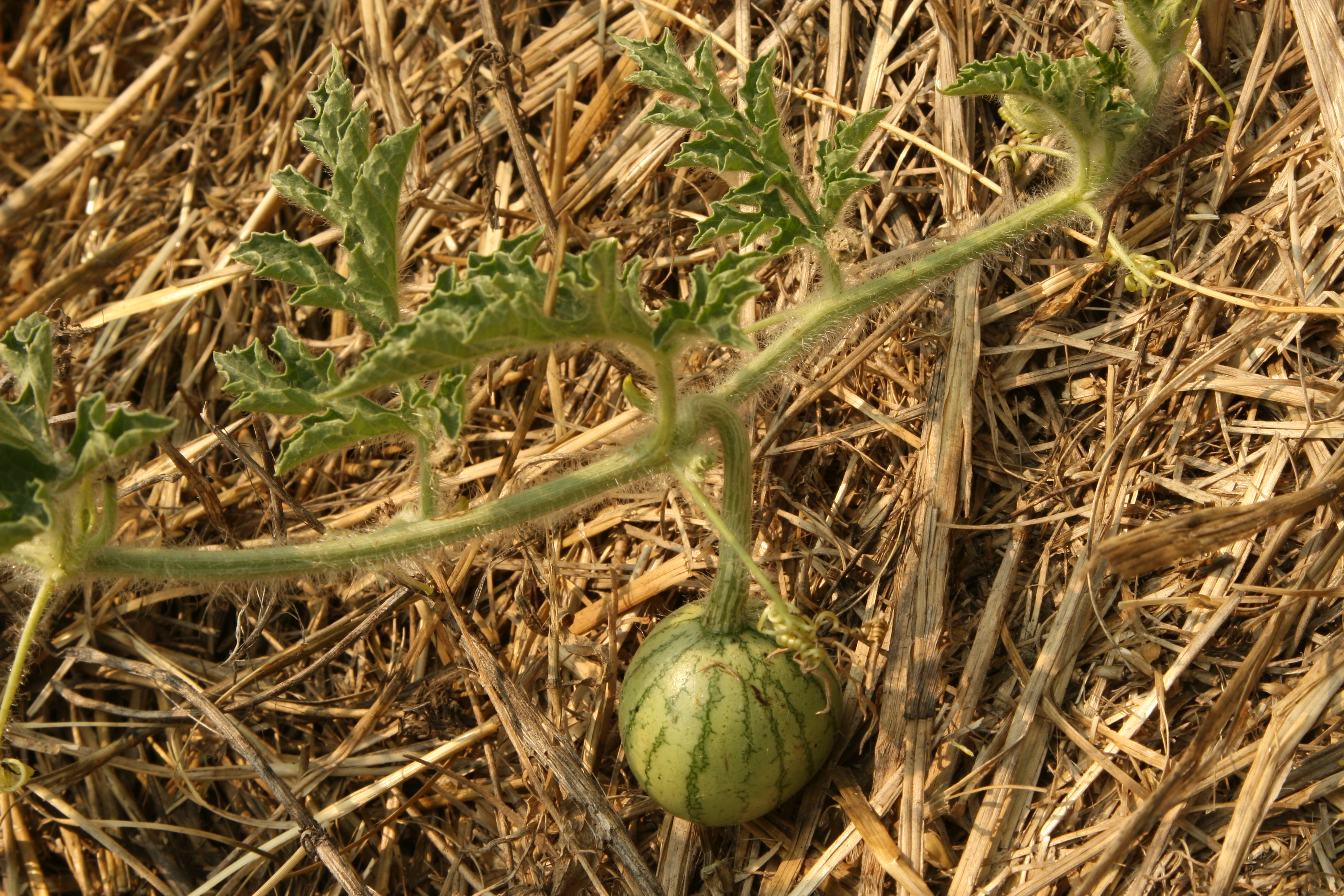
The first is a watermelon growing at the teepee. Will it make it in time? I hope so, though it did get a bit of a late start.
The second and third are a squash that is growing by Allerton Abbey. It has been putting on tons of lush growth. I'm sure no sunlight is reaching the ground beneath it. It has layers of leaves over layers of leaves (not to mention several inches of mulch). It finally got a few female flowers, so we might get some food out of it after all.
The first photo is of Alfalfa (Medicago sativa) or lucerne if you are not in the US. This is a great perennial nitrogen fixer. Most of the time it will live between four and eight years. This drought resistant plant has an incredibly deep root system. Usually the taproots are 6 to 12 feet deep, but under ideal conditions they can easily grow to 30 ft and sometimes more than 60! There is a plant at a Nevada mine tunnel that was found to have 130 ft deep roots! They are an insectary plant and attract many beneficial insects. The seeds can be easily sprouted and eaten, though they are small and might not be worth the trouble of collecting and cleaning.
The second and third photos are of Fireweed (Chamerion angustifolium). The seeds are spread by wind and can last in the soil for many years. When a site is disturbed (by humans, or fire) fireweed is one of the first pioneers to show up. After trees and shrubs get established fireweed doesn't compete well and will die off. The young shoots are edible but become tough and bitter as they get older. A fiber from the stems can be used to make cordage. Fireweed is used by many species of wildlife.
Sorry i haven't been posting much. Everything has been shrouded in smoke from fires in the region and i haven't taken that many photos. We got a little rain the last couple of days, and now the air is clear.
The first photo is of one of the berms at basecamp. Usually, behind the berm you can see mountains behind mountains, behind mountains. It was so smokey we could hardly see the closest mountain!
The second photo is some bulbils from Egyptian walking onions that my friend sent me from Minnesota. Thanks Mike! Now we can multiply the numbers of this great onion faster. Some of these were already getting little roots - they can't wait to grow!
I took advantage of Paul and Jocelyn's kitchen vacancy during their trip to Seattle and made a big batch of strawberry jam. These strawberries had such an intense flavor, the jam is perfect.
All of today's photos are of some orb weaver spiders living around the house at basecamp. They are the Cat-Faced Spider (Araneus gemmoides). These spiders hide out during the day. Like most orb weavers, they seem to build a new web each night (after eating the old one). They have a pattern on their back that with two protruding bumps resembles a cat face. The female will lay a big egg sac in the fall with hundreds of eggs inside. In the spring the eggs will hatch and the spiders will let our a line of silk to go ballooning to a new location.
If you look close at the underside view, you can see the spinnerets.
The first two photos are two more unidentified spiders from basecamp. The first had a lot of debris from previous meals decorating its web. All of the ones like this were pretty small. The second one was rather large and is missing one leg and was slowly climbing the wall.
The third photo is some kimchi that i made using daikon and garlic from basecamp. Yum, spicy ferments!
IMG_8056.JPG
mystery spider
IMG_8070.JPG
mystery spider
IMG_2262.JPG
kimchi
Tomorrow is the first day of the new metric calendar. Comfort me tiny ad:
Large Lot for Sale Inside an Established Permaculture Community — Bejuco, Costa Rica