|

|

|

|

|

|
|
|
|
|
|
|
|

|

|

|

|

|
 7
7


 8
8


 6
6
Other people may reject you but if you lie in the forest floor for long enough the moss and fungi will accept you as one of their own!
This is all just my opinion based on a flawed memory
 6
6
"If you've never failed, you have not tried enough new things"
4
The First Axiom of Life: Don’t do dumb things.
6
Invasive plants are Earth's way of insisting we notice her medicines. Stephen Herrod Buhner
Everyone learns what works by learning what doesn't work. Stephen Herrod Buhner
4
2
Leaftide - garden planner w/ 1228 plant types. Need permaculture testers for fruit trees & perennials. Free Pro month for detailed feedback, even just suggesting plants
5
6
"You must be the change you want to see in the world." "First they ignore you, then they laugh at you, then they fight you, then you win." --Mahatma Gandhi
"Preach the Gospel always, and if necessary, use words." --Francis of Assisi.
"Family farms work when the whole family works the farm." -- Adam Klaus
4
4
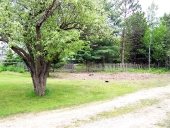
R Scott wrote:How much do you intend to interact with the orchard in the first 5-10 years? I’d make sure the brush is knocked down enough to walk EASILY if you want to do anything before it decays.
3
Cristobal Cristo wrote:I just checked the Fedco website an indeed they state that:
Standard trees are now grafted onto Malus domestica. (We can no longer get Antonovka because of the war in Ukraine)
It would be probably a seedling of some other apple that will produce a normal sized tree.
The trees I have ordered form them and planted in 2023 have already bloomed and hopefully they will produce some apples this year, so 3 years for the first crop, but in your climate they would probably grow much better.
I like the idea of standards interwoven with some dwarfs.
5
Cristobal Cristo wrote:Site preparation for orchard is to some extent comparable to building foundation - it's difficult to change after the orchard is established.
I would recommend to dig all stumps and roots with a rented/hired excavator, use chipper for all wood material and mix it into the soil with deep plowing/ripping. This is how they prepare the ground for planting new orchards here. At that point I would also add some additional organic material - more if the soil has high clay contents.
3
Jake Schroth wrote:[Where abouts are you located if you dont mind me asking. Up here in central maine being zone 5 we only have about 150 growing days, but generally lots of rain, and cold.
5
Douglas Alpenstock wrote:
Cristobal Cristo wrote:Site preparation for orchard is to some extent comparable to building foundation - it's difficult to change after the orchard is established.
I would recommend to dig all stumps and roots with a rented/hired excavator, use chipper for all wood material and mix it into the soil with deep plowing/ripping. This is how they prepare the ground for planting new orchards here. At that point I would also add some additional organic material - more if the soil has high clay contents.
I am not an expert on orchards in your area. Still, the comments above make sense to me. Half measures rarely lead to stellar results.
I am particularly concerned about the aspen. I'm not sure of your variety, but generally the rootstocks of both poplar and aspen do not die when the standing trees are cut down. Instead, they pop up 100 new trees from the roots. I think this would be a highly competitive species and a maintenance nightmare in an orchard.
4
Cristobal Cristo wrote:
Jake Schroth wrote:[Where abouts are you located if you dont mind me asking. Up here in central maine being zone 5 we only have about 150 growing days, but generally lots of rain, and cold.
The best apples were developed in countries with cold/temperate climates and these are the apples I'm trying to grow in my hot, too intensely sunny California location. Some survived and some not.
Jake Schroth wrote:With my day job being a forester i am well aware of their tendency to sprout, and with regular cutting (ie monthly), they die off after a year or two from depleting their root reserves. Thats how i dealt with it when removing the random scattered aspens in what is now my garden.


|
This guy is skipping without a rope. At least, that's what this tiny ad said:
Free Heat Movies! Get 'em while it's Cold!
https://www.stoves2.com/Wood-Burning-Stoves
|