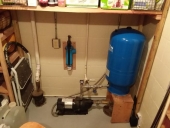
What if you can't find the water shut off and no one knows where it is?
The hot water hose burst on the washing machine, what do you do?
Invasive plants are Earth's way of insisting we notice her medicines. Stephen Herrod Buhner
Everyone learns what works by learning what doesn't work. Stephen Herrod Buhner
Anne Miller wrote:What if you can't find the water shut off and no one knows where it is?
The hot water hose burst on the washing machine, what do you do?
Shut off the inlet/outlet valves on the hot water heater then...
...but the real answer is we have no business living in a house if we don't know where the shutoffs for water, gas, and electric are.
At least not knowing the water shutoff just ruins your stuff instead of having potential to kill you like the other two.
When i lived in an earthquake area i kept a wrench in a bag taped to the gas shutoff outside. Going back inside a leaning/shattered/gas filled house to look for a wrench before the building explodes is... an unfortunate way to die. https://www.bbc.com/news/videos/c93ww718g2vo
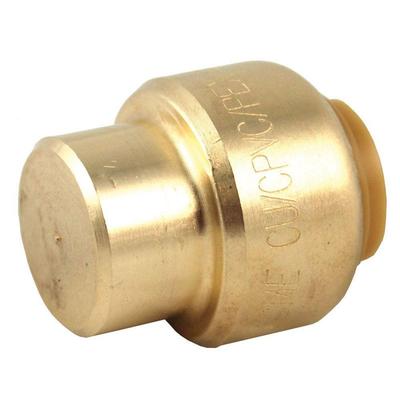
A friend of mine gave me a recommendation that I love. He keeps a couple sharkbite end cap fittings on hand for the standard size pipes in his house. In the event there is an issue with a leak AND the controlling valve fails, you could cut the pipe and quickly stop the flow by popping on the sharkbite. This gives you time to properly fix the issue without flooding out your space.
For those who are unfamiliar with sharkbites, they are a product that you push onto a pipe to make a tight seal. No sweating or pro-pressing needed.
In my job as a property manager, we photograph the location of all the services - the water mains, internal and external power switch boards, gas meter, and hwc when we do the initial entrance inspection.
The report is provided to the tenants and is useful for maintenance people when they need to do any work at the property.
The local council also have online records of where water mains is located.
As a home owner, we are often less well informed if we didn’t actually build our home.
If the burst is upstairs and there is water now streaming through the house, grab a flashlight and turn off the power (main breaker) eliminating electrocution risk. Main breaker is probably in the basement. While you are down there:
Turn off main water valve. This should be close to the main sewer line in the basement and often has the water meter attached to it.
If you cant find that the next option is shutting it off in the street/sidewalk.
If you cant reach the shutoff valve in the street (under ice and snow) and for some reason you cant get to the shutoff in the house, and your piping is copper (or lead, lol) take a hammer to the pipe upstream of the burst somewhere where there is a solid backing (e.g. where the pipe touches a joist) and hammer the f**k out of it. This will slow down the leak and buy you some time to dig the outside shutoff valve cover out of the snow and ice. You would have to be pretty desperate to do this. Not sure if you could do something similar with PEX. Often PEX will have a loop installed somewhere, so you could include a crimp/kink there by bending it back on itself and securing it with wire/twine/rope or duct tape. Not sure what plan B would do if you have cast iron or PVC pipes as these pipes are not deformable.
Three followup items:
Shut off the water heater (gas or electric) because you dont want heat being applied to an empty water heater.
Once the water is shutoff drain the system by opening a tap upstairs and then run water out of your lowest tap in the building (probably the water heater or washing machine).
Flush toilets to remove water from the toilet cisterns and if you have a spare jug of winter windshield wiper fluid, dump some of that into the toilet bowls.
Sometimes your first warning that there is a problem is not so much a water leak, but that the water is "off". Pipe freezes and water will not flow and the leak only then appears once the heating to the house is turned back on.
Anne Miller wrote:What if you can't find the water shut off and no one knows where it is?
The hot water hose burst on the washing machine, what do you do?
Shut off the inlet/outlet valves on the hot water heater then...
...but the real answer is we have no business living in a house if we don't know where the shutoffs for water, gas, and electric are.
It was not my house, maybe I was too stupid to know about the hot water heater (or even where it was?) and I did not want to be burned by scalding hot water ...
Invasive plants are Earth's way of insisting we notice her medicines. Stephen Herrod Buhner
Everyone learns what works by learning what doesn't work. Stephen Herrod Buhner
Here are some images of the 'flood stops'.
One style is simply a small tap and the other smaller unit is a fllod top unit.
GENERALLY THESE FLEXIBLE UNITS DONT LAST BEYOND 10 YEARS.
SOME ARE MARKKED FOR REPLACEMENT EARLIER.
THEY ARE A DISGRACE, BUT 'FALCON' SUPPLY A FLEXIBLE 100% STAINLESS STEEL FLEXIBLE UNIT WHICH WILL NOT BURST.
John, you intrigue me with your post. I should pay more attention to the age of all plumbing components, and need to think long and hard about pvc, pex, even steel. What is considered best practice for plumbing , for health and for safety?Do folks replace all plumbing after X amount of time? Perhaps replace all bits every 12 years, or wait until they leak? An opinion,or two please.
A few of things I've learned:
- it's a good idea to exercise all shutoff valves (open and close them), both the whole house and at individual fixtures, on a regular basis, probably at least once a year. If they don't move, they tend to corrode internally and stick, and may not work when you need them. I had a valve handle I was trying to close break off because it was too badly stuck - thankfully it wasn't something I needed off urgently, but would have been bad otherwise.
- have shutoff valves at each fixture. This isn't necessarily an emergency thing, but if you're trying to fix or replace a faucet or appliance and you can't shut off the water there and have to shut off the main, it's a bigger production that has to be done now, instead of being able to take your time with the fix. Exterior faucets especially should have their own independent shutoffs.
- if you shut off the main for any reason, you probably want to go through the house and remove aerators and run the faucets until they run smooth (i.e. once the air is out, run a bit longer). The pressure drop/rebuild tends to knock sediment loose in the pipes, which clogs up the aerators and makes them flow poorly.
"All we have to decide is what to do with the time that is given us." ~ Tolkien
Timothy Norton wrote:A friend of mine gave me a recommendation that I love. He keeps a couple sharkbite end cap fittings on hand for the standard size pipes in his house. In the event there is an issue with a leak AND the controlling valve fails, you could cut the pipe and quickly stop the flow by popping on the sharkbite. This gives you time to properly fix the issue without flooding out your space.
For those who are unfamiliar with sharkbites, they are a product that you push onto a pipe to make a tight seal. No sweating or pro-pressing needed.
Sharkbite End Cap
Yup. And let you plug the leak and turn the rest of the house back on so you can wait until normal business hours.
"You must be the change you want to see in the world." "First they ignore you, then they laugh at you, then they fight you, then you win." --Mahatma Gandhi
"Preach the Gospel always, and if necessary, use words." --Francis of Assisi.
"Family farms work when the whole family works the farm." -- Adam Klaus
R Scott wrote:
Yup. And let you plug the leak and turn the rest of the house back on so you can wait until normal business hours.
I like the previous comments about "preparedness" for an emergency -- knowing your system, regular inspection/maintenance, action plan in case of: x,y,& z., tools & supplies on-hand -- but this comment here is as much about a strategy to save time, money, and frustration. If you have to hire a plumber, an emergency call may cost more, or leave you tied up waiting for "as soon as they can get there" especially if the problem is weather-related you can bet that you are not the only one calling. If you can stabilize things, you can more easily schedule a repair, allowing you to better make plans regarding work, meals, hygiene... and not waste a bunch of time waiting around, or washing dishes in your shower. If you are doing your own repairs, whether in an emergency or not, doing the work when supplies or help are available is wiser than starting at midnight on Saturday.
Benedict Bosco wrote:A few of things I've learned:
- it's a good idea to exercise all shutoff valves (open and close them), both the whole house and at individual fixtures, on a regular basis, probably at least once a year. If they don't move, they tend to corrode internally and stick, and may not work when you need them. I had a valve handle I was trying to close break off because it was too badly stuck - thankfully it wasn't something I needed off urgently, but would have been bad otherwise.
- have shutoff valves at each fixture. This isn't necessarily an emergency thing, but if you're trying to fix or replace a faucet or appliance and you can't shut off the water there and have to shut off the main, it's a bigger production that has to be done now, instead of being able to take your time with the fix. Exterior faucets especially should have their own independent shutoffs.
- if you shut off the main for any reason, you probably want to go through the house and remove aerators and run the faucets until they run smooth (i.e. once the air is out, run a bit longer). The pressure drop/rebuild tends to knock sediment loose in the pipes, which clogs up the aerators and makes them flow poorly.
I learned a trick from a veteran plumber years ago: Most shutoff valves are the "gate" type with the handle that you turn to open and close. Since they spend years, even decades, in the open position, it's very common for them to corrode in place...then when you really need to turn them off RIGHT NOW you can't. His trick is to open it all the way, then back off about half a turn from the fully open position. This keeps the surfaces from mating and gives you some wiggle room when you need to free things up quickly.
You can also replace a gate shutoff with a high quality ball valve. These are very resistant to seizing up, but more costly.
PHIL, that is a fabulous trick with the gate valve, I have broken a few.
Rico, burst flexible pipes is a $A40 million a year problem in Australia, with the average repair cost of $A40,000.
Carpets, flooring etc.
I have seen them put inside walls!
They are usually marked replace every 5 or 10 years!
I do not know why they are allowed to be used at all.
Falcon from the USA makes unbreakable flexible stainless steel pipes.











 1
1


![[Thumbnail for pipe.jpg]](/t/371675/a/287648/pipe.jpg "Filename: pipe.jpg
Description:")
 1
1




![[Thumbnail for flood-stop-valves.jpg]](/t/371675/a/287764/flood-stop-valves.jpg "Filename: flood-stop-valves.jpg
Description:")