• Post Reply Bookmark Topic Watch Topic
  • New Topic
permaculture forums growies critters building homesteading energy monies kitchen purity ungarbage community wilderness fiber arts art permaculture artisans regional education skip experiences global resources cider press projects digital market permies.com pie forums private forums all forums
this forum made possible by our volunteer staff, including ...
master stewards:
  • Carla Burke
  • John F Dean
  • Nancy Reading
  • r ransom
  • Jay Angler
  • Timothy Norton
stewards:
  • paul wheaton
  • Pearl Sutton
  • Anne Miller
master gardeners:
  • Christopher Weeks
  • M Ljin
gardeners:
  • Jim Garlits
  • thomas rubino
  • William Bronson

how to design a cover crop for large containers

 
master steward
Posts: 15879
Location: Pacific Wet Coast
10318
duck books chicken cooking food preservation ungarbage
  • Likes 5
  • Mark post as helpful
  • send pies
    Number of slices to send:
    Optional 'thank-you' note:
  • Quote
  • Report post to moderator
Due to deer and rabbit pressure, I am mostly growing my vegetables in large plant pots and half barrels currently. The trouble is keeping the fertility and soil tilth up without disturbing the soil.

The plant pots are about 1.4 sq ft and the half barrels are 2.6 sq ft.

One of the barrels got a fair bit of finished compost added to it this spring, whereas the one beside it, got almost none. The difference in the vigor of the beans I planted is really noticeable, with the compost making a huge difference. The problem is that the compost is a lot of work and materials to make and tends to shrink down a lot. What I need to do is be improving the soil in situ, which I admit is one of the reasons I grew the beans in the pots in the first place.  

Rather than hoping for a few beans from the poor soil pot, should I be chop and dropping a percentage of the plants when they start to bloom? I was told once by an organic gardener that, "it isn't a soil building crop if you take any product from it. The whole plant must go to soil building." Does this sound right to all you permies?
 
pollinator
Posts: 4304
Location: Tennessee 7b
366
  • Likes 4
  • Mark post as helpful
  • send pies
    Number of slices to send:
    Optional 'thank-you' note:
  • Quote
  • Report post to moderator
You can take a crop and still leave behind extra for the soil.
 
pollinator
Posts: 326
Location: UK
108
kids urban seed
  • Likes 5
  • Mark post as helpful
  • send pies
    Number of slices to send:
    Optional 'thank-you' note:
  • Quote
  • Report post to moderator
White clover works well in containers as a living mulch between seasons. I undersow it around my tomatoes in half barrels and just leave it over winter. Fixes nitrogen, keeps the soil from compacting, and you can chop it back in spring without pulling it. Crimson clover is another option if you want something that dies off over winter so you can replant without dealing with cutting it back. For smaller pots where space is really tight, I've had decent results just leaving the roots of previous crops in and scattering a handful of field peas on the surface in autumn. They don't take up much room but the roots do the soil building work underground.
 
gardener
Posts: 3827
Location: Western Slope Colorado.
960
5
goat dog food preservation medical herbs solar greening the desert
  • Likes 5
  • Mark post as helpful
  • send pies
    Number of slices to send:
    Optional 'thank-you' note:
  • Quote
  • Report post to moderator
A couple ideas, how would perennial comfrey work, in combination with the white clover?  Would it grow through the winter?  

Or, what about adding worms and the  kind of kitchen waste they like…

Which brings me to an important question, will the pots be sitting out in the rain all winter?  Or, do you cover them, to keep most of the leaching rain water from washing away your precious fertility?

I know tarps are not your thing, but could a leaky roof such as boards laid parallel across the top, and sloping to shed most of the water create a worm habitat?  Or fungal habitat, or both?

 
steward & manure connoisseur
Posts: 5276
Location: South of Capricorn
3265
dog rabbit urban cooking writing homestead ungarbage
  • Likes 5
  • Mark post as helpful
  • send pies
    Number of slices to send:
    Optional 'thank-you' note:
  • Quote
  • Report post to moderator
I would wonder about the comfrey roots being too big. BUT using comfrey leaves to cover the soil and keep it from running off (which is a problem for me in my container gardens) is a great idea. I also do the same with rhubarb leaves, which my animals can't eat. I find that when I put compost into my containers the birds tend to disturb it more than they do in the ground, and so covering it with large leaves keeps the compost where I want it.
 
pollinator
Posts: 226
Location: Colrain, MA, USA (Dfb - USDA zone 5a - ~1,000' elev.)
33
  • Likes 5
  • Mark post as helpful
  • send pies
    Number of slices to send:
    Optional 'thank-you' note:
  • Quote
  • Report post to moderator
There's Black Medic, a low-growing alfalfa genus legume that's less vigorous than White Clover: Medicago lupulina. It is difficult now to buy seed in USA, but black medic is common, and seeding now, so I've gathered a little seed - perhaps you could too. You can select for prostrate forms when gathering. https://en.wikipedia.org/wiki/Medicago_lupulina

There's also Matweed ( https://en.wikipedia.org/wiki/Guilleminea ), which spontaneusly formed a living mulch when I grew black beans on freshly-tilled ground here.

There's Matbean, but this maybe more tropical. https://en.wikipedia.org/wiki/Vigna_aconitifolia

And there's Purslane.

Brian
-
 
gardener
Posts: 1991
Location: Longbranch, WA Mild wet winter dry climate change now hot summer
496
3
goat tiny house rabbit wofati chicken solar
  • Likes 4
  • Mark post as helpful
  • send pies
    Number of slices to send:
    Optional 'thank-you' note:
  • Quote
  • Report post to moderator
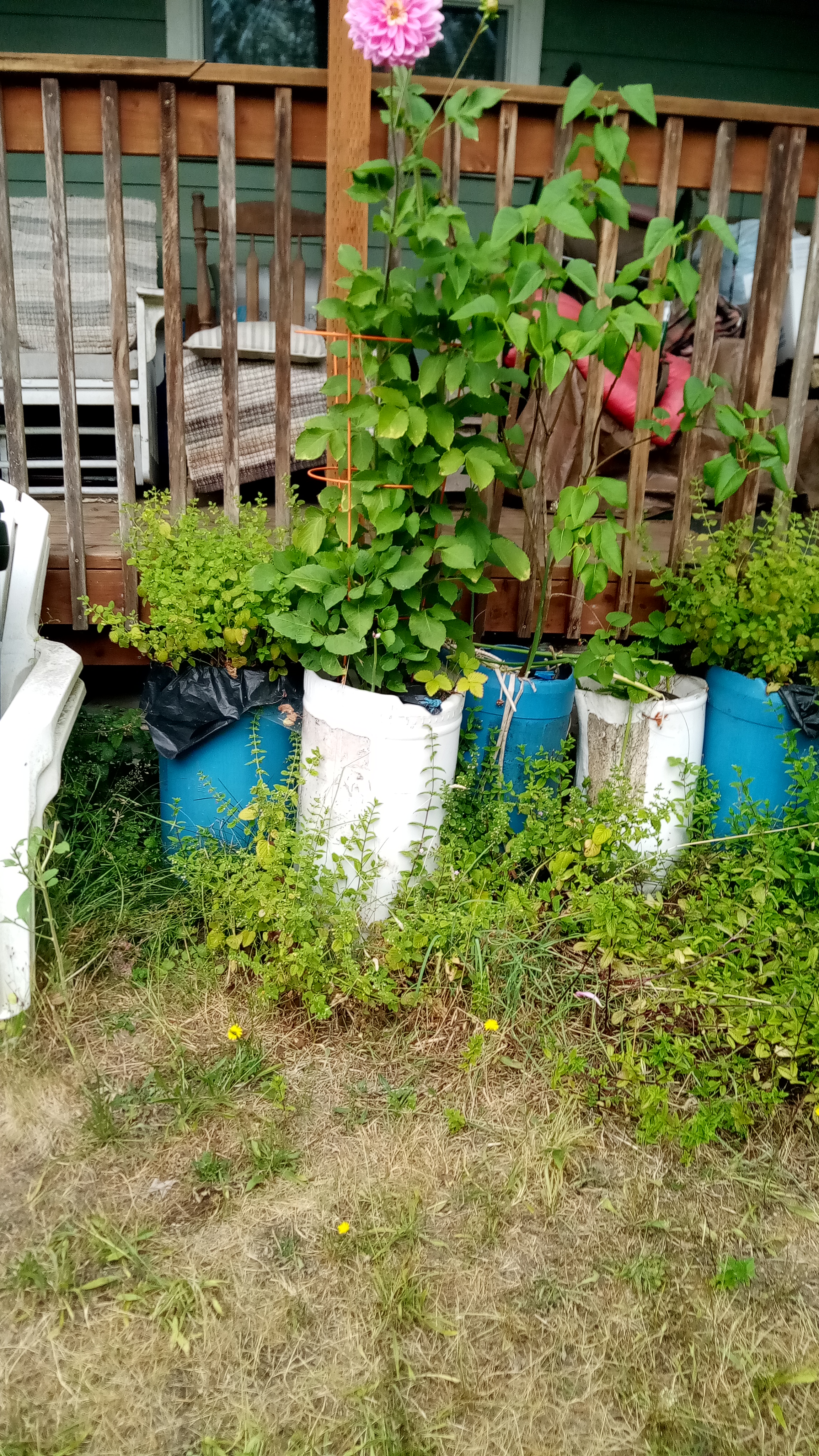
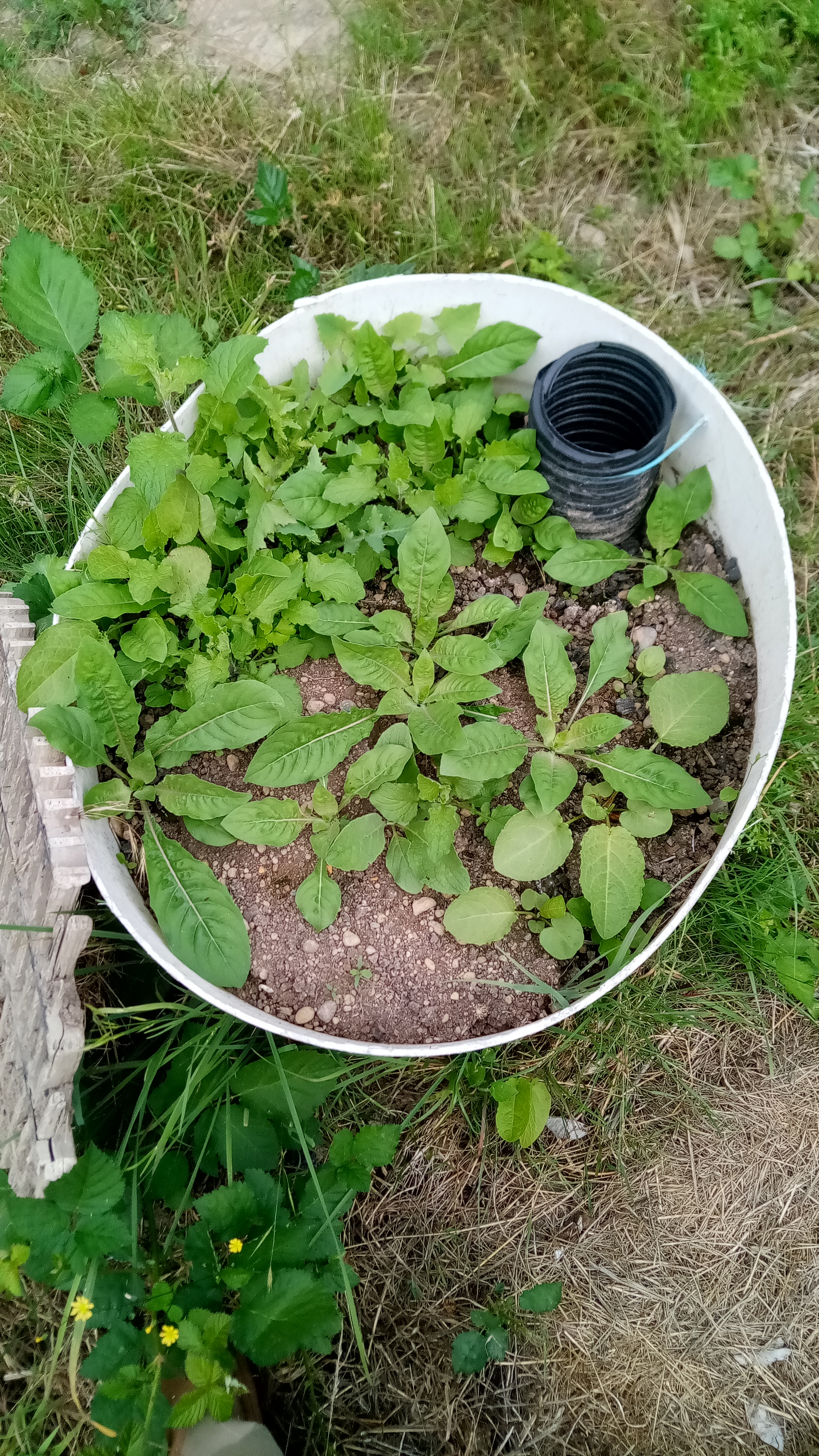
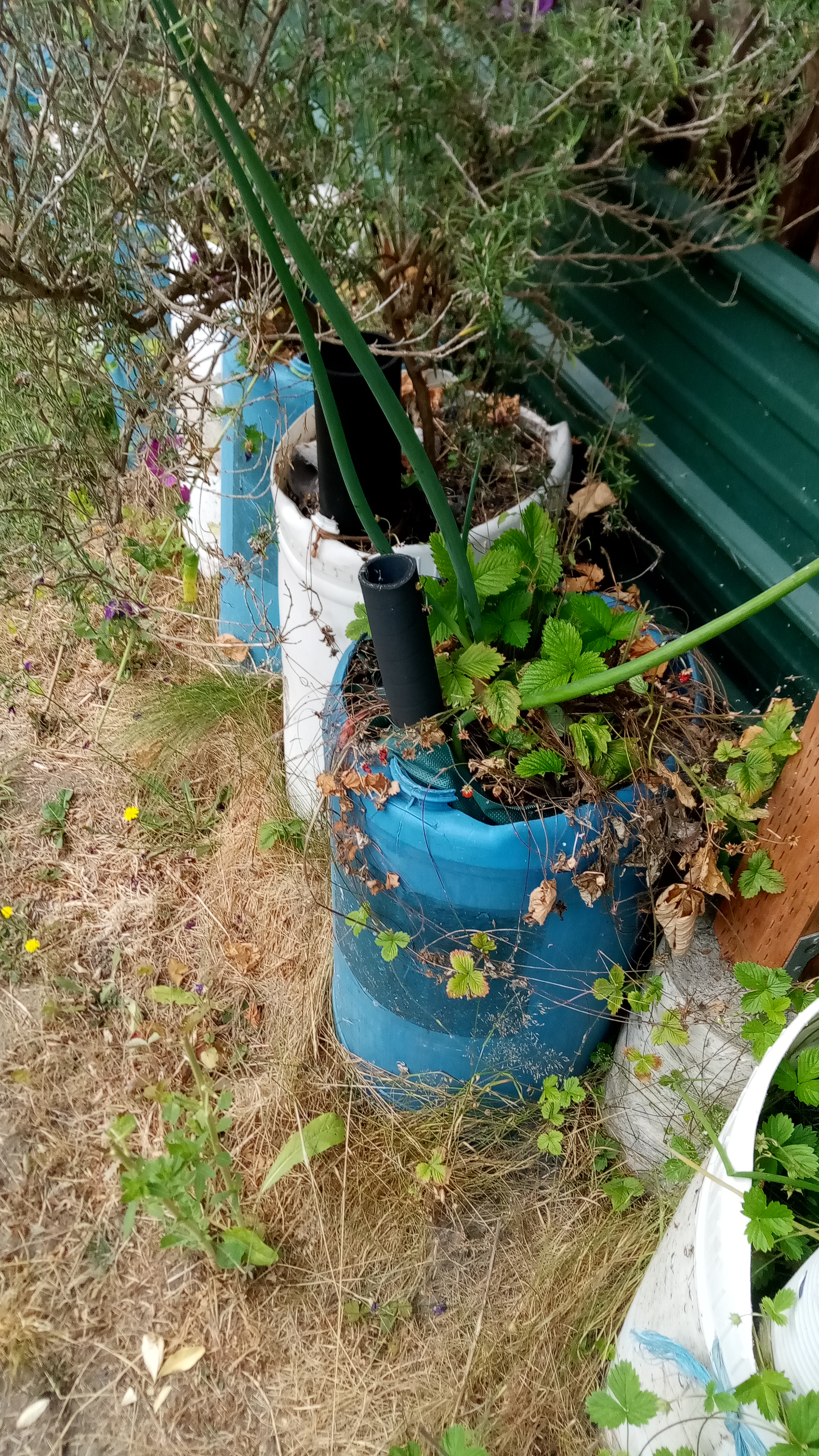
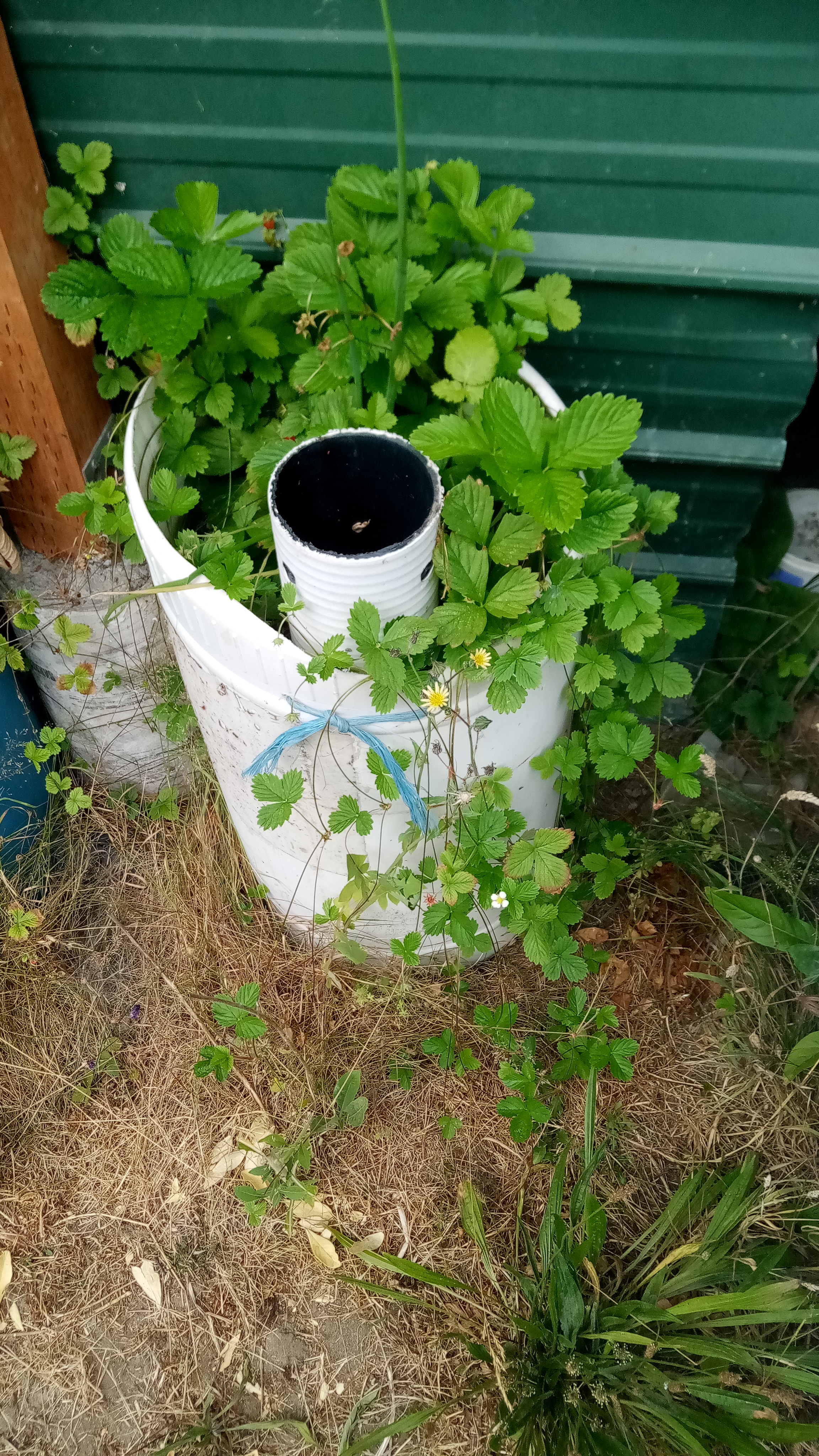
I make worm compost for my containers.   When i set up my barrels I put a perforated tube to the bottom then a layer of gravely soil then a gob of worm compost with active worms then a layer of soil.  The worms sustain the soil fertility for several years and incorporate chop and drop or mulch used on the surface.  They more rapidly break down the roots left in the soil.  Walking onions are making the their bulbs at the top right now these will be planted as soil cover in some of the barrels over the winter and a few left to reproduce again.  Some barrels have alpine strawberries as ground cover, the runners hang over the sides of the barrels and some of the plants on the runners are producing berries. If you use the trick in the other thread in this daylish of putting starter pots at the bottom you can propagate them. Many of my barrels are lined up along my deck so I can just direct the runners from one barrel to the next.
 
pollinator
Posts: 623
143
  • Likes 1
  • Mark post as helpful
  • send pies
    Number of slices to send:
    Optional 'thank-you' note:
  • Quote
  • Report post to moderator

Jay Angler wrote: "it isn't a soil building crop if you take any product from it. The whole plant must go to soil building." Does this sound right to all you permies?


I think at the extreme or theoretical level this is 'correct', but misleading.  Yes.  In a closed system all minerals are finite.  Plants health is more than just minerals.  Exodates from microbes, worm castings from the digestion of organic material, etc... go into the equation.  In real terms your plants will benefit from the cycle.  If you are truly 'building soil' then yes.  It would need to be a closed system.  However, that is not the way life and the natural world operates.  

You may be interested in reading up on the Jena Study done in Germany.  There are good youtube videos.  The upshot is they planted test plots in the same field side by side.  The more variety of plants that were included in a plot the higher the yields.  It was mostly a linear relationship, but they found maximum yields above 16 unique plant varieties.  Much like companion planting, it appears the overall health of the soil improves the more species you have contributing to the health of the soil.  So if it were just about cycling one plant the yields would not see variation in yields.  There is something beyond 'just the mineralization'.
 
gardener
Posts: 2255
Location: Zone 6b
1456
forest garden fungi books chicken fiber arts ungarbage
  • Likes 2
  • Mark post as helpful
  • send pies
    Number of slices to send:
    Optional 'thank-you' note:
  • Quote
  • Report post to moderator
Containing gardening has been quite challenging for me if I choose to avoid the soilless system of peat and soluble plant food. A cubic ft of mineral soil is not the same in a container as in the ground. It has more air to it, heats up and dries out easily, organic matter breaks down faster. The initial fertile soil with good texture quickly turns into a lifeless brick. Usually I need to amend native soil with lighter materials to reduce bulk density and add water retention. If you are in a dryer climate, drip irrigation with just the right amount of water would save a lot of work and reduce nutrient leaching.

I have no experience with cover crops in container.  When I set up the pot (mineral soil + biochar + compost), it is ready for planting. The fertility hardly lasts for more than 2 months due to hot and humid weather. I would regularly add healthy plant materials as mulch or weed tea to get the plants fed. So far, my container yuzu tree and tropical flowers are doing fine without frequent repotting.
 
steward
Posts: 19269
Location: USDA Zone 8a
4859
dog hunting food preservation cooking bee greening the desert
  • Likes 2
  • Mark post as helpful
  • send pies
    Number of slices to send:
    Optional 'thank-you' note:
  • Quote
  • Report post to moderator
If I wanted to add nitrogen, I would plant legumes like clover and peas that pull nitrogen from the air and fix it into the soil.

Crimson clover and hairy vetch are also good choices for a cover crop.
 
Hans Quistorff
gardener
Posts: 1991
Location: Longbranch, WA Mild wet winter dry climate change now hot summer
496
3
goat tiny house rabbit wofati chicken solar
  • Likes 5
  • Mark post as helpful
  • send pies
    Number of slices to send:
    Optional 'thank-you' note:
  • Quote
  • Report post to moderator
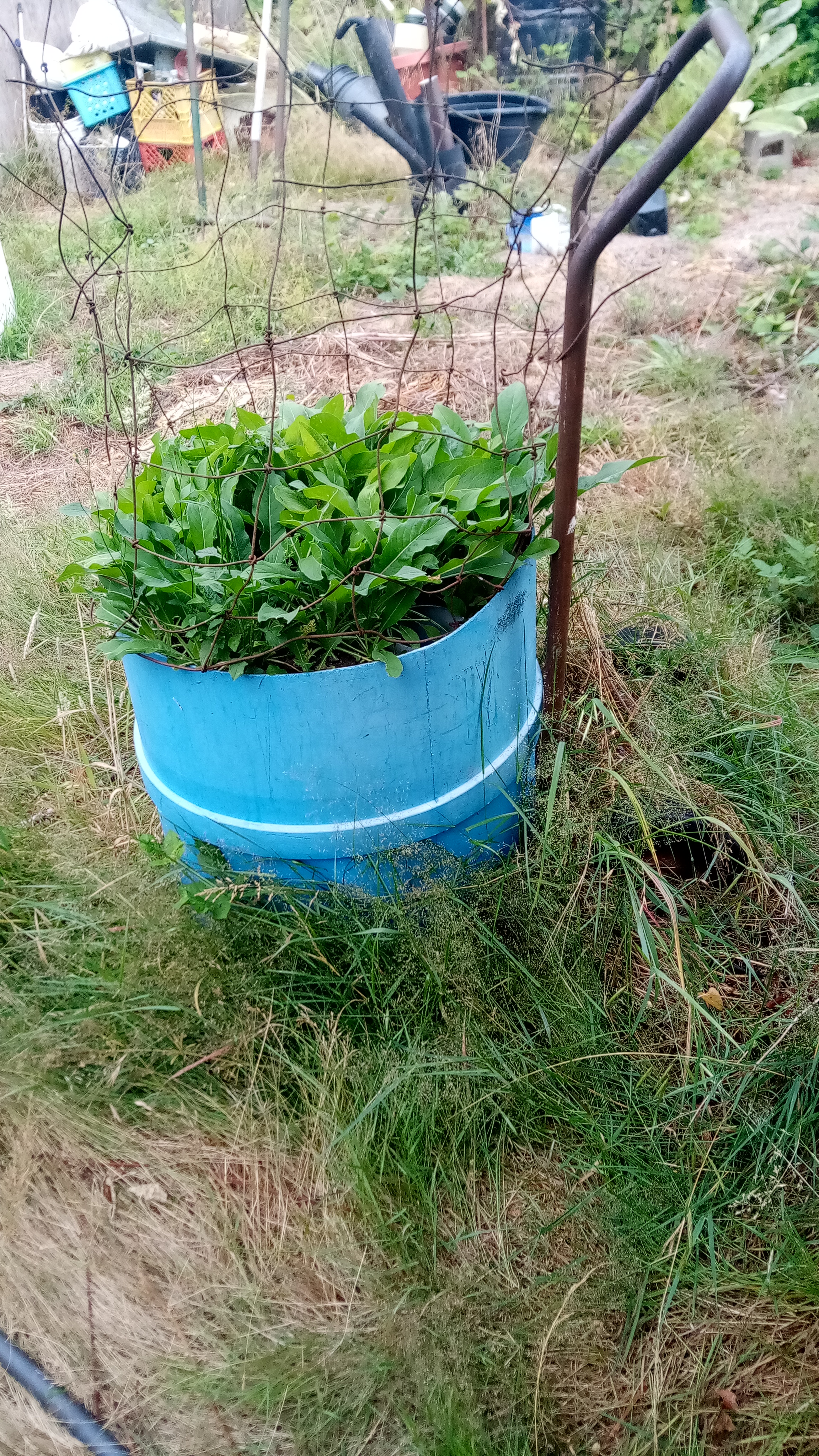
This thread needs some pictures.  note the barrels are 20 years old.
IMG_20260723_104836.jpg
Half barrel on hand truck to move it to green house in winter. cover crop evening primrose salad greens. wire cage to keep the deer from harvesting them
Dalia planted 4 years ago. barrel over winters in greenhouse
IMG_20260723_104653.jpg
Example of 1/4 barrel showing fill tube just started allowing plants to start feeding the soil life. will be planted to potatoes over winter. light enough to dump and refill for harvest.
IMG_20260723_104745.jpg
Rosemary and strawberry by deck. Planted 10 years ago.
IMG_20260723_104756.jpg
Strawberry runners using the side of the barrel.
IMG_20260723_104614.jpg
Half barrel on hand truck to move it to greenhouse in winter. evening primrose for salad greens. wire cage to keep deer from harvesting.
 
Can you really tell me that we aren't dealing with suspicious baked goods? And then there is this tiny ad:
Build a better world. Literally.
https://wheaton-labs.com/bootcamp
reply
    Bookmark Topic Watch Topic
  • New Topic