
• Post Reply Bookmark Topic Watch Topic
  • New Topic
permaculture forums growies critters building homesteading energy monies kitchen purity ungarbage community wilderness fiber arts art permaculture artisans regional education skip experiences global resources cider press projects digital market permies.com pie forums private forums all forums
this forum made possible by our volunteer staff, including ...
master stewards:
  • Carla Burke
  • Nancy Reading
  • John F Dean
  • paul wheaton
  • r ranson
  • Timothy Norton
  • Jay Angler
stewards:
  • Andrés Bernal
  • Pearl Sutton
  • Anne Miller
master gardeners:
  • Christopher Weeks
gardeners:
  • M Ljin
  • Jeremy VanGelder
  • thomas rubino

Compacted Chicken Run (Hardpan)

 
Steward of piddlers
Posts: 6711
Location: Upstate New York, Zone 5b, 43 inch Avg. Rainfall
3403
monies home care dog fungi trees chicken food preservation cooking building composting homestead
  • Likes 6
  • Mark post as helpful
  • send pies
    Number of slices to send:
    Optional 'thank-you' note:
  • Quote
  • Report post to moderator
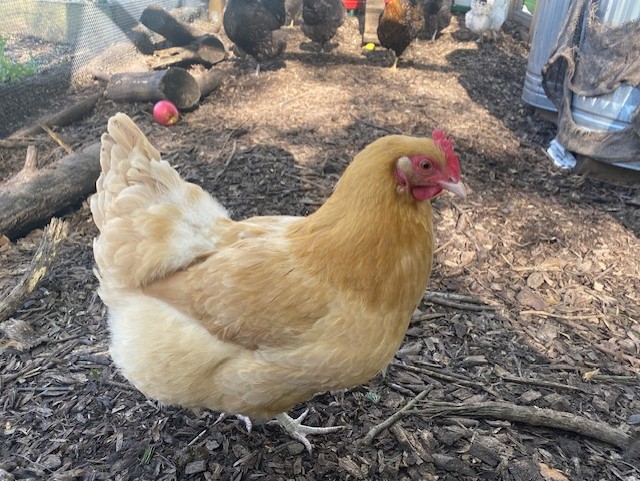
For safety and security reasons, I have an enclosed run attached to my chicken coop for the times that I can't be outside to be available to tend to the hens in their various paddocks. This has led to a higher level of manure in one spot compared to the lightly fertilized paddocks.

I have observed today that there was a level of hardpan in the run right on the surface. I however forgot to take a picture but I did find one that is only a few months old that shows the sort of development of a wood/dirt layer.


I have decided to just start from a far corner and cultivate the hardpan with a sharp hoe to loosen up everything. It took some elbow grease but at least it is something that can be scratched easier for the girls.


I'm stuck between two approaches to go to from now. Should I just top off with fresh material (wood chip/shavings) or would it be advantageous to take the time and sift out the built up compost before putting in more chip?

I don't NEED any compost at the moment but perhaps having less volume in the run before adding new material would reduce issues?

Let me know your thoughts.
 
gardener
Posts: 3020
Location: Central Maine (Zone 5a)
1551
homeschooling kids trees chicken food preservation building woodworking homestead
  • Likes 11
  • Mark post as helpful
  • send pies
    Number of slices to send:
    Optional 'thank-you' note:
  • Quote
  • Report post to moderator
I would suggest adding more carbon (leaves, woodchips, etc) like you are thinking. My mom had a small pen and it was not just hard pan, but smelly as well. I started throwing buckets full of fall leaves over the fence... the chickens loved rooting through them for bugs and within a week or two, the smell was better, and the dirt did not look as hardpan as it had been. Of course then we got snow, so I was not able to leave it for more than a month... but it was headed in the right direction. I suspect it would be the same for you. I wouldn't even bother harvesting until you need it. Doing a sort of deep bedding system, but in the outside pen.
 
master pollinator
Posts: 2043
Location: Ashhurst New Zealand (Cfb - oceanic temperate)
658
duck trees chicken cooking wood heat woodworking homestead
  • Likes 10
  • Mark post as helpful
  • send pies
    Number of slices to send:
    Optional 'thank-you' note:
  • Quote
  • Report post to moderator
I dump lots of stuff in the chicken pen, including wood chips, and it all tends to form a mucky plaster layer over the surface. What I do to counteract this usually involves five minutes with a digging fork, and then the chickens do the rest. The number of worms that live directly underneath that hardpan is phenomenal and it's always a free-for-all when I break things up a little bit.

I often fill the wheelbarrow with some screened material from this exercise, and use that on garden beds or just layer it on the active compost piles. I also throw a bucket of biochar and some wood ash around on a regular basis.
 
master steward
Posts: 14231
Location: Pacific Wet Coast
8498
duck books chicken cooking food preservation ungarbage
  • Likes 11
  • Mark post as helpful
  • send pies
    Number of slices to send:
    Optional 'thank-you' note:
  • Quote
  • Report post to moderator
Sort of what Phil says. I use a garden fork like a broad fork - dig in, lift just enough to crack the pan, move 4 inches, repeat. If it looks dry under the cracks, I tip their water bucket into the cracks, then I add fresh wood chips on the top to try and fall down the cracks a bit. I only do 3-4 square feet at a time each day until it's loosened up.

I find leaves are more prone to getting stinky if I don't do this often as they tend to pack down more than wood chips do.

I also have several composts which I let do the slow digestion method of minimal care. If the run is getting stinky, I definitely take a garbage can off the top - usually the area near the waterer is the biggest issue. One of my runs is on a slope, so I also toss the stuff that's slid down back up for the chickens to relocate down to the bottom again!
 
steward
Posts: 18038
Location: USDA Zone 8a
4602
dog hunting food preservation cooking bee greening the desert
  • Likes 5
  • Mark post as helpful
  • send pies
    Number of slices to send:
    Optional 'thank-you' note:
  • Quote
  • Report post to moderator
Where I live, disturbing the soil causes more erosion due to several factors.

If that were my chicken run I would add more layers of organic matter.  

Types of organic matter could be chicken bedding, wood chips, leaves and twigs, grass clippings, etc.

I bet the chickens would love those too.  That would give them things to scratch at and find more bugs, too.

 
Timothy Norton
Steward of piddlers
Posts: 6711
Location: Upstate New York, Zone 5b, 43 inch Avg. Rainfall
3403
monies home care dog fungi trees chicken food preservation cooking building composting homestead
  • Likes 9
  • Mark post as helpful
  • send pies
    Number of slices to send:
    Optional 'thank-you' note:
  • Quote
  • Report post to moderator
With some time passed and experience gained, I have noticed that the areas that tend to harpan in the run are around the feeder.

My educated guess is that the feed getting scratched and dropped into the ground contributes to the formation of a compact hard layer. Perhaps the predominantly soybean/corn dust acts as a glue?

I am breaking up the hardpan with a sharp hoe and adding fine pine shavings to help dry out and loosen the areas.
 
Matt McSpadden
gardener
Posts: 3020
Location: Central Maine (Zone 5a)
1551
homeschooling kids trees chicken food preservation building woodworking homestead
  • Likes 10
  • Mark post as helpful
  • send pies
    Number of slices to send:
    Optional 'thank-you' note:
  • Quote
  • Report post to moderator
I'm sure the fact that they spend a lot of time in that place, standing and pooping also contributes Do you have the ability to move the feeder around? Even spending 1 week in each corner would help spread things around. It might lessen the effect which is turning it into hardpan.
 
Timothy Norton
Steward of piddlers
Posts: 6711
Location: Upstate New York, Zone 5b, 43 inch Avg. Rainfall
3403
monies home care dog fungi trees chicken food preservation cooking building composting homestead
  • Likes 6
  • Mark post as helpful
  • send pies
    Number of slices to send:
    Optional 'thank-you' note:
  • Quote
  • Report post to moderator
I do rotate the feeder after this observation. Originally I thought the rain was the key suspect for compaction and I had covered half the run with planks but it seems the feed container location matters more.

The upcoming plan is to let the hens out in their paddock and I'm going to try and remove some hardpan material while their out. I figure adding it to the compost pile might give it a jumpstart! I do deep litter in the coop to good effect with the 'carbon diaper' method of waste handling. It gets a little trickier when that is applied to the run in my experience.
 
pollinator
Posts: 597
Location: Zone 8A
113
homeschooling kids rabbit tiny house books chicken composting toilet medical herbs composting homestead
  • Likes 5
  • Mark post as helpful
  • send pies
    Number of slices to send:
    Optional 'thank-you' note:
  • Quote
  • Report post to moderator

Timothy Norton wrote:With some time passed and experience gained, I have noticed that the areas that tend to hardpan in the run are around the feeder.


I have made some of those same observations.

I had a hanging feeder and then switched to making my own out of a bucket so I can move it every couple weeks or so. The area around the feeder was always the worse for hardpan.

I turn the bedding every month or two because I have the same thing happen to me that is happening to you.

The run/coop combo is 24'x36' with 12'x24' under cover. It is covered completely with wire so the chickens have access to the entire area 24/7 and roost under the covered part. With the very wet April and May, I had smell issues I had not ever had before. Turning the bedding as mentioned above and adding more wood chips more frequently than I was used to solved the issue. The area under cover stays drier and has fewer issues.
 
Jay Angler
master steward
Posts: 14231
Location: Pacific Wet Coast
8498
duck books chicken cooking food preservation ungarbage
  • Likes 12
  • Mark post as helpful
  • send pies
    Number of slices to send:
    Optional 'thank-you' note:
  • Quote
  • Report post to moderator
I would agree that "foot traffic" is a big part of compaction. Chickens are bad enough, but I've got ducks and they take it to a whole new level!

Things that can be considered:
1. Good variety in the size of bedding - when wet, a little extra sawdust will both soak up moisture fast, but also compost faster, but too much and it packs really easily, so you also need material that's more like what comes out of our chipper/shredder. It's a balancing act.
2. When I have it, I add biochar. It will lighten the material, and when you do shovel out a layer and add it to your compost, it then helps the compost and eventually helps the garden.
3. A light sprinkling of fresh bedding frequently, seems to do a better job than a thicker layer less often.
4. If the hardpan is all dried out, dumping wet veggie scraps on top can also help. The veggies not only add moisture, they attract the chickens so that they scratch and break up the loosened chunks of hardpan into smaller chunks. (I still use my fork to do an initial loosening.)
5. The problem is the solution: yes, if you've got too little bedding and the chicken coop stinks, that's a bad thing, but if your chickens have created a lot of good manure, shoveling it into buckets to take to your compost to finish decomposing gives you the option of adding fertility to important spaces. Yes, the permaculture way is to build fertility on the spot with plant choice and chop and drop, but I've got a spot which is "bedrock in the wrong spot" and nothing will grow there without getting the rocks out and putting some soil/compost mix in its place. There are some plants my family love that are more likely to grow if they're in pots where we can keep a close watch on them, and those pots need good compost. Many of my birds are in portable shelters with no bottom that move every day or two, so I get no compost from those birds and the field gets a fairly even boost of fertility. So I don't worry about the few birds that don't get to move. (eg. I have a hen whose eggs are due to hatch. She will have to stay where she is for at least 2 weeks, because chicks are too small to keep safe any other way. I will add and remove bedding to her area until they're big enough for portable housing, and gladly compost the deposits.
 
Jackson Bradley
pollinator
Posts: 597
Location: Zone 8A
113
homeschooling kids rabbit tiny house books chicken composting toilet medical herbs composting homestead
  • Likes 9
  • Mark post as helpful
  • send pies
    Number of slices to send:
    Optional 'thank-you' note:
  • Quote
  • Report post to moderator

Jay Angler wrote: I use a garden fork


Based on reading this thread, I got one of the bully tools all steel garden forks. I had been using a pitch fork to turn the hard pan areas of the chicken area. It is 2x as fast as a pitch fork. I have also been using it in the garden.

It is a great investment.

Garden-Fork.jpg
[Thumbnail for Garden-Fork.jpg]
 
Posts: 124
12
  • Likes 6
  • Mark post as helpful
  • send pies
    Number of slices to send:
    Optional 'thank-you' note:
  • Quote
  • Report post to moderator
A ‘broad fork’ makes short work of packed soil since that’s basically what’s is designed to do. It also doesn’t mess with soil health if used correctly.
 
pollinator
Posts: 3987
Location: 4b
1453
dog forest garden trees bee building
  • Likes 4
  • Mark post as helpful
  • send pies
    Number of slices to send:
    Optional 'thank-you' note:
  • Quote
  • Report post to moderator

Josh Hoffman wrote:

Jay Angler wrote: I use a garden fork


Based on reading this thread, I got one of the bully tools all steel garden forks. I had been using a pitch fork to turn the hard pan areas of the chicken area. It is 2x as fast as a pitch fork. I have also been using it in the garden.

It is a great investment.


I have that fork as well, and that's what I use for the chicken run hardpan issue.  My broadfork goes too deep for doing it, the garden fork is just right.
 
Jackson Bradley
pollinator
Posts: 597
Location: Zone 8A
113
homeschooling kids rabbit tiny house books chicken composting toilet medical herbs composting homestead
  • Likes 5
  • Mark post as helpful
  • send pies
    Number of slices to send:
    Optional 'thank-you' note:
  • Quote
  • Report post to moderator

Trace Oswald wrote:

Josh Hoffman wrote:

Jay Angler wrote: I use a garden fork


Based on reading this thread, I got one of the bully tools all steel garden forks. I had been using a pitch fork to turn the hard pan areas of the chicken area. It is 2x as fast as a pitch fork. I have also been using it in the garden.

It is a great investment.


I have that fork as well, and that's what I use for the chicken run hardpan issue.  My broadfork goes too deep for doing it, the garden fork is just right.


I am a little embarrassed that I had never heard of a garden fork before I read through this. I have a 14" broadfork but like you mention, I am not trying to go that deep in the litter. I would be 4"-6" in the ground at 14".

Glad to hear it has been useful for you too. I am glad I came across the all metal bully tools one. It is a solid tool.
 
Jay Angler
master steward
Posts: 14231
Location: Pacific Wet Coast
8498
duck books chicken cooking food preservation ungarbage
  • Likes 7
  • Mark post as helpful
  • send pies
    Number of slices to send:
    Optional 'thank-you' note:
  • Quote
  • Report post to moderator
I got a long handled manure fork for when the coop is getting stinky and other techniques aren't working to get it in balance. I can only add so much mulch before I run out of headroom!

When the mulch is wet, but not compacted, the manure fork allows me to fork it into plastic garbage cans and move it to a composting area *without hurting my back*. With our incredibly wet winters, it is unusual not to have to do that at least once.  The wood chips can't decompose fast enough in the cold, that I'm serious about running out of headroom!

The compaction often happens when the weather is drier, but bird feet coupled with messy water play, combine to pack the surface down. That's when the garden fork is ideal. I'm not getting as far as the soil underneath. I'm just breaking up the woodchips, letting some air in so it can do some decomposing, and getting the chickens to investigate the area for bugs!
 
master gardener
Posts: 5343
Location: Carlton County, Minnesota, USA: 3b; Dfb; sandy loam; in the woods
2914
7
forest garden trees books chicken food preservation cooking fiber arts seed woodworking homestead ungarbage
  • Likes 8
  • Mark post as helpful
  • send pies
    Number of slices to send:
    Optional 'thank-you' note:
  • Quote
  • Report post to moderator
I'd be inclined to put down rings of fence and plant radishes, moving and repeating maybe three times per season. But your run has to have enough room built into it to handle losing the space.

 
Trace Oswald
pollinator
Posts: 3987
Location: 4b
1453
dog forest garden trees bee building
  • Likes 4
  • Mark post as helpful
  • send pies
    Number of slices to send:
    Optional 'thank-you' note:
  • Quote
  • Report post to moderator

Christopher Weeks wrote:I'd be inclined to put down rings of fence and plant radishes, moving and repeating maybe three times per season. But your run has to have enough room built into it to handle losing the space.


I might try that with mangel beets.  It would be great if they would grow to some huge size for the chickens and to break up the pan.
 
What kind of corn soldier are you? And don't say "kernel" - that's only for this tiny ad:
The new kickstarter is now live!
https://www.kickstarter.com/projects/paulwheaton/garden-cards
reply
    Bookmark Topic Watch Topic
  • New Topic