
• Post Reply Bookmark Topic Watch Topic
  • New Topic
permaculture forums growies critters building homesteading energy monies kitchen purity ungarbage community wilderness fiber arts art permaculture artisans regional education skip experiences global resources cider press projects digital market permies.com pie forums private forums all forums
this forum made possible by our volunteer staff, including ...
master stewards:
  • Carla Burke
  • Nancy Reading
  • paul wheaton
  • John F Dean
  • r ransom
  • Jay Angler
stewards:
  • Timothy Norton
  • Tereza Okava
  • Pearl Sutton
master gardeners:
  • Christopher Weeks
  • M Ljin
gardeners:
  • Jeremy VanGelder
  • Megan Palmer
  • Thekla McDaniels

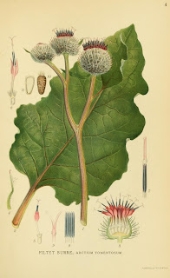
burdock, arctium lappa, when during it's second year does it go to seed?

 
Posts: 10605
Location: a temperate, clay/loam spot on planet earth, the universe
3775
4
  • Likes 6
  • Mark post as helpful
  • send pies
    Number of slices to send:
    Optional 'thank-you' note:
  • Quote
  • Report post to moderator
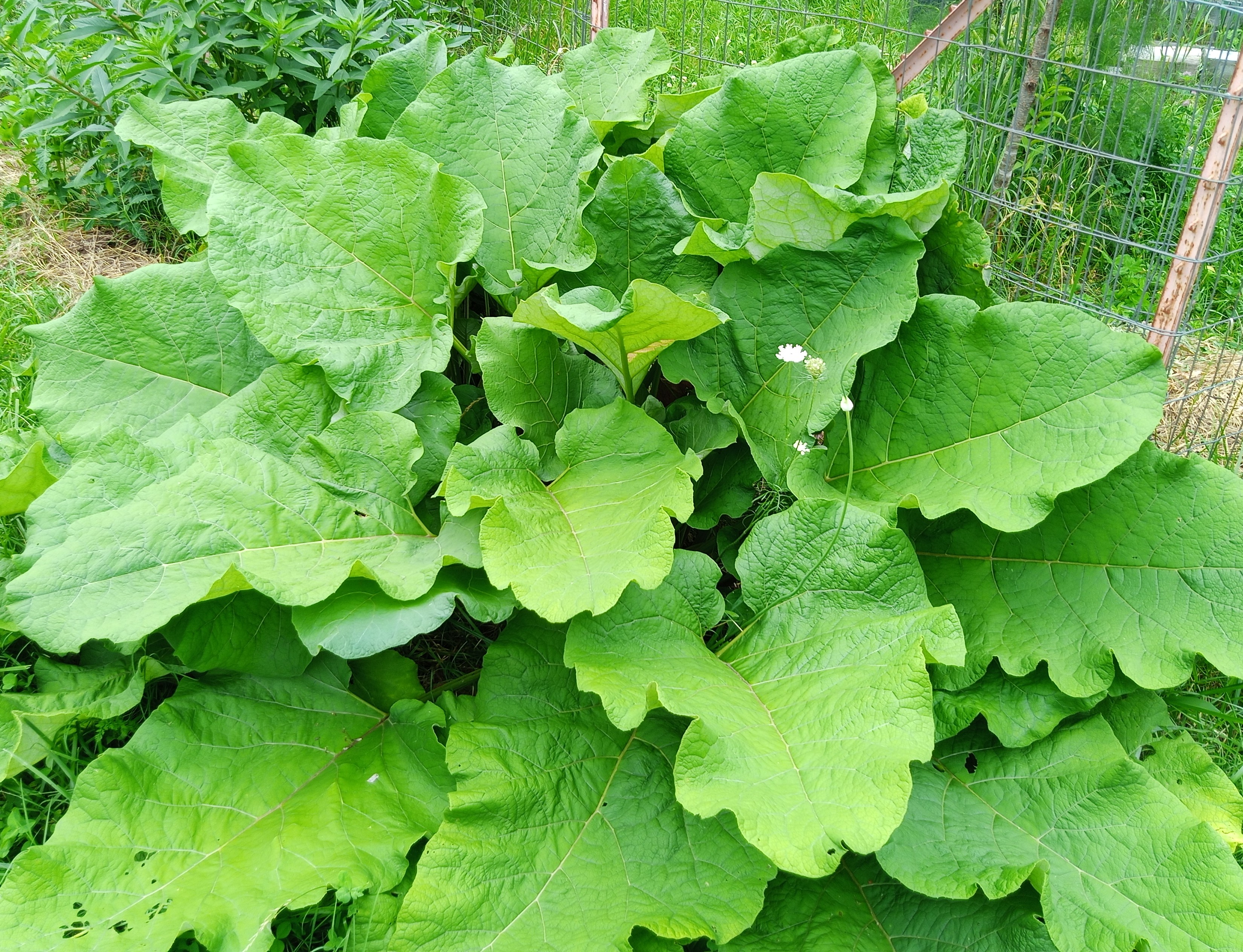
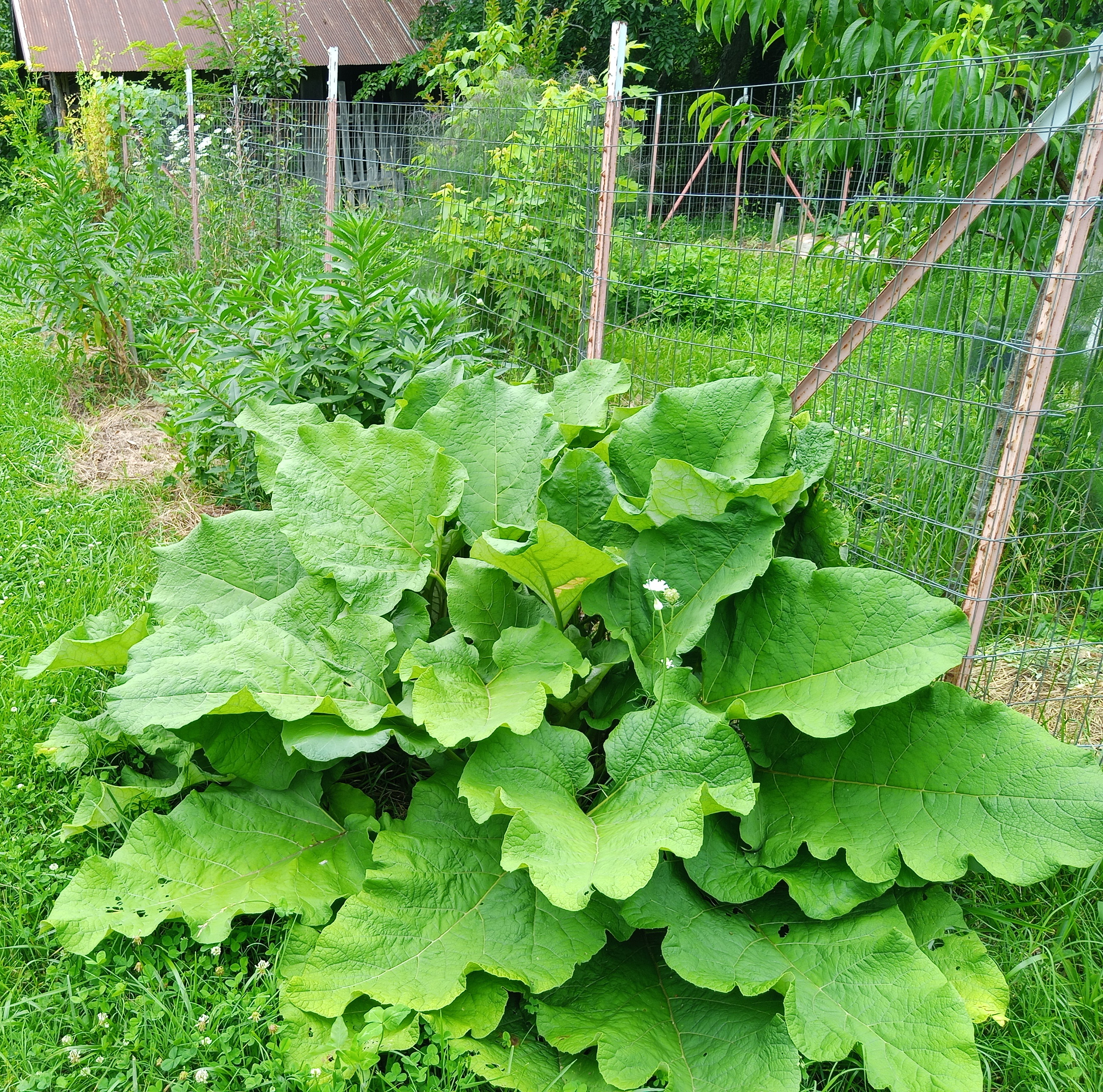
I planted seed here several years ago and did not dig roots, just saved some seed from the next years plants and replanted...
I thought it had disappeared but here it is in a spot where I did not plant any

I saw the young plants sometime last year so assumed that this year it would go to seed although there's no sign of a flower stalk.

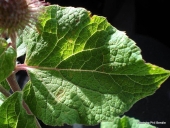
The leaves are huge!  The fence posts behind it are 5' for scale.

Maybe I should have dug some this spring?
When does burdock normally go to seed?

I really want to use the root but it seems like I'm just out of sync with this plant.

IMG_20250611_154955_931-2.jpg
burdock, arctium lappa
IMG_20250611_155024_459-2.jpg
burdock, arctium lappa
 
gardener
Posts: 1991
Location: Longbranch, WA Mild wet winter dry climate change now hot summer
497
3
goat tiny house rabbit wofati chicken solar
  • Likes 7
  • Mark post as helpful
  • send pies
    Number of slices to send:
    Optional 'thank-you' note:
  • Quote
  • Report post to moderator
I avoid burdock because I don't want the burs.   I do have curly dock which makes a seed stalk in late summer and make seeds that look like coffee grounds.  Being biennial it produces the seed stalk the second year.  So the root is best harvested between when the leaves die back and when it starts to leaf out and use its stored nutrients.  Never saw a burdock as big as the one in your picture.
 
master pollinator
Posts: 5439
Location: Due to winter mortality, I stubbornly state, zone 7a Tennessee
2413
7
forest garden foraging books food preservation cooking fiber arts bee medical herbs
  • Likes 10
  • Mark post as helpful
  • send pies
    Number of slices to send:
    Optional 'thank-you' note:
  • Quote
  • Report post to moderator
Oh, about now. The soft green burs open a tiny bit exposing a burgundy-pink center. Then they turn into the brown sticky burs. Once the stalk grows, the root isn't good eating. Eat The Weeds article here.
20250612_195408.jpg
[Thumbnail for 20250612_195408.jpg]
20250612_195319.jpg
[Thumbnail for 20250612_195319.jpg]
 
steward & manure connoisseur
Posts: 5322
Location: South of Capricorn
3329
dog rabbit urban cooking writing homestead ungarbage
  • Likes 10
  • Mark post as helpful
  • send pies
    Number of slices to send:
    Optional 'thank-you' note:
  • Quote
  • Report post to moderator
i have a burdock plant that has been out there for at least 3 years and so far, no flowers. No idea why, maybe not having a hard frost has screwed up its instincts. Where I went to school in upstate NY I remember seeing huge burdock with flowers and burs, especially near swampy areas, when I would go hiking in late June or July on summer trips.
 
Judith Browning
Posts: 10605
Location: a temperate, clay/loam spot on planet earth, the universe
3775
4
  • Likes 9
  • Mark post as helpful
  • send pies
    Number of slices to send:
    Optional 'thank-you' note:
  • Quote
  • Report post to moderator
thanks Joylynn and Tereza and Hans!

I think I'll dig one then...

It's two or three plants so there would still be some to leave for seed and I am anxious to see the size of the root and it's edibility.

I have also been eyeing the huge leaves for a wrap for fermenting tempeh rather than the glass pyrex that I use.  
 
Judith Browning
Posts: 10605
Location: a temperate, clay/loam spot on planet earth, the universe
3775
4
  • Likes 9
  • Mark post as helpful
  • send pies
    Number of slices to send:
    Optional 'thank-you' note:
  • Quote
  • Report post to moderator
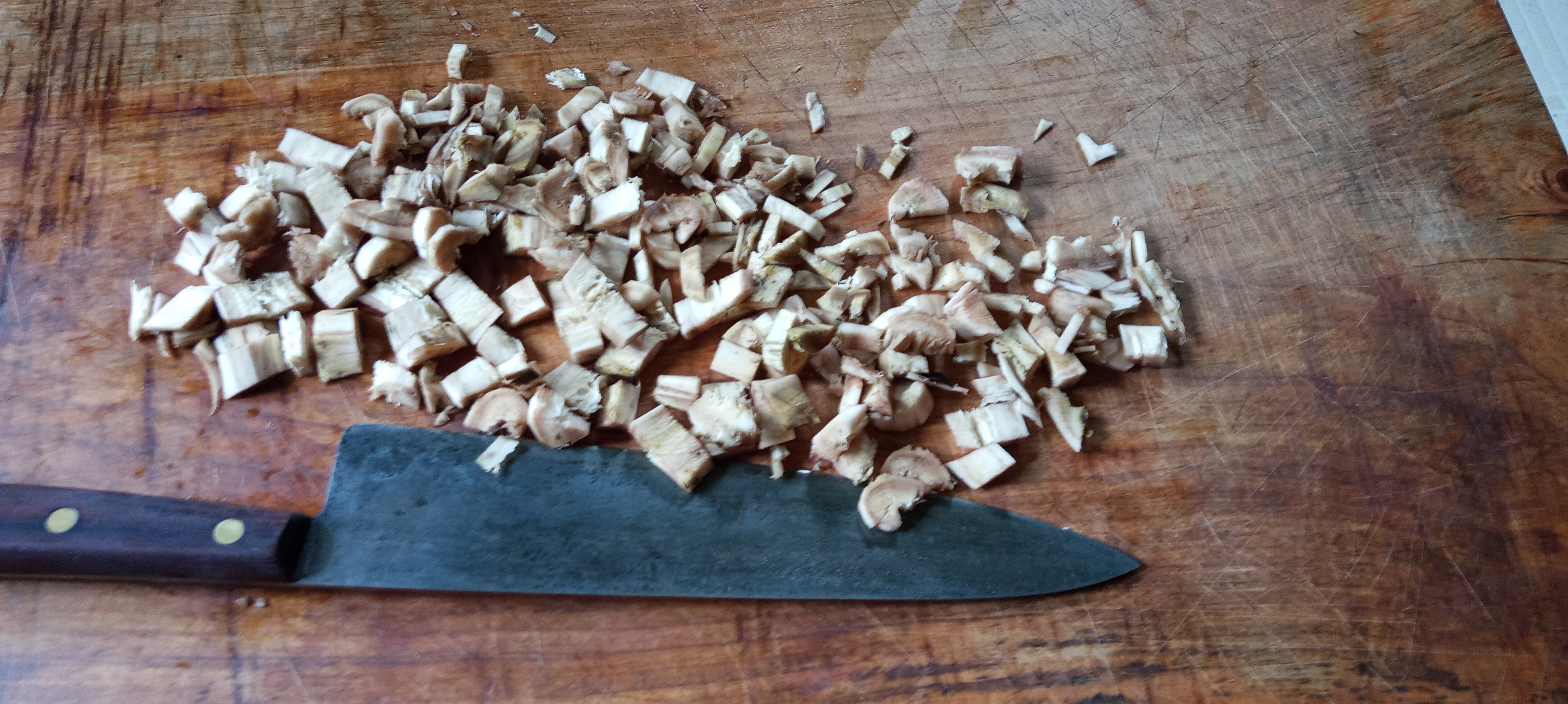
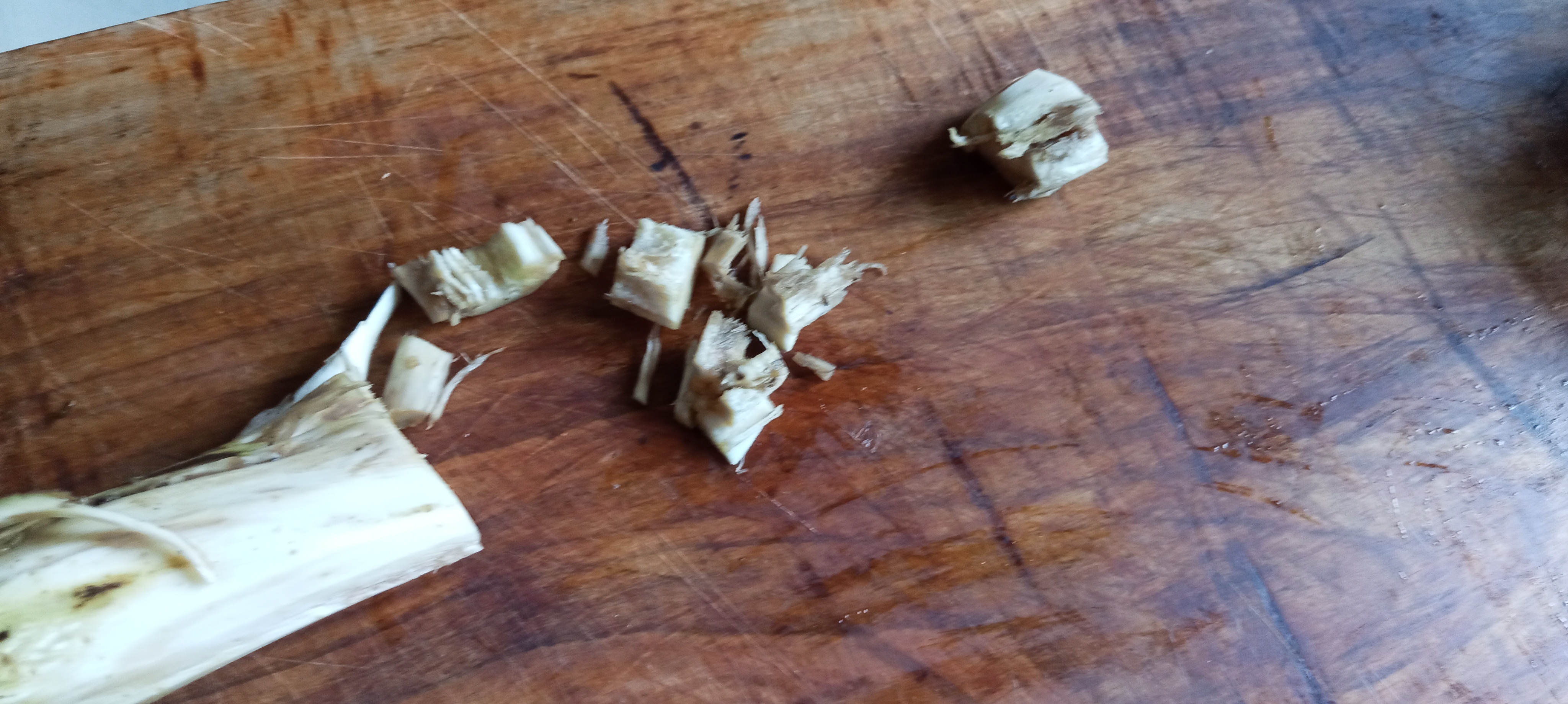
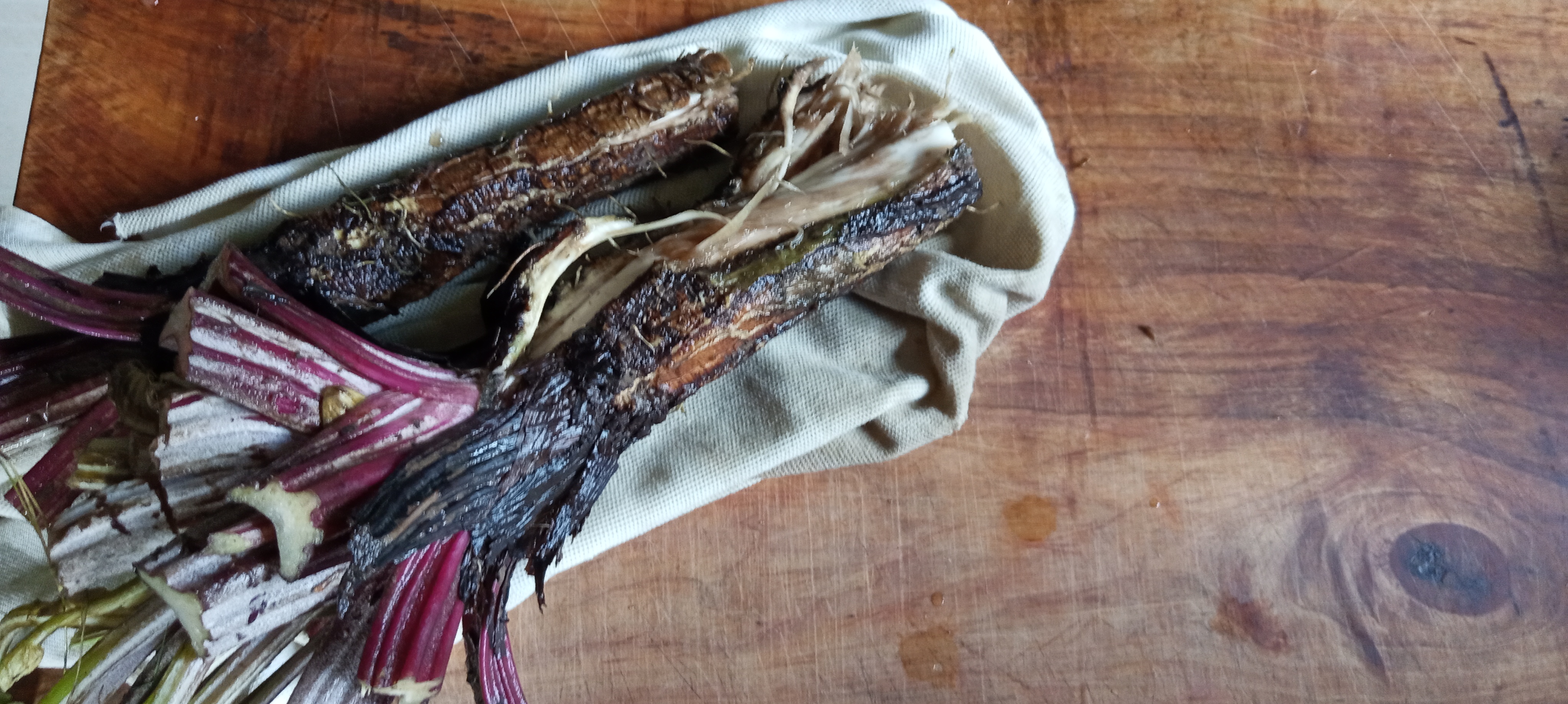
dug two.
flavor good but too woody to eat...will dry for decoction and vegetable broth.

There are several plants...none show signs of going to seed.
IMG_20250613_153531_627.jpg
burdock
burdock
IMG_20250613_152922_791.jpg
burdock
burdock
IMG_20250613_152658_311.jpg
burdock
burdock
 
gardener
Posts: 5759
Location: Cincinnati, Ohio,Price Hill 45205
1356
forest garden trees urban
  • Likes 11
  • Mark post as helpful
  • send pies
    Number of slices to send:
    Optional 'thank-you' note:
  • Quote
  • Report post to moderator
I just bought another bundle of gobo root to plant out.
It's the domesticated version of burdock.
I built a little tower of milk crates to grow them in this time, to make harvest easy.

I love the idea of using roots that are too tough to chew as ingredients in broths.
 
Tereza Okava
steward & manure connoisseur
Posts: 5322
Location: South of Capricorn
3329
dog rabbit urban cooking writing homestead ungarbage
  • Likes 11
  • Mark post as helpful
  • send pies
    Number of slices to send:
    Optional 'thank-you' note:
  • Quote
  • Report post to moderator

William Bronson wrote: I just bought another bundle of gobo root to plant out.
It's the domesticated version of burdock.


All my burdock is the tops of purchased gobo that i put in the ground (like a carrot top). It takes really well if there are still leaves left and the weather is right-- then you get to have your gobo and eat it too!!
 
Judith Browning
Posts: 10605
Location: a temperate, clay/loam spot on planet earth, the universe
3775
4
  • Likes 9
  • Mark post as helpful
  • send pies
    Number of slices to send:
    Optional 'thank-you' note:
  • Quote
  • Report post to moderator
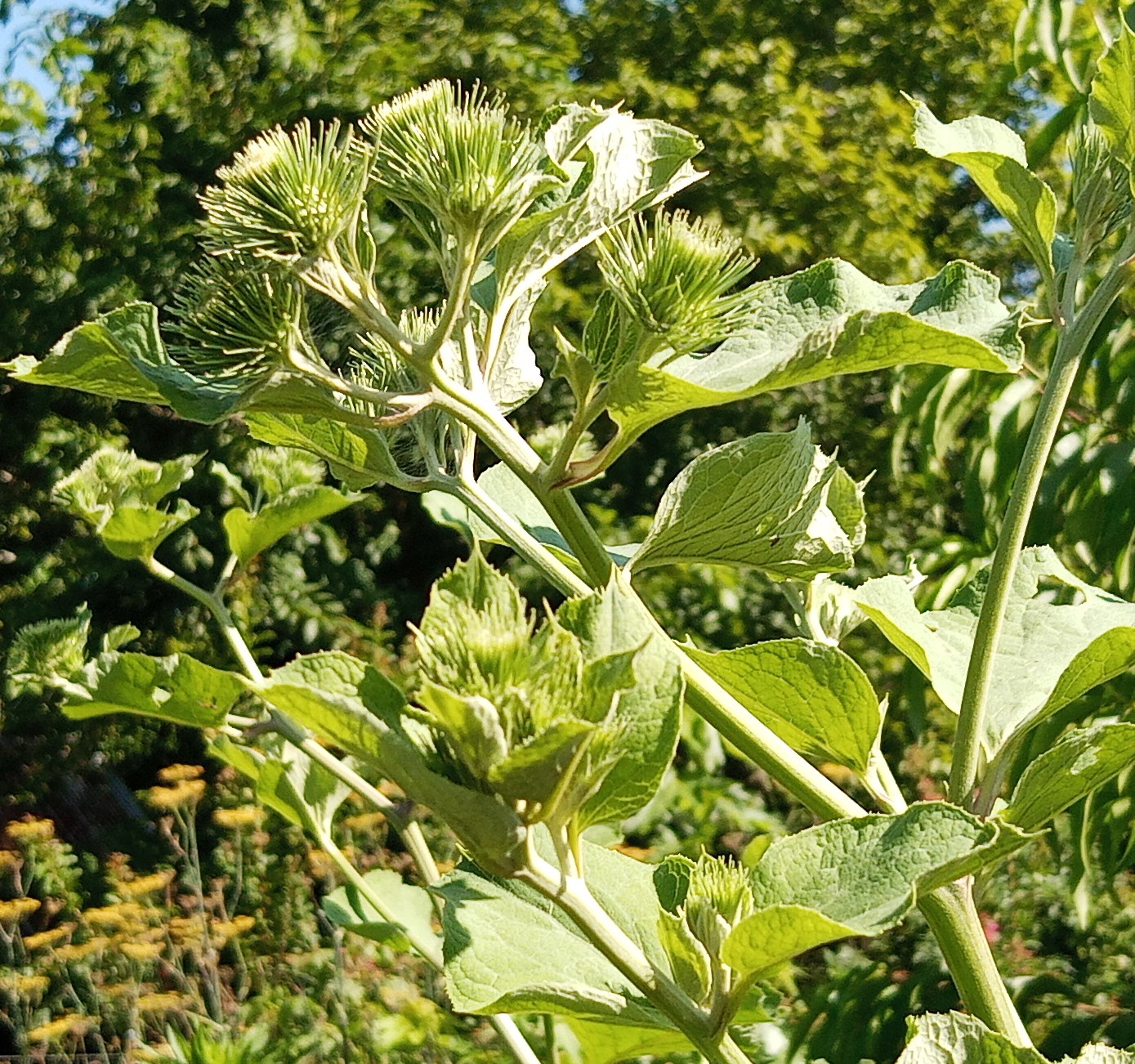
have been looking for gobo...

and now my burdock is going to seed!
IMG_20250719_100207_859-2.jpg
burdock going to seed
IMG_20250719_100200_607-2.jpg
burdock going to seed
 
master gardener
Posts: 2805
Location: Zone 5
1625
ancestral skills forest garden foraging composting toilet fiber arts bike medical herbs seed writing ungarbage
  • Likes 11
  • Mark post as helpful
  • send pies
    Number of slices to send:
    Optional 'thank-you' note:
  • Quote
  • Report post to moderator
Sometimes root vegetables or biennials will take three years, depending on the seeding and germination time, and how much energy they have. Angelica is considered to take three normally, because it takes that long for them to harvest the energy so that they can send up their gigantic flower stalk. Burdock may be the same in weedy conditions. I have noticed this happening with parsnip, too. If they germinate late summer through fall, they will make a small root and then overwinter. By the next fall they are enormous. The flower stalks made by such a parsnip plant, if I let them grow, are walking sticks (or would be if they didn’t burn you).

White lettuce (Prenanthes) can apparently take ten years before they have collected enough energy to send up their magnificent flower stalk, and then die.

Burdock leaf might be good for tempeh. It might also make it intolerably bitter for those not used to bitter flavors. Or it could be very nice. The bitter can rub off on the hands and make all sorts of things taste bitter. Sam Thayer gives a story about taking people on a foraging walk and showing them burdock. Then he takes them to a mulberry tree and they start eating mulberries. People start remarking on how bitter the mulberries taste…
 
Posts: 1
  • Likes 10
  • Mark post as helpful
  • send pies
    Number of slices to send:
    Optional 'thank-you' note:
  • Quote
  • Report post to moderator
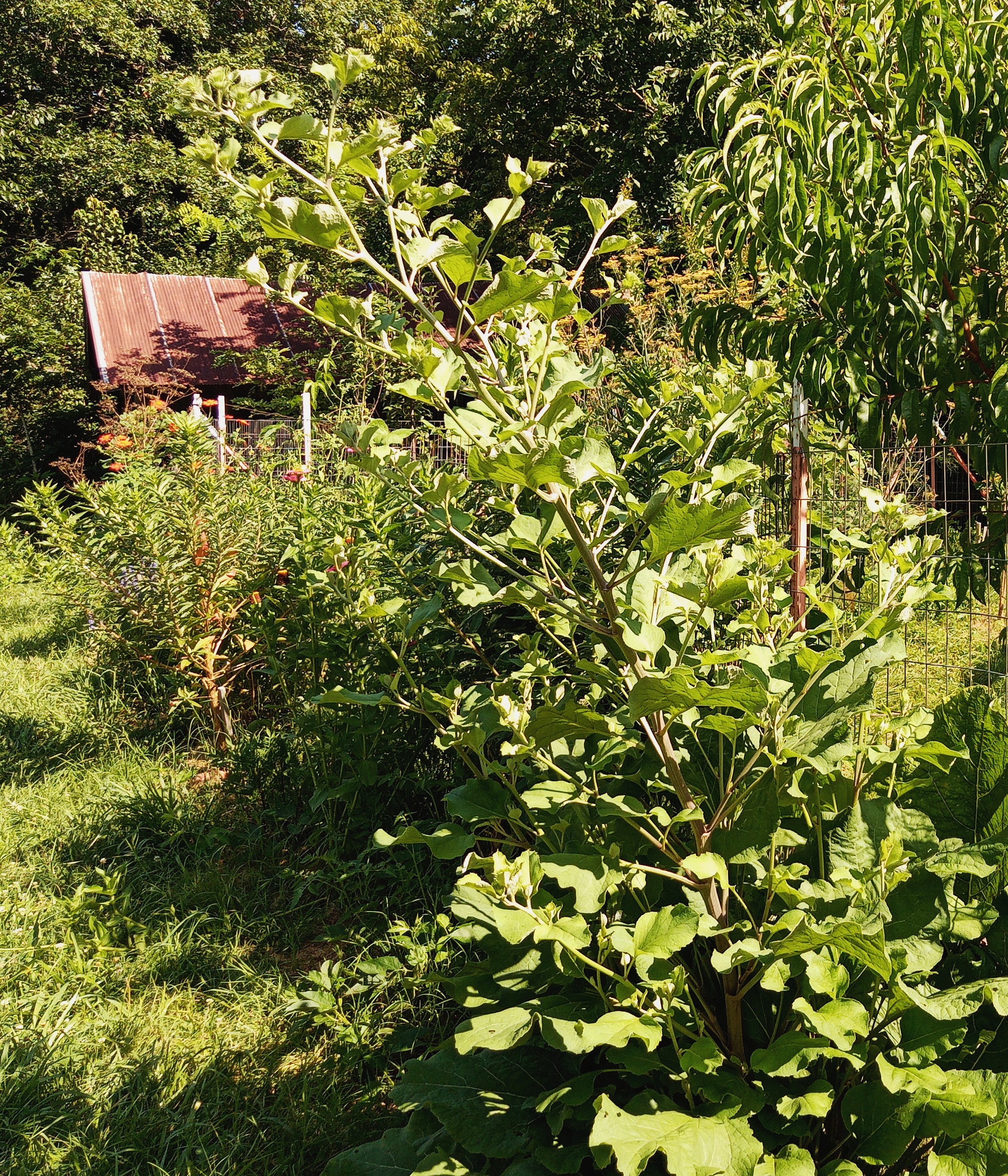
Just wanted to share mine that I about to go to seed. She is probably 10 ft tall right now, 11 if she wasn't droopy.
1785367130031427338944441452490.jpg
[Thumbnail for 1785367130031427338944441452490.jpg]
 
William Bronson
gardener
Posts: 5759
Location: Cincinnati, Ohio,Price Hill 45205
1356
forest garden trees urban
  • Likes 10
  • Mark post as helpful
  • send pies
    Number of slices to send:
    Optional 'thank-you' note:
  • Quote
  • Report post to moderator
There are burdock plants in the paths at our community garden.

The roots go so deep that digging them out of paths is a fools errand.
But I don't want them dropping seed in the beds,so I chop them at soil level and use the leaves as compost or mulch.
They seem to return very reliably.

Lately I've wondered, will these plants persist indefinitely untill they are able to set seed?
If so this could allow them to be used as a biomass generator, kinda like comfrey, as long as we don't let them set seed.

Stumbling across this thread again, I have another question.
Should we allow them to set seed (sequestering the seed with a bag or foil) so they will naturally die and rot, leaving deep holes filled with organic matter?
They do die after setting seeds, right?
Otherwise they would be a perennial,not a biannual, I think.

 
master pollinator
Posts: 364
Location: UK
131
kids urban seed
  • Likes 9
  • Mark post as helpful
  • send pies
    Number of slices to send:
    Optional 'thank-you' note:
  • Quote
  • Report post to moderator
Worth testing. The leaves are genuinely massive for mulch and if it just keeps generating them year after year without seeding that would be pretty handy. Mine regrow from the crown after cutting but I always assumed they'd eventually give up or find a way to set seed. The comfrey comparison is interesting, be curious to see if the regrowth stays as vigorous over multiple chops.
 
Tereza Okava
steward & manure connoisseur
Posts: 5322
Location: South of Capricorn
3329
dog rabbit urban cooking writing homestead ungarbage
  • Likes 10
  • Mark post as helpful
  • send pies
    Number of slices to send:
    Optional 'thank-you' note:
  • Quote
  • Report post to moderator

William Bronson wrote: Should we allow them to set seed (sequestering the seed with a bag or foil) so they will naturally die and rot, leaving deep holes filled with organic matter?


So I've been eating burdock for about 30 years now, and I've never seen one thicker than the narrowest part of a baseball bat (and that was a MONSTER that nobody would buy to eat, generally the ones sold for food are about the thickness of my thumb, maaaaybe two fingers held together and that's a big one). Now these are the ones grown for eating, so they're in fluffy dirt to go straight down, no 'burls' or twists. But I take the tops and plant them in my garden since the rabbits like the leaves, and they regrow. After a few years (remembering that I'm in a year-round growing place, so annual/perennial is a bit flexible) they get a bit bigger, but not much. The holes they leave will be relatively small, and they will take a long time to decompose because at that point there all hard fibers. I'm thinking tree roots, how after you cut down a tree they can stay a long time. The holes will be straight down, but I don't know how useful they will be to you in terms of soil building.
 
steward and tree herder
Posts: 14072
Location: Isle of Skye, Scotland. Nearly 70 inches rain a year
7745
6
transportation dog forest garden foraging trees books food preservation woodworking wood heat rocket stoves ungarbage
  • Likes 7
  • Mark post as helpful
  • send pies
    Number of slices to send:
    Optional 'thank-you' note:
  • Quote
  • Report post to moderator
I thought burdock was perennial? I grew some last year from vegetable seed and they were tiny, but I have replanted them in the hope that they will be a source for my own burdock seed in future. So far the plants are regrowing reasonably well. A bit small, but they are competing in grass....
 
William Bronson
gardener
Posts: 5759
Location: Cincinnati, Ohio,Price Hill 45205
1356
forest garden trees urban
  • Likes 10
  • Mark post as helpful
  • send pies
    Number of slices to send:
    Optional 'thank-you' note:
  • Quote
  • Report post to moderator
I think we may be talking about two different plants.
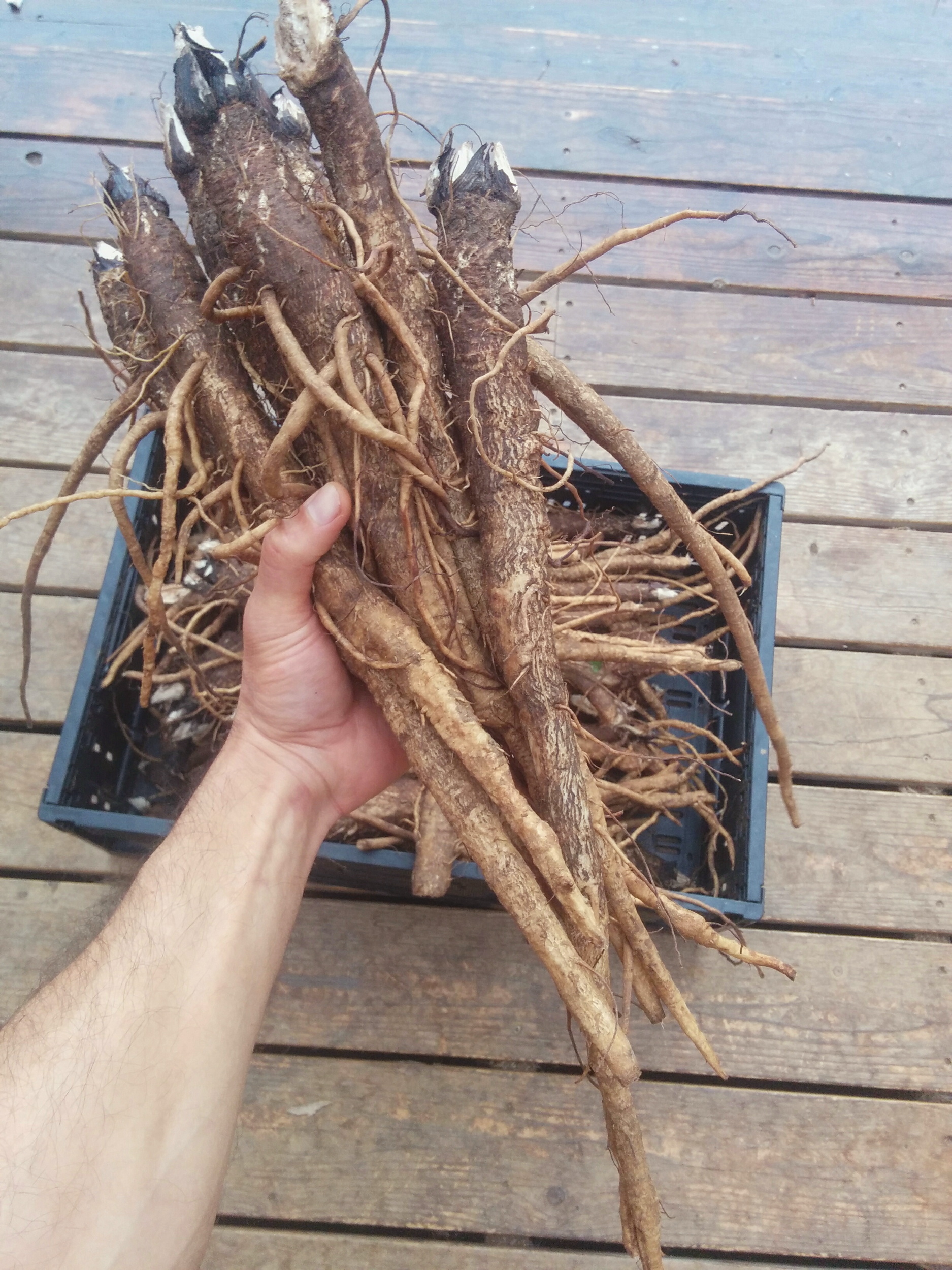
The wild burdock I'm familiar with has rather large roots, at least by the time it sets seed.
burdock-1505.jpg
Like these
Like these
 
Nancy Reading
steward and tree herder
Posts: 14072
Location: Isle of Skye, Scotland. Nearly 70 inches rain a year
7745
6
transportation dog forest garden foraging trees books food preservation woodworking wood heat rocket stoves ungarbage
  • Likes 7
  • Mark post as helpful
  • send pies
    Number of slices to send:
    Optional 'thank-you' note:
  • Quote
  • Report post to moderator
The Japanese cultivate burdock as a vegetable - that may well be a selection of burdock, much like parsnip is a selection of wild parsnip.

Darn (or similar minor expletive) According to wikipedia burdock does die after flowering, so I'm going to have to keep replanting for seed...
 
Tereza Okava
steward & manure connoisseur
Posts: 5322
Location: South of Capricorn
3329
dog rabbit urban cooking writing homestead ungarbage
  • Likes 10
  • Mark post as helpful
  • send pies
    Number of slices to send:
    Optional 'thank-you' note:
  • Quote
  • Report post to moderator
Definitely that, William- they're selecting the tender ones before they set their seeds, but I'd say those in the picture are about the same as the big ones I've seen (but mine take years to get that big). If I were looking for a nice, easy rotting thing I'd probably go with daikon radishes instead (less fiber, bigger holes, rot up faster).
 
William Bronson
gardener
Posts: 5759
Location: Cincinnati, Ohio,Price Hill 45205
1356
forest garden trees urban
  • Likes 8
  • Mark post as helpful
  • send pies
    Number of slices to send:
    Optional 'thank-you' note:
  • Quote
  • Report post to moderator
I hear you, daikon is great, but burdock grows where they can't.
I often find my daikons growing mostly on the surface , with only a short root
 
pollinator
Posts: 2967
Location: RRV of da Nort, USA
936
  • Likes 7
  • Mark post as helpful
  • send pies
    Number of slices to send:
    Optional 'thank-you' note:
  • Quote
  • Report post to moderator
I've seen the gobo recipes reference here but also came across yamagobo (?) or pickled burdock root.  Has anyone tried making this as a way to store harvested root pieces?
 
Tereza Okava
steward & manure connoisseur
Posts: 5322
Location: South of Capricorn
3329
dog rabbit urban cooking writing homestead ungarbage
  • Likes 8
  • Mark post as helpful
  • send pies
    Number of slices to send:
    Optional 'thank-you' note:
  • Quote
  • Report post to moderator

William Bronson wrote:I hear you, daikon is great, but burdock grows where they can't.
I often find my daikons growing mostly on the surface , with only a short root


You have a good point. I am seeing that right now due to weather-- where last year the daikon went down and got big, this year they're literally jumping out of the ground.
For biomass, they're a fabulous plant, I can't see what you would lose by trying it.
 
William Bronson
gardener
Posts: 5759
Location: Cincinnati, Ohio,Price Hill 45205
1356
forest garden trees urban
  • Likes 8
  • Mark post as helpful
  • send pies
    Number of slices to send:
    Optional 'thank-you' note:
  • Quote
  • Report post to moderator
I won't be planting it , but I will probably try bagging the heads on mature specimensinstead of chopping them down.
 
Posts: 2
1
  • Likes 7
  • Mark post as helpful
  • send pies
    Number of slices to send:
    Optional 'thank-you' note:
  • Quote
  • Report post to moderator
Burdock root with carrot daikon radish leaves or other greens and seaweed. Delish broth! roasted or dried burdock great for tea infusion. Fantastic for liver health and blood health
 
Posts: 124
Location: central Pennsylvania
16
5
  • Likes 7
  • Mark post as helpful
  • send pies
    Number of slices to send:
    Optional 'thank-you' note:
  • Quote
  • Report post to moderator
Burdock root is most edible, and nutritious, when dug in the fall /winter of the first year plant or very early spring of a second plant.  Once the second year plant starts to grow, all the resources in the root are being used to grown the plant.  It is no longer nutritious, nor medicinal, and hardly edible .
 
I agree. Here's the link: http://stoves2.com
reply
    Bookmark Topic Watch Topic
  • New Topic