• Post Reply Bookmark Topic Watch Topic
  • New Topic
permaculture forums growies critters building homesteading energy monies kitchen purity ungarbage community wilderness fiber arts art permaculture artisans regional education skip experiences global resources cider press projects digital market permies.com pie forums private forums all forums
this forum made possible by our volunteer staff, including ...
master stewards:
  • Carla Burke
  • John F Dean
  • r ransom
  • Nancy Reading
  • Timothy Norton
  • Jay Angler
stewards:
  • paul wheaton
  • Pearl Sutton
  • Eric Hanson
master gardeners:
  • Christopher Weeks
  • M Ljin
gardeners:
  • thomas rubino
  • Megan Palmer
  • Benjamin Dinkel

Project creep - Hobbit Forge

 
steward and tree herder
Posts: 11863
Location: Isle of Skye, Scotland. Nearly 70 inches rain a year
5975
5
transportation dog forest garden foraging trees books food preservation woodworking wood heat rocket stoves ungarbage
  • Likes 10
  • Mark post as helpful
  • send pies
    Number of slices to send:
    Optional 'thank-you' note:
  • Quote
  • Report post to moderator
I've been thinking of putting my (future) smelting forge in a building, so that it is protected from the weather and I don't have to keep dismantling it or wait for fine weathr to play....

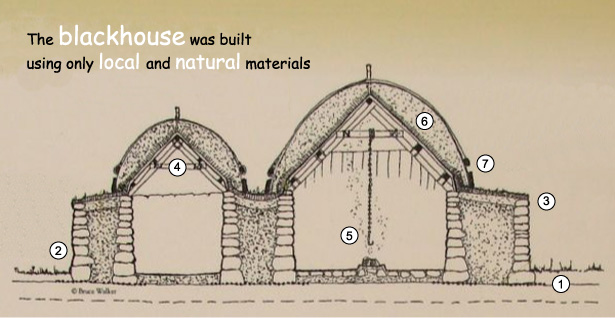
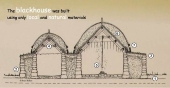
I've also been intrigued by the idea of building something ike a little blackhouse for an outside view point/shelter. Something like this:


source

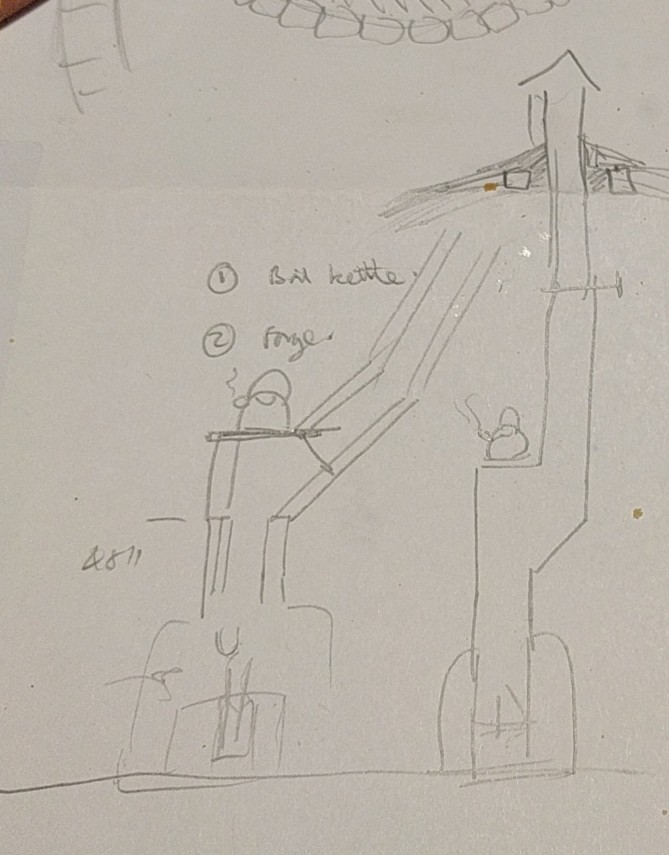
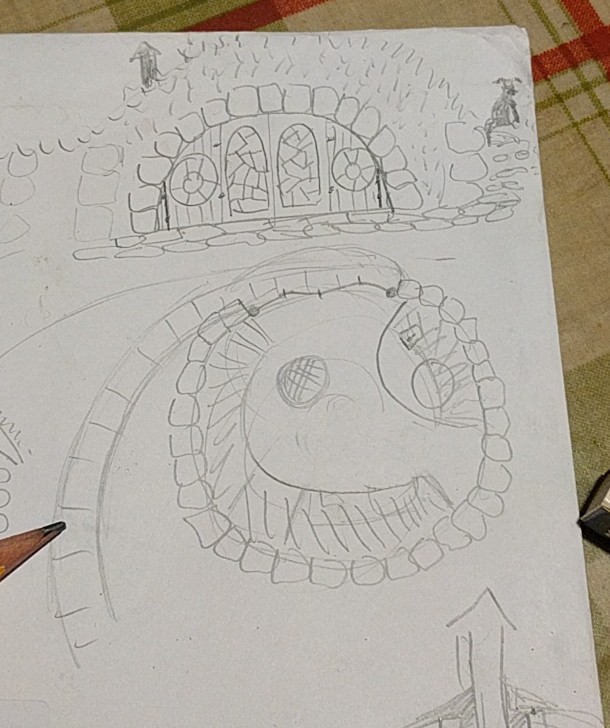
Thinking about hobbit houses, makes me think that the forge ought to at least be able to boil a kettle quickly, making it a bit more mutlifunction. So starting to sketch possibilities on the back/front of an envelope (as you do). I have turf, rock, roundwood, polythene sheet. I may need to sink the forge into the floor slightly, so that the kettle hotplate is at a reasonable height. I may have to (ahem) borrow some flue from another future project to get the hot gases through the roof.

Any easy ways of protecting the roof from the flue? I'm assuming it will still be pretty hot, as I'm not thinking of saving the heat with thermal mass at this stage. Maybe infill with clay?
hobbit_forge1.jpg
Possible kettle stand on flue
hobbit_forge_den.jpg
Layout within round house
 
Nancy Reading
steward and tree herder
Posts: 11863
Location: Isle of Skye, Scotland. Nearly 70 inches rain a year
5975
5
transportation dog forest garden foraging trees books food preservation woodworking wood heat rocket stoves ungarbage
  • Likes 10
  • Mark post as helpful
  • send pies
    Number of slices to send:
    Optional 'thank-you' note:
  • Quote
  • Report post to moderator
So...as you do I've been looking for helpful information and I'll link threads here for easy reference.

At the moment I'm thinking -

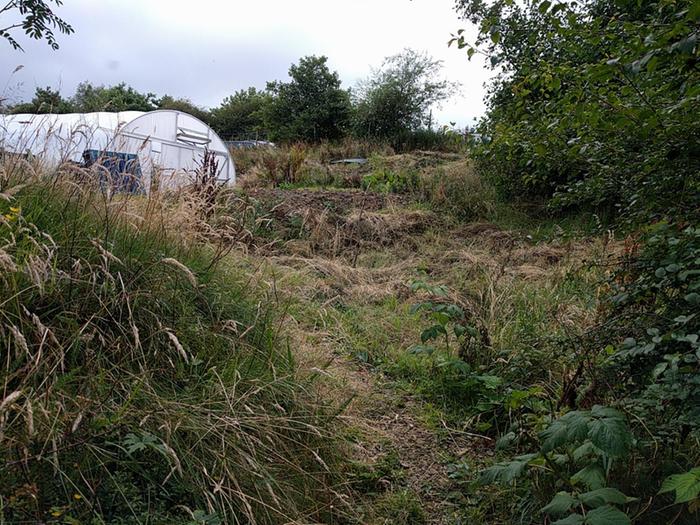
1) clear the site and dig down as far as I can to get a level surface. The rock underneath may have outcrops or be rather shallow which may complicate things.

2) Dig a slight ditch around the back side of the construction to hopefully divert water away from the floor and foundations to try and keep it drier. I can overflow this down the hill .

3) Back fill the floor with broken rock. I do have a bit of this spare. There's lots of information on earthen floors in the earthen floor forum. I think I'll probably tile the surface with beach pebbles, but keeping it drier will help with durability and comfort. Kirk Mobert gives a simple summary of construction here drain layer, base layer and finish layer. I wonder if I have some less crushable rock to make the drain layer with - the 'rotten rock' tends to fracture as you compact it, but may make a single layer possible....

4) build up a 3-4 foot wall using stones from the former boundaries. I'm thinking about 10ft internal diameter, but will have to check clearance around the rocket furnace. I'll leave a gap facing North (away from the prevailing winds for the doorway).

5) I was contemplating a reciprocal round roof, because they are so cool, but then I found the term corbel roof and came across these Albanian earth sheltered houses:


source

And I think something like that might be easier to do single handed as well as being rather like a beehive sheiling (albeit in wood not stone). I think a hexagonal roof would work well. I'd really like to put a central atrium window if I can find the right translucent component. We did have a chipped glass punch bowl, which might have been ideal (If I haven't disposed of it as useless....)

6) Cover the whole lot walls and roof (excluding door and rooflight ) with a thick layer of sheep fleece.

7) Back fill behind the stone wall with soil and blend out to surrounding area

Cover roof with Damp Proof Membrane (DPM) (Maybe I still have enough old polytunnel plastic to create a membrane) and overlap onto surrounding ground

9) Cover DPM with a thin layer of soil and turf

Still thinking how to get the flue out - I think it will need to go out through the wall ......

 
gardener
Posts: 5533
Location: Cincinnati, Ohio,Price Hill 45205
1177
forest garden trees urban
  • Likes 11
  • Mark post as helpful
  • send pies
    Number of slices to send:
    Optional 'thank-you' note:
  • Quote
  • Report post to moderator
Very neat project idea!
I think a corbeled roof might be extra well suited for a green roof, it seems like it will have ledges.
It might be an ideal roof  for a pigeon cote.

If there is some netting available, it might help hold down the damp proof layer and keep the green room from sliding of that layer.
Cordage or even vines might work.
Actually since sheep fleece is available that could be ideal.
I have no direct experience but I'd imagine fleece can hold dirt, water, seeds and roots quite well.
Would it attract rodents?
Not sure.


Nancy Reading
steward and tree herder
Posts: 11863
Location: Isle of Skye, Scotland. Nearly 70 inches rain a year
5975
5
transportation dog forest garden foraging trees books food preservation woodworking wood heat rocket stoves ungarbage
  • Likes 7
  • Mark post as helpful
  • send pies
    Number of slices to send:
    Optional 'thank-you' note:
  • Quote
  • Report post to moderator
Thanks William!
I'm hoping I might make this happen next spring, but there are a lot of other projects that may take priority (including actualy working on the house!)

I think I'm aiming for a dome shaped roof, as as it will be blended into the surrounding soil surface it shouldn't have much steepness. AS you say the corrugations of the corbel logs should help it keep in position. MInd you more fleece on top would give the membrane some protection from stones, so that might not be a bad idea to cover it on top as well.

I hadn't thought about mice. I guess as long as they don't eat through the membrane they are welcome... I'm not storing food in there as it would get too hot from the forge to be a root cellar, it's more a fun experimental thing to do that might just turn out pretty good.

One thought I've had is #7: I think if I can find enough rotton rock I will back fill behind the walls with rubble - that might help avoid the walls getting too damp. I'll need to check that the surrounding surface tends to slope away on all sides so as not to direct water into the building at all.

Another overnight thought was I'll have to think about the doorway. 3 -4 foot is not going to be tall enough for even me to walk through at all comfortably. A reall big log for the first roof supporteither side might give me another foot I suppose? Most of our spruce is only about 10 inch max diameter. How else could I get a little more height in the doorway?

The Albanian houses use the central hole as a smoke vent. I wonder if I could flash round a flue there with glass somehow? I suspect it would be a pain to get it to seal against rain at all.
 
William Bronson
gardener
Posts: 5533
Location: Cincinnati, Ohio,Price Hill 45205
1177
forest garden trees urban
  • Likes 8
  • Mark post as helpful
  • send pies
    Number of slices to send:
    Optional 'thank-you' note:
  • Quote
  • Report post to moderator
For your flashing maybe use a  tire as mold, put a length of stovepipe, wrapped in cardboard, in the center.
Add bottles in a spiral pattern leaving some space around the center pipe.
Pour concrete around this, not too thick.
We might add wire reinforcement to the mold for tying it into the structure, we could use Pyrex cookware instead of bottles.
After demolding, wear PPE, break all the bottles off flush with the concrete, clean up the edges with ana angle grinder.
You now have a round bottle window with a pass through for a stovepipe.
Installed horizontally it should cover the hole in the center of the roof and let some light through.
After installation , fill the gap around the stove pipe with high temp silicon.

We could also do this ferrocement style.
Lay the metal mesh in place, over the hole, poke our flue through it, lay out glass pie plates or mixing bowls  around the flue, and  apply our cement mix around those components.
Parge the mesh from inside the structure, make sure to not cover the glass plates, but do get under their rims.
After it sets,  seal edges between the concrete mix and pie plates with silicon.
You can remove the mesh from under  the pie plates, but keeping it in place might be better, for safety sake.

Either of these ideas might work using clear glass pebbles or marbles  instead of bottles or dishware.
With pebbles you could use clear silicon instead of Portland cement.

Given the heat that smelting steel requires, we may not be able to use glass anywhere near the flue, but a "bond beam"  that ties the stone walls together could be good place to add bottles to admit light.
That could be a way to add a foot of height for entrance/egress comfort.
A dormer is another way, since you only need to add height in that one section of the circle that is your walls.
A dormered entryway could be good place to hang outer ware as you enter the forge.


While this forge  might not be good place for a food storage, it could be good place to dry things, like tree hay.
 
master gardener
Posts: 5518
Location: Carlton County, Minnesota, USA: 3b; Dfb; sandy loam; in the woods
3078
7
forest garden trees books chicken food preservation cooking fiber arts seed woodworking homestead ungarbage
  • Likes 7
  • Mark post as helpful
  • send pies
    Number of slices to send:
    Optional 'thank-you' note:
  • Quote
  • Report post to moderator
Maybe get extra doorway height by digging down farther for a sunken entry? It isn't clear from your description whether that'll be possible after the initial dig-down to rock, and I suppose you might not know how even the bedrock is until you dig it up.
 
master steward
Posts: 14459
Location: Pacific Wet Coast
8739
duck books chicken cooking food preservation ungarbage
  • Likes 6
  • Mark post as helpful
  • send pies
    Number of slices to send:
    Optional 'thank-you' note:
  • Quote
  • Report post to moderator
Nancy Reading wrote:

The Albanian houses use the central hole as a smoke vent. I wonder if I could flash round a flue there with glass somehow? I suspect it would be a pain to get it to seal against rain at all.


Here, we're obligated to have a "hat" on our chimneys for spark arresting. Does your rain fall horizontally enough that a large hat wouldn't help protect the base of the vent pipe? Our hats are made of stainless steel and I admit they were a bit pricey, but that was decades ago, so quality ones do last at least.
 
Nancy Reading
steward and tree herder
Posts: 11863
Location: Isle of Skye, Scotland. Nearly 70 inches rain a year
5975
5
transportation dog forest garden foraging trees books food preservation woodworking wood heat rocket stoves ungarbage
  • Likes 7
  • Mark post as helpful
  • send pies
    Number of slices to send:
    Optional 'thank-you' note:
  • Quote
  • Report post to moderator
Some great ideas there thanks William!
I do like the idea of using glass bottles in a window. I have some I dug up from the old waste pit and it would be pretty cool to be able to use those. Useful threads:
https://permies.com/t/3486/cutting-glass-bottle
https://permies.com/t/40/11155/dirt-glass-bottle-walls
It also occurs to me that I am building a forge....so may be able to melt glass into a specific window shape.

As regards the flue temperature, I'm toying with the idea of a stone bell, which would extract some of the heat. I'm also not sure what flue I have, or will use. I might have some double wall flue, but it seems extravagant to use that for this. It is also not impossible I might still try for a stone chimney through the wall.

Christopher, I suspect that some sort of dormer/frame over the door will be the easiest option for the door height. I have a step at the doorway in my pallet shed, and it is a bit annoying to have the change in height. Also could be a bit dangerous, if someone forgets it is there, as a trip might send someone down the hillside.

Jay, rain can fall horizontally here pretty often! A hat is a good idea for stopping the rain falling down the chimney rather than spark arresting . I suspect we can find something suitable, or if I go for a stone chimney, then maybe some tilted paving slabs might work as a cap.
 
Nancy Reading
steward and tree herder
Posts: 11863
Location: Isle of Skye, Scotland. Nearly 70 inches rain a year
5975
5
transportation dog forest garden foraging trees books food preservation woodworking wood heat rocket stoves ungarbage
  • Likes 6
  • Mark post as helpful
  • send pies
    Number of slices to send:
    Optional 'thank-you' note:
  • Quote
  • Report post to moderator
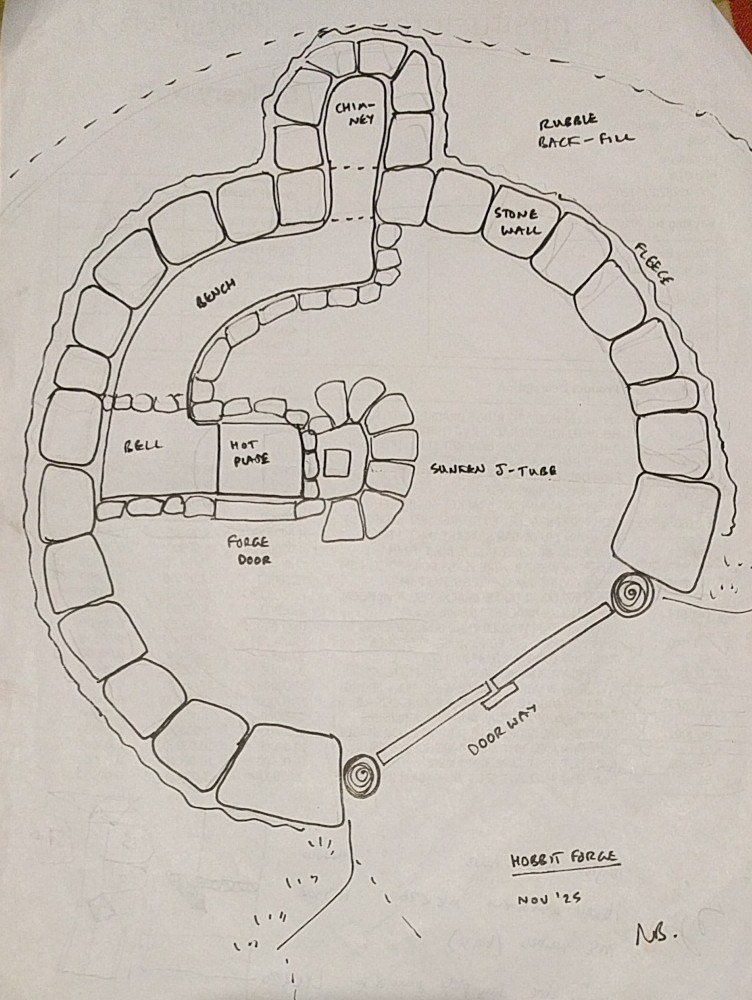
Sketching a possible plan with rocket forge/bell/bench with flue exiting through wall.....I may have clay pipe that I can use to line the flue with. I think a smaller diameter would be better than I have drawn here. Clean outs would be required....
hobbit_forge_plan.jpg
Rocket Forge-bell-bench
 
She still doesn't approve of my superhero lifestyle. Or this shameless plug:
Learn Permaculture through a little hard work
https://wheaton-labs.com/bootcamp
reply
    Bookmark Topic Watch Topic
  • New Topic